

The land that would not be sold
Everyone in the town of San Miguel de la Sierra said the same thing: Clemencia Salvatierra should sell the ranch. They said it at the store, in church, in the tortilla line, and even in low voices when she passed by with her basket of fresh eggs.
“A woman alone can’t handle so much land.”
“Her father is dead. What’s the point of holding on?”
“That’s no longer loyalty. It’s stubbornness.”
Clemencia listened without answering. She was thirty-four years old, with black hair always gathered in a thick braid and hands rough from so much work. She was not a woman of speeches. Neither had her father, Don Abundio Salvatierra, been one. He spoke with actions: raising fences, planting trees, repairing roofs, tending animals, watering the flowers his wife had planted before she died.
El Refugio ranch was not large compared to the rich haciendas, but for Clemencia it was an entire world. There she had learned to ride before she turned five. There her father taught her to tell dry earth from tired earth, a rain sky from a lying sky, a sick cow from a cow that was simply sad.
Don Abundio died one March afternoon, sitting in his chair on the porch, looking at the hills of Chiapas as if saying goodbye to every tree. He left no fortune. He left an adobe house, two goats, six chickens, an old cow named Consuelo, a stubborn vegetable garden, and a rose garden that still bloomed.
A few days after the burial, Uncle Ceferino arrived—Don Abundio’s older brother. He sat in the kitchen without removing his hat and placed a folder of papers on the table.
“Clemencia, there are people interested in buying. People with money. Your father is no longer here. We have to be reasonable.”
She served him coffee.
“The ranch is not for sale.”
Ceferino looked at her as if he had just heard something rude.
“And what are you going to do alone? You have no husband. You have no children. You don’t have the strength to keep this going.”
Clemencia set the cup in front of him.
“I have hands.”
“Don’t be stubborn.”
“I am my father’s daughter.”
Ceferino left without drinking the coffee.
Then other relatives came. Aunt Remedios arrived with easy tears and poisonous advice. The cousins talked about prices, buyers, opportunities, as if El Refugio were a dead animal they could already divide among themselves. They all said Don Abundio would have wanted Clemencia to be practical.
But she knew the truth. Her father would never have sold the land where his wife was buried.
Months passed. Clemencia worked more than her body could bear. At dawn she milked the goats, fed the chickens, checked the north fence, and watered the garden with a clay pot that had belonged to her mother. She sold eggs, milk, and fruit in town. With that she bought corn, salt, soap, oil, and nails when she could.
The barn roof was broken. The well needed cleaning. The north fence leaned with every strong wind. There were nights when Clemencia sat alone on the porch, arms aching, staring at her father’s empty chair.
“Don’t worry, Papá,” she would say softly. “I can still do it.”
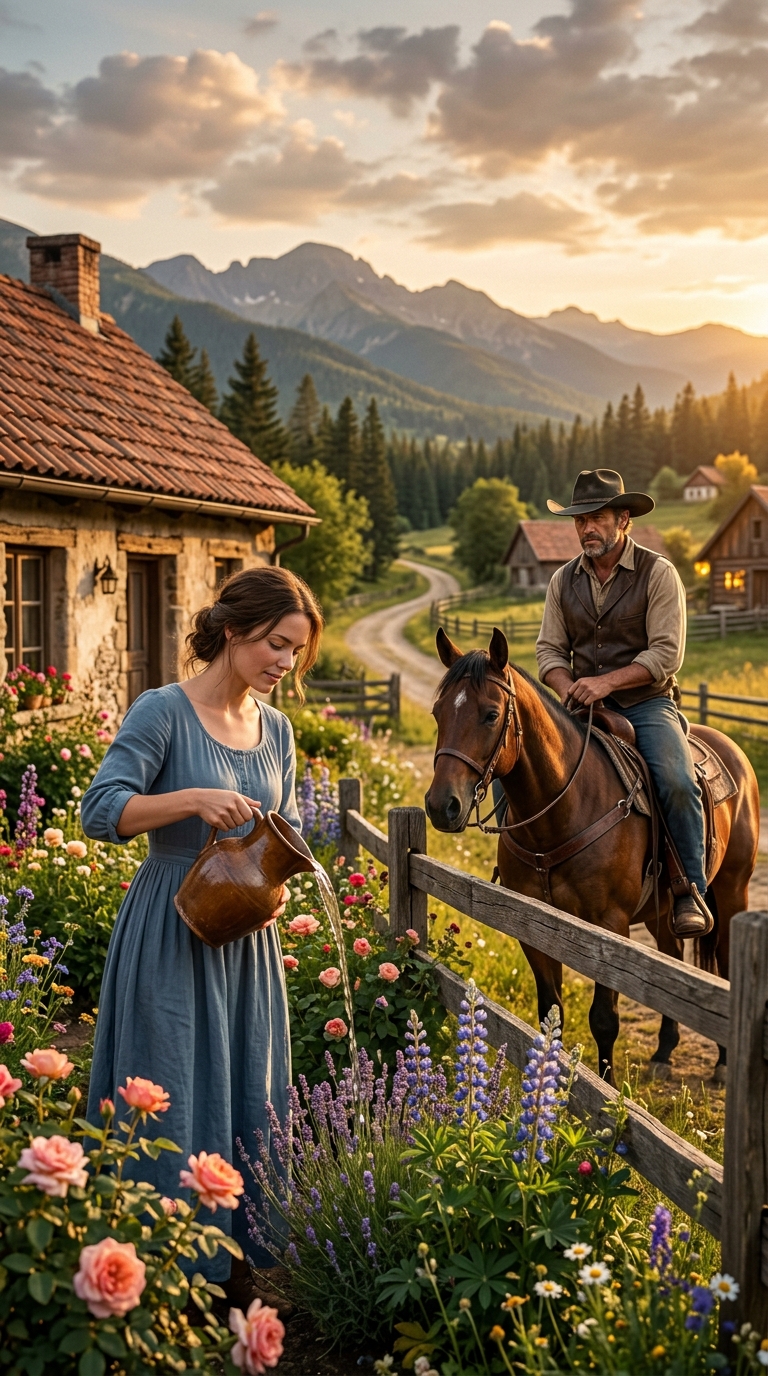
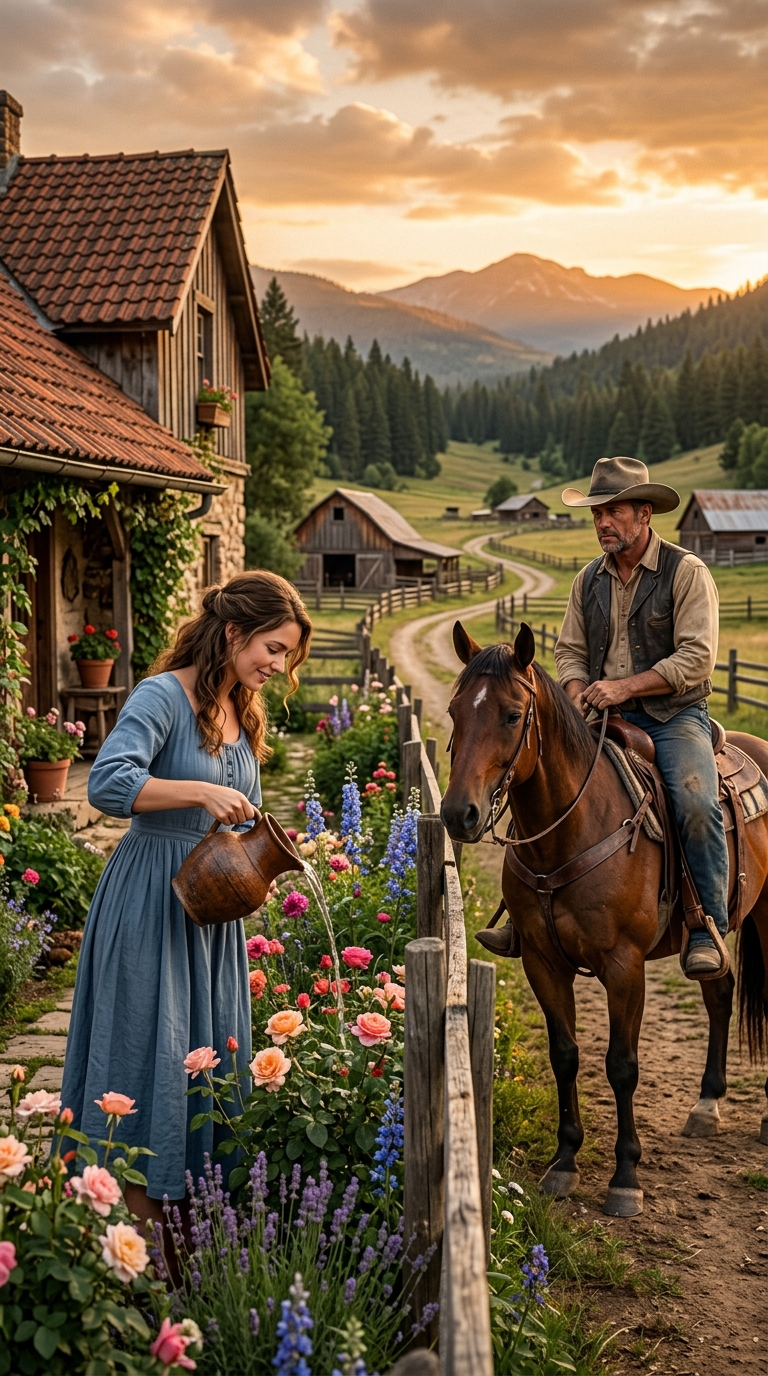
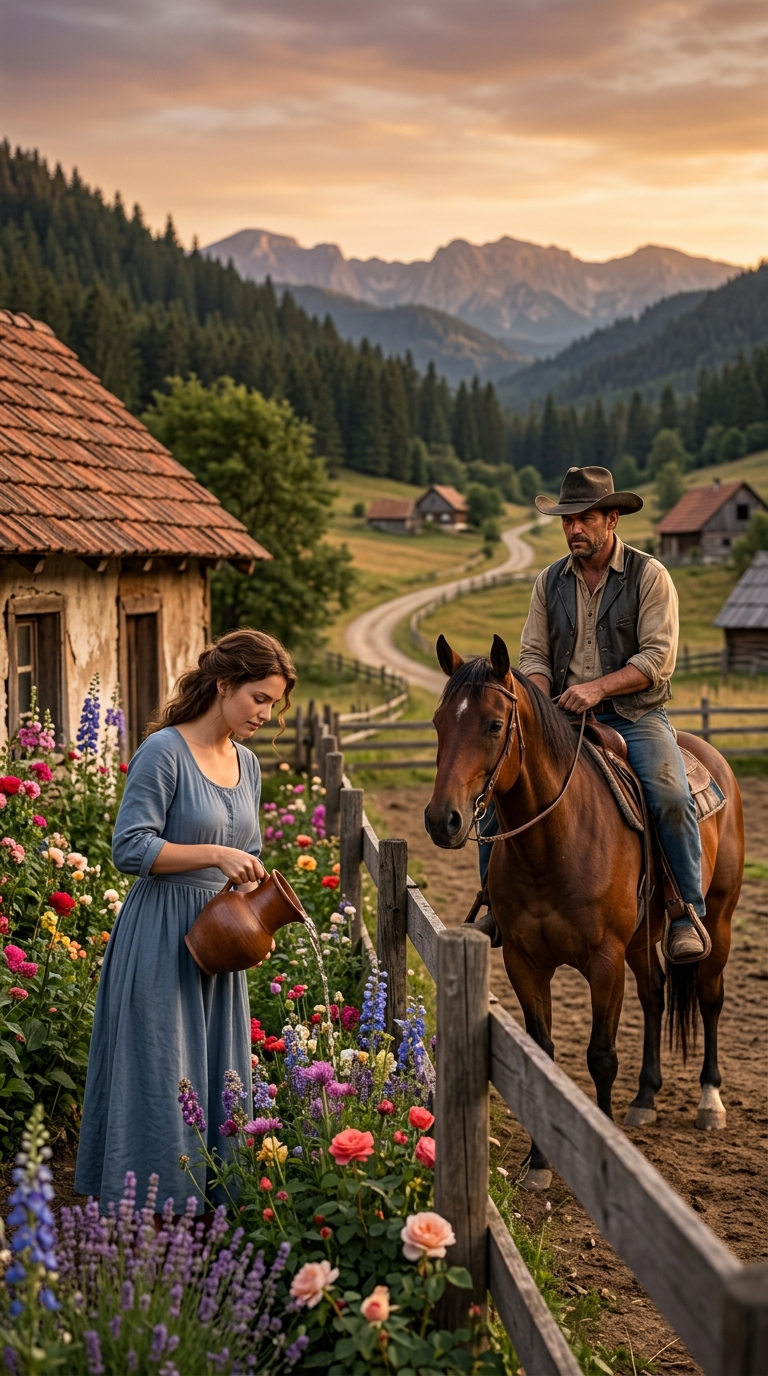
One October afternoon, while watering the roses, she heard a horse stop on the other side of the fence.
She looked up.
It was a man around forty, strong, tanned by the sun, with a short beard and a clean hat. He did not look like a lost traveler. He looked like someone who had arrived with a decision already made.
“Good afternoon,” he said. “I’m looking for El Refugio ranch.”
“You’ve found it.”
The man dismounted slowly.
“My name is Eliodoro Vázquez. I have a ranch on the other side of the stream.”
Clemencia kept watering.
“I know you by name.”
“I came to talk to you.”
“If you came to buy, you can save yourself the thirst.”
Eliodoro remained silent. He carried a written offer in his pocket. A fair offer, according to him. He did not intend to take advantage of a woman alone. He simply wanted to expand his land. Clemencia’s bordered his, had water and woodland, and everyone in town said she would sell sooner or later.
But seeing her there, clay pot in her hands, watering the roses as if tending a promise, the words became jumbled.
“May I ask for some water?” he finally asked.
Clemencia looked at him for a few seconds.
“Come to the porch.”
That was how Don Abundio had raised her: whoever comes to your door is offered water, even if they come to tell you what you do not want to hear.
Eliodoro sat on the wooden bench. She took her father’s chair. Between them was a small, old table marked by years of hot cups.
“They told me you might sell,” he said.
“They told you wrong.”
“They also told me the situation was difficult.”
“That they told you correctly.”
Eliodoro looked at the garden.
“And still you won’t sell?”
“Still.”
“Why?”
Clemencia took time to answer.
“Because every tree on this ranch was planted by my father. Every fence he raised. Every rose my mother cared for. If I sell, where does their memory stay?”
Eliodoro lowered his gaze.
“I understand.”
“No. People understand when they lose something that cannot be bought.”
He was not offended. On the contrary, that phrase landed in his chest like a truth.
Before leaving, he asked:
“What is needed most here?”
Clemencia frowned.
“Why do you want to know?”
“Just asking.”
“The barn roof. The north fence. The well.”
Eliodoro nodded.
“That has a solution.”
“Everything has a solution when there is time and money.”
The next day, before the sun grew hot, Eliodoro returned. But he did not bring papers. He brought tools, wood, and wire.
Clemencia came out to the porch with coffee in her hand.
“What are you doing?”
“I came to look at the barn roof.”
“I didn’t ask for help.”
“I know.”
“Then why did you come?”
Eliodoro removed his hat.
“Because I know how to do it. And because yesterday I understood that this ranch doesn’t need a buyer. It needs hands.”
Clemencia wanted to tell him to leave. She wanted to defend her pride like someone defending the last door of a house. But she saw his tools, his dusty boots, the serious way he waited for her answer.
She went into the kitchen and returned with another cup.
“If you’re going to work, first drink coffee.”
That was how it all began.
Eliodoro returned one week, then another. He repaired the barn, reinforced the north fence, and cleaned the well with the help of two laborers he paid himself. Clemencia never thanked him with long words, but she served him food at midday, and in the countryside that was also a way of saying it.
The town began to talk.
“She’s found herself a husband.”
“Surely he’ll convince her to sell.”
“No one helps for free.”
Clemencia paid no attention. Neither did Eliodoro.
One afternoon, while they cleaned the vegetable garden furrow together, he stopped.
“Clemencia.”
“What?”
“The first time I came to buy the ranch.”
“I know.”
“I no longer want to buy it.”
She drove the hoe into the earth.
“Then what do you want?”
Eliodoro took a deep breath.
“I want to keep coming. Without the pretext of buying. Without obligation. If you’ll let me.”
Clemencia looked at the bougainvillea, the roses, the adobe house, her father’s empty chair.
“You may come,” she said. “But if you come, you work.”
He smiled.
“I already know that.”
For the first time in many months, Clemencia smiled too.
But the peace did not last long.
One morning a black truck arrived at the ranch. Ceferino, a town lawyer, and two unknown men got out. They brought papers and an attitude of triumph.
“Clemencia,” Ceferino said, “this is over. Your father left debts. The ranch will be sold to cover them.”
She felt her blood run cold.
“My father owed nothing.”
The lawyer spread out some documents.
“Here is Don Abundio’s signature. He acknowledged a loan using the ranch as collateral.”
Clemencia took the papers with trembling hands. The signature looked like her father’s, but something was off. A badly made curve. A different pressure.
“This is false.”
Ceferino slammed the table.
“Enough of these tantrums! We offered to let you sell with dignity. Now you’re going to lose everything.”
Eliodoro arrived on horseback at that moment. He saw Clemencia pale, saw the papers, saw Ceferino’s smile.
“What’s going on?”
“Don’t get involved,” Ceferino growled. “This is family business.”
Eliodoro dismounted.
“When someone forges papers to steal land from a woman, it stops being family business.”
The lawyer grew nervous.
“Be careful what you say.”
Eliodoro looked at the signature.
“Don Abundio didn’t sign like that.”
Ceferino let out a laugh.
“And how would you know?”
Eliodoro took an old sheet of paper, carefully folded, from his pocket.
“Because years ago I bought two young bulls from Don Abundio. I still have the receipt. This is his real signature.”
He placed both papers on the table.
The difference was clear.
Clemencia felt her legs weaken. Her uncle had tried to steal the ranch from her. Not convince her. Not help her. Steal from her.
“Why?” she asked, her voice broken.
Ceferino did not answer.
The silence betrayed him more than a confession.
Eliodoro took the case to the municipal judge. Don Tomás, an old friend of Abundio’s, stated that Ceferino had been looking for buyers for months. The notary who supposedly certified the debt denied ever seeing Don Abundio. In the end, the fraud was exposed.
Ceferino lost the little honor he had left. The relatives who had given so much advice disappeared from town for a while. Clemencia recovered her papers, but she was wounded in a deeper way.
That night she sat on the porch and cried for the first time since her father’s death.
Eliodoro did not come too close. He simply sat on the bench.
“Your father knew you could do it,” he said.
“Everyone wanted to take away the only thing I had left of him.”
“Not everyone.”
Clemencia looked at him with wet eyes.
“And you? What do you want from me, Eliodoro?”
He removed his hat.
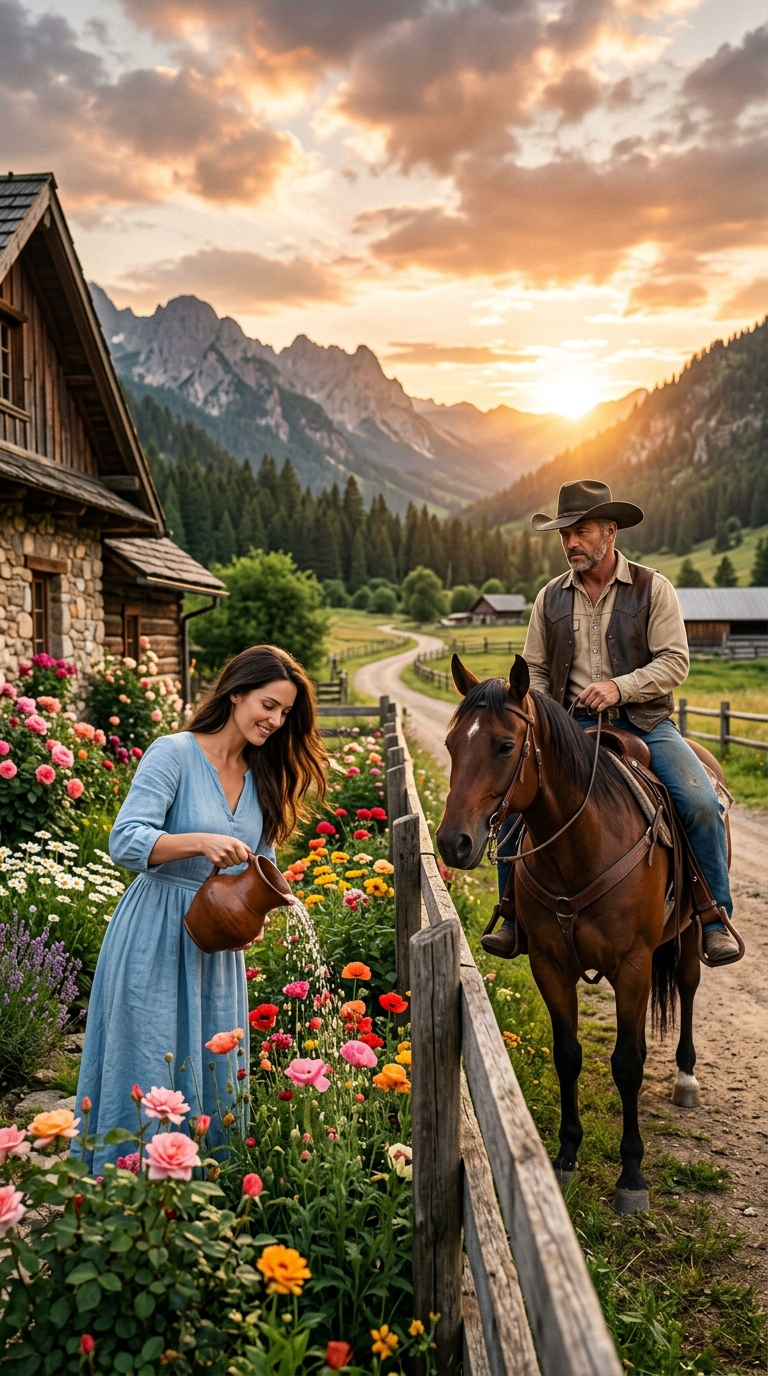
“Nothing you don’t want to give. I have my ranch. You have yours. I didn’t come to take your land. I came because when I saw you watering those flowers, I understood that there are people who cannot be sold, just as there are lands that cannot be abandoned.”
A month later, Eliodoro asked her to marry him on the porch.
He brought no musicians or expensive ring. He brought his son Benigno, a serious twelve-year-old boy who already loved Clemencia because she had taught him the name of every animal.
“I don’t want you to give me your ranch,” Eliodoro said. “I want to walk it with you. I want to add my hands to yours. And if one day you tell me to leave, I will go without taking a single stone.”
Clemencia looked at Benigno.
“And what do you say?”
The boy lowered his head, shy.
“I say that the cow Consuelo likes me here. And you too.”
Clemencia laughed through her tears.
“Then it’s all right.”
The wedding was simple, in the town chapel. There was no luxury, but there was truth. Don Tomás brought flowers from the garden. Benigno stood beside his father with his chest puffed with pride. Ceferino was not invited.
El Refugio remained Clemencia’s. That was made clear before the judge, the town, and Eliodoro. But it was no longer a silent ranch. Now there was laughter on the porch, the sound of a child’s footsteps in the yard, two horses by the paddock, and two cups of coffee at dawn.
Don Abundio’s roses continued to bloom.
One afternoon, years later, Eliodoro asked her:
“Did you never regret not selling?”
Clemencia looked at the sunset over the hills, the living flowers, the solid house, Benigno fixing a fence as if he had been born there.
“If I had sold, you would have bought it and left.”
Eliodoro smiled.
“And I wouldn’t be here.”
“Exactly,” Clemencia said.
Then she took her mother’s clay pot and watered the roses once more.
Because some lands are not sold.
Some lands wait.
And sometimes, when a woman stays to defend what she loves, life sends her not a buyer, but a companion.
