

Part 1: The Check at the Funeral Lunch
The funeral lunch was ham buns, scalloped potatoes, and three kinds of bars laid out on long folding tables in the basement of St. Paul’s, the same meal the church ladies had put out for every funeral I could remember.
I sat at the far end of one table in front of a plate someone else had filled for me, and I hadn’t taken a single bite of it.
Jeff had been gone six days. It still didn’t feel like something that had actually happened.
He was forty-seven. On a cold Tuesday in March he walked out to the machine shed after supper to check a hydraulic leak on the planter, and when he still hadn’t come in by nine, I took a flashlight out there and found him.
So I was sitting in that basement, listening to the coffee urn tick and the women in the kitchen rinse cups, when my brother-in-law Randy pulled out the folding chair across from me and sat down. A moment later Scott took the seat beside him.
Randy, at fifty-two, was the oldest. Scott was forty-nine. Jeff had been the youngest, and the three of them had farmed together ever since their father retired, under a partnership he had drawn up so the land would never be divided into pieces too small to farm.
Randy laid his big hands flat on the table for a second, the way he always did before saying something hard.
Then he pulled a long envelope from the inside pocket of his suit coat and pushed it across to me, past the salt and pepper shakers.
“It’s the buyout,” he said, low enough that nobody else could hear. “Like the agreement says. We had it figured with the bank this week. We didn’t want you to have to worry about it.”
I lifted the flap. Inside was a cashier’s check from the bank in Hastings, made out to me, for five hundred thousand dollars.
Scott cleared his throat and kept his eyes on the tablecloth. “The house goes with the partnership, Melissa. You know that. We’d need you out by planting. We figured that gives you plenty of time to find something in town.”
Plenty of time. It was mid-March. Planting would start at the end of April, or the first week of May if the cold held on. That left about seven weeks to clear out twenty years.
I glanced at the next table. My daughter Abby, twelve years old, was sitting beside my sister, nudging a lemon bar around her plate with a plastic fork.
She hadn’t cried during the service. She had gripped my hand so tightly that it left marks on my fingers.
I want to be truthful about what moved through me right then, because I’ve told this story a handful of times since, and people always want to hear that I was furious.
I wasn’t furious. I was too worn out for that. Mostly it felt as though someone had opened a door in the dead of winter and let all the warmth drain out of the room.
And here is the thing, the reason I didn’t fight them.
For twenty years I had kept the books for Engel Brothers. Every check, every seed invoice, every operating note and every land payment had crossed my kitchen table.
I knew that partnership agreement better than Randy did, and better than Scott, who hadn’t looked at it since the day he put his name on it.
The agreement said that if a partner died, the surviving partners could buy out his share from his spouse, at a price set by the formula in the agreement and an appraisal of the land and the equipment.
It said the house on the home place belonged to the partnership, because their father had built it with partnership money in 1979. Jeff had signed it. I had sat next to him while he did, holding Abby on my lap.
I had worked through the formula myself the night after the funeral, at two in the morning when sleep wouldn’t come. It came to just under five hundred thousand. They had rounded up.
So the price was fair. The paperwork was legal. Jeff had agreed to every word of it in his own handwriting. There was nothing to take to anyone, and no one to call.
The only thing wrong with it was the timing, and you can’t sue a man for handing you a check at a funeral.
I also knew something they didn’t realize I knew. In January I had seen the letters from the bank.
Two dry summers in a row had left the partnership’s operating line stretched thin, and the new loan officer wanted the balance sheet tidied up before he would renew.
A widow holding a third of the partnership was a loose end on a balance sheet.
I slipped the envelope into my purse and snapped the clasp shut. “All right,” I said.
Randy let out a breath. He looked relieved. That was what stayed with me later, lying awake. Not the check. The relief on his face, as if he had been bracing for a scene and was thankful I hadn’t made one.
“We just thought a clean break would be easier on you,” he said. “No hanging on. No worrying about the bank or the markets.”
“I understand,” I said, and I did. I understood completely. Then I stood up and went to sit with my daughter.
That night at home, Abby sat at the kitchen table still in her funeral dress and asked whether we were going to live with Aunt Pam in Hastings now.
Pam is my sister. Someone at the lunch had already said it within Abby’s hearing, the way people do.
“I don’t know yet, honey,” I told her. “I haven’t decided anything.”
“Do we have to leave the house?”
I could have lied. I considered it. But she was twelve, and she was a farm kid, and farm kids can sense a lie the way they can sense rain coming.
“Yes,” I said. “The house belongs to the farm, and the farm belongs to Uncle Randy and Uncle Scott now. They paid us for Dad’s part.”
She turned that over for a long time. Then she said, “But Dad’s fields are still here.”
“They are.”
Neither of us could stand the quiet in the house after that, so we pulled on our coats and walked to the end of the lane. The sun was dropping orange behind the grain bins, and across the gravel road Walt Hoffman’s quarter stretched flat and brown all the way to the line of cottonwoods along Pawnee Creek.
Engel Brothers had rented that ground from Walt for thirty-one years. Jeff called it the creek quarter, and he treated it like it was his own. He planted it first every spring, ahead of the home place, because he said Walt’s ground warmed up faster and because Walt liked to sit on his porch and watch.
Abby leaned into my side. “Dad said that was the best dirt in the county.”
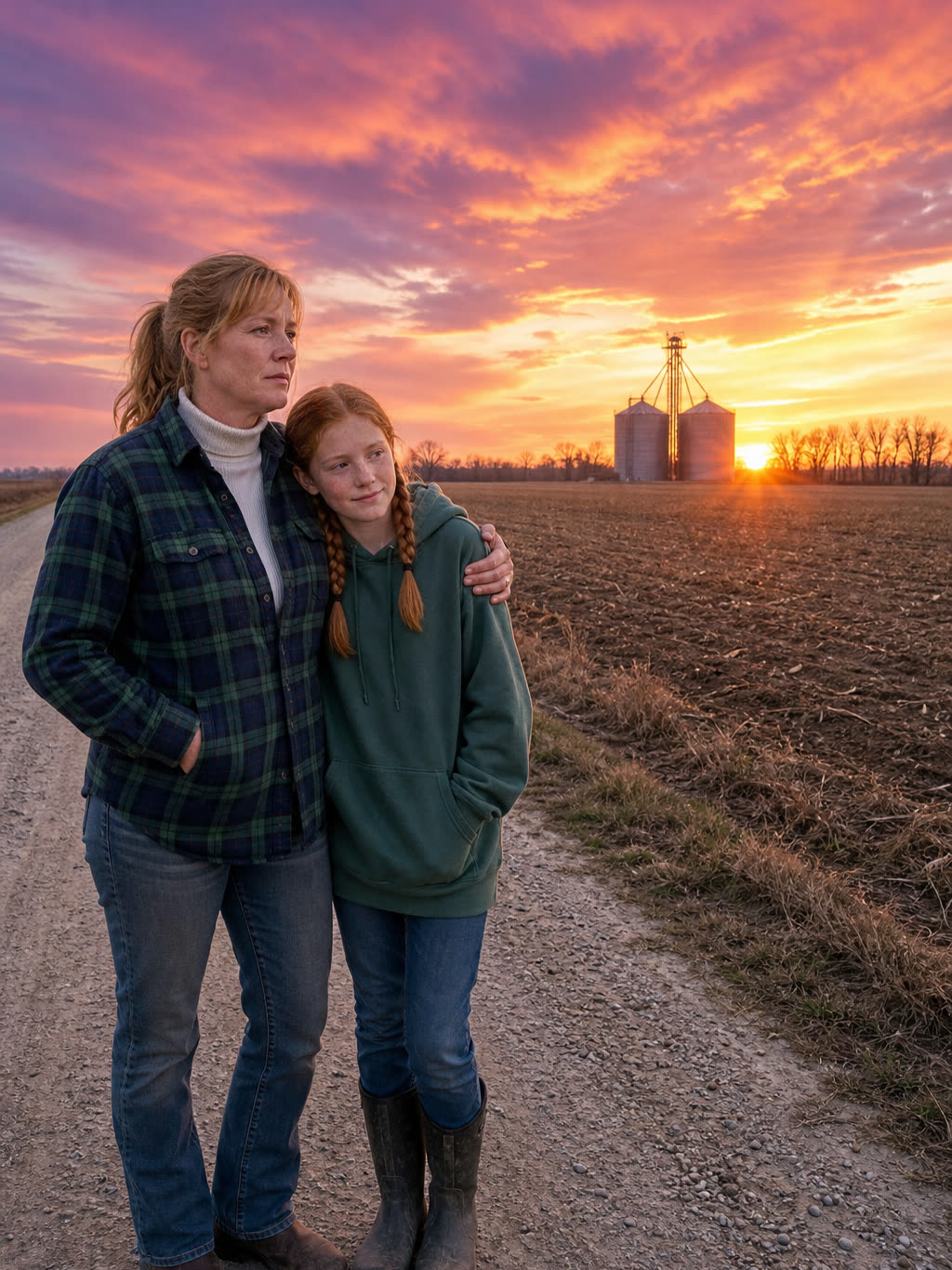
“He said that about every field he ever farmed,” I told her, and for the first time in six days she very nearly laughed.
The next two weeks went the way those weeks always go. Casseroles came in foil pans with names written on masking tape. The phone rang and I let it ring. I bought boxes at the hardware store in Hastings and started packing the basement, because nothing down there had the power to break me.
Pam called every other night with listings: a two-bedroom duplex near the hospital, a little ranch house on the north side with a fenced yard. “You could walk to the grocery store,” she said, as if that were the thing I’d been missing all these years.
I kept the books through all of it, because the books don’t stop for anybody. The March statements arrived. Out of habit I paid the partnership’s bills one last time, and then I sat looking at the ledger and realized I no longer had any business opening those envelopes.
One entry nagged at me. The Hoffman rent. It had been due the first of March, a little over ninety thousand dollars, and there was no check written for it. Randy and Scott hadn’t said a word about it. Jeff had always been the one who dealt with Walt, the same way he dealt with the seed salesman and the neighbor kids who walked beans in July. He was the brother people liked to talk to.
I told myself it wasn’t my problem anymore. It was the hardest thing I told myself that whole month.
On the last Saturday in March, I finally made myself clean out Jeff’s pickup. It still smelled like him, coffee and diesel and the spearmint gum he chewed to keep from smoking. I threw away gas station receipts and saved a pocketknife for Abby and cried over a pair of gloves still shaped like his hands.
In the glove box, under a tire gauge and a stack of co-op tickets, was a manila folder with Walt’s name across the front in Jeff’s square capital letters.
Inside was a farm lease. Three hundred twenty acres, Section 14, Pawnee Township, five years, cash rent. Walt had signed the bottom in shaky blue ink on the ninth of February. The tenant’s line was empty. And the tenant typed at the top of the page was not Engel Brothers.
It was Jeffrey and Melissa Engel.
Stuck to the front was a yellow note in Jeff’s handwriting: Talk to Mel first. Then R & S.
I sat in the cab with the door open and the cold pouring in, reading those few lines again and again. For twenty years every piece of paper on that farm had crossed my table, and this one never had.
I was still sitting there when headlights swung into the yard.
Walt Hoffman eased himself out of his old Ford the slow way a man of seventy-four gets out of anything. He was holding his seed cap in both hands, turning it by the bill. He looked at the folder in my lap and didn’t seem the least bit surprised.
“I figured you’d find that sooner or later,” he said. “Jeff was supposed to be the one to tell you. Now I guess it’s me.”
“Tell me what, Walt?”
He put his cap back on and looked across the road at his own ground, going gray in the dusk. “That my land’s still waiting on a signature,” he said. “And I’m not giving it to Randy and Scott.”
Part 2: The Ground Across the Road
Walt sat at my kitchen table with his coat still on, as if he wasn’t sure he’d be allowed to stay. I made coffee because my hands needed something to do.
“Jeff came over the second week of January,” he said. “Sat right about where I’m sitting now, only at my place. Said he was done being outvoted two to one.”
I knew the votes he meant. I had written them into the minutes. The hog confinement site Randy wanted to build on the north eighty, a quarter mile upwind of Walt’s house. The plan to tile out the wet slough on Walt’s creek quarter, which Walt had told them three separate times he wanted left alone for the ducks. The rent check that had gone out six weeks late last fall, and the one before that.
“My Ruth is buried in the church cemetery and I’m not going anywhere,” Walt said. “But I’m too old to fight about my own land with men who think it’s theirs. Jeff never once acted like it was his. He asked me before he did anything. He asked me about the slough. He asked me how Ruth was doing right up till the end.”
He drank some of the coffee. “He wanted to go out on his own. The agreement lets a partner pull his share out, he said. Take it slow, take a few years. Start with my ground and build from there. Him and you.”
“He never said a word to me,” I said. My voice came out smaller than I meant it to.
“He was going to. Your birthday, he said. The twenty-first. He wanted to hand you the lease and tell you it was your present.” Walt looked down into his cup. “He said you were the better farmer of the two of you. Said you just never got the seat.”
I had to get up and stand at the sink for a while after that.
I grew up on a dairy outside Juniata. I was milking before I could reach the light switch in the barn. When I married Jeff, I drove grain cart every fall for twenty years and ran every number the operation ever produced. I knew what the creek quarter yielded in a wet year and a dry one, what it cost to fertilize, which corner held water after a June storm. I had never once sat in the planter seat, because there were three brothers and only one planter.
“I don’t own a tractor, Walt,” I said to the window.
“You own a check,” he said.
He went home a little after nine. I didn’t sleep. Around four in the morning I gave up and opened the laptop, and I did the thing I am good at. I ran the numbers.
Rent on three hundred twenty acres. A used tractor, a used sixteen-row planter, a sprayer I could hire out. Seed and fertilizer on credit from the co-op if they would carry me, and I thought they would, because I had paid their bills on time for twenty years. Crop insurance. A cushion for a bad year, and another cushion under that one. When I was finished, there was still money left from Randy’s check for Abby’s college, and the creek quarter would have to fail two years running before it touched that.
When Abby came down for breakfast, I told her everything. The lease. The note. What her dad had been planning.
She listened with a spoon halfway to her mouth. Then she set it down. “So we could farm Dad’s fields.”
“They’re Walt’s fields, honey.”
“Dad’s fields,” she said, and that settled it.
On Monday I drove to the credit union in Hastings instead of the bank, opened a farm account in my own name, and deposited the cashier’s check. On Tuesday I sat at Walt’s kitchen table under Ruth’s cross-stitched sampler and signed my name on the line where Jeff’s should have gone. Walt had crossed out Jeffrey in pen and initialed it.
“There’s one more thing,” he said, and slid a key across the oilcloth. “The tenant house. Nobody’s lived in it since the Novaks moved to Kearney. It needs paint and the furnace is temperamental, but it’s yours for nothing as long as you’re farming my ground.”
The tenant house sat at the end of Walt’s lane, directly across the gravel road from the home place. From its front step you could see the yard light Jeff had put up the year Abby was born.
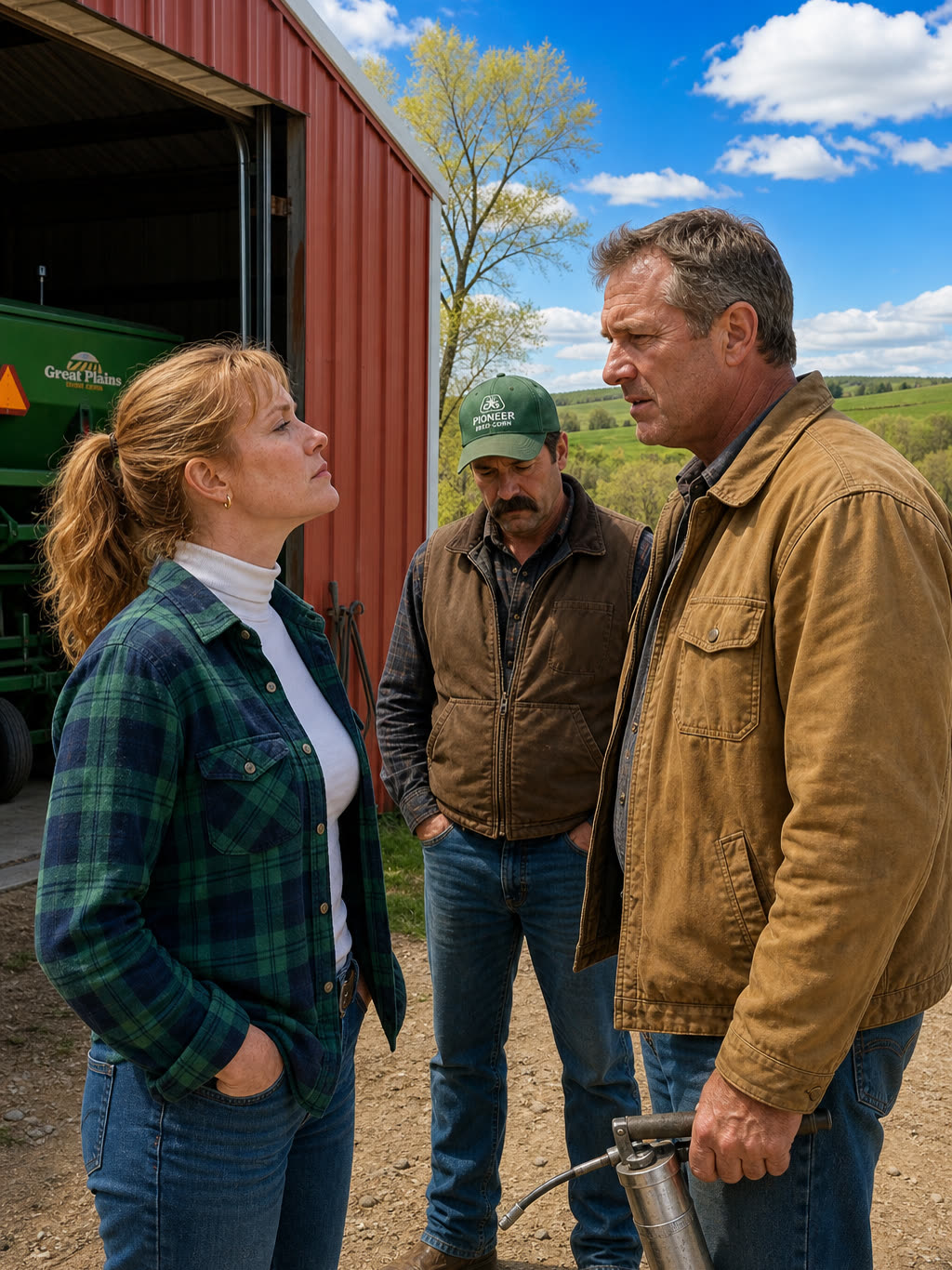
I told Randy and Scott that Thursday. I could have called. I drove over to the shop instead, because I had sat across a table from them once already and I wanted to do this one standing up.
They were greasing the planter when I came in. The same planter. Somebody had fixed the leak.
I told them plainly. Walt’s ground was leased to me for five years, starting now. I would be out of the house by the first of May, like they’d asked, and I’d be living across the road.
For a moment nobody moved. Then Randy set down the grease gun.
“That ground’s been ours for thirty-one years,” he said.
“It’s been Walt’s for seventy-four.”
Scott’s face had gone a dull red under his seed cap. “Did Jeff put you up to this? Before?”
“Jeff didn’t put me up to anything,” I said. “Walt asked me. I said yes.”
Randy came around the planter. He is a big man and he knows it, and I had seen him use that size on seed dealers and bankers, but he had never once used it on me. He didn’t now either, quite. He stopped a few feet away.
“You’re going to lose every dime of that check,” he said. “You’ve never run a planter in your life.”
“Then it’ll be my dime.”
“That’s three hundred twenty acres off our base, Melissa. You know what the bank is going to say.”
“I know exactly what the bank is going to say,” I said. “I typed the last letter you sent them.”
He opened his mouth and shut it again. Behind him, Scott looked at the floor of the shop the same way he had looked at the tablecloth in the church basement.
“I signed your paper,” I said, quieter. “Every word of it was fair. Walt never signed anything with you. That’s all this is.”
I walked out before either of them could answer, and I made it all the way to the end of the lane before I had to pull over.
We moved across the road in the third week of April. Abby carried boxes over the gravel in her dad’s old green sweatshirt, back and forth, back and forth, as though she could keep the two houses stitched together by walking between them. Pam came out from Hastings with a carload of cleaning supplies and an opinion about everything, and painted the tenant kitchen yellow without asking.
I bought a tractor at a consignment auction in Grand Island, an orange one, older than I wanted but with honest hours and a good loader. Walt insisted on driving it home himself, forty miles at eighteen miles an hour with his flashers on, and I followed in the pickup laughing at the line of cars stacking up behind him.
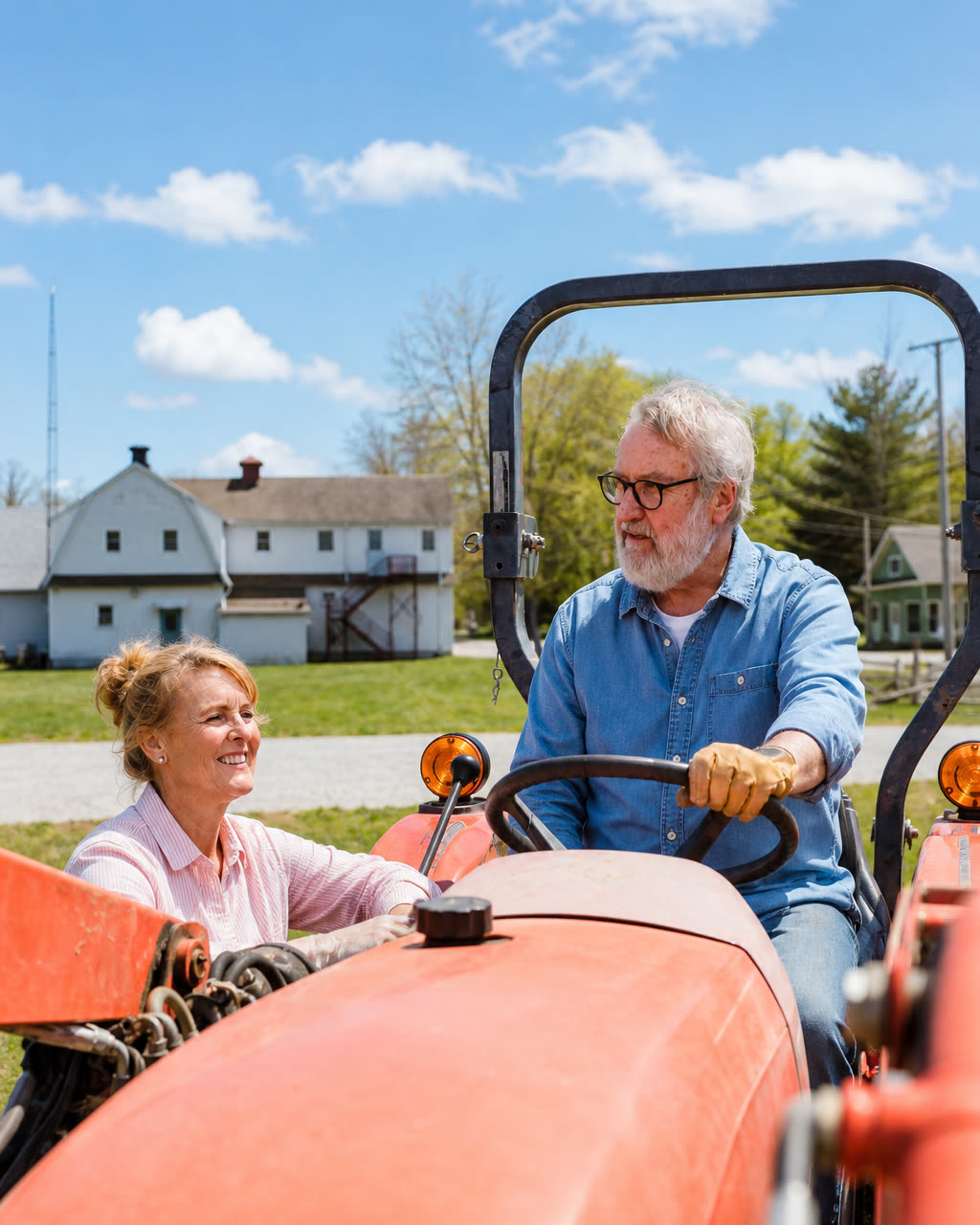
When he finally pulled into his yard, I climbed up beside the hood and checked the hydraulic lines while he sat at the wheel in his leather gloves, grinning down at me through his beard.
“Ruth would have said we were both out of our minds,” he said.
“Ruth would have been right,” I told him, and it was the first real laugh I’d had since March.
The town talked, of course. At the co-op I heard a man say the Engel widow had gone soft in the head with grief, and I heard old Marv Pohlman tell him to shut up and buy his feed. A neighbor I barely knew dropped off a pickup load of seed tenders he wasn’t using. And one evening I found a cardboard box on the tenant house step, full of Jeff’s wrenches and his good torque wrench from the shop. There was no note. I knew Scott’s handwriting on the box flaps, where he had written JEFF in marker and then crossed it out and written MELISSA.
Planting started the first week of May. The ground came up fit on a Monday and I pulled into the creek quarter at sunrise with the planter folded behind me and my heart in my throat. Walt sat on his porch with his coffee, the way he had watched Jeff for years. Abby rode along after school with her homework in her lap and never did one problem of it.
Across the road, Randy and Scott were planting too. Some afternoons the two outfits ran parallel along the gravel, dust rising off both, and neither side waved, and neither side looked away.
By the Friday of the second week I had all but forty acres in. I was running late into the dark to finish ahead of rain, and when I turned at the end of a pass I smelled it before I saw it. Hot hydraulic oil. A fine mist of it was spraying out from a hose on the planter’s lift cylinder, glittering in the tractor lights.
I shut everything down and sat in the cab for a long time. Then I took the flashlight and climbed down.
It was the same kind of leak. The same smell. The same cold spring dark, the same beam of light swinging across the steel. My hands were shaking so badly the light jittered all over the planter frame, and I could not make myself get down on my knees and crawl under it. I stood there in the field with the oil dripping and I could not move at all.
Headlights came bumping down the field road from the gravel. A pickup pulled up alongside the tractor and the engine died.
Randy climbed out with a flashlight in one hand and a box of hose fittings in the other. He walked into my light and stopped.
“Walt called me,” he said. “He saw you stop out here. He said you’d be standing just like this.” He swallowed. “And he said it was time I told you the truth about that Tuesday.”
Part 3: What Grows Back
Randy didn’t say anything else right away. He set the fittings on the planter frame, handed me his flashlight, and got down on his back in the dirt under the lift cylinder like he had done ten thousand times before.
“Hold it steady,” he said. “Little to the left.”
I held it steady. It gave my hands somewhere to be.
For a few minutes there was only the scrape of a wrench and the drip of oil and the frogs going in Walt’s slough. Then Randy started talking from under the planter, where he didn’t have to look at me.
“He told us that afternoon,” he said. “Jeff. That Tuesday. He came into the shop around three and said he was pulling his share out. Taking Walt’s ground. Said he’d talked to Walt and Walt had already signed, and he was telling us first so we wouldn’t hear it at the co-op.”
My throat closed. Talk to Mel first. Then R & S. He had gotten it backward. He had run out of time to get it right.
“I lost my temper,” Randy said. “I said things. I said he’d be broke in two years and come crawling back. I said Dad would be ashamed of him for breaking up the ground. Scott tried to stop me and I told him to stay out of it. Jeff just stood there and took it, and then he said, ‘I love you, Randy, but I’m done,’ and he walked out.”
The wrench stopped.
“He went home for supper. And then he went out to the shed to look at the planter, because that’s the kind of guy he was. Even after all that, he was out there fixing our planter.” Randy’s voice cracked straight down the middle. “The doctor said it was his heart. Something he was born with that nobody ever caught. But I keep thinking, if I hadn’t been yelling at him three hours before. If I’d just let him go.”
I set the flashlight on the frame so it pointed at the hose, and I sat down in the dirt beside the planter where I could see his boots.
“That’s why the check,” I said. “At the funeral.”
“The bank wanted it clean, that part was true,” he said. “But mostly I couldn’t sit across the table from you knowing that was the last thing I ever said to him. So I made it business. Business I know how to do.” He slid out from under the planter and sat up, and his face was wet and smeared with oil. “It was a lousy thing, Melissa. Handing you that envelope with Abby sitting right there. I’ve known it every day since.”
I thought about all the things I could say. I had rehearsed some of them in the tenant house at night, lying under Pam’s yellow paint fumes. None of them seemed to matter now.
“It wasn’t you,” I said. “It was his heart. You heard the doctor same as I did.”
“I know it.”
“Then know it,” I said. “Jeff would have forgiven you before he got to the end of your lane. You know that better than I do.”
He wiped his face with the back of a glove and only made it worse, and I started laughing, and then I was crying, and then we were both just sitting in the dirt next to a leaking planter in the middle of Walt Hoffman’s field at eleven o’clock at night.
After a while Randy cleared his throat. “Hose is on. Let’s see if it holds.”
It held. I asked him if he wanted to go home. He said he’d wait and make sure. I planted until the sky turned gray, and every time I turned at the headland his pickup was still parked by the field road with the dome light on and Randy asleep against the window.
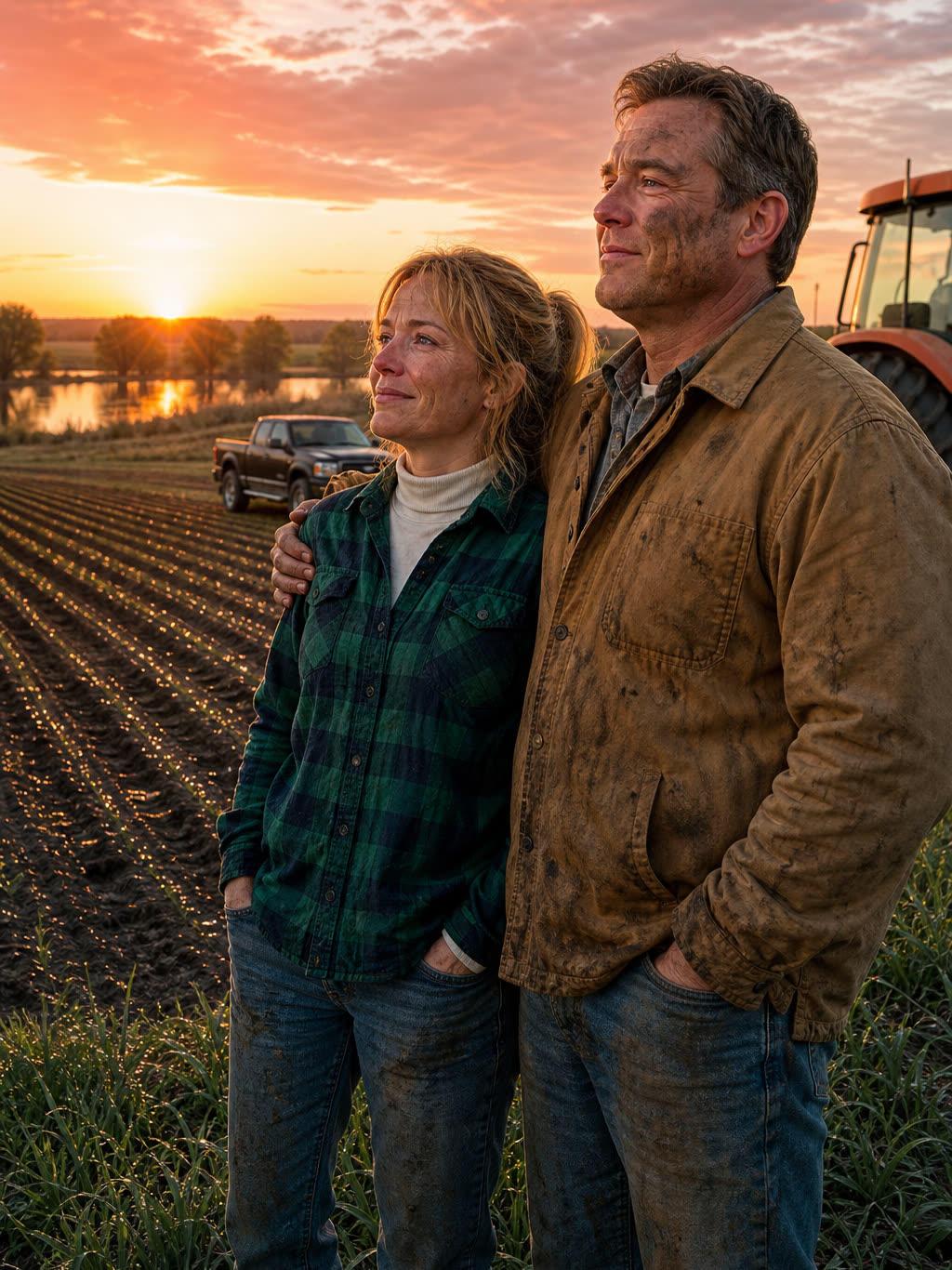
The last pass finished just as the sun came up over the cottonwoods. I climbed down. The whole creek quarter lay planted in clean straight rows, wet with dew, and the sky was turning pink and gold over the slough Jeff had refused to drain. Randy got out of his truck and stood beside me at the edge of the field and looked at it for a long time.
“Your rows are straighter than his were,” he said finally.
“Don’t tell Walt,” I said. “He’ll put it in the paper.”
The rain came that afternoon, a soft, slow, all-night rain, exactly the kind you pray for. It was the first wet spring in three years.
Things didn’t become easy after that. They became workable, which on a farm is about the best you can ask for.
In June the bank renewed the Engel Brothers line, smaller than they wanted and with a covenant they didn’t like. Randy came across the road one evening with the loan documents and asked me if I would look them over. I told him I’d do it for my hourly rate. He paid it without blinking, and I found two errors in the bank’s math that saved them eleven thousand dollars in interest.
After that, they hired me back to keep their books, two days a month, at a fair rate. It was strange at first, sitting at my old kitchen table across the road, which was now Scott’s son Tyler’s kitchen table, with Tyler’s wife making coffee in my old coffeemaker. But the numbers were the same numbers, and I knew them better than anybody.
Scott came to me separately, in July. He found me hoeing sweet corn by the tenant house and stood at the end of the row with his hands in his vest pockets for so long that I finally handed him the other hoe.
We worked our way down two rows before he said anything. “I should have said something at the lunch,” he said. “I knew it was wrong, the timing. I just let Randy do the talking because I always do.”
“I know you did,” I said. “I got the box of tools.”
He nodded and kept hoeing. That was all Scott ever needed to say about anything, and it was enough.
Abby spent the summer half on one side of the road and half on the other. She showed a heifer at the county fair that Randy had given her out of the partnership herd, and she sold sweet corn off a card table at the end of Walt’s lane, and she rode in the sprayer with me and in the tractor with her uncles. Walt taught her to play cribbage on his porch and lost to her on purpose until the day she beat him for real, and then he refused to speak to her for an entire afternoon.
The creek quarter grew the best corn I had ever seen. I am not being sentimental. I have the yield maps. In August it stood taller than the roof of my pickup, dark green and even all the way to the cottonwoods, and people slowed down on the gravel road to look at it.
I didn’t own a combine, and buying one would have been foolish for three hundred twenty acres. So in September I sat down with Randy and Scott at the shop and hired Engel Brothers to custom harvest my ground, at the same rate they would charge anybody. Randy tried to knock it down. I wouldn’t let him.
“It’s business,” I said. “You told me yourself you know how to do business.”
He laughed and wrote the invoice.
They came across the road the first week of October. Randy ran the combine, Scott ran the grain cart, and I drove my own truck to the elevator. The second afternoon, Abby climbed into the buddy seat of the combine beside Randy, the seat where Jeff used to put her when she was four years old and fell asleep against the window every time.
I stood at the edge of the field and watched the combine eat its way down the rows, and the yield monitor numbers came over the radio in Randy’s voice, and every one of them was higher than the last.
Walt drove out in his old Ford and parked by my truck. He let down the tailgate and we sat on it together, like two people watching a parade.
“Ruth would have said you were out of your mind,” he said.
“You told me that already.”
“I was wrong,” he said. “She’d have said you were your husband’s wife. Which isn’t the same thing at all.”
When the last load went to the elevator that week, I sat down at the yellow kitchen table and ran the numbers one more time. After rent, seed, fertilizer, insurance, the tractor, the planter, and the custom harvest bill, the creek quarter had paid for itself and then some. Abby’s college money was untouched. There was enough left over to rent the eighty acres Marv Pohlman had been trying to get rid of since spring.
That evening Abby and I walked out to the end of Walt’s lane, the way we had walked to the end of the other lane back in March. The stubble was gold in the last light. Across the road, the yard light Jeff had put up the year she was born flickered on over the home place, and we could see Tyler’s kids chasing a dog around the machine shed.
Abby leaned against me. She was taller than she’d been in March, almost to my shoulder now.
“Dad’s fields are still here,” she said.
“They are,” I said, and I put my arm around her. “So are we.”
