

By the time the first violin note drifted through the ballroom, Elena was already being erased from the night. Outside the kitchen, Doña Margarita’s sixtieth birthday gala shimmered with the effortless polish of old wealth. Crystal chandeliers cast a golden glow across marble floors.
Servers moved between clusters of elegantly dressed guests, balancing silver trays of wine and carved meat.
Laughter rose at the right moments. Compliments passed smoothly from one person to another.
Every corner of the mansion was designed to tell a single story: status, lineage, control.
And for Margarita, that story mattered more than truth itself.
She had spent years shaping a world where appearance was treated as proof of worth.
Her son Lance fit that world perfectly.
He was an architect with a respected name, educated abroad, precise in speech, careful in presentation—everything a wealthy family could showcase as validation.
Then he married Elena.
And from that moment, Margarita treated the marriage like a private offense.
Elena arrived without a famous surname.
She didn’t display connections or seek attention.
She dressed simply, spoke softly, and never competed for dominance in any room.
To most people, those were virtues.
To Margarita, they were flaws.
Or worse—uncertainty.
There is a particular cruelty rooted in class that depends on certainty.
It must define who stands above and who stays below.
Elena disrupted that order because she never fought for position, never raised her voice, never offered explanations that made her easier to categorize.
So Margarita labeled her instead.
Gold digger.
Opportunist.
A woman from nowhere.
Whenever Lance was away, the insults came sharper.
“You’re good for nothing.”
“You trapped my son.”
“You belong in service, not in this family.”
Elena remained quiet.
Margarita mistook that silence for defeat.
She never understood that silence can also be control.
Or discipline.
Or endurance sharpened over time.
The gala gave Margarita the perfect stage.
Lance was in Japan on business.
No one would be there to interrupt her or challenge her authority.
Before guests arrived, Elena had prepared a simple elegant dress for the evening.
When she went to get it, it was gone.
Margarita was waiting.
Her explanation was calm.
“I had it removed,” she said. “You will not stand in front of my guests embarrassing me tonight.”
Then came the next instruction.
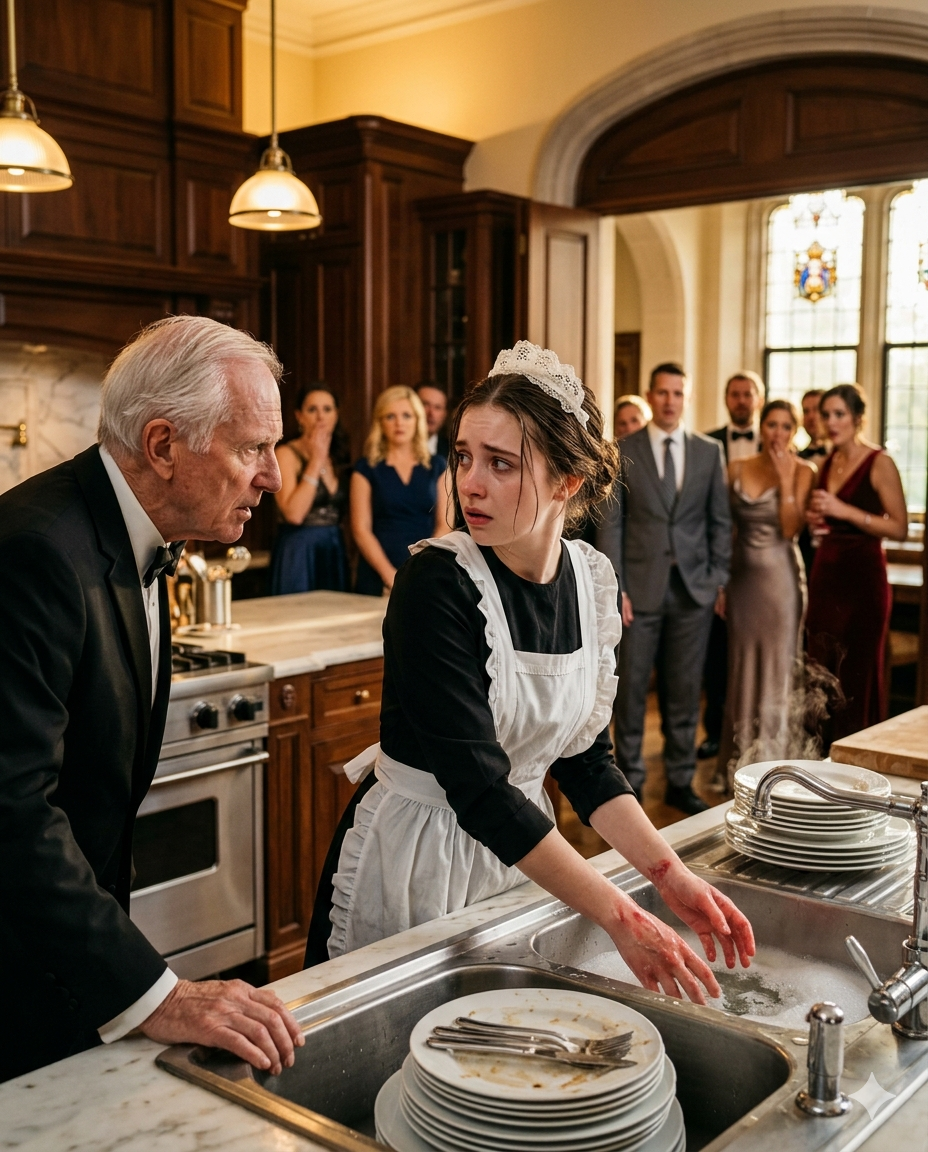
Elena was sent to the kitchen.
Told the staff was short.
Ordered to wear an old apron and wash dishes because that was work suited to her.
It wasn’t just punishment.
It was classification.
A deliberate attempt to assign her the role Margarita had already decided for her.
Below the family.
Below the guests.
Below visibility itself.
Elena complied.
That detail would later disturb everyone who heard the story.
She complied.
Not with collapse, but with stillness.
A quiet strength that came from somewhere deeper than pride.
As she tied the apron and stepped into the heat of the kitchen, she carried something inherited from her father—
Not every battle must be fought immediately.
The kitchen was another world entirely.
The ballroom sparkled.
The kitchen endured.
Outside, crystal touched crystal.
Inside, metal clashed with porcelain, and stacked dishes rose higher with every passing minute.
Elena’s sleeves were soaked within half an hour.
Soap burned her skin.
Grease stained her fingers.
Each tray arriving from the party reminded her that while others performed elegance, she had been ordered to disappear into labor.
At one point, tears slipped silently into the sink.
She did not break down.
She did not call out.
She wiped them away and continued.
That image would later haunt those who laughed at her.
Because laughter came soon enough.
Cruelty always wants witnesses.
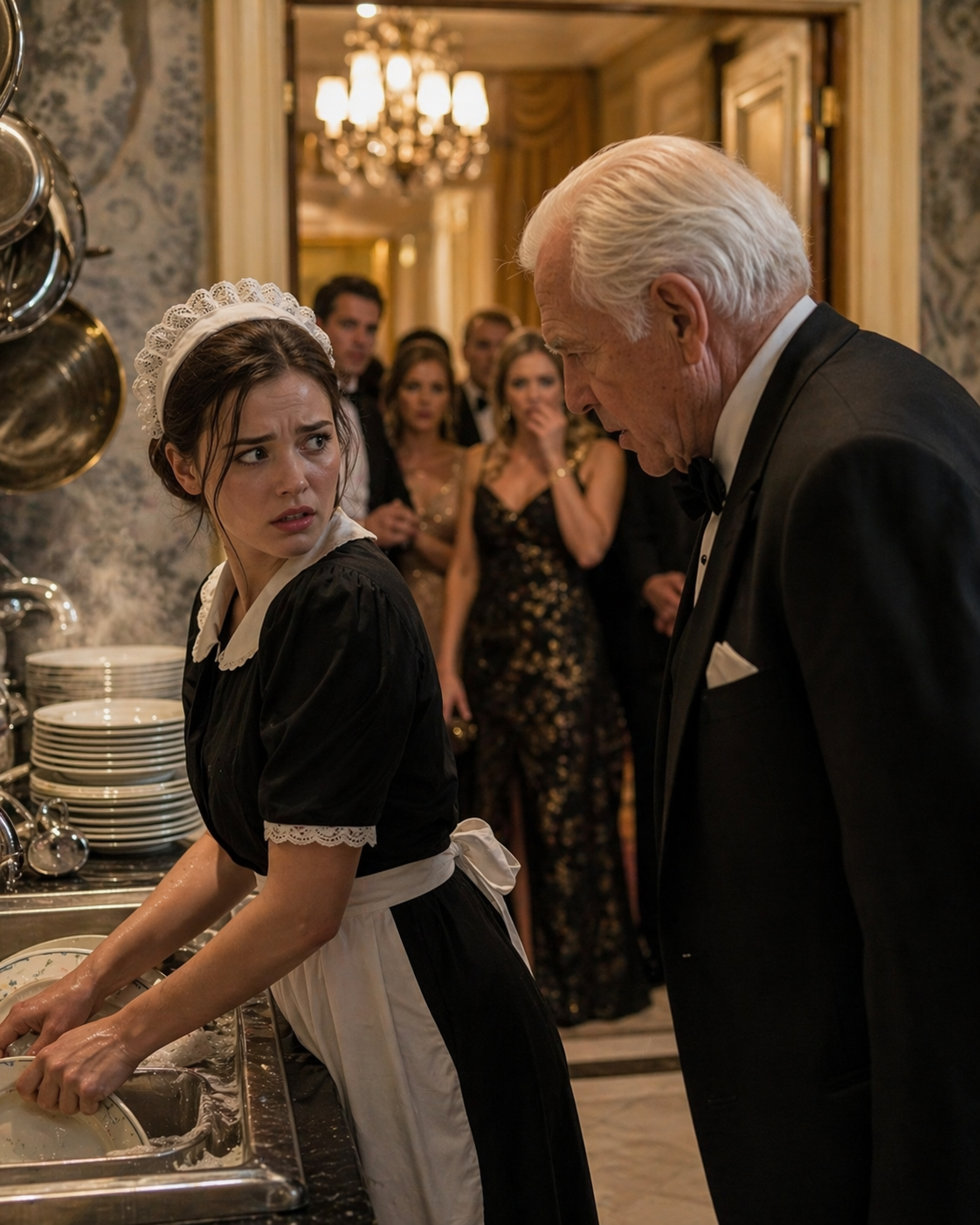
Margarita returned with a group of jeweled guests behind her—women shaped by years of comfort and certainty.
“There she is,” Margarita said, gesturing toward the sink as if unveiling a display.
“This is my son’s wife.”
They looked at the soaked sleeves, the apron, the bowed head, the dishes.
The conclusion came easily, because it had already been suggested to them.
“Doesn’t she look like a servant?” Margarita said.
They laughed.
One called the marriage disgraceful.
Another questioned Lance’s judgment.
Margarita smiled, satisfied, as if order had finally been restored.
Elena said nothing.
That silence unsettled some and encouraged others.
To the cruel, it looked like submission.
To the perceptive, it would have looked like restraint before impact.
Before leaving, Margarita added one final command.
“Finish everything. And don’t come out. You are not part of this evening.”
She closed the kitchen door.
What she believed she had sealed away was Elena.
What she actually sealed in was the illusion of control.
Because something outside the house was about to arrive.
It began as a shift in atmosphere.
A pause in the music.
A ripple through conversation.
Then silence spreading faster than words.
A guest of exceptional importance had arrived.
The vehicle appeared first.
A black Rolls-Royce under the portico lights, marked with a crest recognized instantly by some—and feared quietly by others.
When the door opened, conversation near the entrance died.
Don Alejandro Valmonte stepped out with the calm of a man who never needed introduction.
He wore power the way others wore clothing.
Effortlessly.
He was not simply wealthy.
He belonged to a level where wealth itself deferred.
Valmonte Royal Holdings controlled assets, trusts, and private fortunes spoken of only in lowered voices.
His name could rebuild companies or end them with a call.
Margarita had not invited him.
That realization struck her first.
Men like him do not arrive without reason.
She moved quickly, forcing a smile, masking panic with hospitality.
“It is an honor to have you here,” she said.
But he wasn’t looking at her.
His eyes moved across the ballroom. Searching.
Then he spoke.
“Where is Elena?”
The question silenced the room more sharply than any interruption could have.
Margarita blinked.
“Elena?”
He repeated it, colder.
“Where is Princess Elena?”
The word shifted everything.
Princess.
Not metaphor. Not exaggeration.
A title.
It moved through the room like electricity.
Some guests froze in confusion.
Others understood instantly that nothing had been as they believed.
Margarita’s face drained.
She tried to speak, to redirect, to recover control.
It failed.
A trembling staff member finally pointed toward the kitchen.
Don Alejandro didn’t wait.
He walked.
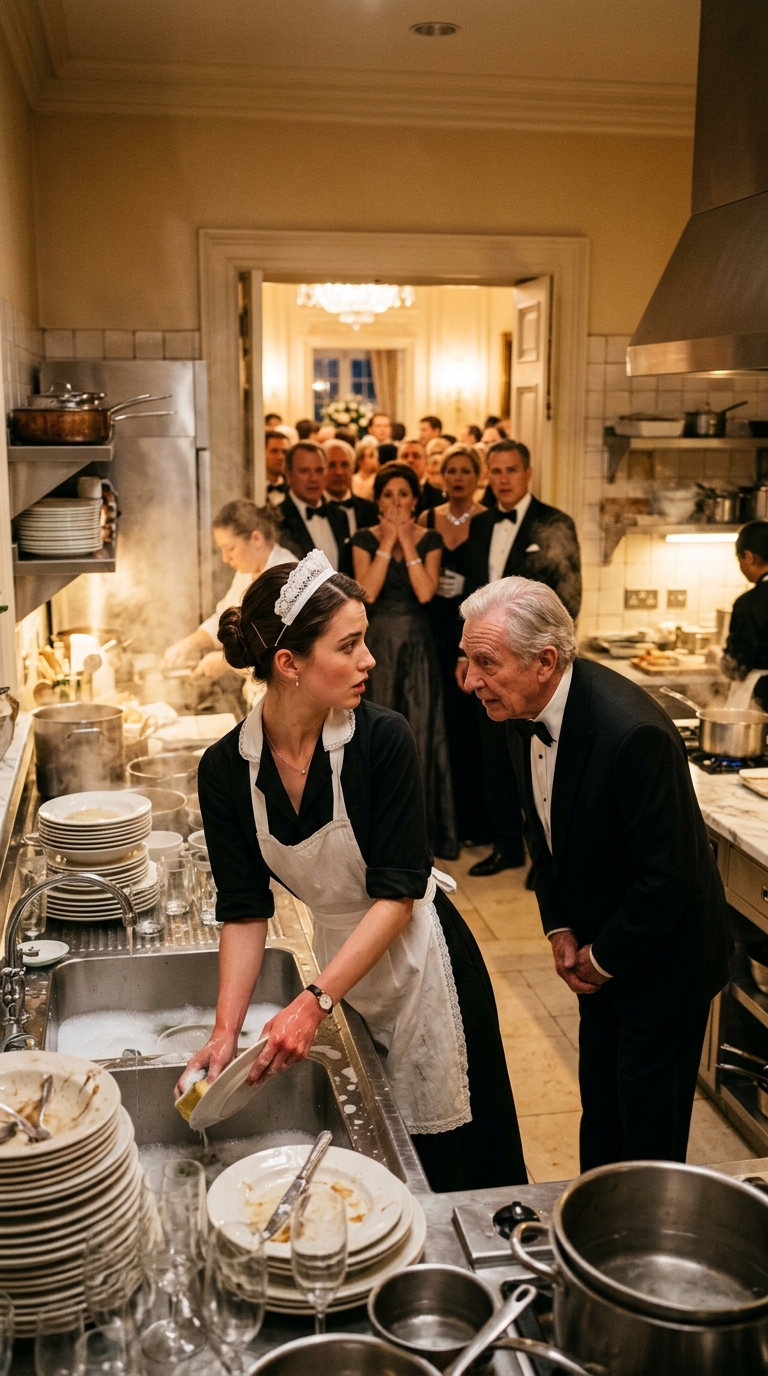
And the entire ballroom followed in uneasy silence, pulled forward by curiosity and dread.
Margarita came too, but now she looked less like a host and more like someone trying to outrun consequences.
The kitchen door opened.
And Elena stood there.
Apron on.
Hands wet.
Stillness in her expression.
For a moment, nothing needed to be said.
Then Don Alejandro stepped forward and bowed.
Deeply.
Not performative.
Formal.
“Princess Elena,” he said. “Forgive us. We have been searching for you everywhere.”
The room forgot how to breathe.
The richest man present had just bowed to the woman they had reduced to labor.
Margarita stared, as if reality had collapsed its rules.
But it was only beginning.
Don Alejandro continued.
Elena was not who they believed.
She was the daughter of the late Alejandro Elena de Valmonte y Casillas, heir to sovereign trusts and assets far beyond their assumptions.
The revelation struck like impact.
Her silence made sense.
Her restraint made sense.
Her refusal to compete made sense.
She had never needed their approval.
Because she had never been below them.
She had been above them all along.
Margarita tried to speak again.
But apologies offered only after exposure carry no weight.
Elena slowly removed the apron and placed it aside.
The gesture was simple.
It ended everything.
Then she spoke calmly.
“Dignity does not disappear in a kitchen. It only reveals who is unable to recognize it.”
The room froze deeper.
But Don Alejandro wasn’t finished.
He had not come only to reveal identity.
He had come with consequences.
Legal matters.
Business entanglements.
And mentions of acquisitions tied directly to Elena’s foundation.
The atmosphere changed again.
From humiliation to risk.
From social collapse to legal exposure.
Talk of unauthorized claims and potential fraud began surfacing.
No one looked at chandeliers anymore.
No one cared about wine or music.
The night had changed ownership.
Then Don Alejandro produced a sealed envelope marked with the Valmonte crest.
Elena’s expression shifted slightly at the sight.
Not fear.
Recognition.
As if she had always known this moment would arrive.
She took it carefully.
Margarita watched, frozen.
The guests leaned in without realizing it.
Because everyone understood the same truth now.
The first revelation had destroyed status.
Whatever was inside that envelope would decide everything that remained.
