

PART 1: THE ROOM THAT LAUGHED
The courtroom started laughing the instant I walked through the door, and I understood exactly why.
I was nineteen years old, dressed in black Converse sneakers and a worn navy blazer, carrying a thick three-ring binder instead of the sleek leather briefcase everyone apparently believed a legitimate lawyer should have.
I looked young because I was young.
There was no way to disguise it.
The deputy prosecutor near the witness stand had at least fifteen years on me. Gray showed at the bailiff’s temples. The defense attorneys waiting for cases later that morning wore tailored suits and the expressions of people who seemed to have stopped being surprised by anything years ago.
And then there was me.
My blazer came from a thrift shop.
My shoes had white rubber toes.
Five colored tabs stuck out from the side of my binder.
And I was preparing to cross-examine Officer Dennis Kilroy, a twenty-three-year veteran of the police department.
He was already seated on the witness stand when I came in.
He had a broad face, silver beginning to appear at his temples, and the easy posture of a man convinced this hearing was nothing more than a formality. Mirrored sunglasses hung from the front of his uniform. His hands rested casually on his thighs.
When he watched me sit down at the defense table, one corner of his mouth lifted.
The prosecutor looked at me, then toward the judge, almost as if he were checking whether someone had made an error.
Even Judge Evelyn Mercer peered down over her glasses.
“You’re appearing for the defendant?”
“Yes, Your Honor.”
Several people shifted.
Someone in the gallery whispered.
I caught the words young enough to be his sister.
I ignored them.
Then Kilroy leaned toward the microphone and said, just loudly enough to be heard, “What is this, some kind of debate club?”
The room cracked.
Not everybody laughed.
But enough people did.
The prosecutor covered his mouth.
A court clerk lowered her eyes toward her desk.
Two officers seated behind the prosecution table exchanged amused grins.
Heat climbed from my throat into my face.
For half a second, I wanted to drop my gaze.
That was probably exactly what they expected me to do.
Instead, I set my binder on the table and took my seat beside Malik Harris.
Malik wasn’t laughing.
Neither was his mother.
They were the only two people in that courtroom who understood what that morning actually meant.
Malik was twenty-two.
Until twelve days earlier, he had worked an early shift at a warehouse distribution center. He had never been arrested before. His supervisor described him as quiet, dependable, and almost irritatingly punctual.
Then Officer Dennis Kilroy stopped him.
By the time that traffic stop ended, Malik had been accused of running a stop sign, behaving suspiciously, reaching underneath his seat, resisting arrest, and striking Kilroy’s arm.
He had spent days behind bars.
His employer replaced him after he missed work.
His mother borrowed money just to cover basic expenses.
And now Malik’s entire future rested on several paragraphs written by a police officer who had been wearing a camera.
Malik sat next to me with his hands clasped tightly together.
His knuckles were pale.
Behind us, his mother, Mrs. Harris, held a white church hat tightly against her chest. She had planned to wear it that morning. At courthouse security, she had removed it and never put it back on.
Every few minutes, I could hear her repeating the same prayer under her breath.
“Please, Lord. Just let them see.”
That was exactly what I intended to do.
Make them see.
Not make them like me.
Not force them to respect my age.
Not persuade them that I deserved to be in that courtroom.
Just make them see what was already in front of them.
The prosecutor stood.
His name was Grant Holloway. He was experienced, composed, and not cruel. Somehow, that made the case more difficult.
Cruel prosecutors were easy to distrust.
Holloway sounded reasonable.
And reasonable people could sell dangerous stories far more effectively.
“Officer Kilroy,” he began, “directing your attention to April sixth, were you on patrol near Parker Road and Elston Avenue?”
“Yes, sir.”
“Did you observe a traffic violation?”
“I did.”
“What did you see?”
Kilroy turned slightly in the judge’s direction.
“A dark sedan failed to make a complete stop at the stop sign. It proceeded through the intersection. I initiated a traffic stop.”
His voice was calm.
Certain.
The kind of voice people believed before deciding whether they actually should.
“And who was driving that vehicle?”
“The defendant.”
Kilroy identified Malik.
Beside me, Malik swallowed.
Holloway continued.
“Can you describe the defendant’s behavior when you approached?”
Kilroy sighed as if he had exercised extraordinary patience.
“He was twitchy. Argumentative. Kept questioning why I had stopped him. I instructed him to keep his hands visible. At one point, he reached down under the driver’s seat.”
Holloway paused.
“Did that concern you?”
“Absolutely. You never know what someone is reaching for.”
I didn’t write anything down.
I already knew every word.
Kilroy had used almost identical language in his report.
Suspicious movements.
Repeated refusal to comply.
Reached beneath driver seat.
Concern for officer safety.
Aggressive resistance.
Clean language.
Official language.
That was the danger of lies written in police language.
They arrived dressed as facts.
Holloway asked him what happened afterward.
“I ordered him out of the vehicle. He refused. When I attempted to place him under arrest, he resisted physically and struck my arm.”
“Did you ultimately gain control of him?”
“Yes.”
“Was he arrested?”
“Yes.”
Holloway stepped away.
“No further questions.”
A perfectly organized story.
A traffic violation.
A nervous driver.
A threatening movement.
A lawful command.
Resistance.
Assault.
Arrest.
Every cause flowed neatly into its effect, so perfectly that if I hadn’t watched the footage myself, I might have believed him too.
Judge Mercer turned toward me.
“Cross-examination?”
I stood.
The atmosphere in the courtroom shifted.
Not because anyone respected me yet.
Because everyone wanted to watch what the teenager would do.
I buttoned my blazer, instantly regretting it when the button pulled awkwardly, then carried my binder toward the lectern.
Kilroy watched me coming.
His smirk appeared again.
I heard one of my professors speaking inside my head.
Never begin with the question you care about most.
Make the witness comfortable first.
Let certainty become a habit.
Then make certainty expensive.
“Officer Kilroy,” I said, “how long have you been a police officer?”
“Twenty-three years.”
Pride filled his answer.
“And during that time, approximately how many traffic stops have you conducted?”
“Thousands.”
“So you’re familiar with department procedures for traffic stops?”
“Obviously.”
A slight ripple passed through the courtroom.
I ignored his tone.
“You’re also familiar with body-worn camera procedures?”
“Yes.”
“You were wearing a functioning body camera on April sixth?”
“Yes.”
“You activated it?”
“Yes.”
“At the beginning of the stop?”
Kilroy looked directly at me.
“Yes.”
I held his gaze for one second.
Then another.
“Your testimony is that you activated your body camera when the traffic stop began?”
“Yes.”
“Not several minutes later?”
“No.”
“Not after you had already contacted Mr. Harris?”
“No.”
“At the beginning.”
“That’s what I said.”
I nodded.
“Thank you.”
I walked back to the defense table.
For a moment, confusion appeared on Holloway’s face.
I hadn’t challenged a thing.
I hadn’t accused Kilroy of dishonesty.
I hadn’t raised my voice.
I had simply forced him to repeat the same answer three times.
At the defense table, I opened my binder.
Five tabs.
REPORT.
VIDEO.
TIMELINE.
KILROY CROSS.
CLOSING.
My fingers paused on the fourth tab.
Kilroy Cross.
I removed a single sheet from that section.
Then I looked toward the courtroom monitor.
“Your Honor, may I approach the evidence display?”
Judge Mercer nodded.
“You may.”
The clerk helped load the state’s own body-camera exhibit.
Kilroy watched without concern.
That mattered.
He believed the footage protected him.
He had probably watched it once.
Maybe twice.
I had watched it until I knew the rhythm of Malik’s breathing.
Normal speed.
Half speed.
Quarter speed.
Frame by frame.
Volume high.
Volume low.
Headphones.
Speakers.
I had studied every second because Malik didn’t have twenty-three years of credibility behind him.
He had me.
The monitor came alive.
The first image appeared.
Officer Kilroy was already standing beside Malik’s driver-side window.
Malik’s face was visible.
Both hands were resting on the steering wheel.
There was no footage of the patrol car lights being activated.
The sedan was never shown crossing Parker Road.
There was no intersection.
No stop sign.
No driving.
No pursuit.
No moment showing Kilroy deciding to pull Malik over.
The state’s own footage began after the most important event in its traffic case had supposedly already occurred.
I left the frame frozen on the screen.
Then I turned around.
“Officer Kilroy?”
“Yes?”
“Is that your body-camera footage?”
“Yes.”
“And that is Mr. Harris?”
“Yes.”
“And where are you when this video begins?”
Kilroy studied the monitor.
“At his vehicle.”
“More specifically?”
“Driver’s side.”
“Beside the driver’s window?”
“Yes.”
“So the video does not begin when you first observe Mr. Harris’s vehicle.”
Kilroy shifted slightly.
“No.”
“It does not show him driving through the intersection.”
“No.”
“It does not show him running a stop sign.”
“No.”
“It does not show you activating your emergency lights.”
“No.”
“It does not show his vehicle pulling over.”
“No.”
The courtroom was completely silent now.
I looked directly at Kilroy.
“If you activated your body camera when the traffic stop began, why does the recording begin only after you are already standing beside Mr. Harris’s window?”
His smirk disappeared.
Not dramatically.
Only slightly.
But I noticed.
So did Malik.
Kilroy leaned toward the microphone.
“There can be delays.”
“Was there a malfunction?”
“Not that I remember.”
“Did you report a malfunction?”
“No.”
“A delay?”
“No.”
“Did you document any problem with your body camera that day?”
“No.”
“So as you sit here today, you cannot identify any documented technical reason why the beginning of this traffic stop is missing.”
Holloway rose.
“Objection. Characterizes the footage as missing.”
Judge Mercer looked at the monitor.
Then at Kilroy.
“Overruled. He may answer.”
Kilroy tightened his jaw.
“No.”
One word.
But the atmosphere in the courtroom had completely changed.
Nobody was laughing anymore.
I pressed play.
And for the first time that morning, everyone saw Malik Harris not as words inside a police report—
but as a frightened young man with both hands resting on a steering wheel.
PART 2: THE FIRST CRACK
The footage opened with Malik asking a question.
“Officer, can you tell me why you stopped me?”
His voice sounded nervous.
Not aggressive.
Not completely calm either.
Anyone claiming Malik had been perfectly relaxed would have been lying.
He was frightened.
I knew because I had asked him afterward.
But I didn’t need Malik to explain it.
You could see it in the way his shoulders lifted whenever Kilroy leaned toward the window.
You could hear it in how carefully he chose every word.
Kilroy’s recorded voice filled the courtroom.
“License and registration.”
“Yes, sir. My wallet’s in my right pocket. Is it okay if I reach for it?”
I paused the recording.
Malik’s hands remained on the steering wheel.
Ten and two.
Almost painfully precise.
I turned toward the witness stand.
“Officer Kilroy, you testified Mr. Harris was twitchy.”
“Yes.”
“Where?”
“What?”
“On the video. Where is he twitchy?”
Holloway stood.
“Objection.”
“I’ll rephrase.”
Judge Mercer nodded.
I pointed toward the frozen image.
“At this moment, are both of Mr. Harris’s hands visible?”
“Yes.”
“Are they on the steering wheel?”
“Yes.”
“Is he making any sudden movement?”
“Not at that exact second.”
I had anticipated that answer.
“At what exact second does he make the sudden movement?”
Kilroy looked at the monitor.
“There were several.”
“Then we’ll watch them.”
I started the video again.
Kilroy’s recorded voice said, “Don’t move.”
Malik froze.
Then Kilroy said, “Give me your license.”
Malik hesitated.
“My wallet’s in my pocket, sir.”
“Then get it.”
“You told me not to move.”
Several people in the gallery shifted.
On the recording, Malik’s right hand traveled roughly six inches toward his jacket pocket, slowly enough that I could almost count the movement in syllables.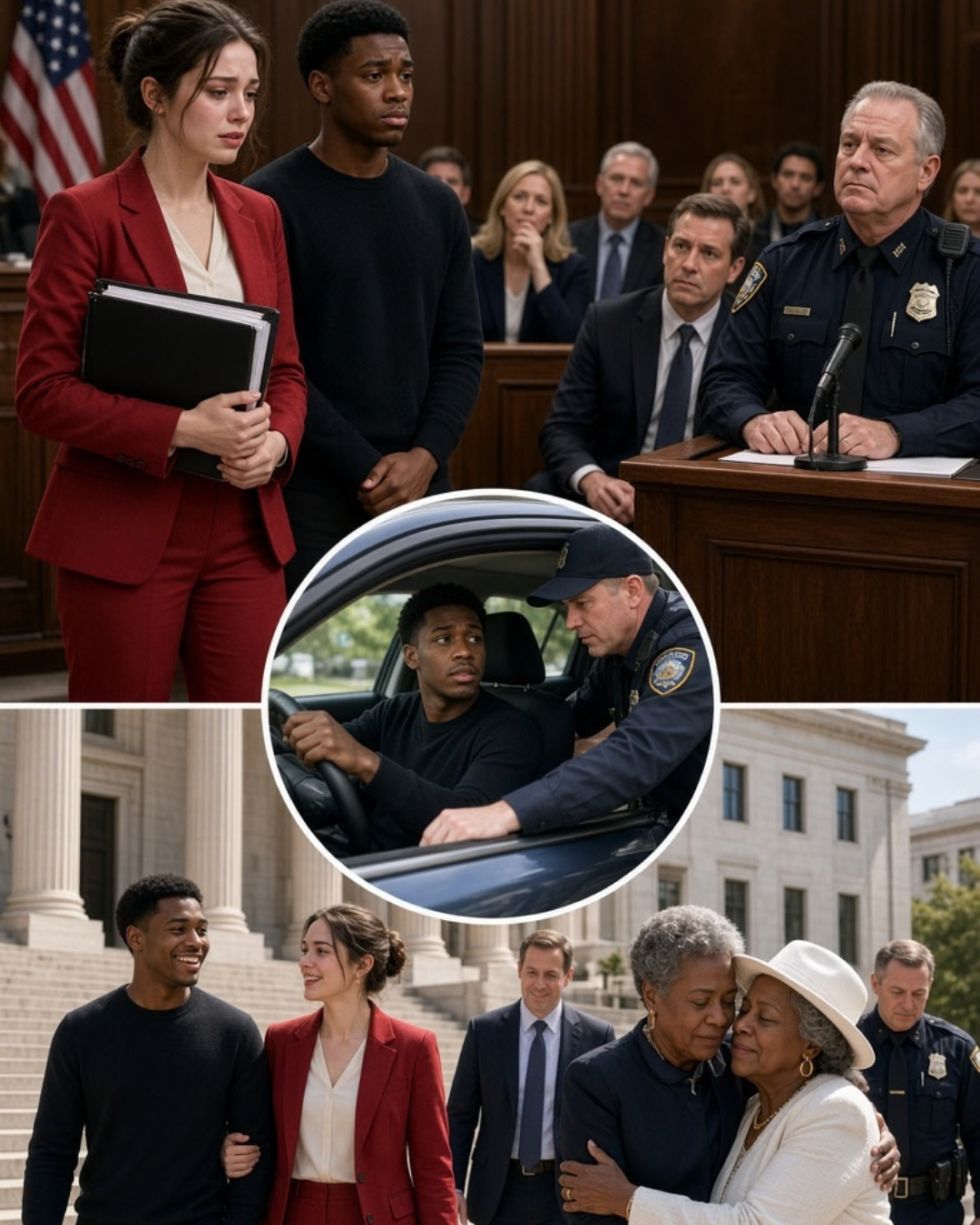
Kilroy’s voice sharpened.
“Keep your hands where I can see them.”
Malik immediately put his hand back on the steering wheel.
I paused the footage.
“Officer, did Mr. Harris comply when you told him to return his hand to the wheel?”
Kilroy crossed one leg over the other.
“He was being argumentative.”
“That wasn’t my question.”
Judge Mercer looked directly at him.
“Answer counsel’s question.”
Kilroy tightened his mouth.
“Yes.”
I resumed the video.
Malik asked, “Can I ask what I did?”
Kilroy replied, “You can do what I’m telling you.”
“I’m trying to. I just don’t know why I got stopped.”
I paused again.
“Officer Kilroy, is asking why he was stopped illegal?”
“No.”
“Is asking permission before reaching for a wallet suspicious?”
“It can be.”
“How?”
“Depends on the situation.”
“What about this situation?”
Holloway stood.
“Objection. Calls for an argumentative conclusion.”
“Sustained.”
I nodded.
“Officer, at the moment Mr. Harris tells you where his wallet is located, can you see his hands?”
“Yes.”
“When he begins moving toward the pocket after you tell him to get his license, is the movement visible?”
“Yes.”
“When you tell him to put his hand back, does he?”
“Yes.”
I allowed the answer to hang in the silence.
Then I turned to the section of his report that had bothered me from the beginning.
“Earlier, you testified that Mr. Harris reached under the driver’s seat.”
“He did.”
“When?”
Kilroy blinked.
“During the stop.”
“I understand. Before or after the moment we just watched?”
“Before.”
My heartbeat accelerated.
Not because his answer surprised me.
Because he had chosen the only possible place to put it.
Before the footage.
I kept my voice even.
“Before the recording begins?”
“Yes.”
“You saw him reach under the seat before the recording starts?”
“Yes.”
“So that movement is not captured on your body camera.”
“Apparently not.”
“And you told this court a few minutes ago that you activated your body camera when the stop began.”
“That’s standard procedure.”
“That wasn’t my question.”
His eyes narrowed.
I asked again.
“Did you testify that your camera was activated when the stop began?”
“Yes.”
“And now you’re telling the court the movement that made you fear Mr. Harris was reaching under his seat happened before the video begins.”
“Yes.”
“So either your camera was not recording when the stop began, or the body-camera exhibit does not contain the beginning of the recording.”
Holloway stood immediately.
“Objection.”
“Sustained.”
I stepped backward.
“Understood.”
I had pushed one sentence too far.
But everyone had already heard it.
More importantly, every fact leading toward it had come directly from Kilroy.
I changed direction.
“Officer, you said the movement under the seat concerned you because you did not know what he might be reaching for.”
“That’s right.”
“What did you do after seeing that movement?”
“I ordered him to show his hands.”
“And in the first frame of the video, where are his hands?”
“On the wheel.”
“So whatever happened before the recording, by the time this video begins, he is showing you both hands.”
“Yes.”
I pressed play.
Malik continued asking why he had been stopped.
Kilroy still hadn’t answered him.
Twelve seconds into the footage, Malik said, “Sir, if I ran a stop sign, just tell me which one. I’m not trying to argue.”
Then the audio disappeared.
The video kept playing.
That was the second crack.
The first time I had watched the footage, I assumed something was wrong with my laptop.
I rewound it.
Played it again.
Exactly the same thing happened.
The picture continued.
The sound vanished.
Kilroy’s mouth moved.
Malik’s mouth moved.
Their bodies remained clearly visible.
But for part of their interaction, the courtroom could hear nothing.
Then the audio returned with Kilroy saying, “Step out of the vehicle.”
I froze the footage.
Judge Mercer leaned forward.
Holloway stopped writing.
I turned toward Kilroy.
“Is the loss of audio we just heard contained in the state’s exhibit?”
“Yes.”
“Did you report an audio malfunction?”
“I don’t remember.”
“There’s nothing about one in your incident report, correct?”
“Not that I recall.”
I raised a copy.
“Would reviewing the report refresh your recollection?”
Kilroy glanced at Holloway.
Then back toward me.
“No. If it’s not in there, it’s not in there.”
“So you did not document an audio malfunction.”
“No.”
“What happened during the period with no audio?”
“I continued giving him commands.”
“What commands?”
“To comply.”
“Specifically.”
Kilroy inhaled.
“I don’t remember every word from every stop.”
That was the first answer he had given that sounded genuinely honest.
I nodded.
“You don’t remember every word.”
“No.”
“But in your report, you describe Mr. Harris as argumentative during this interaction.”
“He was.”
“What did he say?”
“He kept challenging me.”
“What words did he use?”
“I don’t remember exactly.”
“Did he threaten you?”
“He was escalating.”
“That wasn’t my question. Did he threaten you?”
“No.”
“Did he curse at you?”
“I don’t recall.”
“Did he say he was going to hurt you?”
“No.”
“Did he attempt to drive away?”
“No.”
“Did he open the door?”
“No.”
“Did he reach under the seat during the visible portion of this recording?”
Kilroy hesitated.
“No.”
That answer struck harder than anything I could have said myself.
Behind me, Mrs. Harris stopped praying.
I continued.
“When the audio returns, what is the first command we hear you give him?”
Kilroy knew the answer.
He had just heard it himself.
“Step out of the vehicle.”
“And before that command, in the portion we can see and hear, Mr. Harris repeatedly asks why he was stopped.”
“Yes.”
“You never answer him on the recording.”
“I’m not required to debate people on the side of the road.”
“I didn’t ask whether you were required to debate him.”
A muscle twitched in Kilroy’s cheek.
“No.”
“No, you did not answer him?”
“No.”
I looked back toward the monitor.
When I first accepted Malik’s case, everyone warned me not to expect some dramatic contradiction.
Real courtroom victories, they said, almost never looked like television.
Witnesses rarely collapsed and confessed.
Prosecutors didn’t suddenly develop consciences.
Judges didn’t pound gavels after brilliant speeches.
Most cases turned on much smaller details.
A word.
A timestamp.
A hesitation.
A sentence someone could no longer explain.
That morning, Kilroy had entered court believing twenty-three years of experience automatically made his account stronger than Malik’s.
But experience had created something else as well.
Confidence.
And that confidence had made him careless.
I glanced toward Malik.
He was staring at the screen.
Not at me.
At himself.
I wondered what it felt like to watch the worst ten minutes of your life projected ten feet high while strangers decided whether your fear looked like guilt.
Then the bailiff called for silence after someone whispered in the gallery.
Judge Mercer looked toward me.
“Counsel, continue.”
I turned back to Kilroy.
We still hadn’t reached the arrest.
That was the portion he had used to support the most serious charges.
And the moment he understood where I was heading, he straightened in his chair.
For the first time that entire morning, Dennis Kilroy looked less like a veteran police officer delivering routine testimony—
and more like a man waiting nervously for the next frame.
PART 3: WHAT THE REPORT CALLED RESISTANCE
Before the hearing, Malik had repeatedly asked me one question.
“What if they watch it and still believe him?”
The first time he asked me, we were sitting inside a small interview room with a metal table bolted to the floor.
I hadn’t known exactly how to answer.
I could have given him the law-school response.
The burden of proof.
Credibility determinations.
Objective evidence.
Reasonable doubt.
Instead, I gave him the truth.
“I can’t control what they believe. I can control what they have to look at before they decide.”
He stared at me for a long moment.
Then nodded.
“Make them look.”
Now, standing inside the courtroom, that promise felt heavier than any legal principle I had ever memorized.
I restarted the body-camera recording.
The audio had returned.
Kilroy’s recorded voice sounded louder.
“Step out of the vehicle.”
Malik remained seated.
“Why am I being arrested?”
“I said step out.”
“Sir, I’m not refusing. I’m asking what I did.”
“Out. Now.”
On-screen, Malik slowly moved his left hand away from the steering wheel and toward the door controls.
Kilroy immediately reached through the open window.
The camera jolted as his body moved forward.
Malik shouted.
“Okay! I’m getting out!”
For less than a second, the picture swung toward the roof of the vehicle.
Then it dropped again.
Kilroy was holding Malik’s wrist.
Malik’s other hand remained visible near the steering wheel.
“Stop resisting!”
“I’m not! You got my arm!”
“Stop resisting!”
“You’re twisting it!”
I paused the recording.
The courtroom had grown so quiet I could hear the air-conditioning vent above the clerk’s desk.
I turned toward Kilroy.
“You testified Mr. Harris refused to exit the vehicle.”
“Yes.”
“At this point, what is he doing with his left hand?”
Kilroy stared at the frozen image.
“Moving.”
“Toward?”
“The door.”
“The interior door handle?”
“Yes.”
“So after you ordered him out, he moved his hand toward the door.”
“He was moving slowly and still arguing.”
“But he was moving toward the door.”
“Yes.”
I advanced the recording several frames.
“Your hand is through the window here?”
“Yes.”
“You grab his wrist?”
“I take control of his arm.”
“Before the door opens?”
“Yes.”
I moved forward another frame.
Malik’s shoulder twisted.
His face tightened.
Kilroy’s arm pulled backward.
The movement I had studied dozens of times happened in less than a second.
Malik’s forearm moved upward while Kilroy pulled.
Their arms touched.
The camera shook.
Kilroy had described that moment differently in his written report.
I returned to the lectern.
“Officer, your report states, ‘The suspect struck my right arm while actively resisting removal from the vehicle.’ Correct?”
“Yes.”
“Those are your words?”
“Yes.”
“You wrote the report the same day?”
“Yes.”
“When your memory was fresh?”
“Yes.”
I walked toward the monitor again.
“Let’s look at the contact you described as a strike.”
I replayed the sequence at regular speed.
It happened quickly.
Confusingly.
Exactly the kind of movement that could become whatever the first written account declared it to be.
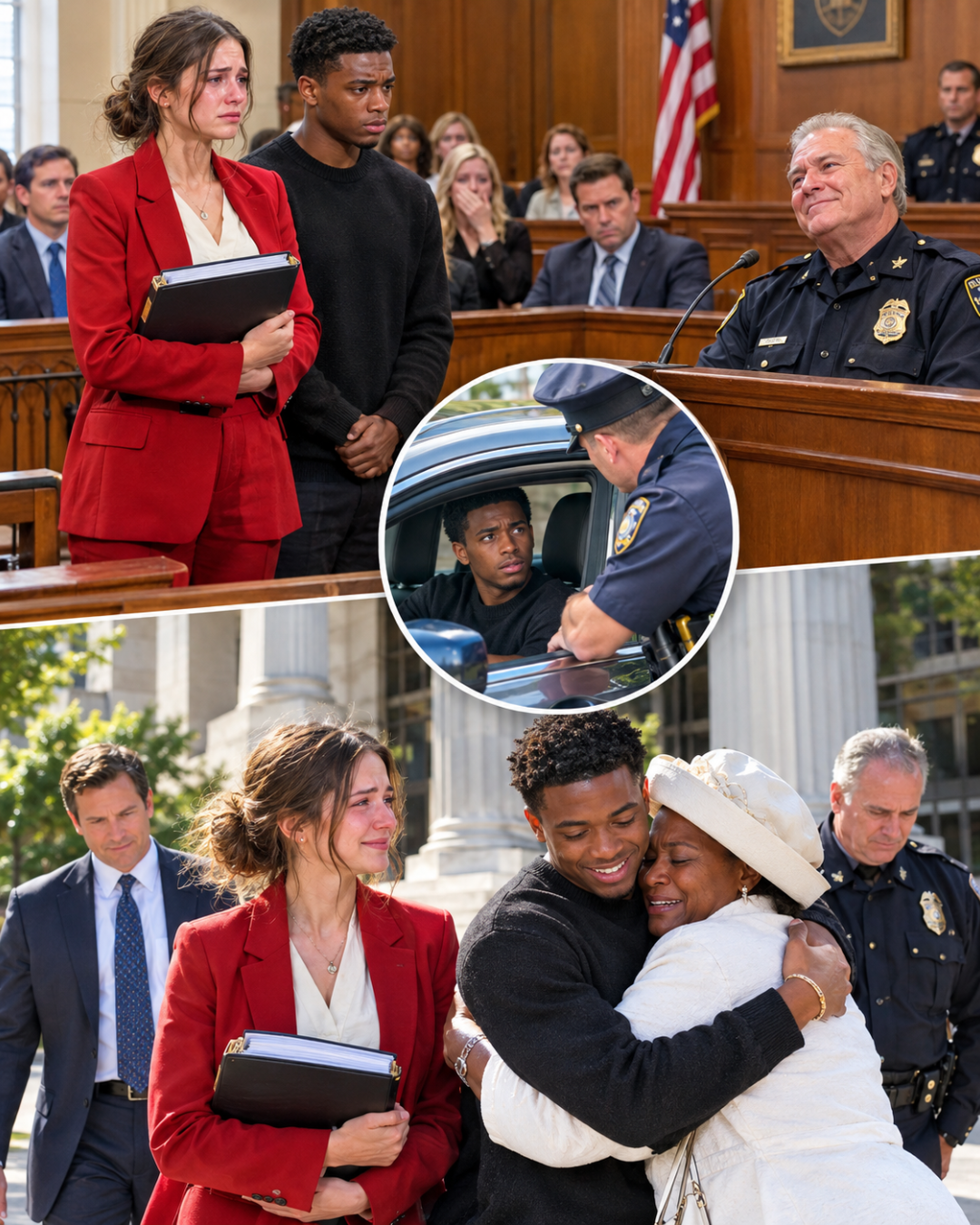
Then I slowed it down.
Kilroy’s hand entered through the window.
His fingers wrapped around Malik’s wrist.
Kilroy pulled.
Malik’s forearm moved upward.
Their arms touched.
I paused.
“Is that the contact you described?”
Kilroy stared at the monitor.
“It’s part of the resistance.”
“Is that the strike?”
“He hit my arm.”
“Is that the moment?”
“Yes.”
I advanced one frame.
“Your hand is already holding his wrist.”
“Yes.”
“Your arm is moving backward.”
“Yes.”
“His arm is attached to the wrist you are pulling.”
Several people inhaled sharply.
Holloway stood.
“Objection. Argumentative.”
“Sustained.”
Judge Mercer looked toward me.
“Ask a question, counsel.”
“Yes, Your Honor.”
I turned back to Kilroy.
“Before your arms make contact, are you physically pulling Mr. Harris’s wrist toward the window?”
“I’m controlling him.”
“Are you pulling his wrist?”
“Yes.”
“Does the video show him forming a fist?”
“No.”
“Does it show him drawing his arm back as if preparing to strike?”
“No.”
“Does it show him swinging toward you?”
“He resisted.”
“Does it show a swing?”
Kilroy’s voice became harder.
“No.”
There it was.
Another answer he couldn’t take back.
I continued playing the recording.
Kilroy opened the vehicle door from outside.
Malik put one foot onto the pavement.
“Turn around.”
“I am.”
“Hands behind your back.”
“You have my hand!”
“Stop resisting!”
“I’m trying!”
Kilroy pushed Malik against the vehicle.
The camera angle became unstable.
For several seconds, nearly everything visible was metal, fabric, and movement.
But the audio remained perfectly clear.
“Give me your other hand!”
“It’s right here!”
“Stop pulling away!”
“You’re pushing me!”
Then Malik’s voice changed.
It didn’t become louder.
It became smaller.
“Please. I’m not trying to fight you.”
That sentence had remained with me since the first time I watched the footage.
Maybe because it wasn’t dramatic.
There was no movie speech.
No threat.
No heroic defiance.
Only fear.
Please. I’m not trying to fight you.
I paused the footage.
“Officer Kilroy, did you hear Mr. Harris say that?”
“I heard it just now.”
“Did you hear him say it on April sixth?”
“I don’t know.”
“You were standing directly beside him.”
“There was a lot happening.”
“But your report says he was aggressively resisting.”
“Yes.”
“Describe the aggressive resistance.”
“He tensed his arms. Pulled away. Failed to follow commands.”
“Did he punch you?”
“No.”
“Kick you?”
“No.”
“Head-butt you?”
“No.”
“Attempt to run?”
“No.”
“Try to enter the vehicle again?”
“No.”
“Reach for your weapon?”
“No.”
“Reach toward his waistband?”
“No.”
“Reach beneath the seat during the arrest?”
“No.”
I waited for a moment.
Then asked, “What weapon did you recover from the vehicle?”
Holloway was standing before Kilroy could respond.
“Objection. Relevance. There is no weapons charge.”
I faced the judge.
“Your Honor, Officer Kilroy testified that an alleged movement beneath the seat created the officer-safety concern used to explain his escalation of the stop.”
Judge Mercer considered my argument.
“Limited purpose. Overruled.”
I turned back to Kilroy.
“What weapon did you recover?”
“None.”
“Did you recover anything dangerous from beneath the driver’s seat?”
“No.”
“Anything illegal?”
“No.”
“Anything there that explained the movement you say you saw?”
Kilroy looked toward Holloway.
“No.”
I left that point quickly.
The absence of a weapon did not establish that Malik had never moved.
I knew that.
I didn’t need to pretend otherwise.
I needed something more powerful.
Kilroy’s own timeline.
“Officer, when exactly did you see Mr. Harris reach under the seat?”
“I already said. Before the camera begins.”
“Was that before you arrived at the window?”
“Yes.”
“While you were approaching the vehicle?”
“Yes.”
That was more precise.
I felt Malik move behind me at the defense table.
I kept looking at Kilroy.
“You could see inside the vehicle while approaching?”
“Yes.”
“Clearly enough to see his hand go beneath the seat?”
“Yes.”
“And that happened after you had initiated the stop.”
“Yes.”
“After Mr. Harris had pulled over.”
“Yes.”
“After you had activated your body camera.”
Kilroy paused.
That pause was different.
This time, he saw the trap before answering.
I stayed perfectly still.
So did Judge Mercer.
Finally, Kilroy said, “Like I said, there may have been a delay.”
“Earlier you testified you were not aware of a malfunction.”
“I said I didn’t remember one.”
“And you did not document one.”
“No.”
“And the state has not shown this court any footage of you approaching Mr. Harris’s vehicle.”
“No.”
“Or any footage of this movement under the seat.”
“No.”
I returned to the defense table.
Holloway watched me sit down.
His expression had changed too.
He wasn’t amused anymore.
He was doing exactly what I had done for three nights before the hearing.
Reconstructing the case inside his head.
Trying to determine which pieces could still survive.
Judge Mercer glanced toward the clock.
“Counsel, how much longer?”
“Approximately fifteen minutes, Your Honor.”
Kilroy exhaled briefly through his nose.
It almost resembled a laugh.
Not the confident laugh from earlier.
This one came from irritation.
I opened my binder to the REPORT tab.
Two lines remained highlighted in yellow.
I looked up.
“Officer Kilroy, I want to talk about the reason you gave for arresting Mr. Harris.”
“I already explained it.”
“Yes.”
I raised the report.
“You wrote that he was arrested after ‘repeated refusal to comply with lawful commands.’”
“That’s correct.”
“Which command did he refuse first?”
Kilroy thought for a moment.
“To provide identification.”
I looked toward the judge.
Then Holloway.
Then back at Kilroy.
And slowly, without saying another word, I turned toward the monitor.
Because that answer wasn’t in his report.
But it was on the video.
And it was wrong.
PART 4: THE STORY CHANGES
I replayed the opening sequence.
“License and registration,” Kilroy said through the courtroom speakers.
Malik replied, “Yes, sir. My wallet’s in my right pocket. Is it okay if I reach for it?”
“Don’t move.”
Malik stayed still.
“Give me your license.”
“My wallet’s in my pocket, sir.”
“Then get it.”
“You told me not to move.”
Kilroy’s expression on the witness stand hardened while his recorded voice echoed around the courtroom.
Malik slowly began reaching.
“Keep your hands where I can see them.”
Malik placed his hand back on the steering wheel.
I paused the recording.
“Officer, where in that sequence does Mr. Harris refuse to provide identification?”
Kilroy stared at the monitor.
“He was delaying.”
“That wasn’t my question.”
“He didn’t immediately hand it to me.”
“You told him not to move.”
“For officer safety.”
“And when you later told him to get his license, he attempted to reach for the location where he had told you the wallet was.”
“He was moving.”
“Because you ordered him to get his license?”
Holloway rose.
“Objection. Asked and answered.”
“Sustained.”
I moved on.
There was no point arguing after the footage had already answered for me.
I glanced down at my notes.
The most difficult part of cross-examination wasn’t coming up with clever questions.
It was knowing when to stop asking them.
When I first began preparing for this hearing, I had written eighty-three questions.
Then I reduced them to sixty.
Then forty-two.
That morning, I had twenty-six.
Most weren’t intended to force Kilroy to admit he had lied.
People rarely volunteered something like that.
The questions were meant to force him to choose between versions.
Every choice made the road narrower.
“Officer,” I said, “you described Mr. Harris as argumentative because he repeatedly asked why he had been stopped.”
“Among other things.”
“What other things?”
“He questioned my commands.”
“Such as when you told him not to move and then told him to retrieve his license?”
Kilroy stared directly at me.
“He knew what I meant.”
“How?”
Holloway stood.
“Objection.”
“Sustained.”
Judge Mercer sounded sharper now.
“Counsel.”
“Yes, Your Honor.”
I stepped backward.
Heat returned to my face.
Not embarrassment this time.
Adrenaline.
I reminded myself that losing an objection didn’t mean losing the point.
I shifted to what happened after the audio disappeared.
“When the audio returns, you order Mr. Harris out of the vehicle.”
“Yes.”
“What offense was he under arrest for at that moment?”
“The traffic violation and his conduct.”
“A traffic violation normally results in arrest?”
“It can.”
“What conduct?”
“Failure to comply. Suspicious movement. Resistance.”
“Had he resisted arrest before you attempted to arrest him?”
Kilroy opened his mouth.
Then stopped.
Someone behind me shifted in their chair.
I repeated myself.
“Had Mr. Harris resisted arrest before you attempted to arrest him?”
“No.”
“So resistance could not have been the reason you first decided to arrest him.”
“His behavior was escalating.”
“What behavior immediately before you ordered him from the car?”
“He was argumentative.”
“He asked why he had been stopped.”
“He wasn’t complying.”
“With what command?”
“I’ve already answered this.”
Judge Mercer leaned closer to her microphone.
“Officer, answer the question.”
Kilroy kept his eyes fixed on me.
“Identification.”
I turned back toward the monitor.
“Which we just watched him attempt to retrieve.”
Holloway rose.
“Objection.”
“Sustained.”
“Withdrawn.”
I walked back toward the lectern.
There was a dangerous temptation in that moment.
I could sense the courtroom beginning to move with me.
That feeling could make a lawyer reckless.
It could tempt you to start performing.
I had watched older lawyers do exactly that.
Once they felt the room shift, their questions became longer, louder, more theatrical. They stopped establishing facts and started chasing applause.
I had already heard enough laughter for one morning.
I didn’t want applause.
I wanted a record.
So I slowed myself down.
“Officer Kilroy, you agree a body camera is intended to create an objective record of police interactions.”
“In part.”
“It records things a written report may later describe.”
“Yes.”
“It can confirm an officer’s memory.”
“Yes.”
“It can also show events differently from how someone remembers them.”
Kilroy glanced toward Holloway.
“That can happen.”
“You reviewed your footage before coming to court?”
“Yes.”
That answer surprised me.
I had expected him to say no.
“You watched this recording?”
“Yes.”
“All of it?”
“Yes.”
“And after watching it, you still testified this morning that Mr. Harris struck your arm.”
“He did.”
“You still testified he refused to exit the vehicle.”
“He did.”
“You still testified he reached beneath the seat.”
“He did.”
“Even though the alleged reach is not on the recording.”
“I know what I saw.”
There.
That sentence.
I had been waiting for something exactly like it.
I know what I saw.
Twenty-three years of experience entered the courtroom again.
Not as evidence.
As authority.
I nodded once.
“Of course.”
Then I walked toward the monitor.
“But the court can only see what was recorded.”
Holloway rose.
“Objection.”
“I’ll withdraw it.”
Judge Mercer appeared irritated with both of us now.
That didn’t matter.
I had one final section.
I returned to the missing audio.
“Officer, who controls your body camera while you are wearing it?”
“I do.”
“You can activate it.”
“Yes.”
“Can you deactivate it?”
“Yes.”
“Can you stop recording?”
“Depending on the situation.”
“Can audio ever be interrupted?”
“There can be technical issues.”
“Were you aware of a technical issue on April sixth?”
“I told you. I don’t remember.”
“You did not document one.”
“No.”
“You do not know today why the audio disappears.”
“No.”
“And that disappearance occurs immediately after Mr. Harris asks which stop sign he allegedly ran.”
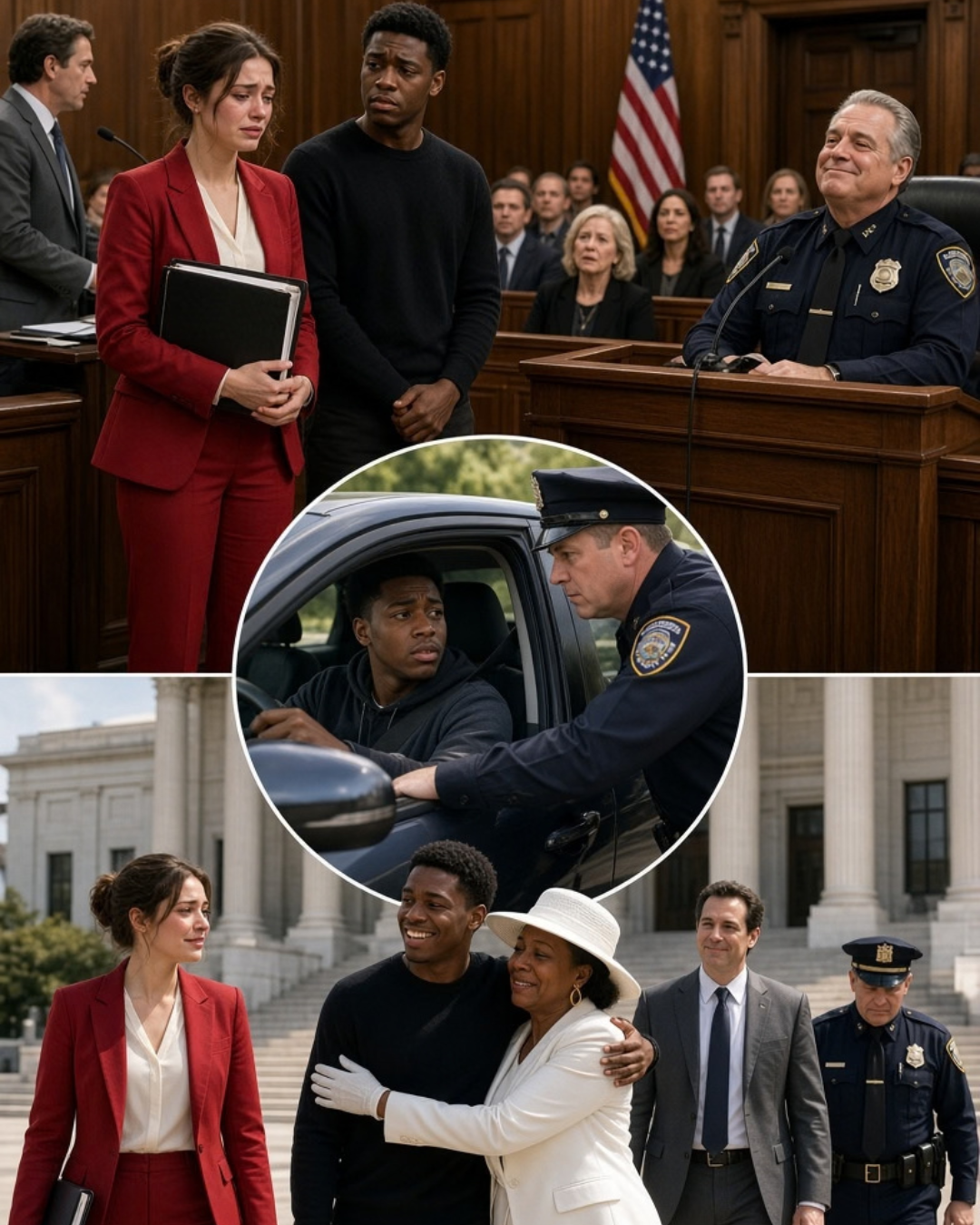
Kilroy glanced toward the monitor.
“He asked a lot of questions.”
“So yes?”
“Yes.”
“When the audio returns, you are ordering him from the vehicle.”
“Yes.”
“Whatever was said between those moments is not audible on the exhibit.”
“Yes.”
“And you cannot tell this court from memory exactly what was said.”
“Not every word.”
“Thank you.”
I shut the binder.
Then opened it once more.
One question remained.
I had written it the previous night and circled it twice.
Beside it, I had also written:
ONLY ASK IF HE COMMITS.
He had committed.
I walked toward the witness stand.
Not close enough to intimidate him.
Only close enough that neither of us needed to raise our voices.
“Officer Kilroy, when you wrote your report, you believed the body camera supported your account.”
“Yes.”
“When you came to court today, you believed the body camera supported your account.”
“Yes.”
“You still believe that?”
Kilroy looked at me.
Then at the frozen image showing Malik’s hands on the wheel.
“Yes.”
I swallowed.
“Then please identify for the court the moment on this recording when Mr. Harris reaches under the seat.”
Silence.
Kilroy’s jaw shifted.
“It happened before this portion.”
“Then identify the moment on this recording when he strikes you.”
“We already saw it.”
“The court saw you holding his wrist before your arms made contact. Is there another moment?”
“No.”
“Identify the moment when he attempts to flee.”
“He didn’t flee.”
“Identify the moment when he threatens you.”
“He didn’t threaten me.”
“Identify the moment when he reaches for a weapon.”
“He didn’t reach for my weapon.”
“Identify the moment when he swings his fist at you.”
“He didn’t make a fist.”
“Identify the moment when he says he intends to resist arrest.”
“That’s not how resistance works.”
I nodded.
“No further questions.”
I returned to the defense table.
My legs suddenly felt strangely weightless.
Malik whispered, “That’s it?”
“That’s it.”
“But he didn’t—”
“I know.”
The prosecutor stood for redirect.
I expected Holloway to try repairing the damage.
He did.
He asked Kilroy whether body cameras always captured every angle.
“No.”
Whether officers were sometimes forced to make split-second decisions.
“Yes.”
Whether traffic stops could become dangerous.
“Absolutely.”
Whether someone could resist without punching or kicking.
“Yes.”
Whether Kilroy continued to believe Malik had resisted.
“Yes.”
It was competent redirect examination.
It reminded the court that body-camera footage wasn’t magic.
Cameras didn’t capture everything.
Fear could be legitimate.
Police officers sometimes had to act before danger became obvious.
I understood all of that.
So did Judge Mercer.
Then Holloway made a mistake.
“Officer Kilroy, despite what we’ve watched today, are you certain you saw the defendant reach beneath the driver’s seat?”
“Yes.”
“And when did that happen?”
“Before I got to the window.”
Holloway nodded.
“And that movement was one factor in your concern?”
“Yes.”
“No further questions.”
I was already standing.
“Brief recross, Your Honor.”
Judge Mercer checked the clock.
“Brief.”
I turned toward Kilroy.
“Officer, the movement under the seat happened before you reached the window.”
“Yes.”
“But after the stop began.”
“Yes.”
“And you testified under oath that your camera was activated at the beginning of the stop.”
Kilroy stared directly at me.
Holloway stayed seated.
There was nothing there to object to.
“Yes.”
I allowed the silence to stretch for one second.
“Thank you.”
That was it.
No speech.
No accusation.
No demand that Kilroy confess to anything.
I sat down.
And for the first time since I had entered the courtroom, Officer Dennis Kilroy looked at me without even a trace of amusement.
PART 5: MAKE THEM SEE
Closing arguments began following a brief recess.
In the hallway, Malik’s mother grabbed my arm.
Her fingers were cold.
“Is it good?”
I looked at her.
“I think the video helped us.”
“That’s not what I asked.”
I almost smiled.
Mrs. Harris had taught Sunday school for twenty-seven years. She possessed the rare ability to make a question sound like a commandment.
“Is it good?” she asked again.
“It’s better than it was this morning.”
She studied my expression.
Then nodded.
Malik stood several feet away beside a vending machine.
He looked exhausted.
When his mother headed toward the restroom, he stepped closer to me.
“He lied.”
His voice was barely above a whisper.
“I know.”
“No. I mean he actually sat there and lied.”
I glanced toward the courtroom doors.
“Malik—”
“I kept thinking maybe he remembered it different. Maybe I remembered it different because I was scared. You know?”
I understood.
That had been one of the ugliest parts of the entire case.
The report had gotten inside Malik’s own memory.
When someone wearing a badge wrote that he had acted aggressively, Malik began wondering whether his fear had somehow looked like aggression.
When Kilroy wrote that Malik resisted, Malik replayed the moment he had been pulled from his car and wondered whether tensing from pain counted as fighting.
When the report said he had struck an officer, Malik began doubting the movement of his own arm.
Official language had accomplished something the physical force alone hadn’t.
It made him question his own experience.
“You asked permission to get your wallet,” I said. “The video shows it.”
He nodded.
“You moved toward the door when he told you to get out.”
Another nod.
“And when he grabbed you, you told him you weren’t trying to fight.”
Malik lowered his eyes.
“I know.”
“Then hold on to what you know.”
The courtroom doors opened.
The bailiff called us inside.
This time, when I walked back toward the defense table, nobody laughed.
Judge Mercer entered.
Everyone stood.
Then Holloway delivered the state’s closing argument.
He was careful.
He no longer overstated what the body camera showed.
He argued that the recording began after the alleged stop-sign violation and therefore could not contradict Kilroy’s observation.
He argued that a police officer might reasonably interpret a driver’s movements as threatening even when later viewing made those movements appear less significant.
He argued that resistance did not require throwing a punch.
Finally, he reminded the judge that Kilroy had twenty-three years of experience.
I listened silently.
Some of what he said was fair.
That mattered.
If I pretended every part of the state’s argument was ridiculous, I would sacrifice my own credibility.
When Holloway finished, Judge Mercer looked toward me.
“Defense.”
I stood.
My mouth had gone dry.
This was the moment people imagined should sound brilliant.
I had spent years reading famous closing arguments.
Beautiful ones.
Furious ones.
Historic ones.
Standing there, none of that mattered anymore.
Malik didn’t need poetry.
He needed clarity.
“Your Honor, the state is correct about one thing. The body camera does not show the alleged stop-sign violation.”
I saw Holloway glance in my direction.
That wasn’t the opening he had expected.
“But that absence does not strengthen the state’s case. It means the court has only Officer Kilroy’s word about the event that supposedly justified the stop.”
I moved slowly toward the lectern.
“Officer Kilroy told this court his body camera was activated when the traffic stop began. The video, however, begins with him already at Mr. Harris’s window. There is no documented malfunction. No documented delay. No explanation for the missing beginning.”
Judge Mercer watched without expression.
I continued.
“Officer Kilroy then testified that the movement he found most threatening—the alleged reach beneath the driver’s seat—occurred before the video begins, while he was approaching the vehicle. That creates a problem the state cannot solve simply by asking the court to trust his experience.”
I never called him a liar.
I didn’t have to.
“The video we do have shows Mr. Harris’s hands on the steering wheel. It shows him telling Officer Kilroy exactly where his wallet is. It shows him asking permission before reaching. It shows him being ordered not to move, then ordered to retrieve his license, then warned when he tries to follow that second command.”
I heard Mrs. Harris breathe behind me.
“It shows him asking why he was stopped.”
I glanced toward the monitor.
“Then the audio disappears.”
Holloway shifted.
“I am not asking this court to guess why. The defense does not need to invent an explanation. Officer Kilroy could not provide one either. What matters is that the state asks this court to rely on words we cannot hear and events we cannot see while discounting the portions we can.”
I faced Judge Mercer again.
“The state says Mr. Harris refused to exit the vehicle. The video shows him moving toward the door before Officer Kilroy reaches through the window and takes hold of his wrist.”
I paused.
“The state says Mr. Harris struck Officer Kilroy. On the recording, the contact identified by the officer occurs after Officer Kilroy has already seized Mr. Harris’s wrist and begun pulling his arm.”
Another pause.
“The report calls it a strike. The video shows no fist. No windup. No swing.”
Kilroy was seated behind the prosecutor now.
He stared straight ahead.
“The report describes aggressive resistance. The recording contains Mr. Harris saying, ‘Please. I’m not trying to fight you.’”
My voice nearly caught on the words.
I controlled it.
“This case does not require the court to decide whether Officer Kilroy has ever done good work in twenty-three years. It does not require the court to decide whether traffic stops can be dangerous. Of course they can.”
I glanced toward Malik.
“It requires the court to decide whether the state proved these charges against this defendant, on this day, based on this evidence.”
I closed my binder.
“For days, Mr. Harris has lived inside Officer Kilroy’s description of him. Suspicious. Aggressive. Resistant. Dangerous.”
I placed one hand on the binder.
“But the court has now seen him.”
I thought about Mrs. Harris standing in the hallway.
Is it good?
I thought about Malik sitting in the interview room.
What if they watch it and still believe him?
Make them look.
I looked directly at Judge Mercer.
“The defense asks the court to judge the evidence that exists, not the authority of the person describing what is absent.”
Then I sat down.
There was no gasp.
No applause.
No dramatic music.
Only the sound of my chair scraping against the courtroom floor.
Judge Mercer removed her glasses.
She looked first toward the prosecution.
Then toward me.
Then toward Malik.
“I’m going to take five minutes.”
She left the bench.
We stood.
The second the door shut behind her, quiet conversations spread across the courtroom.
Malik said nothing.
Neither did I.
Five minutes could feel longer than twelve days when enough depended on them.
I looked across the aisle.
Kilroy was speaking quietly with Holloway.
Holloway listened with his arms folded.
At one point, Kilroy looked in my direction.
I expected anger.
What I saw was worse.
Calculation.
As though he were still trying to understand how the morning had slipped out of his control.
I wondered when he had first decided I was harmless.
Probably when he noticed the sneakers.
Maybe the binder.
Maybe my age.
Maybe the moment everyone laughed and I didn’t know where to put my hands.
He had confused embarrassment with weakness.
I had nearly made the same mistake myself.
The door opened.
“Court.”
Everyone stood.
Judge Mercer returned.
She sat down, reviewed something on the bench, and then looked toward Malik.
“Mr. Harris, remain standing.”
My heart struck once, hard.
Malik rose beside me.
I stood with him.
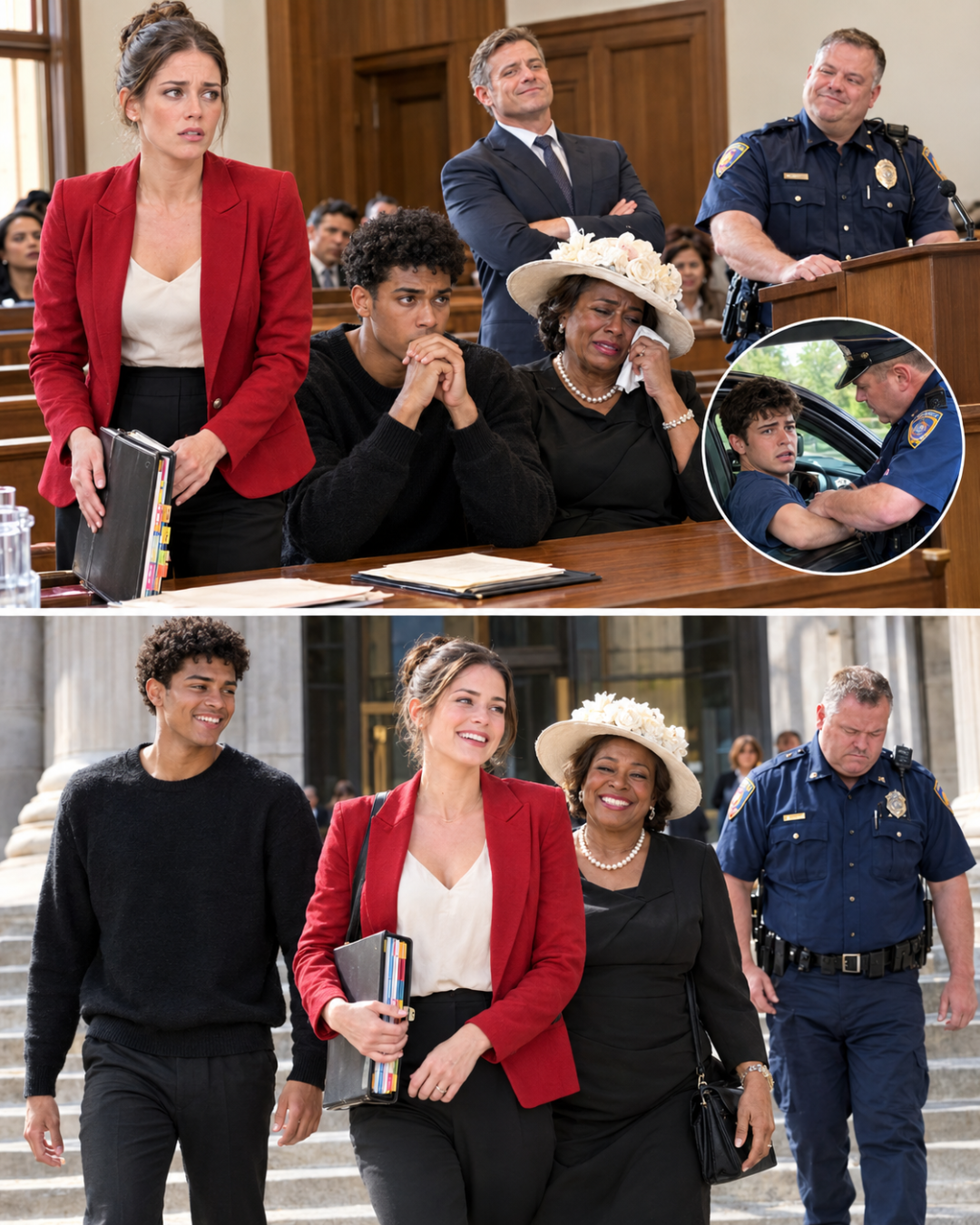
Judge Mercer spoke slowly.
“A court must be careful not to substitute video for the totality of circumstances. Body-camera footage has limitations. It may fail to capture an officer’s entire field of view, and a recording cannot reproduce every perception an officer experiences in real time.”
Holloway’s shoulders relaxed slightly.
Mine didn’t.
“However,” the judge continued, “when recorded evidence materially conflicts with testimony, the court cannot ignore that conflict.”
Nobody moved.
“Officer Kilroy testified that his body camera was activated at the beginning of the stop. The recording admitted by the state begins after he has already approached the defendant’s window. There is no evidence before the court explaining that discrepancy.”
I felt Malik’s hand brush against the edge of the table.
“The alleged movement beneath the driver’s seat is not recorded. The testimony concerning when it occurred creates further uncertainty regarding the recording timeline.”
Judge Mercer glanced downward.
“Regarding the defendant’s conduct during the recorded portion of the stop, the court does not find that the footage supports the characterization contained in the incident report to the degree necessary to establish the charged offenses beyond a reasonable doubt.”
Malik stopped breathing beside me.
“At several points, the defendant appears confused regarding conflicting commands. The physical contact identified as a strike occurs during the officer’s attempt to control the defendant’s arm. The recording does not establish beyond a reasonable doubt an intentional strike.”
Behind us, Mrs. Harris made a sound.
Small.
Sharp.
Like a sob being crushed before it escaped.
“As to the resisting charge, the evidence is likewise insufficient.”
Judge Mercer looked directly at Malik.
“Not guilty.”
Malik’s knees almost buckled.
I grabbed his elbow.
The judge continued addressing the remaining charge, disposing of it in words I barely registered because Mrs. Harris was openly crying now.
Not guilty.
Insufficient evidence.
Citation dismissed.
Those were the words that remained.
For twelve days, Malik had been defendant.
Suspect.
Arrestee.
Aggressor.
Now the clerk was saying his full name while entering the disposition into the record, and for the first time, it sounded as if his name belonged to him again.
Holloway collected his papers.
Kilroy stood.
Nobody applauded.
Courtrooms didn’t operate that way.
But the silence afterward was completely different from the silence before my cross-examination.
At the beginning of the morning, people had become quiet because they were waiting for me to humiliate myself.
Now they were silent because they had watched a story unravel.
Kilroy stepped away from the prosecution table.
For one strange second, I thought he might speak to me.
He stopped beside our table.
His eyes dropped toward my sneakers.
Then toward the binder.
Finally, toward my face.
“You got your result,” he said quietly.
There were a hundred things I could have said.
I could have reminded him about the joke.
Asked whether debate club was finished.
Told him he had done it to himself.
Instead, I said, “The video got the result.”
Something shifted in his expression.
Barely.
Then he walked away.
I watched him disappear through the side door.
Only after he was gone did I realize my hands were trembling.
Malik noticed too.
“You’re shaking.”
“Adrenaline.”
He stared at me.
Then somehow, he laughed.
Not loudly.
Not cruelly.
Just one exhausted burst of disbelief.
“All morning you looked like you knew exactly what you were doing.”
“I did know what I was doing.”
“Then why are you shaking?”
“Knowing what you’re doing and being terrified are not opposites.”
That made him laugh again.
His mother came around the railing before the bailiff had time to stop her.
She hugged Malik first.
She held his face between both hands.
“My baby.”
“Ma.”
“My baby.”
“I’m okay.”
“You are now.”
Then she turned toward me.
I barely had time to react before both of her arms wrapped around me.
The church hat was still in her hand, pressed between our bodies.
“Thank you,” she whispered.
“You don’t have to—”
“Don’t tell me what I have to do.”
I laughed against her shoulder.
“Yes, ma’am.”
She stepped back.
Her eyes were wet.
“You made her listen.”
I looked toward the judge’s empty bench.
“No.”
Mrs. Harris shook her head.
“You made them look.”
Those words stayed with me.
Outside the courthouse, the morning had become bright.
Traffic flowed past the stone steps.
People crossed the street holding cups of coffee.
A bus sighed as it stopped at the corner.
The world hadn’t changed simply because Malik Harris had been found not guilty.
His lost days weren’t returned to him.
His job didn’t magically come back.
His mother still owed money she had borrowed to cover bills.
There would be paperwork and phone calls and explanations.
There would be people who heard the word arrested and never waited long enough to hear what happened afterward.
A verdict could end a legal judgment.
It couldn’t erase everything that had already happened.
Malik stood on the courthouse steps staring toward the street as though he had never seen sunlight before.
His mother finally placed her church hat on her head.
It sat slightly crooked.
She didn’t notice.
I sat on the stone railing and opened my binder.
The tabs were bent.
My notes were covered with marks.
One page had a coffee stain.
Near the top of my cross-examination outline, above every question, I had written a single sentence to myself:
DO NOT FIGHT HIS CONFIDENCE. USE IT.
I stared at those words.
That morning, Dennis Kilroy had entered the courtroom carrying twenty-three years of experience.
I had entered with three months of practice, black Converse sneakers, and a binder.
He had authority.
I had questions.
At first, everyone seemed certain which one mattered more.
Maybe that was why the laughter had hurt so much.
Some part of me had feared they might be right.
I had spent most of my life as the youngest person in rooms designed for older people. Youngest in class. Youngest taking exams. Youngest interviewing for jobs people assumed I had no business seeking.
Being young had taught me a peculiar kind of silence.
People talked freely around someone they underestimated.
They explained too much.
They grew careless.
They assumed you hadn’t noticed the thing they contradicted five minutes earlier.
That morning, Kilroy had looked at me and seen a child pretending to be a lawyer.
So my first question hadn’t frightened him.
Neither had my second.
Or my fifth.
By the time he realized those questions were connected, he had already answered them.
Malik walked over.
His mother had stepped away to call someone.
He stood beside me with his hands inside his pockets.
“What happens now?”
“We get copies of the disposition. Then we start dealing with everything else.”
“My job?”
“I can’t promise anything.”
He nodded.
“I know.”
I shut the binder.
He looked back toward the courthouse.
“Do you think he knew?”
“Knew what?”
“That the camera didn’t match the report.”
I thought about Kilroy saying he had reviewed the footage before coming to court.
I thought about the missing beginning.
The silent portion.
The position of Malik’s hands.
The contact between their arms.
I could have given Malik an answer that sounded satisfying.
But I had spent the entire morning asking a court not to fill missing pieces with assumptions.
I wasn’t going to do it myself.
“I don’t know what he knew,” I said. “I know what he testified to. I know what he wrote. And I know what the video showed.”
Malik considered my answer.
Then nodded.
“Fair.”
He began walking down the courthouse steps.
Halfway down, he turned around.
“Hey.”
“Yeah?”
“You need new shoes.”
I looked down at my Converse.
“They’re comfortable.”
“You just won a case in sneakers.”
“I did not win because of the sneakers.”
“No, but now you have to keep wearing them. Superstition.”
“I’m a lawyer. I believe in evidence.”
He smiled.
“Evidence says you’re undefeated in those shoes.”
I laughed.
It was the first laugh of the morning that didn’t hurt.
Malik continued down the steps toward his mother.
I stayed where I was for another minute.
Then I looked back through the courthouse doors.
Another case was already being called.
Another defendant.
Another report.
Another version of events being transformed into official language.
The system moved forward quickly.
It always did.
I picked up my binder.
When I had entered that courtroom, everyone noticed how young I was.
When I walked out, I wanted them to remember something different.
A report wasn’t automatically the truth because it sounded official.
Experience wasn’t evidence merely because it sounded impressive.
Fear wasn’t aggression simply because someone with more power described it that way.
And a frightened man asking why he had been stopped didn’t become dangerous merely because a police report needed him to be.
The truth had been visible from the beginning.
In Malik’s hands resting on the steering wheel.
In commands that contradicted one another.
In his movement toward the door.
In the wrist already being held before the supposed strike.
In the silence where sound should have existed.
And most of all, in the distance between what Dennis Kilroy said the body camera would prove and what everyone eventually saw with their own eyes.
The courtroom had laughed when I entered.
By the time I walked out, nobody was laughing.
And I knew exactly why.
