


When Daniel Harrington saw Eleanor Price again, he wasn’t prepared for how the moment would distort his sense of time. It didn’t arrive with drama. There was no sharp gasp, no cinematic pause where the world politely waited for him to understand. It came quietly, almost indifferently, as if the past had chosen a moment when he was distracted enough to slip back into his life unnoticed.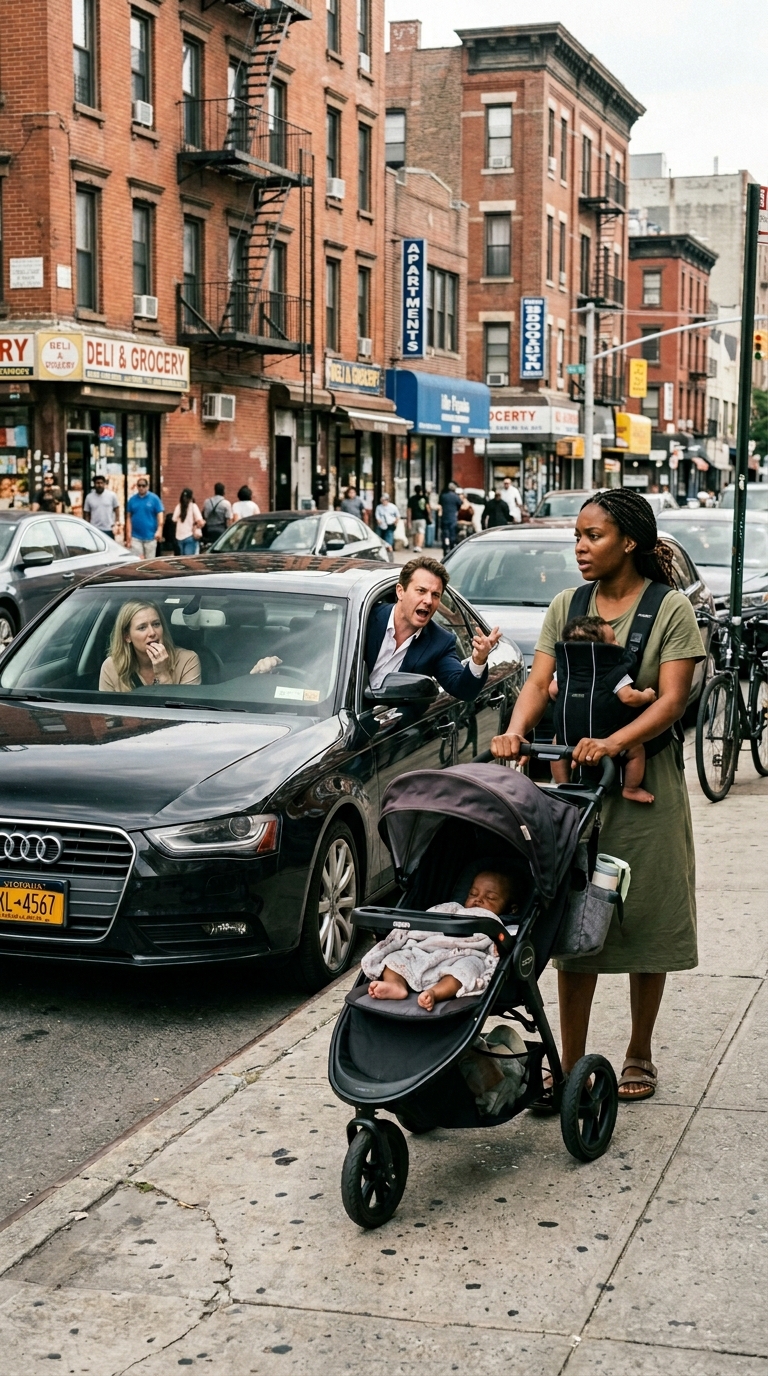
She stood near Regent’s Canal, one hand resting on the handle of a double stroller, the other adjusting a blanket that had shifted just enough to reveal a small sleeping face. Daniel noticed the movement before he noticed her face. It was precise, practiced, automatic—the gesture of someone who had learned to correct imbalance before it happened. By the time recognition reached him, it was already too late to pretend it was coincidence. He pulled the car over without clearly deciding to.
Eleanor only looked up when he stood in front of her, his name already forming on his lips. Surprise crossed her face, brief and controlled, before settling into something calmer, more guarded. “Daniel,” she said. “I wondered when this would happen.”
They sat in a nearby café, quiet and half-empty in the early afternoon. The stroller rested beside the table, two infants asleep inside it with the absolute trust of those who had never yet been let down by the world. Eleanor didn’t waste time on pleasantries or softened phrasing. She had never been skilled at pretending ease where none existed. “They’re yours,” she said simply. “Their names are Oliver and Rose. They’re four months old.”
Daniel felt the words register in his body before his mind could catch up. He looked at the children—the delicate curl of Rose’s fingers and the firm set of Oliver’s jaw even in sleep—and felt something inside him give way, not violently, but completely. The life he had built with such care shifted, not collapsing, but revealing how fragile it truly was.
Eleanor explained without accusation. She spoke about the weeks of uncertainty, about choosing silence instead of chaos, about learning to exist in a world now shaped by feeding schedules and sleepless nights. She spoke of necessity, not resentment. Of survival, not blame.
“I wasn’t asking you to be ready,” she said. “I was asking myself to be.”
Daniel didn’t sleep that night. He drove through London until the city thinned into something quieter, his phone lighting up repeatedly with messages from Charlotte, his fiancée, asking where he was, whether he was safe, whether something was wrong. He didn’t know how to answer. Something was wrong, but it was also, in a way he couldn’t yet explain, profoundly right.
Daniel’s life until then had been defined by order. Charlotte fit into it perfectly. She was intelligent, composed, admired by his parents and trusted by his colleagues. Their engagement had been the natural outcome of a relationship that followed expectation rather than urgency. Love, Daniel believed, was something steady and reasonable, a mutual decision rather than a consuming force. Fatherhood was neither steady nor reasonable.
He began visiting Eleanor’s flat in the evenings, awkward at first, unsure where to place his hands or his focus. He learned quickly—how Oliver preferred to be held upright, how Rose settled at the sound of low, steady speech. He learned the language of exhaustion, the hollowed look Eleanor carried in those early weeks, and the quiet competence that replaced vulnerability out of necessity.
Charlotte noticed the shift immediately. He cancelled dinners, missed calls, arrived late and distracted when he did appear. “You’re somewhere else,” she said one evening, watching him from across the table. “And you’ve been there for weeks.”
Daniel told her the truth, or as much of it as he could say aloud. “I have children,” he said. “I didn’t know.”
Charlotte stayed silent for a long time. When she spoke, her voice was calm, but edged with careful restraint. “And now?” she asked. “What does that mean for us?”
Daniel couldn’t answer right away. The silence stretched between them, filled with the understanding that whatever he said next would reshape their future.
Eleanor never asked Daniel to choose her. She asked him to choose presence—to show up consistently, to understand that fatherhood wasn’t a single decision but a series of small, ordinary ones made every day.
They spoke about logistics rather than feelings—schedules, childcare, finances, boundaries. What would happen if closeness became too difficult. They avoided the past, knowing nostalgia could twist necessity into something dangerous. Daniel suggested a house in Hampstead, large enough to allow both connection and distance.
“I’m not asking you to move in as my partner,” he said carefully. “I’m asking you to move in as their mother, and my co-parent.”
Eleanor didn’t answer immediately. She had learned the cost of trusting too quickly.
She took time. And eventually, she agreed.
Charlotte understood before Daniel found the courage to say it. They ended their engagement without raised voices or blame. There was grief and disappointment, but also an understanding that love sometimes means stepping aside when the future you imagined no longer belongs to you.
Work grew more complicated. Daniel’s absence was noticed. Investors questioned his focus. His leadership, once defined by total control, began to shift into something less rigid, more intentional. When asked to travel to New York to reassure key stakeholders, he hesitated.
Eleanor watched him pack, her expression unreadable. “You should go,” she said. “Balance isn’t sacrifice. It’s sustainability.”
He went.
In the conference room, under harsh lights and careful scrutiny, Daniel spoke honestly. He didn’t frame fatherhood as a weakness or inconvenience. He spoke of clarity. Of perspective. Of building something meant to last.
It was a risk. They invested anyway.
Two years later, the house was loud in the way only homes with young children can be. Oliver climbed furniture with determination. Rose tested limits with fearless curiosity. Eleanor moved through the chaos with practiced ease, and Daniel learned to plan meetings around school pickups and doctor visits.
They argued. They negotiated. They forgave quickly.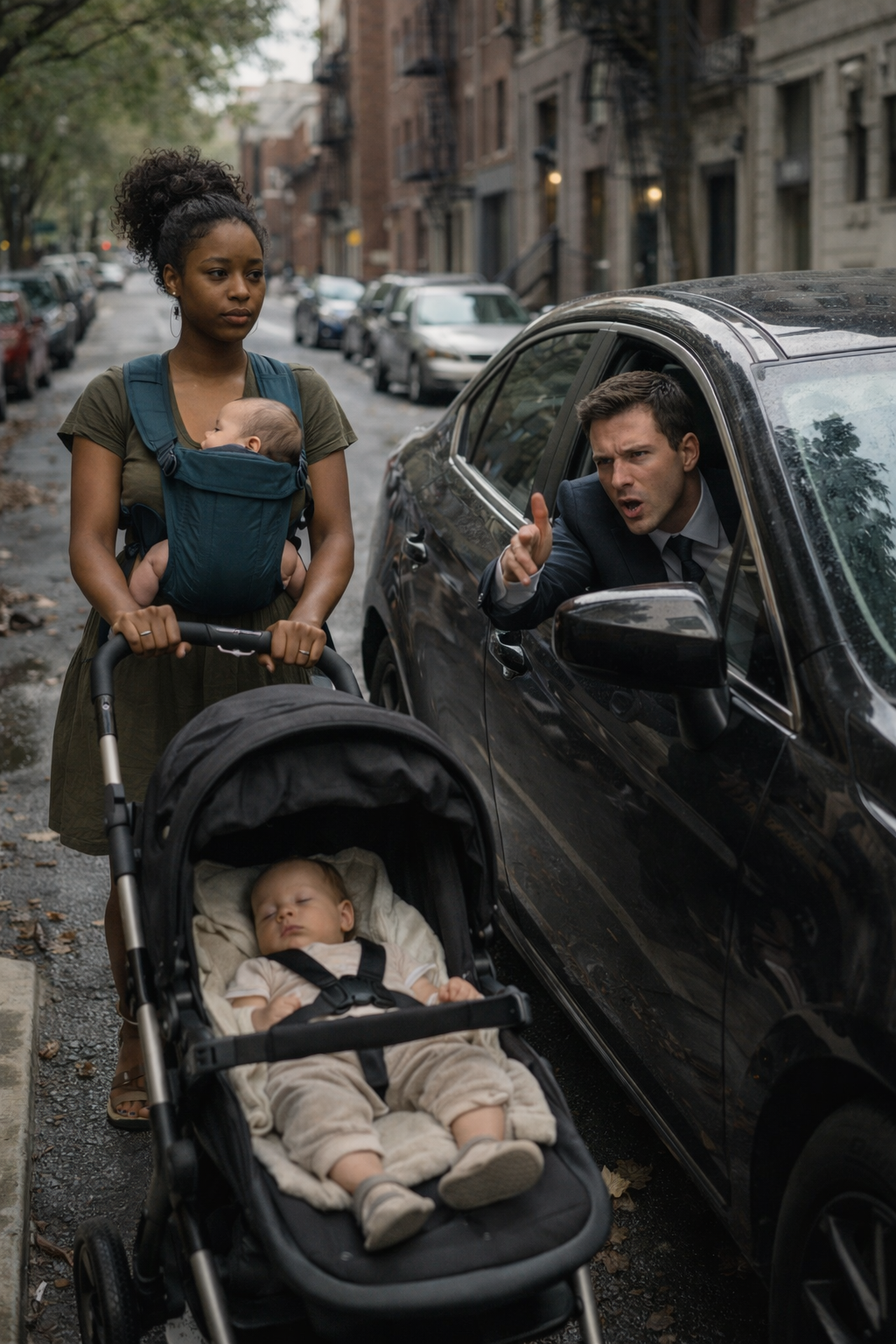
At the park on Saturday afternoons, beneath old oak trees, Daniel pushed the swings higher while Eleanor watched, content in a way she once thought impossible.
“Do you ever miss it?” she asked quietly. “The life you had before?”
Daniel considered the question carefully.
“No,” he said. “I miss who I thought I had to be. But I love who I am.”
They went home together.
Not to a perfect ending, but to something better. A life built with intention, shaped by ordinary days, each one an unremarkable and extraordinary choice to stay.
