

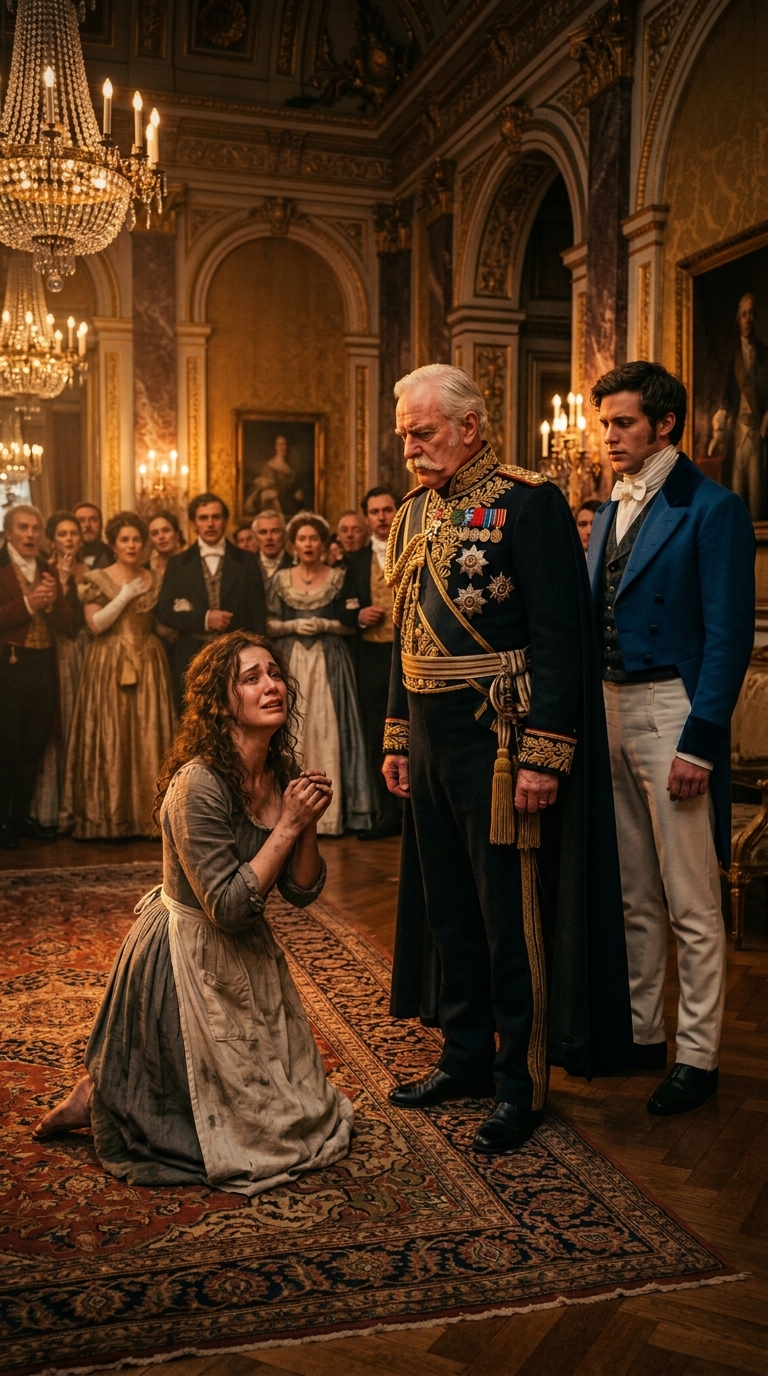
The day the most important negotiation in the Montejo family’s history was about to collapse, the only person capable of saving it was on her knees, picking up documents from the floor that no one else had bothered to look at.
In the main hall of Hacienda San Jacinto, on the outskirts of Querétaro, the long table was impeccable: leather folders, glasses of mineral water, white flowers in fine clay vases, and Talavera dinnerware that was only used when there were visitors capable of changing the course of the company. Outside, the sun beat down on the stone arches. Inside, the air was so tense that even the waiters walked without making a sound.
The problem was simple and terrible: the official interpreter had not arrived.
The Montejo family had spent 8 months preparing an agreement with a group of Austrian investors to export processed agave to Europe. Gabriel Montejo, director of the family consortium since his father’s death, had reviewed every clause with lawyers, accountants, and advisors. He was young to lead such an old company, but he had a reputation for being cold, precise, and proud. He never raised his voice because he was used to everyone obeying before it became necessary.
But that morning, his last name was not enough.
Mr. Klaus Reiter, representative of the Austrian firm, began speaking in English with courtesy. Then, noticing that no one fully understood the legal differences between one version and another of the contract, he switched to German. Héctor Larios, Gabriel’s personal secretary, turned pale. The company’s lawyer pretended to review a page. Doña Leonor Montejo, Gabriel’s aunt and the unofficial guardian of the family’s prestige, pressed her lips together as if the world’s incompetence were a personal offense.
“This is unacceptable,” Reiter said in German, with a calm that hurt more than a shout. “I will not sign a document that you cannot even defend in our language.”
No one responded.
No one, except Isabel Ríos.
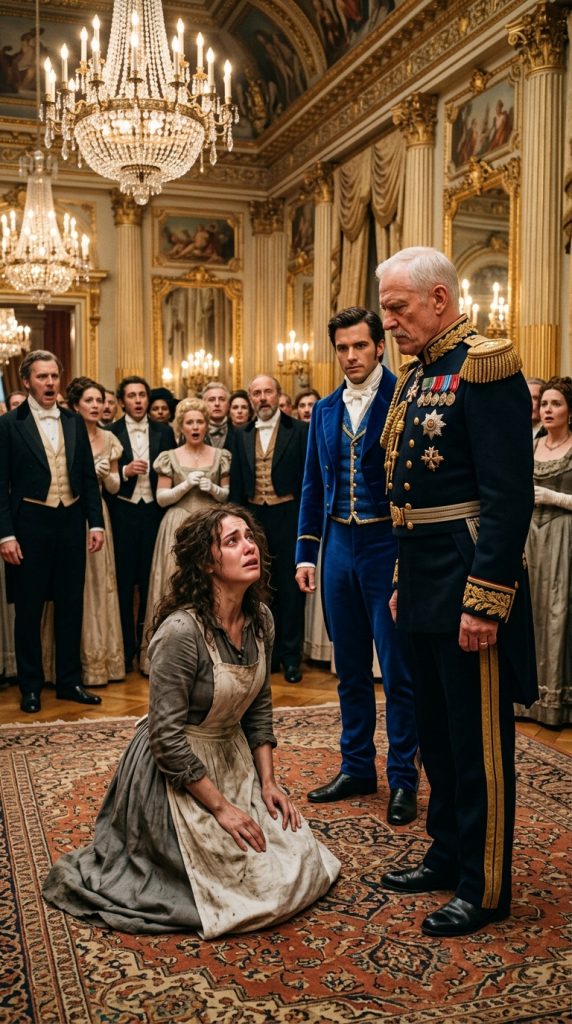
Isabel had been working at the hacienda for 3 years. Her position was ambiguous: she helped organize receptions, reviewed inventories, arranged documents, supervised flowers, tablecloths, chairs, and glasses. She was not exactly a domestic employee or an administrative assistant. Like many invisible women, she was the person who solved everything without anyone having to acknowledge it.
That day, she was standing by the sideboard, picking up some sheets that had fallen when Héctor had rushed in minutes earlier.
She was not supposed to speak. She knew that.
She had learned that a woman without a visible last name should remain silent even when she knew more than the men seated at the table. She had learned that intelligence, when it came from below, made people uncomfortable. But she also knew that the translation they had just attempted was wrong.
She raised her gaze.
“Herr Reiter,” she said in clean, formal, elegant German, “Mr. Montejo assures you that all the clauses were reviewed, but you are right to demand precision. The Spanish version of Article 6 does not fully reflect the meaning of the term used in the original.”
The entire room froze.
Gabriel slowly turned his head toward her. Héctor dropped his pen. Doña Leonor looked at her as if a chair had just spoken.
Reiter, surprised, responded to her in German. Isabel stood up, placed the documents on the sideboard, and answered without hesitation. She did not just translate. She explained. She compared the versions. She pointed out 2 errors in the dates, a dangerous ambiguity in the arbitration clause, and an omission in the tax annex. For 25 minutes, the woman everyone thought was part of the decoration held the entire meeting together.
In the end, Reiter signed.
Before leaving, he approached Isabel and inclined his head slightly.
“Your German was not learned in just any school,” he said quietly. “Your father must have been a very cultured man.”
Isabel did not respond. She only lowered her eyes.
But Gabriel heard.
That night, while the hacienda slept and the crickets sang among the bougainvillea, Gabriel remained in his study with a single question in his mind: Who was Isabel Ríos really?
The next morning, he asked Héctor to investigate. Not with gossip. With documents.
The report arrived 3 days later.
Isabel Ríos, born in Mexico City. Daughter of Ernesto Ríos Salvatierra, a Mexican diplomat posted in Vienna for 12 years. Mother deceased when Isabel was 10. Father died when she was 15, amid an administrative scandal that was never proven but destroyed his reputation and left his daughter without support, without scholarships, without a powerful family to stand up for her.
After that came rejections. Translation agency applications denied. International assistant positions closed “due to lack of references.” Temporary jobs. Private homes. Events. Hotels. Until she reached Hacienda San Jacinto, where no one had ever asked her what she really knew how to do.
Gabriel read the report twice.
Then he found a detail that left him motionless.
In the old Montejo company archives there was a record of a visit by Ernesto Ríos to the family home in Mexico City, 20 years earlier. Gabriel had been 12 years old at the time. He suddenly remembered a long hallway, a red carpet, a little girl sitting with a huge book on her knees. He remembered wanting to show off a phrase in German and saying it wrong. He remembered that she corrected him without mocking him.
“I don’t need help,” he had said, offended.
“Yes, you do,” the little girl had replied, returning to her book.
Gabriel closed the folder.
It was her.
In the following days, something changed in the hacienda. The archive room, always kept locked, was found open. On the table, Isabel found old contracts in German, French, and English. No one gave her an order. No one explained anything. But one afternoon, Gabriel entered with a folded document in his hand.
“I need to know if this translation is correct,” he said.
Isabel read it.
“It is not.”
“How much does it affect us?”
“It depends on whether the other party knows how to take advantage of it.”
Gabriel observed her attentively.
“And would you know how to determine that?”
“Yes.”
There was no false humility in her answer. Nor arrogance. Just truth.
That was the beginning.
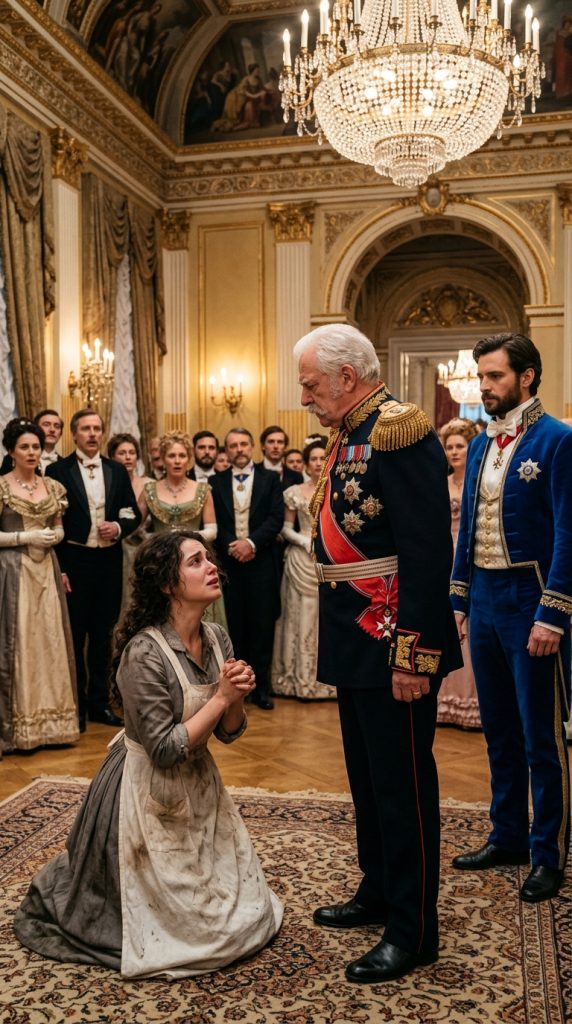
First came contracts. Then letters. Then calls with foreign advisors. Gabriel began to seek her out not to ask her to arrange rooms, but to ask her things that no one else could answer. At first, Isabel kept her distance. She answered with precision, without allowing gratitude to be confused with trust. She had survived too long without expecting anything.
Doña Mercedes, the housekeeper, was the first to notice.
“The master has been looking for you a lot lately,” she commented one night while Isabel was leaving some keys in the kitchen.
“It’s about documents,” Isabel replied.
Doña Mercedes smiled faintly.
“Sometimes people start with documents because they don’t know how to talk about anything else.”
But the calm did not last.
Doña Leonor Montejo was not a loudly cruel woman. Her danger lay in the elegance with which she could humiliate someone without staining her gloves. One afternoon she found Isabel leaving the library with folders under her arm.
“Miss Ríos,” she said, “I’m glad my nephew values your help. But it’s wise to remember that in a house like this, every person prospers best when they understand their place.”
Isabel stopped.
For years she would have lowered her head. That afternoon she did not.
“I know my place, Doña Leonor. It took me 12 years to understand that it was not the position where others wanted to put me.”
The woman hardened her gaze.
“Be careful. A powerful man’s gratitude can easily be mistaken for something more.”
“And a powerful family’s fear can easily be disguised as advice.”
Doña Leonor did not respond.
Gabriel, from the side corridor, had heard everything. He did not intervene. Not because he did not want to defend her, but because Isabel did not need anyone to complete what she had just said.
That night, Gabriel found her in the library.
“I heard what happened in the corridor,” he said.
Isabel closed a folder.
“I didn’t need help.”
“I know. That’s why I didn’t come in.”
The silence between them was different. It was no longer distance. It was recognition.
“Why didn’t you ever say who you were?” Gabriel asked. “Your father, your languages, your education.”
Isabel looked at the spines of the books.
“Because when I said I was the daughter of a diplomat and now I was asking for any kind of work, people didn’t ask what I knew how to do. They asked what had gone wrong. And I grew tired of paying for a fall I didn’t cause.”
Gabriel lowered his voice.
“Your father’s fall was not your fault.”
“I know that.”
“But you haven’t lived as if you knew it.”
Isabel could not answer immediately. That phrase touched her where no one had touched her in years.
Four days later, Reiter asked to return to the hacienda. He brought documents from the Austrian Ministry of Foreign Affairs. Gabriel organized a formal dinner. Upon learning of it, Doña Leonor invited several families from Querétaro and Mexico City, convinced that with enough witnesses she could force her nephew to “correct” his course.
Isabel found a dark blue dress laid out on her bed. Doña Mercedes had left it there without explanation.
“Tonight you will not serve the table,” the woman said when Isabel looked for her. “Tonight you will sit at it.”
The hall sparkled with candles, silver, and fresh flowers. Isabel entered with her back straight, feeling every gaze like a needle. Some guests murmured. Doña Leonor smiled with venomous calm.
The dinner proceeded with polite phrases. At the end, when the plates were cleared, Doña Leonor raised her glass.
“Gabriel,” she said, “I’m glad you have gathered so many witnesses. There are decisions a Montejo must make thinking not of his emotions, but of the weight of his surname.”
Silence fell.
Gabriel set his glass on the table and stood up.
“You’re right, Aunt. There are things that must be said with witnesses present.”
He looked at Isabel.
“Isabel Ríos is the daughter of Ernesto Ríos Salvatierra, a Mexican diplomat recognized by the Austrian government as one of the most brilliant negotiators of his generation. Starting tonight, she will be the Director of International Relations for the Montejo Consortium, with authority, salary, and a place at this table.”
No one spoke.
Then Reiter stood up. He opened a folder with an official seal.
“The Ministry keeps Mr. Ríos’s files,” he said in Spanish. “And it also keeps the conclusion of an investigation closed two months ago: Ernesto Ríos was wrongly accused. His reports were altered by a superior who has now been identified. His name is cleared.”
Isabel felt the world stop.
For 12 years she had carried a shame that did not belong to her. For 12 years she had watched doors close because of an invented shadow. And now, in a room where many had looked at her as if she had no history, her father had his voice back.
Reiter approached her and handed her the folder.
“Your father asked that, if everything was ever cleared up, they tell you this: ‘I did not lose my name, it just took them a while to return it.’”
Isabel pressed the papers to her chest. She did not cry at first. She held herself together with all the strength she had used to survive. But when Doña Mercedes, from the doorway of the hall, wiped her eyes with her apron, Isabel could no longer hold back.
Gabriel approached her.
“You don’t have to be strong right now,” he told her softly.
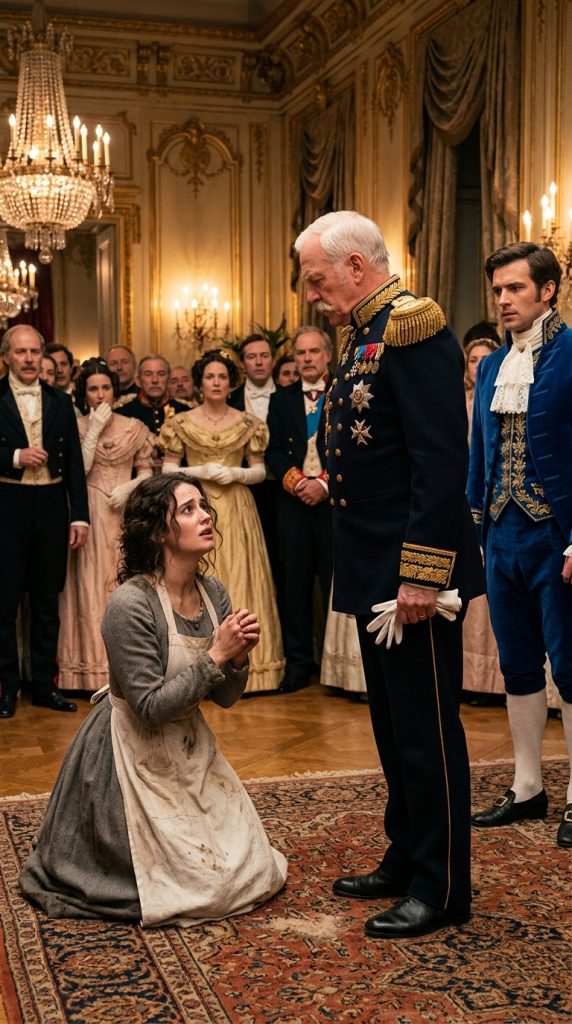
That phrase broke her.
She cried without shame, not like someone defeated, but like someone who could finally release a stone she had carried hidden under her clothes for too long.
Doña Leonor stood up, pale.
“Gabriel, this is reckless.”
He looked at her without anger.
“No. What was reckless was letting a brilliant woman spend 3 years being invisible in my own house.”
Then, in front of everyone, he added:
“And if Isabel agrees to walk with me, not as a debt or a reward, but as an equal, I would be honored to walk by her side.”
It was not a proposal on one knee or a spectacle. It was something harder: a promise made without embellishment.
Isabel looked at him. She remembered the boy in the hallway, the man who had finally conjugated a phrase correctly after 20 years, the master who could have saved her and instead chose to recognize her.
“I accept walking,” she said. “But not behind.”
Gabriel smiled for the first time that night.
“Never behind.”
Months later, Hacienda San Jacinto changed without losing its soul. In the old map room, an international office directed by Isabel Ríos was opened. Letters arrived from Vienna, Berlin, Madrid, and Brussels. Contracts no longer hid traps in poorly translated words. Young women from nearby towns began receiving scholarships to study languages and foreign trade through a fund created in honor of Ernesto Ríos.
Doña Leonor went to live for a season in San Miguel de Allende. She said she needed peace and quiet. No one contradicted her.
One afternoon, Isabel found Gabriel in the same hall where everything had begun. He was holding a sheet of paper with a phrase written in German.
“Is it conjugated correctly?” he asked.
Isabel read it. This time, the phrase was perfect.
“You’ve improved.”
“I had a good teacher.”
“You had a 30-second lesson and it took you 20 years to use it.”
Gabriel folded the sheet.
“But I used it.”
Isabel looked out the window. The bougainvillea was blazing with color under the sun. For the first time in years, she did not think about the doors that had closed. She thought about the ones she herself would open.
That night, in the notebook she had kept almost empty for years, she wrote a single line:
“My father was right: a name may take time to return, but when it returns clean, it illuminates even the house that once tried to ignore it.”
And below, after thinking for a moment, she added:
“Today I stopped being invisible.”
