

PART 1
When the old passenger truck kicked up its final cloud of dust in front of the main square of San Marcos de la Cruz, deep in the mountains of Chihuahua, half the town was already peeking out from their windows. Gossip traveled faster than the icy wind: they said the refined lady arriving from the capital wouldn’t last even three sunrises at El Peñasco ranch. That place belonged to Julián Fierro, a widower hardened by tragedy, with a temper worse than a rabid dog, and father to three children who had grown up wild among the ravines.
At the town cantina, the men quietly placed their bets. They argued over what would break the outsider first: the mountain cold, the pumas that roamed at night, or Julián’s shouting.
But Emilia Robles hadn’t crossed half the country on a wooden seat just to be broken by anyone.
When she stepped off the truck, her travel dress covered in dust and clutching a worn leather suitcase, the locals saw only a pale woman—far too fragile for a land of hardened men. None of them could see the terror she carried locked inside her chest. No one knew that after her father’s sudden death, her uncle Arturo had stolen the family estate, drained the bank accounts, and decided to sell her like property. To settle a gambling debt, he had arranged to marry her off to a 65-year-old moneylender—a cruel man feared across the region.
Desperate, Emilia had found a crumpled advertisement in an old newspaper:
“Widower in the high mountains seeks hardworking wife. 3 children. Harsh life. Own home.”
It didn’t sound like a fairy tale—but it was her only way out of hell.
“You the one called Emilia?” a rough voice growled behind her.
She turned—and her heart skipped. Julián Fierro was enormous, with shoulders as wide as doors, an unkempt black beard, and steel-gray eyes that seemed to carry the fury of a storm. No “good afternoon.” Not even the hint of a smile. He scanned her from head to toe with open disappointment.
“Thought they’d send someone with more meat on her bones,” he spat.
Emilia clenched her fists, lifted her chin, and held his gaze.
“And I thought men from the mountains had better manners, Mr. Fierro. Guess we were both wrong.”
A couple of women sweeping the street crossed themselves at her words. Julián said nothing. He snatched her suitcase with one hand and tossed it into the back of his rusted truck.
The ride to El Peñasco was torture. The dirt road twisted along dizzying cliffs, lined with dark pines. When they finally arrived at the log cabin, the scene was bleak. Waiting in the packed dirt yard were the three children.
Matías, twelve, glared at her with pure hatred while sharpening a hunting knife.
Jacinta, eight, hid behind a log—dirty, tangled, wary.
Little Tomás, just four, played in the mud with a cow skull.
They looked like abandoned wolf cubs.
The first week was psychological warfare. Matías stomped in with manure-covered boots right after Emilia had cleaned. Julián vanished at five in the morning and returned after midnight, completely ignoring her. The cold seeped through the wooden cracks like knives of ice.
But Emilia didn’t shed a single tear.
She woke at four, chopped wood until her hands bled, brewed coffee, made tortillas, and scrubbed the children’s clothes with lye soap until they were spotless.
Everything changed on the morning of the sixth day.
Julián had gone down to town to buy feed. Emilia was in the corral, struggling to milk a stubborn cow, when a piercing scream echoed across the mountain.
Jacinta.
Emilia dropped the bucket and ran toward the ravine. Below, in the half-frozen river from the night’s snowfall, little Tomás had slipped. The current dragged him toward a cluster of sharp rocks. Matías stood frozen on the edge, screaming, unable to move.
Emilia didn’t hesitate.
She dove headfirst into the icy water.
The cold hit her chest like a blade—her lungs felt like they would explode—but she swam with pure desperation, grabbing the boy by his shirt just before the river swallowed him. Fighting the current and crashing against rocks, she dragged them both to the shore, clutching his small, frozen body.
She carried him back to the cabin, trembling uncontrollably. She stripped his wet clothes, wrapped him in furs by the fire, and rubbed his chest until he breathed again.
She collapsed on the wooden floor, exhausted—
when the cabin door burst open.
It wasn’t Julián.
Two black trucks from town had arrived.
The local sheriff stepped out, followed by a well-dressed man with a sinister smile—one of her uncle Arturo’s enforcers.
“The game’s over, niece,” the man said, pulling out a gun and aiming it directly at the boy resting by the fire.
No one was prepared for the nightmare about to unfold.
PART 2
The silence inside the cabin grew so thick it could almost be cut.
Emilia rose to her feet, ignoring the icy water dripping from her soaked clothes, her lips blue from hypothermia. With a sudden, fierce movement—like a cornered lioness—she stepped between the gun and Tomás.
“If you want to take me, you’ll have to go through me—but you don’t touch the children,” she hissed, her voice steady despite the cold biting into her bones.
The thug let out a dry laugh. The sheriff, a corrupt man with a tobacco-stained mustache, stepped forward holding a crumpled paper.
“Ma’am… or miss. Your uncle reported a theft. Says you took important documents before running away. Either you come quietly so we can deliver you to your fiancé—or I arrest you right here as a thief.”
Matías—the boy who had hated her all week—suddenly stepped beside her, gripping his knife with trembling but determined hands.
Before the sheriff could mock him, the roar of Julián’s rusted truck shook the windows.
Julián jumped out, his hunting rifle already raised. His gray eyes now burned with infernal rage at the sight of armed strangers in his home—and his new wife, soaked, protecting his children.
“You’ve got three seconds to lower that gun—or I’ll put you down myself,” the widower roared, cocking the weapon.
The thug tried to act brave. “Stay out of this, rancher. This woman is a fugitive.”
Julián didn’t hesitate.
He fired.
The bullet tore through the thug’s boot, grazing his foot. The man screamed and dropped the weapon. The sheriff immediately raised his hands, pale as paper.
“Get off my land!” Julián shouted, advancing like a beast unleashed. “She’s my wife by law. If any of you—or that filthy uncle—set foot on this mountain again, you won’t make it back alive.”
The two men stumbled out, jumped into their trucks, and fled.
Julián shut the door, lowered his rifle, and turned to Emilia. He saw her blue lips, the puddle of water at her feet, and Tomás sleeping peacefully under the furs—alive because of her.
The wall of ice around his heart shattered.
“You jumped into the river… for him,” Julián murmured, his voice breaking.
Matías lowered his knife, tears in his eyes.
“Pa… the current was taking him. She almost drowned saving him.”
Julián stepped closer, removed his thick wool jacket, and wrapped it around Emilia with unexpected gentleness. He carried her to the fire.
That was the turning point.
From that night on, the war ended.
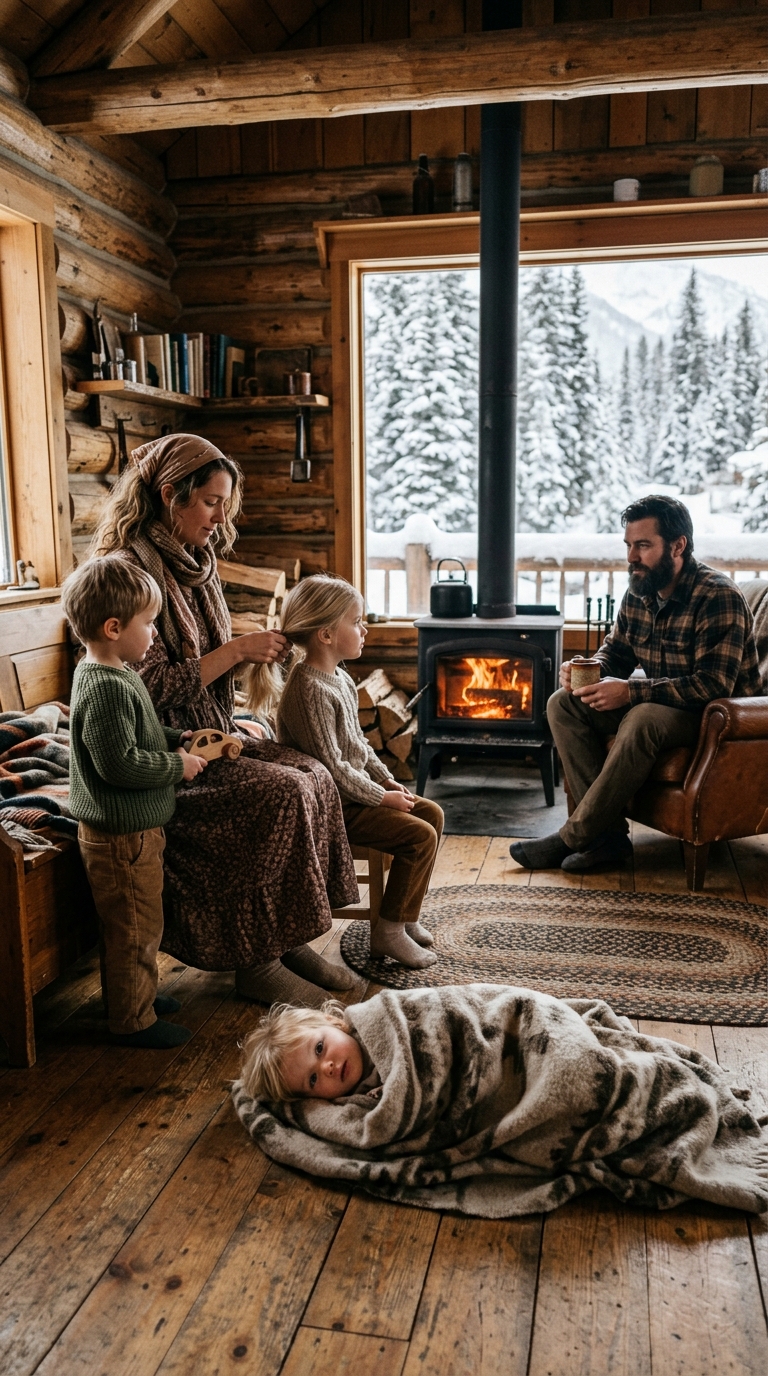
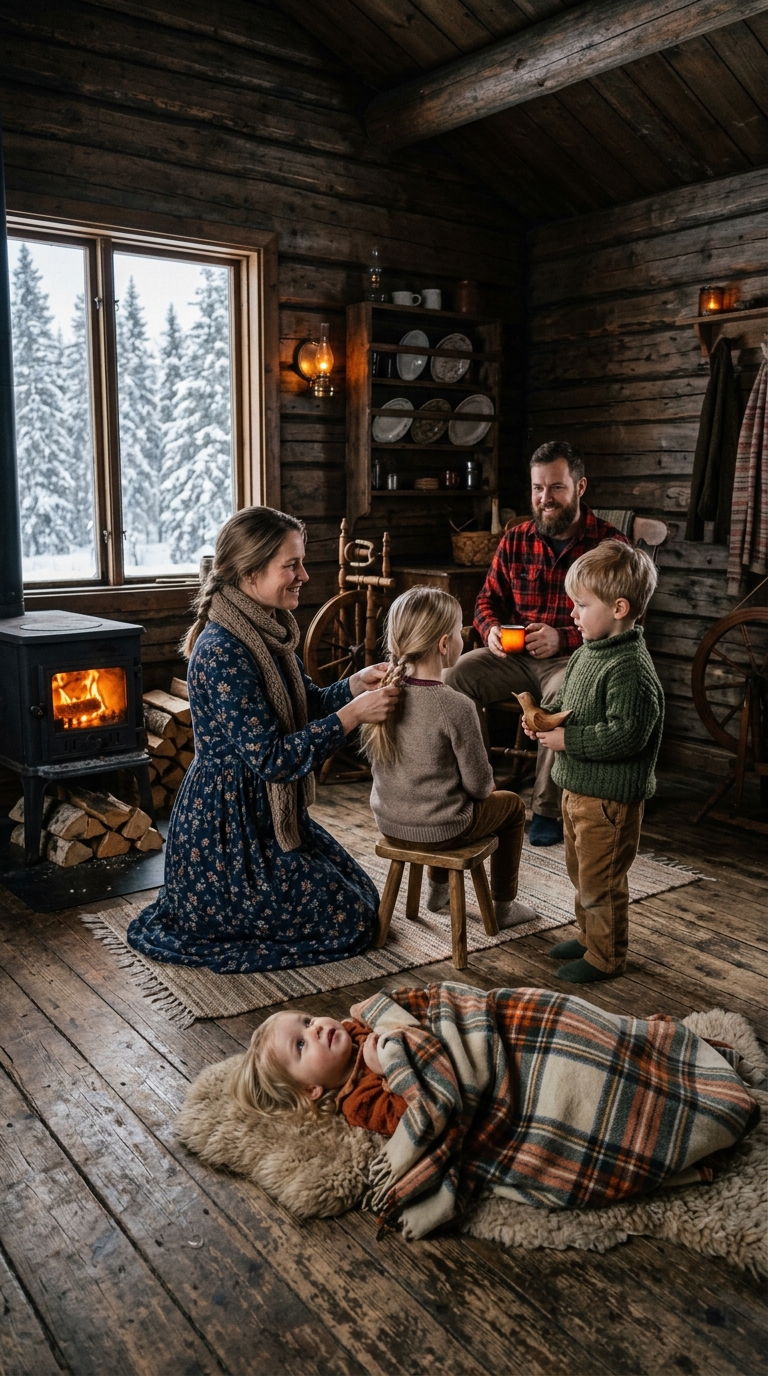
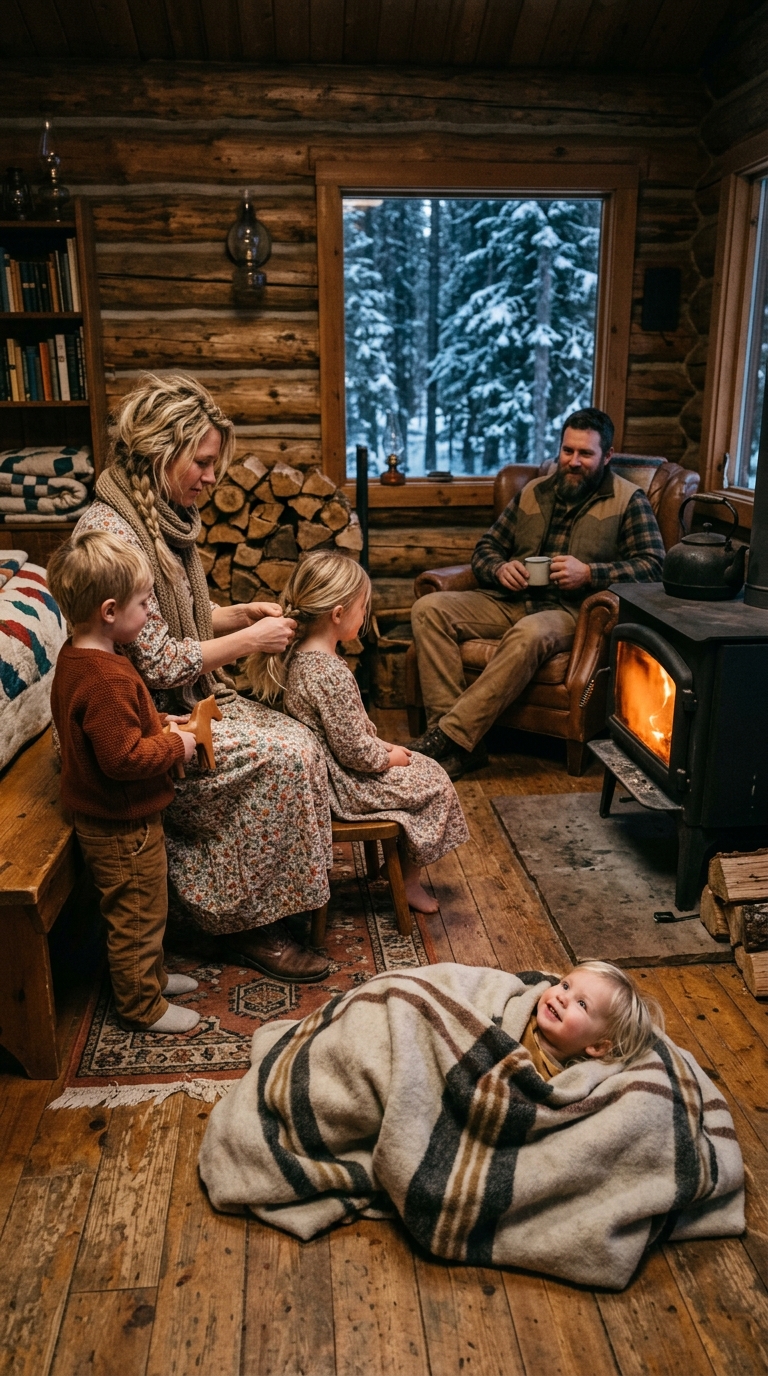
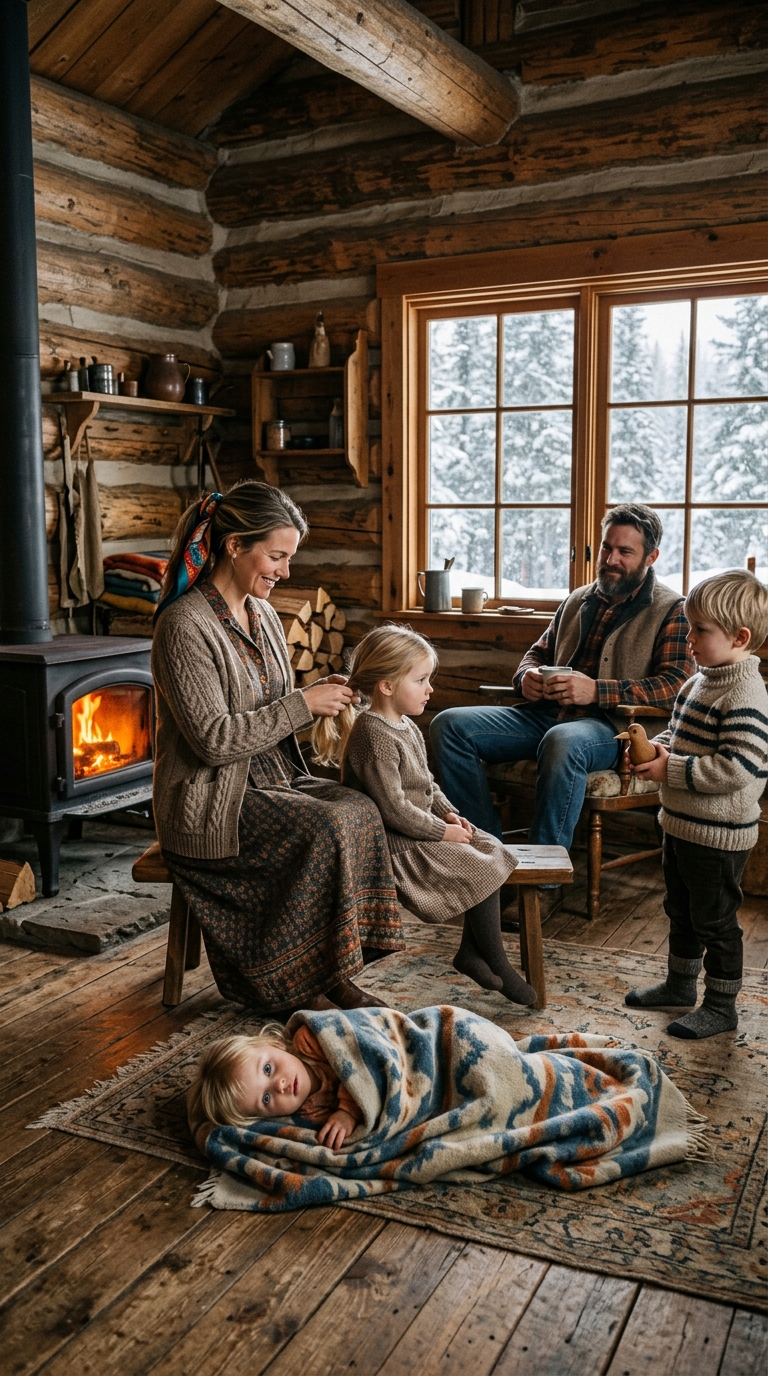
The children began following her everywhere like she was the sun in the middle of winter. Matías chopped wood without being asked. Jacinta learned to comb her hair so Emilia could tie ribbons in it. Little Tomás wouldn’t fall asleep unless she sang to him.
Julián stopped coming home at midnight. Now he returned at six, fixed leaks, and sometimes stood in the doorway watching her—with a respect and admiration he had never felt before.
But peace in the mountains is deceptive.
A month later, the real conflict erupted.
Not from her uncle—but from the richest man in town: Don Fausto, a ruthless boss who controlled the region’s timber and water. He arrived with four lawyers and an eviction notice, demanding the river rights crossing El Peñasco over an alleged tax debt.
Julián reached for his rifle—but Emilia stopped him.
“Bullets will only get you locked up and leave us alone,” she warned. “Let me fight this.”
The next day, Emilia went to town.
In front of Don Fausto, the sheriff, and the lawyers, she opened her worn suitcase and revealed the documents her uncle accused her of stealing.
They weren’t her family’s property papers.
They were hidden accounting ledgers.
“You’re not collecting a debt,” Emilia said, dropping them on the desk. “These records show you and my uncle laundering drug money through fake land debts for ten years. He tried to sell me because I found this.”
Silence.
Three days earlier, she had secretly sent copies to the military prosecutor in the capital.
“The army is two hours away,” she said coldly. “Touch our land—or my husband—and you’ll rot in federal prison.”
Don Fausto knew he was finished.
That same day, the army arrested him. Days later, her uncle Arturo and the moneylender were captured.
On the drive back, Julián stopped the truck, staring at the endless mountains.
“I was looking for someone to help me keep my children from starving,” he said quietly. “But you saved all our lives. You gave me my soul back, Emilia.”
She smiled.
For the first time in her life, she was exactly where she belonged.
“This is my home, Julián. And no one is taking it from me.”
Over the years, her story became legend across Chihuahua.
They no longer remembered her as the fragile woman who stepped off the truck.
They called her “The Lady of El Peñasco.”
The woman who dove into an icy river for a child who wasn’t hers.
The one who brought down the corrupt with courage and truth.
The one who turned a broken cabin into the warmest home in the mountains.
Sometimes, the worst tragedies push us toward the place we were always meant to find.
And Emilia—who ran just to survive—ended up finding a whole life.
