

PART ONE: THE LICENSE FILED BEFORE OUR VOWS
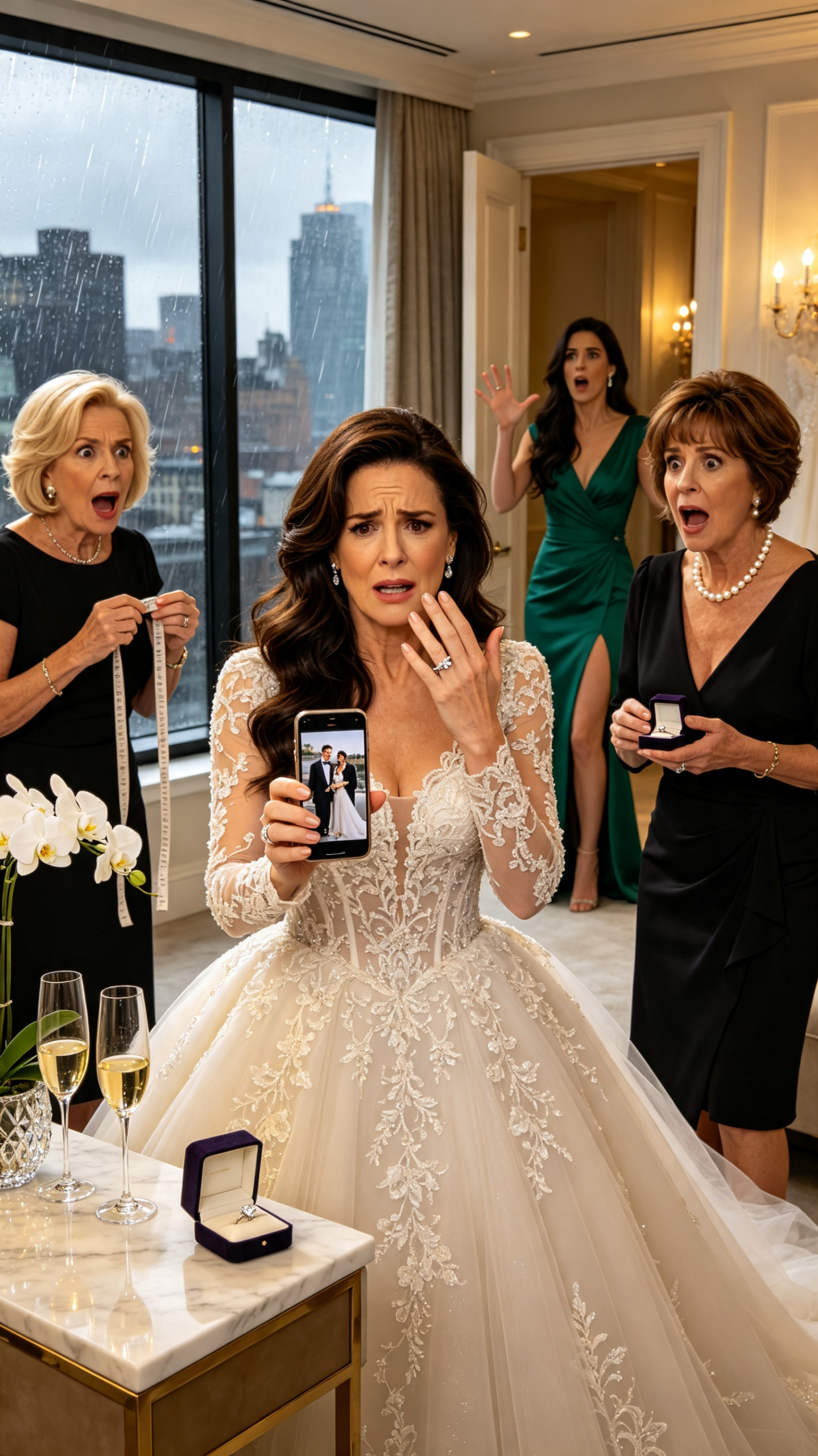
Seventeen hours before my wedding in Seattle, I discovered that my fiancé had legally married the woman he always called his most regrettable mistake.
I was standing in the bridal suite of the Fairmont Olympic Hotel as two seamstresses worked on the sleeves of my silk gown. Outside the windows, rain blurred the downtown towers, while the ballroom below was being decorated with cedar branches, white orchids, and hanging glass lights.
My closest friend, Lauren Brooks, sent me the photograph without saying a word. Graham Mercer stood outside the King County courthouse in the charcoal coat I had bought him for his birthday. Beside him, Celeste Ward held a marriage license against her ivory dress while his arm rested around her waist.
The courthouse clock read 3:18 Friday afternoon.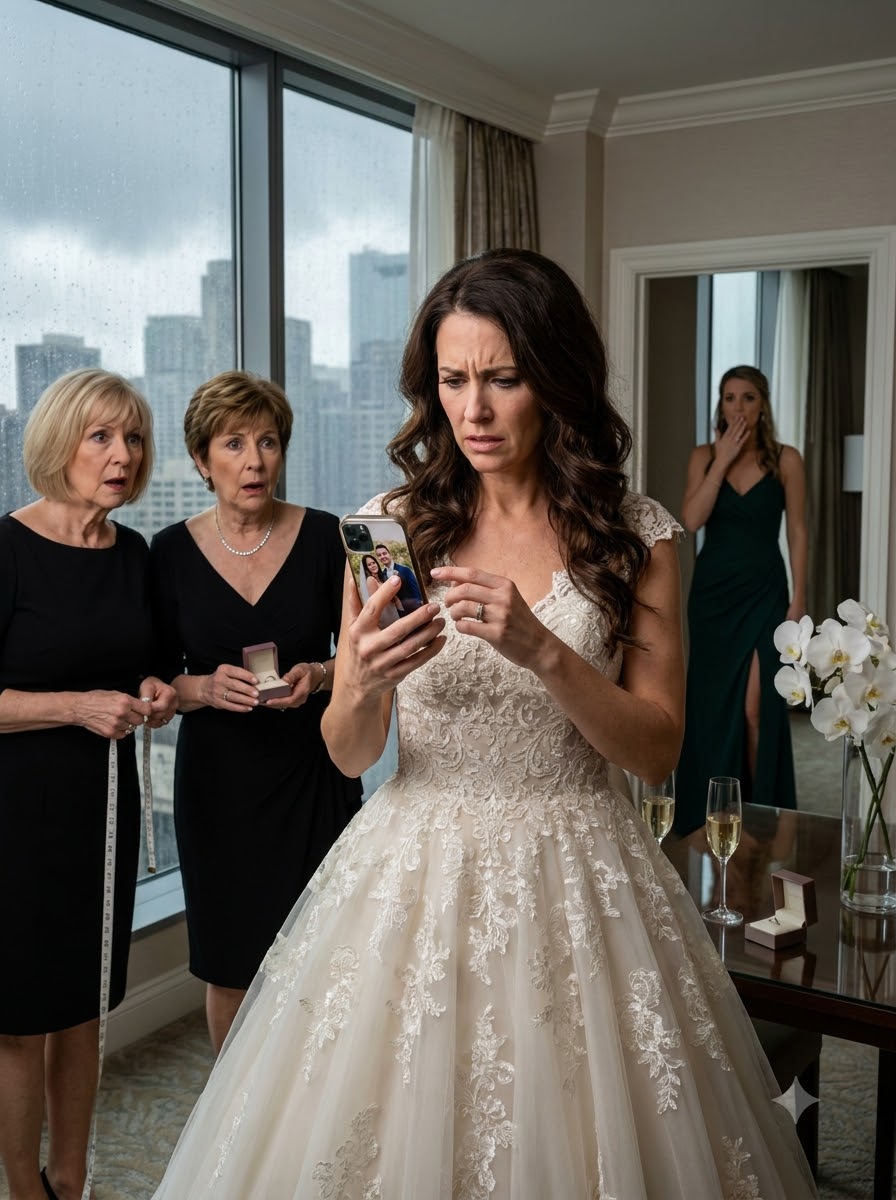
At 3:24, Lauren called.
“Claire, I verified the license through the county filing system and spoke with the clerk’s office,” she said. “They completed a civil ceremony this afternoon, and the record is valid.”
I asked the seamstresses to step outside and locked the suite door behind them. My wedding dress was still fastened around me as the future it represented vanished with astonishing speed.
Graham and I had been together for eight years. He was the public face of Mercer Maritime Holdings, a family business operating ports, ferries, and coastal freight terminals throughout the Pacific Northwest. I was Dr. Claire Bennett, a cerebrovascular surgeon specializing in complex aneurysms at Cascadia University Medical Center.
Our wedding had become an occasion long before it remained a promise. More than three hundred guests were traveling from five states, the governor was expected to attend dinner, and Mercer Maritime had arranged a charitable announcement during the reception.
Graham’s grandmother, Margaret Mercer, had chosen the date. She was seventy-eight, formidable, and recovering from a warning leak caused by an intracranial aneurysm that my team had monitored for eleven months.
I cared about Margaret independently of the grandson who had introduced us. She challenged hospital trustees, remembered nurses by name, and never treated my medical authority as merely a charming accessory to Graham’s success.
Before I could call him, a message from Graham appeared on my phone.
Celeste’s mother is dying, and Celeste needed legal security before making decisions about the family property. The courthouse arrangement is temporary and private. Tomorrow remains unchanged, so please do not create a crisis that could endanger Grandmother.
I read the final sentence twice.
Graham had married another woman, yet he portrayed my reaction as the dangerous situation.
I carefully removed the gown and changed into black trousers, a cream sweater, and the raincoat hanging beside my luggage. Then I photographed every wedding contract, payment authorization, vendor invoice, and message connected to his explanation.
My attorney, Miriam Sloan, answered immediately.
“Do not sign anything, do not authorize additional payments, and preserve the original messages,” she said. “A public ceremony tomorrow could expose you to allegations that you knowingly participated in a fraudulent representation.”
“Can I recover the money paid from my account?”
“Some deposits are lost, although anything not yet earned can be frozen. More importantly, Graham cannot use your professional reputation to legitimize a ceremony after marrying somebody else.”
I contacted the hotel’s event director and canceled every outstanding authorization connected to my name. The Mercer family could still pay for the flowers, champagne, security, and ballroom if they wanted, but they would do it without access to my accounts.
Graham called seven times before I finally answered.
“Claire, tell me you are not canceling vendors over a legal technicality.”
“Marriage is generally more than a technicality on the evening before a wedding.”
“Celeste required protection because her mother’s estate is being challenged, and this arrangement gives her standing. We will dissolve it quietly after the situation stabilizes.”
“You cannot marry me tomorrow while remaining married to her.”
He remained silent for several seconds.
“The ceremony can proceed symbolically, and the formal license can be completed later.”
I sat beside two engraved champagne glasses marked with our initials.
“You want Celeste to receive the legal marriage while I perform the public one.”
“I want the people who depend upon us to avoid unnecessary humiliation.”
“You mean your family, your company, and yourself.”
His voice became harder.
“Grandmother’s blood pressure has been unstable, and you know emotional shock could trigger another hemorrhage. If you disappear tomorrow, whatever happens to her will follow you professionally and personally.”
That threat erased the last uncertainty from my decision.
“Margaret is my patient, Graham, which means her health will never become leverage in this conversation.”
I ended the call, placed my engagement ring inside its velvet box, and asked Lauren to arrange the earliest flight to Denver, where my sister lived.
Before I left, I uploaded one file to the wedding video system. It contained no accusations, only the county record, Graham’s message calling his marriage temporary, and a written statement scheduled to appear if anyone publicly misrepresented my absence.
The ballroom could keep its enormous screen.
It simply would not display a bride.
PART TWO: THE CEREMONY BUILT AROUND AN EMPTY DOOR
I arrived in Denver shortly after midnight and disabled every notification except calls from my hospital. Graham contacted me from unfamiliar numbers, his mother left pleading messages, and the Mercer family attorney demanded confirmation that I would honor the contractual obligations.
I replied only through Miriam.
The next morning, Lauren entered the Seattle ballroom wearing the dark green dress chosen for my maid of honor. She sat near the back with her phone concealed beside the program and described what was happening through an encrypted call.
By ten o’clock, guests had filled the ballroom beneath thousands of white orchids. Graham stood beside the officiant, although his boutonniere disappeared after Margaret learned about the courthouse record.
At 10:14, Graham’s mother announced that a medical delay had affected the bride. At 10:27, the quartet repeated the processional. At 10:35, the hotel closed the entrance doors.
Then Graham walked onto the stage alone.
“Claire has experienced an episode of severe professional exhaustion,” he told the guests. “Our family is supporting her through a private health crisis, and we ask everyone to respect her recovery.”
Lauren whispered, “He is telling them you had a breakdown.”
I watched snow drift beyond my sister’s apartment window while my anger settled into something colder than panic.
Graham understood exactly how an accusation of instability could damage a female surgeon. Exhaustion made male physicians appear dedicated, while the same condition could make women seem unreliable, emotional, or unsafe around patients.
He had married Celeste and was now attempting to turn my refusal into medical evidence against me.
“Activate the ballroom file,” I said.
Lauren sent the remote command supplied by the hotel’s audiovisual manager. The enormous screen behind Graham shifted from our engagement portrait to the official county record.
Three hundred phones rose almost at once.
The next slide displayed Graham and Celeste outside the courthouse. The final slide showed his message explaining that their marriage was temporary and tomorrow should continue unchanged.
Beneath it appeared my statement: I am not experiencing a medical or psychological crisis. I declined to participate after discovering that the man awaiting me at the ceremony legally married another woman yesterday afternoon. My absence is an informed decision rather than a symptom.
Graham turned toward the screen and fell silent.
His mother insisted that the projection be taken down, but Margaret stood from the front row before the hotel staff could react.
“Leave it exactly where it is,” she said. “If my grandson believed this arrangement was reasonable, he may explain it beneath the evidence.”
Graham tightened his grip on the microphone.
“This concerns a private estate matter involving Celeste’s family.”
“Then why did you publicly diagnose Claire with a condition she does not have?” Margaret asked.
Guests began walking out before he could answer. Hospital trustees exited together, followed by port commissioners and two Mercer Maritime directors. The officiant shut his folder and moved away from the floral arch.
At 10:52, the ballroom was no longer functioning as a wedding venue. It had become a room of abandoned chairs, untouched champagne, and the unmistakable consequences of Graham’s certainty.
Margaret asked to speak with him privately. Lauren followed far enough to watch them enter an adjoining salon, though she could not hear what was said.
Eight minutes later, a server called for medical assistance.
Margaret had collapsed beside the conference table.
PART THREE: RETURNING FOR THE PATIENT, NOT THE FAMILY
Paramedics took Margaret to Cascadia University Medical Center, where imaging showed that her cerebral aneurysm had enlarged and begun leaking. The hemorrhage remained limited, but the vessel’s shape made conventional clipping extremely dangerous.
Dr. Daniel Cho, my neurosurgical partner, called me before noon.
“The aneurysm changed near the posterior branch, and the vessel wall appears less stable than yesterday,” he said. “We can manage her pressure temporarily, but the intervention cannot wait several days.”
For almost a year, Daniel and I had planned a hybrid procedure combining bypass surgery with an endovascular flow-diversion device customized to Margaret’s anatomy. Another qualified team could perform it, but I had studied every image, measurement, and variation in her circulation.
“Prepare the operating room for tomorrow morning and send me the new scans,” I said.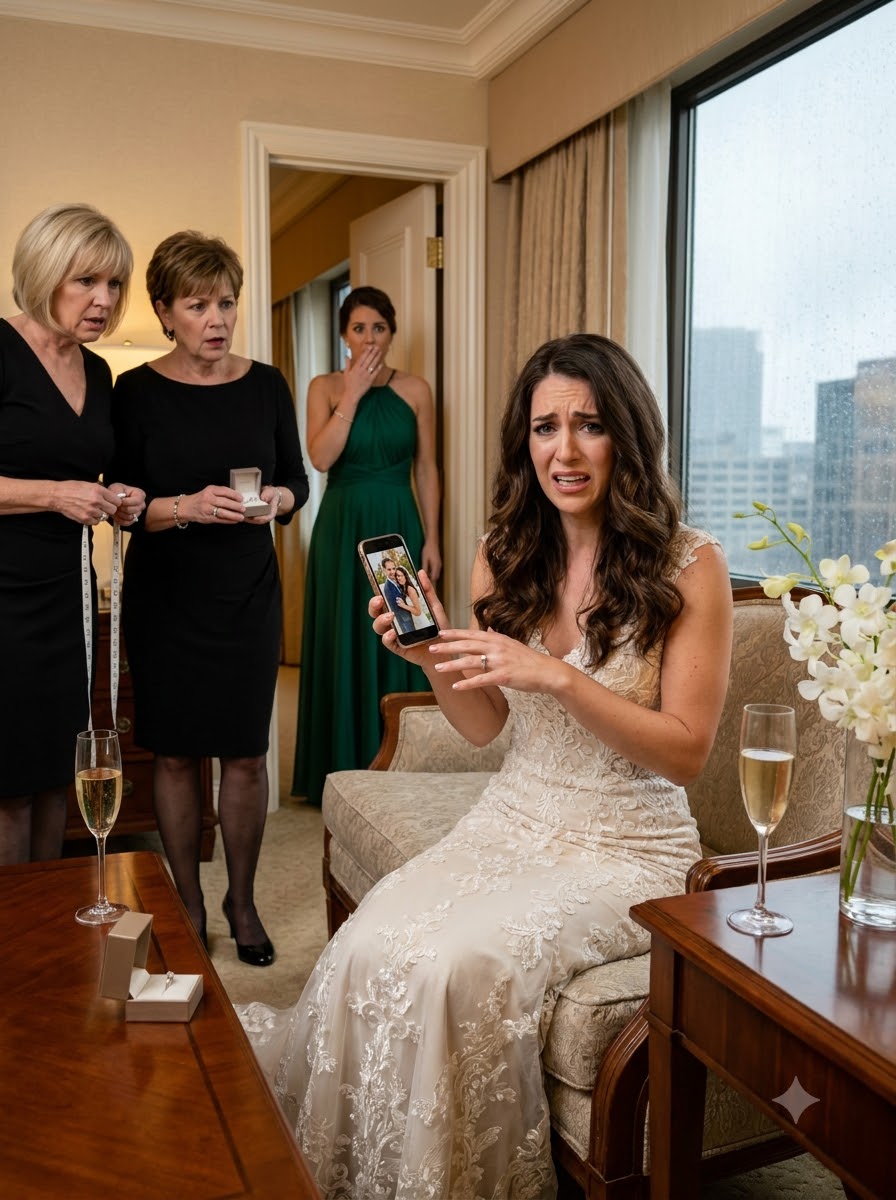
Daniel hesitated.
“Graham told the family you abandoned Margaret during an emergency.”
“Graham also told three hundred people I suffered a breakdown.”
“I did not believe him.”
“Neither will the medical record.”
Margaret asked to speak with me after she was stabilized. Her voice sounded weak but remained unmistakably direct.
“Claire, do not return because that family is frightened.”
“I am returning because you are my patient.”
“Good, because Graham appears to think my aneurysm is a marital negotiation.”
“Your aneurysm has already caused enough trouble without entering family law.”
She laughed, then coughed.
“Can you still operate after everything he did?”
“What Graham destroyed was personal trust. He did not erase my training or my responsibility to you.”
I arrived in Seattle that evening and entered the hospital through a staff entrance crowded with reporters. Inside the surgical planning room, scans covered three monitors while Daniel, vascular specialist Priya Shah, and the perfusion team reviewed the revised approach.
Nobody asked about my wedding dress. They asked about vessel angles, perfusion pressure, bypass timing, and the sequence for deploying the device.
That professional focus steadied me more effectively than comfort.
After the meeting, I visited Margaret in intensive care. She held my hand as I explained the risks of stroke, bleeding, cognitive injury, and death.
“Those risks existed before today,” she said. “The only new danger is that my grandson may attempt another explanation.”
I smiled despite myself.
“Hospital security has instructions limiting visitors, and Graham cannot enter the surgical unit without your consent.”
“Excellent. Consider that my first successful procedure.”
Graham waited outside the intensive-care doors wearing yesterday’s tuxedo trousers and a wrinkled white shirt.
“You came back,” he said.
“For Margaret’s surgery.”
“We can discuss everything after she is safe.”
“There is nothing to discuss about us.”
He moved closer.
“Celeste and I are already preparing an annulment. The marriage lasted less than a day, and the estate dispute has been resolved through another arrangement.”
“Your marriage lasted long enough to reveal what you believed I would tolerate.”
“I panicked because Celeste threatened to expose private company records unless I protected her.”
“Then you should have contacted counsel instead of marrying her.”
“I thought I could contain it.”
“You attempted to contain me as well.”
He glanced toward the intensive-care unit.
“If Grandmother survives, can we begin again?”
“Her survival will not purchase my forgiveness, and my work cannot become proof that your choices were repairable.”
Security approached after he refused to step away. I entered the restricted corridor without turning back.
PART FOUR: THE OPERATION AND THE SECOND SECRET
The procedure began at 6:10 the following morning and lasted eleven hours. We constructed a bypass to preserve blood flow, temporarily isolated the damaged segment, and guided the flow-diversion device through a narrow arterial route. Halfway through the deployment, Margaret’s pressure shifted, and monitoring indicated reduced circulation to the language center. Daniel adjusted the bypass while Priya repositioned the catheter by less than two millimeters.
The signals recovered.
By late afternoon, imaging confirmed that the aneurysm was no longer filling dangerously and that the bypass remained open. Margaret entered recovery with movement on both sides and appropriate responses to spoken commands.
When I finally stepped out of the operating room, Graham, his parents, and several Mercer directors were waiting in the consultation area.
“The procedure achieved its primary goals, although the next forty-eight hours remain critical,” I explained. “She will stay under neurological monitoring, and only approved visitors may enter.”
Graham’s mother began crying. Graham moved toward me as though gratitude had restored our intimacy, but I stepped beside Daniel before he could touch me.
Then Mercer Maritime’s general counsel, Rebecca Sloan, asked Graham to stay.
Celeste had handed over the private company records she had used as leverage. They revealed that Graham had authorized payments from a port-modernization fund into a consulting business controlled by her brother. He had married Celeste partly because spousal privilege and beneficiary rights would make her cooperation with investigators more complicated.
The dying mother, inheritance dispute, and emotional emergency had all been fabricated.
Rebecca turned toward me.
“Your attorney’s preservation notice prevented two wedding-related accounts from being closed. Those accounts received transfers connected to the consulting company.”
The wedding Graham had insisted I preserve had been partly funded through disputed corporate money.
Mercer directors suspended him that evening and launched an independent audit. After regaining consciousness, Margaret supported the decision through written authorization without asking me to lessen the consequences.
Graham later claimed Celeste had manipulated him, while Celeste claimed Graham had created the scheme. Their conflicting explanations gave investigators more information than either of them intended.
My engagement ended without negotiations because there had never been a legal marriage between us. Miriam recovered most of my unearned deposits, while the remaining losses became part of a civil claim involving misrepresentation and unauthorized financial transfers.
I returned to Denver for several weeks after Margaret stabilized. The hospital placed no restrictions on my practice because Graham’s accusation had been publicly disproven, while my colleagues documented that I had remained clinically capable throughout the emergency.
Margaret transferred her follow-up care to Daniel so that nobody could use our medical relationship as a path back into my personal life.
“You saved me without allowing the Mercers to keep owning your time,” she told me. “That is the outcome I want preserved.”
PART FIVE: A LIFE WITHOUT THE PERFORMANCE
One year later, I accepted leadership of a new cerebrovascular program in Denver. The position gave me authority to train surgeons, expand rural emergency consultation, and develop custom devices for patients whose anatomy made standard treatment impossible.
Margaret regained her speech, mobility, and independence. She stepped down as chair of Mercer Maritime after appointing outside directors and establishing protections for employees who reported financial misconduct.
Graham lost his executive position and eventually entered a plea agreement involving restitution and cooperation. His marriage to Celeste was annulled, although neither legal reversal changed what their courthouse photograph had revealed.
He requested one meeting before sentencing, and I agreed to ten minutes inside my attorney’s conference room.
Graham looked older, not dramatically transformed, but visibly changed by months without people fixing every consequence before it reached him.
“I returned the money connected to the wedding,” he said. “I also sold my boat to cover the deposits you could not recover.”
“Miriam confirmed the transfer.”
“I know repayment does not earn another chance.”
“Then you finally understand the difference between obligation and affection.”
He lowered his eyes to his hands.
“I did love you.”
“You loved the certainty that I would remain competent while you behaved irresponsibly.”
“That is difficult to hear.”
“It was more difficult to live.”
For once, he did not argue.
Before leaving, he asked why I had returned for Margaret after his family had used her illness against me.
“Because she was my patient and because I loved her,” I answered. “Neither reason belonged to you.”
“Was there ever a version of this where you forgave me?”
“There was a version where you told me the truth before the courthouse, canceled our wedding, and accepted what followed. You chose the version where everybody else carried the cost of protecting you.”
His eyes closed briefly.
“How do I forgive myself for that?”
“That responsibility cannot become another task assigned to me.”
I left the room without enough anger to pull me backward.
Several months later, our Denver program completed its first emergency rural consultation. A small hospital in western Colorado transmitted scans from a teacher with an unusual aneurysm, and our team guided stabilization before an air transfer.
After surgery, I stood beside the observation window as morning light crossed the mountains. My phone displayed one message from Margaret:
The patient chose her own life, and the surgeon finally chose hers. I consider both procedures successful.
I smiled before returning to rounds.
The wedding in Seattle had been created to display certainty: orchids, engraved crystal, influential guests, and a bride expected to appear because too much money had been spent for her refusal to remain imaginable.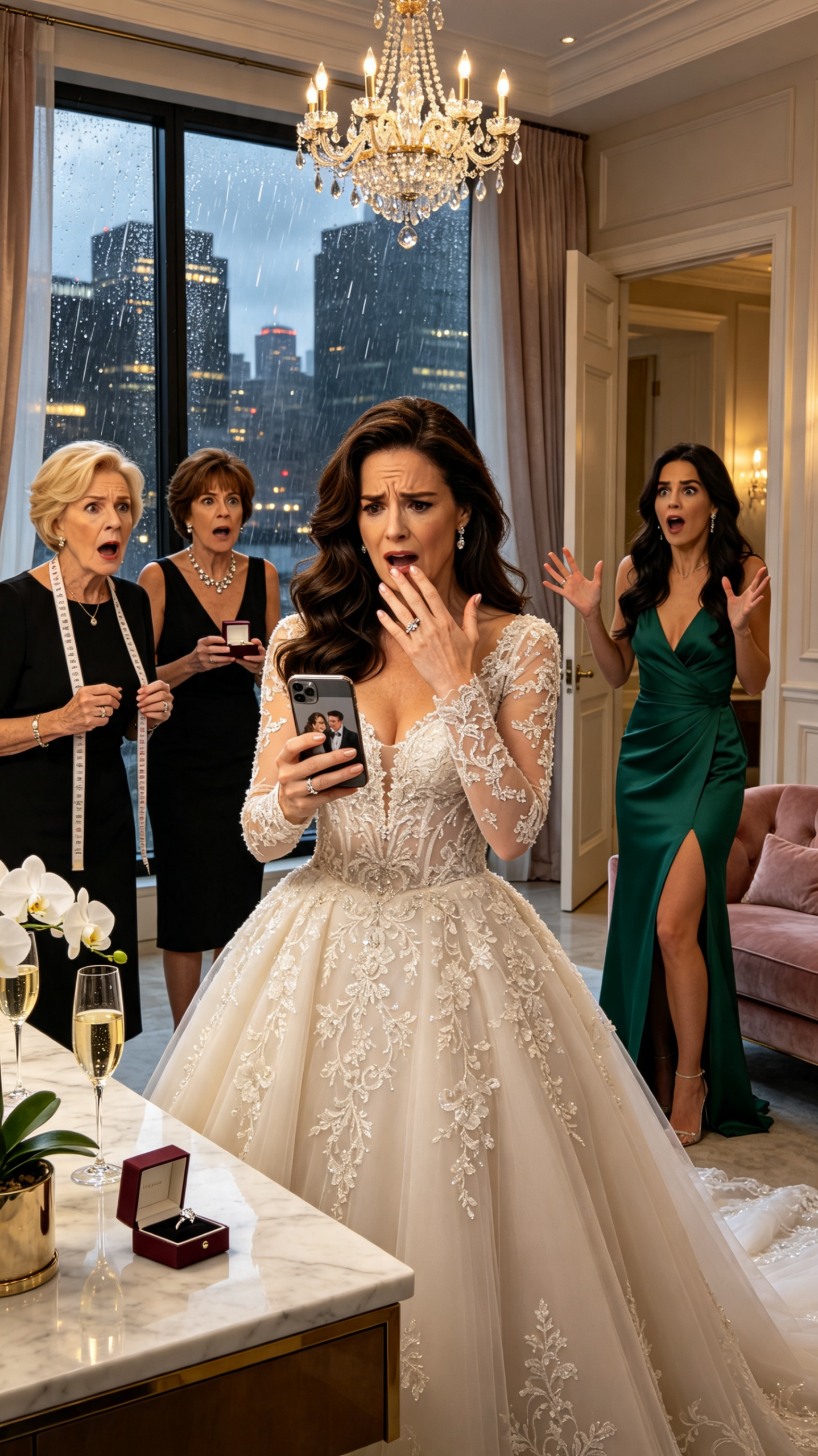
Graham believed the ceremony would continue because I had always been dependable. He failed to understand that dependability was a principle, not a leash.
I returned when a patient needed me. I did not return when a dishonest man demanded that I perform forgiveness.
That distinction rebuilt my life.
For years, I believed loyalty meant staying beside people through every emergency. Eventually, I learned that some emergencies are deliberately created by people who expect loyalty to shield them from consequences.
Those emergencies do not require devotion.
They require distance, evidence, and a locked operating-room door.
THE END
