

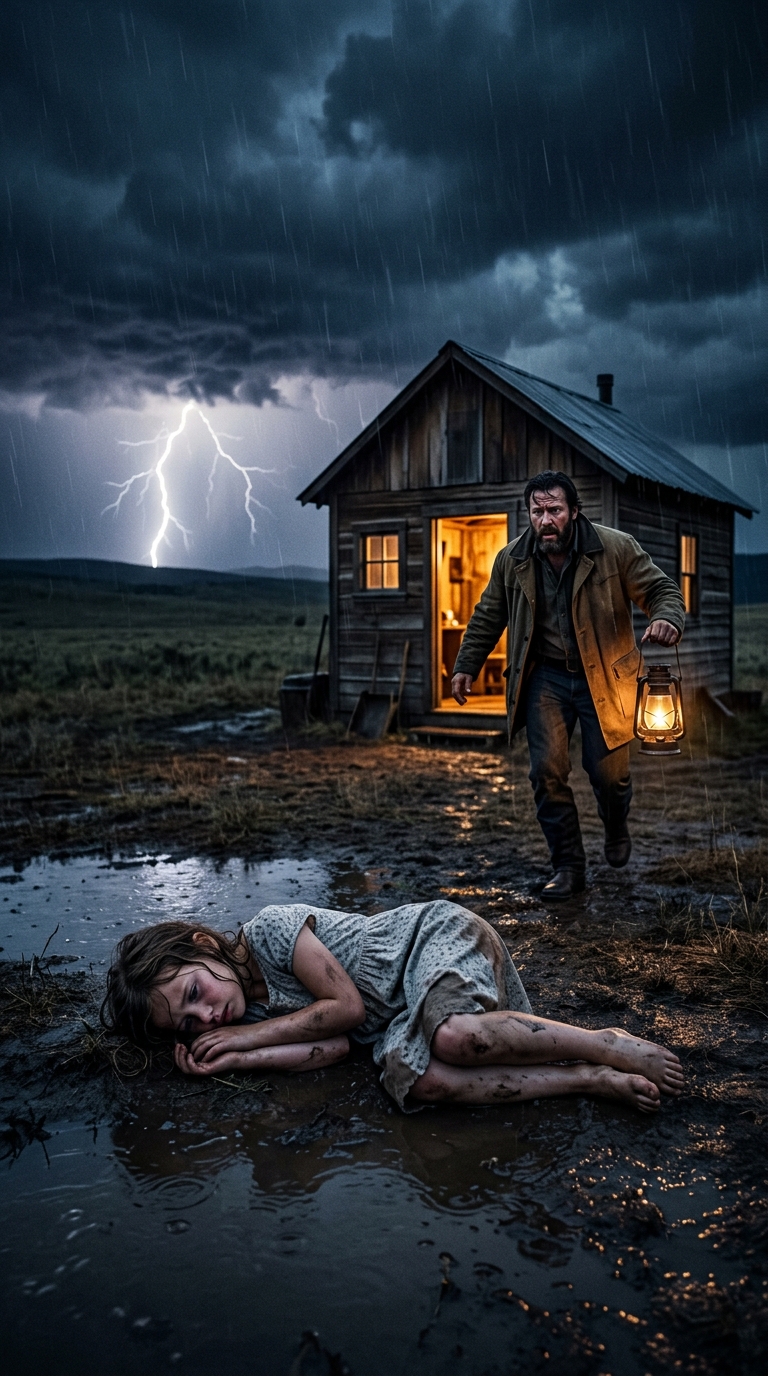
The summer of 1893 fell over San Lorenzo del Arroyo like a dry curse. It hadn’t rained for months in northern Coahuila, and the land—cracked and hardened—looked like old skin incapable of offering even a single promise. The men were short-tempered, the animals sensed danger before anyone else, and the wind carried dust instead of relief. In those days, Darío Montaño lived as if the world had nothing left to offer him.
Since he buried his wife Leonor, he hadn’t cried again.
Not because the pain had faded, but because it had settled inside him, hardening him. He built his ranch with his own hands—with anger and silence. He put up fences, repaired corrals, dug trenches—anything that kept him moving so he wouldn’t have to think. The result was a property respected by everyone in the region, but one that brought him no peace. Only work. Only exhaustion. Only nights that stretched far too long.
That night, he was washing the dust from his arms by the water pump when he heard a dull thud at the door. It didn’t sound like a knock. It sounded like something collapsing.
Darío stood still for a few seconds. In a place like that, at night, you didn’t rush toward the unknown. He walked slowly, unlatched the door, and pulled it open.
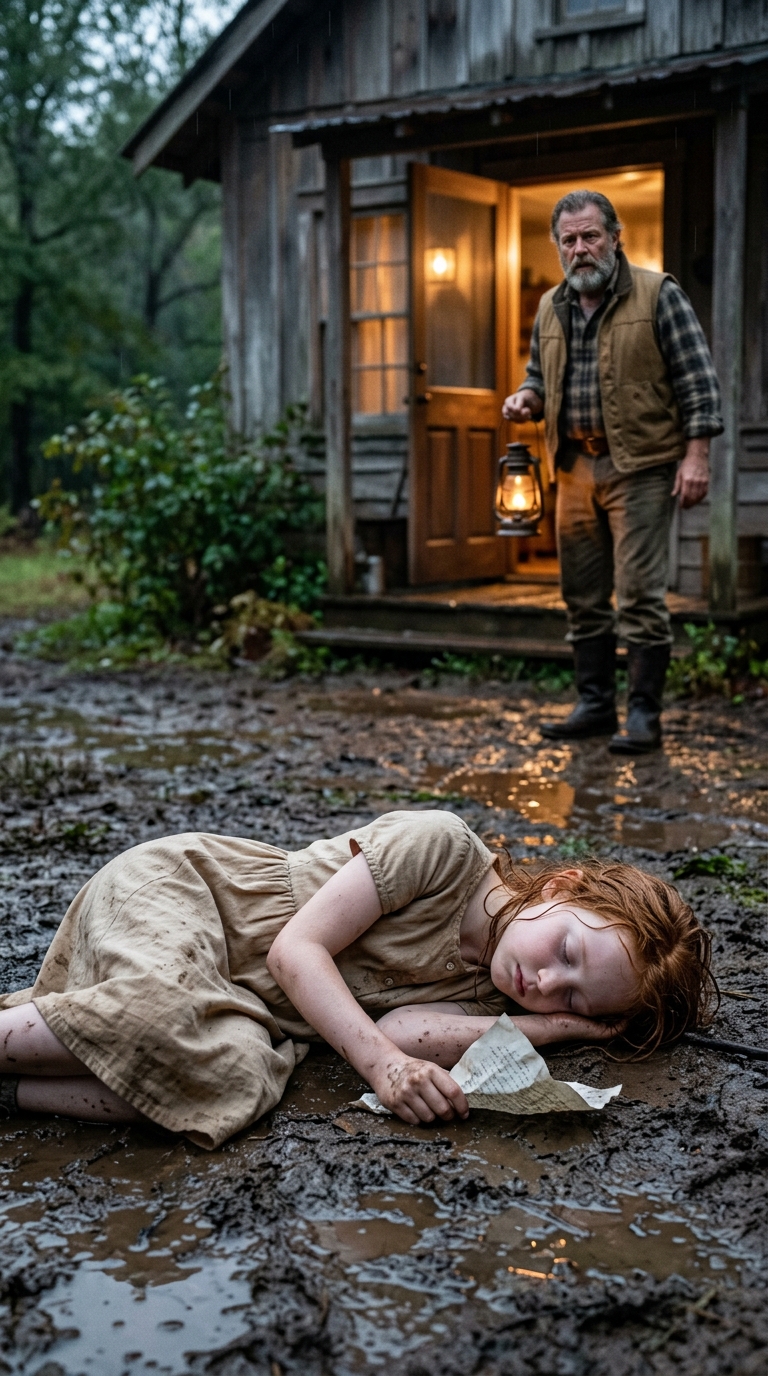
A little girl fell against his chest.
She was small—maybe nine years old. Her dress, once light-colored, was torn and stained with dried blood. Her lip was split, one eye swollen nearly shut, and her hands trembled with a desperation that didn’t belong to a child, but to someone much older—someone who had already seen too much. In one fist, she clutched a crumpled piece of paper.
“Easy,” Darío said, his own voice sounding strange to him—rough, rarely used. “You’re safe now.”
The girl tried to speak, but her breath broke in her chest. Darío caught her before she hit the ground and carried her inside. He lit a lamp, filled a basin with water, and when the light fully revealed her face, something tight and hardened inside him twisted.
This girl hadn’t been hurt just once.
She had been suffering for a long time.
“What’s your name?” he asked gently.
She looked at him with her one clear eye. They were light-colored eyes—far too serious for her age.
“Elisa… Elisa Rojas.”
The name struck him like a stone.
Tomás Rojas.
Darío remembered him well. A decent man, steady and honorable, owner of hundreds of hectares by the creek. They had crossed paths years ago at cattle fairs and boundary agreements. They weren’t close friends, but they respected each other. Months earlier, Darío had heard that Tomás had died in a wagon accident on the northern road. He had never fully believed that story.
“Where did you come from?” he asked.
“From Don Sebastián Valdés’s estate,” the girl whispered. “He says everything belongs to him now.”
Darío clenched his jaw. Sebastián Valdés was one of those polished men who knew how to smile while stealing. He had money, connections, influence in the courts and the land office. Generous when people were watching—merciless when no one could prove anything.
Darío took the paper the girl still clutched. It was a guardianship order, signed just weeks after Tomás Rojas’s death. The document named Sebastián Valdés as Elisa’s legal guardian and temporary administrator of the family’s land until she came of age.
At the bottom was the signature of Judge Ignacio Figueroa.
“Where did you get this?” Darío asked.
“I stole it from Valdés’s desk,” Elisa said, lifting her chin slightly. “He was drunk. I waited two days to run. I wanted to come here.”
Darío studied her carefully.
“Here? Why?”
She hesitated for a moment.
“My father said you were the only honest man for miles.”
Darío didn’t know what to say. No one had described him so plainly in years. He cleaned the wound on her brow, gave her something to eat, and prepared a small bed for her near the fire. Before falling asleep, the girl looked at him with barely contained fear.
“He’s going to come for me.”
Darío stood by the door.
“Then let him come.”
Sebastián Valdés arrived the next day, before noon, accompanied by a young deputy named Rubén Cota and his foreman—a massive man with small, cruel eyes known to everyone as Laureano. Darío saw them approaching from a distance and stepped onto the porch before they could dismount.
Valdés spoke with polished manners, as if this were nothing more than a courtesy visit.
“I’ve come for the girl, Montaño. She is under my legal guardianship.”
Darío didn’t move.
“The girl arrived at my house beaten, with a split lip and bruises across her face. That matters more to me than your paper.”
Valdés held his smile for a moment longer.
“Children fall. They run, they trip… they make things up. You know how that is.”
“No,” Darío replied. “What I know is what a coward looks like when he hides behind the law.”
The foreman stepped forward, but Rubén Cota did not. The young deputy avoided meeting Darío’s eyes.
Valdés held up the guardianship order.
“Judge Figueroa signed this. The girl belongs to me until she comes of age, and the land is under my administration. If you refuse to hand her over, I’ll charge you with obstruction—and I can have your titles, your water rights, everything you own reviewed.”
That was a real threat. A calculated one.
Darío met Valdés’s gaze without blinking.
“I’ll speak to the judge. I’ll review that document. Until then, Elisa isn’t going anywhere.”
The smile vanished from Sebastián Valdés’s face.
“You’re making a mistake.”
“Maybe,” Darío said. “But not today.”
After they left, Elisa stood by the kitchen window, arms crossed tightly over her chest.
“People are afraid of him,” she said.
“I know.”
“They’ll try to scare you too.”
Darío pulled a chair over, turned it around, and sat facing her.
“Your father trusted me without ever telling me. I don’t know why. But I know what kind of man he was—and I know what kind of man Valdés is. That’s enough for me.”
That same day, Darío rode into town. At the land office, he was assisted by Ana Cordero—a serious, meticulous clerk who had spent years watching documents pass through her hands and secrets get trapped beneath official seals. Darío asked to review Tomás Rojas’s records. Ana hesitated, glanced toward the door, then handed him two folders.
What he found made his blood run cold.
Tomás’s land had not been transferred directly into Valdés’s name, but to a company called Northern Lands Company, in which Sebastián was the primary partner. The transfer had been completed just days after Tomás’s death.
Too fast.
Too clean.
Too convenient.
Darío looked up.
“How many times has this happened?”
Ana held his gaze, tension visible in her eyes.
“Twelve cases in less than two years,” she said quietly. “Entire families. Some sold for almost nothing. Others disappeared overnight. And the same company shows up every time.”
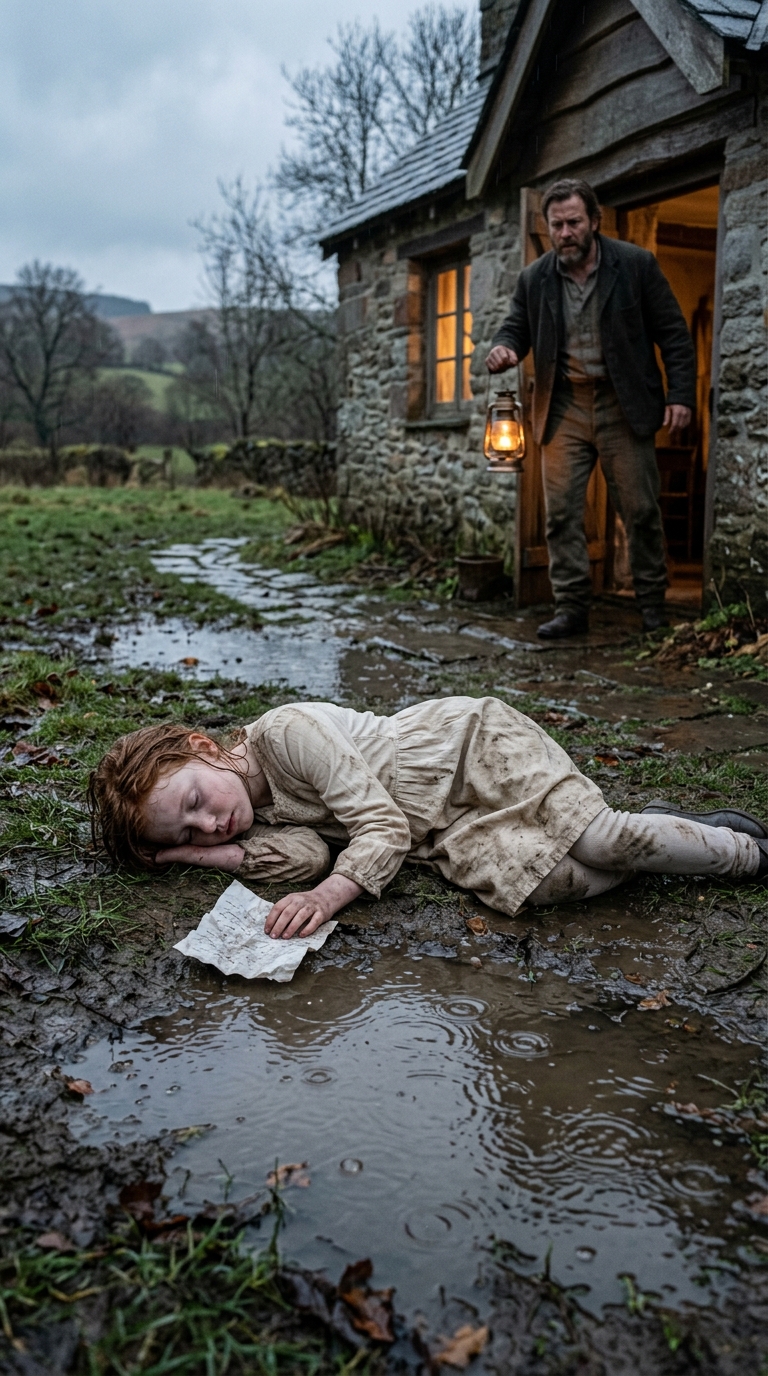
With every answer, the shape of the monster became clearer.
Darío left the office and went straight to the church of San Lorenzo. Father Mateo Lucero—a tall, stern, and courageous priest—listened without interrupting. When Darío finished, the priest opened a drawer, took out a sealed envelope, and placed it on the bench.
“Tomás Rojas came to see me three weeks before he died,” he said. “He left this in case anything happened to him. He told me to give it to the right man.”
Inside was a letter—and a payment receipt from the Northern Lands Company to Judge Ignacio Figueroa.
A bribe.
It was no longer a suspicion. It was a perfectly constructed trap.
Tomás had uncovered the fraud. He had been gathering evidence—and he knew he was in danger. In the final line of the letter, written in a steady hand, he had added: “If I’m not here, keep Elisa safe. That’s all that matters.”
Darío closed his eyes for a moment. And for the first time since Leonor’s death, the pain he carried inside him found direction.
The days that followed were a whirlwind. Rubén Cota returned to the ranch alone and confessed that he had heard the beatings at Valdés’s house—and had done nothing out of fear. This time, however, he was willing to testify. Ana Cordero agreed to provide certified copies of the records. Father Mateo formally handed over the letter. And Darío sought out Gabriel Reyes, a retired lawyer who lived on the outskirts of town and still had a reputation for being incorruptible.
Gabriel read everything in silence, then said:
“We won’t win with noise. We’ll win with precision. This has to go before a judge who isn’t bought.”
They managed to convince a traveling magistrate, sent from Saltillo, to hear the case in San Lorenzo. The news spread like wildfire. On the day of the hearing, the small courthouse was packed. Farmers, widows, merchants, families who had lost their land without fully understanding how—everyone crowded inside and outside the building.
Sebastián Valdés arrived immaculate, dressed in a dark suit with his own lawyer at his side. He smiled as if he still controlled the board.
But this time, he didn’t.
Gabriel Reyes built the case piece by piece: Tomás’s suspicious death, the guardianship signed before the legal deadline, the failure to notify Elisa’s maternal grandmother, the irregular transfers, the records of other families, the payment to Judge Figueroa. Rubén Cota testified. Ana Cordero presented the documents. Father Mateo handed over Tomás’s letter.
Then Elisa asked to speak.
The entire room fell silent.
The girl walked to the front, her back straight. A faint yellow bruise still marked the area near her eye. She swore to tell the truth—and did so without tears, without embellishment, with a voice that hurt more precisely because it did not seek pity. She spoke of being locked away, of Laureano beating her, of Valdés telling her she was nothing without him and that her father’s land no longer belonged to her. She spoke of the night she escaped. She spoke of how she had stopped crying because she realized her tears wouldn’t stop anyone.
When she finished, no one moved.
Not even Darío.
The magistrate then turned to Judge Figueroa and, in front of everyone, asked whether he had received money from the company linked to Valdés. The man was sweating. He tried to avoid answering. He looked to Sebastián for help.
That look condemned him.
He confessed.
He admitted he had taken the money. He admitted the guardianship did not comply with the law. He admitted he believed no one would ever question it.
Murmurs erupted across the room.
Sebastián made one last desperate attempt to save himself. He announced that he would “voluntarily” return the land to Elisa as an act of goodwill.
But it was too late.
The magistrate immediately annulled the guardianship, restored ownership of the land to Elisa, and ordered a formal investigation into fraud, bribery, and dispossession against Valdés and his associates.
Elisa sat beside Darío, her hands clenched tightly in her lap. When she heard that she was no longer under Sebastián’s authority, she slowly opened her fingers—as if her entire body had just remembered it no longer needed to brace for the next blow.
That was what broke something inside Darío.
Days later, state authorities arrived. Laureano fled. Figueroa was suspended. Sebastián Valdés was arrested at the door of his own house—without applause, without speeches—like men fall when they grow so used to power that they forget how fragile it becomes the moment someone dares to speak the truth out loud.
Two weeks later, Darío took Elisa back to the Rojas estate.
The house was empty, dusty—but still standing. The orchard needed work, one barn door hung loose on a single hinge, and the porch needed new nails. But the moment the girl placed her hand on the doorway, she stopped, breathing slowly, as if she could still feel her father’s presence in the wood.
“I can almost hear him whistling when he came back from the fields,” she whispered.
Darío stood beside her, not touching her, simply sharing the silence.
“The land is yours, Elisa. Clean. No debts. No claims.”
She nodded—but didn’t step inside yet.
“I can’t take care of it alone.”
“No,” he said. “Not alone.”
She turned and looked at him, her expression no longer just fear—but something stronger.
“Then help me. Until I can.”
Darío looked at the house, the land, the endless sky stretching above both properties. For years, he had built his ranch to avoid feeling. Now he understood that real shelter wasn’t about hiding from pain—it was about finally finding something worth protecting.
“Yes,” he said. “We’ll work both lands. Together.”
Elisa smiled faintly—a small, but genuine smile. The kind that doesn’t ask permission to enter your life.
The rains came in September. The creek began to sing again between the stones. The earth softened. The grass turned green. In San Lorenzo del Arroyo, old records began to be reviewed, and other families found the courage to reclaim what had been taken from them. Rubén Cota was no longer a frightened young man—he became a worthy deputy. Ana Cordero kept her position. Father Mateo remained a refuge for those who had lost faith in men’s justice. And Gabriel Reyes took on two more cases without charging a single cent.
At the Rojas estate, the orchard bore fruit again. At the Montaño ranch, the fences were repaired. And many afternoons, when the work was done, Darío and Elisa sat in the kitchen—him with a cup of coffee, her with warm milk—reviewing accounts, seeds, rainfall, and plans.
One October night, the girl looked up from a notebook where she was writing carefully.
“Do you regret it?” she asked.
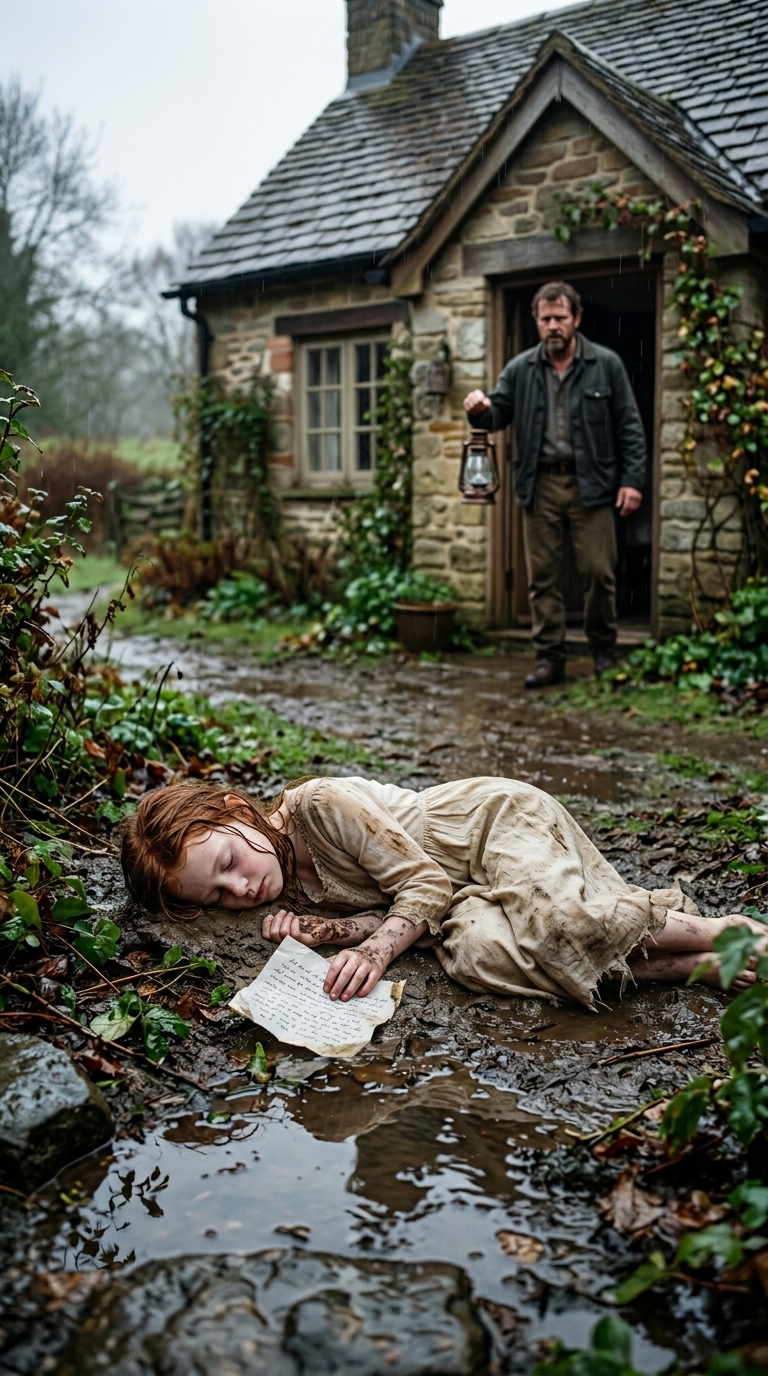
Darío took a moment to understand the question.
He thought about the risks, the threats, the fear—everything he had faced since the night that bloodied child had collapsed at his door.
Then he thought about the hollow silence of his house before she arrived.
He shook his head.
“Not even a little.”
Elisa smiled again and went back to writing.
Outside, the rain fell steadily over both the Rojas land and the Montaño ranch—as if the sky had finally decided to bless them equally.
And Darío realized he had spent years confusing solitude with peace.
True peace, he discovered as he looked at that brave, living girl—finally safe—was not about remaining untouched.
It was about having someone worth protecting.
And now, at last, they both had a home that no one would ever take from them again.
