

For nine years, I convinced myself that my marriage had been buried for good.
I had billions, a Manhattan penthouse, private jets, expensive cars, and a corporation with my name across the building—but none of those things could stop my hands from shaking when an anonymous envelope appeared on my desk containing a single sentence:
“If you still remember Emily, come here.”
My name is Daniel Whitmore.
I was thirty-five years old, and from the outside, my life looked complete.
Money.
Influence.
A carefully guarded existence where almost no one dared mention my ex-wife.
Emily Whitmore.
The woman I had once loved.
The woman I had thrown out of our mansion nine years before.
The woman I had never apologized to.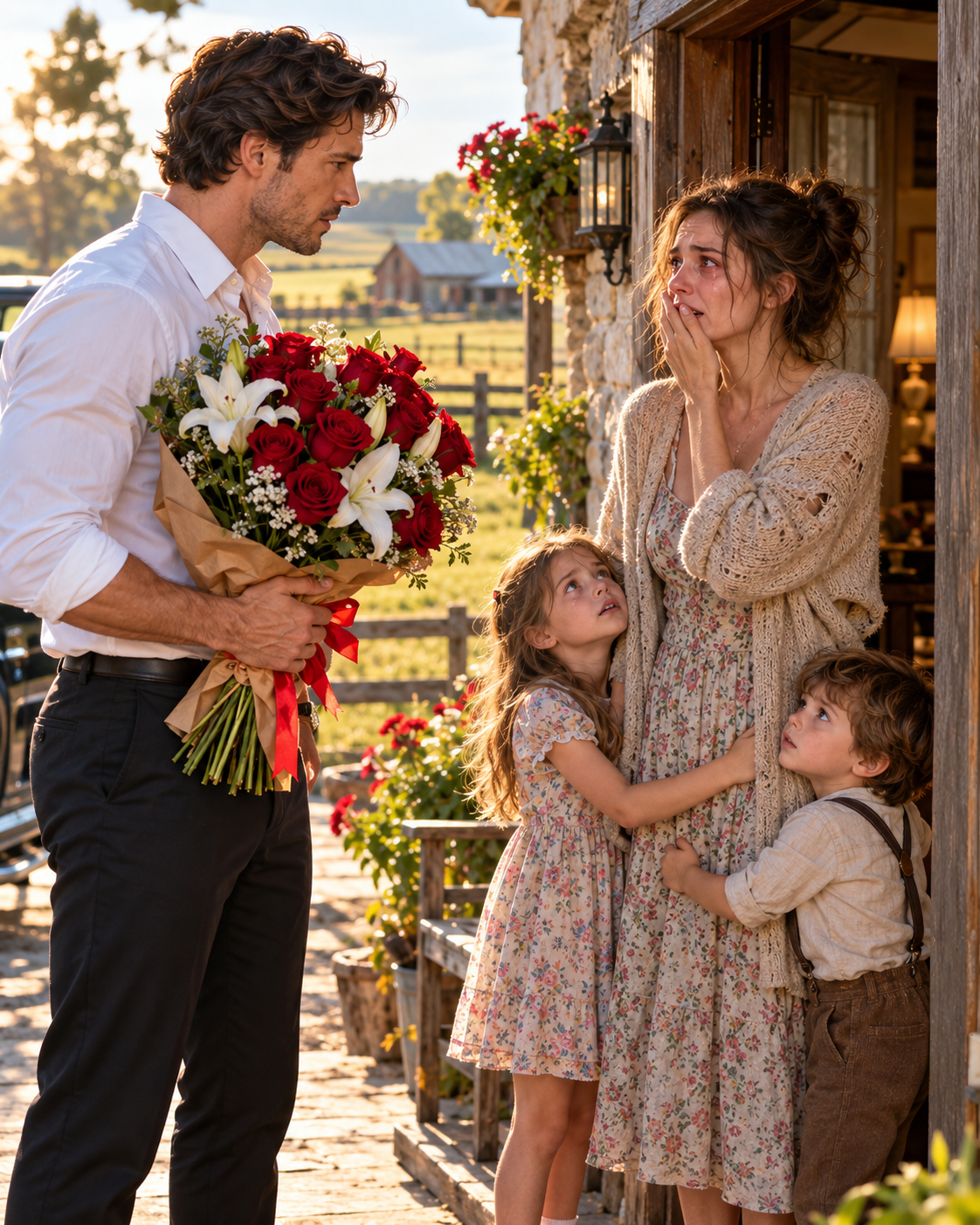
One afternoon, my assistant set an envelope on my desk.
No company logo.
No return address.
Only my name written across the front.
Inside was a single piece of paper.
**If you still remember Emily, come here.**
Beneath those words was an address in a remote Kentucky town.
I read it twice.
Then once more.
And suddenly, nine years vanished.
I was twenty-six again, standing at the top of our staircase after a disastrous business deal, angry at the entire world and desperate to find someone to blame.
So I chose Emily.
“You’re holding me back,” I told her.
She stared at me through tears.
“Daniel, please…”
I refused to listen.
“Leave.”
That one word destroyed everything.
Emily packed a small suitcase and walked through the front doors of the mansion she had once helped me believe could actually become a home.
I stayed on the staircase.
I watched her disappear into the darkness.
And I never saw her again.
Until now.
Maybe.
My longtime driver, Marcus, stepped into my office.
“I need a car,” I told him.
He studied the address.
“That’s several hours away.”
“I know.”
“Do you want me to come?”
“No.”
He paused.
“This time,” I said, “I’m going alone.”
For once, I abandoned the tailored suits and private aircraft.
I rented an ordinary pickup truck and began driving.
Manhattan disappeared behind me.
Skyscrapers gave way to highways.
Highways narrowed into two-lane roads.
Then came forests, farmland, and tiny towns where the name Daniel Whitmore meant absolutely nothing.
With every mile, memories returned.
Emily laughing in our kitchen.
Emily waiting for me at the dinner table.
Emily warning me that money would mean nothing if I lost everyone I loved.
My grip tightened around the steering wheel.
“I should’ve apologized,” I whispered.
But apologies are easy when the person you hurt isn’t standing there to hear them.
Hours later, the GPS finally announced:
“You have arrived.”
I slowed the truck.
The address led down a narrow dirt road bordered by thick trees.
There was no mansion.
No iron gate.
No luxury.
Just an old wooden fence and a modest house beneath a patched metal roof.
Cardboard covered one of the windows.
The porch sagged slightly on one side.
I climbed out of the truck.
“Emily…”
I could barely force her name from my mouth.
Then I noticed something beside the porch.
A pair of worn children’s shoes.
I stopped cold.
Children?
I had never known Emily had any.
My heartbeat thundered as I climbed the porch steps.
I raised my hand toward the door.
Before I could knock, it slowly opened from the inside.
And when I saw the face looking back at me, every word I had rehearsed for nine years disappeared.
PART 2
The boy standing in the doorway looked about eight years old.
Thin.
Dark-haired.
Barefoot.
He wore a faded blue T-shirt and jeans that were slightly too short at the ankles.
But none of that was what made me stop breathing.
It was his eyes.
Gray-blue.
Exactly like mine.
For several seconds, neither of us spoke.
He stared at me with the cautious curiosity children reserve for strangers who somehow seem familiar.
Then his eyebrows pulled together.
“Are you lost?”
My mouth opened.
Nothing came out.
Behind him, somewhere inside the house, I heard a woman’s voice.
“Ethan? Who is it?”
Every muscle in my body locked.
I knew that voice.
Nine years could not erase it.
Age could not erase it.
Distance could not erase it.
Emily appeared behind the boy.
She stopped.
The color vanished from her face.
One hand immediately went to the doorframe.
I had imagined this moment thousands of times.
Sometimes she slapped me.
Sometimes she screamed.
Sometimes she shut the door.
Sometimes she cried.
Never once had I imagined silence.
But silence was what I got.
Emily looked older.
Not dramatically.
Just enough for nine difficult years to show themselves.
Her brown hair was pulled into a loose knot. She wore jeans and a simple cream sweater, and there were faint lines around her eyes that hadn’t existed when I last saw her.
But she was still Emily.
The woman I had loved before ambition turned me into someone neither of us recognized.
Her gaze moved from me to the truck.
Then back to me.
“Daniel.”
Hearing my name in her voice nearly broke something inside me.
I swallowed.
“Emily.”
The boy looked between us.
“You know him?”
Emily’s expression changed.
Not fear.
Something more complicated.
Something guarded.
“Yes.”
The boy waited.
Emily slowly placed her hand on his shoulder.
“Ethan, go inside.”
“But—”
“Please.”
He looked at me one more time before disappearing down the hallway.
Emily stepped onto the porch and quietly pulled the door closed behind her.
For several seconds, we simply stood there.
Nine years between us.
Nine years of unanswered questions.
Nine years of anger.
Nine years of regret.
I had negotiated acquisitions worth billions without blinking.
I had sat across tables from politicians, bankers, hostile boards, and men determined to destroy me.
Yet standing in front of Emily, I could barely speak.
Finally, she did.
“Who gave you this address?”
“I don’t know.”
Her eyes narrowed.
“I received a letter.”
Something flickered across her face.
“A letter?”
I reached into my jacket and handed it to her.
She unfolded it.
Her expression changed as she read the sentence.
“If you still remember Emily, come here.”
She stared at the handwriting.
Then she closed her eyes briefly.
“You recognize it.”
Emily folded the paper again.
“My neighbor, Ruth.”
I looked toward the neighboring property, barely visible through the trees.
“Why would she send it?”
Emily handed the paper back.
“Because she thinks she knows what’s best for everyone.”
There was irritation in her voice.
But beneath it was exhaustion.
I looked toward the door.
Toward where Ethan had disappeared.
Emily noticed.
Her shoulders stiffened.
“Don’t.”
One word.
Quiet.
Firm.
“Emily…”
“Don’t stand there and start calculating.”
“I’m not.”
“Yes, you are.”
She knew me too well.
Even after nine years.
I lowered my voice.
“How old is he?”
Her jaw tightened.
“Eight.”
The porch seemed to tilt beneath my feet.
Eight.
I did the arithmetic anyway.
Of course I did.
Emily saw the answer arrive on my face.
“Emily…”
She turned away.
“Is he mine?”
The question came out almost soundless.
She looked toward the trees.
For several seconds, she said nothing.
Then:
“Yes.”
The world stopped.
No dramatic thunder.
No sudden music.
Nothing except wind moving through Kentucky trees and the distant sound of a dog barking.
I stared at her.
“I have a son?”
Emily finally faced me.
“You have a biological son.”
The distinction hit hard.
I deserved it.
“Why didn’t you tell me?”
The moment those words left my mouth, I regretted them.
Emily laughed once.
There was no humor in it.
“Why didn’t I tell you?”
“I didn’t mean—”
“You threw me out.”
“I know.”
“You told me I was holding you back.”
“I know.”
“You watched me leave.”
“I know.”
Her voice trembled now.
“And three weeks later, when I discovered I was pregnant, I called you.”
My chest tightened.
“What?”
“I called your office.”
I shook my head.
“No.”
“Four times.”
“I never knew.”
“I sent letters.”
I stared at her.
“What letters?”
“Three of them.”
“I never received anything.”
Emily’s eyes hardened.
“I went to New York when I was almost five months pregnant.”
My stomach dropped.
“You came back?”
“I stood in the lobby of Whitmore Tower for forty minutes.”
I couldn’t breathe.
“What happened?”
“Your security director told me you refused to see me.”
“I never knew you were there.”
“He said you had instructed your staff not to allow me near you.”
A memory surfaced.
My father.
Standing in my office days after Emily left.
Telling me that if I wanted to build an empire, I needed to stop looking backward.
My father had controlled much of my schedule then.
My correspondence.
My security.
My staff.
And he had despised Emily because she challenged him.
Because she challenged me.
Because she reminded me there were things more important than Whitmore Holdings.
I stepped backward.
“My father.”
Emily said nothing.
“He intercepted everything.”
“I don’t know.”
“I do.”
And suddenly, details from nine years earlier began fitting together.
The security changes.
The new assistants.
The private mail screening.
My father repeatedly insisting Emily had already moved on.
I had believed him because believing him was easier than admitting I wanted her back.
But none of that absolved me.
Even if every letter had been destroyed.
Even if every call had been blocked.
Even if Emily had stood downstairs while I sat forty floors above her without knowing.
The first cruelty had still been mine.
I had told her to leave.
I sat on the porch step.
For perhaps the first time in my adult life, I didn’t care what I looked like.
“I missed eight years.”
Emily folded her arms.
“Yes.”
“His first word.”
“Yes.”
“His first step.”
“Yes.”
“Birthdays.”
“Yes.”
“School.”
“Yes.”
Each answer landed like a hammer.
I looked at the closed door.
“Does he know about me?”
“No.”
“Nothing?”
“He knows his father and I separated before he was born.”
“That’s all?”
“That’s all.”
I nodded slowly.
Then I asked the question I was terrified to ask.
“Does he think I abandoned him?”
Emily looked at me for a long moment.
“I never told him that.”
That hurt more than if she had said yes.
After everything I had done to her, Emily had still protected me from the hatred of a child I didn’t even know existed.
“Why?”
“Because children shouldn’t carry adult bitterness.”
I lowered my head.
“I’m sorry.”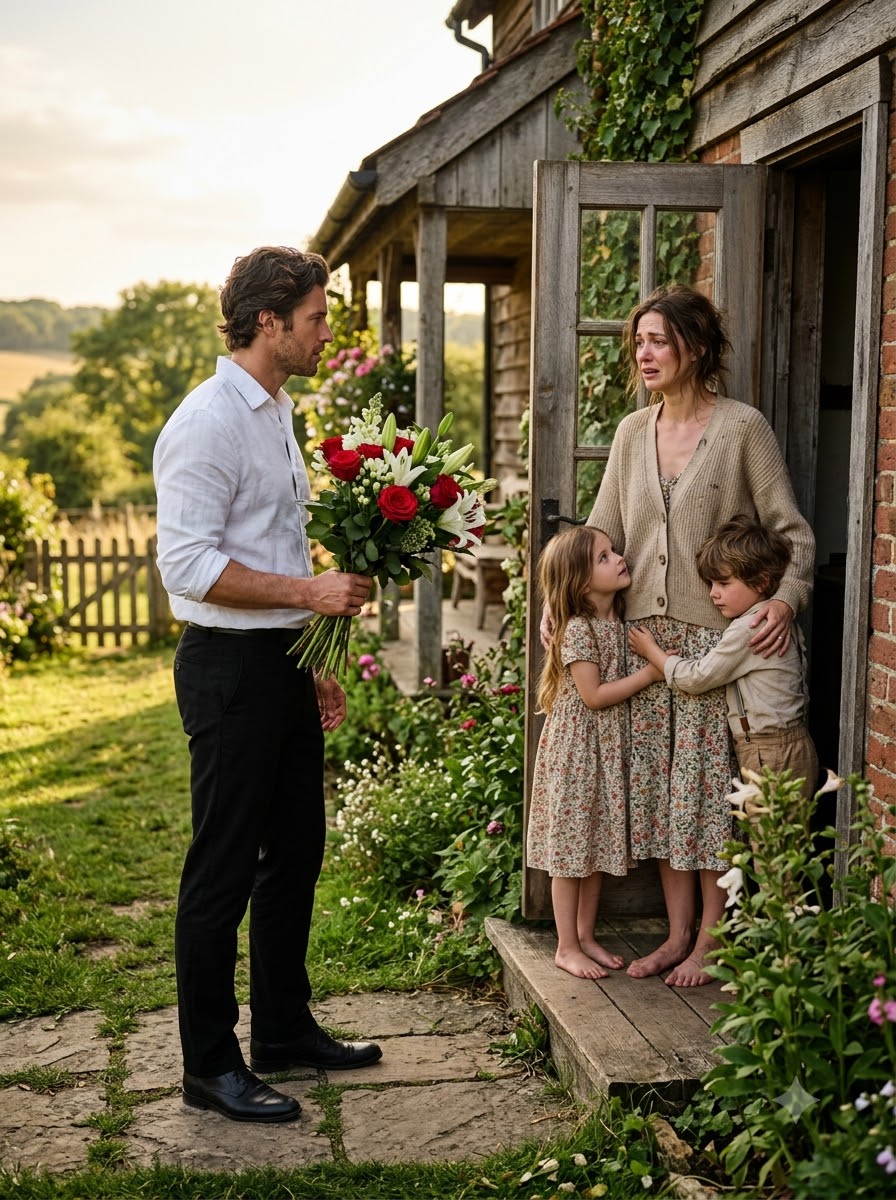
Emily didn’t respond.
I forced myself to look at her.
“I know that isn’t enough.”
“No.”
“I know it doesn’t fix anything.”
“No.”
“I know I don’t have the right to arrive here after nine years and ask you to forgive me.”
“No.”
Every answer was calm.
And deserved.
“But I am sorry.”
Her eyes filled slightly.
I continued.
“I was cruel to you because I was failing, and blaming you was easier than admitting I was terrified. You loved me when I had almost nothing, and the moment I started becoming successful, I treated your love like a weakness.”
Emily looked away.
“I spent years telling myself you left because our marriage wasn’t strong enough.”
My voice cracked.
“But you didn’t leave.”
I swallowed.
“I threw you away.”
For the first time, tears slipped down Emily’s cheeks.
She wiped them away quickly.
“I waited for you to come after me.”
That sentence destroyed whatever remained of my defenses.
“I know.”
“No, Daniel. You don’t.”
She looked directly at me.
“I waited at a motel outside the city for six days.”
I closed my eyes.
“Every time headlights came through the curtains, I thought it might be you.”
I couldn’t speak.
“Then I realized you weren’t coming.”
“Emily…”
“So I stopped waiting.”
The door opened behind her.
Ethan stood there.
“Mom?”
Emily immediately wiped her face.
“I’m okay.”
He didn’t look convinced.
His gaze shifted toward me.
“Is he making you sad?”
I stood.
“No.”
My voice came out rough.
“I mean… I did. A long time ago.”
Ethan frowned.
Children understand more than adults want them to.
“Who are you?”
Emily looked at me.
Then at him.
I could see the decision happening behind her eyes.
Finally, she opened the door wider.
“Come inside.”
The house was small but warm.
A wood stove sat in the corner.
Books filled mismatched shelves.
Crayon drawings covered part of the refrigerator.
On the kitchen table sat a half-finished model airplane.
I stopped when I saw it.
Ethan noticed.
“I built that.”
“It’s good.”
“The wings aren’t finished.”
“They look pretty good to me.”
He studied me.
“You know airplanes?”
“A little.”
That earned the smallest smile.
Emily gestured toward a chair.
I sat.
Ethan remained standing.
Emily crouched beside him.
“There’s something I need to tell you.”
His eyes moved between us.
“This is Daniel.”
“Okay.”
Emily took a breath.
“He’s your father.”
Silence.
Ethan stared at me.
Then at Emily.
Then back at me.
“My dad?”
I felt tears burn behind my eyes.
“Yes.”
He stepped backward.
“Where were you?”
No boardroom had ever frightened me like those four words.
I could have blamed my father.
I could have explained intercepted letters.
Blocked calls.
Manipulation.
But Ethan deserved the simplest truth first.
“I made a terrible mistake.”
He waited.
“I hurt your mother, and I let too much time pass before trying to fix it.”
Emily looked at me.
I continued.
“I didn’t know about you.”
Ethan glanced at her.
She nodded.
“He didn’t.”
He looked back at me.
“So you didn’t leave because of me?”
“No.”
I answered instantly.
“Never.”
His shoulders relaxed slightly.
“Did you want kids?”
The question nearly shattered me.
“With your mother?”
I looked at Emily.
“Yes.”
Ethan seemed to think about that.
Then he walked over to the table.
He picked up the model airplane.
One wing hung crookedly.
“Can you fix this?”
I stared at him.
Emily covered her mouth.
I stood slowly.
“I can try.”
That afternoon, I sat at a scratched kitchen table beside the son I had never known and repaired the wing of a ten-dollar model airplane.
It was the most important thing I had done in years.
I stayed at a motel that night.
Emily did not invite me to stay.
I did not ask.
The next morning, I returned.
And the morning after that.
For three days, I didn’t mention money.
I didn’t mention lawyers.
I didn’t mention custody.
I didn’t offer to buy Emily a house.
I simply showed up.
Ethan showed me his school.
His favorite creek.
The tree he had tried to build a fort in.
He asked hundreds of questions.
“Do you really live in New York?”
“Yes.”
“Is your building huge?”
“Pretty huge.”
“Do you own an airplane?”
“Yes.”
His eyes widened.
“A real one?”
“A real one.”
“Can I see it?”
I looked toward Emily.
“Someday, if your mom says it’s okay.”
Emily noticed that.
I could tell.
On the fourth evening, after Ethan went to bed, Emily and I sat on the porch.
“You’re different,” she said.
“I hope so.”
“You used to solve everything with money.”
“I still solve too many things with money.”
She almost smiled.
“Why haven’t you offered me any?”
“Because you’d throw me off the porch.”
That actually made her laugh.
Quietly.
Briefly.
But it was Emily’s laugh.
The same laugh from our kitchen nine years earlier.
Then her expression became serious again.
“Daniel, this doesn’t mean we’re getting back together.”
“I know.”
“It doesn’t mean you can take Ethan.”
“I know.”
“And I won’t let your world swallow him.”
“I won’t either.”
She studied me.
“What do you want?”
I thought carefully.
Not like a businessman.
Like a father.
“A chance.”
“To do what?”
“To know him.”
I paused.
“And if you’ll allow it, a chance to show you that the man who told you to leave isn’t the man standing here now.”
Emily looked toward the yard.
“That could take years.”
“I have years.”
“You don’t know that.”
“Then I’ll use whatever time I have.”
The next morning, I called Marcus.
“Cancel everything for the week.”
He went silent.
“Everything?”
“Everything.”
“The Singapore meeting?”
“Yes.”
“The board retreat?”
“Yes.”
“The investor dinner?”
“Yes.”
Marcus paused.
Then he asked:
“Did you find her?”
I looked through the kitchen window.
Emily was making pancakes while Ethan argued passionately about whether chocolate chips counted as breakfast food.
“Yes.”
Marcus exhaled.
“And?”
I smiled faintly.
“I found more than her.”
Over the next several months, my life changed.
Not dramatically.
Not overnight.
Slowly.
Which was exactly how Emily wanted it.
I flew to Kentucky regularly.
Commercially at first.
Ethan thought airports were exciting.
I attended a school science fair where his volcano failed to erupt until twenty minutes after judging ended.
I sat through a youth baseball game in freezing rain.
I learned he hated tomatoes.
Loved astronomy.
Was afraid of thunderstorms but pretended he wasn’t.
And inherited my unfortunate habit of taking things apart just to see how they worked.
Emily watched all of it cautiously.
I never pushed.
Eventually, Ethan visited New York.
He stood in the lobby of Whitmore Tower staring upward.
“This whole building is yours?”
“My company owns it.”
“So basically yours.”
Emily smiled.
“He got your ego.”
“I was hoping he’d avoid that.”
For the first time, she laughed without stopping herself.
But there was still one piece of the past I needed to confront.
My father.
He was seventy-one by then and living in Connecticut.
I drove there alone.
He was sitting in his study when I placed copies of Emily’s old letters on his desk.
Ruth had kept them.
Emily had given her copies years earlier.
My father’s expression changed immediately.
“You remember these?”
He said nothing.
“You blocked her calls.”
Silence.
“You stopped her from seeing me.”
Finally, he leaned back.
“You were building something extraordinary.”
My jaw tightened.
“She was pregnant.”
“I didn’t know that at first.”
“At first?”
His silence answered me.
I stared at the man whose approval I had spent half my life chasing.
“You found out.”
“Yes.”
“And you still said nothing.”
“She would have distracted you.”
I laughed.
It sounded empty.
“Distracted me?”
“You became everything I knew you could become.”
I leaned toward him.
“No.”
He frowned.
“I became everything you wanted me to become.”
I straightened.
“And it cost me nine years with my son.”
He tried to speak.
I stopped him.
“You did something unforgivable.”
Then I paused.
“But so did I.”
That distinction mattered.
My father had hidden Emily’s attempts to reach me.
But he had not forced me to throw her out.
He had not stopped me from finding her afterward.
That failure belonged to me.
I left without another word.
A year passed.
Then another.
I never bought Emily a mansion.
She didn’t want one.
Instead, when the roof needed replacing, she allowed me to pay half.
Half.
She insisted.
When Ethan needed braces, we split the cost.
When he wanted a telescope for his tenth birthday, Emily bought the telescope.
I bought the astronomy books.
I learned that being a father wasn’t about providing everything.
It was about being there for ordinary things.
Homework.
Dentist appointments.
Bad dreams.
School concerts.
Arguments about bedtime.
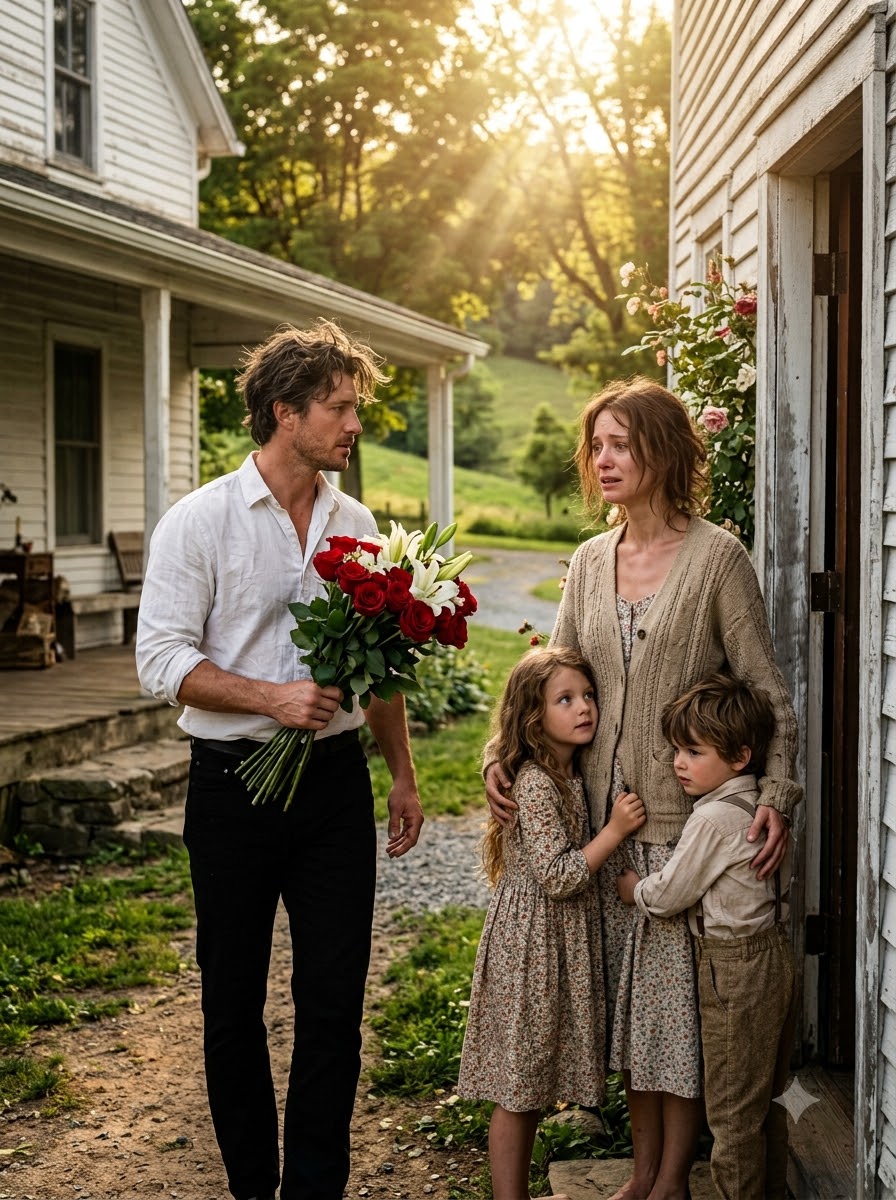
Life.
Two years after I first arrived on that porch, Emily and I stood beside the creek behind her house while Ethan searched for frogs downstream.
“I hated you for a long time,” she said.
“I know.”
“Then I stopped.”
I looked at her.
“When?”
“I don’t know.”
She smiled sadly.
“Probably when I realized hating you required me to keep carrying you around.”
“That sounds like something you’d say.”
“It is.”
We watched Ethan crouching near the water.
Then Emily reached for my hand.
It was the first time she had touched me that way in eleven years.
I didn’t move.
I barely breathed.
“You’re still here,” she said.
“I told you I would be.”
“You used to make promises too.”
“I know.”
“But this time…”
She looked at me.
“You kept showing up.”
I squeezed her hand gently.
A year later, we married again.
Not in Manhattan.
Not in a cathedral.
Not surrounded by executives, politicians, photographers, or people trying to impress one another.
We married beneath an old oak tree in Kentucky.
There were twenty-three guests.
Marcus stood beside me.
Ruth cried through the entire ceremony.
And Ethan carried the rings.
When Emily walked toward me, I remembered the night I had watched her walk away.
Nine years earlier, I had remained frozen on a staircase while the woman I loved disappeared through a door.
This time, I walked toward her.
Halfway.
Because I had finally learned something money had never been able to teach me.
Love isn’t proven by what you own.
It isn’t proven by promises made when everything is easy.
It is proven by who you become after you’ve failed someone.
By whether you take responsibility.
By whether you return.
By whether you stay.
Today, the old Kentucky house still stands.
The roof is new now.
So are the windows.
But Emily refused to change the porch.
It still leans slightly to one side.
Ethan is older.
The model airplane we repaired together still sits on a shelf in his room.
And the anonymous letter Ruth sent me is framed in my study.
Not because it reunited me with Emily.
Not exactly.
It hangs there because it reminds me of the day I finally stopped believing success could protect me from regret.
People sometimes ask why I keep one cheap piece of paper beside awards, photographs, and documents worth millions.
I always give them the same answer.
Because everything else in that room represents what I built.
That letter represents what I almost lost.
For nine years, I thought Emily had become part of my past.
I was wrong.
She had been living a life I should have been brave enough to search for.
And somewhere inside that small Kentucky house was a boy with my eyes, building model airplanes and wondering about a father he had never met.
I can never recover those eight missing years.
I can never watch his first steps.
I can never hear his first word.
I can never take back the night I told Emily:
“Leave.”
Some mistakes cannot be erased.
They can only be answered by what you do afterward.
So now, whenever Ethan asks me why I drive instead of flying when we visit certain places, I tell him I like the road.
He doesn’t know the whole reason.
Maybe someday he will.
Because once, on a long road between Manhattan and Kentucky, the skyscrapers disappeared behind me, the world became quiet, and for the first time in years, I had nowhere left to hide from the man I had become.
At the end of that road was an old wooden fence.
A leaning porch.
A woman I had never stopped loving.
And a little boy who opened the door and asked:
“Are you lost?”
I was.
For nine years.
I just didn’t know it until I finally found my way home.
