

PART 1
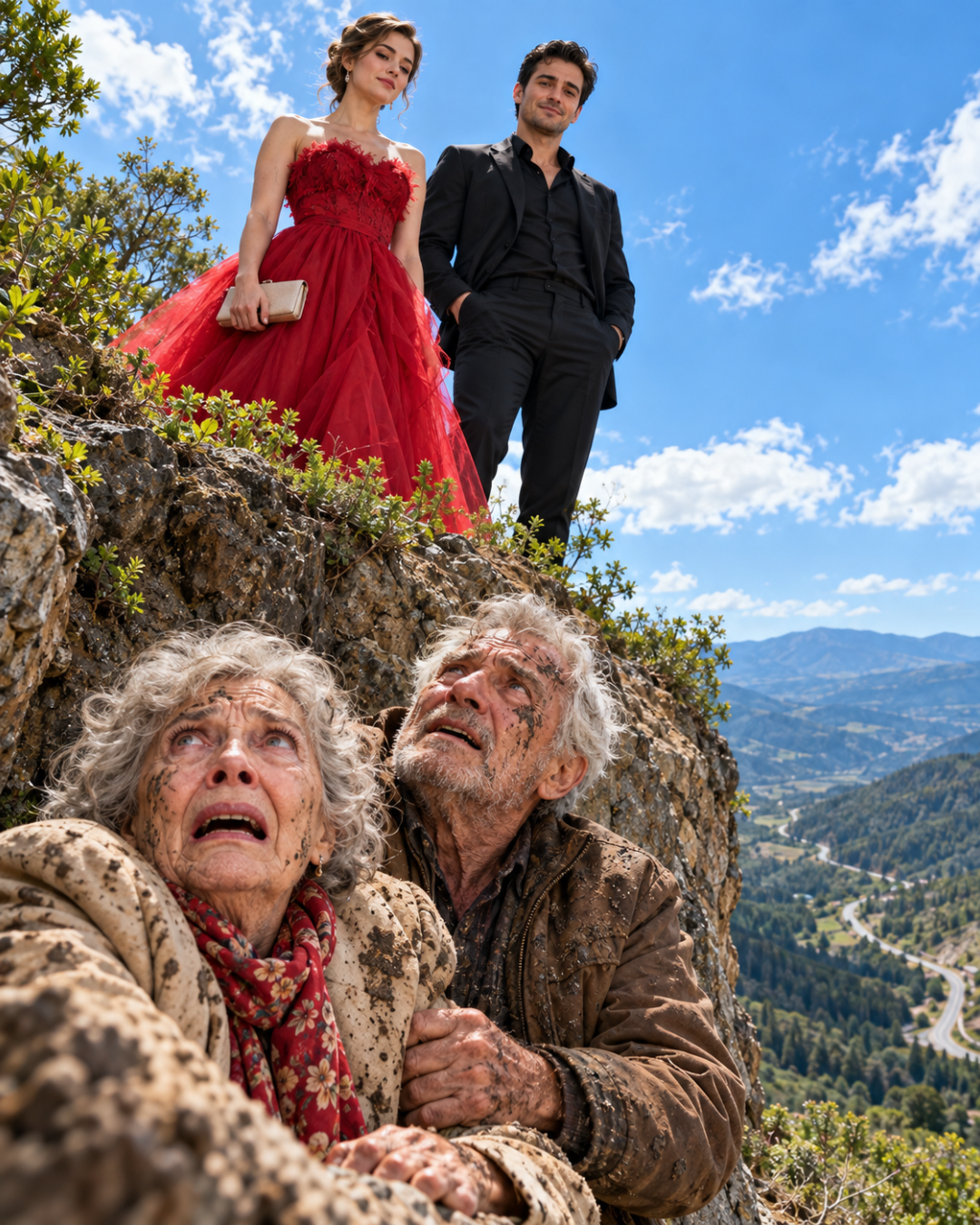
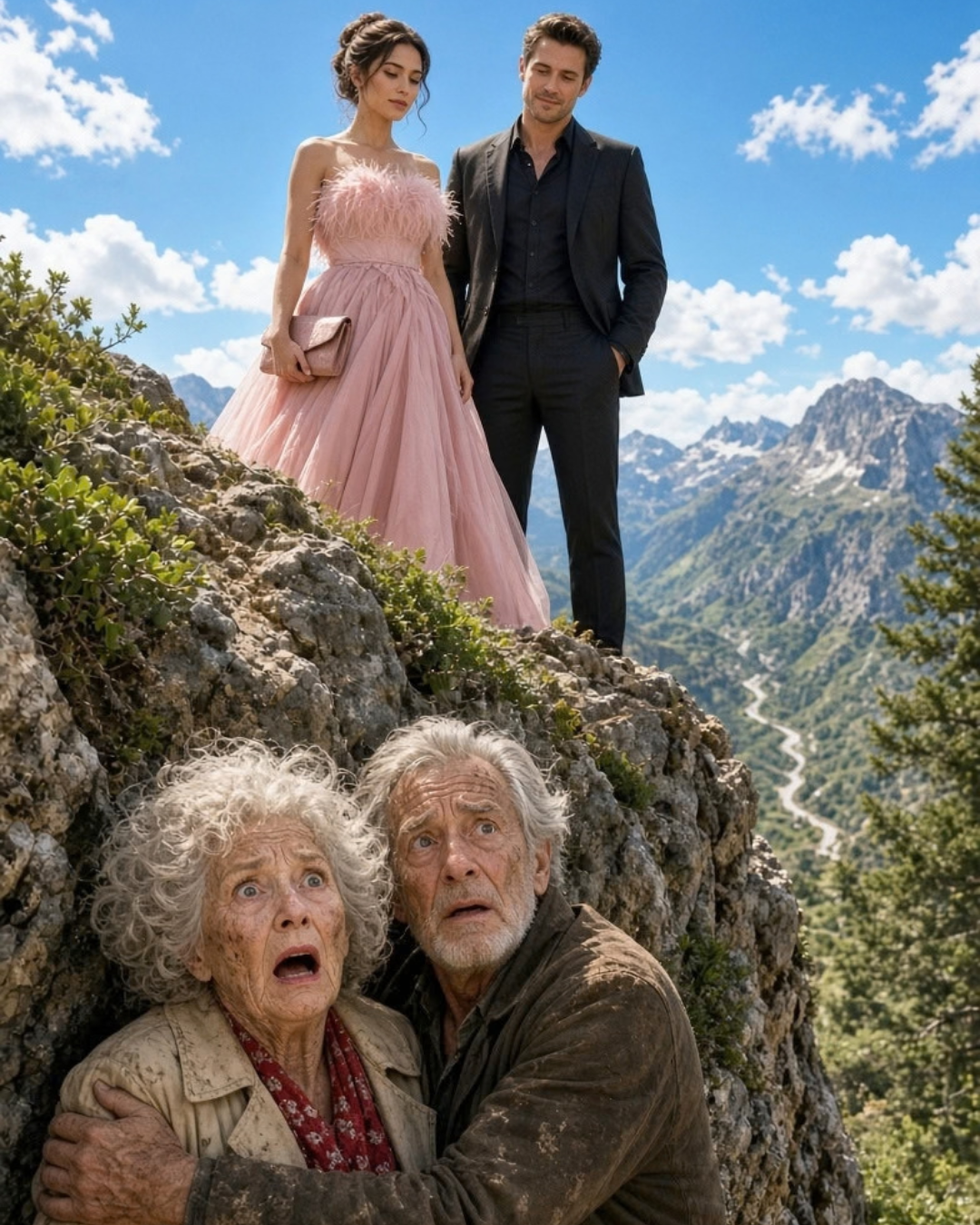
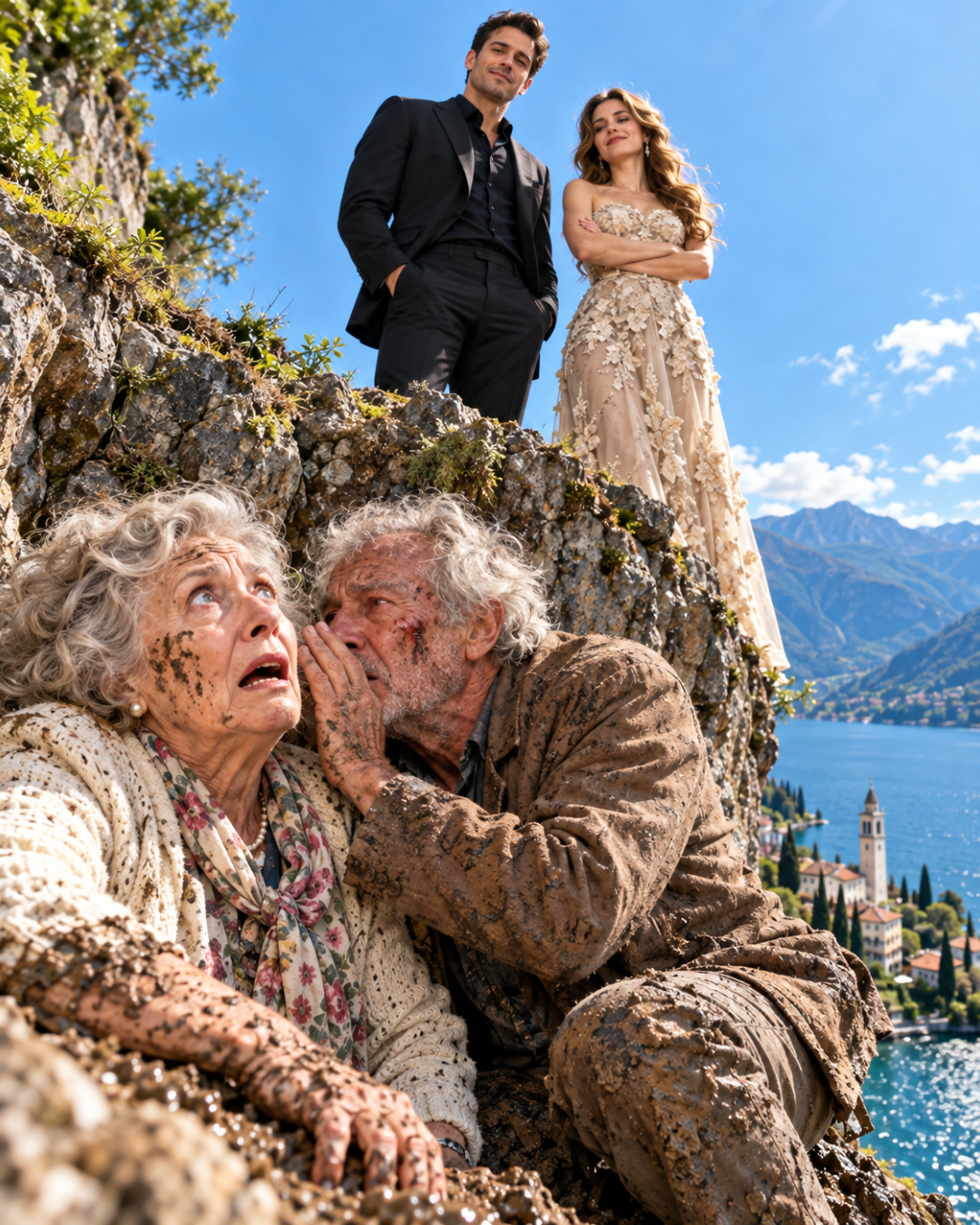
“Are the old folks dead yet?” I heard my son say from the top of the ravine.
I would recognize Daniel’s voice even if a hundred years passed. The same voice that as a child called me “Mom” when he had a fever now spoke of our death with the calm of someone asking whether the trash had already been taken out.
I was lying among rocks, branches, and damp earth, several meters below the lookout in the Sierra Gorda of Querétaro. My whole body hurt. Beside me, my husband Roberto was breathing with difficulty; his forehead was split open and his shirt was torn.
Then we heard Paola, our daughter-in-law.
“At last we can breathe. We sell the house, we collect the insurance, and we’re done supporting these two.”
Daniel let out a laugh.
“We’ll say they got too close to take a photo. With last night’s rain, anyone could slip here.”
I felt something inside me break.
Hours earlier, Daniel had arrived at our house saying he wanted to make up for having grown so distant. He proposed taking us to see several lookouts near Pinal de Amoles. I even prepared sandwiches for the trip, happy because it had been months since our only son had spent a full day with us.
At the lookout, Paola offered to take our photo.
“Stand a little farther back,” she told us, smiling.
That was the last thing I heard before I felt two hands pushing me.
Roberto managed to grab me and turned his body to cushion part of the fall. That was why we were still alive.
When we heard the car start, I wanted to scream, but Roberto covered my mouth.
“Don’t make a sound, Elena.”
“They tried to kill us!”
“I know.”
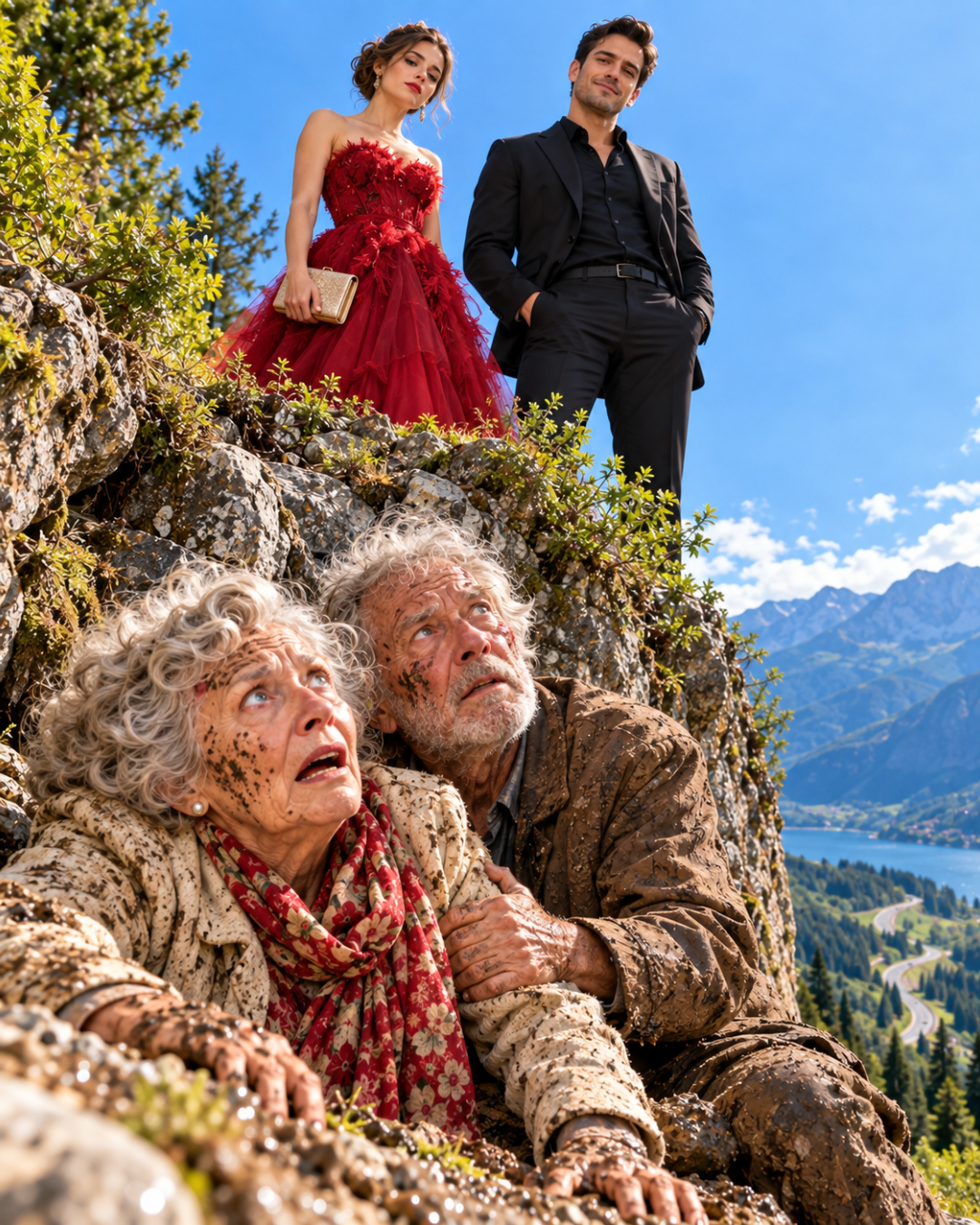
He slipped a hand under his shirt and took out a small recorder. A red light was still on.
I stared at him.
“Why are you carrying that?”
Roberto closed his eyes for a few seconds.
For weeks he had noticed strange things. Daniel went into his study when he thought no one was watching. He had asked too many questions about the deeds to our house in Juriquilla and about a piece of land we had bought twenty years earlier. He had even wanted to know where we kept our identification.
Roberto installed a discreet camera in the study and caught Daniel photographing documents.
He didn’t know Daniel planned to kill us, but he did suspect he wanted to commit some kind of fraud.
That was why, before agreeing to the outing, he put the recorder in his pocket and asked Tomás, an old friend of his who had worked as an investigative police officer, to follow the location of his phone from a distance.
“I thought he would try to make us sign something,” Roberto murmured. “I never imagined this.”
I started to cry.
We had paid for Daniel’s university by working for years. When his business failed, we lent him money. When he got married, we helped him with the down payment on his apartment.
And our payment had been a push toward a cliff.
Then light appeared among the trees.
Two headlights stopped above the ravine.
“It’s Tomás,” Roberto whispered.
Minutes later, a flashlight lit our faces.
While Tomás came down with a rope to rescue us, Roberto squeezed my hand and said something that left me cold:
“Elena, if Daniel was willing to kill us for the deeds, it’s because he owes much more money than we imagined.”
I still didn’t know how much.
I also didn’t know that the recorder had just captured a conversation capable of destroying the perfect life our son had built on our backs.
And what we found that same night in our own house was even worse.
PART 2
Tomás took us to a small cabin that belonged to a cousin of his. Nobody knew we were alive.
While we cleaned our wounds, Roberto set the recording on the table.
Before the push, while we pretended to sleep in the back seat, Daniel and Paola had talked, believing we couldn’t hear them.
“With the insurance we’ll get nearly four million,” Daniel was saying. “Then we sell the house. With that I cover the shortfall at the company.”
I felt sick.
Roberto explained what he had discovered: Daniel worked as an administrator at a construction company in Querétaro, and nearly one million eight hundred thousand pesos were missing from several accounts under his responsibility.
In addition, a preliminary contract had appeared to sell our land to a developer. Roberto’s signature was forged.
But the original deed was missing.
That was why they were in a hurry.
Then Tomás opened his computer and showed the feed from the camera installed in our study.
Daniel and Paola had just walked into our house.
We were supposedly dead, and instead of mourning us, they were rummaging through drawers looking for documents.
“It has to be here!” Daniel shouted. “Tomorrow I have to turn over the deed, or they’re going to report me.”
He opened a small safe.
Inside he didn’t find the deed.
He found a photograph of the lookout he had taken us to.
Roberto had placed it there that morning, along with a note:
“I know you’re looking for my documents. If anything happens to us, the proof is in someone else’s hands.”
I watched Daniel lose his color.
But something else caught my attention.
Paola was wearing a red ring.
My ring.
It was a ruby that had belonged to my mother. A month earlier it had disappeared from my bedroom. Daniel had told me:
“Mom, lately you forget everything. Maybe we should start thinking about someone taking care of you.”
For weeks I had even asked myself whether I was really losing my memory.
Now I understood the truth.
My own son had stolen the ring and then used my anguish to make me believe I was aging badly.
“That’s it,” I said. “The son I raised no longer exists.”
On the screen, Daniel called Ernesto, our insurance agent for years.
“The accident went well,” he said. “I need you to move the paperwork forward.”
There was silence on the other end.
Then Ernesto answered:
“Without a death certificate I can’t pay you. And someone sent me a recording of what you said in the car. If this reaches the prosecutor’s office, you won’t be the only one who goes down.”
Daniel started shouting.
Minutes later, police arrived at our house to ask him new questions. Tomás had discreetly sent information to former colleagues.
The net was beginning to close.
The next morning, a lawyer blocked any movement on our accounts and properties and revoked the powers of attorney Daniel had been using.
Hours later a message arrived in the family WhatsApp group:
“Since my parents are still missing and the authorities fear the worst, tomorrow we will hold a rosary and a symbolic farewell. We need the family united.”
Paola even wrote that they would receive everyone at a funeral home in Querétaro.
I looked at Roberto.
“They’re planning to hold our funeral without even finding our bodies?”
He set the phone on the table.
“No. They’re planning to use it to convince everyone we’re dead and pressure the insurance.”
I took a breath.
“Then we’ll go.”
Roberto looked at me for several seconds.
“Where?”
“To our funeral.”
And the next day, while our son prepared to cry in front of two empty coffins, we were already coming in through the back door of the funeral home.
PART 3
The funeral home was full when we arrived.
Tomás had us come in through a service door. From a small side room we could watch the chapel without anyone seeing us.
At the front they had placed two closed coffins.
Empty.
Between them was a photograph of Roberto and me taken on our silver wedding anniversary. Someone had put white flowers around it.
For an instant I felt a knot in my throat.
My sister Lucía was crying in the second row. My brothers-in-law, cousins, and neighbors had traveled from different parts of Querétaro to say goodbye to us.
They were suffering for real.
Daniel wasn’t.
He was sitting beside the coffins with a white handkerchief in his hands. Every so often he covered his face and lowered his head.
Paola was wearing an elegant black dress.
And my ruby ring was still shining on her finger.
At her feet was a leather bag, half open. I managed to make out several forms.
Roberto saw them too.
“They’re from the insurance,” he whispered.
I felt a mix of rage and shame.
They hadn’t even waited to bury us.
A few minutes later, two agents from the prosecutor’s office came in.
They walked up to Daniel.
“Sir, we need to ask you some additional questions.”
The performance changed immediately.
“Now?” he protested. “I’m saying goodbye to my parents.”
“Precisely because of them.”
They took him to a small nearby office, along with Paola. We listened from the next room.
Daniel repeated his story.
That Roberto had lost his balance.
That I had tried to hold him.
That we both fell.
That he had tried to save us.
Then one of the investigators asked:
“If you’re so sure your parents died yesterday, can you explain why this morning you tried to withdraw money with your father’s card?”
Silence.
“I had authorization.”
“The authorization was revoked by the account holder this morning.”
Daniel answered too quickly:
“That’s impossible. My father is dead.”
The investigator let a few seconds pass.
“Curious certainty for someone whose parents are officially still missing.”
Paola started to get nervous.
“They were already old,” she said. “Sooner or later we were going to have to support them. Daniel is an only child. Everything would have ended up his anyway.”
I put a hand to my chest.
Not because it surprised me.
Because for the first time I was hearing what they really thought of us.
An inheritance collected early.
That was what we were.
The agents left after warning them that they had to appear again before the prosecutor’s office.
As soon as the door closed, Daniel hit the table.
“Someone is helping my parents!”
Paola turned to him.
“Don’t talk nonsense. They’re dead.”
“Then explain to me who blocked the accounts.”
It was at that moment that Ernesto, the insurance agent, appeared.
He came in looking both ways.
“We have a serious problem.”
Daniel lunged at him.
“I need that money.”
“You’re not going to get it.”
“You promised to speed up the payment.”
Ernesto lowered his voice.
“Your father changed the beneficiaries two days ago. If both of them die, the money will go to your aunt Lucía.”
Daniel went still.
Roberto looked at me.
I hadn’t known he had done it either.
“It was a precaution,” he whispered to me. “I wasn’t sure of anything, but I didn’t want to leave them a clear path.”
The argument continued on the other side.
Ernesto was frightened because someone had sent him part of the recording. Daniel needed money because the construction company had already detected irregular movements. And Paola, desperate, proposed something that finished destroying any doubt about her character.
“Then we ask the family for money,” she said. “We tell them your parents left debts. Everyone is here. If each one helps, we can gather quite a bit.”
Daniel stayed silent.
Then he answered:
“We’ll say my dad had a gambling problem and that I’m trying to clean up what he left.”
Roberto took my arm.
“I’ve heard enough.”
We walked out of the room.
At that moment Daniel was standing in front of our family, saying:
“I didn’t want to tell this during the funeral, but Dad left very serious financial problems. Paola and I are trying to pay everything. Any support you can give us…”
“How convenient,” Roberto said from the back of the chapel. “Especially since I have never gambled a peso in my life.”
The silence was absolute.
More than thirty people turned at the same time.
My sister Lucía let out a cry.
An aunt dropped her rosary.
Daniel stood frozen beside our portrait.
Paola backed up until she hit a chair.
Roberto walked slowly down the center aisle. He had a visible bandage on his forehead.
I walked beside him.
“Mom…” Daniel stammered.
I didn’t answer.
“They’re alive!” someone shouted.
Daniel took a step closer.
“Dad, I…”
Roberto raised a hand.
“Don’t act anymore.”
Then he looked at everyone.
“Our son and his wife didn’t organize this farewell because they believed we had died. They organized it because they needed you to believe it.”
Paola reacted first.
“That’s a lie! They’re confused from the blow.”
I walked up to her.
“Then tell me why you’re wearing my mother’s ring.”
Instinctively she hid her hand.
Too late.
“That ring disappeared from my bedroom a month ago,” I went on. “After that, Daniel made me believe I was starting to have memory problems.”
My sister stood up, indignant.
“You stole from your own mother?”
Daniel started to sweat.
“This is being taken out of context.”
Roberto took out the recorder.
“Perfect. Let’s hear the context.”
He pressed the button.
Daniel’s voice filled the chapel:
“Behind the curve is the ravine. If they fall all the way down, nobody is going to think it was anything else.”
Then Paola was heard:
“With the insurance and the house we finally get out of all the debts.”
Nobody moved.
The recording continued.
“The old folks are good for nothing. They only spend.”
My sister Lucía started to cry again, but now from rage.
Daniel went pale.
“It was a conversation taken out of context!”
“Was it also out of context when you pushed us?” I asked.
“I didn’t push you.”
“Then your problem will be explaining to the prosecutor’s office why the recording continues after our fall.”
Daniel looked toward the door.
Two police officers came in.
Behind them was Tomás.
My son’s face changed completely.
He no longer looked like a man of forty.
He looked like that child looking for a way out after breaking something in the house.
“Mom,” he said, coming closer. “Listen to me. I made mistakes. I owed money. I got desperate.”
“You stole one million eight hundred thousand pesos from your company.”
“I was going to pay it back.”
“You forged your father’s signature.”
“I didn’t know what to do.”
“You took out insurance on our lives.”
Daniel started to cry.
“I was scared!”
I looked straight at him.
“We were scared too when we were falling down that ravine.”
He lowered his head.
For the first time, his tears seemed real.
But they came too late.
An agent reported that the prosecutor’s office already had the original recording, the videos from the study, the forged contract, the bank records, and the communications related to the attempt to collect the insurance.
They had also located movements of money from Daniel’s company into personal accounts and expenses that had nothing to do with a supposed “emergency.”
Hotels.
Restaurants.
Luxury purchases.
And transfers that Paola knew perfectly well.
She turned to her husband.
“You told me it all came from investments!”
Daniel looked at her with hatred.
“Now you’re going to pretend you didn’t know?”
“I wasn’t the one who stole at your company!”
“But you did look for the deeds. And you pushed them too!”
The family’s murmur exploded.
In less than a minute they began accusing each other.
The marriage that hours earlier had been crying, embracing in front of our coffins, was falling apart in front of everyone.
Then another agent came in, accompanied by Ernesto.
He no longer had the confident look of our former adviser.
His hands were cuffed.
His arrest had come after the insurance company reviewed internal communications and detected that he had consulted procedures for speeding up indemnities and had shared information he should never have given to Daniel.
“I never agreed to a murder,” Ernesto protested when he saw us. “He told me it would be an accident.”
Daniel stared at him.
“Shut up!”
“Shut up? You’re the one who dragged me into this.”
It was almost grotesque.
Each one was trying to save himself by sinking the other.
Paola took off the ring and set it on a chair.
“I didn’t know it was stolen.”
I walked over and picked it up.
“You watched me look for it for weeks.”
She didn’t answer.
“You watched me cry. And you still wore it.”
I put the ring on my finger.
For the first time since our fall, I felt I was recovering something more than a jewel.
I was recovering my certainty.
I was not losing my memory.
I was not a helpless old woman.
They had tried to convince me of that because they needed me to doubt myself.
The police cuffed Daniel first.
When he felt the metal on his wrists, he collapsed emotionally.
“Mom, please.”
For sixty-four years I had imagined that no sentence could hurt me as much as hearing my son ask for help and refusing him.
I was wrong.
What hurt most was discovering that I no longer felt the impulse to save him.
“Tell them it was an accident,” he begged. “We can fix it. I’m your son.”
I stepped closer.
“Precisely because you are my son, you had every chance to stop.”
He cried.
“Forgive me.”
“I would have forgiven you a debt. I would have forgiven you losing a job. I would even have sold something of mine to help you if you had come and asked me.”
My voice broke for the first time.
“But you decided that our lives were worth less than your problem.”
I said nothing more.
They took him away.
Paola went out behind him.
Before she crossed the door, she turned toward us, perhaps expecting compassion.
She didn’t find it.
The months that followed were exhausting.
We had to give statements many times. The prosecutor’s office reconstructed the trip, reviewed phones, cameras, financial movements, and expert reports on the forged signatures.
The company confirmed the embezzlement.
The insurance company voided any paperwork related to the policies and opened its own investigation into Ernesto.
The contract to sell our land was rendered void.
Our house remained ours.
Daniel and Paola faced charges for the attack against us, fraud, and forgery; Daniel’s financial case also moved forward separately. Ernesto was investigated for his part in the maneuvers related to the insurance.
I didn’t celebrate any of that news.
Justice did not give back the child I had raised.
For months I woke remembering other nights.
Daniel at seven, sick with bronchitis, asleep on my chest.
Daniel entering university.
Daniel hugging me on his wedding day.
For a long time I asked myself at what moment I had lost him.
Then I understood something.
Parents can teach, love, help, and warn.
But there comes an age when our children choose who they want to be.
And we cannot take as our own the guilt for the decisions they make as adults.
Roberto and I did not sell the house.
On the contrary.
We fixed the garden we had been putting off for years. We planted a lemon tree beside the kitchen window and put two armchairs on the terrace.
One afternoon, while we were drinking café de olla, Roberto asked me:
“Do you regret reporting him?”
I looked at my mother’s ring on my hand.
“No.”
“Not even a little?”
I thought before answering.
“It hurts. But pain and regret are not the same thing.”
My sister Lucía started visiting us every Sunday. Some relatives apologized for having believed, for a few hours, Daniel’s story about Roberto’s supposed debts.
We never blamed them.
They had been deceived too.
The only picture we permanently removed from the house was a family photograph that had stood on the fireplace. In it were Roberto, Daniel, and me, smiling during a Christmas.
I didn’t break it.
I put it in a box.
Because denying that I had once loved him would have been another lie.
I did love him.
With all my heart.
And that was precisely why his betrayal hurt so much.
A year later we went back to the Sierra Gorda.
Not to the same ravine, but to a small nearby lookout from which mountains covered in mist could be seen.
Roberto took my hand.
“Are you afraid?”
“Yes.”
“We can leave.”
I shook my head.
“I don’t want that day to be the last memory I have of this place.”
We stayed looking at the landscape for a long time.
Nobody took our photograph.
There was no need.
While the wind moved the trees, I thought of that sentence Daniel had spoken, believing we were dead:
“At last we’re free.”
How strange.
In the end, the only ones who had recovered our freedom were us.
Free of paying for his mistakes.
Free of feeling guilty for saying no.
Free of confusing love with allowing abuse.
And I understood something I would never have wanted to learn that way: being a mother does not mean handing over your dignity, your house, your savings, and finally your life to prove love.
Sometimes loving a child means holding him.
And other times, when that child crosses an unforgivable line, it means letting him answer for his own acts.
Roberto squeezed my hand.
I looked toward the mountains.
We had fallen down a ravine and survived.
But our real fall had begun much earlier, every time we accepted a lack of respect out of fear of losing our son.
That day we decided we would never live that way again.
Because a family should be the place where a person feels protected.
And when someone uses the word “family” to justify abuse, deceit, or greed, setting a limit does not destroy a family.
Sometimes it is the only thing that can save the ones who are still left in it.
