

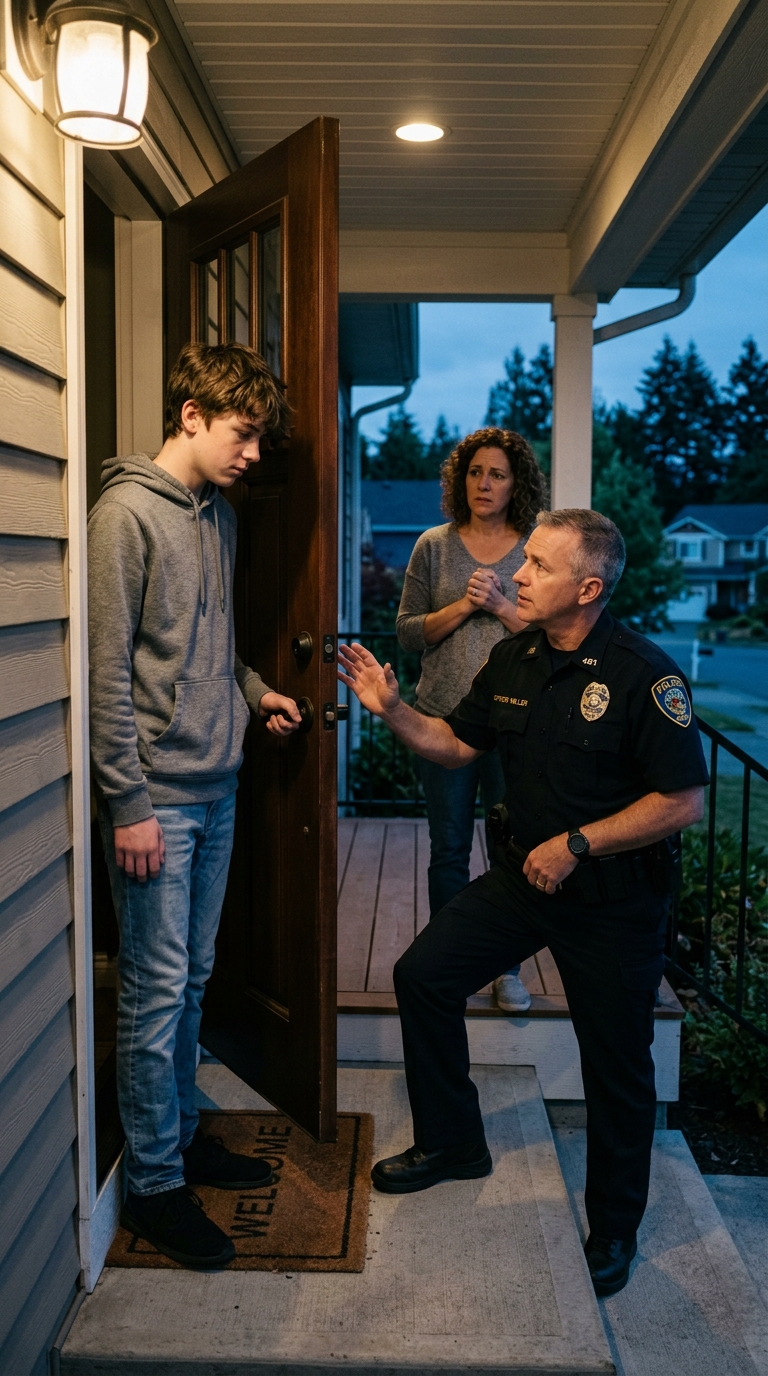
By the time I reached ninety-one, I had already accepted that my life would likely slip away in silence. There were no more regular visits, no phone calls breaking up the long afternoons, and no grandchildren racing through the house like they used to years ago. Most days it was just me, the creak of the floorboards, and the steady tick of the hallway clock reminding me that time was still passing, even if everything else felt still.
My husband had died many years before, and after that, my world slowly shrank. At first, my children still came by. Then visits turned into phone calls. Eventually, the calls became occasional messages. And in time, even those disappeared. Holidays turned into frozen meals eaten in front of the television, and birthdays were marked with a single cupcake from the store and whatever show happened to be on that night.
Loneliness does something strange to a person. After enough time, you start to feel invisible—as if you’re still here, but no longer truly part of the world around you.
That was my life until the boy moved in next door.
His name was Hubert.
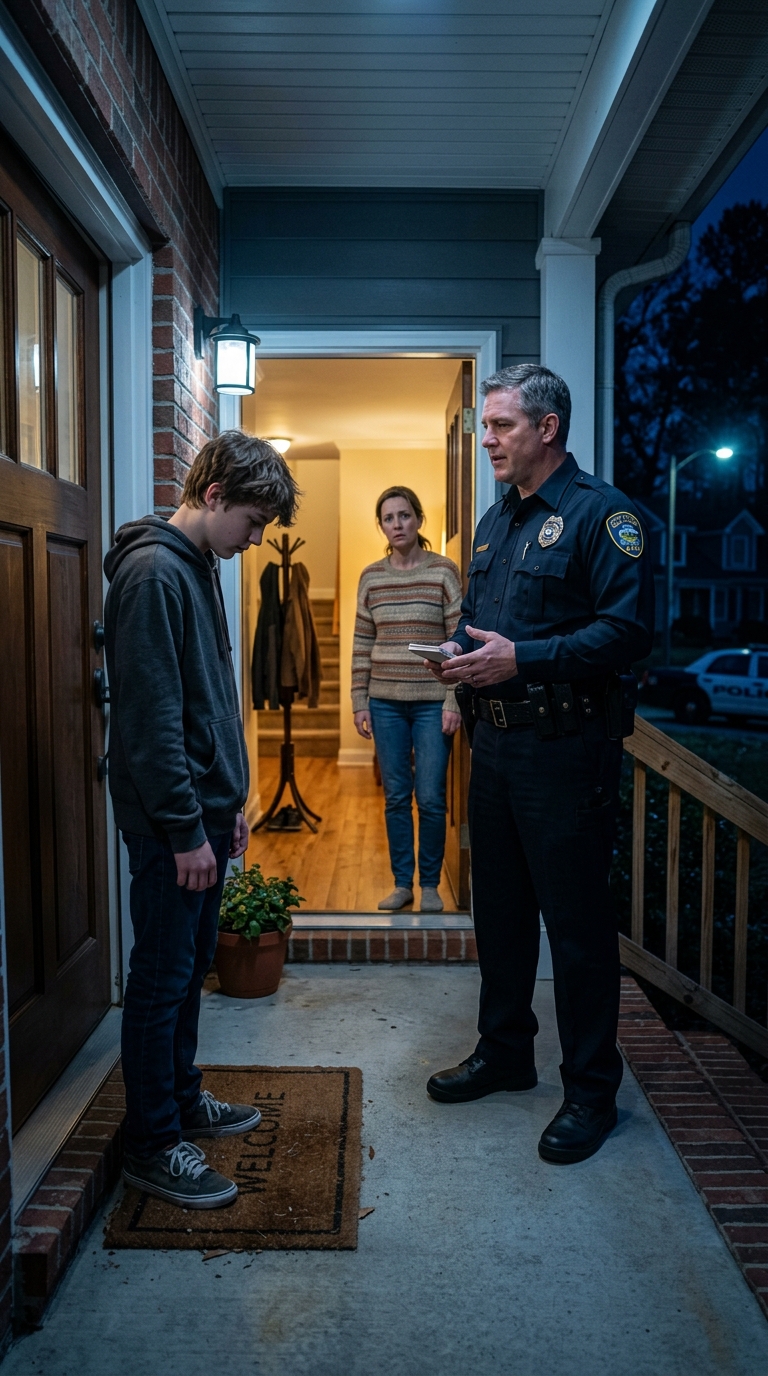
He was twelve—tall and thin in that awkward way boys often are before they grow into themselves. Most of the time, his baseball cap was turned backward, and he carried his skateboard everywhere. In the evenings, I would watch from my window as he practiced tricks on the sidewalk, rolling back and forth while the sun slowly dipped behind the houses.
He fell often.
But he always got back up.
Other children nearby would eventually be called inside. I’d hear voices floating through the evening air—mothers reminding their kids about dinner or homework or bedtime.
No one ever called for Hubert.
His house stayed dark most nights, with no car in the driveway and no warm light shining through the windows.
At first, I told myself I was simply being observant, not intrusive. That explanation held—until the night I heard him crying.
It was late when the sound woke me.
At first, I couldn’t place what had pulled me from sleep. It wasn’t the television, or the pipes, or the usual noises an old house makes at night. It was something softer—more fragile. Muffled sobs drifting through the stillness.
I held my breath and listened.
The crying came again.
Slowly, I got out of bed, slipped on my robe and slippers, and made my way to the front window. I pulled the curtain aside just enough to see.
Hubert was sitting alone on his porch.
His shoulders trembled as he tried to keep quiet. He wore only a thin T-shirt despite the chill in the air, his knees pulled tight to his chest as if trying to make himself smaller. His skateboard lay beside the steps, and his cap had fallen near his feet.
The house behind him was completely dark.
Before I could stop myself, I opened my front door and stepped outside.
“Hubert?” I called softly. “Honey, are you alright?”
He looked up right away.
Tears streaked his face, and the look in his eyes wasn’t just sadness—it was fear, like he’d been caught doing something wrong instead of simply crying alone in the dark.
“I’m fine,” he said quickly, his voice breaking. “Really. I’m fine.”
I took a careful step closer.
“Are you cold? Is your mother home?”
For a moment, he just stared at me.
Then he snatched his cap, rushed inside, and slammed the door so hard it echoed through the quiet street.
I stood there in my robe and slippers for a moment, feeling both foolish and helpless, before slowly heading back inside.
Sleep didn’t come easily after that.
The next day, I found myself watching his house far more closely than usual.
By late afternoon, my stomach was tied in knots.
Normally, Hubert would come outside after school and spend hours on his skateboard, but that day the yard stayed empty.
Four o’clock passed.
Then five.
Then six.
The porch remained dark, and the curtains inside never moved.
By seven that evening, the worry had grown too strong to ignore. I decided to bake an apple pie just to keep my hands busy. It was one of the few recipes I could still make without needing instructions.
When the pie had cooled, I carried it next door and knocked.
“Hubert?” I called. “It’s Mrs. Faith. I brought you some pie.”
No answer.
I knocked again.
“You don’t have to open the door if you don’t want to,” I said gently. “Just say something so I know you’re alright.”
The house stayed silent.
No footsteps. No television. No voice telling me to leave.
Eventually, I went back home and placed the untouched pie on my kitchen table, where it sat all night while I stared at it, wondering what I should do.
By morning, I had made my decision.
Since I can’t drive anymore, I phoned a taxi and asked to be taken to the police station.
The officer at the front desk looked young enough to be my grandson, but he rose politely when I stepped up.
“Ma’am, how can I help you today?”
“I’m not entirely sure,” I said. “But I think a boy on my street might need help.”
He listened closely as I told him about the crying, the dark house, and the door that no one answered.
When I finished, he gave a thoughtful nod.
“You did the right thing coming in,” he said. “Let me get Officer Murray. He handles welfare checks.”
A few minutes later, another officer came out—older, steadier than the first. There was something in the way he spoke that made me feel, for the first time, that maybe things would be okay.
“Tell me everything you noticed,” he said.
So I did.
When I was done, I clasped my hands together, suddenly unsure.
“I know I’m just the old lady next door,” I said quietly. “But if something happened to that boy and I said nothing…”
“You’re not just anything,” he said gently. “You’re someone who paid attention. That matters more than you think.”
He said he’d check the house later that afternoon and asked if I wanted to come along.
“Yes,” I answered right away.
When the police car pulled up that afternoon, Officer Murray stopped by my door first.
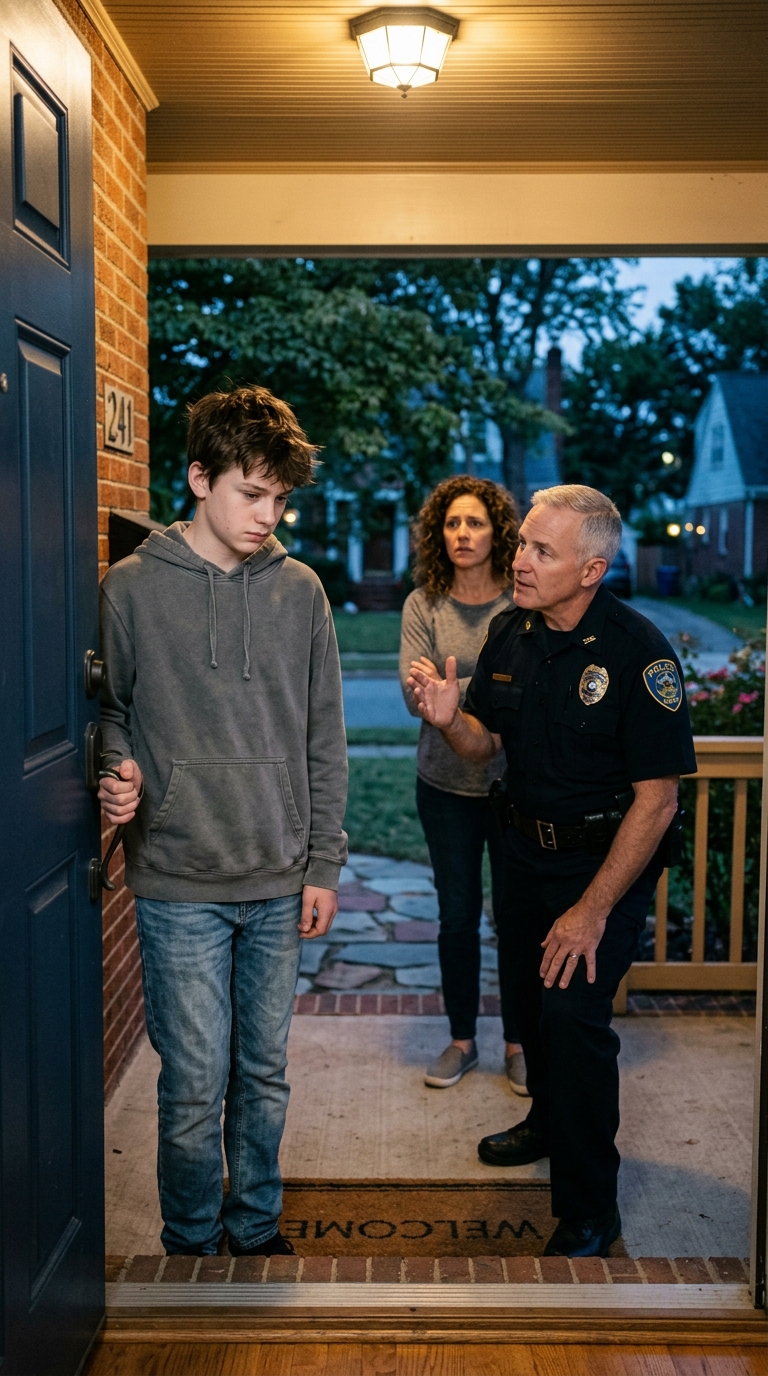
“Ready?” he asked.
“Not even close,” I said. “But let’s go.”
Together, we walked over to Hubert’s house.
Murray knocked firmly.
After a moment, the door opened just a crack, one cautious eye peeking through.
“Hi, Hubert,” Murray said calmly. “Your neighbor was worried about you.”
The boy glanced at me briefly before speaking.
“My mom’s working.”
Murray nodded.
“Would it be alright if I stepped inside and talked for a minute? You’re not in trouble. I just want to make sure everything’s okay.”
Hubert hesitated.
Then, from somewhere deeper inside, a loud cracking noise echoed down the hallway, like something heavy hitting the floor.
Murray’s posture shifted immediately.
“Step back from the door, please,” he said.
Reluctantly, Hubert moved aside.
We stepped inside.
The house felt wrong the moment we entered.
There was barely any furniture in the living room—just an old couch, a wobbly table, and a few cardboard boxes pushed against the wall. The kitchen looked even worse, with dishes piled high in the sink and trash spilling over the bin.
After checking the short hallway, Murray came back and faced the boy.
“How long has your mother been gone?”
Hubert looked down.
“A week,” he said quietly. Then added quickly, “Maybe nine days.”
My hand flew to my mouth.
“You’ve been here alone all that time?”
“I’m fine,” he insisted. “I go to school. I cook. My mom sends money when she can.”
His voice sounded practiced, like he had told himself those words over and over.
“Please don’t make me leave,” he said suddenly. “I don’t want to live with strangers.”
He turned to me, desperate.
“Tell him I’m okay, Mrs. Faith.”
I stepped closer and rested a hand gently on his shoulder.
“You’re brave,” I said softly. “But being brave doesn’t mean you have to do everything alone.”
Officer Murray studied both of us for a moment before speaking again.
“Faith, you live by yourself, correct?”
“Yes.”
“If we reach his mother and sort things out with social services, would you be willing to let Hubert stay with you temporarily?”
I didn’t pause.
“Yes,” I said.
Hubert stared at me, stunned.
“You’d really want me there?”
“My house has been far too quiet for far too long,” I said. “I think we’ll be just fine.”
The next week was filled with paperwork and phone calls, but eventually everything was approved. Hubert moved into my spare bedroom with his backpack, his game console, and his skateboard.
On his first night, he stood awkwardly in the doorway.
“What should I call you?” he asked.
“You can call me whatever feels comfortable.”
He looked down for a moment, then back up.
“Would it be weird if I called you Grandma Faith?”
The words filled the room with warmth.
“I would like that very much,” I said.
From that moment on, everything changed.
Breakfast returned to my kitchen table. Homework spread across the dining room. The house that had once echoed with silence slowly filled with laughter, arguments over math, and the sound of a skateboard tapping against the front steps.

Years later, when my doctor told me I didn’t have much time left, I updated my will.
Everything I had—the house, my savings, the small pieces of jewelry I’d kept for years—would go to Hubert and his mother.
Because family isn’t always the people who share your blood.
Sometimes it’s simply the people who show up when the world feels empty.
And sometimes all it takes to change a life forever… is hearing a child cry in the night and choosing not to look away.
