

My Stepsister Called Me “Only a Nurse” In Front of 140 Wedding Guests—Then the Groom’s Father Stood Up and Asked Everyone to Pay Attention to Me
The Invitation With the Wrong Name
The wedding invitation arrived on a rainy Wednesday afternoon, placed between an electricity bill and a grocery store advertisement.
The envelope was thick and ivory, finished with a beautiful gold seal. Across the front, written in elegant calligraphy, were the names of my stepsister and her fiancé.
Sabrina Bennett and Preston Hale.
Inside was an invitation to their rehearsal dinner and wedding celebration at Harborview Manor, a private waterfront estate outside Annapolis, Maryland.
My name appeared beneath the family section.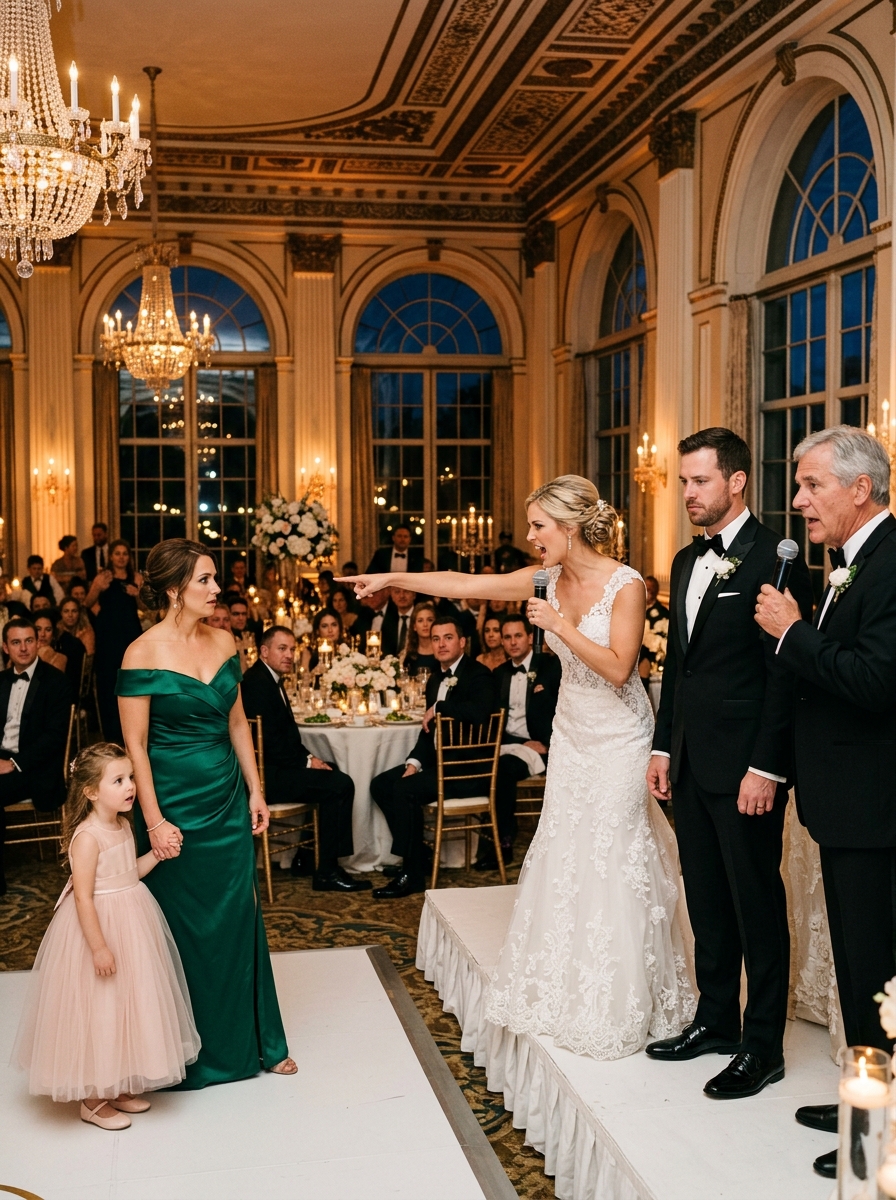
Laura Bennett.
My real name was Laurel Bennett.
I looked at the mistake for several moments before setting the invitation down on my kitchen counter.
Sabrina and I had shared the same home for almost fifteen years, yet she still insisted she could never remember whether my name was Laura, Lauren, or Laurel.
It was never an innocent mistake.
To Sabrina, forgetting my name was another reminder that I had never truly been part of the family.
My father, Martin, married Sabrina’s mother, Denise, when I was eleven. My biological mother had passed away years earlier, and I entered that new family hoping I would finally find a place that felt whole again.
Instead, I gradually learned how easy it was to become invisible within your own family.
Sabrina was given the large bedroom facing the backyard. I was assigned the small room next to the laundry area because Denise said Sabrina needed extra space for her clothes and school supplies.
For birthdays, Sabrina picked the restaurant, the cake, and the people invited. When my birthday arrived, Denise often said everyone was too busy to plan anything special.
My father rarely disagreed.
He always told me things would become more equal once everyone settled in.
They never changed.
By the time I turned thirty, I had stopped waiting for him to stand up for me.
Still, when he called two days after the invitation arrived, a small part of me hoped he would ask how I was.
Instead, he said, “Sabrina needs you at the wedding for the family pictures. Please don’t make this complicated.”
I glanced around my small Baltimore apartment, where my nursing shoes rested beside the door and hospital schedules covered part of the dining table.
“I wasn’t planning to make anything complicated,” I answered.
“Good,” he said. “This wedding is very important to Denise. The Hale family is well respected, and Sabrina wants everything to look perfect.”
Everything needed to appear perfect.
That had always been Sabrina’s biggest priority.
Not truth.
Not compassion.
Only appearances.
The Life My Family Never Took the Time to Understand
I worked as an emergency care nurse at Franklin Shore Medical Center in Baltimore.
My shifts were demanding, unpredictable, and often emotionally draining. Some nights, I came home too exhausted to cook. Other nights, I stayed sitting in my parked car for several minutes before walking inside because after twelve hours of helping terrified families, I needed quiet.
My relatives knew almost nothing about what I actually did.
To Sabrina, nursing meant carrying trays and obeying instructions.
Denise once asked if I had ever thought about pursuing a “more impressive profession.”
My father usually changed the conversation whenever I mentioned the hospital.
They did not know I trained new nurses.
They did not know I had received an award for patient advocacy.
They did not know several doctors specifically requested me during difficult emergency cases because I remained calm under pressure.
They also did not know about the night on Route 50 that changed everything.
Three years earlier, I was driving home after an evening shift when a violent storm moved through the Chesapeake area. Rain fell so heavily that drivers could barely see the road ahead.
Several vehicles were involved in a serious crash near a wooded exit.
I pulled over and contacted emergency services. Then I noticed a dark sedan positioned near the guardrail.
A man inside was awake but struggling to stay alert.
The front of the car was severely damaged, and the door would not open correctly.
I approached carefully and introduced myself.
“My name is Laurel. I’m a nurse. Help is on the way, but I need you to keep looking at me.”
His breathing was uneven.
He tried to move, but I told him to stay still.
“I have to get out,” he whispered.
“Not yet,” I told him. “The safest thing you can do is stay exactly where you are and listen to my voice.”
For almost forty minutes, I remained in the rain beside that vehicle.
I supported him, watched his breathing, and kept him focused by talking about ordinary things.
At one point, he noticed the small pearl earrings I wore.
They had belonged to my mother.
“Those look old,” he murmured.
“They are,” I said. “My mother wore them whenever she needed courage. Tonight, I think we both need some.”
He gave a faint smile.
When the emergency crew arrived, he was still conscious.
I provided the information they needed, stepped away, and watched as they transported him.
The highway was a mess, my clothes were completely soaked, and I had another shift waiting the next morning.
I never learned his name.
I believed I would never encounter him again.
The Family Image Sabrina Created
In the weeks before the wedding, Sabrina covered social media with pictures of flower arrangements, expensive shoes, customized gift boxes, and private dinners with the Hale family.
Based on her posts, anyone would have assumed the Bennetts were a wealthy, well-connected Maryland family.
The reality was far different.
My father managed a building supply store outside Columbia.
There was nothing shameful about his work, but Sabrina apparently told Preston’s family that he was a senior corporate executive who traveled often for business.
Denise introduced herself as a charitable community organizer, even though most of her volunteer activities involved attending fundraising luncheons and sharing photos afterward.
I was almost completely absent from Sabrina’s version of our family.
When people asked about me online, she said I worked at a small neighborhood clinic and avoided family gatherings because I was “emotionally difficult.”
I learned this during the bridal brunch. The gathering was hosted at the Hale family’s waterfront property, a large stone home surrounded by gardens and towering oak trees.
Sabrina wore a pale blue designer gown and walked through the rooms as if the estate already belonged to her.
I arrived in a simple cream-colored dress that I had bought during a sale.
Preston greeted me with a warm smile.
“You must be Laurel,” he said. “I’ve heard so much about the Bennett family.”
The careful emphasis he placed on the word “family” made me wonder what exactly he had been told.
Before I could respond, Sabrina stepped between us.
“Laurel keeps to herself,” she said cheerfully. “She works at a clinic and doesn’t really enjoy social situations.”
“I work in emergency care at Franklin Shore,” I corrected politely.
Sabrina’s smile became slightly strained.
“Right. Something medical.”
Across the room, an older man turned in our direction.
He was tall, silver-haired, and wearing a navy blazer. His expression shifted the moment he saw me.
I recognized him from photographs.
Everett Hale, Preston’s father.
He had created a national chain of waterfront hotels and commercial properties after starting his career as a marina worker.
Throughout the afternoon, I noticed him watching me.
Not in a disrespectful way.
More like someone trying to place a familiar face.
At one point, his eyes stopped on my pearl earrings.
A strange feeling passed through me, but Sabrina pulled me away before I could understand why.
Near the buffet table, Denise spoke quietly.
“Please don’t correct Sabrina in front of the Hales,” she said.
“She gave them incorrect information about my work.”
“She was just making things simpler.”
“Why does my job need to be made simpler?”
Denise looked around to make sure nobody was nearby.
“Because Sabrina is dealing with a lot of pressure, Laurel. For once, can you support her without making everything about yourself?”
I almost laughed.
I had said one sentence about my own life, and somehow even that was considered too much.
The Seat Near the Kitchen
The rehearsal dinner was held the next evening at Harborview Manor.
The ballroom faced the water and was decorated with white roses, candles, and hanging glass lights. Almost one hundred and forty guests filled the room.
My assigned seat was at Table Fourteen, right beside the swinging kitchen doors.
The immediate family sat at long tables near the stage.
When I asked one of the coordinators if there had been an error, she looked at the seating chart.
“No, ma’am. This is where the bride requested that you sit.”
I thanked her and sat down.
From the back of the ballroom, I watched my father laughing with Preston’s relatives. Denise wore a beautiful silver gown and accepted compliments as though she had been the perfect mother.
Sabrina looked thrilled every time a camera turned toward her.
During dinner, several family members delivered speeches.
Preston spoke warmly about his parents, especially Everett, who had taught him that reputation meant nothing without integrity.
I noticed Everett looking toward me again.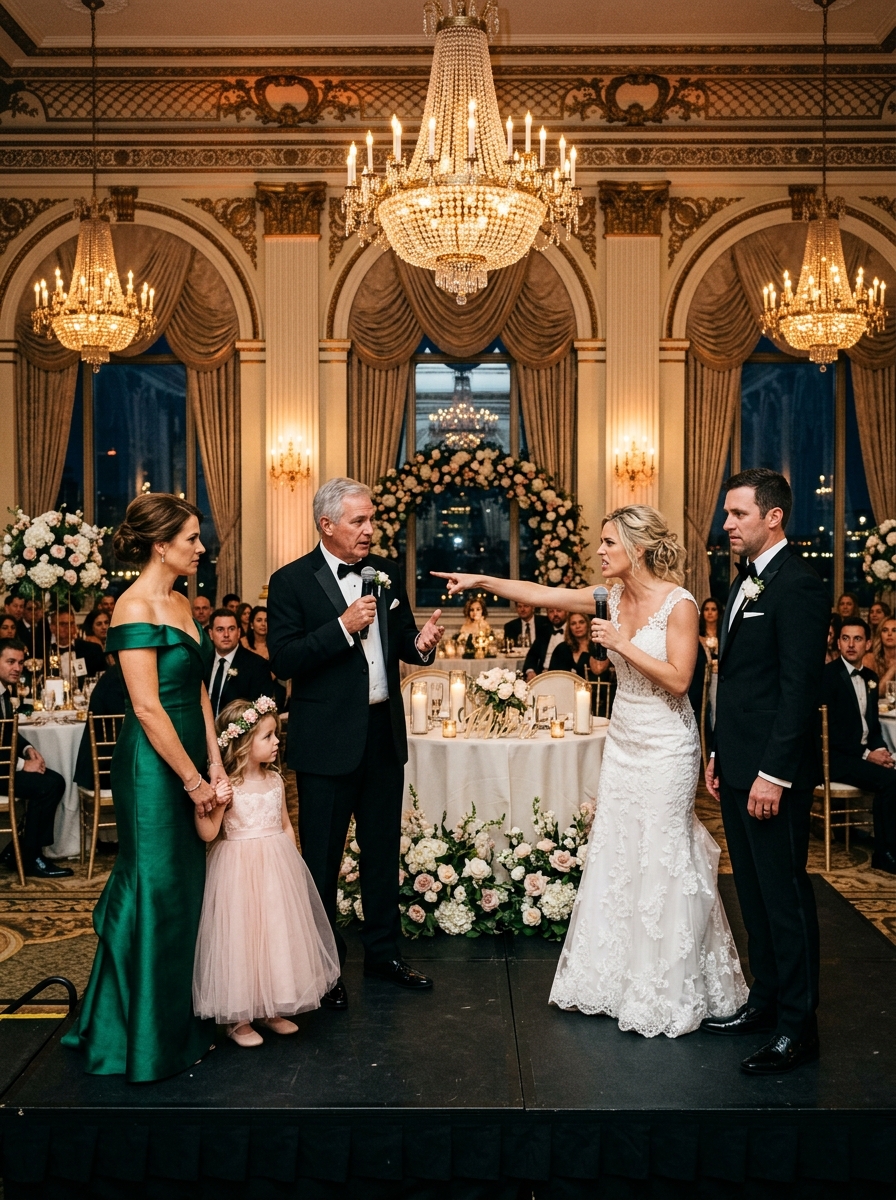
When Sabrina finally reached the microphone, she thanked her mother for teaching her elegance and thanked my father for always supporting her dreams.
Then her eyes moved toward the back of the room.
Toward me.
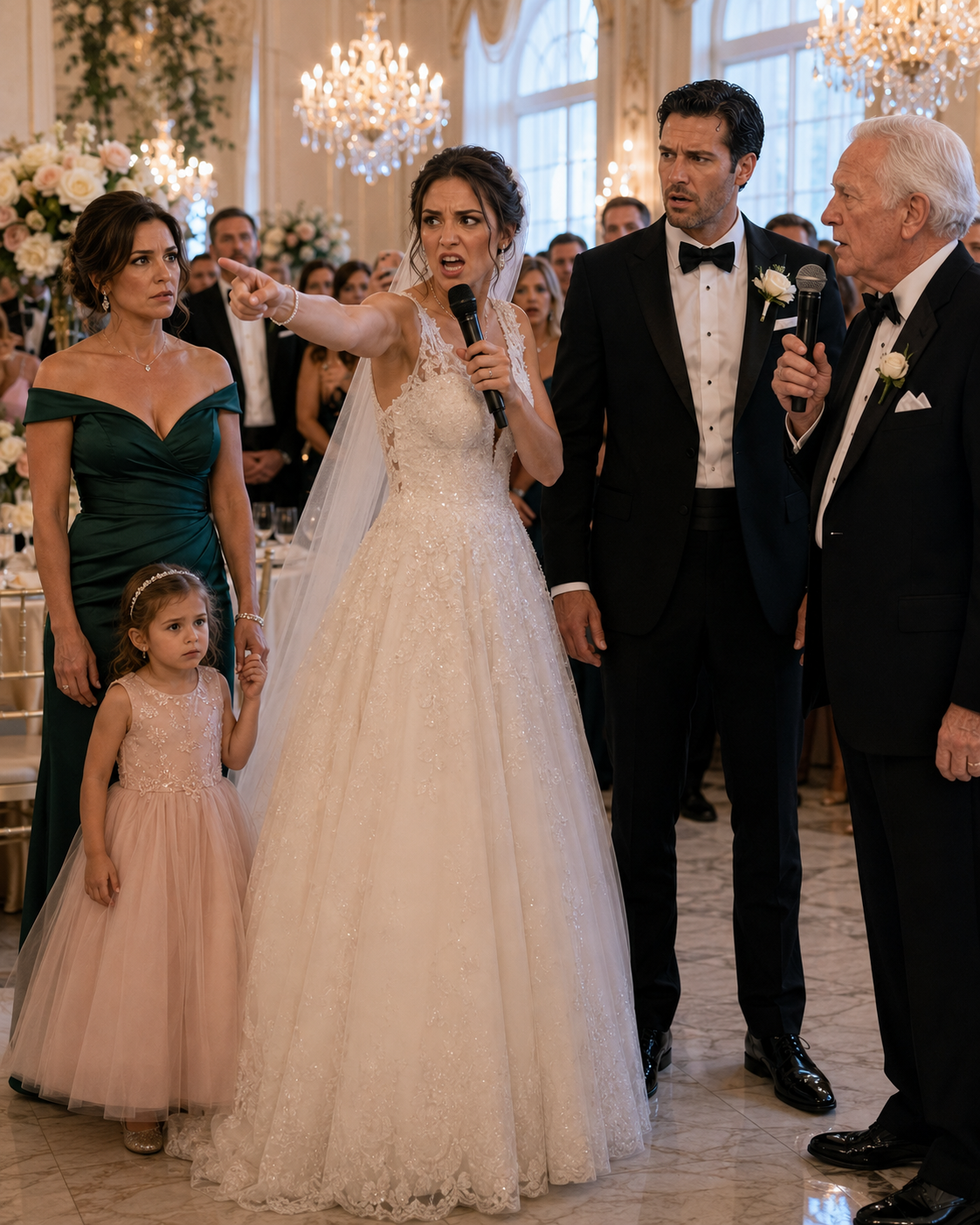
“And somewhere near the kitchen is my stepsister, Laura,” she said.
Several guests turned around.
Heat rushed to my face.
Sabrina gave a lighthearted shrug.
“Or Laurel. I can never remember. She’s only a nurse, so she’s usually too busy to spend time with the rest of us.”
A few guests laughed awkwardly.
My father laughed the loudest.
Denise hid her smile behind her napkin.
Sabrina continued, obviously enjoying the attention.
“But we’re glad she could take the evening off and be included in the family picture.”
More laughter spread through the room.
I stayed seated.
For years, I had convinced myself that silence kept me safe.
That night, silence felt different.
It felt like I was accepting it.
I folded my hands in my lap and reminded myself that I had endured far worse than a thoughtless speech.
Then a chair moved at the head table.
Everett Hale stood.
The Question That Made the Ballroom Go Silent
At first, everyone assumed Everett was about to give another toast.
He walked slowly toward the microphone.
Sabrina moved aside with a satisfied expression, likely expecting him to compliment her.
Instead, Everett looked directly toward Table Fourteen.
“Before this evening continues, I need to ask someone a question,” he said.
The room fell quiet.
His voice remained steady, but emotion was clearly present.
“Laurel, would you please stand?”
For a moment, I could not react.
Every guest nearby looked toward me.
I slowly stood from my chair.
Everett examined my face, then glanced at my earrings.
“Were you driving on Route 50 during the storm three years ago, near the Bayfield exit?”
My breath stopped.
Suddenly, I could hear the storm again.
I remembered the rain, the damaged vehicles reflecting light across the road, the freezing water soaking through my sleeves, and the frightened man asking if he would ever see his family again.
“Yes,” I answered.
Everett’s wife covered her mouth.
Preston turned quickly toward his father.
Everett held the microphone with both hands.
“Did you stop beside a dark sedan and stay with the driver until the emergency team arrived?”
The entire ballroom seemed to vanish around me.
“Yes,” I said again. “I did.” Everett closed his eyes briefly.
When he opened them again, they were filled with emotion.
“I have been searching for you for three years.”
Nobody moved.
Even the servers standing along the walls had stopped.
Everett faced the guests.
“Three years ago, I was involved in a highway accident during a severe storm. I was confused, terrified, and in critical condition. A young woman stopped when everyone else was trying to escape the weather.”
His voice trembled slightly.
“She stood beside me in the rain and made sure I stayed still. She kept me awake. She told me stories about her mother’s pearl earrings because she knew I was losing focus.”
He looked directly at me.
“The specialists later told my family that her actions protected me from permanent spinal damage. They said I might not have made it home if she had not been there.”
A wave of stunned whispers spread throughout the room.
Sabrina’s face turned completely pale.
My father had stopped smiling.
Everett continued.
“I never learned her full name. By the time I recovered enough to begin searching, the reports only identified an unknown medical professional who had left before anyone could thank her.”
He stepped away from the microphone and walked across the ballroom toward me.
When he reached my table, he extended his hand.
“You were never ‘only a nurse,’ Laurel. You were the reason I was able to return to my wife and son.”
My eyes filled with tears.
I reached out and took his hand.
The first person to clap was Preston.
Then his mother stood.
Within moments, almost everyone in the ballroom was standing.
The Lies That Could No Longer Stand
Sabrina walked toward us with a forced smile.
“This is incredible,” she said. “Laurel never told us.”
I looked at her.
“You never asked.”
My words were quiet, but everyone nearby heard them.
Preston’s expression changed.
“You told me Laurel worked part-time at a clinic,” he said to Sabrina.
“I might have misunderstood,” she answered quickly.
“You also said she avoided family events because she was unstable and jealous of you.”
Sabrina opened her mouth, but nothing came out.
My father rushed toward us.
“Laurel has always been very private,” he said. “We are incredibly proud of her.”
Everett turned to him.
“Then why was she seated beside the kitchen while the rest of the family sat at the front?”
My father lowered his eyes.
Denise stepped forward.
“The wedding planner must have made a mistake.”
The coordinator standing nearby calmly responded.
“The seating arrangement was personally approved by the bride.”
Sabrina’s expression became angry.
But this time, there was no crowd willing to laugh along with her.
Preston slowly removed his hand from hers.
“How much of what you told my family was actually true?” he asked.
“This is not the place,” Sabrina whispered.
“You made it the place when you embarrassed your sister in front of everyone.”
The room stayed silent.
I realized Sabrina’s carefully created image was falling apart, not because I had fought against her, but because the truth had finally been brought into the open.
The Gift I Never Saw Coming
Everett invited me to sit with his family at the head table.
I hesitated, but his wife stepped forward and hugged me.
“Please,” she said. “You belong there more than anyone tonight.”
A chair was placed beside Everett and his wife.
For the first time at a family gathering, I was not hidden beside a hallway, a kitchen, or a doorway. Later that night, Everett stepped back to the microphone once again.
He shared that the Hale Family Foundation provided support for continuing education opportunities for healthcare professionals.
Then he announced that the foundation would award me a two-hundred-thousand-dollar grant to continue the advanced medical program I chose.
I was almost speechless.
For years, I had dreamed of becoming a nurse practitioner specializing in emergency medicine, but the cost of tuition and daily expenses had made that dream seem unreachable.
“I don’t know how to thank you,” I said.
Everett smiled.
“You already did, three years ago.”
My father tried to place his arm around me for a photograph.
I quietly stepped away.
Not because I wanted to punish him.
Because I finally understood that allowing someone to share my achievements did not mean they had the right to take ownership of them.
The Life Beyond Their Approval
Sabrina and Preston postponed the wedding the following morning.
A few weeks later, they called off their engagement.
According to Preston, the issue was not a single hurtful comment. It was the endless series of lies that came after it.
My father called again and again.
He apologized for laughing, though most of his apology centered on how embarrassed he felt after Everett challenged him.
Denise sent me a message saying families sometimes make mistakes and that I should not let one uncomfortable night ruin our relationship.
I did not answer right away.
For the first time in my life, I gave myself permission to choose the kind of relationship I wanted instead of accepting whatever treatment they decided to give me.
Six months later, I began an advanced emergency medicine program with assistance from the Hale Foundation.
Everett and his wife attended the small ceremony where I received my first academic honor.
My father did not attend.
Surprisingly, it did not hurt the way I thought it would.
Standing there with my mother’s pearl earrings on, I realized Sabrina had been wrong about one thing.
I had never been “only a nurse.”
I had been a scared child who learned how to become strong without anyone encouraging her.
I had been a young woman who created a meaningful life while her family chose not to notice.
I had been the person who stopped during a dangerous night because someone needed help.
And now, I was finally someone who understood that my worth was never determined by whether my family decided to recognize it.
Sometimes the people who speak the loudest about your life are the same people who never took the time to understand your sacrifices, your bravery, or the quiet efforts you make when nobody is watching.
A career does not become insignificant because someone prideful refuses to appreciate it, because every honest profession has meaning when it is carried out with compassion, responsibility, and dedication.
Never allow a family member’s constant criticism to become the way you see yourself, especially when their judgment comes from jealousy, neglect, or a need to keep you beneath them.
Real character appears in moments when there is no attention, no reward, and no certainty that anyone will ever notice the good choice you made.
Those who repeatedly push you into the background may struggle when others finally recognize your value, but their discomfort should never convince you to disappear again.
Silence may protect your peace for a time, but eventually, speaking the truth with calm confidence becomes a way of honoring yourself and everything you have worked to build.
You do not have to publicly destroy those who hurt you, because sometimes the truth walks into the room quietly and reveals everything without you needing to respond with cruelty.
Someone who saves lives, comforts scared families, or helps another person through hardship should never be called “only” anything, because compassion and service are among the greatest forms of achievement.
Leaving behind a damaging family pattern does not mean you lack gratitude or love; it can simply mean you have finally realized that love without respect is not enough.
The strongest moment in your life may not be when everyone finally celebrates you, but when you understand that your belief in yourself would remain even if the entire room stayed silent.
