

Part 1: The Basket on the Welcome Mat
I was thirty-one years old when my husband walked out of our lives for good, and the only explanation he offered was my diagnosis.
“You cannot give me the big family I have always wanted, and I need a real future,” Keith muttered while looking at the floorboards instead of meeting my eyes.
After he left, silence settled over our home and swallowed it whole. It stayed that way for months, until one freezing morning when a sharp knock at the front door pulled me away from the stove.
I hurried into the hallway to find out who had come calling so early. Nobody ever visited at that hour, and my slippers slapped against the floor as I went.
When I dragged the heavy wooden door open, the wide front porch lay completely empty and still. Cold air rushed past me, and the street beyond was quiet.
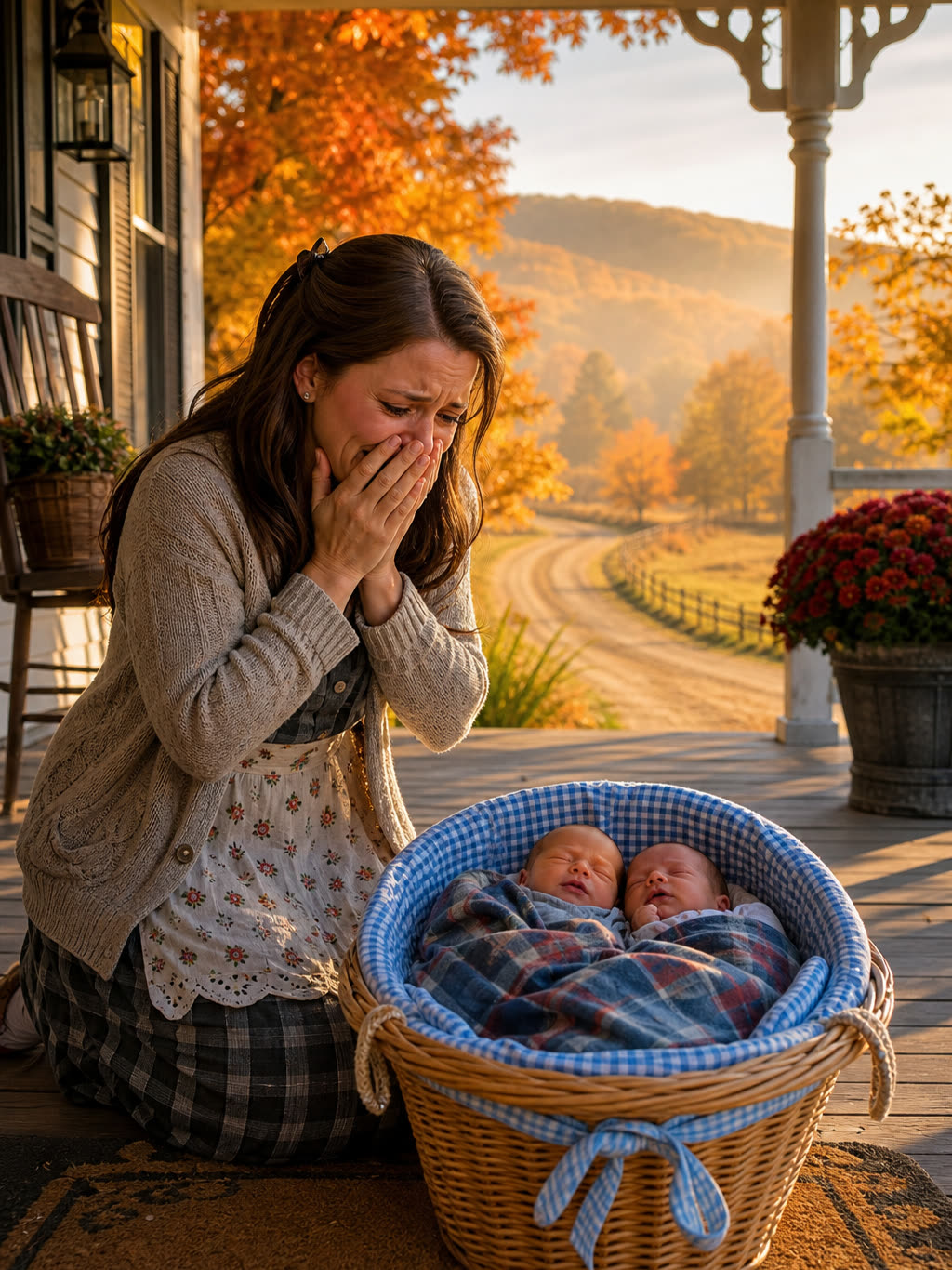
Then, a second later, the faint sound of two babies crying together made me freeze where I stood.
I looked down and saw them. Two tiny newborn boys lay curled against each other inside a large wicker basket, right beside my welcome mat.
They were wrapped snugly in a thick flannel blanket, their small faces scrunched and red from the chill, their fists waving weakly in the morning air.
My knees gave out and I sank down beside them. I could not understand what I was seeing, and I could not make my mouth form a single word.
I grabbed my telephone with hands that shook so violently that I dropped the handset twice on the hardwood floor before I finally managed to dial the emergency operator.
The police conducted a massive search across our neighborhood, knocking on doors and walking the side streets, but the biological mother was never located.
Social services placed the infants into emergency foster care. I told myself that was the end of my part in it, yet I found myself completely unable to banish their tiny faces from my mind.
So I began driving over to the agency every single week just to hold them. The staff grew used to seeing me there, and eventually I filed a formal application to adopt both brothers.
Nearly a year later, the family court judge smiled warmly as she signed the final paperwork and slid the folders across her mahogany desk.
“They are officially your sons today, Hannah, and you are going to give them a wonderful home,” Judge Albright said.
I looked down at the legal documents, my vision blurring, and gave the boys the names Mason and Wyatt.
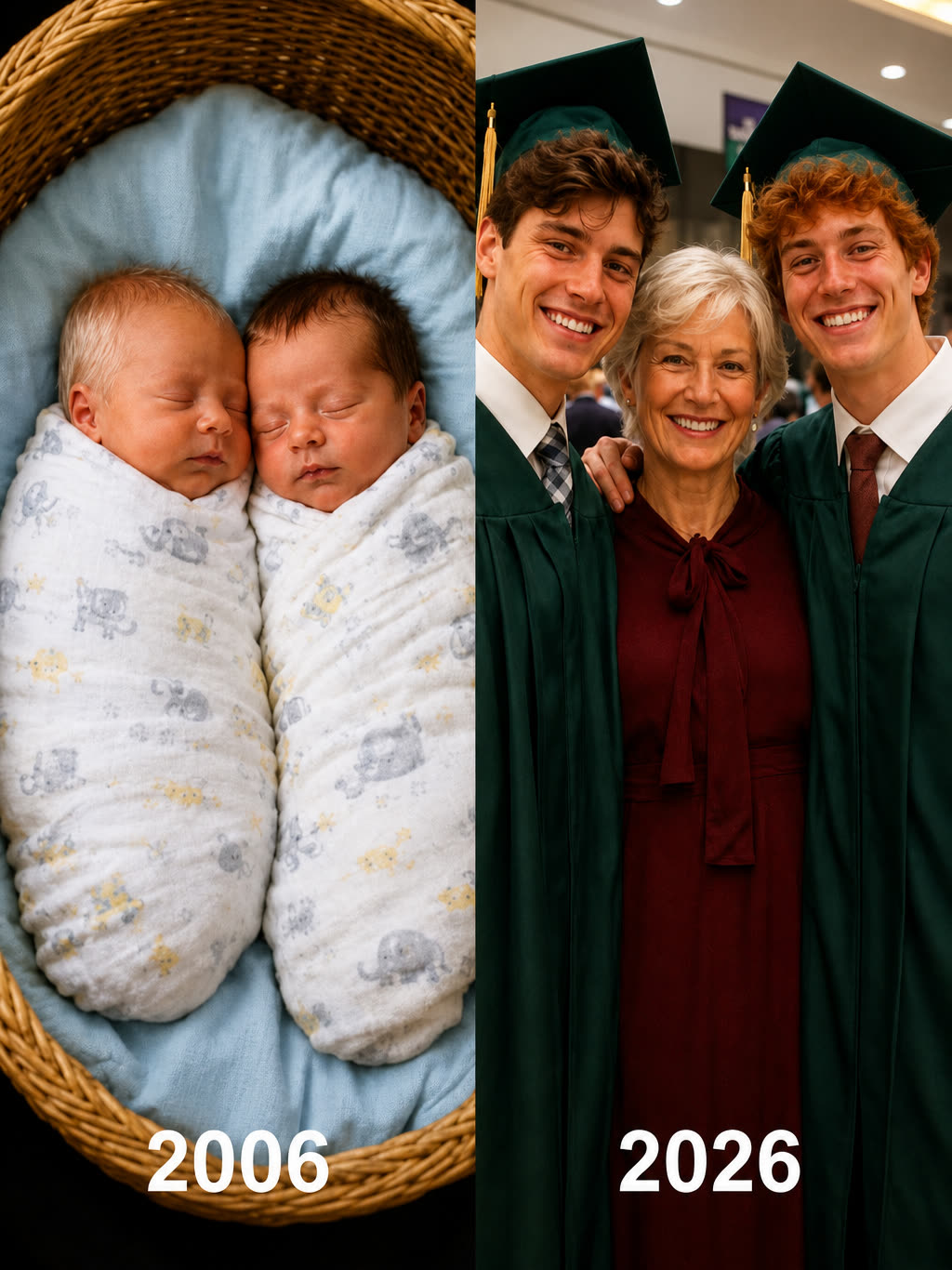
Over the next two decades, those two boys handed me every ordinary blessing that my former husband had claimed I would never know.
They brought bright Christmas mornings, scraped knees on the driveway, awkward middle school band concerts, chaotic teenage debates about curfews, and finally the thick envelopes from universities.
They quickly became the beating heart of my entire world, and twenty years seemed to vanish in the blink of an eye.
Then came last Friday night, when both boys showed up at my front door without calling beforehand.
I had baked a chicken casserole for the dinner I thought I would be eating alone, and I happily set three places. Yet neither of them ate more than two tiny bites.
The atmosphere in the room felt heavy and unsettling from the moment we sat down. Forks scraped, the clock ticked, and my sons kept glancing at each other as if they were passing a message back and forth without words.
Eventually, Mason set his silver fork against the edge of his plate with a sharp click.
“Mom, we have spent the past two months trying to figure out how to tell you something really big,” Mason confessed in a trembling voice.
My glass remained suspended halfway to my mouth as a strange dread settled over my chest. I had never heard my steady, joking son sound that frightened.
Wyatt quietly excused himself from his chair and walked out toward the front coat closet. I listened to his footsteps and the creak of the closet door, and I could not guess what he was fetching.
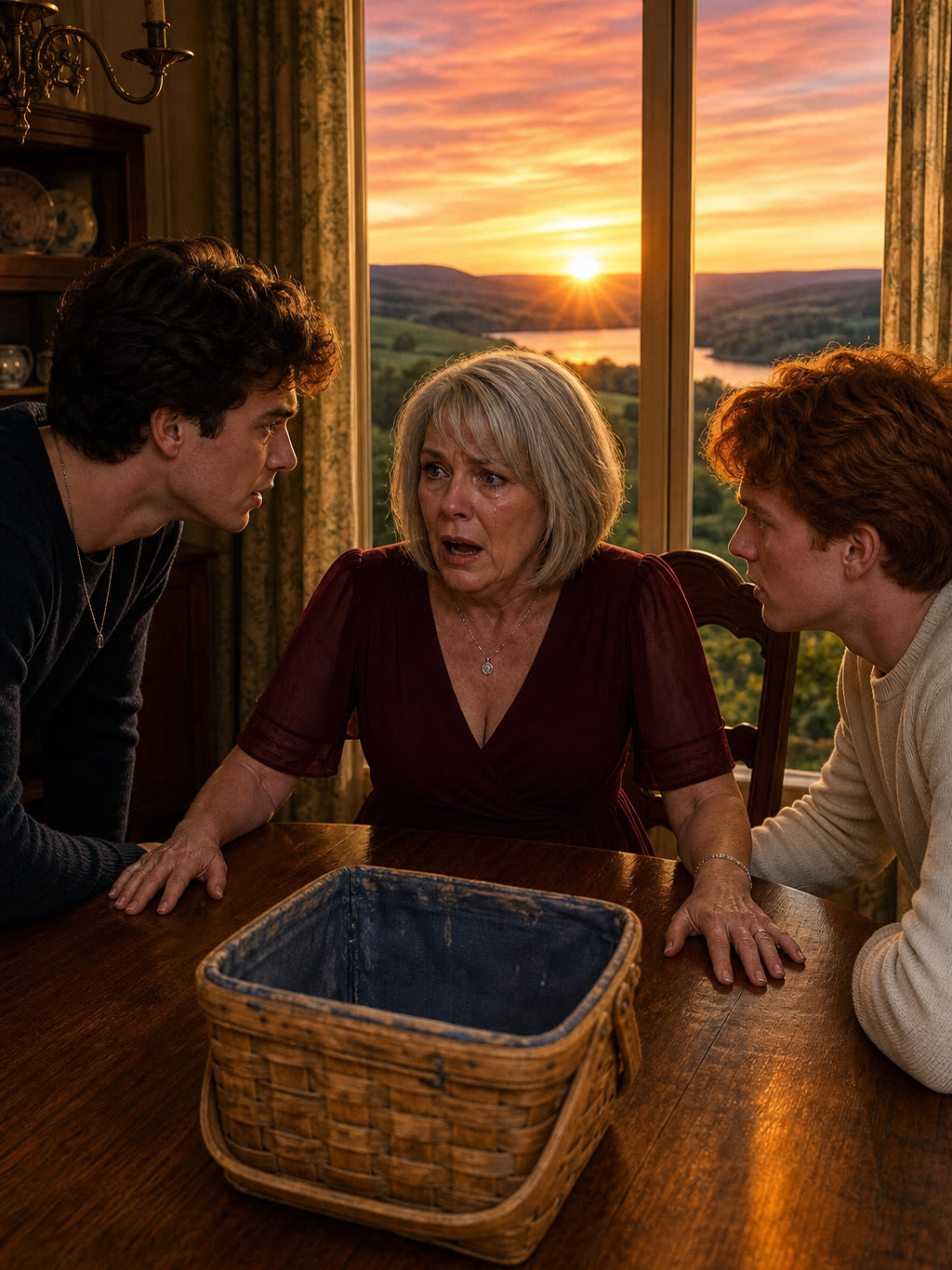
A few moments later, he returned to the dining room carrying a very large, weathered wicker basket between his hands, and he placed it down carefully in the center of the wooden table.
My heart seemed to stop beating, because I recognized that basket instantly.
It was the exact same container, with the same faded blue fabric lining, that had rested on my chilly steps twenty years ago.
My throat tightened so hard that I could not draw a full breath of air. The room tilted slightly, and I gripped the edge of the table to stay upright.
I had believed for two decades that I knew every chapter of my sons’ story, because I had walked beside them through every milestone. I had remembered their unsteady first steps, their first spoken words, and the scraped shins they brought home from the playground.
I had watched them grow from two tiny, helpless infants into the tall, confident young men who now sat across from me. I had considered our family story simple and open.
Yet in one instant, the appearance of that old basket began to dismantle every assumption I had relied upon.
It sat there between the water pitcher and the bread basket like an ancient relic that had fallen through a crack in time. The honey-colored wicker was the same, and so was the one broken willow twig near the left braided handle.
The pale blue quilted lining was the very fabric my trembling hands had touched twenty years ago. Both of my grown boys watched my face with expressions full of anxiety while their dinners grew cold.
I could not bring myself to lift my hands off my lap.
“Mom, please look at me,” Mason said, his voice sounding as if it were traveling through water.
I was fifty-two years old now, yet for one dizzying second I felt like a terrified thirty-one-year-old woman standing barefoot on a cold porch in autumn.
In that quiet second, every forgotten memory of the darkest year of my life rushed back to the surface, and I could not stop it.
The medical diagnosis that shattered my first marriage had arrived on a rainy Monday morning at the clinic. I remembered the date vividly, because Keith and I had purchased expensive concert tickets for that upcoming weekend.
I spent the quiet drive back to our house wondering whether we should still attempt to pretend everything was normal. We never attended the show, and the house remained painfully quiet for the weeks that followed.
Less than a month later, Keith stood in our front hallway with two packed canvas duffel bags waiting near his feet. He kept his gaze locked on the front door handle rather than looking at my face.
“Hannah, please do not make this departure any more difficult than it already is,” Keith insisted.
I stared at him in disbelief, unable to comprehend how casually he was discarding our wedding vows.
“You cannot provide the home or the children I need to feel fulfilled,” he muttered toward the wall.
His words knocked the breath straight out of my lungs, leaving me clutching the banister for balance.
“So that is your final decision after five years of marriage?” I asked with a cracked voice.
He adjusted the heavy strap on his shoulder without responding to my question.
“You already knew that my dwarfism made a biological pregnancy dangerous and unlikely before we exchanged vows,” I pointed out.
He walked out through the screen door before I could finish my sentence, pulling it shut behind him. I was left alone in an oversized home at thirty-one years of age, with an empty future staring back at me.
Later that very same evening, a knock came again, and this time it was Russell standing on my front steps carrying two hot pizzas from the local Italian diner.
I had not called him or reached out to any of our mutual friends after Keith drove away. Yet there he was in his faded brown corduroy jacket, looking at me with the same steady loyalty he had shown since our freshman year at college.
“What happened here tonight, Hannah, and where is Keith’s truck?” Russell asked gently as soon as he saw my red eyes.
All of my composure shattered completely, and I dropped my head against the doorframe.
“Keith packed his things and left me, Russell,” I sobbed while leaning on his shoulder for support.
“He told me that my medical condition meant I could never give him the family he wanted,” I whispered through my tears.
Russell did not try to offer empty platitudes or claim that everything would magically resolve itself by morning.
Now, sitting at that dining table twenty years later, with the basket in front of me and my sons’ eyes fixed on my face, I understood that the past I thought I knew had only been the surface.
Mason drew a long, unsteady breath and reached for my hand across the tablecloth. His fingers were cold.
What my eldest boy said next brought hot tears spilling down my cheeks before I could stop them.
Part 2: The Man Who Never Left
Back then, Russell simply stepped inside, set the pizza boxes on the kitchen island, and quietly took charge of the immediate chaos.
He packed all of Keith’s remaining books and vinyl records into brown cardboard boxes while I sat on the linoleum floor trying to eat. Neither of us dared to say the painful word divorce until the gray morning light began creeping through the window blinds.
I spent the entire year following that awful night learning how to rebuild a quiet routine on my own terms. I accepted remote illustration contracts that allowed me to work peacefully from my sunny dining room table.
I learned to appreciate quiet dawns with a hot mug of coffee while watching the birds in the backyard. I taught myself how to return to an empty house without feeling suffocated by the heavy silence in the rooms.
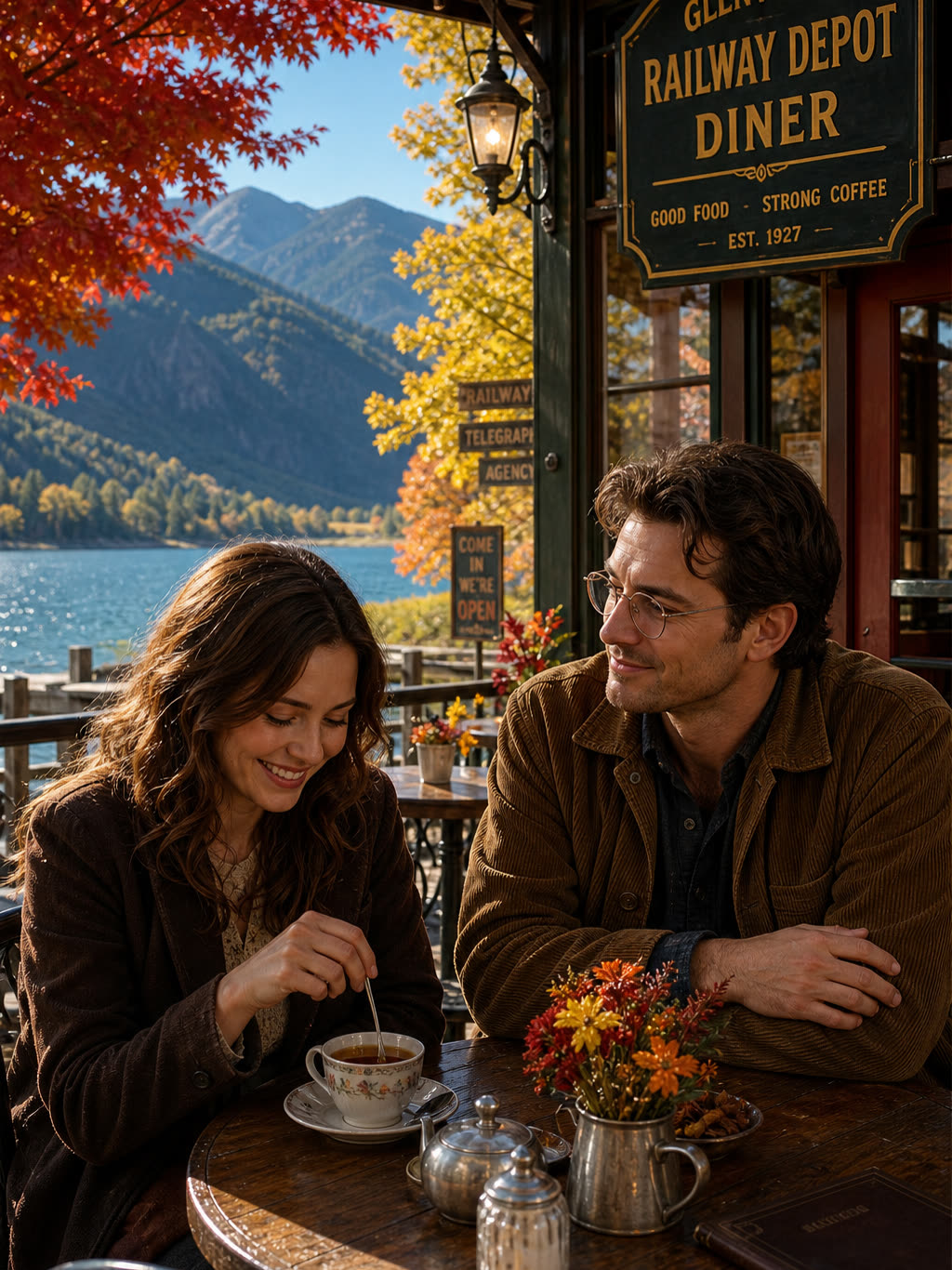
Every single Sunday at noon, Russell and I met for brunch at the little diner down by the old railway depot. It became the fixed point of my week.
The veteran waitress, Peggy, eventually stopped asking if we were dating, after we had corrected her with gentle laughter for six months straight.
“Why do you avoid going on actual dates, Russell?” I asked him one afternoon while stirring sugar into my black tea.
Russell raised one eyebrow and pushed his wire-rimmed glasses higher on the bridge of his nose.
“You are a remarkably handsome and steady guy, so you would make an incredible husband for someone,” I insisted.
“I happen to have extremely particular standards when it comes to a partner, Hannah,” he replied with a faint smirk.
“Just how particular could your standards possibly be?” I challenged with a soft laugh.
“Completely and utterly impossible,” he answered quietly while looking directly into my eyes across the booth.
I chuckled and let the subject drop, assuming he was merely joking about his bachelor lifestyle.
Looking back on those years with clear eyes, I can see that the signs of his unspoken devotion were scattered everywhere along our path.
Russell always remembered the exact week of my medical diagnosis and found subtle excuses to drop by my house with groceries. He remembered the twins’ favorite childhood snacks, and he bought them baseball gloves before I even realized they were interested in sports.
When Mason broke his left forearm during a summer camp trip, Russell drove four hours through a torrential rainstorm just to sit in the emergency room waiting area.
For decades I convinced myself that his presence was just extraordinary friendship and incredible personal fortune. I gave it every safe label in the world, because examining Russell’s loyalty felt far too risky for my peace of mind.
Then my boys finished high school, packed their suitcases, and moved out to attend classes at the state college. The hallways grew quiet once again, and I told myself that I was fully content with living alone as an older woman.
And then came that strange Friday dinner, when both of my adult sons arrived unannounced and barely touched their plates.
“Where on earth did you get that old wicker basket, Wyatt?” I demanded, my voice trembling as I pointed a shaking finger at the table.
Wyatt looked down at his hands, which were clasped tightly together on the edge of the wood.
“Mom, please promise you will listen to everything before you get upset with us,” Wyatt pleaded softly.
“I asked you a direct question, young man, so tell me where you found that basket,” I repeated firmly.
“Russell brought it over to our apartment two months ago,” Wyatt admitted, his voice cracking on the final syllable.
The sound of Russell’s name seemed to suck the warmth completely out of the dining room.
“What do you mean Russell gave you that basket?” I asked, feeling my pulse hammering against my temples.
“He gave us the basket, and then he gave us the entire true story of where we came from,” Wyatt whispered.
Mason looked up, his eyes glassy with unshed tears, and reached across the table to steady my wrist.
“Mom, please try not to hate him for keeping this truth tucked away for twenty years,” Mason said quietly.
My mind slid backward, as though the basket itself were pulling me toward that cold morning twenty years earlier, which still felt entirely immediate and raw.
I had been standing on a wooden stepstool by my kitchen counter, spreading strawberry jam on toast, when three loud knocks sounded at the front door. I wiped my hands on my apron, assuming a postal worker was dropping off a parcel or that Russell was returning a borrowed book.
When I opened the door, the porch boards were vacant and swept clean by the autumn breeze. Then a weak, high-pitched whimper caught my attention from near the steps.
I leaned over the railing and felt my breath hitch in my throat at the sight waiting on the welcome mat. Two tiny infants were wrapped tightly in a thick flannel blanket that carried the faint scent of dried lavender flowers.
“Sweet heaven above, what is happening here?” I whispered aloud to the empty yard as I dropped down to my knees.
I pulled the heavy basket across the threshold and shut the wooden door against the morning chill. My hands trembled so terribly that I dropped the telephone twice on the rug before I could connect with the police precinct.
“Please send someone to my address right away because someone abandoned two newborn babies on my porch,” I cried into the receiver.
Within ten minutes, Officer Vance and her partner arrived at my door, writing notes while medical personnel checked the twins’ vital signs.
“Did anyone leave an envelope, a birth record, or any written note inside the blanket?” Officer Vance asked gently.
“There was absolutely nothing inside the basket except the babies and the flannel blanket,” I answered honestly.
The local authorities searched the surrounding streets and canvassed every neighboring household for several blocks around my house. Nobody had seen a suspicious car idling near my driveway, and nobody had witnessed anyone walking with a large basket.
The biological mother was never identified by the state investigators. The two infants were transported to a licensed foster facility, yet my heart remained anchored to those little boys.
I found myself driving across town every Tuesday and Thursday afternoon just to hold them in the nursery rocking chair. Their small weight against my chest was the only thing that eased the ache Keith had left behind.
Eventually, I picked up my phone and called Russell on a Friday evening while pacing around my small kitchen.
“Russell, I am seriously thinking about applying to adopt both of those twin boys,” I announced breathlessly into the receiver.
“I need you to tell me if I am losing my mind because everyone will think I am crazy,” I added.
“You are not losing your mind at all, Hannah, and I think it is the most wonderful idea you have ever had,” Russell answered without a second of hesitation.
“I am a divorced woman with limited income and a physical condition, so no family court judge is going to give me two babies,” I argued.
“The right judge will see your huge heart, and I will be right beside you to help with every legal document,” he said firmly.
The following Saturday morning, Russell arrived at my home carrying legal pads, pens, and two large bags of Chinese takeout. He sat across from me at the kitchen table for hours, helping me carefully answer every complex question on the state application forms.
At one point, his pencil paused over the section regarding personal character references and family support networks.
“You will need a dependable local emergency contact who lives within five miles of your house,” Russell pointed out.
“Write your own name down in that space because you are the only dependable person I have left,” I told him with a tired smile.
“Are you certain you want to sign up for this chaos when you could be building your own independent life?” I asked.
“I am not going anywhere, Hannah, because being right here with you is the only life I care about,” he replied softly.
He attended every preliminary hearing, drove me to every court appearance, and held my hand in the hallway whenever my anxiety spiked. When Judge Albright finally granted the adoption decree, she smiled warmly and declared that our new family was legally permanent.
I cried tears of pure relief on the entire drive home, glancing back at the two car seats secured in the rear row. Then I gave them the names Mason and Wyatt, and my quiet life transformed into an adventure of endless noise and warmth.
Now the dining room came back into focus, and the two grown men who had once been those car-seat babies were watching me with frightened eyes. Russell’s name hung in the air like smoke.
“What exactly did Russell tell you when he gave you this basket two months ago?” I asked, my voice barely louder than a whisper.
Mason took a deep breath, exchanging a nervous glance with his brother before looking back into my eyes.
“Russell invited us over to his workshop on a Saturday afternoon and told us that he needed to clear his conscience,” Mason explained gently.
Wyatt’s chair scraped backward as he leaned toward me, and I saw his chin tremble the way it had when he was small. Then he spoke the sentence that split my entire world in two.
Part 3: What Russell Had Been Hiding
“He told us that there never was an anonymous biological mother who abandoned us on your front porch,” Wyatt added quietly.
My heart began racing with such force that I had to place both hands flat against the wooden table. The surface felt solid, and I clung to it because nothing else in the room did.
“He used an independent, private gestational carrier agency in another state and funded the entire arrangement using his personal inheritance,” Wyatt revealed.
I opened my mouth to speak, but my vocal cords refused to produce any sound at all. The ticking of the clock grew deafening.
“He knew how deeply you grieved after Keith walked away, and he knew your pride would never allow you to accept financial charity,” Mason continued.
“So he created a situation where the boys would end up on my steps like an abandoned mystery?” I asked in disbelief.
“He coordinated the delivery, alerted the county authorities, and made certain the legal path led straight toward your open door,” Mason said.
“He told us that he trusted your maternal instincts completely, knowing you would visit the nursery and fall in love with us,” Wyatt explained.
“He bet twenty years of our lives on a calculated gamble that my heart would react the way he hoped?” I asked, feeling an overwhelming wave of shock.
“He loved you too much to watch you spend your life grieving for children you thought you could never have,” Mason pleaded softly.
“Why on earth did both of you wait two whole months before telling me this massive secret?” I demanded, blinking through fresh tears.
“We were terrified that you would look at us differently or feel like our entire childhood was built on an elaborate lie,” Wyatt admitted.
I pushed my dining chair back from the table and walked quickly into the adjacent kitchen to lean heavily against the porcelain sink. The cool edge pressed into my ribs, and I stared at the dark window above it without seeing anything.
I buried my face in my hands, trying desperately to process the revelation that my closest companion had orchestrated my entire adult life. Every memory I owned was rearranging itself around a single fact.
Our years together played through my mind in a swift, dizzying reel. Mason had learned to walk first by clinging to the coffee table, while Wyatt spent his toddlerhood attempting to scale every bookshelf.
Our winter holidays had become a whirlwind of colored wrapping paper, warm cocoa, loud laughter, and two boys waking up before dawn. I had patched their scraped knees after bicycle accidents, cheered until my voice gave out at their baseball tournaments, and organized countless birthday parties.
Through every triumphant milestone and difficult trial, Russell had been standing right there beside us. He had occupied a front-row seat at every school graduation ceremony, and he had taught Wyatt how to drive a manual transmission car.
When the thick college acceptance envelopes arrived in our mailbox, Russell had stood in the kitchen doorway while I read them aloud through happy tears.
“You managed to do it, Hannah, and you raised two extraordinary young men all on your own,” Russell had whispered with obvious pride.
“We did this together, Russell, and I could never have survived these twenty years without your help,” I had told him earnestly.
He had merely given me a humble smile and looked out the window, keeping his deepest thoughts locked inside his chest.
Standing at the sink, I finally understood what had been behind that smile. Russell had stood outside courtroom doors, attended school plays, fixed broken bicycles, and remained completely silent about his own massive sacrifice.
He had spent his own savings to give me the sons my husband had denied me, all while demanding nothing in return for two whole decades.
“Mom, please come back into the room and talk to us,” Mason said as he appeared in the kitchen doorway.
“I am not angry at you or your brother, but I need to speak with the man who started this entire story,” I told him as I grabbed my phone.
My fingers trembled violently as I scrolled down my contact list and selected Russell’s number. He answered the call on the second ring, his familiar voice sounding unusually tense and cautious.
“Hannah, I assume the boys finally brought the basket over to your house tonight,” Russell said quietly before I could utter a greeting.
“Get in your truck and drive over to my house this very minute,” I commanded before disconnecting the call without another word.
Thirty minutes later, the front doorbell echoed through the quiet house, and I found Russell standing on my front porch with his hands shoved deep into his coat pockets. He looked older than he had at Sunday brunch only days before, and he did not meet my eyes at first.
“Come inside the dining room so we can finish this conversation once and for all,” I said while stepping aside to let him enter.
Mason and Wyatt had quietly retreated upstairs to their old bedrooms to grant us complete privacy for the confrontation. Russell took a seat at the dining table and stared down at the wicker basket that had remained between the dinner plates.
“I have loved you since our second semester of college, Hannah, long before Keith ever entered your life,” Russell confessed in a steady voice.
“Why didn’t you just say those words to me instead of constructing this unbelievable twenty-year deception?” I asked, wiping my damp cheeks.
“You chose Keith back then, and after he abandoned you, your heart was far too broken to handle another complicated romance,” he answered honestly.
“So you decided to play God and orchestrate a private surrogate pregnancy just to leave two infants on my doorstep?” I asked with a sharp edge in my voice.
“I knew that if I simply offered to fund an adoption or hand you a child, your fierce independence would cause you to reject the gift,” he explained.
“I wanted you to become a mother on your own terms, without feeling any burden of debt toward me or anyone else,” Russell added.
“You allowed me to spend twenty years believing you were just an extraordinarily helpful friend who preferred being single,” I challenged him.
“Gratitude is a terrible foundation for real romantic love, Hannah, and I refused to let you care for me out of obligation,” he replied softly.
“I wanted you to choose me freely as a man, the exact same way you chose to fight for those two boys in court,” he said while looking directly into my eyes.
The raw honesty in his confession drained the remaining anger out of my lungs, leaving only a profound sense of wonder. I had come ready to rage at him, and instead I sat there stunned by the size of what he had given.
“I am completely overwhelmed by what you did, Russell, and I honestly do not know how to feel about you tonight,” I admitted in a whisper.
“You do not have to make any grand decisions tonight, Hannah, because I am willing to wait as long as you need,” he replied with a gentle nod.
“Please go home to your house for now because I need time to think through everything you have revealed,” I instructed him gently.
Russell stood up from the wooden chair, touched my shoulder with familiar tenderness, and walked out into the cool evening air. I listened to his truck start and fade down the street, and the house fell silent again.
For three days I turned the story over and over in my mind, the way I once turned a small baby in my arms to check that every part of him was real. I was not certain of anything except that I could not carry this alone.
Then, on a crisp Monday afternoon, I drove over to Russell’s small house near the edge of town carrying two large paper cups of hot coffee. He answered the front door wearing his work apron, his eyes widening in surprise when he saw me standing on his welcome mat.
“I still cannot wrap my mind around everything you engineered twenty years ago, Russell,” I told him as I handed him one of the warm cups.
“However, I know that I do not want any more secrets standing between us, and I want to discover what we are to each other with complete honesty,” I added.
Russell broke into a wide, relieved smile that made the deep lines around his gray eyes crinkle with warmth.
“That is all I have ever wanted since the day I met you, Hannah,” he answered as he stepped back to welcome me inside his living room.
Over the months that followed, our relationship evolved into something steady, transparent, and remarkably sweet. There were no theatrical romantic speeches or sudden vows, only hours of honest conversation over diner coffee and quiet walks around the park.
By the time the autumn leaves began to fall again, Mason and Wyatt joined us at my house for a joyful Sunday family feast. Russell carved the roasted turkey at the head of the dining table while both boys traded jokes and laughed about their college classes.
The old wicker basket had been cleaned and placed on a high decorative shelf in the corner of the living room. It was no longer a symbol of abandonment or a hidden deception, but a permanent reminder of where our unusual family had found its foundation.
I looked around the warm room at my two handsome sons, and then across the table at the man who had loved me in silence for half a lifetime.
For twenty years, I had proudly believed that I was the strong woman who had chosen to rescue two lost babies from the cold porch steps. The deeper reality was that a quiet, patient man had trusted my heart enough to let me find my true purpose in life.
And after two decades of waiting in the wings, I was finally ready to choose him right back.
THE END.
Disclaimer: This story is a work of fiction inspired by real-life themes. Names, characters, places and events are fictionalized, and any resemblance to real persons is purely coincidental. Images are for illustration purposes only.
