

Chapter 1: The Frost at the Birthday Table
The decree was delivered in the foyer, wrapped in the smell of roasting garlic and the heavy warmth of forced-air heat.
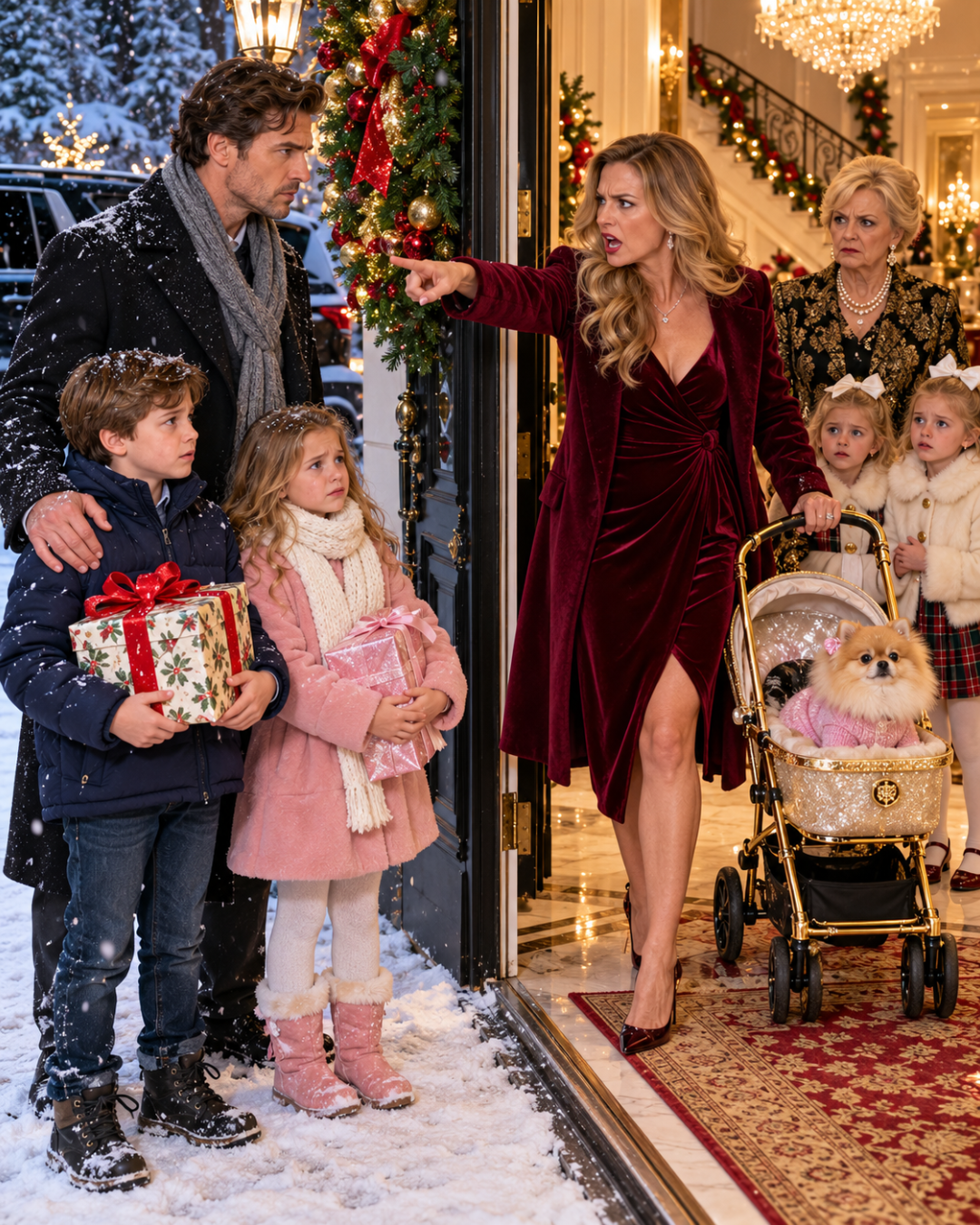
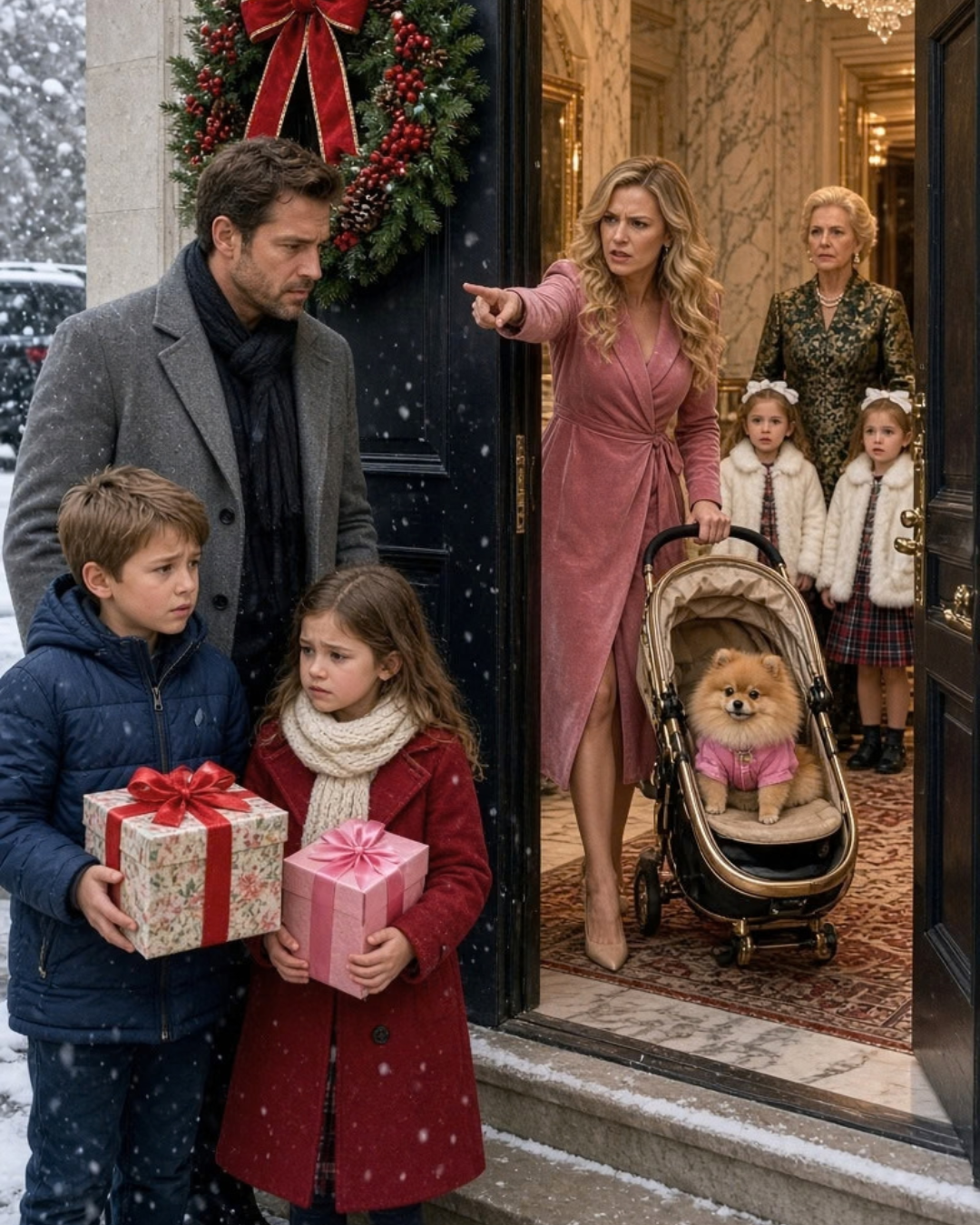
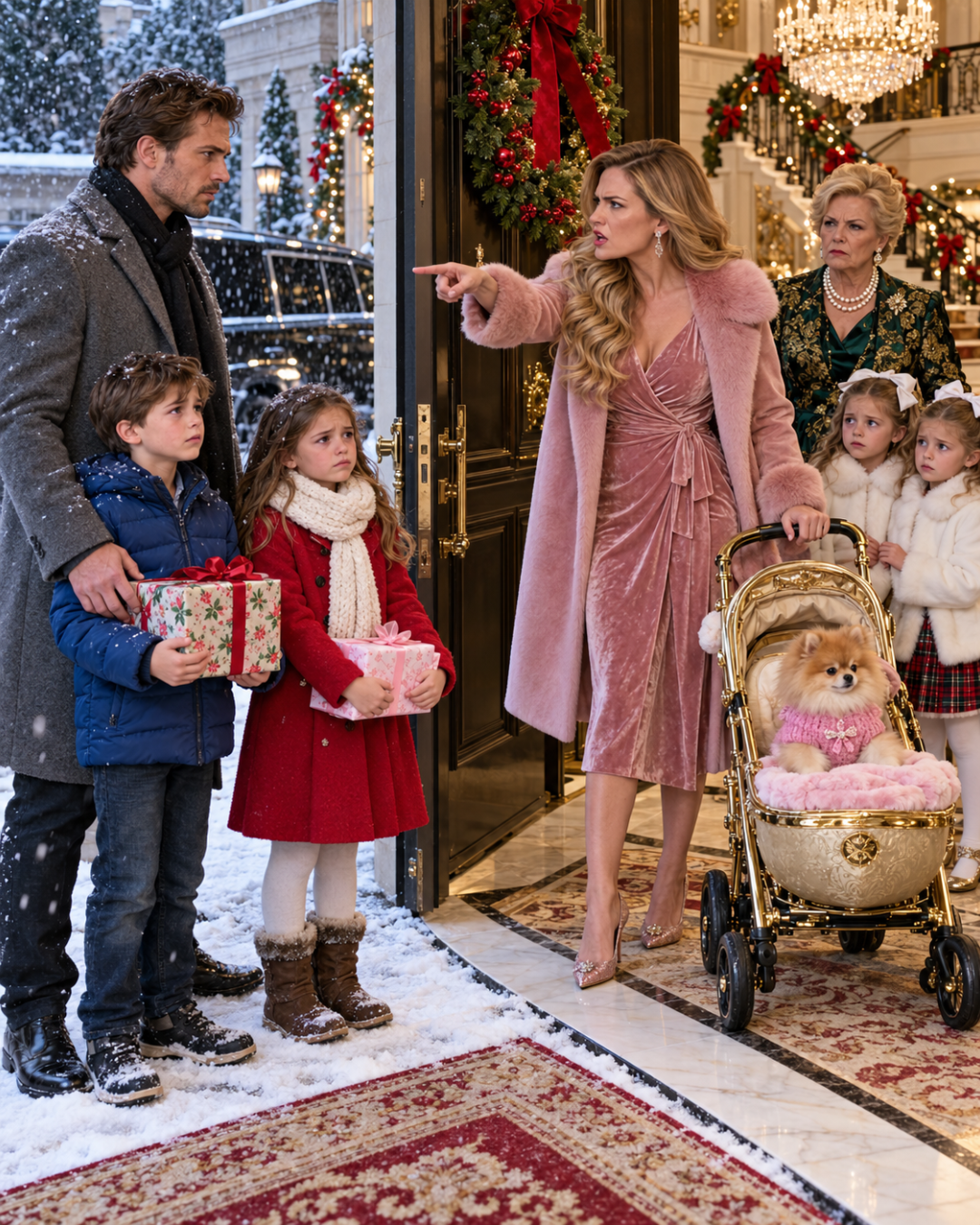
“Your kids can wait in the car during dinner. The twins just don’t feel comfortable around them,” my sister Brooke announced. She said it with the easy, breezy rhythm of someone suggesting we switch from red wine to white.
We had gathered for my mother’s sixty-eighth birthday. I stood near the entryway, still in my heavy canvas work jacket, with my twelve-year-old son, Owen, and my nine-year-old daughter, Lucy, beside me. Both of them were holding hastily wrapped, handmade birthday gifts.
I waited for the punchline. I waited for my mother to laugh, to wave a hand and brush off her daughter’s absurd idea. Instead, Mom simply nodded.
That small, single dip of her chin was the spark. It was not Brooke’s ridiculous demand that cut something deep in my chest. Brooke had been broadcasting weaponized absurdity with total confidence since the late nineties. But my mother agreeing with her—while my children stood shivering in their winter boots, holding offerings of construction paper and glitter—that was an entirely new stretch of betrayal.
I looked toward the front window. Beyond the frosted glass, the bare branches of an oak tree were whipping hard against the streetlamps. It was exactly thirty degrees outside, the kind of wet, bitter cold that worked its way into your bones.
I turned back to my younger sister. “Let me ensure I am translating this correctly. You want my children to sit in the cab of my truck while the rest of us carve the roast?”
Brooke gave me that calm, endlessly patient smile she usually used when explaining abstract ideas—like ‘personal branding’ or ‘synergy’—to people stuck with actual, labor-heavy jobs.
“Rupert, please don’t frame it to sound malicious,” she murmured, adjusting the lapels of her silk blouse.
“I literally just repeated your exact sentence,” I replied, keeping my voice dangerously level.
“The truck has climate control,” Brooke countered, as if she were pointing out a luxury feature at a five-star resort.
“So does this house.”
Mom let out a heavy, theatrical sigh. “Rupert.”
It was that tone. The exact scolding register she had used on me when I was fourteen, after I supposedly humiliated Brooke by telling her middle-school friends that she still slept clutching a battered stuffed rabbit named Mr. Bun Bun. (For the record, she absolutely did.)
Brooke folded her arms across her chest. “My twins have established a very clear boundary. They simply do not feel emotionally secure when Owen and Lucy are in their immediate space.”
Her precious twins, Braxton and Brinley, were eight. At that exact moment, I could see both of them upside down on Mom’s expensive cream sofa. They were mindlessly watching loud, flashing tablet videos while crushing Ritz crackers straight into the upholstery.
Owen looked up at me, his eyes wide and unsure. “Dad, what did we do?”
Before I could get out a reassuring word, Brooke cut in. “You can be a little… intense, Owen.”
My son blinked, clearly lost. “I just said hi to them.”
Brooke nodded solemnly, as if he had confessed. “Exactly. Braxton felt pressured to respond. It was a lot of forced interaction.”
I stared at her, honestly amazed at the Olympic-level mental gymnastics it took to treat a greeting as a psychological attack.
Then quiet little Lucy spoke. “What did I do, Aunt Brooke?”
Brooke hesitated, her eyes sliding away for a fraction of a second. “You ask an excessive amount of questions, sweetie.”
Lucy looked genuinely upset, holding her handmade card tighter against her chest. “I only asked why your dog is riding in a baby stroller.”
As if a stage director had cued it, all five of us turned toward the main hallway. Brooke’s six-pound, shivering Pomeranian, Cartier, sat imperiously in a miniature gray luxury stroller. The dog wore a cashmere ruby-red sweater and four carefully laced, tiny waterproof boots.
I shifted my weight and looked my sister in the eye. “I am standing in absolute solidarity with Lucy on this matter.”
“Cartier suffers from severe hardwood-induced anxiety,” Brooke snapped. “He’s highly sensitive.”
“He is a canine, Brooke. He descended from wolves.”
“He is sensitive!”
“Apparently, so are my children,” I countered, my voice dropping an octave. “Yet, remarkably, only the dog has been provided with a private vehicular transport system inside the living room.”
Mom stepped forward, rubbing her temples as if she were warding off a migraine. “Please, it is my birthday. Can we just have one evening where we do not engage in combat?”
“I am not fighting,” I said quietly. I reached down and lifted Lucy’s floral backpack onto my shoulder. “I am simply departing.”
Mom’s eyes widened in real shock. “Rupert, be serious. You are overreacting.”
Brooke threw her hands up in a grand show of exasperation. “Oh my god, you perpetually do this. You have to turn every minor inconvenience into a massive moral crusade.”
I looked down at my children, whose faces were pale and drawn. I glanced into the dining room, where six elegant chairs sat around a feast. Then I looked out at the freezing asphalt driveway.
“No, Brooke,” I said, my hand closing around the cold brass of the doorknob. “Sometimes the moral crusade arrives with assembly already required.”
Owen wordlessly reached into his coat pocket and handed me the heavy, artisanal pecan pie I had bought from a bakery across town—Mom’s absolute favorite. I took the foil pan and handed it firmly back to him.
“Hold onto that, buddy. We are taking the pastry.”
Mom gasped, deeply offended. “The pie, too? Honestly, Rupert, the pie hasn’t committed any sins.”
Lucy, with a grace that entirely skipped my side of the family, stepped forward and handed Mom her glitter-covered construction paper. “Happy birthday, Grandma.”
For about two fleeting seconds, a shadow of real shame crossed my mother’s face. She looked down at the uneven, childlike handwriting.
Then Brooke ruined it. “You’re deliberately trying to upset her, Rupert. Just leave.”
I pulled the heavy oak door open. The biting wind rushed into the warm foyer at once. “It’s thirty degrees out there. I would absolutely loathe for anyone in this family to experience a moment of discomfort.”
We walked out into the cold, the heavy door clicking shut behind us. I loaded the kids into the truck, turned the heat up until it roared, and drove us to a neon-lit diner ten miles down the highway.
We took a vinyl booth in the corner. The air smelled of burnt coffee and frying grease, and it felt like absolute heaven. Owen ordered a double bacon cheeseburger. Lucy, grabbing the chaotic energy of the night, ordered a towering stack of buttermilk pancakes drowned in whipped cream and chocolate chips. As far as I was concerned, being shut out by your own bloodline legally made dessert count as breakfast.
I did not order an entrée. I sat there eating my mother’s birthday pecan pie straight out of the aluminum tin with a plastic fork, watching my kids laugh and warm up.
At exactly 8:58 p.m., we pulled into our driveway.
At 9:06 p.m., my phone vibrated in my pocket. I pulled it out. A text from Mom.
The heat just stopped working. Call your guy.
I stared at the glowing pixels. I did not chuckle. I did not merely smile. A deep wave of laughter broke out of my chest. I laughed so hard my knees buckled, and I had to lean against the kitchen island to keep from hitting the floor.
Owen wandered into the kitchen, a half-eaten burger in his hand. “Dad? What happened? Are you okay?”
I could not speak. I just handed him the phone.
He read the message, his brow furrowing. “Who is your guy?”
“Usually,” I gasped, wiping a tear from my eye, “it’s me.”
But tonight, the rules of the universe had shifted for good. And I was about to let them freeze.
Chapter 2: The Infrastructure of Enabling
To understand why my mother demanded I “call my guy” about a broken furnace, you have to understand the odd ecosystem of my work.
I specialize in high-altitude structural maintenance. I repair building exteriors, recalibrate rooftop mechanical equipment, weld industrial signage, fix shattered window systems, and do rope-access structural reinforcements. In short, if something breaks high enough above the concrete that a normal person looks up, feels dizzy, and says, “They need to hire a very specific, crazy person to fix that,” I am that person.
I do not repair residential basement furnaces. I am not an HVAC technician. But after twenty-five hard years in commercial construction and industrial maintenance, my contacts list reads like a rolodex of every skilled trade in the tri-state area.
Because of that, an unspoken protocol had grown in my family over the past decade. The protocol was simple: Call Rupert.
If the roof developed a slow leak? Call Rupert. If the garage door sprang a torsion coil? Call Rupert. Gutters coming loose? Rupert. Water heater making a sinister hiss? Rupert. The internet router slowing down during a Netflix binge? Somehow, also Rupert.
I had become the designated emergency infrastructure for a family that aggressively refused to learn how the physical world worked.
The furnace was a particularly sore subject. Two brutal winters ago, Mom’s heating system had needed a catastrophic overhaul. Naturally, I had found the contractor, negotiated the inflated price down to a reasonable margin, supervised the installation, and handled the paperwork of setting up the new municipal gas service.
The gas service was a hurdle because Mom’s credit score had recently suffered a catastrophic collapse. That collapse had a name, a Social Security number, and a six-pound Pomeranian. It was Brooke.
A year earlier, Mom had foolishly co-signed a massive, predatory business loan for Brooke’s first entrepreneurial venture: Luxury Picnic Consulting.
To this day, I cannot give a coherent explanation of what Luxury Picnic Consulting actually was. From the outside, Brooke charged wealthy suburbanites several hundred dollars to sit on damp grass near a pile of artisanal cucumber sandwiches, surrounded by imported Moroccan throw pillows.
The business lasted exactly three months before it collapsed under its own pretension. The debt proved far more durable. Because Mom’s credit was temporarily radioactive, she could not get favorable utility terms.
“Just put the gas account in your name, Rupert,” she had begged me. “Temporarily. Just for a few months until Brooke gets back on her feet.”
That was three years ago.
The utility account was still firmly in my name. The monthly invoice came out of my checking account automatically. In theory, Mom reimbursed me. In reality, her repayment schedule was chaotic fiction. Some months she forgot entirely. Some months she sent exactly half. Other months she called, her voice thick with sorrow, to explain that Brooke was “going through a profound emotional transition” and needed financial shielding.
Brooke had been going through a profound emotional transition since her sophomore year of college. The main casualty of those transitions was always other people’s money.
Standing in my quiet kitchen, I looked down at Mom’s text again.
Call your guy.
My thumbs hovered over the glass. I did not overthink it. I did not draft a diplomatic reply. I simply typed the truth.
My guy doesn’t like you.
I hit send.
Owen, still standing near the refrigerator, made a sound that was a strange mix of a cough and a gasp. “Dad, what? Did you just send that? That is unbelievably cold.”
“Apparently,” I replied, tossing the phone onto the granite counter, “so is your grandmother’s living room.”
The phone did not even have time to go dark before it started vibrating hard against the stone. The caller ID flashed Mom.
I let it ring three times, setting a deliberate pace, before I picked up. “Hello, Robert,” I answered, using my formal business voice.
“This is not a humorous situation, Rupert,” Mom snapped, her voice tight with panic.
“I respectfully disagree. The comedic timing is actually flawless.”
“The furnace is entirely unresponsive. It is making a clicking sound and then dying.”
“Then you need to contact a licensed HVAC company. I am off the clock.”
“I don’t know who to call! I don’t have anyone’s contact information!”
“I forwarded you the digital contact cards for three highly rated, emergency 24-hour companies last winter, specifically for a scenario like this.”
“I don’t have them anymore!”
“They are in your phone, Mom.”
“Where in my phone?” she wailed.
“In our text message history. Just open the search bar and type the letters H-V-A-C.”
A heavy, static-laced silence sat on the line. I could hear the faint sound of wind rattling old windowpanes in the background. Then a muffled, agitated voice entered the call. It was Brooke.
“Give me the phone,” I heard my sister hiss.
Mom, eternally compliant, apparently handed the device over.
“Rupert,” Brooke commanded, her tone stripped of any of the earlier dinner-party sweetness.
“Brooke.”
“You need to get in your truck and come over here right now.”
“No.”
“You haven’t even heard what I was preparing to say!” she shrieked.
“I am fairly certain your next sentence was going to be, ‘I demand you come over here right now.’”
Another tense silence. “That is entirely irrelevant. Listen to me. Declan Vale is arriving tomorrow.”
I closed my eyes and pinched the bridge of my nose. I knew the name. Everyone in our unfortunate gene pool knew the name. Brooke had managed to drop Declan Vale into every conversation, text thread, and family gathering about every six minutes for the past month.
Declan Vale was an internet phantom—a “lifestyle and luxury curator” with an audience of over two million devoted followers. His digital footprint was highly filtered videos of him touring opulent hotels, reviewing Michelin-starred restaurants, attending shadowy celebrity galas, and unboxing products that cost more than my mortgage.
Through some dark magic of relentless networking and aggressive direct messages, Brooke had somehow convinced his management team to let him stop by Mom’s house while he was passing through our city.
Brooke called this coming visit her Breakthrough Meeting.
My sister was forty-one. She had spent most of her adult life waiting for a magical, lucrative breakthrough that skipped the indignity of starting at the bottom. She refused to apply for any corporate job offering a salary below one hundred thousand dollars.
That financial stubbornness was especially impressive given that her highest documented annual income to date was thirty-four thousand dollars, earned during a brief stint as a yoga studio receptionist.
Whenever I had the nerve to point out that glaring math, she instantly accused me of a “toxic employee mindset.” Brooke lived under the ironclad delusion that she naturally belonged in executive boardrooms. Corporate human resources departments continuously believed otherwise.
Her résumé was a graveyard of invented titles: Wellness Consultant, Brand Strategist, Luxury Experience Curator, Synergistic Networking Specialist, Lifestyle Entrepreneur, and, for one confusing fortnight, a Creative Director.
I once made the mistake of asking what, exactly, she had creatively directed.
She had looked at me with deep pity and replied, “You simply lack the visual vocabulary to understand.”
Her obsession with proximity to the elite had hardened three years ago. Her long-suffering husband, Kyle, had a sister named Monica. Monica was a freelance makeup artist who had, allegedly, applied eyeliner to Lady Gaga for one single, chaotic promotional event.
The first time Brooke told the story, it was factually accurate: “Kyle’s sister did Lady Gaga’s makeup once.”
Six months later, the story mutated: “Monica regularly works with Gaga’s team.”
A year later, the delusion expanded: “Our family has intimate relationships within Gaga’s inner circle.”
By last Christmas, I personally heard Brooke casually tell an exhausted Olive Garden waiter, “Our family is deeply connected to the Hollywood entertainment complex.”
Kyle managed inventory at a wholesale flooring warehouse. Mom was a retired municipal clerk. I hung off the sides of skyscrapers on nylon ropes. But apparently, one historical application of celebrity eyeliner had magically turned our bloodline into entertainment royalty.
Now this Declan Vale character was scheduled to cross the threshold of Mom’s modest suburban house. Brooke was utterly convinced that this internet stranger would instantly recognize her dormant, explosive talent and spontaneously offer her a six-figure media directorship that did not currently exist. She had even bought an expensive, structured cream-colored blazer for the occasion.
“Rupert,” Brooke said, her voice dropping into a desperate, breathy whisper. “This man could alter the entire trajectory of my life.”
“I fail to see how the trajectory of your life intersects with a broken fan motor in a basement.”
“The house cannot feel like a meat locker when Declan arrives!”
“I agree completely. It makes for terrible ambiance. So, call a mechanic and pay them to fix it.”
“I am not an HVAC technician, Rupert! You know people in the trades!”
“And you are deeply connected to the entertainment complex,” I fired back. “Call Lady Gaga. See if she knows how to bypass a faulty flame sensor.”
Click. She hung up on me.
Exactly twelve seconds later, Mom called back.
“Rupert, I am begging you,” Mom pleaded.
“Mom, you need to call a twenty-four-hour emergency HVAC dispatch. Tonight.”
“Do you have any idea what they charge just to pull into the driveway at this hour?”
“Yes. It’s a standard two hundred and forty-nine dollar dispatch fee.”
“Before they even turn a wrench!” she cried, aghast.
“Yes. That is the fundamental economic principle of requesting emergency mechanical labor at ten o’clock at night.”
“This is completely ridiculous.”
I leaned back against the cool granite of my kitchen counter, staring at the ceiling. “Mom. Three hours ago, you sat at a dining table and decided that a heated pickup truck was perfectly acceptable, comfortable accommodation for your own grandchildren. Do not start complaining to me about ridiculous.”
“I have not started anything!”
“Your furnace did.”
She exhaled sharply, pure frustration. “This is my house, Rupert.”
“That is factually correct.”
“And as the homeowner, I should possess the fundamental right to have heat in my own home!”
“Also factually correct.”
“So get over here and help me!”
“No.”
Silence stretched across the line. The kind of heavy, loaded silence that comes before an avalanche.
When Mom finally spoke, her voice dripped with venom. “You do not possess the authority to punish me by deciding whether or not my house has heat.”
That sentence hit a nerve. It bothered me deeply. Not because she was wrong about needing warmth, but because she still believed I was the main person responsible for providing it. She saw me not as a son, but as a utility.
I measured my words carefully. “Let me be abundantly clear. I am not deciding whether you have heat. A mechanical component in your basement failed of its own accord. I did not sabotage it. I am instructing you, as an adult, to hire a licensed professional.”
“But you always handle the logistics of these things!”
“I used to handle the logistics of these things.”
“Why are you acting so malicious?”
“Because the children I brought into this world were casually informed that their physical presence was repulsive to your household, and you nodded.”
“That has absolutely nothing to do with my heating system!”
“You are absolutely right,” I conceded smoothly. I let a beat pass. “And since you so eloquently reminded me that this is, in fact, your house… I just realized a glaring administrative error.”
“What error?”
“The municipal gas account.”
Silence. A much longer, heavier silence.
“What about the gas account?” Mom asked, her voice trembling slightly.
“It is currently registered in my name.”
Mom did not answer. Brooke did. I heard the scuffle of the phone changing hands again.
“What are you talking about?” Brooke demanded. I could hear Mom whimpering something unintelligible in the background. Then Brooke’s voice sharpened. “Why on earth is Mom’s heating gas tied to your identity?”
“Because thirty-six months ago, her credit profile was obliterated after she co-signed a predatory loan so you could charge people to eat sandwiches on damp grass.”
“Luxury Picnic Consulting possessed massive market potential!” Brooke shrieked defensively. “It was an avant-garde approach to experiential hospitality! We offered premium lumbar support cushions!”
Mom snatched the phone back, her voice desperate. “Rupert, listen to me. Are you explicitly threatening to call the city and shut off my gas supply?”
“No,” I replied instantly. “Absolutely not. I am not a monster. I would never cut off a vital utility to an elderly woman in freezing temperatures.”
I heard a collective sigh of relief through the receiver.
“However,” I continued, my voice hardening into steel. “First thing Monday morning, I am contacting the utility provider. I am formally transferring legal responsibility for the meter back to your name and social security number. Furthermore, I am logging into my banking portal tonight and permanently deleting the automated payment authorization.”
Mom sounded as if I had struck her with a blunt object. “You… you pay the bill automatically?”
“Yes. Every thirtieth of the month. Like clockwork.”
“But I reimburse you! Sometimes!”
“You reimbursed me in October,” I recited coldly. Silence. “Before that, it was June.” More silence. “And prior to that, February.”
I heard Brooke mutter in the background, “Why does he possess such a psychotic memory for calendar months?”
“Because the global banking system invented digital ledger statements, Brooke,” I said loudly enough for her to hear.
Mom’s voice took on a wounded, theatrical flutter. “So, I see. Now we are keeping a petty scorecard of our debts.”
“No, Mom,” I said softly, the anger finally draining out of me, leaving only a cold resolve. “I am not keeping score. I am simply stopping the game.”
That was the real shift. I was not demanding she wire me the thousands in arrears. I was not marching over to cut the gas line. I was not even blinded by rage anymore.
I was simply, finally, refusing to financially subsidize and physically maintain a house where my own children could be banished to the driveway.
“Call the emergency dispatch company tonight,” I instructed.
Then I pressed the red button and ended the call.
Chapter 3: The VIP Delusion and the Propane Protocol
At exactly 8:12 a.m. the next morning, my phone chimed. It was Mom.
Her voice was hollow, beaten down by the hard realities of blue-collar economics. The emergency HVAC technician had arrived at dawn. After assessing the unit, he determined the main electronic control board had shorted out. The replacement part was highly specific and had to be shipped from a regional warehouse.
It would not arrive until Monday morning.
The furnace had not been murdered; it had simply died of natural causes. No dramatic sabotage, no foul play. Just an ancient, brittle circuit board finally giving up at the most socially inconvenient moment imaginable.
For my mother, this was a severe logistical annoyance. For Brooke, it signaled the impending collapse of Western civilization. Declan Vale, the golden ticket to her unearned corporate empire, was scheduled to arrive at exactly 4:00 p.m.
At 8:14 a.m., Brooke sent me a frantic text: Bring your commercial heating units over immediately.
Through my business, I owned four heavy-duty industrial electric space heaters. I sometimes used them to keep pipes from freezing on enclosed, high-altitude job sites. They were massive, ugly, yellow steel boxes that consumed electricity like a dying star.
I typed a one-character reply: No.
My phone rang at once. I answered.
“Why are you doing this to me?!” Brooke screamed, skipping any greeting.
“Because they are my professional assets. And you are not utilizing them.”
“I am trying to salvage my future!”
“I am also not currently utilizing my forty-foot fiberglass extension ladder,” I replied mildly. “Would you like me to set that up in the middle of the dining room to enhance the aesthetic?”
“This is about my career, Rupert!”
“No, Brooke. This is about a mechanical failure in Mom’s basement. They are entirely separate issues.” I hung up again.
I went about my Saturday. I took Owen to the hardware store. I helped Lucy build a terrifyingly unstable fort out of couch cushions. I tried to push the looming disaster out of my mind.
But by noon, reports started coming in from the front lines. Brooke, running on sheer manic desperation, had apparently scoured the neighborhood, knocking on doors and begging for heat. She had acquired six residential electric space heaters.
At 1:30 p.m., the situation escalated from ridiculous to legally actionable.
My brother-in-law, Kyle, called me. His voice was hushed, low, and laced with real terror. He sounded like a hostage whispering into a smuggled burner phone.
“Rupert,” he breathed. “You have to get over here. I don’t know what to do.”
“Kyle? What is happening? Did the house freeze solid?”
“Worse. She brought the outdoor propane patio heaters inside.”
I dropped the wrench I was holding. It clattered against the garage floor. I stood up, my pulse spiking. “Tell me you are joking.”
“I wish I was.”
“Kyle, absolutely not. That is insane. You cannot burn liquid propane inside a sealed residential envelope.”
“I am acutely aware of the science, Rupert. I told her to turn them off.”
“And?”
“I turned them off physically. I went to the bathroom. When I came back, she had ignited them again.”
“Take the fuel cylinders out to the garage immediately!”
“I tried! She physically blocked me! She claims the stainless steel towers are crucial to the ‘industrial chic aesthetic’ she is trying to cultivate for the influencer!”
“Carbon monoxide poisoning possesses a terrible aesthetic, Kyle. It tends to leave the corpses looking flushed.”
“That is essentially verbatim what I told her! Please, Rupert. Just come.”
I did not go over to fix the furnace. I did not go over to salvage Brooke’s delusional career. I got into my truck and broke several traffic laws simply to keep my blood relatives from accidentally asphyxiating themselves while trying to impress an internet celebrity.
When I barged through Mom’s front door, the scene was chaotic and surreal.
The temperature in the living room hovered around a bleak fifty-two degrees. Mom was pacing the floor in a heavy, fur-lined parka over her sequined birthday dress. Kyle was locked in a silent, desperate tug-of-war with a massive white propane cylinder, dragging it toward the side door while casting paranoid glances over his shoulder.
Cartier the Pomeranian was still trapped in his luxury stroller, now wrapped in three layers of fleece blankets, looking like a tiny, furry mummy.
And then there was Brooke.
She stood in the absolute center of the living room, posing as if she were waiting for a magazine photographer. She wore her pristine, structured cream blazer. Under the blazer, however, she wore skin-tight, waffle-knit thermal underwear.
I stopped dead in the entryway, taking in the visual assault.
Brooke spotted me. She jabbed an acrylic fingernail in my direction. “Do not utter a single syllable.”
I slowly raised my hands. “I am completely silent.”
“Your facial expression is screaming at me.”
I let my eyes travel from the crisp lapels of the blazer, down the gray thermal leggings, and finally to her open-toed designer high heels.
“You look,” I finally said, “like a corporate TED Talk being hosted during a rapid maritime evacuation.”
Kyle, abandoning his struggle with the propane tank, turned his back to us. His shoulders began to shake.
Brooke glared at the back of her husband’s head. “Do not laugh at me, Kyle! I am not laughing! I am physically vibrating from the cold!”
Mom rushed toward me, her breath faintly visible in the frigid air. “Rupert, thank the Lord you are here. Can you please, please just take one quick glance at the basement unit?”
“Mom, the licensed technician already diagnosed the issue. The board is dead.”
“But maybe he overlooked a loose wire! Maybe you can bypass something! You work with wires!”
“I am not going to independently investigate a two-hundred-volt electrical system just because Brooke invited a blogger over for charcuterie.”
Brooke appeared beside Mom, her teeth audibly chattering. “He is not a blogger, Rupert. He is a premier digital personality and a lifestyle visionary!”
“Does this visionary generate massive amounts of British Thermal Units?”
“No!”
“Then today, for all practical purposes, he is a blogger.”
At exactly 3:16 p.m., the heavy brass doorbell chimed.
The whole room froze. Brooke whipped her head toward the grandfather clock. “He is forty-five minutes early!”
Total chaos broke out. Mom began frantically wrestling out of her heavy winter parka, tossing it behind the sofa.
Kyle urgently whispered, “Mom, taking off the coat seems medically ill-advised at this juncture.”
“Do I look like I am freezing to death?” Mom demanded, shivering violently.
“Yes,” Kyle, Brooke, and I replied in perfect, bleak unison.
Brooke aggressively shushed us. “Nobody mentions the climate control issue! We pretend this is an intentional lifestyle choice!”
She took a deep, shuddering breath, pasted a terrifyingly wide, brilliant smile onto her face, and pulled open the heavy oak door.
Declan Vale stood on the porch. He wore faded denim jeans, scuffed leather boots, and a massively thick black arctic puffer jacket.
“Declan,” Brooke purred. Her voice suddenly dropped an octave, taking on a sophisticated, breathy cadence that was entirely foreign to me. For a fleeting second, I genuinely thought an impostor had slipped past me in the hallway. “It is absolutely incredible to finally synergize with you in a physical space.”
Declan stepped over the threshold. He stopped, let the heavy door click shut behind him, and looked around the room. He exhaled, watching his breath form a faint cloud in the air.
“Wow,” he said softly.
Brooke’s smile widened until I feared her facial muscles might snap. “You appreciate the vibe? We cultivate a very open, elemental atmosphere.”
Nobody moved. Nobody spoke. The silence was agonizing.
Finally, Mom cracked. “We… we are passionate advocates for fresh air circulation.”
Declan looked deliberately at the frost-covered, tightly sealed windows. “You circulate it with the glass shut?”
Near the hallway, Kyle suddenly bent double, violently pretending to examine the laces on his loafers to hide his face.
Desperate to regain control of the story, Brooke elegantly offered Declan a crystal flute of champagne from a side table. He graciously accepted the glass. She then reached forward, her hands hovering near his shoulders.
“Allow me to take your jacket, Declan.”
He immediately took a step back, clutching the thick nylon of his coat. “Oh, no thank you. I am absolutely going to keep this on. Forever, probably.”
Brooke kept her manic smile, though her eyes betrayed a rising panic. As she pivoted to guide him toward the living area, Declan’s gaze drifted to a small side table.
Sitting prominently next to a vase of imported orchids was the glittery handmade birthday card Lucy had made the night before.
Declan leaned over and picked it up, genuinely smiling at the crooked crayon lettering. “This is incredibly cute. ‘Happy Birthday Grandma.’”
Mom’s face softened for a moment. “Thank you. My youngest granddaughter created that masterpiece.”
Declan looked around the room. “Is she hiding somewhere?”
“No,” Brooke answered, entirely too fast.
“Not anymore,” I corrected, stepping fully into the light of the entryway.
Brooke turned her head toward me, her eyes widening in a silent, desperate plea for mercy. Declan looked back and forth between us, sensing the sudden drop in pressure.
“Family drama?” Declan asked, taking a sip of his champagne.
“Absolutely not,” Brooke lied smoothly.
“Undeniably yes,” Kyle interjected from the floor.
Brooke shot her husband a look that could have melted steel. Kyle slowly stood, raising his own champagne glass in a mock toast. “Do not mind me. I am currently too hypothermic and malnourished to participate in the deception.”
Declan chuckled, clearly amused by the dysfunction. He looked directly at Mom. “What exactly happened?”
“Oh, it was merely a trivial misunderstanding,” Mom stammered, wringing her hands.
That phrasing lit a spark in my chest. “A misunderstanding,” I said loudly, commanding the room, “is when two parties arrive at the wrong Italian restaurant for a dinner reservation.”
Mom looked at me, her eyes pleading. “Rupert, please.”
I ignored her. I looked directly at the internet visionary. “My children were explicitly instructed to wait outside in the cab of my pickup truck during a family birthday dinner because Brooke’s twins found their presence emotionally taxing.”
The amusement vanished from Declan’s face at once. He lowered his champagne glass. “Are you serious?”
Brooke lunged forward, physically inserting herself between Declan and me. “It was a complex issue regarding interpersonal boundaries, Declan. You know how children’s energies can clash.”
“It was thirty degrees outside, Brooke,” I stated flatly.
Declan slowly looked around the freezing, breath-fogged living room, then at Brooke’s thermal leggings, and finally settled his gaze on me.
“Well,” Declan mused, a dry smirk forming. “That climatic detail seems weirdly relevant to our current situation, doesn’t it?”
Kyle let out a sudden, bark-like laugh into his glass. Brooke shot him another death glare before desperately trying to wrench the conversation back onto its intended tracks.
“Anyway, Declan,” Brooke chirped, gesturing grandly toward me. “This is my older brother, Rupert. He works in… municipal maintenance.”
Declan extended a hand. I shook it. His grip was surprisingly firm. “What specific sector of maintenance?”
“High-altitude structural repair,” I answered.
Declan’s eyebrows knitted together. “I’m sorry, what does that actually entail?”
“Building exterior preservation, rooftop mechanical systems, industrial crane inspections, suspension work. Occasional rope access when scaffolding isn’t viable.”
His eyes widened slightly. “Wait. You physically hang off the sides of skyscrapers?”
Brooke waved her hand, trying to brush the topic out of the air. “Oh, Rupert makes it sound drastically more cinematic than it actually is. It’s mostly just patching concrete.”
Declan ignored her completely, keeping his eyes locked on mine. “What is the highest elevation you’ve operated at?”
“The paramount job was a wind turbine inspection. A little over seven hundred feet above the deck.”
Declan slowly turned his head to look at Brooke. “Brooke, I’m fairly certain that sounds exactly as cinematic and terrifying as it actually is.”
Kyle grinned, leaning against the doorframe.
For the next ten minutes, Declan Vale proceeded to question me. He asked about the tensile strength of five-point harness systems, the protocols for calculating wind-shear limits, the logistics of setting primary anchor points on a flat roof, and the specific psychological process of overriding the brain’s instinct to panic when the sidewalk is seventy stories beneath your boots.
I answered directly, without embellishment.
Brooke stood rigidly beside us, her posture stiffening with every passing second. She was becoming visibly, physically agitated by the realization that her target audience was far more interested in carabiners than her personal brand.
Finally, unable to endure being a secondary character in her own living room, she cut in.
“Declan, I actually arranged this gathering because I wanted to pitch a highly synergistic concept to you.”
Declan politely turned away from me. “Oh? Sure. Let’s hear it.”
“I have been conducting a deep-dive analysis of your digital footprint,” Brooke began, her voice slipping back into that terrifying, breathy corporate cadence.
I watched Kyle slowly close his eyes, bracing for impact.
“And I believe,” Brooke continued, pacing slightly, “that you are currently leaving a tremendous amount of cultural capital on the table. You have a massive, untapped opportunity to pivot into elevated female luxury storytelling.”
Declan blinked. Once. Twice. “I do?”
“Absolutely.”
“What, exactly, is elevated female luxury storytelling?”
Brooke paused. She struck a thoughtful pose, tapping her chin with one finger.
I waited. Kyle waited. Mom held her breath. Even Cartier, shivering in his fleece tomb, seemed to pause his trembling to hear the answer.
Brooke unleashed a dazzling smile. “It is fundamentally about granting your audience exclusive access to premium culture.”
I looked at Kyle. I did not say a word.
Kyle whispered, his voice trembling with suppressed agony. “Do not ask her to define it, Rupert. I am begging you.”
Brooke, oblivious to the impending wreck, plowed forward. “I already organically operate within several highly adjacent, premium circles. I have the necessary network.”
Declan nodded slowly, keeping a mask of polite neutrality. “Interesting. What kind of circles? Can you give me an example?”
“Well,” Brooke said, puffing out her chest. “For instance, my sister-in-law, Monica, has an established, professional relationship with Lady Gaga.”
I violently coughed into my fist to cover a snort.
Brooke snapped her head toward me, her eyes flashing with homicidal intent.
Declan, however, seemed genuinely intrigued by the name-drop. “Oh, wow. Really? That’s legitimately cool. What does she do for Gaga’s team?”
“She is an elite celebrity makeup artist.”
“Impressive. How long was she contracted with her?”
Brooke hesitated. The structural integrity of the lie was beginning to groan under direct questioning. “The relationship was… primarily project-based.”
“Okay,” Declan pressed gently. “How many specific projects did they collaborate on?”
Silence fell on the freezing room. It was thick, heavy, and utterly devastating.
Kyle stared intensely into the remaining dregs of his champagne, refusing to meet anyone’s eyes. Mom studied the intricate patterns of the frozen rug.
Declan waited patiently, his eyebrows slightly raised.
Finally, Brooke’s voice squeaked out. “One?”
Declan tilted his head. “One event?”
I stepped forward, unable to resist the gravity of the moment. “Yes, Declan. It was a singular, historically significant application of eyeliner.”
Kyle completely broke. The dam shattered. He spun around, buried his face in the heavy velvet window curtains, and began roaring with laughter. His shoulders heaved as he wheezed into the fabric.
Declan stared at Kyle, then looked at me, and finally the absurdity of the whole charade caught up with him. He threw his head back and started laughing. Deep, booming, genuine laughter that echoed off the cold walls.
Brooke stood frozen in the center of the room. She slowly turned toward me, her face pale beneath her makeup.
“Do you,” she hissed, her voice vibrating with pure hatred, “find literally everything in the universe to be a joke?”
“No, Brooke,” I replied gently. “Only the things that are undeniably hilarious.”
And then, with the impeccable timing only the universe can provide, the house’s electrical grid surrendered.

Chapter 4: The Blackout and the Mirror
Everything died at once.
The overhead chandelier went black. The low-fi ambient music from the smart speaker choked and cut off. The faux-electric fireplace flickered out. The hum of the six borrowed space heaters fell silent. Even the strategically placed decorative halogen lamp—which Brooke had positioned solely to cast an ‘editorial glow’ on the expensive charcuterie board—was extinguished.
We were plunged into sudden, absolute darkness.
Mom let out a piercing shriek. Cartier the Pomeranian began barking frantically from his stroller. Kyle yelled from behind the curtains, “I did not touch anything! I am innocent!”
I reached into my pocket, pulled out my phone, and switched on the high-beam flashlight, cutting a harsh white beam through the gloom.
I swept the light across the room. Brooke stood perfectly motionless in the center of the carpet, looking like a mannequin that had been unplugged.
“What just happened?” Brooke whispered, her voice stripped of its earlier bravado.
“The main breaker just tripped,” I said, sighing heavily. I pointed the beam at Mom. “How many electric space heaters were running concurrently on this floor?”
Mom flinched under the glare. “Six.”
“Six,” I repeated flatly. “And what about the electric warming trays on the buffet table?”
“Three.”
I slowly panned the flashlight toward the hallway where the electrical panel was. “Congratulations, Brooke. You have successfully escalated from a mechanical failure to a full-blown electrical hostage situation. You overloaded the entire phase.”
I moved through the dark, found the gray steel panel in the hallway, and firmly reset the heavy main breaker. The lights flickered back on.
As I walked back into the living room, I methodically unplugged four of the space heaters and two of the warming trays, throwing the thick cords onto the floor.
Declan Vale was still standing near the entryway, his hands buried deep in the pockets of his thick jacket. He was grinning from ear to ear.
“I have to be completely honest,” Declan announced to the room. “This is, without a doubt, the most entertaining networking visit I have experienced all year.”
Brooke, tragically misreading his amusement, felt a surge of renewed hope. Her face brightened at once. She practically skipped toward him. “Really? You mean that?”
“Absolutely. The chaos here is incredibly authentic.”
“I knew it!” Brooke beamed. “I knew you would feel the unique energy of this space.”
“Brooke,” Kyle muttered from the kitchen doorway, holding a block of expensive cheese. “The literal energy of this space just committed suicide.”
Ignoring her husband, Brooke expertly cornered Declan near the dimming charcuterie board. She leaned in, using her most conspiratorial tone.
“So, regarding my pitch… about us potentially synergizing and working together on future luxury campaigns?”
Declan stopped smiling. He shifted his weight, looking down at her with a gentle but firm expression of finality. “Brooke, I really appreciate the hustle, but I’m not currently hiring.”
Brooke’s smile did not falter; it just hardened. “Oh, I wasn’t necessarily talking about a traditional hiring structure. I meant collaborating. As equal partners.”
“I’m pretty locked in right now. My schedule is entirely booked.”
“For how long?” Brooke pressed, an edge of desperation bleeding into her voice.
Declan paused. He looked around the freezing room, glanced at the shivering dog in the stroller, and finally looked back at my sister.
“Professionally,” Declan said softly, “or emotionally?”
I had to look down at my boots. I bit the inside of my cheek so hard I tasted copper. I genuinely, desperately tried not to laugh at the sheer brutality of the rejection.
I failed. A quiet, breathy chuckle escaped me.
Declan stayed in the frigid house another twenty minutes out of sheer politeness. Interestingly, he spent nineteen of those minutes standing next to me in the kitchen, asking very specific questions about the tensile degradation of nylon ropes exposed to prolonged ultraviolet light, and requesting stories about the worst weather I had encountered while suspended outside a building.
As he finally moved toward the front door to leave, he pulled a sleek matte-black business card from his pocket and handed it to me.
“Hey, Rupert,” he said, shaking my hand warmly. “If I ever decide to produce a documentary series focusing on high-risk, invisible infrastructure jobs… can I give you a call?”
I slipped the card into my flannel pocket. “Sure thing, Declan. Safe travels.”
Behind him, I could see Brooke leaning against the wall. She looked as though someone had just told her that her soul had officially been repossessed.
Declan thanked my mother for her hospitality, offered a sympathetic nod to Kyle, and stepped out into the freezing evening.
The heavy oak door clicked shut.
The silence that followed was heavy and final. The manic energy that had sustained the charade was instantly sucked out of the room, leaving only the biting cold.
Brooke slowly pushed herself off the wall. She turned toward me, her eyes dead and vacant.
“You ruined my life today,” she whispered.
I looked around the room, taking inventory of the intact walls, the breathing inhabitants, and the absurd abundance of uneaten gourmet cheese. “From an objective standpoint, your life appears largely intact.”
“He came to this house specifically for me.”
“Yes, he did.”
“And he left this house desiring only to communicate with you.”
“I didn’t request his attention, Brooke. I answered his questions.”
“That is precisely what makes it so agonizing!” she yelled, her voice finally cracking.
I frowned, genuinely confused. “How?”
“Because you didn’t even care! You didn’t grovel! You didn’t try to impress him! You just stood there in your cheap boots and talked about concrete, and that made you endlessly fascinating to him!”
Kyle, who was quietly gathering the discarded coats from the sofa, slowly raised a single index finger. “She actually presents a highly valid psychological observation there, Rupert.”
Brooke whipped around, turning her fury on her husband. “Whose side are you currently occupying, Kyle?!”
“I am firmly on the side of whichever jurisdiction possesses functioning, central heating,” Kyle replied calmly, walking toward the kitchen.
Brooke watched him leave. Then she collapsed onto the edge of the sofa.
And then, entirely unexpectedly, she began to cry.
It was not her usual theatrical weeping. It was not the manipulative, breathy sobbing she used to extract loans from Mom or sympathy from her friends. This was ragged, ugly, silent weeping. The kind that starts deep in the diaphragm, born of pure, unadulterated exhaustion.
The atmosphere in the room shifted at once. The comic absurdity evaporated.
“I just…” Brooke gasped, pressing the heels of her hands into her eyes. “I just wanted one grand thing to finally work out for me. Just once.”
Nobody joked. Not Kyle in the kitchen. Not Mom, wringing her hands near the hallway. Not even me.
Because looking at her in that moment, stripped of the luxury buzzwords and the manic networking energy, I finally saw the truth. Under the demand for a hundred-thousand-dollar starting salary, beneath the delusions of executive grandeur, and past the pathetic name-dropping of celebrity makeup artists, Brooke was profoundly terrified.
She was forty-one. She scrolled through social media every night, tormented by the curated highlight reels of peers who had established careers, appreciating assets, real promotions, and thriving businesses.
She kept trying to skip straight to the finish line—the part where everyone respects your authority and admires your success—because she was paralyzed by the humiliation of having to spend the next five years as a clumsy, inadequate beginner.
I walked over and sat on the sturdy coffee table directly across from her.
“Then you need to start building something tangible, Brooke,” I said softly. “And you have to actually stay with it when it gets boring.”
She lowered her hands, her mascara smeared beneath her eyes, ruining the pristine cream blazer. “You speak about it as if it is a simple equation. It isn’t.”
“I never said it was simple. It’s brutal.”
“You already possess an established career. You are respected in your field.”
“I didn’t start out respected, Brooke. I spent the first four years of my career fetching heavy equipment and sweeping up debris for foremen who couldn’t even be bothered to remember my first name. I was invisible.”
She looked at me, her eyes bloodshot. “I am forty-one years old, Rupert. I cannot psychologically handle starting at the bottom.”
“Then you need to stop conceptualizing it as the bottom.”
She frowned, sniffing loudly. “What else would you call it?”
“It’s the beginning.”
For the first time in my entire adult life, my mother stayed completely silent and let the lesson land.
Chapter 5: The Thaw
When Monday morning arrived, the sun was shining, but the temperature stayed bitterly cold.
At exactly 9:00 a.m., I sat at my kitchen table, poured a black coffee, and dialed the municipal gas company.
I did exactly what I had promised my mother I would. I did not act out of malice. I did not demand the customer service representative immediately cut the fuel to her house. I did not leave an elderly woman to freeze in the dark.
Instead, I calmly and methodically transferred legal responsibility for the utility meter back into her name and Social Security number. After that, I logged into my online banking portal and permanently revoked the automated withdrawal that had been silently draining my account for thirty-six months.
It took less than fifteen minutes. The administrative weight of three years of enabling vanished with a few keystrokes.
Ten minutes after the transaction was finalized, Mom called me.
“Hello,” I answered.
“So,” Mom said, her voice quiet and strangely calm. “That is the reality of it, then.”
“That is it. The account is yours.”
“You are truly, permanently washing your hands of the payments?”
“Yes.”
She fell silent. I listened to the faint hum of static, bracing for the inevitable storm of guilt trips, the accusations of cruelty, the theatrical lamentations of abandonment.
Instead, she said something that nearly made me drop my coffee mug.
“I suppose,” Mom murmured, her voice tight with an unfamiliar emotion, “that you shouldn’t have been burdened with paying for my heat in the first place.”
I sat perfectly still. “No, Mom. I shouldn’t have.”
Another long, heavy pause stretched between us. I could hear the faint sound of a new furnace blower kicking on in her background. The emergency part had obviously arrived.
“I am deeply, profoundly sorry regarding how the children were treated on Friday night,” she said.
It was a significant step forward. It was vastly better than the defensive posturing of the weekend. But it was not the finish line.
“It’s a good start, Mom,” I replied gently. “But telling me isn’t enough. You need to tell them.”
And, to my everlasting shock, she did.
The following weekend, Mom drove to my house. She sat Owen and Lucy down at my dining room table and delivered a sincere, unqualified apology.
There were no caveats. There were no defensive prefaces like, “I’m sorry if your feelings were hurt,” or “I’m sorry you misunderstood the situation.” She looked my children in the eyes and explicitly told them that she had been entirely wrong to agree with their Aunt Brooke, and that under no circumstances should they ever have been asked to leave their grandmother’s house.
Lucy, with the infinite grace of a nine-year-old, forgave her instantly and demanded a hug.
Owen, my fiercely protective twelve-year-old, took significantly longer to warm back up. He kept his distance for several weeks.
I let him. Trust is a structure that has to be rebuilt brick by brick, and I refused to force him to accept a shoddy foundation.
As for Brooke, the meltdown in the dark seemed to have short-circuited a critical, delusional wire in her brain. Three weeks after the Declan Vale disaster, she quietly accepted an entry-level logistics coordinator position with a regional corporate event-planning company.
Her starting salary was fifty-six thousand dollars a year.
She almost rejected the offer. She called Mom, crying, complaining that the compensation package was a humiliating insult to her ‘inherent market value.’
Mom, perhaps emboldened by paying her own utility bills, told Brooke to dry her tears, accept the position, and learn how to use spreadsheet software.
That single piece of maternal advice may have been the most staggering plot twist in the entire saga of our family.
Brooke took the job. She lasted six grueling months of arranging folding chairs and coordinating catering deliveries. Then, miraculously, she lasted twelve months. Then she secured a modest promotion to account manager.
The last time we briefly discussed her career, she was earning seventy-one thousand dollars a year. She still complains about the taxes. She still harbors intense, burning desires to break into the six-figure bracket. But critically, her current plan to reach that milestone involves acquiring actual, verifiable project experience, rather than relying on the mythical power of Lady Gaga’s eyelashes.

Epilogue: The New Architecture
One year later, we gathered to celebrate Mom’s sixty-ninth birthday at the exact same house.
It was a brittle twenty-eight degrees outside. The wind was howling off the street, rattling the bare branches of the oak tree. Inside, however, the newly repaired furnace was humming with aggressive efficiency, pumping glorious, expensive heat through the floor vents.
More importantly, the social climate had fundamentally changed. When Owen and Lucy walked through the front door, Mom abandoned her place in the kitchen, rushed into the foyer, and hugged them both before anyone else.
Brooke was in the dining room, meticulously arranging silverware. She looked up as Owen walked in.
She stopped, setting a fork down with deliberate slowness. “Owen, buddy. I have some terrible news for you.”
Owen froze, his guard rising at once. “What is it?”
“The twins have formally requested separate, socially distanced seating arrangements for the evening.”
I stopped in the doorway, my muscles tensing out of pure instinct. I stared at my sister.
Brooke kept a deadpan expression, pointing a manicured finger toward the frosty window facing the driveway. “So, unfortunately, I have informed Braxton and Brinley that they will be eating their dinner in the back of my Honda Odyssey tonight.”
From the living room, eight-year-old Brinley shrieked in absolute horror. “Mom! No!”
Brooke broke character and started laughing loudly. “I am just kidding, Brinley! Relax!”
The tension in the room evaporated. Even Owen cracked a genuine, relieved smile and shook his head.
Then Lucy wandered into the living room. She immediately spotted Cartier the Pomeranian. The tiny dog was trotting across the hardwood, currently wearing a set of miniature, bright yellow waterproof rubber boots.
Lucy stopped, crossed her arms, and looked directly at Brooke. “Aunt Brooke. Why on earth is your dog wearing rain boots inside the house?”
Brooke paused. She opened her mouth, ready to deploy a barrage of buzzwords about canine anxiety and tactile sensitivity. She looked at the dog, then at Lucy, and finally just let out a long, defeated sigh.
“You know what, Lucy?” Brooke admitted, shaking her head. “It’s been a year, and I honestly still don’t have a logical answer for that.”
Watching her admit defeat to a ten-year-old may have been the most profound evidence of personal growth I had witnessed in my entire life.
For decades, I operated under the flawed assumption that being a dependable, loving son and brother meant functioning as an infinite resource. I believed that if family called, you deployed. If a machine broke, you sacrificed your weekend to repair it. If someone lacked money, time, tools, or contacts, you absorbed the deficit and found a way to provide it.
I honestly thought that was the definition of love.
Now, standing in the warmth of a house I no longer financed, I realized the truth. I think love, when entirely devoid of boundaries, eventually mutates into something dark and resentful. It stops looking like affection and starts looking remarkably like unpaid, indentured servitude.
My refusal to fix Mom’s furnace that night was not an act of calculated revenge. I did not sabotage the circuit board. I did not physically sever the gas line. A mechanical component reached the end of its lifespan because the laws of physics dictate that all things eventually break.
What fundamentally changed was significantly simpler, yet vastly more powerful. For the very first time in my life, I allowed a crisis that belonged to another capable adult to remain firmly in their possession.
And when my mother so aggressively reminded me that it was, undeniably, her house… she was absolutely correct.
It was her sanctuary. Which meant, ultimately, it possessed the right to become her utility bill, too.
Because if the children I love are not deemed worthy to sit at your dining table, you should probably not expect their father to continue subsidizing the climate control in the room.
