


The Trust Her Father Left Behind
My name is Elena Ward, and if someone had warned me that my whole life would come apart in one afternoon, I would have dismissed it. I would have called them dramatic and said my life was steady, ordinary, and safe. I would have been disastrously mistaken.
I lived in Clearwater Bay, in a bright colonial with white shutters and a wraparound porch I had tended with care across the twelve years I spent with my husband, Marcus Langford. He was a supposedly respected real-estate developer—respected only by people who had never seen what he actually was, by people who accepted the image of success and integrity he had built with such care.
The house stood on a quiet street lined with maple trees, the sort of neighborhood where neighbors waved while watering lawns and children rode bicycles until the streetlights came on. I had picked the colors myself—soft sage green in the kitchen, warm cream in the living room, pale blue in the room that was meant to be a nursery and became my reading room instead, after years of failed attempts and growing disappointment. Every piece of furniture, every throw pillow, every framed photograph stood for hours of my attention, my effort to make something beautiful and lasting.
I had set aside my career as a graphic designer to support Marcus’s expanding business. He said he needed me for the social side—entertaining clients, arranging fundraisers, keeping up the picture of a successful power couple. I became skilled at dinner parties where I served elaborate meals I had spent days preparing, at talking with investors’ wives about subjects that bored me to tears, at holding up a perfect front of domestic contentment while my own ambitions faded. My design portfolio gathered dust in a closet. My creative hopes sank into background noise. When old colleagues offered freelance work, Marcus discouraged me. “We don’t need the money,” he’d say. “I need you focused on us.”
Three days before everything came apart, Marcus stood in our bedroom doorway with his arms crossed, his expensive Italian watch catching the afternoon light. Behind him was the woman who had taken my place—Sabrina Chen, his business partner and lover—moving through my living room as if she were already inspecting property she owned. She ran her fingers along the back of my sofa, the one I had spent weeks choosing from catalogs, and studied the artwork on the walls with the cold eye of someone pricing resale value.
“Elena, you need to go,” Marcus said flatly, his voice devoid of any emotion. “The lawyers finalized everything. The house is in my name. The accounts too. You signed off on the transfer six months ago. Remember?”
I remembered signing papers he had called routine financial updates, trust documents he had said would protect us both if anything happened to him. I remembered how he had rushed me, flipping pages fast, pointing at signature lines while he was “late for a meeting.” I remembered how he had made me feel foolish for asking questions. “It’s just legal boilerplate, Elena. Do you really want to read forty pages of whereas and heretofore?” He had assured me it was standard, that married couples did this all the time.
“I have nowhere to go,” I said, my voice breaking. “Marcus, I gave up my career to support you. I stood by you for more than a decade. I helped you build this business from nothing. I hosted every client dinner, I smiled through every tedious golf tournament, I networked with people I didn’t like, I made your success possible.”
He only shrugged, a gesture of such complete indifference that it took my breath away.
“You had a comfortable life with me, Elena. You lived well. You had nice things. You went to nice restaurants. You took vacations. Now that chapter is over, and you move on. That’s how life works. People move on.”
He did not even look at me while I packed what I could into one suitcase, my hands shaking so badly I could barely close the zipper. I wanted the rest—my books, my grandmother’s china, the photographs—but he stood there like a guard, making it plain I had minutes, not hours. I left with that single suitcase, my laptop, and forty-seven dollars in cash—all that remained in my personal checking account after Marcus had steadily emptied everything we had built together.
Sabrina said nothing to me. She only watched from the kitchen doorway, drinking coffee from my favorite mug—a handmade ceramic piece I had bought on our honeymoon in Portugal—already marking the space as hers.

The Motel
I ended up at the Seaside Motel near downtown Clearwater Bay, a worn place where thin walls carried strangers’ arguments and television noise through the night. The carpet was stained with decades of use, dark patches I tried not to study. The bedspread smelled of industrial detergent and other people’s lives, and the air-conditioning unit rattled as if it meant to shake itself apart. The neon sign outside flickered without rhythm, throwing pink and blue shadows across the ceiling that reminded me of a carnival funhouse.
I paid for a week with money I borrowed from the motel manager, Mrs. Chen—no relation to Sabrina, thankfully—after convincing her I would have funds soon. It was a lie, but desperation makes liars of us all. Mrs. Chen looked at me with a sympathy that made me want to cry and handed me a key to room 217.
I had no family nearby. My mother had died when I was sixteen, killed by a drunk driver on her way home from a night shift at the hospital where she worked as a nurse. My father had followed when I was twenty-five, his heart giving out after years of hard labor and harder living. Marcus’s controlling habits had steadily pushed most of my friends away. Calls went unanswered when I was too busy with his events. Invitations to girls’ nights dried up after I canceled too often because Marcus needed me. The isolation had come on so slowly that I had not noticed until it was complete.
For three days I barely left the room. I lived on vending-machine crackers and tap water from the bathroom sink. I applied for jobs online—administrative posts, freelance design work, retail management, anything that might bring money quickly. But my twelve-year gap in employment was a canyon I could not cross with any explanation that sounded believable. “I supported my husband’s career” read as “I have no relevant experience” to hiring managers. Every application seemed to disappear.
On the fourth day, while I went through old belongings to see what I might sell—my laptop was worth maybe two hundred dollars, my clothes were worthless—I found something I had not expected. Tucked into the inner pocket of a worn leather jacket I had kept for sentimental reasons—my father’s jacket, the one he had worn to work every day for thirty years—was an old ATM card. The plastic was faded, the magnetic strip scratched from years of sitting unused, but I could still read the name on the front: Henry Ward. My father.
The memory struck me like a blow, so clear I had to sit on the edge of the sagging motel bed. I was twenty-five, beside his hospital bed in the last days. Pancreatic cancer had taken him fast—diagnosis to death in four months. He had lost weight, his strong frame reduced by illness, his callused hands thin and fragile. But his eyes were still sharp, still focused, still the eyes that had watched me learn to ride a bike and helped me with algebra.
He had reached into his wallet with trembling fingers and pressed this card into my hand.
“Keep this, Elena,” he’d said, his voice weak but insistent. “Don’t use it unless you truly have nothing left. When you have nowhere else to turn, when the world has knocked you down and you can’t see a way forward, this will be there. Promise me you’ll keep it safe. Promise me you won’t lose it.”
I had promised. I had put it in this jacket and forgotten it through the rush of wedding planning, through the marriage, through the slow loss of my independence. I had always assumed it held a few dollars at most, a small emergency fund he had managed to save from his modest pay as a maintenance supervisor at the harbor district. Maybe fifty dollars. Maybe a hundred if I was lucky.
But desperation makes you willing to try anything. And I had nothing left to lose.
The Bank
The next morning I walked into Seaside Trust Bank in the same clothes I had worn for two days, my unwashed hair pulled back with an elastic band I had found in my suitcase. I felt the judgment of other customers in business clothes, their polished shoes clicking on the marble while I shuffled in worn sneakers. A woman in a designer suit looked at me with thinly veiled disgust and drew her purse closer, as if poverty might spread.
I went to the counter where an older gentleman with silver hair and kind eyes was helping customers. His nameplate read “Martin Dalton, Senior Banking Specialist.” He had the patient manner of someone who had spent decades with people’s financial troubles.
“Excuse me,” I said quietly, my voice barely above a whisper. I placed the faded card on the counter. “I know this is old, but I was wondering if there’s anything left on this account. It belonged to my father. Henry Ward. He passed away seventeen years ago.”
Mr. Dalton took the card with practiced ease and slid it through the reader without much expectation on his face. He had probably seen hundreds of these—old cards, desperate people, accounts with nothing in them. His expression stayed neutral, professional, going through the motions.
Then something shifted. His eyes widened slightly. He looked at the screen, then at the card, then back at the screen. The color left his face as if someone had pulled a plug. His hand, which had rested casually on the counter, gripped the edge so hard his knuckles went white.
“Ms. Ward,” he whispered, his voice urgent and low. “I need you to come with me. Immediately. Please.”
“What? Why?” Panic flooded through me. “Is something wrong? Am I in trouble? Did I do something illegal?”
Two security guards appeared near the counter, and other customers turned to stare. A young mother pulled her child closer. An elderly man adjusted his glasses for a better look. My heart hammered so hard I thought I might pass out. This was it—somehow I had done something wrong, somehow Marcus had found a way to tie me to something illegal, somehow the universe had decided to punish me once more.
“What’s wrong?” I asked again, my voice rising despite my best efforts to stay calm. “What’s on that card? Please, just tell me what’s happening.”
Mr. Dalton leaned closer, his expression moving from shock to something that looked almost like wonder, as if he were seeing a thing he had never expected in his career.
“Ma’am,” he said carefully, choosing each word with precision, “your life is about to change. But we need privacy for this conversation. Please, trust me and come with me to my office.”
He led me across the banking floor, past curious looks from employees who had noticed the unusual moment. A young teller craned her neck as we passed. We went into a glass-walled office overlooking the main lobby. Mr. Dalton closed the door, drew the blinds, and gestured for me to sit. My legs were shaking so badly I nearly fell into the chair.
He sat across from me and turned his monitor so we could both see it. His fingers moved over the keyboard, opening files that seemed to reach back decades, screen after screen of financial records and legal documents.
“Ms. Ward—Elena—do you know anything about your father’s financial arrangements? Any investments, properties, trusts?”
“He was a maintenance supervisor,” I said, my voice hollow. “He worked at the harbor district for thirty-two years. He lived in a small one-bedroom apartment in the old part of town. He drove a fifteen-year-old Ford pickup truck that broke down constantly. He never took vacations except to visit me at college twice. He bought his clothes at discount stores. I don’t understand what this is about.”
Mr. Dalton opened a document—a trust agreement dated twenty-three years ago, typed on official legal paper with multiple signatures and notary seals.
“Your father, Henry Ward, inherited a small parcel of land near the Clearwater Bay harbor from his uncle—your great-uncle Thomas—in 1999. It was about two acres, not particularly valuable at the time. Just an old lot with a condemned warehouse on it. He almost sold it several times but held onto it for reasons he kept to himself.”
He clicked to another document, a contract thick with legal language.
“In 2002, a major development company—Oceancrest Development Group—wanted that land as part of a massive commercial project. They needed your father’s parcel to complete their plans for what became the Oceancrest District. You know the area?”
I nodded. It was one of the most valuable commercial districts in Clearwater Bay—high-rise offices, luxury condos, upscale restaurants, a marina. Prime waterfront property that had turned a blighted industrial stretch into an economic powerhouse. I had been there dozens of times for Marcus’s business dinners.
“Records show your father negotiated something very unusual,” Mr. Dalton continued, his voice filled with professional admiration. “Instead of selling the land outright for what would have been maybe two hundred thousand dollars, he contributed it to the project in exchange for a perpetual stake: five percent of the project’s lifetime net profits, funneled into an irrevocable trust established in your name and your name only.”
The words did not settle. I heard them, but they would not arrange themselves into sense. It was as if he were speaking another language.
“Five percent?” I repeated stupidly. “Of what exactly?”
“The Oceancrest District generates approximately forty-two million dollars in annual net revenue,” Mr. Dalton said gently, watching my face carefully. “Your five percent share, after various deductions, management fees, and taxes, has been accumulating for twenty-one years. Your father never touched a single dollar. The trust was locked with very specific conditions he insisted upon. Only you could access it. Not a spouse—explicitly not a spouse. Not through power of attorney. Not through any legal proxy. Only you, with this card, proper identification, and biometric verification, on or after your fortieth birthday or in circumstances of demonstrated emergency need.”
He turned the screen fully toward me.
The balance read: $4,847,293.67.
The office tilted. The numbers swam. I heard a sound like rushing water in my ears, a roar that drowned everything else. My hands gripped the armrests.
“That’s… that’s nearly five million dollars,” I whispered.
“Yes,” Mr. Dalton said. “And here’s where it gets very interesting, Elena. Three months ago—specifically on August 14th at 2:47 PM—someone attempted to access this trust using your identity. They had your Social Security number, your mother’s maiden name, your date of birth, your address. They presented what appeared to be a notarized power of attorney document granting them full authority over your financial assets.”
The roar in my ears grew louder. My vision narrowed to a tunnel.
“Marcus,” I said, the name leaving my mouth like poison. “It was Marcus. He must have intercepted the mail. He always got home before me. He always sorted through it first.”
Everything locked into place with a horrible clarity. Six months earlier, Marcus had suddenly hired a private investigator, supposedly to look into a competitor undercutting his bids. He had asked me strange questions about my father, about any inheritance, about old family properties. Had Dad owned any land? Had he mentioned any investments? Did I have any old bank documents?
He had pushed me to sign multiple financial papers, calling them routine updates to our estate planning. He had been insistent, almost frantic. When I hesitated, he had grown angry, accused me of not trusting him, and made me feel guilty for questioning our partnership.
Then came the sudden coldness. The distance. The late nights at the office. The revelation about Sabrina. The rushed divorce, where his lawyers pressed me to settle quickly and sign away my claims to everything we had built. “It’s better to end this cleanly,” his attorney had said. “Litigation will just drain you both.”
He had known. Or suspected. He had tried to reach the money and failed. And when he understood he could not get it while married to me, when he saw the trust was locked against spousal access, he had discarded me like garbage. He had thrown me out, sure I would be too broken and too ignorant to ever find the truth.
The Awakening
Mr. Dalton gave me water. He gave me time. He sat patiently while I tried to take in what felt impossible.
“Your father,” he said softly, “was a very smart man. He knew something about human nature. He protected you from people who would use you for this money. Including potential future spouses.”
“He never told me,” I said, tears streaming down my face. “Why didn’t he tell me?”
“According to the trust documents, he wanted you to build your own life first. To know your own worth independent of money. To not be targeted by fortune hunters. The trust was designed to activate when you needed it most or when you were mature enough—at forty—to handle it wisely.”
I thought of my father. Of the long hours he worked. Of the small apartment and the old truck and the sacrifices I had never fully understood. Of how he had pushed me toward college, toward what I loved, toward independence. “Money comes and goes,” he used to say. “But who you are—that stays with you forever.”
Mr. Dalton urged me to speak with an attorney at once. He gave me the name of Andrew Bishop, a specialist in trust law and financial fraud with an office downtown. He also assigned me a private banker, set security protocols on the account, and arranged a temporary line of credit so I could leave the motel immediately.
I walked out of that bank in a daze. The world looked different. The same streets, the same buildings, but everything had shifted.
The Investigation
I met Andrew Bishop the next day in his office on the fourteenth floor of the Harbor Tower. He was in his fifties, with gray hair, sharp eyes that missed nothing, and a reputation for being ruthless when his clients were wronged.
After he reviewed the trust documents Mr. Dalton had provided, his expression hardened.
“This wasn’t just a toxic marriage, Elena,” he said, his voice tight with controlled anger. “Your ex-husband engaged in attempted financial fraud. The fact that he tried to access a trust that wasn’t his using forged documents is a serious crime. We have the bank’s logs. We have the attempted access. We have the fake power of attorney. But there’s more we need to investigate.”
Over the next two weeks, Andrew and a team of forensic accountants went through Marcus’s business dealings. I gave them old files I had kept, emails I had saved, documents I had signed. What they found was worse than I could have imagined.
Marcus had been cutting corners for years. Building inspections were falsified through a network of paid-off inspectors. Materials were swapped for cheaper alternatives that did not meet code—substandard lumber, inferior concrete, cheap wiring that was a fire hazard. Homes were sold with hidden structural problems—foundation cracks, roof leaks, mold behind walls. Safety violations were covered with bribes to compliant inspectors who rubber-stamped permits.
Client funds were misused—deposits taken from buyers for custom upgrades that were never installed. Investment money from partners disappeared into personal accounts Marcus used to fund his lifestyle. The Porsche. The designer watches. The vacation home in Aspen he had bought without telling me, held in an LLC I knew nothing about.
We gathered everything—public records, inspection logs, property sales, complaints from buyers who had been too intimidated to act, testimony from former employees forced to join the fraud or lose their jobs. One former project manager, a man named David Chen, broke down crying in his interview. “I tried to tell buyers about the problems,” he said. “Marcus fired me and blacklisted me in the industry. I couldn’t get work for two years.”
Andrew looked at me across his desk, the evidence spread between us like pieces of a puzzle that showed systematic corruption.
“We can report this anonymously to the state licensing board and the FBI,” he said. “Or you can confront him directly. What do you want to do?”
I thought about it. About twelve years of being made to feel small. About being thrown away the moment I was no longer useful. About Sabrina drinking from my coffee mug. About all the families who had bought homes from Marcus believing they were safe, only to learn they had been sold dangerous, defective properties.
“Report it,” I said. “All of it. Let him face the consequences of what he built.”
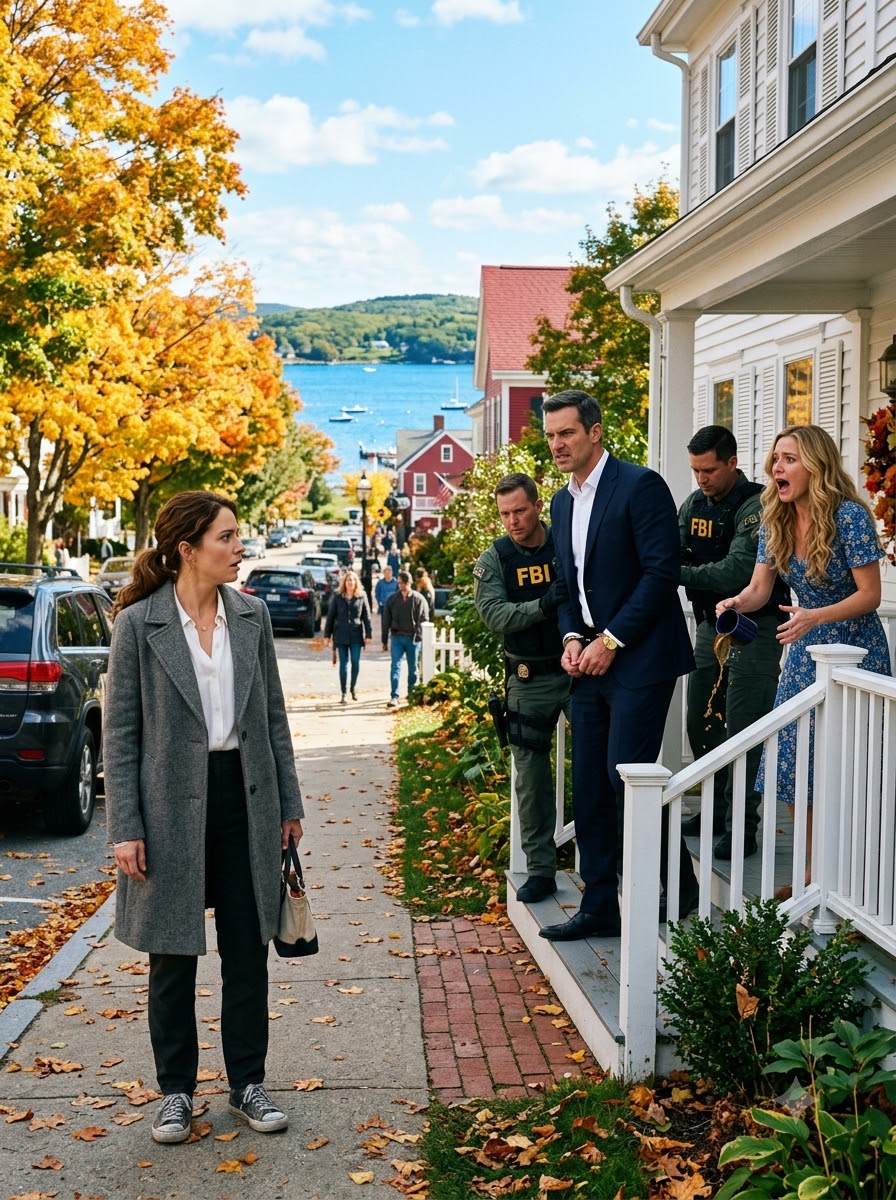
We sent the evidence anonymously to every relevant authority. The state real estate commission. The FBI’s white-collar crime division. The consumer protection bureau. Local news stations. We included everything—documents, testimony, photos, recordings.
A week later I was sitting in my new apartment—a modest two-bedroom I had rented in a quiet building—when the evening news showed Marcus and Sabrina being escorted from their office by federal agents. The crawl at the bottom of the screen read: “Local Developer Faces Fraud Charges—Multiple Agencies Raid Langford Properties—Dozens of Victims Come Forward.”
His company was shut down pending investigation. Licenses suspended. Clients were furious, filing lawsuits. Investors demanded their money back. Properties were seized. Bank accounts frozen. The beautiful colonial with the white shutters and wraparound porch—the house I had decorated with such care—was seized as part of the asset freeze.
But watching his empire fall did not bring the satisfaction I had expected. It only felt necessary. Like watching a diseased tree cut down before it fell and hurt someone. Justice, not revenge.
Purpose
With the trust secured and open to me, I finally had room to breathe. I moved into that modest apartment with real furniture and working appliances. I paid the debt I owed Mrs. Chen at the motel, with interest and a generous tip that made her cry.
But looking at the enormous sum in my account, I did not feel excitement or vindication. I felt the weight of responsibility. My father had lived simply, had given up comfort and luxury, had worked with his hands until his body gave out—all so I could have this future, this safety net.
I walked along the harbor one evening, the same waterfront path my father used to take me on as a child. He would point out the ships, tell me stories about the workers, explain how everything fit together to keep the city running. He had been proud of his work, even when others might have seen it as beneath them. “Honest work,” he used to say. “That’s what matters. Not fancy titles or corner offices. Honest work that helps people.”
The answer settled quietly, like something I had always known and needed to find again: he would want me to help women like me. Women who had been abandoned. Women who had been left with nothing. Women who had been made to feel worthless by people who were supposed to love them.
I founded Rise Again with a substantial portion of the trust—initially one million dollars, with plans to invest more as the organization grew. It was a full support organization for women restarting their lives after financially abusive divorces or separations.
We offered temporary housing in renovated apartments—clean, safe, furnished places where women and their children could stay for up to six months while they rebuilt. Legal guidance from volunteer attorneys who helped with divorces, custody battles, protective orders. Job training and resume workshops to help women reenter the workforce. Therapy and counseling with trauma-informed therapists who understood financial abuse. And most importantly, community—a network of women who understood, who did not judge, who supported one another.
Within the first month, we helped fourteen women and five families. I met Sarah, a twenty-eight-year-old mother of two whose husband had controlled every penny, made her account for every dollar, and left her homeless when she finally escaped with her children. I met Michelle, a forty-five-year-old professional whose ex-husband had destroyed her credit, gotten her fired through harassment, and convinced their mutual friends she was mentally unstable. I met Rosa, a thirty-two-year-old immigrant who spoke limited English and had no idea she had any legal rights at all, who believed her husband when he said he would have her deported if she left.
Watching them rebuild—watching Sarah get her first paycheck from a job at a local clinic where she had trained as a medical assistant, watching Michelle’s face when her credit score finally improved enough to rent an apartment in her own name, watching Rosa stand up straight for the first time in years after learning she had legal status independent of her ex—filled a place inside me I had not known was empty.
My father had not only left me money. He had left me purpose. He had left me the means to turn pain into something meaningful.
The Call
Marcus’s world collapsed completely over the following months. Assets frozen. Investors gone. Properties seized. Criminal charges filed—wire fraud, construction fraud, bribery of public officials. The evidence was overwhelming. And Sabrina, true to form, left the moment things became inconvenient. She disappeared before the worst of the legal trouble hit, reportedly moving to Phoenix to avoid being called as a witness. The last I heard, she had flipped on Marcus completely, testifying against him in exchange for immunity.
One night, about four months after everything began, my phone rang from a blocked number. Against my better judgment, I answered.
“Elena.” His voice was hoarse, broken, barely recognizable. “Elena, please. I need to talk to you.”
“Marcus,” I said, my voice level and calm. “You shouldn’t be calling me. There’s a no-contact order as part of the restraining order my attorney filed.”
“I have nothing,” he said, and I could hear tears in his voice—something I’d never heard before in twelve years of marriage. “No money. No business. No one. Everyone’s abandoned me. My lawyers say I might go to prison for fifteen years. My parents won’t even take my calls. Please, Elena. I know I was wrong. I know I hurt you. But please help me. For what we had. For the years we spent together. You have money now—I know you do. Just help me pay my legal fees. Please.”
Once, his voice would have frightened me. Once, I would have felt that old pull to fix things, to smooth them over, to make everything all right so he would not be angry. Now it only reminded me of who I used to be—and who I had become.
“Marcus,” I said calmly, “I rebuilt my life from nothing because you left me with nothing. You threw me away like I was garbage. You tried to steal from me. You committed crimes against families who trusted you—people who worked hard to buy homes you sold them knowing they were defective. You put children in danger. Now it’s your turn to rebuild. I hope you choose better than you did before. I hope you learn what accountability means.”
“Elena, please—you can’t just—”
“I forgive you,” I said, and realized as I spoke the words that they were true. “Not for you. For me. So I can move forward without carrying anger. But forgiveness doesn’t mean rescuing you from the consequences of your choices. You made decisions. You hurt people. Now you face what comes next. Goodbye, Marcus.”
“You heartless bitch! After everything I gave you—”
I hung up. He called back three times, his voicemails growing more hostile and desperate. I blocked the number and forwarded the recordings to my attorney as evidence of harassment.
The Visit
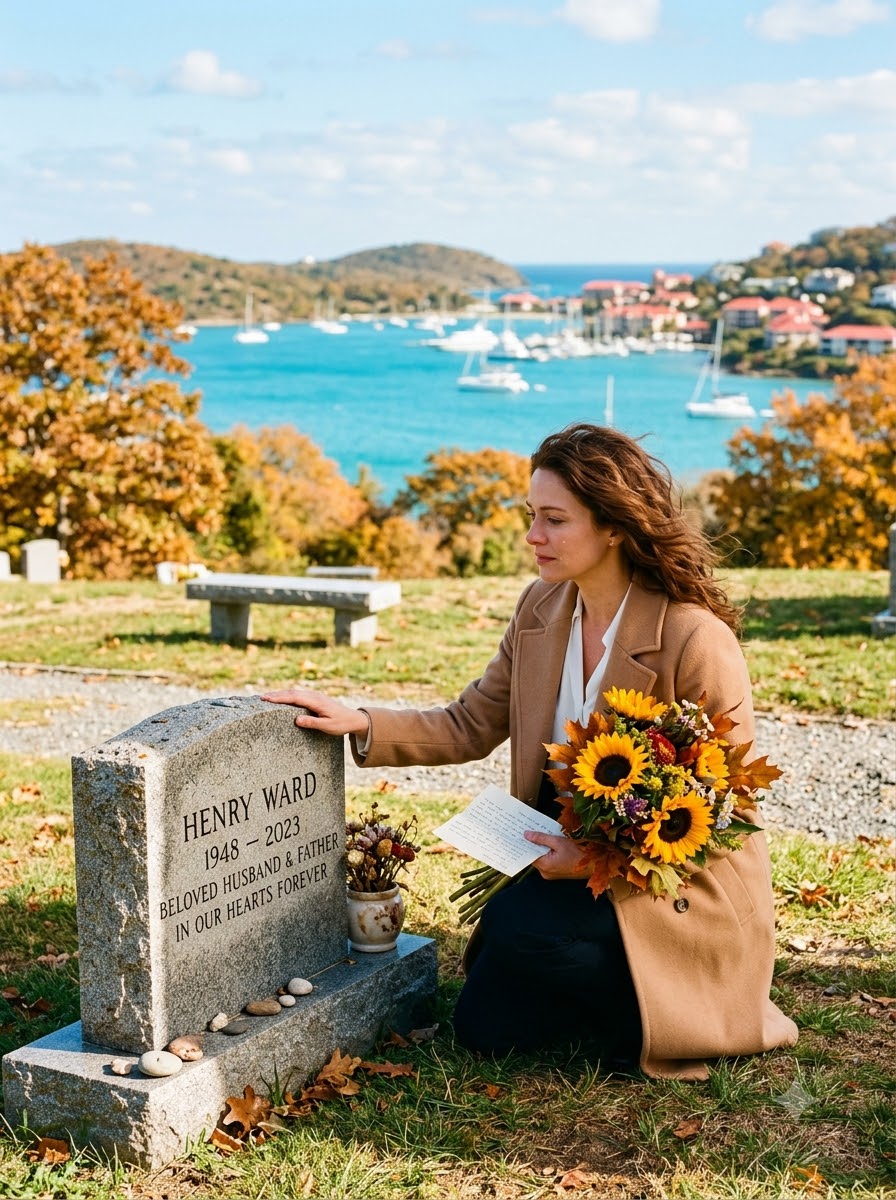
Weeks later, on a cool autumn afternoon, I visited my father’s grave at Clearwater Memorial Gardens. The cemetery was peaceful, set on a hill overlooking the bay he had loved. I brought fresh flowers—sunflowers, his favorite—and sat on the stone bench nearby that bore the inscription “In loving memory of all who rest here.”
I told him everything. About the betrayal. About Marcus and Sabrina. About finding the trust. About the money he had left me. About the organization I had started. About the women whose lives were changing. About Sarah and Michelle and Rosa and all the others.
“You didn’t leave me money, Dad,” I whispered, tracing his name on the simple granite headstone. “You left me freedom. You left me the ability to choose who I want to be. You left me purpose. You gave me the chance to turn pain into something that helps others. You knew—somehow you knew—that I’d need this. That I’d understand someday why you lived the way you did.”
A warm breeze moved the oak branches overhead, carrying the scent of cut grass and autumn leaves and the salt air from the bay.
“I miss you,” I said, my voice breaking. “I wish you could see what I’m building. I wish I could tell you about the women we’re helping. I think you’d be proud. Not of the money—you never cared about money for its own sake. But of what I’m doing with it. Of who I’m becoming. Of the fact that I didn’t let Marcus break me completely.”
I sat there a long time, lighter than I had felt in years. The anger I had carried toward my father for dying too soon, for not being there to walk me down the aisle or protect me from Marcus, had burned away, leaving something clearer and stronger. Understanding. Gratitude. Love that went past death and time.
I had survived. I had risen. And now I was helping others rise too.
As I stood to leave, I noticed a small envelope tucked beneath a rock near the headstone, sheltered from the weather. My name was written on it in handwriting I did not recognize. I opened it carefully.
Inside was a note: “Your father was my friend. He helped me when I had nothing. He gave me a job when no one else would hire me after I got out of prison. He never judged me. He just helped. I saw your organization in the news. He would be proud. Thank you for being his daughter. —Samuel Martinez”
I folded the note carefully and put it in my pocket, another piece of my father’s hidden life revealed. How many people had he helped? How many lives had he touched with simple kindness?
Six Months Later
The Rise Again center now occupied a renovated building near downtown—a former elementary school the city had sold us for a fraction of its value after I met with the mayor and city council. Three floors of apartments, offices, counseling rooms, a childcare center, a computer lab, and community spaces. We had helped sixty-three women and their families. We had partnered with local businesses to create job opportunities—guaranteed interviews for our residents. We had worked with law schools to provide free legal aid. We had built something real and lasting.
I stood in the common room during our monthly community dinner, watching women who had arrived broken and terrified now laughing together, sharing stories, planning futures. Children played in the corner with donated toys, safe and fed and happy. The walls were painted in warm colors—sunrise orange, soft yellow, peaceful blue—hung with artwork the residents had made in our weekly art therapy sessions.
Sarah approached me, holding her two-year-old daughter, Lily. The little girl was wearing a dress Sarah had bought with her own money—a first.
“Elena,” Sarah said, her eyes shining. “I got the apartment. The lease is in my name. My name. I signed it today. I have my own place. I cried when the landlord handed me the keys.”
I hugged her, blinking back tears of my own. “You earned it. You did the work. You showed up every day. You learned new skills. You built your credit back up. You did this.”
“You gave me the chance,” she said, her voice thick with emotion. “When I had nothing—when I was sleeping in my car with two babies—you gave me a chance. You believed in me when I didn’t believe in myself.”
As the evening wound down and I locked up the building, I thought about the motel room where this had started. The desperation. The fear. The moment I had found that faded ATM card and decided to try one more time. If I had not kept my father’s jacket. If I had not searched the pockets. If I had not walked into that bank.
But I had. And everything had changed.
My father had known something I had not understood until now: sometimes the greatest inheritance is not money. It is the chance to change someone else’s life. It is the opportunity to turn pain into purpose, loss into legacy, suffering into service.
I drove home to my apartment—nothing fancy, a two-bedroom in a regular building with regular neighbors—and felt more at peace than I ever had in that perfectly decorated colonial with its wraparound porch and its hollow core.
Marcus was awaiting trial. I had heard through my attorney that he was trying to negotiate a plea deal, but prosecutors were not interested. Too many victims. Too much evidence. Too much damage. Sabrina had testified against him in exchange for immunity, detailing years of fraud and deception. The empire he had built on lies and betrayal had collapsed completely, leaving nothing but rubble and regret.
But that was no longer my concern. He was a chapter I had closed. A lesson I had learned. A person I had forgiven and moved past, not for his sake, but for my own freedom.
I poured a cup of chamomile tea—the same kind my father used to drink—and sat by my window, looking out at the lights of Clearwater Bay. Somewhere out there, women were trapped in situations like the one I had been in. Somewhere out there, someone’s father was working himself to exhaustion to protect a daughter he would never see grow old. Somewhere out there, someone was holding a faded card and wondering whether to try one more time.
I hoped they would. I hoped they would find their own version of what I had found—not only financial security, but the strength to rebuild, the courage to help others, the wisdom to understand that true wealth is not measured in dollars but in lives changed and futures restored.
My phone chimed with a text from Michelle, one of our newest success stories: “Got the promotion. Assistant manager. Benefits and everything. Thank you for believing in me when no one else did.”
I smiled and typed back: “I believed in you because you showed up. You did the work. You earned this. I’m so proud of you.”
Another text came in, this time from Rosa: “My daughter asked me today why I smile so much now. I told her because I remembered how to be happy. Thank you for helping me remember.”
I set down my phone and looked at the photo on my shelf—my father and me at my college graduation, both of us grinning, his arm around my shoulders. He had been so proud that day. “First Ward to get a degree,” he’d said. “You did it, baby girl. You made something of yourself.”
His legacy was not the money, though the money made everything else possible. His legacy was the lesson that even in our darkest moments, when we have nothing left, we still have the power to choose who we become and what we do with our second chances. We still have the ability to help others. We still have value that cannot be measured on a balance sheet.
I had chosen to rise. And I was helping others do the same, one woman, one family, one life at a time.
That, I thought as I finished my tea and prepared for bed, was the inheritance he had really left me. And I was going to make sure it lasted far beyond my own lifetime. Rise Again would continue. The women we helped would go on to help others. The ripples would spread outward in ways I might never see but could trust were happening.
My father had worked himself to exhaustion in a job most people would overlook. He had lived in a tiny apartment and driven an old truck. He had sacrificed everything so that one day, when I needed it most, I would have the freedom to choose my own path.
He had given me more than money. He had given me the chance to matter. To make a difference. To transform suffering into service.
And I was going to honor that gift for the rest of my life.
