

Part 4
“All rise.”
The bailiff’s voice filled the courtroom.
We stood.
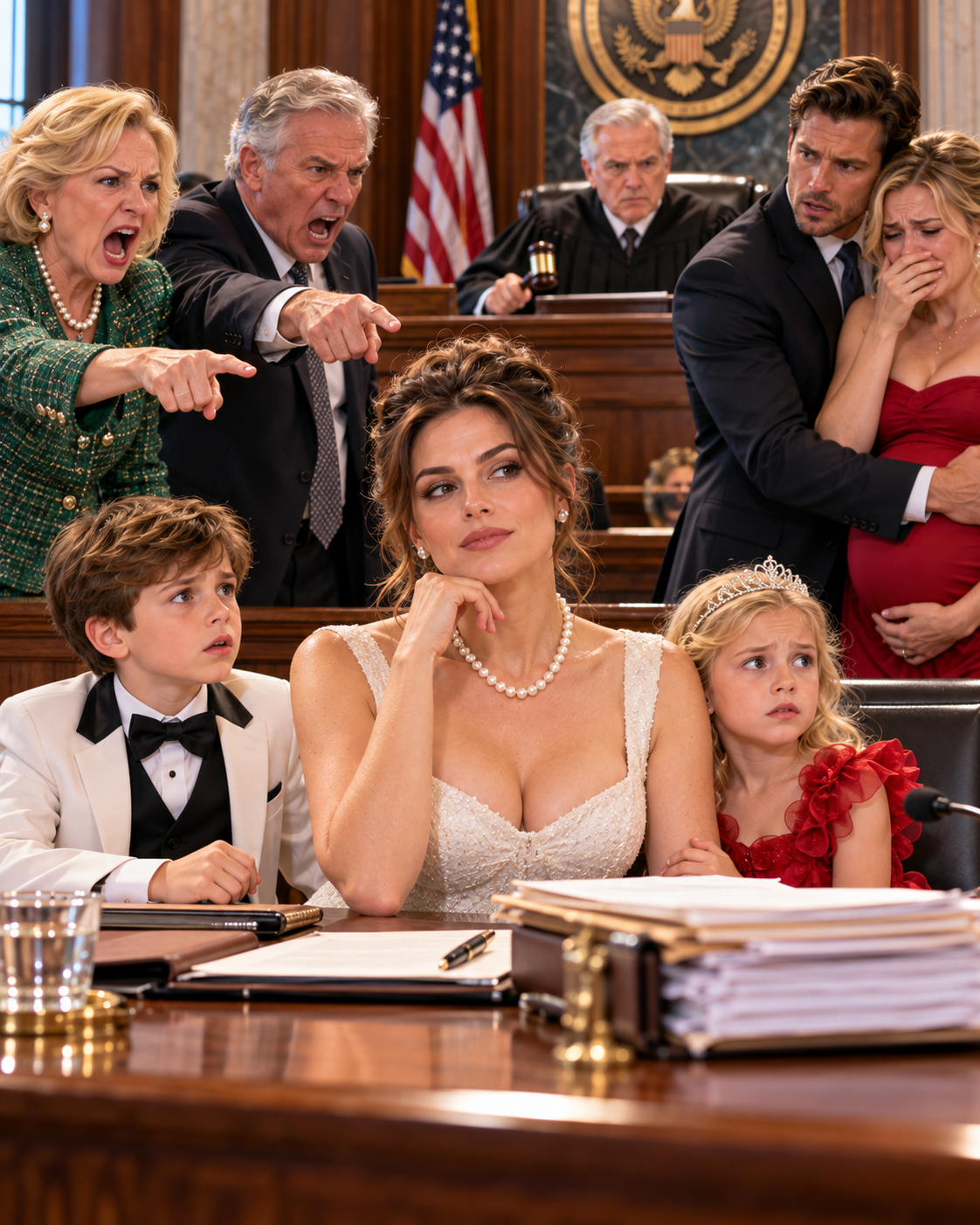
Judge Samuel Caldwell took the bench.
He was an older man with piercing gray eyes and a reputation for having little patience for courtroom theatrics.
He adjusted his reading glasses and began reviewing the documents before him.
Julian sat at the petitioner’s table.
Rosalind sat close beside him.
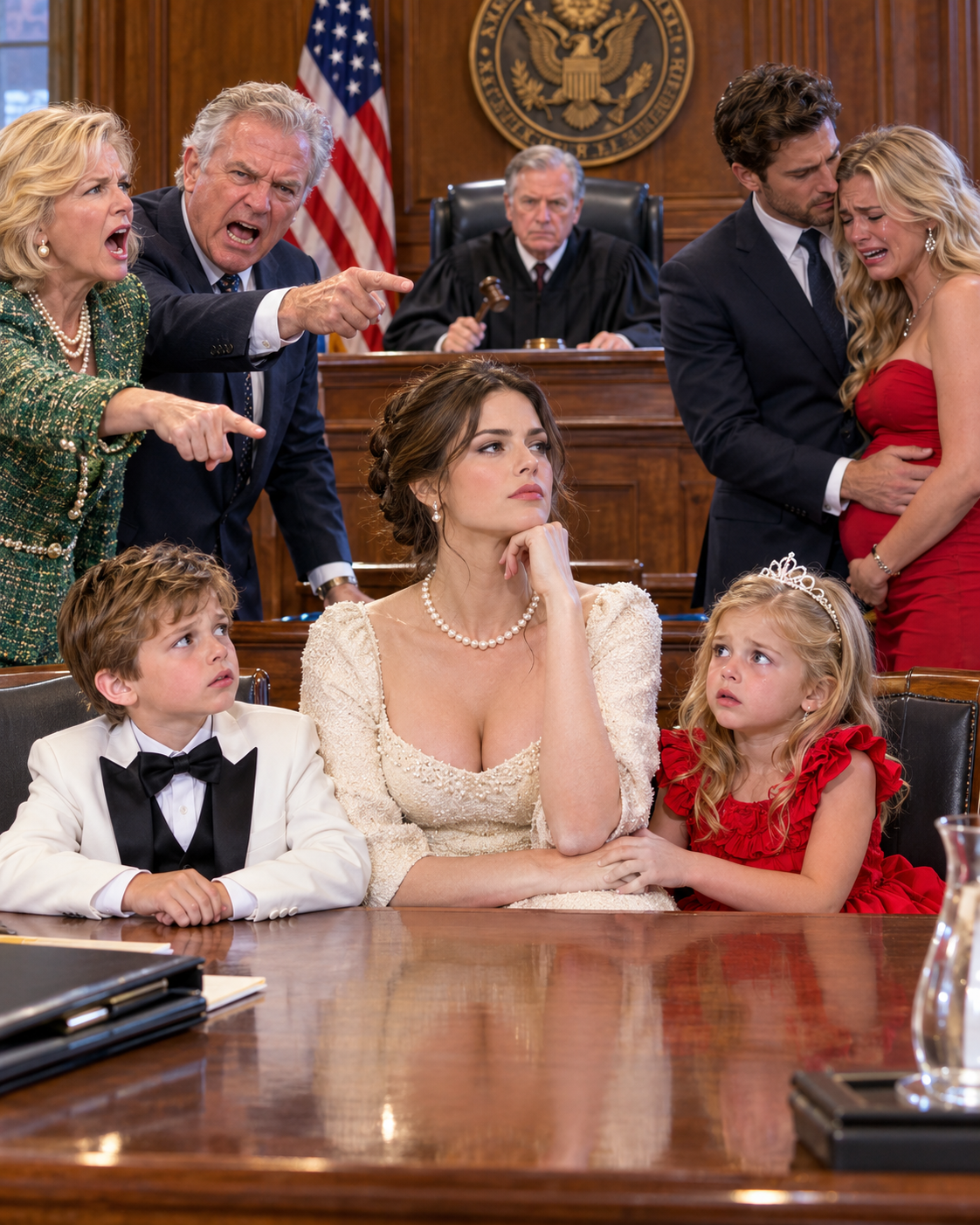
My parents occupied the front row directly behind them.
They looked relieved.
Confident.
United.
Judge Caldwell did not.
Eventually, he placed the financial disclosures on his desk and looked directly at Julian.
“Mr. Julian Lewis,” he began, “before I approve any preliminary custody arrangements or entertain this rather aggressive asset division filing, I need to ask one fundamental question. And I want an honest, legally binding answer on my record.”
The courtroom went silent.
My mother’s smile disappeared.
“Whose name is actually on the deed to the primary residence you are requesting this court award to you? And whose name is on the state corporate registration for the entity you are asking me to transfer into your possession?”
Julian hesitated.
His attorney immediately opened a folder.
“Your Honor, the marital assets are subject to equitable distribution under—”
Judge Caldwell raised one hand.
“I asked your client a direct question, Counselor.”
Julian swallowed.
“The house is… jointly owned. It’s the marital home.”
Judge Caldwell turned toward his clerk.
“Pass me the property records submitted in Mrs. Lewis’s discovery packet.”
The clerk handed him a red-tabbed folder.
He read silently.
Nobody moved.
Finally, he looked up.
“According to the certified deed and tracing of funds provided here, this property was purchased outright in cash. The funds originated entirely from an inheritance Mrs. Lewis received from her late grandmother, Eleanor. The title was recorded solely in Eve Lewis’s name exactly three years before this marriage.”
He turned another page.
“There is no joint ownership here, Mr. Lewis.”
Julian’s jaw tightened.
Marcus Vance leaned toward him, whispering urgently.
The judge continued.
“Lewis Construction Solutions was initially registered as a sole proprietorship under Eve Lewis and was subsequently restructured as an LLC. The operating agreement lists Mrs. Lewis as the sole managing member holding one hundred percent of the equity.”
He looked directly at Julian.
“Your name does not appear on these corporate filings.”
Another page turned.
“The only place you appear in this company’s history is on payroll records for an eight-month period during its second year. According to the HR documentation, that employment ended for cause because of chronic absenteeism.”
I hadn’t spoken a word.
I didn’t need to.
For the first time in fourteen months, I felt as though I could breathe fully.
Rosalind’s face had gone white.
She was finally realizing what I had understood after hiring a forensic accountant.
Julian had built his entire strategy on the assumption that I would surrender.
Judge Caldwell sat back.
“Given that the petitioner is aggressively requesting assets to which the submitted documentation does not establish the ownership interest he claims, and given the evidence submitted regarding the circumstances surrounding the dissolution of this marriage—including communications between Mr. Lewis and Ms. Rosalind Hartley spanning fourteen months before the separation—I see no basis at this stage to simply award those assets as requested.”
He pulled the custody documents closer.
“As for the minor children, this court will order a comprehensive psychological evaluation.”
Julian shifted in his chair.
Judge Caldwell continued.
“Infidelity alone does not determine parental fitness.”
He paused.
“But allegations involving attempted unauthorized access to assets, misleading representations concerning ownership, and litigation conduct intended to pressure the other spouse are matters this court may consider where legally relevant, particularly when evaluating credibility and the children’s best interests.”
My parents sat completely still.
They had walked into court believing they were protecting Rosalind from humiliation.
Instead, they were watching the story they had tried to bury become part of a legal record they couldn’t control.
