

PART 1: The Family at the Door
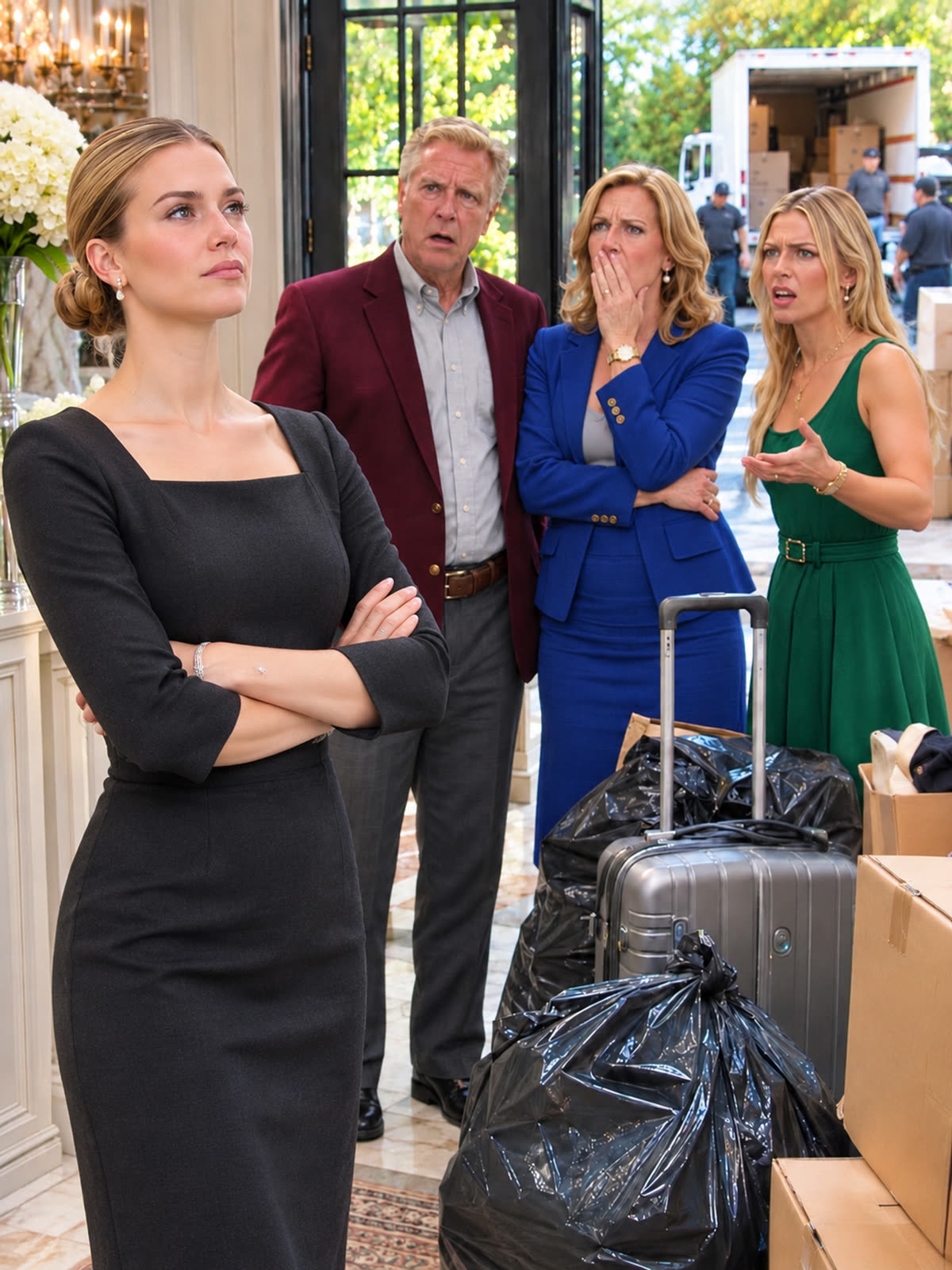
The morning after we buried my grandfather, my parents pulled up outside his house with a moving truck. Seventeen years had passed since I had last seen them. My mother offered neither an embrace nor a question about how I was managing my grief. She simply held out two black garbage bags. “Pack your belongings, Emily. Your grandfather was responsible for you, and now he’s gone. This house belongs to us.” Before I could answer, my younger sister, Brianna, was already heading upstairs. “I’m taking the master bedroom!” she announced.
At twenty-two, I stood in the house that held nearly every memory of my childhood and watched the people who had abandoned me prepare to put me out. I didn’t protest. Shortly before his death, Grandpa had told me exactly what to do if my parents appeared again, and I meant to follow his instructions. They had delivered me to his doorstep when I was five, saying I would stay for a weekend. They drove away that Sunday. Somehow, that weekend stretched into seventeen years.
No birthday calls followed. There were no Christmas visits or letters explaining why they hadn’t come back. Grandpa, however, never treated me as a burden someone else had left behind. His pension supported us. He showed me how to grow vegetables, helped me through homework, and made certain I understood that his table always had a place for me. When I grew old enough to recognize what my parents had done, he didn’t teach me to hate them. He said only that adults sometimes let down those who relied on them.
Now he was gone, and I still couldn’t take in the thought that I would never hear him speak again. My father broke into those thoughts by waving two movers toward the stairs. “Start bringing down the furniture upstairs.” I looked at him. “Dad, those are Grandpa’s things,” I said. Irritation crossed his face. “Your grandfather wanted this property to stay in the family. Don’t make this difficult.” The funeral wreath was still on the front door. Apparently, seventeen absent years had done nothing to weaken their certainty that Grandpa’s possessions belonged to them.
Mom gestured at the bags. “I expect your things packed before lunch.” I lowered them beside the staircase, remembering Grandpa’s hospital room and the faint pressure of his fingers around mine. “If your parents come back, don’t argue with them at the door.” When I asked why he expected them to return, he had given me a look I hadn’t understood. “Let them inside. Let them talk. Give them enough time to show you what matters to them.” “And then?” “Open my study.” That was all the explanation he had offered.
So I remained quiet while Brianna criticized the furniture, Dad directed the movers, and Mom considered which of Grandpa’s things to discard. I didn’t reveal what I knew or ask anyone to leave. Grandpa had used his last days to prepare for this possibility. I trusted him. Then a small click sounded from the hallway, and the study door opened. Mom turned, a garbage bag still in her hand. A woman spoke from inside. “Evelyn. I see you’ve finally decided to come back.” Mom went rigid. When the woman appeared with a leather folder, the bag fell from Mom’s fingers.
She looked to be in her late sixties and wore a dark green cardigan. I remembered seeing her at the funeral, seated quietly beneath the oak tree. Mom stared. “What are you doing in this house?” “I’m Marian Bell,” the woman replied. “Harold’s attorney.” Dad stepped toward her. “Our attorney?” “No. Your father’s attorney.” Then she faced me. “Clara, your grandfather asked me to be here after his funeral. He wanted you to open this room when your parents returned.”
Mom immediately insisted that Marian had no right to be there. Marian explained that Grandpa had provided written permission and instructions regarding his estate, then invited me into the study. Everything remained as he had left it. His reading glasses lay beside the desk lamp, and cedar and old paper scented the room. I hadn’t managed to go inside since he died. The sight of his vacant chair hurt more than I had prepared for. Marian set her folder on his desk. “Before we discuss the property, Harold left a letter for you.”
The cream-colored envelope bore my name in Grandpa’s handwriting. I opened it with care. He knew how hard it would be to confront my parents while I was grieving. He wanted me to remember that he had raised me out of love, not duty and not a desire to punish them. My eyes filled when I reached his reminder that I was allowed to feel angry, but shouldn’t let anger choose my future. Having a house, he wrote, wasn’t the same as having somewhere to belong. He asked me to hear Marian out before deciding anything.
Mom crossed her arms. “That’s touching, but a letter doesn’t determine who inherits property.” Marian reopened the folder. “That’s correct. The law does.” She produced a certified copy of a will signed and witnessed eleven months earlier, when Grandpa was mentally competent. “The residence at 18 Willow Lane, including its contents, has been left to Clara as the primary beneficiary.” Silence held the room. Dad shook his head. “That can’t be right. Harold promised to keep the house in the family.” “He did,” Marian replied. “He left it to the granddaughter he raised.”
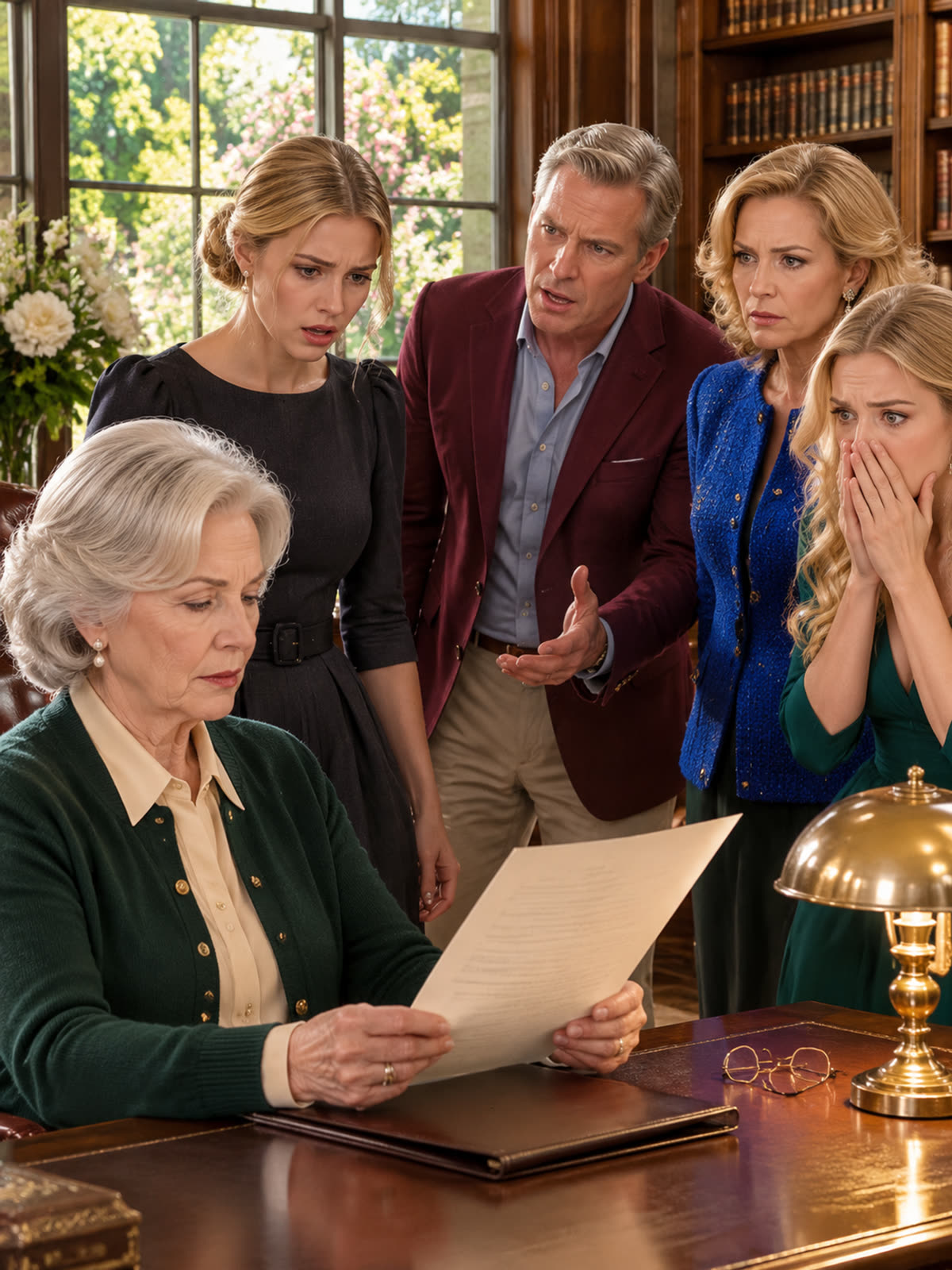
Brianna had followed us into the study. She looked appalled. “What about the master bedroom? What about the furniture?” “None of it belongs to you,” Marian answered. Dad threatened to contest the will. Marian explained that Grandpa had obtained medical assessments documenting his ability to make those decisions. He had also created a trust for property taxes, essential repairs, and my education. I could only stare. “My education?” “Your grandfather wanted you to finish nursing school.”
I had been taking community college classes part-time and working evenings at a pharmacy. Grandpa knew I had delayed clinical training because I couldn’t afford fewer hours at work. Even as his own life was ending, he had been making room for mine. Mom turned on me. “You’re only twenty-two. You have no idea what maintaining this house costs.” “I know exactly what it takes,” I replied. “I’ve been helping Grandpa maintain it for years.”
She brushed that aside as little more than cutting the grass. But there had been meals to prepare, medications to organize, appointments to attend, and care after his surgery. I had done those things because he was my family, not because I expected a house in exchange. Marian let the room settle. “There’s another matter Harold wanted addressed.” From the folder she took another envelope. “Your grandfather kept records concerning the circumstances under which Clara came to live here seventeen years ago.” Mom’s expression shifted.
Marian continued. “Those records include the guardianship agreement, correspondence, and financial arrangements made after Clara’s arrival.” Dad’s posture stiffened. “What financial arrangements?” Marian met his eyes. “Before we discuss those, I believe Clara deserves to know what her parents actually agreed to when they left her here.” I looked between them. All those years, I had thought they had simply driven off and forgotten me. The papers suggested that the truth was more complicated than the story I had lived with.
Marian placed another document on the desk. The change in Dad’s face was immediate. “Your parents initially signed temporary guardianship papers,” Marian explained. “They promised to return within six months.” I faced Mom. “Six months? You told Grandpa you’d come back?” She kept her gaze on the carpet. Dad folded his arms. “We were having financial problems. You were better off here.” “That doesn’t explain why you never called me.” This time, he looked away.
Grandpa had saved the court documents, school records, medical information, and correspondence from those early years. Marian said he wanted the truth available if my parents ever tried to replace it with another version. Then she brought out a blue envelope. “This is a letter Harold sent your mother after the first six months.” Mom’s face tightened. “I don’t want to read it.” Marian laid it on the desk without insisting. Instead, she told me what Grandpa had specifically wanted me to hear. “He never wanted you to believe their absence was your fault.”
My throat tightened. I remembered long afternoons at the window, following passing cars and wondering whether one would finally stop for me. Grandpa had always told me I was loved. Still, there had been questions I hadn’t known how to ask. Now my parents stood across his desk, and the answers were here in envelopes they didn’t want opened. For seventeen years, I had carried the weight of their silence. I looked at the blue envelope, knowing that whatever came next could change the childhood I thought I understood.
PART 2: The Papers They Had Signed
Mom finally broke the silence. “We thought we’d come back.” “When?” I asked. After hesitating, she described their money problems, moving in with relatives, and eventually having my younger sister. With each year that passed, coming back had seemed harder. “You could have called,” I said. “I know.” “You could have visited on my birthday.” Tears filled her eyes. “I know.” For the first time since arriving, she looked ashamed instead of angry. Yet the garbage bags and her demand that I leave were still impossible to forget.
When I asked why they had come now, Mom admitted that an old neighbor had told them Grandpa was dying. They had known he was ill, but waited until the funeral was over. Dad thought the property would fix their present difficulties. He had been out of work for almost a year. After selling their previous house, they were renting, and Brianna’s tuition would soon be due. “So you came for the property,” I said. Mom dropped her gaze. “Your father thought we could start over.”
I couldn’t make sense of abandoning a child for seventeen years, then expecting to live in the home where someone else had raised her. Mom opened the blue envelope at last. Tears ran down her cheeks as she read. “He knew I was ashamed,” she whispered. Grandpa had told her she could return without money or explanations. He wanted honesty and a relationship between us. But she had delayed that conversation until facing the years behind her felt impossible. “I’m sorry, Clara,” she said. It was the first apology I had ever heard from her.
I couldn’t offer immediate forgiveness. Instead, I told her she would not be moving in or taking Grandpa’s things. She accepted my decision. Dad did not. He said another attorney would examine the will and insisted this wasn’t over. Marian reminded him that the house was my residence and he had no authority to remove anything. Then she referred to a probate hearing the following month. Dad frowned. “What hearing?” “The hearing concerning Harold’s second trust.” I looked at her. “What second trust?”
Marian opened the folder. “This concerns a financial arrangement your grandfather made shortly after you came to live here.” Mom became motionless. Grandpa had sold an investment property and created an account for my care. There was more. “For several years,” she continued, “monthly payments were also made to your parents.” I stared. “My parents received money from Grandpa?” “Yes. The payments were intended to help them maintain contact with you and contribute to your upbringing.” Mom couldn’t look at me. Dad seemed stunned too, though his silence felt different.
Marian put a bank statement on the desk. “The payments continued for four years. Your grandfather eventually discovered that the money was being received while the agreed visits and correspondence were not taking place.” Mom whispered that she had thought the deposits were an inheritance. Then she faced Dad. “Daniel, you told me your father had cut us off.” He said nothing. For the first time, fear showed plainly in his expression. Marian reached for another paper. “And there’s something else Clara needs to understand about the guardianship agreement.”
She turned the document toward me. Both my parents had signed it, but this agreement was not temporary. It gave Grandpa permanent guardianship without an ending date. Only three months after leaving me, they had formally made him responsible for raising me. Mom shook her head. “That isn’t what I thought we were signing.” Marian explained that the document had been witnessed and notarized. Dad rubbed his forehead. “We were struggling. Your grandfather could give Clara a better life.” “That doesn’t explain why you told me it was temporary,” Mom said.
Dad shot her a look. “Don’t pretend you weren’t there.” “I was there because you said it was paperwork for school and medical appointments.” Marian confirmed that Grandpa had needed legal authority to care for me, but this document went beyond an ordinary temporary arrangement. “Did you know what you were signing?” I asked Dad. After a pause, he acknowledged that he had told Mom it was temporary. Knowing that he had understood the agreement hurt more than I expected. They hadn’t merely failed to return. There had been a deliberate decision I had never known about.
Mom said they had once returned to Grandpa’s driveway, about six months after leaving me. He urged them to come inside, but Dad refused, saying a visit would confuse me. “I was five,” I whispered. Neither answered. Marian said Grandpa had also proposed regular visits and letters. My parents signed that agreement, but the visits eventually stopped. Mom insisted she had written. “Then why didn’t I receive anything?” Marian glanced at the bookcase. “He preserved the correspondence. I think it’s time you saw it.”
Behind one of the shelves was a concealed compartment. Marian opened it and removed bundles of envelopes, some bearing my name. My hands trembled as I opened the first. Mom had written that she thought of me every day and hoped I would understand why she couldn’t bring me home. Another described her evening work at a bakery. A third held a pressed flower and a promise to write again. I looked at her. “Why did you stop?” “I didn’t stop completely,” she replied. The letters lay between us, evidence of a voice I hadn’t known had reached this house.
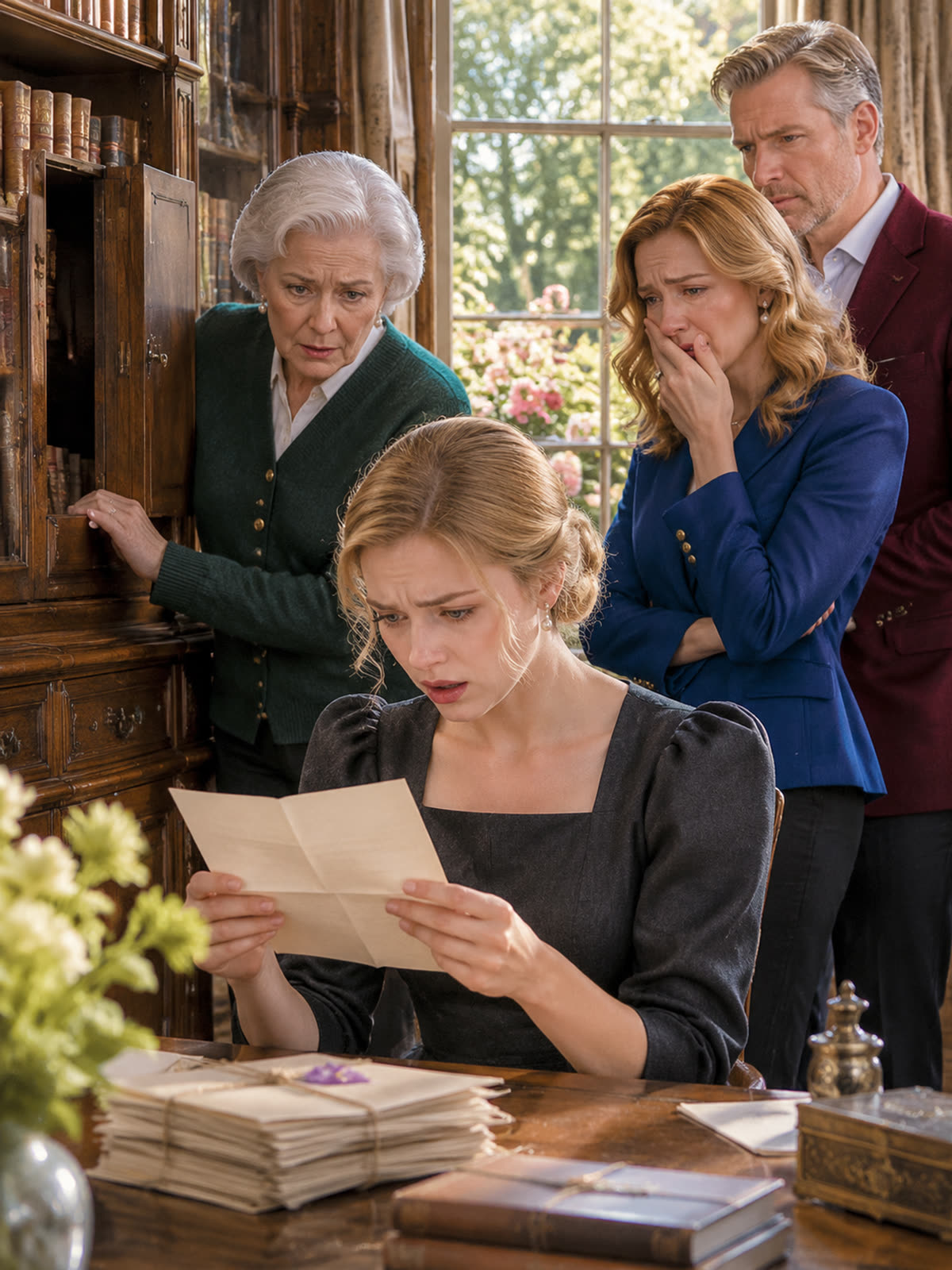
Marian showed me other correspondence: envelopes returned after addresses changed, and messages Grandpa had kept without passing them on to me. One envelope in his handwriting was dated when I was fourteen. Inside, he explained that Mom had contacted him after six months of sobriety. She wanted to see me. He worried about promises she might not be able to keep. I raised my eyes. “Mom, what does he mean by sobriety?” Her face crumpled. “I had a drinking problem.”
She said it had developed after my sister’s birth. She stopped for a time, then began drinking again. Grandpa offered supervised visits, counseling, and transportation. He wanted her recovery to be steady before she rebuilt a relationship with me. But appointments were missed, and eventually she stopped trying. “Did Grandpa forbid you from seeing me?” I asked. “No,” she admitted. “I kept failing to do what we’d agreed.” Dad claimed he had stayed away to protect me from the instability around her.
I looked from one parent to the other. “You spent seventeen years deciding what I could handle. Neither of you thought I deserved to know the truth.” Neither had an answer. Marian acknowledged that Grandpa had made mistakes too. Fear that the letters would hurt me before I could understand them had led him to withhold some of them. Then she told me he had recorded a statement shortly before his death. I asked her to play it.
His voice filled the room, frailer than I remembered, but unmistakably his. He admitted that fear had influenced some of his decisions alongside love. My parents’ absence, he wanted me to understand, had come from repeated choices rather than a single terrible weekend. None of those choices had been my fault. He said I could forgive them slowly, or not forgive them at all. Their failures did not have to shape the rest of my life.
Then he spoke about the house. He had left it to me because it was where I had grown up, not because he expected me to stay forever. When the recording finished, I was crying. Dad asked whether Grandpa had kept the financial records to punish them. Marian explained that the second trust concerned the payments they had accepted without maintaining contact with me. A court would decide whether repayment was appropriate. Dad protested that they couldn’t afford it. Marian told him to get legal advice.
Again, I told my parents they could neither move into the house nor take Grandpa’s belongings. Mom accepted that. Dad remained angry. Eventually, they left, and the moving truck drove away empty. Marian stayed with me to sort the papers. Among photographs and birthday cards, I discovered a small envelope addressed to me. It held a narrow steel key and a handwritten note. Grandpa said there was one place he had never shown me. He wanted me to ask Marian for the deed to an orchard.
I turned the key in my hand. Two words were engraved on its tag: BELL HOUSE. Marian recognized them immediately. “That was your parents’ first address after they left you.” She searched the property records until she found a document unfamiliar to me. My mother was listed as the owner. The ownership history noted that Grandpa had transferred the property seventeen years earlier through a private agreement.
Another notation restricted access until my twenty-third birthday. I was twenty-two. After everything revealed in the study, I had believed the secrets were finally coming to an end. Instead, I held a key to a property in my mother’s name, tied to the year she left me and a birthday still a year away. Whatever Grandpa had arranged at Bell House, he had meant for me to discover it later. And now I knew just enough to understand that his final instructions were not finished.
PART 3: The Key That Had to Wait
The steel key rested in my palm as I studied the words on its tag. BELL HOUSE. It belonged to a property connected to the first address my parents used after leaving me with Grandpa. The records said he had transferred it to Mom under a private agreement seventeen years earlier. They also contained a restriction involving my twenty-third birthday. “Why would Grandpa leave me a key to a house registered in my mother’s name?” I asked.
Marian examined the record. “I can’t tell you exactly what he intended without examining the original agreement.” I had wanted something more definite, but her honesty mattered. After the explanations that had unraveled that morning, I couldn’t face another certainty that might prove false. “Does this mean the house belongs to me?” “Not necessarily. The deed lists your mother as the owner. We need to establish what the private agreement actually provides.” The key offered no simple answer.
I looked at Grandpa’s empty chair. He had given me his home, provided for nursing school, and saved the records that explained my childhood. Yet he had also left another question I couldn’t ask him. For a moment, I was angry. I loved him more than anyone, but I wished he had spoken while there was still time to sit across from him and ask why he had carried so much alone. Marian seemed to understand. “Your grandfather wanted you to have choices, Clara. You don’t have to solve everything today.”
I nodded and set the key beside his letter. The next morning, Mom came back as promised. There was no truck this time. She arrived alone with a small handbag and waited on the porch until I asked her inside. We sat at the kitchen table where Grandpa and I had eaten thousands of breakfasts. She quietly took in the room. “I remember this room,” she said. “Your grandfather used to make pancakes every Sunday.” “He still did,” I replied.
Her eyes filled, but she didn’t make the conversation about herself. I told her about the property record and the key. Recognition came immediately. “Bell House,” she murmured. “We lived there before your sister was born.” “Grandpa transferred it to you seventeen years ago.” She appeared genuinely surprised. “I knew he helped us with housing, but I never understood all the paperwork.” I watched her closely. After the previous day, someone’s recollection was no longer enough for me to treat it as proof.
“Marian is reviewing the agreement,” I said. “I don’t want to make assumptions.” Mom nodded. “That’s fair.” She lowered her gaze to her hands. “I didn’t come here to ask about the property.” “Why did you come?” “Because you asked me to.” The simplicity of that answer left me without one of my own. For seventeen years, I had wanted my mother to visit. Yesterday, she had arrived expecting an inheritance. Today, she had come because I wanted to talk.
We stayed at the table for nearly an hour. She spoke about recovery, the years she had spent avoiding Grandpa, and the shame she had allowed to excuse her absence. I listened without promising to forgive her. Hearing an explanation wasn’t the same as being ready to put the hurt behind me. When she asked whether we might meet again, I said we could move slowly. That was all I could honestly offer, and she accepted it.
Dad was still angry about the will. I made clear that his financial troubles would not alter my boundaries, and neither would an unresolved agreement about another property. Mom accepted that as well. I didn’t know what would become of this fragile beginning between us. One quiet conversation could not replace seventeen years. Still, it was different from the morning she had stood in the hallway with garbage bags and expected me to leave.
During the weeks that followed, I began tending to my own life again. I went back to class and met with the nursing program adviser to discuss finishing my clinical training. For the first time, cutting back at work no longer meant I would necessarily be unable to pay my bills. Grandpa’s planning had given me room to think beyond the next shift and the next expense. Even in his absence, the future he had wanted for me was becoming possible.
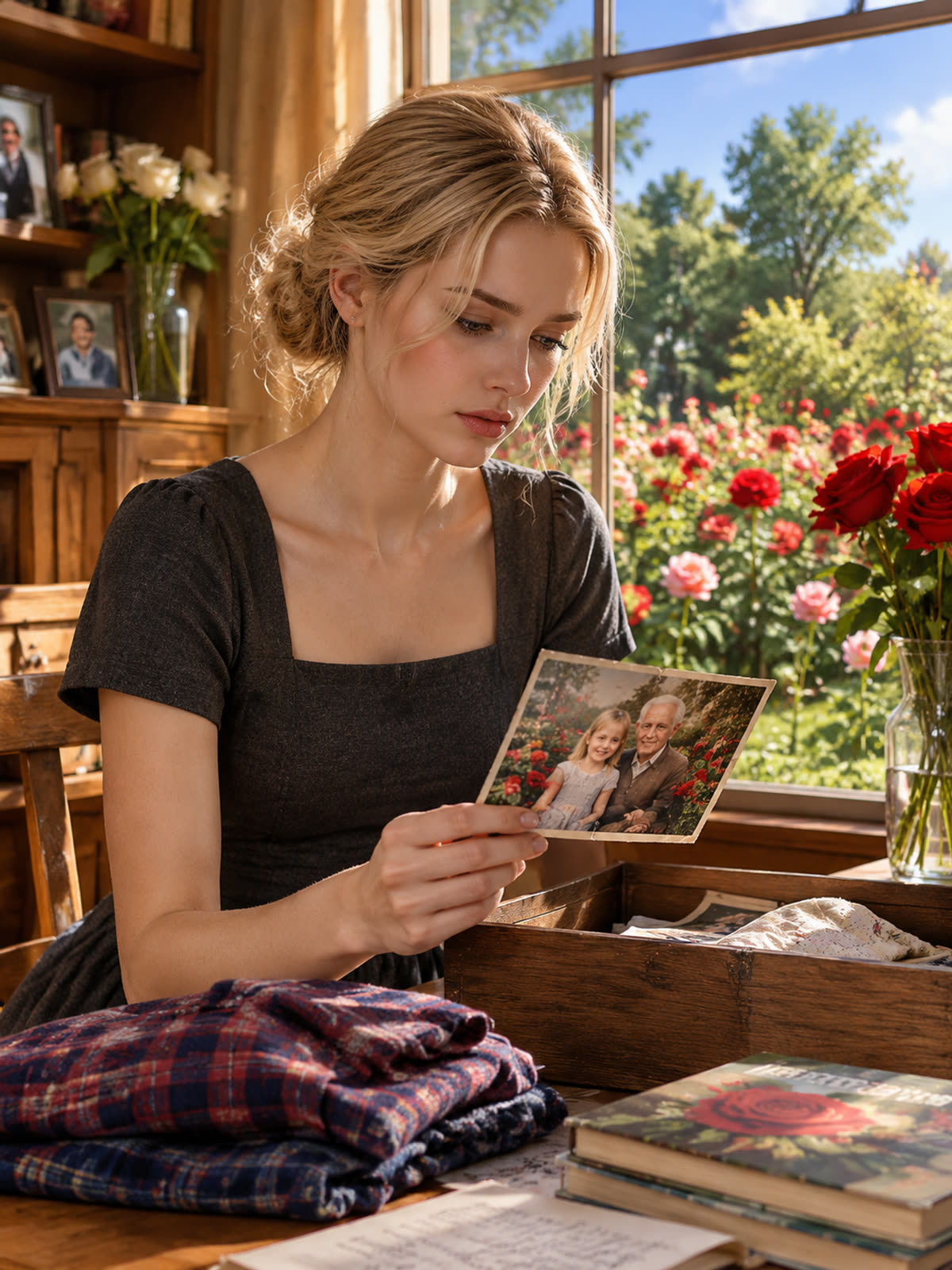
I also began going through his belongings. I kept the flannel shirts he loved, the gardening books crowded with his handwritten notes, and a photograph taken beside his roses when I was six. I wasn’t ready to change his bedroom. Some mornings, I still expected to hear him upstairs. Yet, little by little, the house stopped feeling only like the place where I had lost him. It began to feel again like the home he had trusted me to care for.
Marian continued examining the second trust and the Bell House agreement. She reminded me that the probate hearing would address the outstanding estate issues, while the separate property documents needed their own careful review. I didn’t know what the court would decide about the payments my parents had received. I didn’t know whether my relationship with Mom would ever feel comfortable. The facts we had uncovered hadn’t settled everything. They had only made it possible to begin facing what was true.
And I still had no answer about what Grandpa intended me to find at Bell House when I turned twenty-three. The deed named my mother, the private agreement remained to be understood, and the key could not explain any of it. Those questions would have to wait. I was learning that not every uncertainty had to be resolved before I could take the next step in my own life.
One afternoon, I came across the two black garbage bags Mom had handed me the morning after the funeral. They were folded beside the hallway closet. I carried them into the kitchen and stood with them, remembering how easily she had expected me to pack seventeen years into them. She had arrived believing my place in the house ended with Grandpa’s death. Holding those same bags now, I thought about how much had changed since I had quietly put them down.
I used them for old papers and broken household things that needed to be thrown away. I wasn’t packing to leave. I was clearing room for the life ahead of me. The house wasn’t being emptied around me, and nobody else was deciding which pieces of my childhood I could keep. There was grief in sorting through what remained, but there was also the quiet knowledge that the choice belonged to me.
Before heading upstairs, I paused beside Grandpa’s photograph. “I wish you were here,” I whispered. I couldn’t ask why he had held back the letters. I couldn’t ask what the steel key would reveal or why he had chosen my twenty-third birthday. Loving him didn’t erase those questions, just as understanding some of my mother’s shame didn’t erase the years she had stayed away.
But I remembered his recorded message. He had left me the house to give me a choice, not to claim the rest of my life. Staying would not be a debt I had to repay, and leaving someday would not mean I loved him less. He had wanted his home to protect my future, not prevent me from having one. Whatever else remained uncertain, I could hold on to that.
My parents had returned assuming his death gave them the right to take everything. Instead, I had discovered how carefully the man who raised me had worked during his final months to make certain I would never need to depend on them for a home again. He hadn’t been able to remove the hurt or answer every question while he lived. What he had done was leave me somewhere secure enough to face the answers when they came.
I placed the Bell House key safely beside his letter. I was still twenty-two, and the restriction in the documents still pointed to a birthday a year away. My mother’s name remained on the deed. Somewhere within that private agreement was the explanation Grandpa had not given me. Until Marian finished her review, I couldn’t know what the key meant or what, if anything, would be waiting for me there.
There were answers left to uncover, and I would decide what to do with them. For now, the key stayed beside the letter, its two engraved words holding a question I could not yet open. Grandpa had made sure this house was mine. But what had he arranged for me to discover at Bell House—and why had he wanted me to wait another year?
Disclaimer: This story is a work of fiction inspired by real-life themes. Names, characters, places and events are fictionalized, and any resemblance to real persons is purely coincidental. Images are for illustration purposes only.
