

My husband and I were waiting in the emergency room with our sick baby when my mother-in-law burst through the doors, snatched his coat, and yelled, “He didn’t sign up for this much stress! You’re the mother!” I looked at her silently for a moment before doing something that caught both of them completely off guard.
PART 1: THE NIGHT MY MOTHER-IN-LAW WENT TOO FAR
My daughter June was only four months old when her temperature soared to 104 degrees during the night. At thirty-one, I worked as a nurse practitioner in emergency medicine, and my experience told me this was far too serious to wait until morning.
Before motherhood, I had spent six years remaining composed in hospital rooms filled with frightened families. I had also devoted two years to helping my mother after she was diagnosed with early-onset Parkinson’s disease. Fatigue and responsibility were nothing new to me. Whenever something needed handling, I had learned to take care of it, regardless of whether anyone acknowledged my efforts.
My husband, Ethan, had been raised differently. He was affectionate, humorous, and sincerely considerate, but he was also the only child of Sylvia Donnelly, a woman who had spent thirty-three years shielding him from nearly every uncomfortable experience before he ever had the chance to learn how to deal with it himself.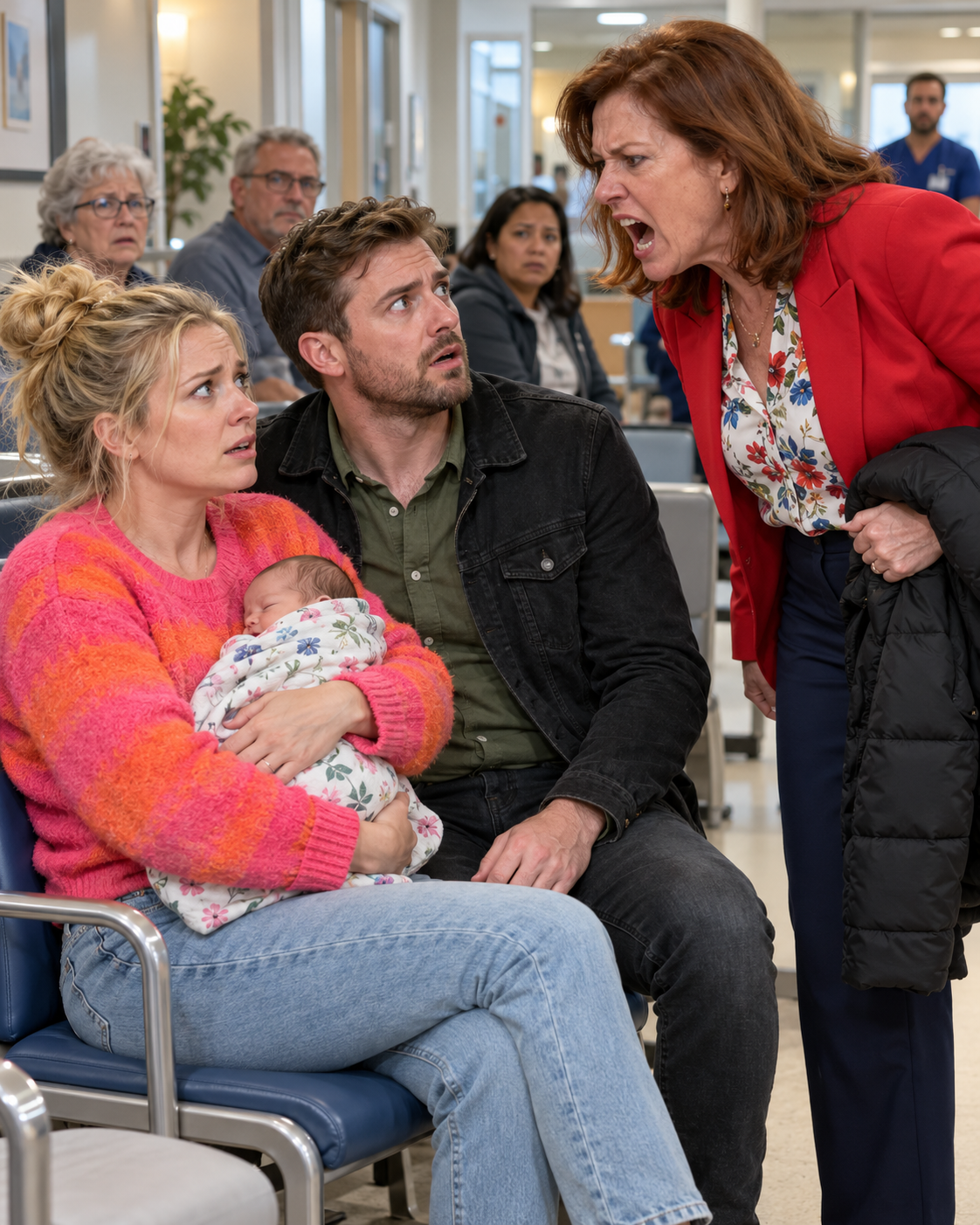
I had recognized that behavior long before June arrived.
When I miscarried our first pregnancy, Sylvia called Ethan daily to remind him how devastating the experience must have been for him. Meanwhile, I sat in the adjoining room, wondering whether it had occurred to her that I was the one who had actually carried and lost the pregnancy.
I kept my feelings to myself because I wanted our marriage to survive without unnecessary arguments.
Eventually, however, I understood that refusing to confront a problem did not make it disappear. It simply gave that problem more time to develop unnoticed.
When June entered our lives, Ethan initially became everything I had imagined he would be as a father. He handled diaper changes, participated in nighttime feedings, and practiced wrapping her in blankets with almost excessive dedication.
But when she reached approximately seven weeks old, an important product launch at his company began demanding nearly all his attention.
Little by little, I became the parent responsible for almost everything.
Ethan came home exhausted from work, and I genuinely understood that. What troubled me was that my own exhaustion never seemed to matter in the same way. Regardless of how little sleep I had gotten, June still needed to be fed, changed, soothed, and cared for.
Then our daughter became ill.
Her temperature started rising on Thursday, initially seeming manageable, but it continued increasing despite the medication we gave her.
At one in the morning, the thermometer displayed 104.1 degrees.
When we contacted her pediatrician, we were instructed to take her straight to the emergency department.
Inside the waiting area, June sobbed against my chest as I gently rocked her, desperately trying to provide some comfort.
Ethan walked back and forth nearby, growing increasingly frustrated with the delay.
“This is ridiculous. I have a massive presentation at nine AM. I can’t be doing this all night.”
“Her fever is still going up. We just have to wait for the doctor.”
“Well, I’m exhausted.”
Not long afterward, Ethan moved away from us and took out his phone.
I assumed he was notifying his supervisor about the situation.
But twenty minutes later, the automatic entrance doors slid apart, and Sylvia appeared in the emergency room.
She had driven forty minutes in the middle of the night.
She did not even glance at June.
Instead, she headed directly toward Ethan, snatched his coat from the nearby chair, and pressed it into his hands.
“Let’s go. I’m taking you to my house. You can get a few solid hours of sleep before your presentation.”
For a moment, I could only stare at her.
“Sylvia, what are you doing? We’re waiting for the doctor.”
“He is exhausted. He can’t sit in a waiting room all night.”
“She is his daughter. I’m exhausted too.”
That was the moment Sylvia completely abandoned any restraint.
Standing in front of the nurses, the other families, and my feverish four-month-old daughter, she shouted so loudly that conversations throughout the waiting room stopped.
“He didn’t sign up for this much stress! You’re the mother. Figure it out.”
I neither burst into tears nor raised my voice in response.
Instead, I rose carefully with June resting in my arms and turned toward Ethan.
He stood there clutching his coat, apparently waiting for someone else to make the decision for him.
And in that instant, I understood that my mother-in-law was not the only person whose behavior needed to be addressed.
I adjusted June against my chest and fixed my gaze on Ethan.
He still had the coat his mother had thrust into his hands, and his face carried the uncertain expression of someone waiting for another person to act before deciding how to respond.
“I need you to listen to me very carefully.”
“I know, Rachel. I’m sorry about my mom.”
“I’m not talking about your mother right now.”
I explained that June was just four months old and running a fever of 104 degrees. We were in the emergency department because the medical team needed to exclude a potentially dangerous infection and determine whether her temperature placed her at additional risk.
I made it clear that I was perfectly capable of managing the emergency by myself.
But my ability to handle it was never the issue.
Our little girl deserved to have both her parents present when she was frightened and unwell.
Then I asked Ethan when he had contacted Sylvia.
He confessed that he had called her after walking away from us in the waiting room. He was exhausted and anxious about the presentation scheduled for the following morning.
“June doesn’t know about your presentation.”
His eyes dropped toward our daughter.
Her loud cries had gradually weakened into a faint, worn-out whimper. Somehow, hearing that fragile little sound was even more painful than listening to her earlier screams.
I turned to Sylvia.
She remained beside her son, looking as though she fully expected everyone around us to acknowledge that she was right.
“Sit down or leave.”
“Ethan.”
He glanced at his mother, then at June, before lowering himself into a chair.
Sylvia stood motionless for several more seconds, finally sitting beside him with obvious reluctance.
I explained precisely how the rest of the night would proceed.
We would remain there until June was examined. Ethan would stay with us throughout the process. If our daughter required hospitalization, he would be involved in arranging her admission.
If the doctors allowed us to take her home, he would pay attention to every instruction concerning her medication, temperature checks, and follow-up appointments.
Then I finally told Sylvia what I should have confronted years earlier.
I understood that she adored her son.
But I had watched her repeatedly express that love by preventing him from experiencing discomfort or accepting responsibility whenever another person needed him.
“When things get hard, you arrive and remove the difficulty. When he is uncomfortable, you fix it. Tonight you drove forty minutes to take a father away from his sick baby because he was tired.”
“He didn’t sign up for this.”
“He signed up to be a father.”
Sylvia argued that I was capable of taking care of everything without Ethan.
I acknowledged that she was correct.
For the previous four months, I had already been carrying considerably more responsibility than I should have.
But I had not chosen Ethan as my husband because I wanted to spend my marriage supporting a grown man who could not function independently of his mother.
“I’m asking for the man I married to be beside me while I handle this.”
Sylvia immediately looked toward Ethan again, clearly expecting him to intervene on her behalf.
“Don’t let her talk to me like this.”
For the first time that evening, Ethan did not immediately withdraw from the disagreement.
“I shouldn’t have called you.”
“You needed help.”
“No. I needed to stay.”
He admitted that his decision to contact her had not come from any genuine need for assistance.
He had been tired, and he simply wanted to avoid spending the rest of the night at the hospital.
Hearing himself confess that seemed to make him realize how different his actions were from actually asking for help.
“Rachel is right, Mom. I’ve been watching her do almost everything for four months while I keep using work as a reason not to be here.”
Sylvia protested that everything she had done had been intended to help him.
Ethan acknowledged her words with a nod.
Then he admitted something I had never heard him say before.
“I think all that helping kept me from learning how to stay when things are hard.”
For several seconds, he studied his mother.
“I love you, but I need you to go home. I need to stay here with my family.”
Eventually, Sylvia got to her feet, collected her handbag, and started toward the automatic doors.
Before walking out, she glanced back at me.
“Rachel, I’m sorry.”
I had never heard her apologize so softly.
Once she was gone, Ethan moved closer and rested his hand gently against June’s back.
“It’s okay. Daddy’s here.”
Then he turned to face me.
“I’m sorry.”
“I need you to stay.”
“I’m staying.”
“Not just tonight.”
He nodded slowly.
“I know.”
For the first time in several months, I felt that he might genuinely be beginning to understand what I had needed from him all along.
At exactly 3:47 that morning, a nurse finally called June’s name.
Ethan immediately got to his feet alongside me.
Together, we followed the nurse into the examination area. For the first time since arriving at the hospital, I no longer felt as though I was carrying both our baby and every responsibility that came with being her parent.
A pediatric resident, Dr. Owens, thoroughly examined June and requested several tests.
After another period of waiting that seemed to stretch endlessly, she explained that our daughter had a urinary tract infection.
Such an infection could produce a dangerously elevated temperature in a young infant, but antibiotics could treat it.
“We’re going to start antibiotics tonight. Her fever should come down significantly within twenty-four to forty-eight hours.”
“What should we watch for until then?”
Dr. Owens discussed the possibility of a febrile seizure if June’s temperature rose dramatically again. She also walked us through the medication schedule, hydration requirements, follow-up instructions, and warning signs that would mean returning to the hospital.
Ethan remained at my side throughout the explanation.
He listened attentively and asked thoughtful questions about what our daughter would need after we returned home.
That small change affected me more deeply than I expected.
For four months, I had watched him take part in parenting whenever it fit comfortably into his schedule, only to step away when professional obligations or exhaustion became inconvenient.
Now, he was acting like a father who understood that both parents needed to know how to care for their child.
We were discharged shortly after five in the morning.
June had received her first dose of antibiotics. Although she was still unwell, her temperature had decreased to slightly above 101 degrees, and she appeared a little more comfortable.
Ethan drove us home while I remained in the back seat beside her.
He barely spoke during the journey.
But the silence felt different.
It was not the irritated silence of a man resenting his circumstances, nor the defeated quiet of someone overwhelmed by fatigue.
It seemed to be the silence of a person finally examining his own decisions and recognizing how close he had come to abandoning an important responsibility.
When we arrived home, I fed June until she drifted to sleep against my chest.
Ethan sat quietly beside me for several minutes.
Then he spoke.
“Do you want me to take her?”
“In a minute.”
He accepted my answer and nodded.
A moment later, he revealed another decision he had made.
“I’m calling in. I’m not doing the presentation today.”
“You don’t have to do that.”
“Yes, I do. June needs to be monitored, and you need to sleep. I’m staying home.”
At eight that morning, Ethan contacted his supervisor and explained that an emergency involving his family prevented him from coming to work.
The supposedly critical presentation he had treated as impossible to miss was postponed without any significant difficulty.
When he returned to the living room, he extended his arms toward me.
“Rachel.”
I gently placed June in his embrace.
As she shifted against him, he held her close and murmured reassuringly.
“It’s okay. I’m here.”
Then I went upstairs.
For the first time in what felt like forever, I slept for four uninterrupted hours.
When I came downstairs, Ethan was sitting on the sofa next to June’s bassinet.
He had measured her temperature at the prescribed intervals, administered her medication according to the instructions, monitored how much she had eaten, and recorded everything carefully.
“Her fever is 100.2. She ate a little, and she’s been asleep for about an hour.”
I lowered myself onto the sofa beside him and studied our daughter.
Her expression was peaceful, and for the first time since the previous evening, I could recognize signs that she was recovering.
“She looks better.”
“I think so too.”
Then Ethan turned toward me, his face carrying an expression that surprised me.
“Rachel, can we talk about your mother?”
I frowned in confusion.
“My mother?”
He nodded.
“I’ve been watching you take care of June, work, and care for your mom, and I’m realizing something. You’ve been carrying three full-time jobs while I’ve been complaining that I’m tired.”
What followed would reshape far more than the events of a single night in the emergency room.
PART 2 : HE FINALLY UNDERSTOOD THE MEANING OF PARTNERSHIP
With June sleeping peacefully in her bassinet, Ethan remained beside me and began naming the responsibilities he had watched me manage for months.
Between raising our daughter, maintaining my career, and helping my mother navigate Parkinson’s disease, he was finally recognizing something he had overlooked.
My exhaustion had never been less significant than his simply because I had learned not to voice it as often.
“I want to be useful. Not to perform being useful. Actually useful.”
I asked him to explain what that would mean in practice.
I had listened to promises before, and I needed something more substantial than reassuring words.
Ethan paused to think.
Then, instead of making broad declarations, he began identifying particular responsibilities he could take over.
“I’ll drive your mother to her Thursday appointments. You take Wednesday morning, and I’ll take Sunday afternoons. When June needs someone at night, we share it. Actually share it.”
“That’s what sharing looks like.”
He acknowledged that he had become very good at promising assistance without reliably delivering it.
More importantly, he admitted that I had repeatedly attempted to explain these problems long before that night.
The issue had never been that I failed to express what I needed.
It was that he had refused to truly hear me until the situation became so painful that I could no longer remain silent.
“I don’t want to wait until you reach the point where you can’t stay quiet anymore.”
“That requires you to listen earlier.”
“Yes. I’m going to try.”
Eventually, our discussion turned toward Sylvia.
Ethan recognized that he needed to address his mother’s behavior personally rather than continuing to leave me responsible for enduring her remarks.
Her interference had become a recurring source of tension in our marriage because he had repeatedly preferred avoiding an unpleasant conversation with her over acknowledging how much that avoidance hurt me.
“I’ve been choosing my comfort over your reality.”
“Yes.”
“Every time I said she meant well and let it go, every time she said something about you and I didn’t respond, I was choosing comfort.”
Hearing him acknowledge that truth without attempting to justify himself meant more than he probably realized.
Sylvia had always been a challenging presence in our lives.
But Ethan’s reluctance to establish boundaries had allowed her influence to extend into our marriage long after he should have learned to make decisions without seeking her approval.
He told me he would contact her that afternoon, following June’s next temperature check, and explain the boundaries himself.
Then he asked something I had not anticipated.
“Why didn’t you leave last night? You could have called your sister or someone else and handled everything alone. Why did you make me stay?”
I considered my answer before speaking.
“Because I wanted you to be the person who stayed.”
He wondered whether my concern was simply that June needed a reliable father figure.
“You specifically, Ethan.”
I reminded him of the day our daughter was born.
In the delivery room, he had held June for the first time and cried without embarrassment because his love for her was so overwhelming.
That version of Ethan had not been imaginary.
He was the man I had married, and I had believed he was capable of remaining that devoted father even when parenting became tiring, terrifying, or inconvenient.
“June deserves the man from the delivery room in the hard moments too, not just the beautiful ones.”
“I want to be that man.”
“I know.”
“How?”
“Because you stayed.”
Ethan pointed out that I had essentially forced him to remain at the hospital.
But I reminded him that he had still possessed the freedom to leave with Sylvia.
His mother had stood in front of him, offering the very escape he had wanted.
Yet when the moment came, he had chosen not to take it.
“When you said what you said, I didn’t want the excuse anymore.”
His gaze shifted toward June.
“I want to be the person who doesn’t need a reason to stay.”
“That’s who I need you to be.”
For the first time in months, I was not hearing another empty assurance that he would eventually become more involved.
I was witnessing my husband recognize that a genuine partnership could not be measured only by its happiest memories.
Its strength was revealed by the person who remained present when walking away would have been so much easier.
That morning, while we sat near June’s bassinet, our daughter shifted in her sleep.
Without hesitating, Ethan reached toward her.
He rested his palm lightly against her back, and she almost immediately settled again, responding to the familiar comfort of someone she knew and trusted.
“She’s beautiful.”
“Yes.”
“I don’t tell you that enough. Her, and you.”
“One thing at a time.”
Ethan nodded.
For once, he made no attempt to repair everything through some grand declaration.
He seemed to understand that the difficulties in our marriage had accumulated gradually, built from patterns and behaviors repeated over many years.
Undoing those patterns would require consistent effort rather than a single emotional conversation.
“Start with staying.”
“Yes.”
“Then the conversation with my mother.”
“Yes.”
“Then helping with your mother’s appointments.”
“Yes.”
“And then everything else.”
“Everything else.”
He turned toward me.
“Step by step.”
“That’s right.”
Later that afternoon, Ethan called Sylvia himself.
I neither listened to their discussion nor prepared a script for him.
Establishing appropriate boundaries with his mother was now his responsibility, not one more obligation for me to supervise.
What mattered was his growing awareness of the behavior that had created the problem.
For years, he had allowed Sylvia to answer for him, defend his choices, and shield him from uncomfortable circumstances.
He had done so because confronting her seemed more difficult than allowing me to deal with the consequences of her interference.
That pattern had finally been interrupted in the emergency room.
Meanwhile, June continued responding to the antibiotics.
By the following morning, her temperature had fallen below 100 degrees.
Within another day, she had returned to being the same strong-willed little girl who expected to be fed the instant she became hungry, drifted off to sleep without warning, and smiled so brightly that her entire face seemed to light up.
The medical emergency was over relatively quickly.
But the lessons it had exposed remained with us.
Ethan started taking my mother to her Thursday appointments.
On Sunday afternoons, he spent time caring for her while I focused on June.
And whenever our daughter awakened during the night, he no longer remained in bed waiting to find out whether I would respond first.
Some nights, he got up.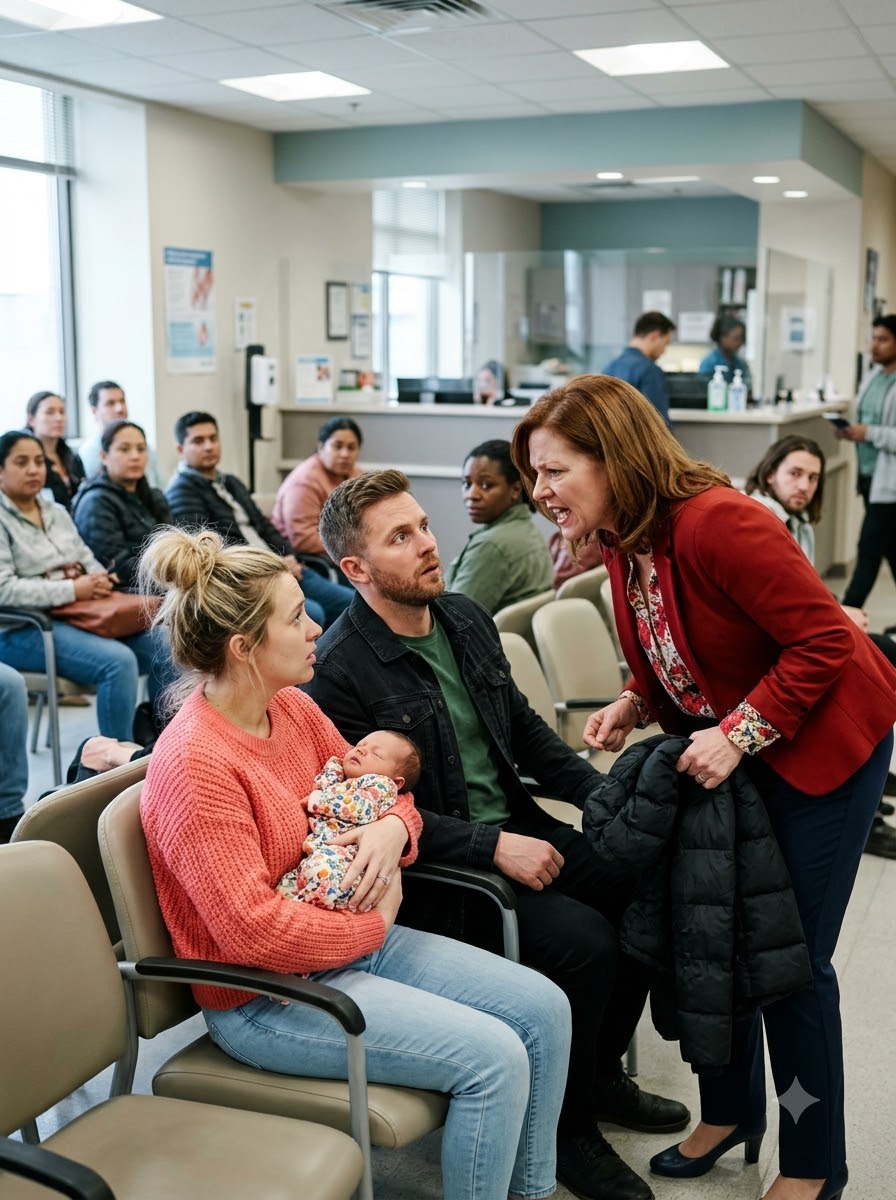
Other nights, I did.
That was exactly how it should have been.
We were finally dividing the responsibilities rather than operating under the unspoken assumption that whichever parent recognized a problem first automatically became responsible for solving it.
Ethan did not become a completely different person in a single night.
Neither did Sylvia.
There were still difficult discussions, familiar habits that resurfaced, and occasions when I had to remind Ethan that true partnership required paying attention before someone had to ask.
The difference was that he now listened before the situation reached a breaking point.
He also stopped defending his mother’s hurtful behavior simply by insisting that her intentions were good.
He had finally learned that loving a parent did not mean giving that parent permission to interfere with a marriage.
That evening in the emergency department became a clear dividing point in our family’s story.
Before it happened, Ethan had been an affectionate father who nevertheless expected someone else to carry the most demanding responsibilities of raising a child.
Afterward, he began learning what it meant to remain present.
Several months later, I asked whether he still remembered calling Sylvia from the hospital waiting room.
“All the time.”
“Do you regret it?”
He glanced toward June, who was happily playing on the floor.
“Yes. But I’m glad I finally saw what I was doing.”
Then his eyes met mine.
“And I’m glad you didn’t let me leave.”
I thought back to the moment Sylvia stood in the emergency room, shouting that her son had never agreed to endure so much stress.
She had been mistaken.
Ethan had accepted that responsibility the instant he became a father.
He simply had not fully understood the meaning of that commitment until our baby was ill, his mother was standing there offering him his coat, and I made him confront the decision about which direction he would take.
That night, he chose to stay.
And throughout the months that followed, he continued choosing to stay.
