

Part 1: The Day My Father Found Me Walking
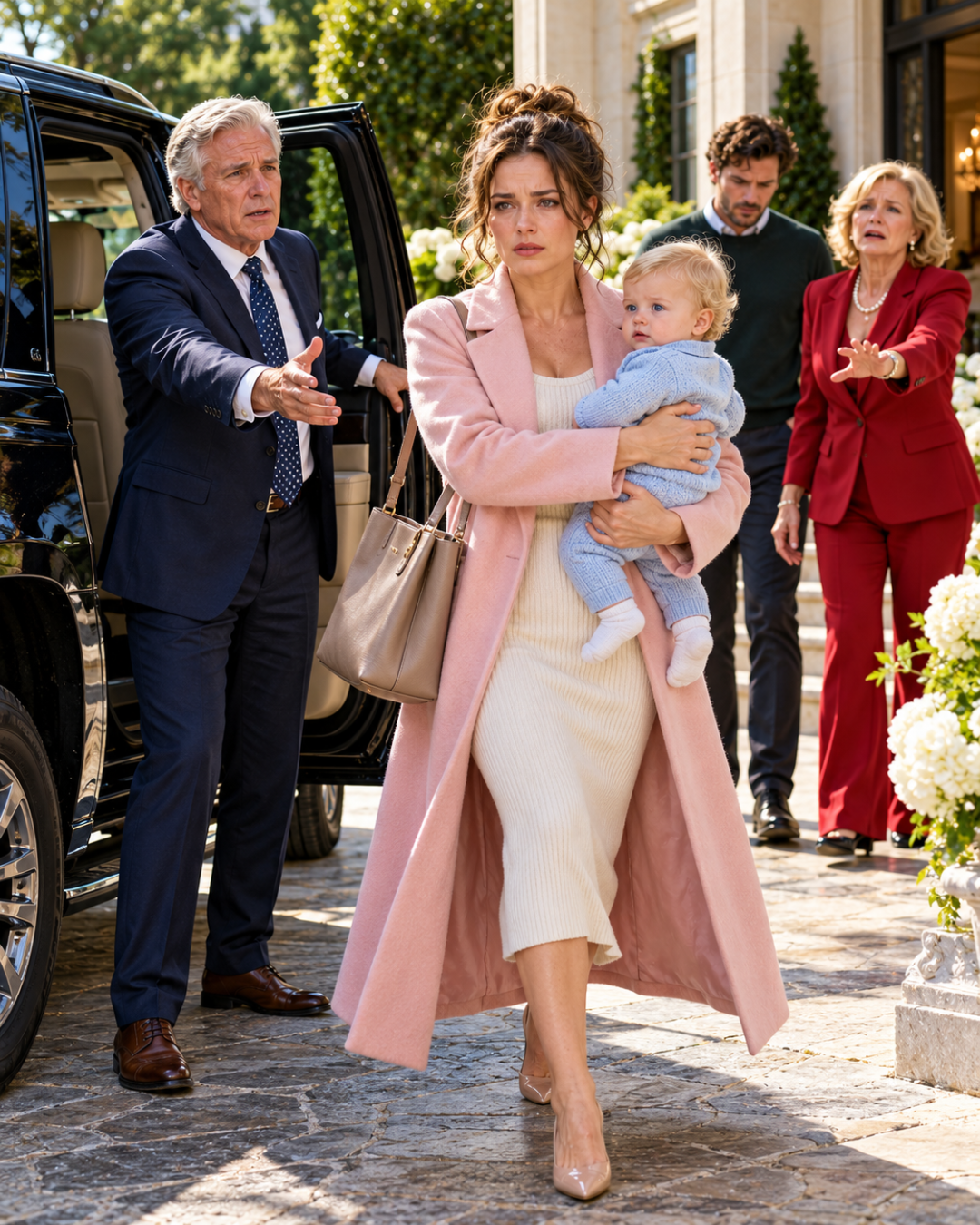
The day my father found me limping along the sidewalk with my eleven-month-old son in one arm and two heavy grocery bags in the other, the lies I’d been telling myself for six months finally began to collapse.
I’d insisted everything was manageable.
Living with my husband’s parents was temporary. Losing our apartment was an unfortunate setback. Daniel was doing his best to find another job. His mother was difficult, but she wasn’t deliberately cruel.
And above all, I kept telling myself I was strong enough to handle it.
Then a black SUV slowed beside the curb.
The passenger window rolled down.
“Elena?”
I stopped walking.
I recognized that voice immediately, and my stomach tightened before I even turned around.
“Dad.”
General Robert Hayes pulled over so abruptly that one tire brushed the curb.
He climbed out before I could invent an explanation.
He wasn’t wearing his uniform. Just jeans, a navy polo shirt, and the worn brown walking shoes he preferred whenever he visited my neighborhood.
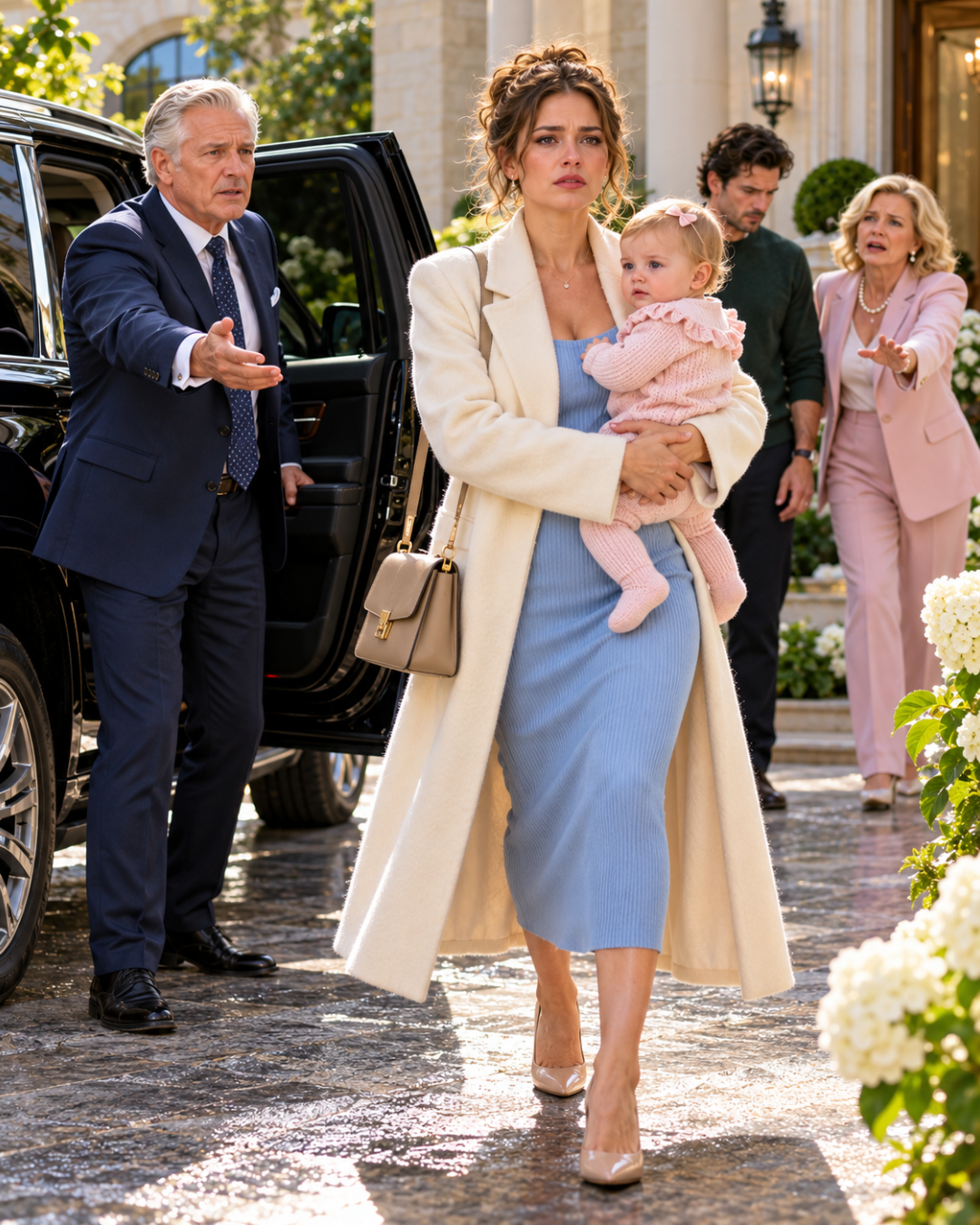
At sixty-two, his hair had turned mostly silver, but his posture remained perfectly straight.
Thirty-five years in the Army had taught him to remain composed in almost any situation.
They had also made him exceptionally observant.
He looked at Lucas first.
Then at the grocery bags cutting into my fingers.
Finally, his gaze settled on my left ankle.
It was swollen so badly that the skin above my sneaker looked stretched.
His expression changed.
“What happened?”
“Nothing.”
He stared at me.
I knew immediately that answer wouldn’t work.
“I twisted it a few days ago.”
“A few days ago?”
“It’s getting better.”
I tried to take another step.
Pain shot through my ankle, and I winced before I could hide it.
Dad reached for the groceries.
“I’m fine, Dad.”
He took the bags anyway.
“Elena.”
Just my name.
Yet somehow, at thirty-two years old, married and holding my own baby, I suddenly felt like a fourteen-year-old caught doing something foolish.
Lucas stirred against my shoulder.
Dad’s stern expression softened.
“Come here, soldier.”
My son smiled sleepily at his grandfather.
Dad took him gently, adjusted him against his chest, and kissed the top of his head.
Lucas grabbed his collar.
Then Dad asked the question I’d been dreading.
“Where’s your car?”
I stared at the pavement.
“Elena.”
“My mother-in-law has it.”
He didn’t speak immediately.
“What do you mean, she took it?”
“She has the keys.”
“The SUV you bought after Lucas was born?”
I nodded.
The registration was in Daniel’s name.
At the time, it had seemed like a harmless arrangement. Daniel had handled the insurance and paperwork while I paid the deposit from my savings and made every monthly installment from my bank account.
We called it our family vehicle.
But it was the car I used every day.
I’d selected Lucas’s car seat and the little mirror that let me see him from the driver’s seat.
I drove it to pediatric appointments, grocery stores, and work meetings.
Never once had I imagined that Daniel’s name on the registration could be used to keep me from driving the vehicle I paid for.
Dad lowered his voice.
“Why does Marlene have your keys?”
I swallowed.
“She said I don’t deserve to use it.”
My father’s face became frighteningly calm.
“What happened?”
I looked away.
“Daniel needed it.”
“For a job interview?”
“No.”
“Then why?”
I exhaled.
“Mom—Marlene—said the gas and insurance were household expenses, and because we’re staying in their house, she gets a say in how things are used.”
Dad stared at me.
I hurried to explain, embarrassed by how unreasonable it sounded.
“She thinks I drive too much. She says groceries can be bought closer to the house and that walking would be good for me.”
His eyes dropped to my injured ankle.
“She knows you’re injured?”
I said nothing.
He looked at the grocery bags.
“How far is the grocery store?”
“About a mile.”
“With Lucas?”
“I had the stroller.”
“Where is it?”
“One wheel jammed halfway there.”
Dad remained silent for several seconds.
Then he asked, “Where’s Daniel?”
“At home.”
The disappointment in his expression hurt more than anger would have.
“Daniel let you do this?”
“He’s been under a lot of pressure.”
Dad met my eyes.
“Pressure doesn’t make a man blind, Elena.”
My cheeks burned.
“He lost his job six months ago. He’s depressed. His parents are supporting us. I don’t want to make things harder.”
“And who is supporting you?”
I opened my mouth.
Nothing came out.
Dad adjusted Lucas against his shoulder, gathered the groceries, and opened the passenger door.
“Get in.”
“Dad—”
“Get in.”
“I can handle this.”
“I know you can.”
His answer stopped me.
He wasn’t questioning my strength.
“I know my daughter can survive almost anything. That doesn’t mean she should have to.”
My throat tightened.
“What are you going to do?”
“We’re going to your house.”
“It isn’t my house.”
“Fine. We’re going to the house where you are currently living.”
“Dad, please.”
He waited.
I lowered my voice.
“If Marlene sees me arrive with you, she’s going to lose it.”
“Then she’ll lose it.”
“She might throw us out.”
He held the door open.
“Then you won’t spend another night there.”
“You don’t understand.”
His gaze sharpened.
“No, Elena. I think the problem is that I’m beginning to.”
I stood frozen beside the SUV.
“This stopped being a family disagreement the moment somebody made my injured daughter limp a mile home with a baby while keeping the vehicle she pays for.”
Tears stung my eyes.
I’d always hated crying in front of Dad.
He’d taught me how to change a tire before I turned sixteen, read maps, manage money, protect myself, and examine documents before signing anything.
He’d raised me to be independent.
Yet somehow, I had become a woman who needed permission to drive her own car.
“What if Daniel chooses them?” I whispered.
For the first time, Dad hesitated.
Then he answered gently.
“Then at least you’ll finally know.”
I climbed into the passenger seat.
Dad secured Lucas in the child seat and got behind the wheel.
An access pass for a military installation hung beneath his rearview mirror.
Marlene would never have recognized its significance.
To the Brooks family, my father was simply Robert Hayes, a quiet man who traveled frequently and had once served in the Army.
They knew almost nothing about his career.
I’d wanted it that way.
Growing up as the daughter of a senior military officer meant deployments, relocations, security restrictions, and long periods when Dad was away.
When I married Daniel, I wanted his family to know me as Elena.
Not as the daughter of a general.
Marlene had once dismissed Dad as “some career Army officer.”
I’d never corrected her.
His accomplishments belonged to him.
I didn’t want his rank opening doors for me.
But I was beginning to realize that my desire for independence had helped convince Marlene that I had nobody willing to stand beside me.
Dad pulled into traffic.
“How long has this been happening?”
I looked out the window.
“What?”
“You know exactly what.”
“Dad—”
“How long?”
I watched the houses pass.
“Not at first.”
He waited.
“When we first moved in, they were nice.”
And they had been.
Six months earlier, Daniel’s company eliminated his department.
He expected to find another job within weeks.
Instead, the weeks became months.
Our savings disappeared faster than we’d anticipated.
I’d reduced my hours after Lucas was born. Between rising rent, health insurance changes, and childcare costs, returning to full-time work barely made financial sense until I found something better.
After two months, Daniel’s parents offered us their basement suite.
“No rent,” Richard Brooks had said.
“Family helps family,” Marlene added.
I’d cried with relief.
During the first few weeks, Marlene cooked meals and watched Lucas while I showered.
Then the criticism began.
Baby food was too expensive.
Daniel’s shirts weren’t folded correctly.
We left lights on too long.
Lucas shouldn’t eat certain foods.
I should appreciate having such a patient husband.
At first, I dismissed the remarks as ordinary disagreements.
Then came the rules.
I needed permission before doing laundry.
No showers after nine.
I couldn’t use the kitchen when Marlene entertained guests.
Lucas had to remain quiet during Richard’s television programs.
And I was expected to explain where I was going whenever I left the house.
Eventually, the supposedly free arrangement began costing money.
First groceries.
Then utilities.
Then cleaning supplies.
Whenever I questioned the increasing contributions, Marlene reminded me that we were living under her roof.
My savings dwindled while Daniel repeated the same words.
“Just keep the peace until I get a job.”
So I did.
I endured Marlene criticizing my parenting, opening mail addressed to me, rearranging my belongings, and telling dinner guests I was “taking a little break from working,” even though I completed remote assignments after Lucas fell asleep.
I ignored her increasingly frequent references to our SUV as “Daniel’s car.”
Then, three days before Dad found me, I missed the bottom stair while carrying laundry and twisted my ankle.
Marlene saw the swelling.
The next morning, she took my keys.
“You don’t need to be driving anyway,” she said.
At first, I thought she was concerned about the injury.
Then she added:
“And frankly, Elena, until you start contributing more, you should stop acting like everything belongs to you.”
I stared at her.
“I make the payment on that car.”
“You’re living in my house.”
“What does that have to do with my car?”
“Everything is connected when other people are supporting you.”
Daniel sat at the kitchen table.
When I turned toward him, he wouldn’t meet my eyes.
That should have been the moment I refused.
Instead, I told myself he was exhausted, ashamed of losing his job, and afraid to challenge his mother.
I invented explanations because accepting the truth felt unbearable.
Dad turned onto the Brookses’ street.
My stomach tightened.
“Elena.”
“Yes?”
“When we go inside, I’m not going to make decisions for you.”
I looked at him.
“I will not order you to leave your husband. I will not tell you what to do with your marriage.”
His hands remained steady on the wheel.
“But nobody is taking away your choices tonight.”
We pulled into the driveway.
My SUV was parked beside the garage.
Seeing it sitting there made me want to cry.
I’d walked a mile on an injured ankle, carrying my baby and groceries, while my vehicle remained unused just outside the house.
Then Dad noticed the spare keys lying in the center console.
He switched off the engine.
“Stay here for a minute.”
“Why?”
“I want you to answer one question before we walk inside.”
His voice became very quiet.
“Did Marlene take those keys from you?”
I hesitated.
“No.”
He watched my face.
“Then who gave them to her?”
There were only two sets.
Mine.
And Daniel’s.
I stared at the keys.
“Daniel did.”
Dad nodded once.
He didn’t look pleased or surprised.
He simply opened his door.
“Come on.”
For the first time in six months, I wasn’t afraid of entering that house.
I was afraid of what I would finally have to admit about my marriage.
Marlene opened the front door before we reached it.
She must have seen us through the security camera.
“Elena.”
Her tone made my name sound like an accusation.
Dad carried Lucas while I held the groceries.
“Good evening,” he said.
Marlene barely acknowledged him.
“Where have you been?”
For months, I’d answered that question as though I needed permission to leave.
This time, I didn’t apologize.
“Buying groceries.”
“I can see that.”
She looked at my ankle.
“You were supposed to come straight back.”
“I did.”
“With him?”
Dad remained quiet.
Marlene apparently mistook his silence for weakness.
“Robert, this is really a family matter.”
“I agree.”
She blinked.
“This is between Daniel and Elena.”
“Then Daniel should probably join us.”
Her lips tightened.
“You don’t come into my home and tell me what—”
“Mom?”
Daniel appeared behind her, wearing a worn college T-shirt and gray sweatpants.
For one ridiculous moment, I felt relieved.
This was my husband.
The man who’d held my hand through eighteen hours of labor.
The man who once drove across town at midnight because I was craving strawberry ice cream.
Surely he would see my swollen ankle.
Surely he’d ask whether Lucas and I were okay.
Instead, he looked alarmed.
“Elena, why is your dad here?”
Not a question about my injury.
Not a word about our son.
Only concern that my father had arrived.
I looked at Dad.
He’d promised not to speak for me.
So I answered.
“He found me walking home.”
Daniel rubbed his face.
“Oh, God.”
Marlene crossed her arms.
“She chose to walk.”
Dad turned toward her.
“She chose?”
“Yes.”
“The car is outside.”
“The car belongs to Daniel.”
The grocery bags dug into my hands.
I faced my husband.
“Did you give her the keys?”
He said nothing.
“Daniel.”
Marlene stepped closer.
“I asked him for them.”
“I’m not asking you.”
Daniel looked exhausted.
“Elena, can we please not do this with your father standing here?”
I almost laughed.
“With my father standing here?”
“This is embarrassing.”
Something inside me broke.
I’d believed Daniel was trapped between his wife and his mother.
But now I understood that what frightened him most wasn’t my suffering.
It was someone witnessing it.
Dad set the groceries on the entry table and gently handed Lucas back to me.
Then he looked at Daniel.
“My daughter asked you a question.”
Marlene snapped at him.
“Robert, I think you need to remember whose house you’re standing in.”
Dad turned toward her calmly.
“I know exactly whose house I’m standing in.”
His voice never rose.
“That is why I have not raised my voice. I have not insulted you. And I have not told you how to run your home.”
“Good.”
“But Elena’s vehicle is not your home.”
Marlene laughed coldly.
“Daniel’s vehicle.”
Dad looked at me.
I understood.
This was my question to ask.
I turned back to my husband.
“Did you give her my keys?”
He stared at the floor.
“Yes.”
I had already known.
Still, hearing him admit it hurt.
“Why?”
“Mom said you were driving too much.”
“Daniel.”
“We’re spending too much on gas.”
“I pay for the gas.”
“With money we should be saving.”
“And walking a mile on a sprained ankle with Lucas made sense to you?”
“I didn’t know you were going to walk.”
“How did you think I was getting groceries?”
“There are delivery apps.”
“Your mother told me delivery fees were wasteful.”
Marlene snorted.
“They are.”
I looked at her.
“Then what exactly was I supposed to do?”
“You could have waited.”
“For what?”
“For Daniel.”
I laughed before I could stop myself.
Daniel looked hurt.
“I would’ve gone later.”
“When?”
He didn’t answer.
I’d seen him playing video games that afternoon after submitting one job application.
I’d even asked whether he wanted anything from the grocery store.
He’d barely looked up.
Marlene gestured toward the living room.
“Whatever problems exist in your marriage, Elena, dragging your father into them is childish.”
“I didn’t drag him into anything. He found me.”
“Well, now that he knows you’re alive, he can go.”
Dad glanced at me.
He was offering to leave if that was what I wanted.
But I wasn’t finished.
I turned to Daniel.
“Why didn’t you tell her no?”
His eyes flicked toward his mother.
“Because we need them right now.”
“We need a place to stay. That doesn’t mean she owns us.”
“It’s her house.”
“There it is again.”
“What?”
“Every time she crosses a line, you say the same thing.”
His jaw tightened.
“You have no idea how much pressure I’m under.”
“I don’t?”
“No, Elena, you don’t. I lost my job. We lost the apartment. My parents are paying the mortgage while we’re staying here, and every day I wake up knowing I can’t support my family.”
His voice cracked.
For a moment, I recognized the man I’d married beneath all that shame.
Then he pointed at me.
“And every time you and Mom fight, I’m the one stuck in the middle.”
Whatever sympathy I’d felt suddenly went cold.
“You’re not in the middle.”
He frowned.
“You’re my husband.”
Silence filled the entryway.
“If your mother humiliates me and you stay quiet, you’re not in the middle.”
“Elena—”
“If she takes something I paid for and you hand her the keys, you’re not in the middle.”
He looked away.
“If she treats me like a burden while I buy groceries for this house, pay the car payment, cover Lucas’s expenses and work after midnight, and you tell me to keep the peace…”
My voice shook.
“You’re not in the middle, Daniel.”
Dad didn’t say a word.
He didn’t need to.
Marlene stepped between us.
“That is enough.”
“No.”
The word surprised even me.
She went rigid.
I held Lucas closer.
“No. It isn’t enough.”
Her face darkened.
“Be very careful, Elena.”
“Or what?”
Dad watched me without interrupting.
I took a breath.
“What happens if I’m not careful?”
“You live in my home.”
“Yes.”
“You eat food bought for this household.”
“Most of the groceries for the last three months came from my debit card.”
“You use our electricity.”
“I give Richard money toward the utility bill.”
Marlene’s face twitched.
Daniel looked at me as though he hadn’t known.
I continued.
“I buy diapers. Formula. Groceries. I pay the SUV payment. I pay my phone. I paid your plumber last month because you said things were tight.”
Marlene flushed.
“That was temporary.”
“So is living here.”
“Not if my son can’t find a job.”
Daniel visibly recoiled.
That was when I understood something else.
Marlene’s control wasn’t limited to me.
Daniel had spent years learning to mistake her demands for love.
She turned toward him.
“Tell her.”
He swallowed.
“Tell me what?” I asked.
Daniel couldn’t answer.
So Marlene did.
“If you’re going to behave like this, you should find somewhere else to stay.”
The words hung in the air.
There it was.
The threat I’d feared for six months.
Leave, and you’ll have nowhere to go.
Lucas stirred in my arms.
My heart hammered.
I glanced at Dad.
He didn’t move.
The decision was mine.
“Okay.”
Marlene blinked.
“What?”
“We’ll leave.”
Daniel’s head snapped toward me.
“Elena.”
“Lucas and I are leaving tonight.”
Marlene’s expression changed from anger to disbelief.
“You’re not taking my grandson anywhere.”
Dad took one step forward.
I lifted my hand.
“Dad.”
He stopped.
I faced Marlene.
“He is my son.”
“He is Daniel’s son too.”
“I know.”
“Then Daniel decides whether you take him.”
Dad finally spoke.
“That is not how parental rights work.”
She spun toward him.
“You stay out of this.”
His expression remained controlled.
“I would strongly advise everyone in this room to stop making legal claims they don’t understand.”
Marlene gave him a contemptuous look.
“And what exactly makes you an expert?”
Dad didn’t answer.
Neither did I.
Marlene reached for her phone.
“Fine. Maybe the police can explain it.”
Daniel looked alarmed.
“Mom, don’t.”
“No. If Elena thinks she can march out of this house with Daniel’s child and Daniel’s vehicle because her father showed up pretending to intimidate us, she can explain it to the police.”
Dad turned toward me.
“Do you want a police officer here?”
I stared at him.
“Why would I want that?”
“Because if you’re leaving tonight, a civil standby isn’t a bad idea. Everyone stays calm. You collect your belongings. There’s a record of the interaction.”
Marlene scoffed.
“Oh, now you’re a lawyer too?”
“No.”
Dad took out his phone.
“But I know when lawyers are useful.”
Marlene laughed.
“Go ahead. Call whoever you want.”
Dad looked at me.
“You sure?”
I glanced at Daniel.
He still couldn’t meet my eyes.
“Yes,” I said.
“I’m sure.”
Dad began dialing.
Then Marlene made the mistake that changed the atmosphere in the room.
She pointed directly at him.
“I don’t care what kind of little military job you had, Robert. You’re not coming into my house and ordering my family around.”
Dad slowly lowered his phone.
Daniel stared at his mother.
“Mom.”
“What?”
His face had gone pale.
“His name is Robert Hayes?”
Marlene frowned.
“Yes. Obviously.”
Daniel pulled out his phone and began searching.
I knew what he was looking for.
Seconds later, he glanced at me.
“Elena…”
I remained silent.
He looked back at his screen.
Whatever color remained in his face disappeared.
Marlene snatched the phone from his hand.
She read what was displayed.
Then she looked up at my father.
For the first time since I’d known her, Marlene Brooks had nothing to say.
On Daniel’s phone was a photograph of Dad in dress uniform.
Four stars shone on his shoulders.
General Robert Hayes.
Thirty-five years of military service.
Thousands of soldiers had once served under commands authorized by his signature.
Marlene stared at him.
Dad simply raised his phone to his ear.
“Yes,” he said into the phone. “I’d like to request a civilian officer for a family property dispute and supervised retrieval of personal belongings.”
He met Marlene’s eyes.
“No special treatment.”
He paused.
“Just procedure.”
And somehow, those two ordinary words frightened her more than any threat could have.
Part 2: The Choice My Husband Had Avoided for Six Months
The police arrived twenty-five minutes later.
Those twenty-five minutes felt longer than the previous six months.
Nobody knew what to say.
Marlene disappeared into the kitchen twice, pretending to wipe countertops that were already spotless.
Daniel stood quietly near the living room.
Dad remained beside me, holding Lucas whenever my ankle became too painful.
Richard Brooks finally came downstairs.
My father-in-law had always been kinder than Marlene.
But I was beginning to understand that kindness without action could become another kind of silence.
He looked around.
“What happened?”
Marlene immediately supplied her version.
“Elena is taking Lucas and trying to steal Daniel’s vehicle.”
Dad briefly closed his eyes.
I nearly smiled.
Richard turned toward me.
“Is that true?”
“No.”
“She’s leaving.”
“Yes.”
“With the baby.”
“Yes.”
Richard nodded slowly.
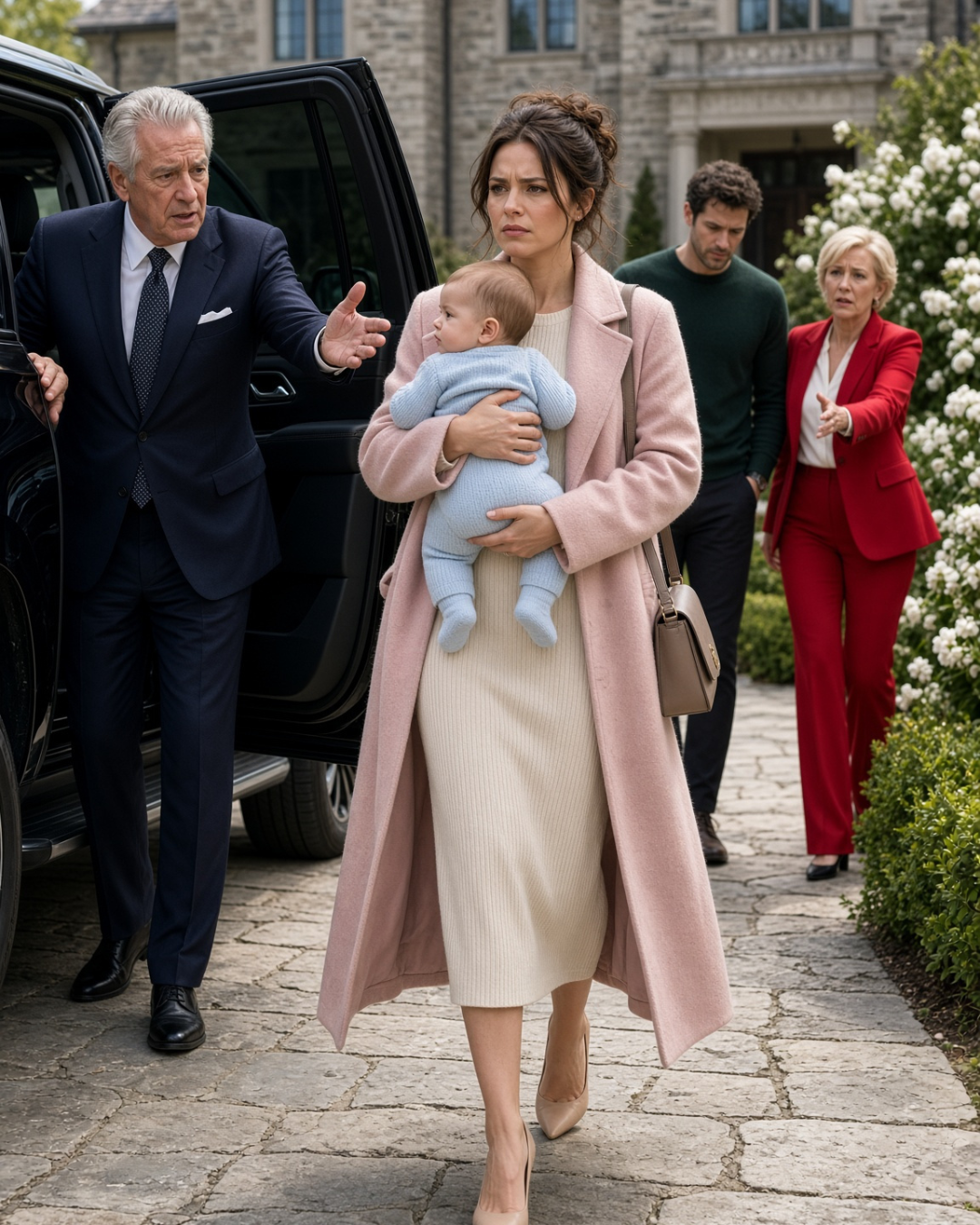
Then, finally, he noticed my ankle.
“What happened to you?”
“I twisted it.”
He looked toward the window and the SUV outside.
“Why were you walking?”
Nobody answered.
The silence told him enough.
When the officers arrived, Dad stepped aside.
He didn’t introduce himself with his rank.
He didn’t demand special treatment.
He let me explain.
I told them I was leaving voluntarily with Lucas, wanted to collect our belongings peacefully, and needed to resolve the dispute over the vehicle.
One officer checked the registration.
“Daniel’s.”
Marlene folded her arms, looking victorious.
The officer turned toward my husband.
“Is the vehicle yours?”
Daniel glanced at me.
I could almost see the struggle behind his eyes.
His mother’s demands.
His embarrassment.
His fear.
Our marriage.
And six months of pretending that surrendering to Marlene was the same as keeping the peace.
“Yes,” he said finally. “My name is on it.”
Marlene smiled.
The officer nodded.
“And do you object to your wife driving it?”
Her smile vanished.
Daniel swallowed.
Marlene stared at him.
“Daniel.”
The officer raised a hand.
“Ma’am, I need him to answer.”
Daniel looked at me again.
I wasn’t asking him to rescue me anymore.
I simply wanted him to tell the truth.
“The car is Elena’s,” he said.
Marlene inhaled sharply.
“Daniel!”
“She paid for it.”
My eyes filled.
“She put down the deposit. She makes the payments. It’s registered to me because I handled the paperwork.”
The officer nodded.
“So you’re giving her permission to take it?”
Daniel closed his eyes briefly.
“Yes.”
Marlene erupted.
“After everything we have done for you?”
He flinched.
There it was again.
Every favor converted into a debt.
Every act of kindness transformed into something that could later be used against him.
Dad watched Daniel with an expression I hadn’t expected.
Not contempt.
Recognition.
As though he understood what it meant to feel trapped by obligations.
Marlene turned toward me.
“This is what you wanted, isn’t it? To humiliate us?”
“No.”
“You brought a general and two police officers into my house!”
“You called the police.”
Her mouth opened.
Then closed.
One officer coughed and looked away.
I almost laughed.
Dad placed Lucas in my arms.
“Tell me what you want packed.”
“I’ll do it.”
He looked at my ankle.
“Elena.”
“I need to do this.”
He nodded.
“Okay.”
I climbed the stairs slowly.
Every step hurt.
But the pain was nothing compared with the fear I’d carried for months.
The bedroom Daniel and I occupied was attractive enough.
Gray walls.
A large window overlooking the backyard.
A pale rug Marlene had chosen.
Yet I’d never felt at home there.
Everything seemed borrowed.
Even the dresser felt like something I was merely allowed to use.
I pulled out the suitcases.
Then I stopped.
Not our suitcases.
Mine and Lucas’s.
I packed his diapers, formula, medicine, clothes, favorite blanket, and blue stuffed elephant.
Then I gathered a week’s worth of clothing for myself, my laptop, chargers, work files, passport, and birth certificate.
From beneath the bed, I retrieved a box of financial records.
SUV payment statements.
Insurance documents.
Receipts.
Proof of household expenses.
I’d been quietly saving those documents for months without admitting why.
Perhaps part of me had recognized the danger long before I was ready to confront it.
Daniel appeared in the doorway.
“I told them the car was yours.”
I kept packing.
“Thank you.”
He winced at my tone.
“Elena, please.”
“Please what?”
“Can we talk?”
I folded one of Lucas’s sweaters.
“You’ve had six months.”
“I know.”
“No. I don’t think you do.”
He stepped into the room.
“I screwed up.”
I faced him.
“That doesn’t cover it.”
“I was trying to survive.”
“So was I.”
“My mother is—”
“Don’t.”
He stopped.
“Don’t make this about her.”
His jaw tightened.
“But she is the problem.”
“No.”
I shook my head.
“She is a problem.”
He looked confused.
“You’re my husband, Daniel. I didn’t marry your mother.”
“I never wanted you to get hurt.”
“You watched me get hurt.”
He looked down.
“I didn’t know your ankle was that bad.”
“I’m not talking about my ankle.”
He finally understood.
I zipped Lucas’s suitcase.
“When she insulted me, you told me to let it go.”
“I was trying to keep the peace.”
“When she opened my mail?”
He said nothing.
“When she told me what I could feed our son?”
Still nothing.
“When she started deciding when I could leave the house?”
“Elena—”
“When she called the SUV yours and you knew I paid for it?”
Tears appeared in his eyes.
“I felt like such a failure.”
I believed him.
That made everything more painful.
He hadn’t necessarily stopped loving me.
He’d lost respect for himself.
And he’d expected me to become smaller so that he wouldn’t have to confront his shame.
Daniel sat on the edge of the bed.
“I lost everything.”
“No.”
He looked up.
“You lost a job.”
His expression crumpled.
“I know that felt like everything. But I was still here. Lucas was still here. We were still your family.”
“I couldn’t provide for you.”
“I wasn’t asking you to provide everything.”
My voice broke.
“I was asking you to stand beside me.”
Daniel covered his face.
I wanted to sit beside him.
I wanted to comfort him.
I remembered our first apartment, our wedding, and the way he’d cried when he held newborn Lucas because he was afraid of dropping him.
I still loved that man.
But loving the person he might become didn’t mean I had to keep accepting the choices he was making.
“I need to leave,” I said.
He lowered his hands.
“For tonight?”
“I don’t know.”
“Elena.”
“I can’t promise you anything.”
“What about Lucas?”
“You can see him.”
His shoulders relaxed.
“I am not taking your son away from you.”
I paused.
“But I will not raise him in a house where he watches his mother become smaller every day.”
Daniel looked devastated.
I hated hurting him.
But avoiding painful truths hadn’t protected our marriage.
It had nearly destroyed me.
He stood.
“I’ll help carry the bags.”
I nodded.
We returned downstairs together.
Marlene was waiting.
Her expression changed when she saw the luggage.
“You’re really doing this.”
“Yes.”
She turned to Daniel.
“Are you going to let her?”
For one terrible second, I thought he might surrender again.
Then he spoke.
“She doesn’t need my permission to leave.”
Marlene stared at him.
“You ungrateful—”
“Mom.”
His interruption startled her.
“This is my fault.”
“No, it isn’t.”
“Yes.”
He looked at me.
“I let you treat my wife like she owed us for every breath she took in this house.”
Marlene recoiled.
“That is not what happened.”
Daniel didn’t argue.
He picked up my suitcase.
It was the first real boundary he’d established in six months.
And it was too late to keep me there.
Outside, Dad loaded our belongings while one officer remained nearby.
Marlene stood in the doorway.
“You think this makes you strong?” she called.
I turned.
“Running to your father because marriage became difficult?”
For a moment, I wanted to defend myself.
I wanted her to understand.
Then I realized I didn’t need her approval.
“No.”
She waited.
“I think leaving when someone keeps teaching you that you deserve less is what makes you strong.”
Her lips tightened.
I secured Lucas in the back seat.
Dad stood beside the driver’s door.
“You driving?” he asked.
I looked down at my ankle.
“Probably not tonight.”
A small smile appeared.
“Good decision.”
I handed him the keys.
As I settled into the passenger seat, Daniel approached my window.
“Elena.”
I lowered it.
He looked at Lucas.
Then at me.
“I’m sorry.”
I believed he meant it.
But remorse wasn’t the same as change.
“I know.”
“Will you call me?”
“When I’m ready.”
He nodded.
Dad started the engine.
Under the porch light, Marlene looked furious.
But she no longer looked powerful.
For six months, I’d feared being forced out of that house.
Now I understood that the real danger had been forgetting I was allowed to leave.
Dad drove us to his home, forty minutes away.
I hadn’t asked because I was embarrassed to need help.
The guest room was exactly as I remembered.
On the dresser stood a photograph of seventeen-year-old me wearing soccer cleats, glaring at Dad before a tournament.
I stared at that picture and began crying.
I’d been loud, stubborn, and confident.
That girl would never have imagined asking permission to drive a car she’d paid for.
Dad brought ice for my ankle.
Lucas was asleep in the portable crib Dad kept for visits.
I sat on the bed.
“You must be disappointed.”
Dad looked up.
“In you?”
I nodded.
“No.”
“But you raised me better than this.”
He sat opposite me.
“Elena, I raised you to recognize danger on a battlefield.”
A sad smile crossed his face.
“I apparently forgot to teach you that danger doesn’t always arrive looking dangerous.”
I looked away.
“He never hit me.”
“I know.”
“Marlene never hit me either.”
“I know.”
“I wasn’t trapped.”
Dad leaned forward.
“Then why did you feel like you needed permission to leave?”
I couldn’t answer.
“I should have called you sooner.”
“Maybe.”
“You would have come.”
“Yes.”
“Immediately.”
“Yes.”
I laughed weakly.
“Probably with half the Army.”
“No.”
He smiled.
“A lawyer, maybe.”
I laughed for real.
Then Dad became serious.
“You know what I did tonight?”
“What?”
“I drove a car.”
I frowned.
“I carried grocery bags.”
“Dad—”
“I held my grandson.”
I listened.
“You did the rest.”
“That doesn’t feel true.”
“It should.”
He gestured toward the hallway.
“I didn’t tell Marlene no.”
“You did.”
“Only after you did first.”
I thought about that.
“My rank scared her.”
“Maybe.”
He looked at me firmly.
“But my rank doesn’t matter tomorrow.”
He wasn’t promising to use his military position against the Brooks family.
I wouldn’t have wanted that.
“I can help you find an attorney,” he continued. “A civilian one. I can make sure you understand your options. I can give you a place to stay. I can make calls if you need resources.”
He met my eyes.
“But I cannot live your life for you.”
“I know.”
“Good.”
He stood, then stopped at the door.
“And Elena?”
“Yes?”
“Needing help isn’t the same thing as being helpless.”
I barely slept.
Daniel sent several messages apologizing, asking about Lucas, and promising to give me space.
Marlene demanded to know when I intended to return her grandson after I’d calmed down.
I stared at the message in disbelief.
She still spoke about Lucas as though he were something she owned.
I blocked her number.
Then I opened my banking app.
I added up the groceries, utility contributions, car payments, baby supplies, and household purchases I’d paid for while being told I contributed nothing.
The total made me feel sick.
Not because I’d spent the money.
Because I’d believed the story Marlene told about me.
The next day, Dad placed a family-law attorney’s number beside my coffee.
He didn’t make the call for me.
I did.
Over the following week, my life became a series of appointments, documents, and practical decisions.
Strangely, the paperwork was comforting.
Bank statements didn’t care who cried the loudest.
Receipts didn’t care who felt insulted.
The documents showed what I’d earned, what I’d paid, and what options I actually had.
My attorney explained custody, separation, property, and the SUV.
Because Daniel’s name appeared on the registration and title, formal steps would be needed to establish ownership if we separated.
I wanted clarity.
Not another fight.
Ten days after I left, Daniel unexpectedly agreed to transfer the SUV to me without conditions.
We met at the attorney’s office.
He looked exhausted.
His hair had been cut, he wore a button-down shirt, and dark circles shadowed his eyes.
“Hi.”
“Hi.”
He signed the paperwork.
When everything was complete, he pushed the keys toward me.
“You should have had these all along.”
I accepted them.
“Thank you.”
He stared at his hands.
“I moved out.”
“From your parents’ house?”
He nodded.
“I’m staying with Matt for now.”
Matt was an old college friend.
“Why?”
Daniel exhaled.
“Because Mom told me this was all your fault.”
I waited.
“And I realized she needed it to be.”
He looked at me.
“If it was your fault, then she hadn’t done anything wrong. And if she hadn’t done anything wrong, then I didn’t have to admit what I let happen.”
I remained quiet.
“I told her I needed space.”
“How did that go?”
He laughed bitterly.
“She told me you poisoned me against her.”
I couldn’t help smiling.
“That sounds familiar.”
“Yeah.”
His eyes filled.
“I got a job.”
My heart lifted.
“Daniel.”
“It’s not like the old one. Salary’s lower. But it’s work.”
“That’s good.”
“I start Monday.”
For the first time in months, he seemed to feel a little pride in himself.
“I’m glad.”
He hesitated.
“Does this change anything?”
I’d known he would ask.
There was no Marlene in that room.
No police officer.
No father standing beside me.
Only my decision.
“I don’t know.”
Daniel nodded.
“I deserve that.”
“This isn’t punishment.”
“I know.”
“I love you.”
He closed his eyes.
I hadn’t planned to say it.
But it was true.
“I love you,” I repeated. “That’s part of why this hurts so much.”
He wiped his face.
“I love you too.”
“But love didn’t keep me safe in that house.”
“I know.”
“And I can’t move back into a marriage where keeping your mother calm matters more than protecting our boundaries.”
“It won’t.”
“You can’t promise that yet.”
He looked at me.
“Why not?”
“Because ten days ago you couldn’t tell her no.”
He absorbed the words.
I told him that any changes he made needed to be for himself, not simply a strategy to win me back.
“If you change, do it because you need to become someone you can respect. Not because you’re trying to get me back.”
He nodded.
“And if we ever try again, we’re doing it slowly.”
“Okay.”
“Counseling.”
“Yes.”
“Separate home.”
“Yes.”
“Your mother never gets a key.”
He gave a broken laugh.
“Absolutely.”
“And when she insults me?”
“I stop it.”
“When she threatens to withhold help?”
“I let her.”
“When she says I’m tearing the family apart?”
He held my gaze.
“I tell her our marriage is not hers to manage.”
I wanted to believe him.
But understanding a boundary and maintaining it were two different things.
I stood.
“I need time.”
“You have it.”
I picked up my keys.
“Elena?”
I turned.
He watched me for a moment.
“Your dad scares the hell out of me.”
I laughed so hard I had to lean against the table.
Daniel laughed too.
“He never threatened you.”
“I know.”
“He barely said anything.”
“I know. That’s what made it worse.”
I shook my head and headed toward the door.
Then Daniel called after me.
“He told me something that night.”
I turned.
“What?”
“While you were packing.”
I hadn’t known they’d spoken privately.
Daniel looked down.
“He said he didn’t care if I was unemployed.”
I waited.
“He said, ‘A paycheck is not what makes you responsible for your family. Your choices are.’”
Those words sounded exactly like Dad.
“What did you say?”
“Nothing.”
Daniel smiled sadly.
“I think that was the first thing anybody had said to me in six months that made me feel like losing my job hadn’t taken away my ability to be a man.”
I nodded.
Then I left.
Not because I hated him.
But because forgiveness didn’t mean surrendering my freedom.
And whatever happened to our marriage, I was determined never to return to the woman who had needed permission to leave her own home.
Part 3: The Keys Were Finally Mine
Three months later, I drove down the same street where Dad had found me limping with Lucas in my arms.
My ankle had healed completely.
Lucas babbled happily in his car seat, smiling at the little mirror I’d chosen when he was born.
The SUV registration now carried my name.
It was officially mine.
Not because Dad had threatened anyone.
Not because his military rank had forced the Brooks family to cooperate.
But because I’d finally taken responsibility for protecting my own choices.
I’d rented a small two-bedroom apartment fourteen minutes from Dad’s house.
The kitchen was cramped.
The bathroom tiles were ugly.
The closet door in my bedroom refused to close unless I lifted it slightly.
I loved every inch of that place.
I could do laundry whenever I wanted.
I could shower after nine.
I could leave a light on without being questioned.
I could choose where to put my furniture.
And when I paid the rent, nobody used that payment as a reason to control me.
Daniel visited Lucas three evenings each week and on alternate weekends.
He never missed an arrangement.
He kept working and began individual therapy before we discussed counseling together.
That mattered more to me than promises.
At first, Marlene tried to reach me through him.
She wanted to see Lucas.
She missed her grandson.
She believed the separation had lasted long enough.
Eventually, Daniel stopped passing along her demands.
One afternoon, while dropping Lucas off, he stood in my doorway and said:
“I told her if she wants a relationship with you, she needs to apologize directly.”
I raised an eyebrow.
“How did that go?”
“She said she had nothing to apologize for.”
“Then I guess we have our answer.”
He smiled faintly.
“That’s what I said.”
There was no miraculous transformation.
Just small, consistent changes.
Daniel learning to disagree with his mother.
Me learning to say no without apologizing.
Dad respecting my independence.
And bills that nobody used as proof that I owed them obedience.
Then one Saturday afternoon, my doorbell rang.
I checked the security camera.
Marlene stood outside.
My heart began racing.
For a moment, I was back in her foyer, afraid of what would happen if I challenged her.
Then Lucas laughed from the living room.
I looked around my apartment.
My furniture.
My belongings.
My door.
I opened it with the security chain still attached.
Marlene immediately noticed.
“Elena.”
“Marlene.”
“May I come in?”
“No.”
Her face tightened.
Then, unexpectedly, she controlled her reaction.
“I see.”
We stood in silence.
Finally, she spoke.
“Daniel told me I need to apologize if I want to see Lucas.”
“Daniel shouldn’t be negotiating for me.”
“That’s what he said too.”
I nearly smiled.
Marlene looked older than I remembered.
Less certain.
But still proud.
“I was trying to protect my son,” she said.
I sighed.
“If this is going to be an explanation of why everything was justified, we can stop now.”
Her jaw tightened.
For a moment, I saw the old Marlene.
Then she took a breath.
“I thought Daniel was falling apart.”
“He was.”
“I thought you expected too much from him.”
“I expected him to be my husband.”
She looked away.
“I know that now.”
I waited.
“I should not have taken your keys.”
“No.”
“I should not have told you the car wasn’t yours.”
“No.”
“I should not have threatened you with housing.”
“No.”
Each answer seemed to wound her pride.
But I wasn’t going to make the apology easier by pretending those things hadn’t happened.
Marlene glanced past me toward Lucas.
“I convinced myself that because I was helping you, I had the right to make decisions for you.”
I remained silent.
“And I didn’t.”
That was the first thing she’d said that felt like genuine accountability.
“I’m sorry.”
I studied her face.
An apology couldn’t erase six months.
It couldn’t instantly restore trust.
And I had learned that forgiveness didn’t automatically mean giving someone access to my life.
“Thank you for saying that.”
Hope appeared in her eyes.
“Can I see him?”
“Not today.”
Her expression fell.
“Elena—”
“We can talk again.”
“When?”
“I’ll decide.”
I saw the old instinct rise in her face.
The demand for an answer.
The belief that she was entitled to set the terms.
Then she swallowed it.
“All right.”
Those might have been the hardest words Marlene Brooks had ever spoken to me.
She walked away.
I closed the door.
Only then did I realize my hands were trembling.
Five minutes later, Dad called.
The timing seemed suspicious.
I answered.
“Did Daniel tell you?”
“Tell me what?”
“Marlene was here.”
He paused.
“Do you need me?”
I smiled.
He didn’t ask what she’d said.
He didn’t demand details.
He simply asked whether I needed him.
“No.”
“Good.”
He sounded pleased.
“That’s all I called for.”
“Dad.”
“Yes?”
“I never thanked you.”
“For what?”
“For that night.”
There was a brief silence.
“I told you. I drove a car.”
“You stopped.”
“That too.”
“You saw me.”
His silence changed.
I looked toward Lucas, who was sitting on the floor trying to fit a wooden block into a cup that was too small.
“I think I had been hoping someone would see me for a long time.”
Dad’s voice softened.
“I’m sorry I didn’t sooner.”
“You couldn’t. I kept telling you I was fine.”
“You were convincing.”
“I learned from the Army.”
He laughed.
“Terrible institution.”
I smiled.
Then his voice grew serious.
“You know something, Elena?”
“What?”
“That day on the sidewalk, I was furious.”
“I noticed.”
“No, you didn’t.”
I laughed.
“Fair.”
“I wanted to walk into that house and fix everything for you.”
“What stopped you?”
“You did.”
I frowned.
He continued.
“I realized that if I went in there and started giving orders, I’d just be another person telling you how your life was going to work.”
My eyes filled.
“So I did the only useful thing I could think of.”
“What?”
“I opened a door.”
I looked at my apartment door.
Three months earlier, I’d believed strength meant never needing anyone to open a door for me.
Now I understood something different.
Strength could mean accepting help.
It could mean choosing to walk through an open door.
And sometimes, it meant keeping a door closed until someone learned to respect what was on the other side.
That afternoon, Lucas and I returned to the grocery store where everything had begun.
I sat in the parking lot for a moment.
I remembered the stroller wheel jamming.
The grocery bags cutting into my fingers.
My swollen ankle.
The embarrassment of watching strangers pass while I struggled to carry my baby.
And the SUV sitting unused in the Brookses’ driveway because I’d been told I didn’t deserve to drive it.
I looked at my reflection in the rearview mirror.
For the first time, I didn’t see a weak woman.
I saw someone who had been exhausted.
Frightened.
Desperate to keep her family together.
Someone who had tried so hard to be reasonable that she’d stopped recognizing how unreasonable everyone else’s demands had become.
I forgave that woman.
I hoped she would forgive me too.
My phone vibrated.
A message from Daniel appeared.
Dinner after I drop Lucas off Sunday? Just us? No pressure.
I read it carefully.
Months earlier, I would have agreed immediately because I was afraid of disappointing him.
Now I stopped and considered what I wanted.
Then I replied:
Dinner sounds good.
It wasn’t reconciliation.
Not yet.
Maybe Daniel and I would find our way back to each other.
Maybe we wouldn’t.
But if we did, our marriage would have to be built differently.
We couldn’t simply return to what we’d had before.
Daniel would have to meet me as an equal.
And I would never again make myself smaller to keep someone else comfortable.
I put my phone away.
Lucas grinned at me in the mirror.
“Ready?”
He kicked both legs excitedly.
I laughed.
“Yeah. Me too.”
We went inside the grocery store.
I carried Lucas without pain.
I chose what we needed without worrying whether someone would criticize the cost.
I didn’t count every item while wondering whether I’d be accused of taking advantage of somebody else’s generosity.
When we finished, I secured Lucas in his car seat and loaded the groceries into the back.
Then I stood beside the driver’s door.
For a moment, I held the keys in my palm.
My keys.
My vehicle.
My decision.
I’d once believed Dad’s greatest gift was the protection that came with four stars on his shoulders.
But it wasn’t.
It wasn’t the police officers.
It wasn’t his calm confrontation with Marlene.
It wasn’t even the night he rescued Lucas and me from that house.
His greatest gift was seeing me when I’d nearly forgotten how to see myself.
He reminded me that accepting help didn’t make me helpless.
And then he stepped aside so I could choose my own future.
I climbed into the driver’s seat.
Lucas laughed behind me.
I started the engine and drove toward the little apartment I’d chosen for us.
A home where nobody could threaten to evict us for asking questions.
Where nobody could take my keys to teach me a lesson.
Where I didn’t have to earn the right to make ordinary decisions.
And where my son would grow up knowing something I had nearly forgotten:
Love should never require you to surrender your dignity.
This time, I wasn’t waiting for someone to give me permission to go home.
I already had the keys.
