


PART 1 — THE WORDS THAT ENDED ELEVEN YEARS
“COME GET YOUR DAUGHTER! SHE’S NOTHING BUT DEAD WEIGHT, AND WE DON’T WANT HER IN THIS HOUSE ANYMORE!” Less than an hour after our divorce became official, my former mother-in-law screamed those words into her phone. I was standing on the marble floor of the entrance hall in the house I had called home for eleven years, one suitcase in my grip and my freshly stamped divorce papers in the other hand.
My former husband, Grant Bellamy, was barely three feet from me. He heard every syllable. And yet what he said next cut deeper than anything his mother had just yelled.
“Mom, lower your voice. The neighbors can hear you.”
That was all. He didn’t say, Don’t talk about my ex-wife like that. He didn’t say, She’s been part of this family for eleven years. The only thing he asked was that my humiliation be delivered quietly enough that nobody next door could overhear it.
Judith Bellamy, his mother, gave me a smile full of triumph. “Well, Tessa? You heard me. Your parents can come collect you. You’re not our responsibility anymore.”
My eyes drifted to the luggage waiting beside the staircase. Eleven years of marriage had shrunk to two suitcases and a cardboard box, and the woman who had once welcomed me with open arms was now acting as if I had moved into her home without asking.
What I did next startled both of them. I smiled, gently. “You’re absolutely right, Judith. My parents can come get me.”
I pulled out my phone and called Dad. “Dad? Are you busy?”
“Not too busy for you, sweetheart. What’s wrong?”
“Could you come pick me up?” He didn’t quiz me or ask me to explain. “Where are you?” “At Grant’s house.” A brief silence. “Inside or outside?” “Inside.” “Finish packing. I’ll be there shortly.” I hung up.

Judith folded her arms. “Good. At least your family understands whose responsibility you are.”
Grant shifted his weight, plainly uncomfortable. “Tessa, I can drive you to your apartment.” “No, thank you.” “We don’t have to make this awkward.”
I nearly laughed. Awkward? His mother had ordered my parents to fetch me like an unwanted chair left behind after a move, and the thing that bothered him was awkwardness.
For eleven years I had scheduled his mother’s doctors, handled her medicines and transportation, paid her medical bills, organized the family gatherings, and quietly dealt with every crisis that disturbed their comfort. Apparently, divorcing Grant had turned me into a liability overnight.
I lifted the smaller suitcase. “Don’t worry, Grant. I’m leaving.”
Judith aimed a finger at the cardboard box. “Take those books too. I don’t want you showing up again next week claiming you forgot something.”
I nodded. “Anything else?”
Her lips parted, but a sound from outside interrupted her. An engine rumbled beyond the windows. Then a second one. Then another.
Grant stepped toward the glass and looked at the driveway. “What the hell?”
Through the tall windows I watched a black Cadillac Escalade roll through the gates. A second luxury SUV followed it. Then a third. A fourth. Within moments, eight gleaming black SUVs stood in the circular drive of the Bellamy house in Richmond, Virginia.
Polished chrome trim shone on every one of them, and the windows were tinted so darkly that nobody could see inside. They all looked expensive enough to belong at the private estate of a famous celebrity, and each carried the understated silver emblem of my father’s transportation company.
Judith hurried to the window. “Grant! What’s happening? Who are all these people?” “I have no idea,” Grant said, staring.
The door of the first Escalade swung open, and a tall, silver-haired man in a charcoal coat stepped out. My father. Everett Keene.
He wasn’t wearing an expensive suit. His shoes were scuffed, and a folded checklist from the morning’s inspections poked out of his coat pocket. He looked like a man who had been working all morning, and he had.
Dad had built Keene Executive Transportation up from two airport shuttles into one of the leading private transportation companies in Virginia. Two years earlier he had entered the luxury corporate transport market. Grant had never asked about it.
Dad walked straight toward me. “Everything packed, Tess?” “Just these.” He picked up the bigger suitcase. “Then let’s get you home.”
Grant came out onto the porch, his eyes locked on the line of vehicles. “Mr. Keene, are those yours?”
Dad glanced back. “Company vehicles. We were inspecting a new corporate fleet nearby when Tessa called.” “All eight?” “We have another twelve at the main facility.”
Grant blinked and stared. I could practically watch him doing the arithmetic. For years he had described Dad to his friends as a small car-service operator. It had apparently never crossed his mind that a man in ordinary work boots could also run a thriving company that provided luxury transportation to major corporations.
Judith appeared in the doorway, her expression completely transformed. “Everett! You didn’t have to bring an entire parade!”
Dad looked at her. “I didn’t. I brought my daughter a ride. The drivers are on their way to another appointment.”
Judith gave a nervous laugh. “Oh, well, you know how emotional divorces can be. We were just trying to get everything sorted out.”
Dad said nothing. He turned back to me. “Ready?” I nodded.
Grant picked up my box of books. “Here. I’ll carry these.” Dad took it from him. “Thank you, son.” That one word seemed to shrink Grant.
As I climbed into the Escalade, my phone buzzed. A bank alert lit the screen: Additional Card Purchase Approved — Judith Bellamy. It showed $137.42 spent at an upscale homeware store.
I stared at the notification. Judith had just thrown me out of the family, and she still felt entitled to go shopping with my money.
Her supplementary card was tied to an account that held more than $600,000 of my separate assets. The card did not let her spend or withdraw that whole sum; I had set a modest monthly limit. Even so, she had treated the arrangement as permanent for years.
I opened my banking app, found her card, and tapped once. CARD FROZEN.
Another alert popped up while Grant was still standing outside. Transaction Declined — Judith Bellamy.
I took one last look at the house. Then I turned my phone face down. “Drive, Dad.”
Grant watched us pull away. I believed the confrontation was over. I was wrong. Five days later, Judith would bring that card to my office, and what she had discovered at home would change everything.
Once Dad’s Escalade reached the main road, he checked on me in the mirror. “Did she really say that?” I looked up. “Say what?” “That you’re dead weight.”
I nodded. Dad tightened his grip on the wheel, and for a moment I worried he would turn the car around. Instead he said, “Your mother made chicken soup. She’ll probably try to feed you before you can take your coat off.”
I almost fell apart. It wasn’t the insult, and it wasn’t the divorce papers. What undid me was knowing that somewhere else in Richmond, two people still considered looking after their daughter a privilege rather than a burden.
Dad drove me to my apartment in Scott’s Addition. I had rented the one-bedroom three months earlier, soon after Grant and I filed for divorce. It wasn’t fancy. Half-unpacked boxes crowded the little living room beside the couch, the kitchen was hardly spacious, and the bedroom barely fit my queen-size mattress. Still, every inch of it belonged to my next chapter.
Twenty minutes later Mom arrived with soup, bread, and that familiar worry in her eyes. Patricia Keene could always sense trouble without being told. She studied my face. “Something happened.”
I told her everything. Judith’s phone call. Grant’s silence. The luxury vehicles. And finally the credit card. Mom listened without a word. When I finished, she asked, “Did you freeze it because you were angry?”
I hadn’t expected that. “Would that be so terrible?”
“Being angry isn’t terrible. But you need to understand why you’re doing something before you decide whether it’s right.”
I looked at my phone. Judith’s card showed up gray in the banking app. Inactive. “I should have canceled it months ago,” I admitted. “I just kept putting it off because I knew she’d be upset.”
Mom sighed. “Tessa, you’re divorced. You don’t need permission to stop paying your former mother-in-law’s expenses.”
I knew that. I had understood it logically for months. Emotionally, I was still struggling. Judith hadn’t always been cruel, and Grant hadn’t always stood by while his mother humiliated me. Once, I sincerely believed I had joined a loving family.
Grant and I married when I was twenty-seven. He sold commercial construction services while I built my career in financial compliance. His father had died years earlier, and Judith lived alone in a big house. As her arthritis worsened, we moved in to help her cope. At first, everything went smoothly.
One August morning Judith fell in the downstairs bathroom. Grant got to her before I even reached the hall. He eased her onto the living-room sofa, phoned her doctor to ask what to do, and took the whole day off work to look after her. When I offered to stay with her the next day, he refused. “She’s my mother, Tess. I’ll take care of her.”
I laughed. “We’re married. We’re supposed to help each other.” “We do help each other,” he answered. “But I didn’t marry you to get a free caregiver.” I loved him more after that.
The following year Judith had knee surgery. Grant provided most of her care at first. I handled the meals and the insurance forms. He helped her with exercises, monitored her prescriptions, and drove her to appointments. We made a good team.
Then came my brown notebook, a plain hardback from an office supply shop. In it I wrote down Judith’s appointments, medicine adjustments, insurance details, and rehabilitation schedule. Grant added notes at first. His handwriting was terrible. Some evenings we sat together at the kitchen table laughing while I tried to decipher the impossible loops and arrows he drew.
Judith once left her wallet behind at the hospital. Embarrassed by an unpaid bill, she called me, and I rushed over from the office. That evening I suggested a solution to Grant. “What if I get your mom an additional credit card? Just for medical emergencies.”
He looked concerned. “From your personal account?” “Yes. I’ll set a limit. That way, if something happens, she won’t have to wait for us.” “Are you sure?” “Of course.”
At first Judith refused. “I have my own retirement money. I don’t need charity.” “It’s not charity,” I assured her. “It’s backup.” Eventually she accepted. For months she phoned after every charge. “Tessa, I spent forty dollars at the pharmacy.” “Tessa, I used the card for my prescription.” I reassured her each time.
Gradually, her spending changed. A grocery order. Flowers for a relative. A hotel reservation. Dinner for visiting cousins. Deposits for family celebrations. Every charge looked innocent, and my silence slowly led everyone to treat the card as ordinary household funding.
That account was only one part of my finances. My separate assets came to roughly $600,000, mostly investments and property I had acquired before the marriage, plus a gift from my parents that had been properly documented. The card gave Judith no access to any of that. Its monthly cap was $2,000, and every charge was my responsibility. Still, I was covering costs that should never have fallen entirely on me.
The card was only the beginning. Things shifted over time. Grant stopped adding entries to the notebook, and eventually he stopped opening it. Judith began calling me instead. At first the requests were occasional. Soon she expected instant answers to every question.
What time was her specialist appointment? Which prescription needed refilling? Had the family restaurant reservation been confirmed? Who was picking up Aunt Marlene from the airport? If I didn’t know the answer, I had to find it.
Meanwhile Grant kept climbing at work. He became regional sales director. His travel increased, and so did his hours. Whenever I objected, he kissed my forehead and gave the same reply. “You’re just better at this stuff, sweetheart.”
I accepted that for years. Until Dad needed a cardiac procedure. Then Grant asked an astonishing question, one that showed me exactly how little he valued my parents’ needs and wellbeing.
PART 2 — THE MARRIAGE THAT ENDED WHEN I STOPPED SAYING YES
“Can’t your father reschedule his heart procedure?” Grant said it while eating leftover birthday cake in our kitchen. I stared at him in disbelief. “What?”
“The procedure. Is there any chance the hospital could move it a couple of days?”
Dad’s cardiologist had found a serious irregular heart rhythm and decided he needed a scheduled catheter-ablation procedure. Mom was frightened. Dad pretended he wasn’t. I was trying to work out how to help them both.
Grant, however, seemed far more bothered that the hospital had booked Dad’s procedure for the very Saturday of Judith’s seventieth birthday celebration. I had already spent six weeks planning it.
“Grant, my father is having a procedure on his heart.” “I understand that. But your mom said it wasn’t an emergency.” “It’s still medically necessary.” “I’m just asking whether there’s flexibility.” “Why?”
Irritation crossed his face. “Because Mom’s birthday dinner has forty-two guests, and you’re the one who knows all the arrangements.”
I set my glass down carefully. “So you want my father to postpone his medical treatment because you don’t know where your relatives are sitting?” “That’s not fair.” “Then explain it differently.”
He rubbed his forehead. “I don’t want everyone calling me all day asking questions.” “Then don’t answer them. Read the planning spreadsheet.”
I opened my laptop and emailed him the complete event folder. The guest list. The seating chart. Hotel confirmations. The transportation schedule. Dietary restrictions. The restaurant manager’s number. Everything. “There,” I said. “You have everything you need.”
Grant looked at the screen. “You’re really leaving me to handle this alone?” “I’m going to the hospital with my father.”
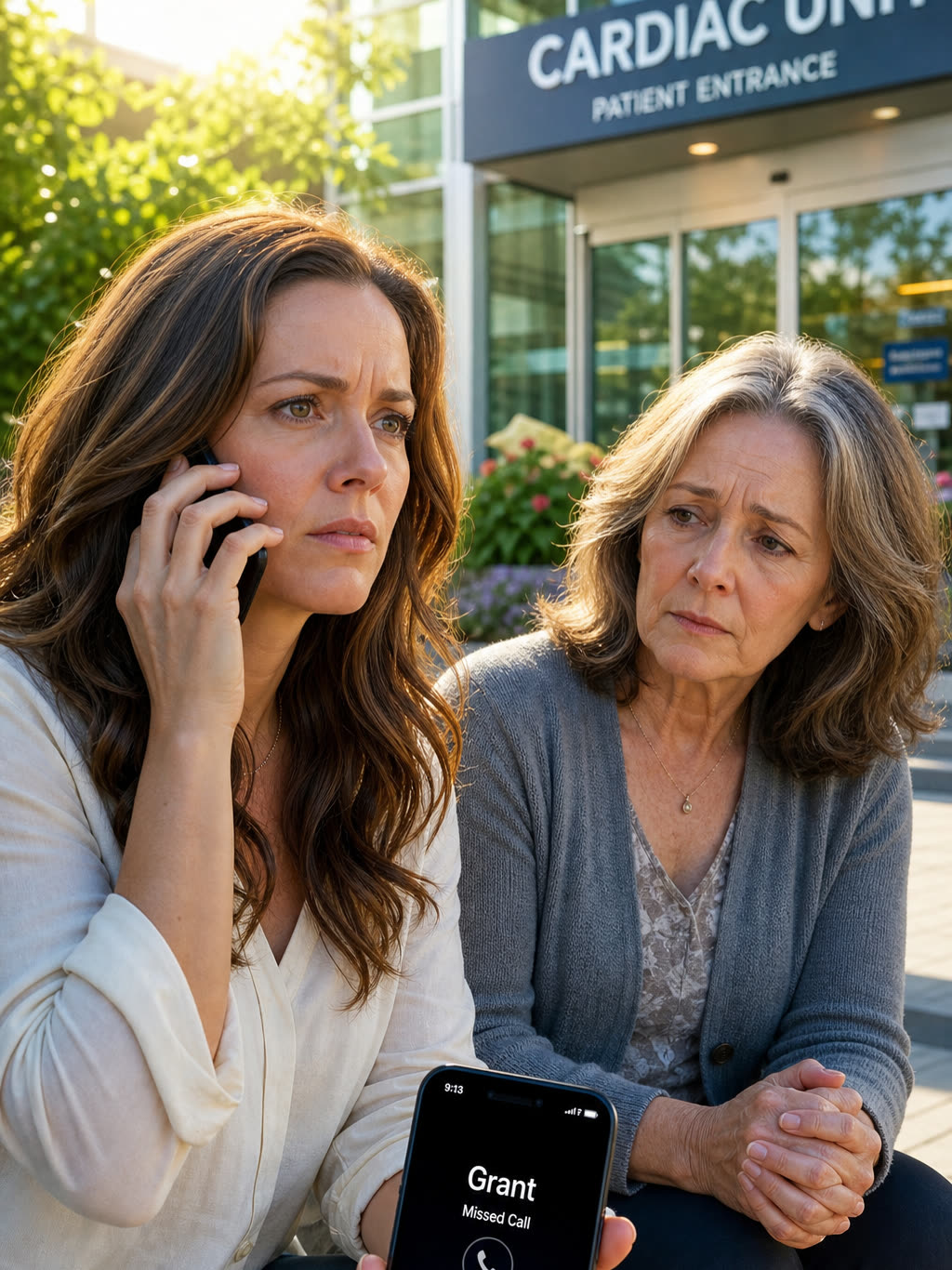
That Saturday, Mom and I sat outside the cardiac unit while Dad had his procedure. At 10:14 a.m. my phone rang. Grant. “The restaurant says Aunt Marlene requested a vegetarian meal.” “It’s in the spreadsheet.”
He called again twenty minutes later. “Which hotel did you put Uncle Raymond in?” “It’s in the spreadsheet.”
Then Judith called. “Tessa, the florist brought the wrong centerpiece arrangement.” I turned toward the hospital doors. “Judith, my father is having his heart procedure right now.”
“I know, dear, but surely you could make one quick call.” I felt myself go cold. “Ask Grant.” “He doesn’t know the florist.” “He has the number.” She let out an exaggerated sigh. “You’re being a little difficult today.” I hung up.
An hour later the heart specialist came out. Dad’s treatment had succeeded. I hugged Mom until she cried.
By the time I reached the Bellamy house that night, the celebration was over. Nothing had gone wrong. Everyone had eaten. The flowers were in place. The family had enjoyed the occasion. Grant had handled it.
Instead of asking how Dad’s surgery had gone or how frightened I had been sitting outside the treatment room, Grant pulled me aside to complain. “You embarrassed my mother today.”
I looked at him. “Excuse me?” “She was upset about how you spoke to her.” “My father was having a heart procedure.” “You didn’t have to snap.”
I was speechless for a moment. Then I asked, “If your mother had been in that hospital, would you have expected me to leave her side to fix my family’s dinner reservations?”
He looked away. “That’s different.” Those two short words snapped something inside me that I hadn’t even realized was still holding our marriage together.
From then on, I made gradual changes. When Judith needed a ride to her rheumatologist, I sent the appointment details to Grant. He never arranged a ride. Judith called me fifteen minutes before she was supposed to leave. “Tessa, where’s my car?” “Grant was arranging it.” “Well, he forgot. Can’t you do it?”
My finger hovered over the ride-hailing app. I could have solved it in thirty seconds. I had done it for years. Instead I said, “Please call Grant. He agreed to handle it.”
Twenty minutes later he arranged the ride and apologized to Judith. The appointment wasn’t missed. No disaster occurred. Even so, Grant was livid. “You deliberately made her wait to prove a point.” “No. I expected you to do what you said you would.” “It’s one stupid phone call.” “Then why is that phone call always mine?” He couldn’t answer.
A month later Judith needed cataract surgery. Grant announced that he had a business trip scheduled for the same day. “I’ll need you to take two days off,” he said. I was sorting laundry. “Have you asked your office to change your travel arrangements?”
“I can’t just rearrange everything.” “Have you looked into hiring someone to help afterward?” “Why would we pay somebody when you’re right here?”
My hands stopped moving. There was the truth, the reality we had dodged for years. My hours were considered free. His hours were precious. Judith’s needs defaulted to me.
I met his eyes. “Grant, I will help your mother when I can. But you cannot keep treating my career and my life like spare space in your calendar.”
He gave a bitter laugh. “Maybe we’d be better off divorced if we’re going to divide every little responsibility like roommates.”
Silence filled the bedroom. I asked him to say it again. He refused. He apologized the next day, but his tone gave him away. He regretted bringing up divorce. He didn’t regret leaving all the work to me.
I suggested a thirty-day experiment. “For one month, you manage your mother’s needs first. If you genuinely need help, ask me. But don’t automatically assign everything to me.” He agreed.
Unexpectedly, the first ten days went beautifully. Grant rescheduled his flight to take Judith to surgery, and I helped give her eye drops that night. He began using reminders. He booked doctor’s visits. He organized rides. He even told Judith, “If I say I’ll take care of something, I’ll take care of it.”
For the first time in years, hope returned. We went out to dinner. He reached for my hand across the table. He said he understood. Then his employer won a major contract, and his workload surged.
How quickly Grant relapsed revealed something painful. He had always been capable of doing his share. He simply preferred that I do it.
His first return to old habits came disguised as a polite request. “Tess, Mom has a follow-up appointment tomorrow, but I’ve got a meeting. Would you mind taking her?” “Did you try changing the appointment?” “Yes. I called this morning. They don’t have anything else available for three weeks.”
I checked my calendar. I had time. “Okay. I’ll take her.” He smiled. “Thank you. I really appreciate it.” That was how marriage should work. Partners supporting each other. Not one partner automatically sacrificing herself for every minor inconvenience.
Three days later Grant asked me to call Judith’s pharmacy while he drove, and I did. That Thursday evening my phone buzzed while I was in the shower. Afterward I found Grant’s message: a restaurant’s number, and below it six words. Make a reservation for Sunday. Eight people.
No hello. No request. No context. I stared at the screen, then set it aside.
When Grant came home, he asked, “Did you book the restaurant?” “No.” He froze halfway out of his coat. “Why not?” “Because you didn’t ask me.”
He chuckled. “Tessa, I texted you the number.” “You sent me an instruction. That’s different.” He looked at me as though I were being deliberately difficult. “Do we seriously have to turn everything into a negotiation now?”
“No. We just have to stop pretending my time belongs to you.” His face tightened. “You’re keeping score.” I shook my head slowly. “I’m trying to stop keeping everyone else’s life running while mine gets pushed aside.”
He tossed his jacket onto a chair. “I’ve spent the last two weeks trying to make you happy, and you’re still finding things to complain about.”
That remark explained everything. He wasn’t changing out of a belief in shared responsibility. He was changing only to end our dispute. And as soon as he felt he had done enough to satisfy me, he expected our old division of labor to resume exactly as before.
On the final evening of the trial, I waited until Judith went upstairs. Grant sat at the dining table scrolling through his phone. I put down two glasses of water. “Grant, we need to talk.” He glanced up, and my tone made him set the phone aside. “What’s wrong?” “I want a divorce.”
He sat motionless for several seconds. Then he gave a short, disbelieving laugh. “Over some stupid restaurant reservations?” “No.” “Over my mother’s doctor’s appointments?” “No.” “Then what, Tessa?”
I sat across from him. “Because when life gets difficult, you still think my needs are optional and yours aren’t.”
He started to speak, but I kept going. “You can remember your mother’s appointments. You can book her rides. You can organize family celebrations. But you only want to do those things when they’re convenient.” “That’s not true.” “Then why does my refusal to do them make you so angry?”
He lowered his eyes. I stayed quiet. This time I would not supply his answer.
Finally he said, “I thought marriage meant making sacrifices.” “So did I.” “Then why won’t you?” “Grant, I’ve been making them for years. You just stopped recognizing them as sacrifices.”
He pressed both palms on the table. “We can fix this.” I wished I could believe him. That hurt the most.
I remembered him staying awake all night to change his mother’s ice packs. He had driven Mom to the ER despite having a fever. He knew exactly how I liked my coffee. But cherishing who he had been wasn’t the same as loving our present life together.
“I’m tired,” I whispered. His eyes filled with tears. “Are you saying you don’t love me anymore?” I swallowed. “I’m saying loving you has cost me too much of myself.”
Neither of us raised our voice. Nothing was thrown. We sat quietly while our eleven-year marriage ended.
The divorce proceedings were unexpectedly civil. With our lawyers, we divided the marital property and documented our individual assets. Our lawyer made clear which assets belonged to each of us. Records showing the source of my $600,000 in separate assets, along with our settlement, protected them. Grant didn’t contest that. “I never thought that money was mine,” he told me.
I believed that. Money wasn’t his central failing. His failure was assuming that my willingness to give carried no cost.
Our separation lasted months, first under one roof, then apart. I moved into my apartment three months before the divorce was finalized. Judith still called now and then. Sometimes she needed help finding medical files. Other times she needed a ride arranged. Occasionally she just asked whether I would come home for dinner.
I tried to answer kindly, but each call made it harder to detach from the life I had chosen to leave. Her supplementary card stayed active throughout. I knew it needed canceling. I kept promising myself I would cancel it after the divorce, and I hesitated even after the decree.
Only after Judith ordered my mother to retrieve her unwanted daughter did I see that the delay wasn’t kindness. It was fear.
That night, after Dad brought me home, I reopened the bank app. Her card was still blocked. I messaged Grant one last time. I’ve disabled your mother’s additional card. Please arrange another payment method for her expenses. You can contact the bank if you need help understanding which transactions were affected.
He saw the message. He didn’t reply. The next morning brought another declined-payment alert. Judith had tried to use the card for a family memorial-luncheon deposit at a restaurant.
Thirty minutes later Grant texted. I paid the deposit myself. I replied, Thank you. Then he added: Mom says you humiliated her.
I considered his words. At last I wrote back: I didn’t humiliate her, Grant. I stopped paying.
His answer came almost instantly. She doesn’t understand why you’re doing this. I had no wish to explain myself yet again. Then explain it to her. She’s your mother.
I went back to work. In the days that followed, the Bellamys began discovering how much my unpaid labor had been holding up their lives.
Five days after the divorce decree, my office receptionist called my desk. “Tessa? There’s a woman downstairs asking for you.” I was reviewing a financial compliance report. “Does she have an appointment?” “No. She says she’s related to you.”
My stomach clenched. “What’s her name?” A silence followed. “Judith Bellamy.”
PART 3 — THE WOMAN WHO FINALLY LEARNED TO WALK AWAY
I shut my eyes. I had expected furious calls. Accusations, certainly. Possibly another demand that I reactivate the card. I had not expected a visit to my office. I told reception I would be right down.
When the elevator doors opened, Judith was standing near the lobby windows. She wore a brown wool coat and held a small leather purse. Her face had changed. She wasn’t ill, and she wasn’t afraid. She was only worn out. She straightened as I approached. “Tessa.”
“Mrs. Bellamy.” She flinched slightly, and I hadn’t anticipated that. For eleven years I had called her Mom. Hearing her formal name seemed to hurt her more than she had expected.
“Could we talk somewhere private?” she asked. I glanced at the café across the street. “We can go there.” She nodded.
We took a small table by the window. I asked for water. Judith ordered tea. Without a word, she opened her bag and laid the supplementary card between us. The card she had used for years. The one I had blocked five days earlier. “I came to return this.”
I looked at it. “You could have mailed it.” “I know.” She clasped her hands. “I needed to tell you something.” I stayed quiet. Her eyes stayed on the card. “I thought you froze it because you wanted to punish me.”
I said nothing. “After what I said to your mother, I assumed you were trying to embarrass me.” “That wasn’t why.” “I know that now.” Her voice trembled. “Grant explained it to me.”
I leaned back. Judith drew a breath. “The morning after you left, I tried to pay the deposit for the memorial luncheon. The payment was declined.” “I know.” “I thought the bank had made a mistake.”
She smiled sheepishly. “I actually asked the restaurant manager to run it twice.” I could picture it. Judith had always been proud of her financial independence, yet there she had stood at a public payment counter while a stranger explained that the card she had relied on would not work.
“Grant paid the deposit,” she went on. “Then he told me you had canceled the card permanently.” I nodded. “I had no right to expect you to keep paying my expenses,” she said quietly.
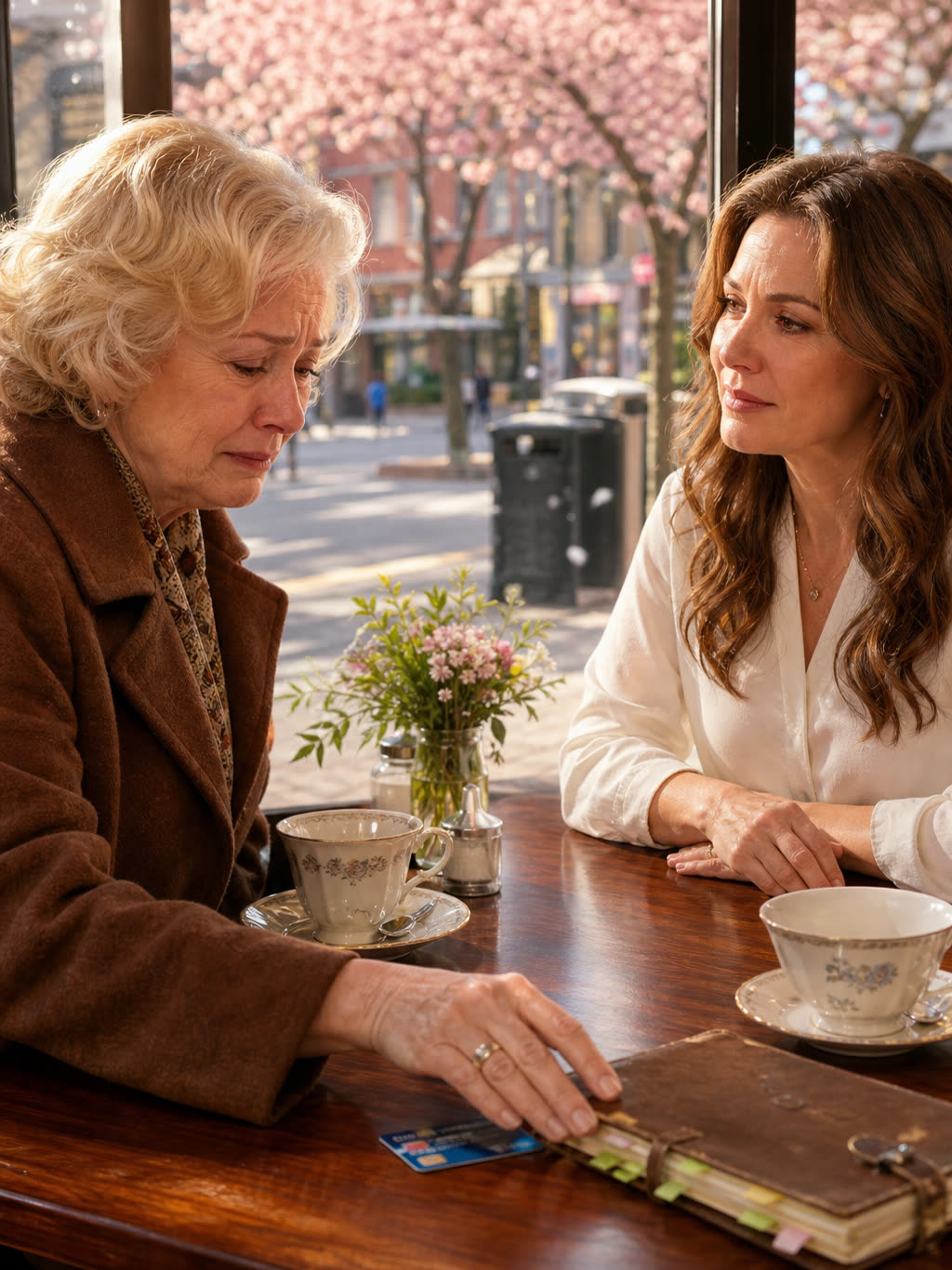
I hadn’t expected to hear that. What came next surprised me even more. “That’s not why I’m here.” She opened her purse again and took out the familiar brown notebook. The notebook I had kept. I had started it after her knee operation. My stomach clenched. “Where did you find that?” “In the medical cabinet.”
I lowered my gaze. Its corners were frayed. Colored tabs stuck out of several pages. She placed it beside the card. “After you left, I called Grant because my blood pressure prescription had changed. I couldn’t remember which instructions were current.”
I listened closely. “He opened the cabinet and found this.” She stroked the cover. “At first he was looking for one prescription. Then he started turning the pages.” Tears gathered in her eyes. “He noticed that he used to write things in it.”
I remembered his crooked writing. His untidy arrows. His jokes about his awful penmanship. “Then he realized he hadn’t written anything for years,” Judith said. I looked away.
She continued. “He went through the whole book. Every appointment. Every medication change. Every ride you scheduled. Every reminder you wrote.” Her voice cracked. “Tessa, I never realized how much was in there.”
An old ache returned. For years I had longed for recognition. Now that Judith saw, I wasn’t sure how to receive it. “There’s more,” she whispered.
“Grant was trying to organize the memorial luncheon. He couldn’t find the hotel arrangements from last year, so we opened the old family group chat.” She dropped her gaze. “Almost every message was yours.”
I remembered those messages. Uncle Raymond needs a ground-floor room. Aunt Marlene is vegetarian. The transportation company confirmed pickup at 8:30. The restaurant has the final guest count. I had written hundreds, often late at night, usually after my working day ended.
Judith wiped her cheek. “I used to tell my relatives how wonderful Grant was because he always took such good care of me.” My throat tightened. “And he let me believe it.”
She opened the journal. Grant’s handwriting filled the early pages. The later pages held only my notes. Judith traced one particular entry. “Your former husband told me something yesterday.” “What?”
“He said, ‘Mom, I used to know how to do all this. I just stopped because Tessa was always there.’” I stared at the table. She went on. “He told me he made your kindness into an excuse.”
We sat in silence. Then Judith said the unthinkable. “I did the same thing.” She looked up. “I called you a burden.”
I didn’t respond. “I called your mother and ordered her to come take you away. I acted as though your presence in my house had been some terrible inconvenience.” A tear slid down her cheek. “But the truth is, for years, you were carrying the weight of my household while I congratulated my son for being such a wonderful man.”
My eyes stung too. Judith reached out her hand, then stopped short of mine. “I am ashamed of what I said.”
I looked at the card. For years that plastic card had stood for what I mistook for love. Perhaps it began that way. Somewhere along the line, generosity had turned into expectation.
“Judith,” I said softly, “I didn’t freeze the card because I wanted you to suffer.” “I know.” “I froze it because we’re no longer family in the way we used to be. And even when we were, I should have had the right to decide what I could give.” She nodded. “You’re right.”
“I won’t reactivate it.” “I didn’t come to ask you to.” I hadn’t expected that either. She turned to a recent page. Fresh writing sat below my old entries. It was Grant’s handwriting. Still untidy. Still uneven. Yet unmistakably his.
“He’s arranging my appointments now,” she said. “And I’m learning to manage more things myself.” She smiled through tears. “Yesterday I booked my own ride to the pharmacy.” “That’s good.” “It took me fifteen minutes.” I almost smiled back. “It gets easier.”
She closed the notebook. “I don’t expect you to forgive me today.” That mattered more than any dramatic apology. “I don’t know if I can,” I admitted. Judith nodded. “I understand.”
We finished our drinks. As she stood, habit made me ask, “Do you need me to call you a car?” She met my eyes. For the first time that afternoon, she smiled genuinely. “No, Tessa. I already booked one.”
She slipped the notebook back into her purse. The card stayed on the table. “Thank you for everything you did for us,” she said. I watched her walk toward the exit. I picked up the card. It was almost weightless. Yet its meaning had weighed on me for years.
That evening Judith phoned my parents to apologize directly for her words. Mom mentioned it at dinner. “She said she had no right to call you dead weight,” Mom explained. “Did you forgive her?” Mom paused to think. “I told her an apology matters. What she does afterward matters more.”
I watched Mom. I finally understood how my parents could help without expecting repayment. Real love didn’t itemize favors. Genuine gratitude didn’t demand perpetual payment. I assumed that was my marriage’s final lesson.
Three months after the divorce, I found Grant outside an eye clinic holding Judith’s dented green thermos. For a foolish instant, emotion outran thought. He wore the navy coat I had given him four Christmases earlier. His hair had grown longer. He looked weary. But when he turned toward me, the painfully familiar expression on his face brought eleven years of shared memories rushing back before I could stop them. “Tessa?”
I had attended a compliance meeting in the neighboring medical building. I hadn’t expected to see either of them. Judith sat by the entrance with medical paperwork in her lap. She gave me a tentative smile. “Hello, Tessa.” “Hello, Judith. How are you?” “Much better. Just a routine follow-up.”
I looked at Grant. “Everything okay?” He nodded once. “Yeah. The doctor wants to check her vision again. Nothing serious.” Judith held up the folder. “Grant remembered everything this time. Even the previous scans.” Her voice carried quiet pride.
Months earlier, that would have wounded me. Now I was pleased. “I’m happy to hear that.” Judith looked between us, then stood. “I’m going to check whether they’re ready for me.”
Grant followed her with his eyes as she walked to reception. Once she was out of earshot, he faced me again. “Can we talk for a minute?” I thought about refusing. But he seemed changed. He made no demands. He showed no anger. He seemed to grasp what his loss had cost. “Sure.”
We stepped into a quiet corner of the hall. For a moment neither of us spoke. Then Grant said, “Mom told me she visited you at work.” I nodded. “She apologized.” “She meant it.” “I believe she did.”
He looked down at the thermos. “Do you remember this thing?” I almost laughed. “Of course.” The olive-green thermos had gone to Judith’s appointments for years. Grant bought it after her knee operation. It had once fallen from a hospital chair, denting its base. Judith wanted to throw it away. Grant wouldn’t let her. “It’s ugly, but it still works,” he had said.
I remembered washing it every night. Filling it with warm water each morning. Leaving it beside Judith’s bag as a reminder. Little tasks. Countless little tasks.
Grant turned the thermos in his hands. “Mom told me something after you left.” I stayed quiet. “She said there was a time when I used to fill this myself.” I nodded. “You did.” “And then you started doing it.” “Yes.” “And after a while, I stopped even noticing whether it was full.”
His voice wavered. “I guess that’s what happened to our marriage.” I looked at him. He continued. “I kept thinking you were just naturally better at taking care of things. I told myself you didn’t mind.” He swallowed. “But the truth is, I didn’t want to know whether you minded. Because knowing would have meant I had to change.”
I had spent years trying to convey that feeling. His acknowledgment brought both relief and grief. “I know,” I whispered. Grant rubbed his eyes. “I’ve been doing everything myself these last few months. Mom’s appointments, the insurance calls, the pharmacy, family gatherings.” “That’s good.” “It’s exhausting sometimes.”
I nearly smiled. “Yes, Grant. It is.” He laughed without humor. “I finally get it.” I searched his face. He seemed sincere. The change was visible. But recognizing the problem after our divorce couldn’t undo the years before it.
He took a deep breath. “Tessa, do you ever think we made a mistake?” My chest tightened. “What kind of mistake?” “Getting divorced.”
There it was. I had anticipated it. He stepped closer. “I know I can’t erase what happened. But I’ve changed. I really have.” “I can see that.” “Then maybe we could try again.”
He searched my expression. “We wouldn’t have to move back into Mom’s house. We could get our own place. Start over. Do things differently.”
For eleven years I had dreamed of hearing those words from Grant. I had wanted my work acknowledged. To watch him accept responsibility. To share a marriage where both our needs counted. Now he was offering the future I had long begged for. But not with him anymore.
“Grant,” I said gently, “I’m glad you’re taking care of your mother.” He nodded hopefully. “But you shouldn’t be doing it to prove something to me.” His expression shifted. “What do you mean?”
“She’s your mother. She needs you. You should show up for her because you love her, not because you think doing so will bring me back.” He looked away. I continued. “I spent years waiting for you to become the partner I needed. Every time you improved, I hoped it would last. Every time you slipped back, I convinced myself to be patient.”
My voice stayed steady. “I can’t spend the rest of my life evaluating whether you’re finally ready to treat me as an equal.” His eyes grew wet. “So that’s it?” I nodded. “Yes.”
He stared at the floor. Then, quietly, he asked, “Do you hate me?” The question stung unexpectedly. “No, Grant.” “Not even after everything?” I shook my head slowly. “I loved you for eleven years. I don’t need to turn all those memories into something ugly just because our marriage ended.”
A tear rolled down his face. “But I can’t go back.” He nodded slowly. For once, he didn’t argue. He didn’t call me unreasonable. He didn’t push me to change my mind. He simply said, “I understand.”
Judith came back shortly afterward. “Grant, they’re ready.” He stood a little straighter. “Okay, Mom.” He gave me one last look. “Take care of yourself, Tess.” I smiled softly. “I will.”
I watched him return to Judith. He picked up her folder. Checked that she had her glasses. Reviewed the appointment details. He opened the clinic door and let her go in first. His actions were completely ordinary. That was precisely the point. He was doing tasks that never should have seemed exceptional.
I stepped outside into February sunlight. My phone buzzed. A message from Dad. Sunday dinner at six. Your mother says she’s making your favorite. I smiled and replied. I’ll be there.
Six months later, my life had changed completely. I had earned a senior-director promotion. The boxes were finally unpacked. I chose furniture to suit my own taste instead of someone else’s. I started taking weekend getaways with friends. Some Sundays I read, strolled beside the James River, or did nothing at all.
At first, idleness unsettled me. I constantly feared I had forgotten an appointment, a phone call, or a task. Eventually that anxiety eased. I no longer managed another person’s calendar each morning. I stopped interrupting meetings to solve other adults’ problems. I stopped apologizing for personal time.
Judith sent occasional cordial holiday greetings. Grant never asked me back. My parents stayed the same. Present. Supportive. And never counting favors.
One Sunday evening, Dad and I were washing dishes after dinner when he looked at me and asked, “Are you happy, sweetheart?” I thought about the question. It deserved a real answer. “I am,” I said at last. He smiled. “Good.” He handed me another plate.
I suddenly remembered Dad arriving at the Bellamy house with eight luxury SUVs. Judith had demanded that my parents collect their burden. Grant had worried the neighbors would hear. Standing there among my luggage, I had convinced myself that the collapse of our marriage must somehow mean I had failed. But I hadn’t. I had mistaken constant sacrifice for love for far too long.
The $600,000 wasn’t my true victory. Neither were the luxury vehicles. Neither was Judith’s declined card or her eventual apology. My real victory was being able to hold on to the happy memories of our marriage without feeling compelled to return to the painful life it had become.
I could accept apologies while keeping boundaries. I could love someone and still walk away. I finally understood that having the strength to carry everyone else’s burdens had never meant I was required to keep carrying them for the rest of my life.
That night I walked into my apartment, set my keys on the kitchen counter, and looked around the room. Nobody expected me to organize tomorrow’s rides. Nobody depended on my memory for their appointments. I didn’t have to justify my place by being useful.
I had kept another family’s life running for eleven years. Once I stopped, something surprising happened. Their lives didn’t fall apart. They learned to manage on their own. And I learned to care for myself.
Disclaimer: This story is a work of fiction inspired by real-life themes. Names, characters, places and events are fictionalized, and any resemblance to real persons is purely coincidental. Images are for illustration purposes only.
