

Part 3: A Home Where She Belonged
About four months after the restaurant dinner, a handwritten letter arrived from Dad.
I recognized his handwriting immediately.
For a moment, I wondered whether he had finally understood.
Maybe he wanted to apologize to Sole.
Maybe he had reflected on the years of unequal treatment.
Maybe he had finally realized why I walked away.
I opened the envelope.
He wrote that he was sorry about the car payment situation.
He said Mom had been under stress.
He reminded me that family was family and nobody was perfect.
He suggested it was time to move forward.
I read the letter twice.
Not once did he mention what Mom had said at dinner.
Not once did he acknowledge the messages she had sent my daughter.
He didn’t mention Sole’s name.
The letter wasn’t really an apology.
It was another attempt to restore the arrangement that had benefited them.
I folded it and placed it in a folder in my desk.
I kept it for documentation.
Then I returned to my ordinary day.
I never wrote back.
People sometimes assume that cutting ties with family must leave an unbearable emptiness.
They expect grief.
Regret.
A constant desire for reconciliation.
That wasn’t my experience.
I felt sadness for the family I had wanted.
But I didn’t miss the constant tension.
I didn’t miss preparing Sole for gatherings where she would be treated differently.
I didn’t miss the guilt that followed every boundary.
I didn’t miss being expected to pay bills while my daughter was made to feel unwanted.
Most of all, I didn’t miss watching Sole become smaller whenever my parents entered the room.
Without that pressure, our lives became simpler.
Not perfect.
We still had ordinary problems.
Homework arguments.
Forgotten chores.
Busy mornings.
Sole still left her shoes where someone could trip over them.
Sometimes she forgot to put away her art supplies.
Sometimes she stayed up too late reading.
But those were normal parts of raising a teenager.
They weren’t signs that she needed to prove she deserved her home.
She already belonged.
I began to understand that protecting a child doesn’t always involve a dramatic confrontation.
Sometimes it means noticing the small ways someone is being hurt.
Sometimes it means refusing to excuse behavior simply because it comes from a relative.
And sometimes it means leaving a table where your child has been made to feel unwanted.
I thought often about the moment Sole asked whether she was a mistake.
That question stayed with me.
No child should have to wonder whether their existence is something the adults around them regret.
No child should have to earn love through perfect behavior.
And no child should be made responsible for keeping peace among adults.
For years, I had told myself that continuing to visit my parents was an act of patience.
I thought I was giving them opportunities to improve.
But I was beginning to recognize the cost.
Every additional chance I gave them required Sole to sit through another uncomfortable gathering.
Another thoughtless gift.
Another cruel question.
Another reminder that they saw her differently from the other grandchildren.
I had been patient with my parents.
But Sole had been the one paying for that patience.
That realization changed the way I thought about family.
I stopped measuring relationships by how long people had known me.
I started paying attention to how they treated the people I loved.
I stopped believing that a biological connection automatically entitled someone to unlimited access to my life.
And I stopped confusing financial generosity with an obligation to tolerate disrespect.
The money I had been paying was never the central issue.
Canceling those payments didn’t make Sole more valuable.
She had always been valuable.
It simply meant I was no longer willing to financially support people who repeatedly hurt her.
As the months passed, Sole began growing more confident.
Her artwork filled the shelves in her room.
She started showing me sketches before they were finished.
She talked more openly about school.
Sometimes she invited friends over and laughed so loudly from her bedroom that I could hear her from the kitchen.
I loved that sound.
It reminded me of the little girl I had first gotten to know during those eleven months before the adoption.
The girl who loved mystery books and animal movies.
The girl who was frightened of thunderstorms but laughed with her whole face.
The girl who had slowly learned to trust that I would be there when she needed me.
One evening, I found her sitting on the living room floor, sorting through old photographs.
She had discovered pictures from the first year we lived together.
There was one of her standing beside our Christmas tree.
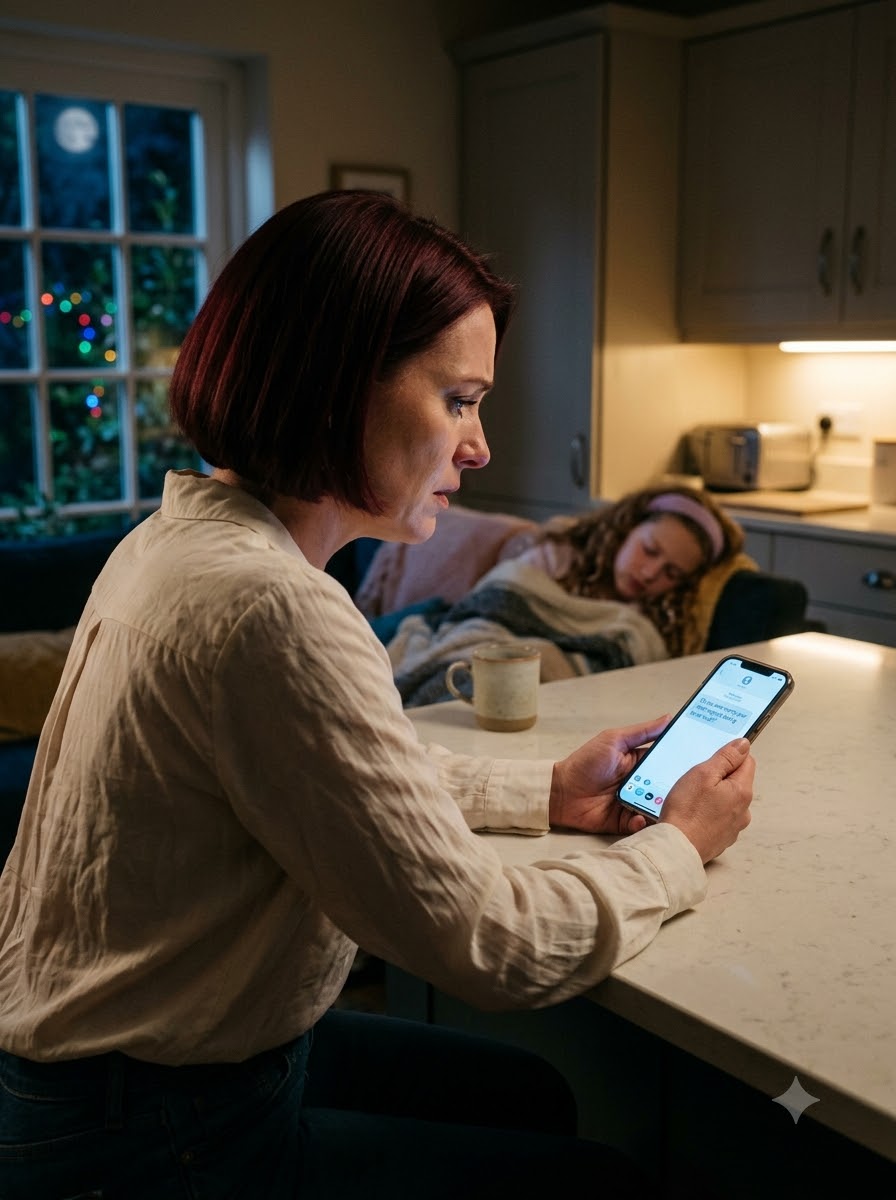
Another showed her holding the stuffed rabbit with the missing eye.
She looked up when I entered.
“Do you remember this?”
She held up a photograph from the day her adoption became official.
I sat beside her.
“Of course.”
She studied the picture.
“You look really happy.”
“I was.”
She smiled.
“Me too.”
We sat together, looking through the photographs.
After a while, she asked a question I hadn’t expected.
“Did you ever wish you had a different daughter?”
I turned toward her.
“No.”
She looked down at the picture.
“Not even when things got hard?”
“Not even then.”
She was quiet.
I reached for her hand.
“Sole, adopting you wasn’t something I settled for. It was something I chose. And I would make that same choice again.”
She leaned against me.
For a moment, I remembered the child who had asked whether Grandpa knew her name.
Then I looked at the teenager beside me.
She had grown so much.
And despite everything, she was still learning that she didn’t have to prove her worth.
I wished I could erase every cruel word she had heard.
I couldn’t.
But I could make sure those words never became the truth she believed about herself.
Sole is fourteen now.
She still makes hot chocolate she doesn’t always finish.
She still reads past bedtime with a flashlight she thinks I don’t know about.
And she still laughs with her whole face whenever something is genuinely funny.
She is creative.
Thoughtful.
Funny.
Sometimes stubborn.
Sometimes messy.
Completely herself.
And she is not a mistake.
She never was.
She is the reason I finally learned the difference between love and tolerance.
For years, I believed keeping a family together was worth almost any sacrifice.
I no longer believe that.
Some relationships come with conditions that should never have existed.
Some people offer a seat at their table only if you accept being treated as less valuable.
And sometimes the healthiest decision is to stand up and leave.
I don’t regret walking out of that restaurant.
I regret how long it took me to recognize that we deserved better.
I remember the cold air outside.
The silence in the car.
The way Sole’s fingers slowly relaxed when I held her hand.
And the moment she finally allowed herself to cry.
That night changed our lives.
Not because I canceled a few payments.
Not because my parents lost access to my money.
But because my daughter saw that I would choose her safety and dignity over anyone else’s comfort.
She saw that she didn’t have to sit quietly while someone questioned her worth.
She saw that being family didn’t give anyone permission to hurt her.
And she learned that she would never have to earn her place beside me.
Our home is quieter now.
There are fewer family gatherings.
Fewer holiday obligations.
Fewer phone calls filled with guilt.
But there is more laughter.
More peace.
More room for Sole to be exactly who she is.
Sometimes I watch her sitting at the kitchen table, drawing while music plays softly in the background.
She hums along without realizing it.
Her books are scattered around her.
Her shoes are probably in the hallway.
And every now and then, she looks up and smiles at me.
In those moments, I know I made the right decision.
My daughter doesn’t need a perfect family.
She needs a home where she feels loved.
A home where she doesn’t have to become smaller to make someone else comfortable.
A home where her place is never questioned.
That is what I intend to give her.
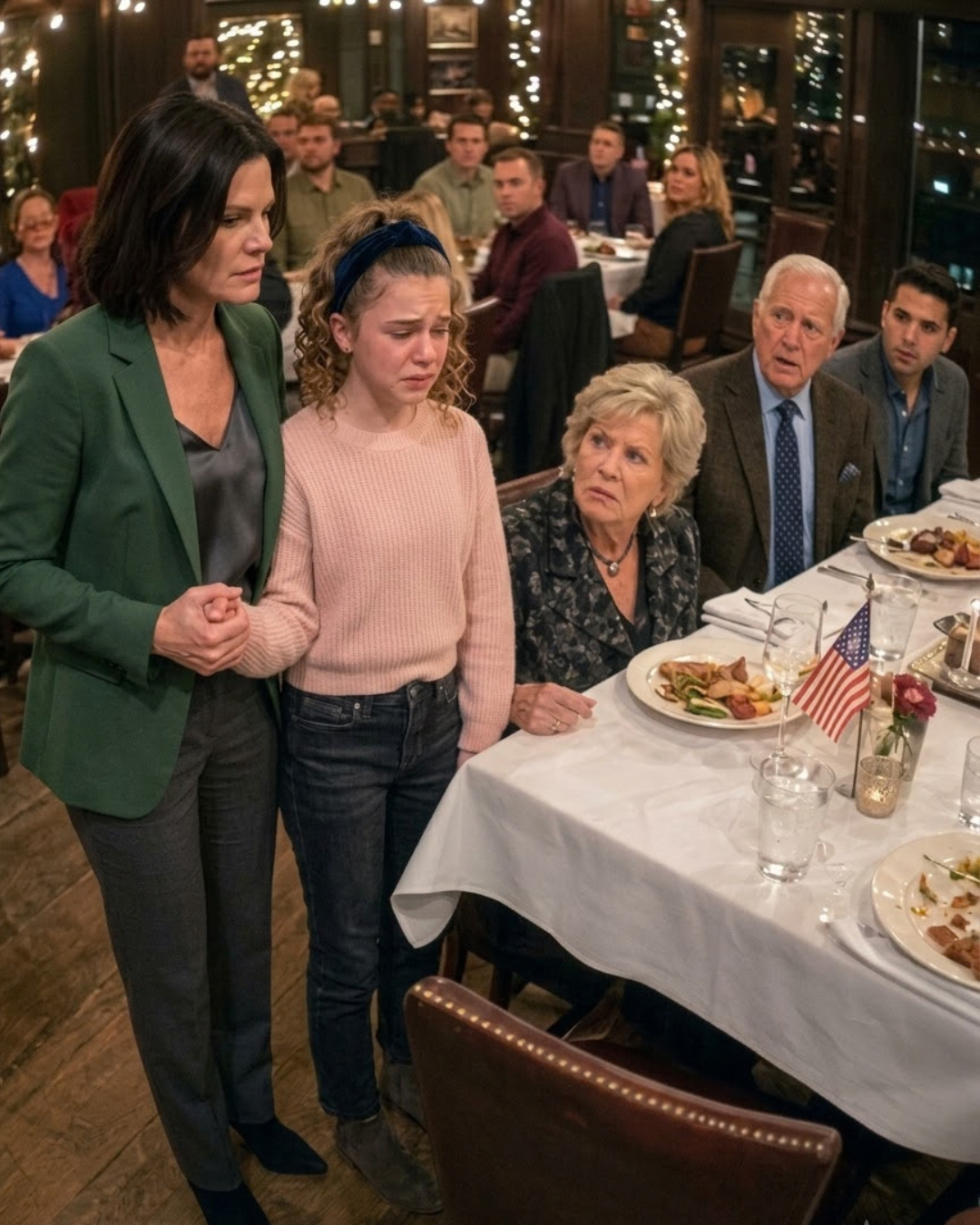
My mother once told Sole that they didn’t sit with mistakes.
She was wrong.
Because my daughter was never the mistake.
The mistake was believing that people who repeatedly hurt her deserved unlimited chances to do it again.
And the best thing I ever did was finally stop giving them those chances.
I took my daughter’s hand.
I walked away.
And I have never regretted the direction we chose.
The End.
