

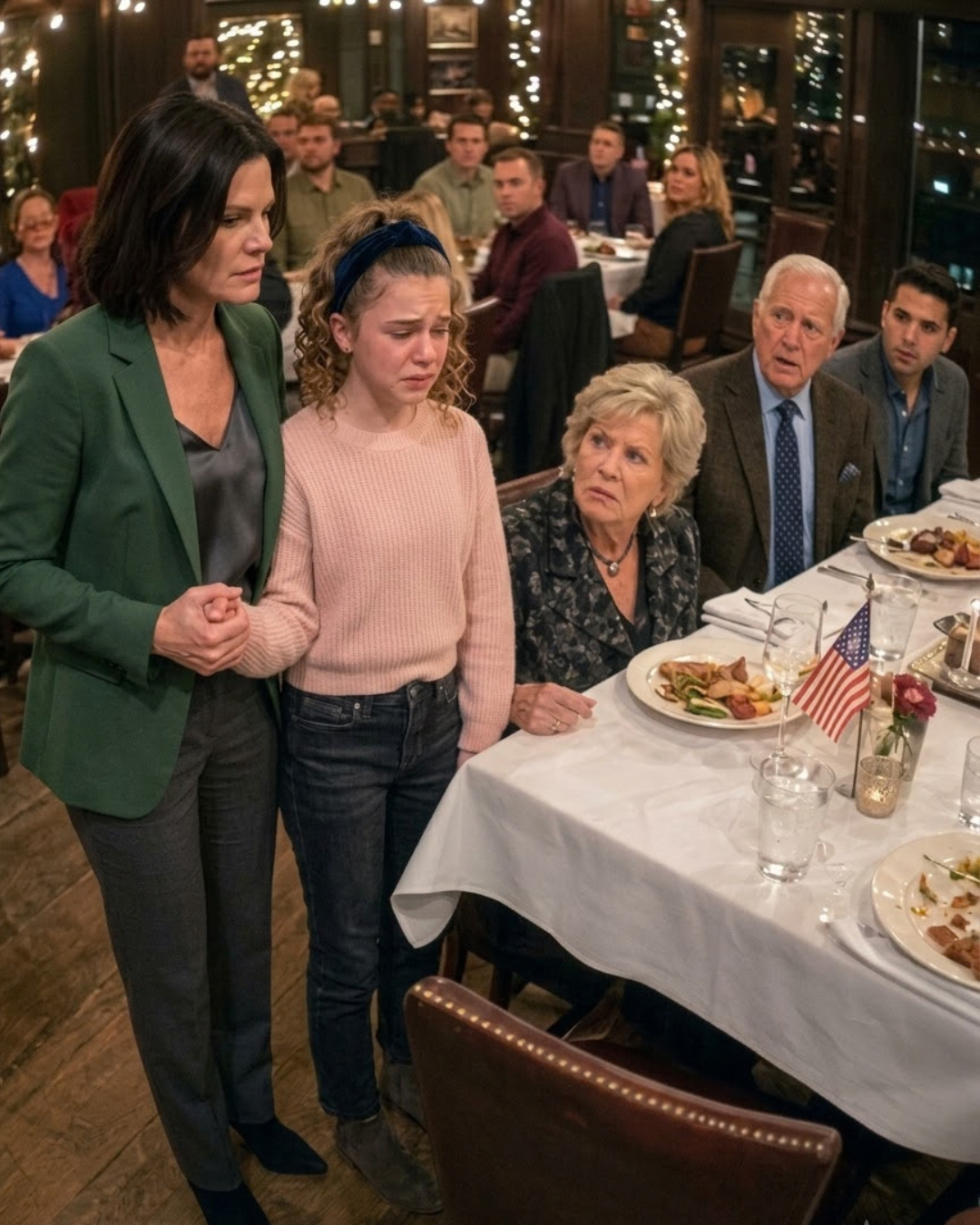
Part 2: The Messages That Changed Everything
When we got home, I made Sole hot chocolate.
She barely touched it.
I settled her on the couch beneath two blankets and put on a movie she had watched countless times.
Then I sat beside her.
I didn’t trust myself to speak about what had happened yet.
I was angry in a way I had never experienced before.
Not shouting.
Not shaking.
Just certain.
The kind of anger that settles into you quietly and changes the direction of your life.
At 10:14 that night, my father sent a text.
“You’re still making the car payment tomorrow, right?”
I stared at the screen.
He hadn’t asked whether Sole was okay.
He hadn’t apologized for what Mom said.
He hadn’t even acknowledged that his granddaughter had left the restaurant in tears.
He wanted to know about his car payment.
For three years, I had helped support my family financially.
I paid my parents’ car loan.
I covered part of their utility bills.
I paid Chris’s phone bill.
I also helped with the pharmacy expenses Mom described as temporary, even though those payments had continued month after month.
After my divorce, I was more financially stable than they were.
I had enough to help.
And I had been raised to believe that taking care of family was simply what decent people did.
But that night, I finally understood something.
To me, the money had been an expression of love.
To them, it had become an expectation.
I opened my banking app.
I canceled the car payment.
I removed the utility transfers.
I stopped the automatic payment for Chris’s phone.
I closed the pharmacy payment arrangement.
Then I reviewed every linked account, saved card, and recurring transfer.
I changed passwords.
I revoked access wherever necessary.
I updated my security questions using answers none of them would know.
It struck me how little they understood about my life.
They knew when their bills were due.
They knew which expenses I covered.
But they couldn’t have told anyone Sole’s favorite cereal.
They didn’t know the small details that mattered to her.
They didn’t even seem interested.
By midnight, I had blocked Mom.
At 12:07, I blocked Dad.
At 12:11, I blocked Chris.
Then I sat alone at the kitchen table.
I remembered something Sole had mentioned casually a few weeks earlier.
Grandma had been sending her messages.
At the time, she hadn’t seemed upset.
I had assumed they were ordinary conversations.
Now I wondered.
Sole had previously allowed me to check her phone when necessary, so I opened the messages from Mom.
There were three that immediately caught my attention.
“Do kids at school ever make you feel different?”
“Do you ever worry your mom regrets taking on so much?”
“Do you ever wonder where you really belong?”
I read them again.
And again.
Each question had been written as though Grandma were simply concerned about Sole’s feelings.
But together, they told a different story.
Mom had been encouraging my daughter to question her place in our family.
She had been planting doubts about whether I truly wanted her.
Whether I regretted adopting her.
Whether she belonged with me at all.
I sat in the blue glow of the phone, remembering Sole as a seven-year-old arriving at my door with one bag and a stuffed rabbit missing an eye.
I remembered her at nine, asking whether Grandpa knew her name.
I remembered how carefully she had sat at the restaurant, trying to be perfect.
For six years, she had been working to earn acceptance from people who had already decided not to give it.
And while she was doing that, Mom had been privately encouraging her to doubt the one relationship that should have made her feel secure.
I felt sick.
I took screenshots of the messages.
I forwarded copies to my email.
Then I saved everything.
By morning, I had twenty-nine missed calls.
Dad left voicemails demanding an explanation.
Mom cried about betrayal and ingratitude.
Chris accused me of destroying the family over one comment.
One comment.
That was how he described what had happened.
I stood at the kitchen counter and listened to every voicemail.
Not because I was reconsidering.
I wanted to hear, clearly and without excuses, what each person believed the problem was.
Nobody asked about Sole.
Nobody apologized.
Nobody said my daughter’s name.
Every message focused on the inconvenience my decision had caused them.

I deleted the voicemails after preserving what I needed.
Then Sole’s phone lit up beside me.
Another message from Mom.
I read the first line.
And something inside me settled.
For years, I had explained.
I had forgiven.
I had warned them.
I had tried to make them understand.
Now I was finished.
I called a family attorney.
Not because I wanted a dramatic confrontation or immediate court action.
Sole was safe, and I wasn’t afraid of my parents physically.
But I had financially supported them for years.
I wanted to know whether any of those arrangements created legal obligations.
The attorney reviewed the situation.
She explained that the payments had been voluntary.
There were no contracts requiring me to continue.
I had no legal duty to pay their car loan, utilities, phone bill, or pharmacy expenses.
The money was mine.
The choice was mine.
“You’re free,” she said.
I hadn’t expected those two words to affect me so deeply.
But they did.
For years, I had felt responsible for keeping everyone comfortable.
Now, for the first time, I understood that I could stop.
Two weeks passed.
Dad tried reaching me through a cousin.
He wanted me to reconsider.
He said I was being unreasonable and damaging the family.
I sent one response through the cousin.
“I am not available for this conversation.”
Mom contacted a woman from my church who knew us both.
She hoped the woman would convince me to reconcile.
Instead, the woman called to ask whether I was okay.
I told her what happened at dinner.
Then I explained the messages I had found on Sole’s phone.
She listened without interrupting.
Finally, she said, “I had no idea. I’m sorry, Marlo.”
Her words meant more than she probably realized.
She didn’t tell me to forgive.
She didn’t ask me to consider Mom’s feelings.
She simply acknowledged what had happened.
Chris tried one final time.
His message came from an unfamiliar number.
“You think you’re better than us. You always have. Enjoy your perfect little life.”
I read it once.
Then I put down the phone.
I didn’t answer.
Some messages aren’t attempts at conversation.
They’re attempts to provoke a reaction.
And I had nothing left to give him.
The hardest part wasn’t cutting off my family.
It was helping Sole recover from what they had done.
She wasn’t angry with me.
If anything, she seemed relieved.
But sometimes, while we ate dinner or worked on homework, she would suddenly become quiet.
I recognized that cautious expression.
It was the look she used to wear around my parents.
One evening, she asked, “Are you sad about it?”
I considered my answer.
“I’m sad about what I thought they could be,” I told her. “I’m not sad about what I did.”
She nodded slowly.
“Me neither,” she said.
That was when I understood something painful.
Sole had known how they felt about her for a long time.
She had simply been waiting to see whether I would finally protect her.
I thought about all the holidays she attended.
All the thank-you notes she wrote.
All the times she sat quietly, hoping that if she behaved perfectly, they would eventually accept her.
She had been trying to earn love from people who should have offered it freely.
And I had allowed those situations to continue because I wanted to believe my parents could change.
I wished I had acted sooner.
But I couldn’t change the past.
I could only make sure it didn’t happen again.
Over the following months, I began making changes.
I repainted Sole’s bedroom.
She chose the color herself.
We installed shelves for her books and a lamp that filled the room with a soft golden glow.
We visited a museum she had been asking to see for two years.
We drove three hours to attend a concert by a band she loved.
On the way home, we sang with the windows down.
I enrolled her in an art class.
Six weeks later, her teacher pulled me aside.
“She has something real. I want you to know that.”
I smiled.
I had always known Sole was talented.
But hearing someone else recognize her abilities made me proud.
Slowly, the tension in our home began to disappear.
Sole laughed more often.
She left her shoes in the middle of the floor again.
She sang off-key.
She fell asleep on the couch with a book resting across her face.
She stopped trying to make herself invisible.
And I realized how much energy we had both spent preparing for the next hurtful remark.
For the first time in years, our home felt peaceful.
