

PART 1: THE DAUGHTER THEY CALLED A FRAUD
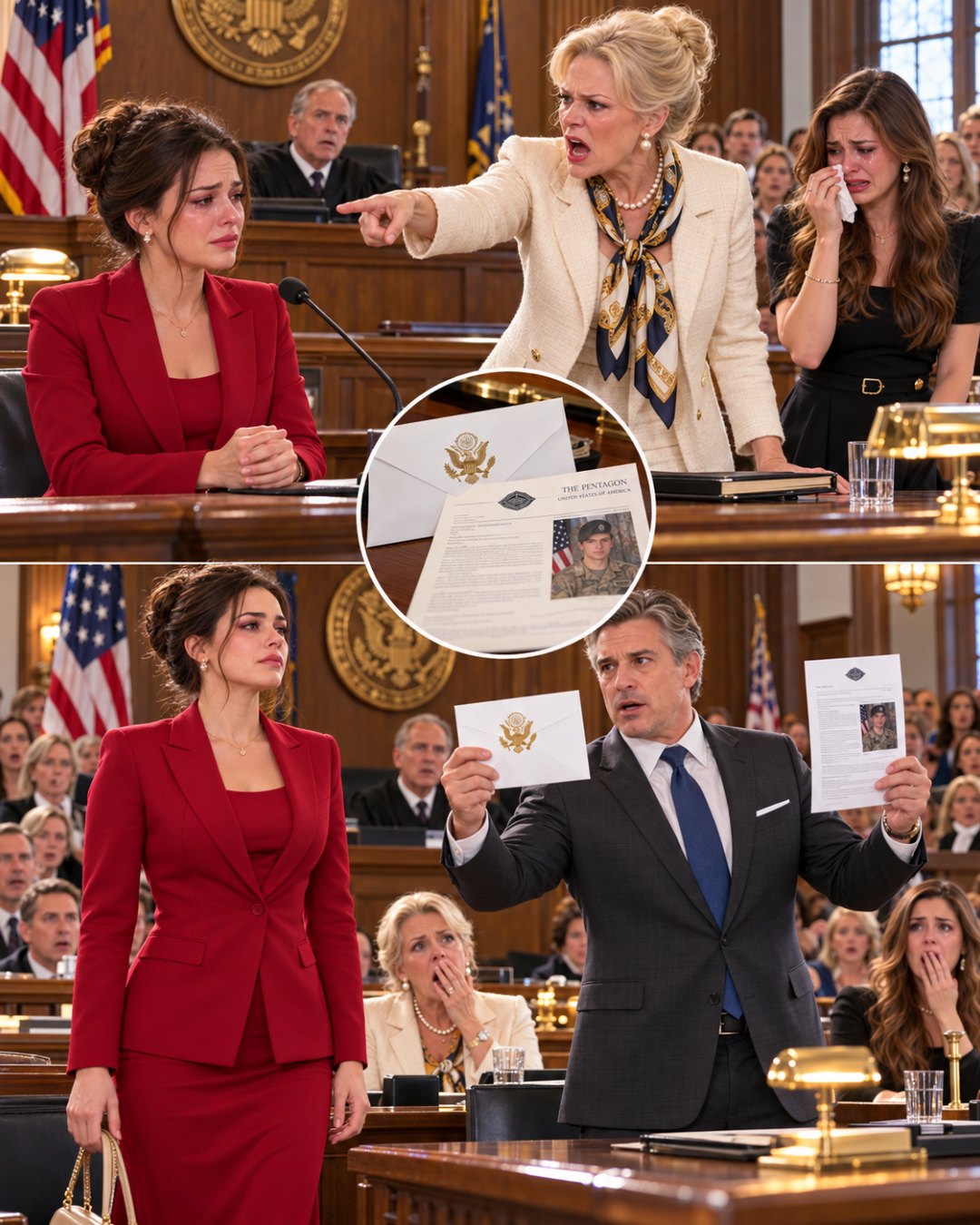
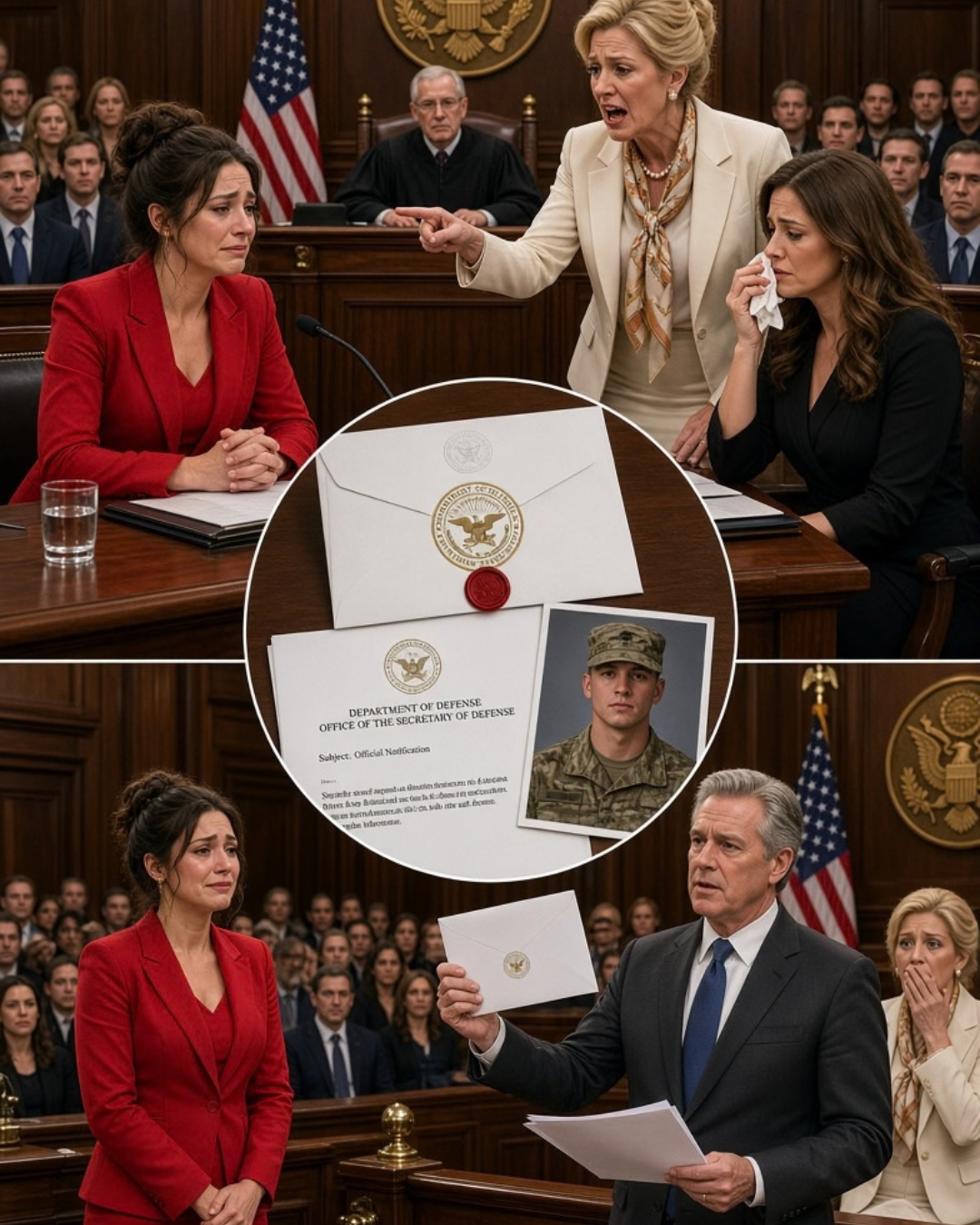
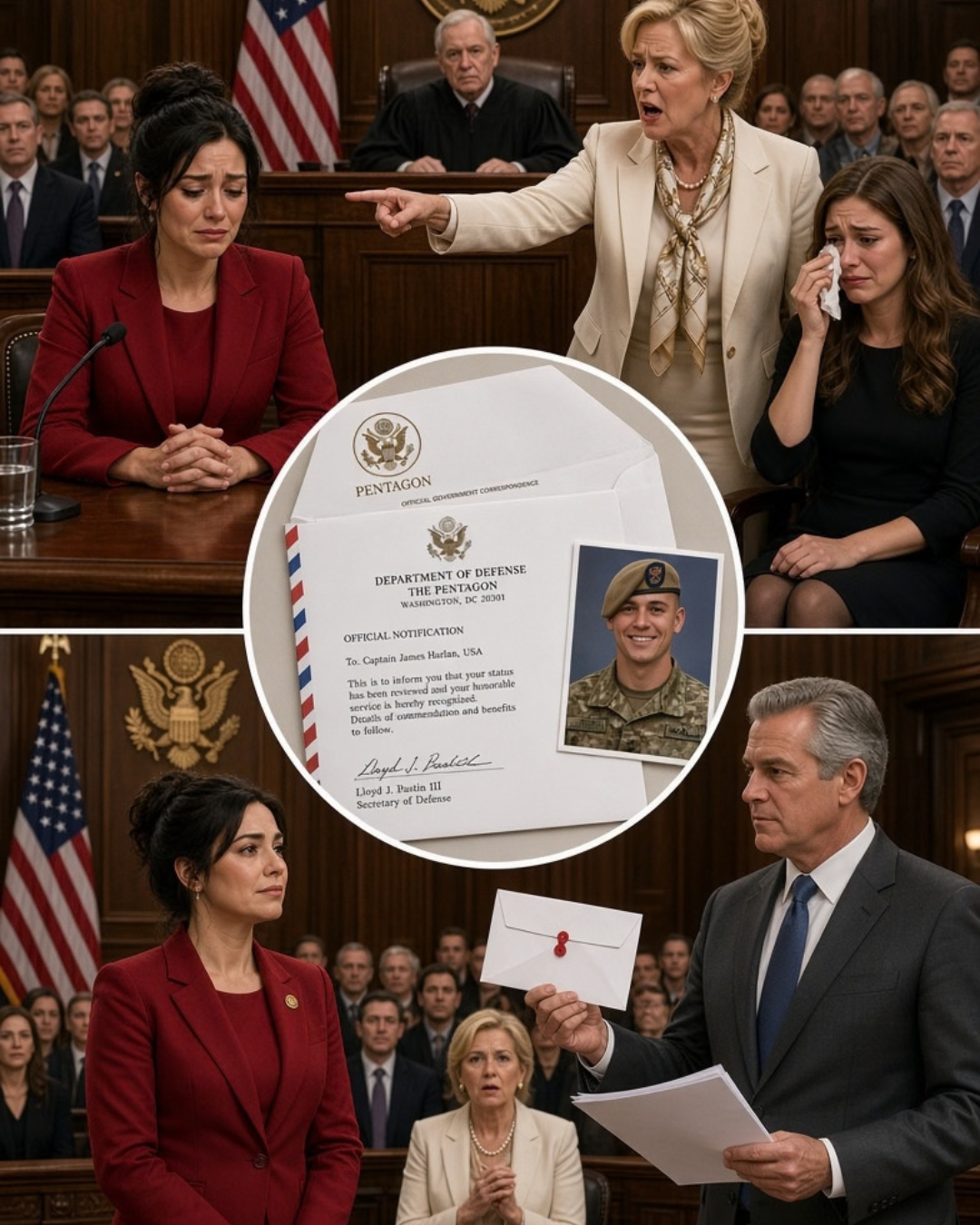
My mother stood in the middle aisle of the county courthouse, pointed one perfectly manicured finger at me, and told nine jurors that I had spent eighteen years pretending to be someone I wasn’t.
“She didn’t serve a single day!” she shouted. “Not one! She’s nothing but a miserable fraud!”
Every head in the jury box turned toward me.
I recognized every single face.
Mr. Hensley, who used to manage the Little League snack stand. Mrs. Pike, my childhood Sunday school teacher. A retired bus driver named Walter Briggs, who still wore his VFW cap and had once told my father he hoped both his daughters would make something of themselves.
Now none of them could look at me without suspicion.
My mother had spent six weeks making sure of that.
The courtroom smelled of polished floors, aging paper, and bitter vending-machine coffee. Sunlight fell through the tall windows in pale rectangles, illuminating the dust drifting above the wooden benches.
Somewhere outside, a delivery truck was reversing.
Beep.
Beep.
Beep.
The sound reminded me of alarms I had heard in places I was not permitted to discuss.
I sat on the witness stand with my hands folded in my lap.
At thirty-six years old, after eighteen years in the United States Navy, I knew how to remain motionless under pressure.
I had spent nights studying satellite feeds until the numbers blurred. I had listened to senior officers debate decisions that would never appear in newspapers. I had worked inside secured facilities where an ordinary conversation could become a national security violation if the wrong person overheard it.
I knew how to keep my breathing steady when every instinct told me something terrible was coming.
But nothing in my training had prepared me to sit twelve feet away from my own mother while she tried to destroy my life.
Corinne Voss looked magnificent that morning.
Cream-colored blazer. Pearl earrings. Silk scarf. Perfectly curled gray-blonde hair.
She had chosen the same outfit she wore to charity luncheons and church fundraisers, the one that made strangers describe her as elegant before discovering what she was capable of saying.
Her expression was a carefully arranged combination of grief and indignation.
She looked like a woman defending her dead husband’s honor.
She was actually trying to take away everything he had left me.
My younger sister, Liora, sat behind her in a black dress, clutching a tissue box.
Her eyes were red.
I couldn’t tell whether she had been crying or had simply rubbed them enough to create the effect.
Every few seconds, she glanced toward the jury.
Then toward our mother.
Then toward me.
Her knee bounced beneath the bench.
She wasn’t comfortable, but she wasn’t stopping anything either.
At the plaintiff’s table, my mother’s attorney, Miles Arvett, adjusted his expensive tie.
He was the highest-priced civil attorney in our county, and he carried that distinction like a second briefcase.
For three hours, he had walked the jury through what he called the extraordinary absence of my adult existence.
No civilian employment history.
No corporate payroll records.
No publicly available income-tax returns.
No conventional residential trail connecting me to a single workplace for ten consecutive years.
He had hired a private investigator, and the investigator had assembled a folder thin enough to wave dramatically in the air.
Arvett had done exactly that.
“A legitimate eighteen-year career leaves evidence,” he told the jury. “Paychecks. Employers. Addresses. Tax records. Something.”
He dropped the folder onto his table.
“This woman left nothing.”
I heard a quiet murmur from the gallery.
My mother lowered her head as though the revelation physically wounded her.
Then she looked up.
“She abandoned us when she turned eighteen,” she said. “She disappeared. She couldn’t even be bothered to come home when her father needed her.”
My throat tightened.
That was the lie I had been dreading.
Not the accusation that I had never worked.
Not the insinuation that I had invented my service.
I could survive those.
I had documents that could establish the truth.
But hearing my mother tell an entire courtroom that I had abandoned Dad felt like being struck in a place no protective equipment could cover.
My father, Everett Voss, had been dead for fifty-three days.
I still had his last voicemail saved on my phone.
I had not been able to listen to it since the funeral.
And now the woman who had stood beside his hospital bed was using his memory as a weapon.
“She came back for the money,” my mother continued. “That’s the only reason she’s here.”
I watched my sister lower her gaze.
She did not object.
She did not tell the jury about the night she had called me at two in the morning because Dad’s breathing sounded wrong.
She did not mention that I had stayed on the phone with her while she waited for the ambulance.
She did not mention the hospital visits.
Or the leave requests.
Or the long calls with Dad that continued even after his voice had grown too weak for complete sentences.
Instead, she pressed a tissue against her cheek.
And I understood something painful.
My sister was willing to let the town believe I had abandoned our father if it meant she could inherit his money.
The money was substantial.
Not the kind of fortune that made magazine covers, but more than anyone in our town would have expected from a quiet man who wore the same brown jacket for fifteen years.
Dad owned the house where we grew up. He had retirement savings, investments, and a portfolio he had built patiently over two decades.
My mother had never paid much attention to those accounts.
She had always been more interested in what money could buy than in how it was earned.
But my father had been careful.
Especially during the last years of his illness.
He had transferred his separate assets into a trust and appointed an independent trustee to administer them after his death.
The trust named his two daughters as beneficiaries.
There was one important condition.
To receive an inheritance, each daughter had to demonstrate at least ten years of lawful, continuous employment.
If we both qualified, the estate would be divided equally.
If only one qualified, the other daughter would not receive an automatic share. The qualifying daughter would receive the distributable estate.
Dad had insisted on that provision.
I knew why.
Liora had never held a conventional job for longer than a season.
She had been a consultant, a stylist, a creative director, and briefly the manager of a small boutique.
For most of her adult life, she had lived with our parents or relied on their financial support.
She talked about launching businesses.
She purchased expensive planners.
She attended networking events.
She had beautiful websites for projects that never seemed to produce actual work.
Whenever Dad asked how things were going, she answered with words like development, branding, and transition.
Our mother considered this ambition.
Dad considered it avoidance.
But he loved her.
He loved us both.
And his trust was supposed to ensure that neither of us inherited a lifetime of financial security without first demonstrating that we could support ourselves.
For me, the employment requirement should have been straightforward.
Eighteen years.
One employer.
The United States Navy.
Unfortunately, most of my assignments could not be described in an ordinary employment verification.
Some of my duty history was restricted. Some associated assignments were classified. My civilian records offered very little information about where I had lived or worked.
The Navy could verify my service.
But my mother had built her case around the fact that her investigator couldn’t find it in civilian databases.
She had discovered the difference between an invisible public record and a nonexistent career.
And she had turned that difference into a public execution.
My attorney, Captain Rowan Vale, sat at the defense table.
He was a retired Navy JAG officer who had moved into private practice.
Silver hair at the temples. Plain charcoal suit. A watch with a scratched metal band.
He had the unhurried posture of a man who had spent decades learning that the loudest person in the room was rarely the most dangerous.
Before the hearing, he had given me one instruction.
“Whatever your mother says, don’t react until I tell you.”
I had nodded.
Then he had placed his briefcase beside his chair.
I had noticed something white inside it.
A large envelope.
Heavy paper.
Official markings.
The kind of envelope that never arrived with ordinary mail.
I knew what it contained.
More importantly, I knew what it did not contain.
There were details about my career that could never be displayed in a public courtroom.
But there was enough information inside that envelope to end the central lie.
I had personally authorized its release.
The paperwork had taken weeks.
Captain Vale had warned me that once we introduced the verification, certain facts about my life would become public.
My service dates.
My status.
My branch.
My lawful employment.
I had agreed.
I had spent most of my adulthood protecting information.
Now I needed to protect my father’s final wishes.
Across the courtroom, Arvett raised the investigator’s folder again.
“Your Honor, the plaintiff’s position is simple. The defendant cannot establish qualifying employment. Her claim to the trust therefore fails.”
He turned to the jury.
“And if her employment claim fails, the trust’s remaining eligible beneficiary is her sister, Liora Voss.”
He gestured toward Liora, who immediately lowered her head.
My mother dabbed her eyes.
Then Arvett asked me one final question.
“Can you identify a single civilian employer who paid you during the last eighteen years?”
I looked directly at him.
“No.”
A ripple moved through the room.
He smiled.
“No civilian employer whatsoever?”
“No.”
“And you’re asking this jury to believe you were employed continuously anyway?”
“Yes.”
He spread his arms.
“By whom?”
I looked at Captain Vale.
He gave the smallest possible nod.
“The United States Navy.”
My mother laughed.
It was a short, sharp sound.
The laughter hurt more than her shouting.
“Oh, please,” she said. “She’s been telling that story since she was eighteen.”
The judge struck his gavel.
“Mrs. Voss. You will remain silent unless questioned.”
My mother pressed her lips together.
But she was smiling.
She thought she had won.
Arvett turned back toward me.
“And yet, Lieutenant Commander Voss—if that is even your rank—you have not produced a single public record establishing this supposed military career.”
I felt my fingers tighten against one another.
Captain Vale stood.
“Objection. Counsel is conflating the absence of a public civilian record with the absence of military service.”
Arvett waved a dismissive hand.
“Then perhaps the defense would finally like to provide proof.”
Captain Vale looked at the judge.
“Your Honor, we would.”
He reached down.
Opened his briefcase.
And withdrew the white envelope.
My mother’s smile faltered.
Just slightly.
Captain Vale placed the envelope on the table in front of him.
Then he looked directly at Arvett.
“Counsel,” he said quietly, “you should have been much more careful about what you asked for.”
PART 2: THE EIGHTEEN YEARS MY MOTHER ERASED
The first time I saw the envelope, I was sitting across from Captain Vale in his office, staring at a document that seemed absurdly ordinary compared with everything it represented.
My entire adult life had been reduced to a few paragraphs.
A name.
A service number.
A period of continuous active-duty employment.
An authorized signature.
And a statement explaining why the details of my assignments could not be released.
Eighteen years of my life, condensed into something that could fit inside a white envelope.
Captain Vale had placed it between us.
“This is sufficient to verify your service,” he told me. “But I need you to understand something. Once we submit the unclassified certification, your mother will know that the Navy has officially confirmed your employment.”
I almost laughed.
“She already knows I joined.”
“Knowing you joined and admitting you served are apparently two different things.”
He was right.
That was the cruelest part of the entire case.
My mother had watched me leave home at eighteen.
She had seen the recruiting paperwork on our kitchen table.
She had watched me pack the same blue duffel bag I carried to the recruiting station.
She had even taken a photograph of me standing beside Dad on the morning I left.
But within a year, she had begun telling people that my military career was a phase.
Within five years, she was describing it as a story I told to avoid answering questions about my life.
By the time Dad died, she had convinced herself that the absence of information meant the absence of a career.
Or perhaps she had simply convinced herself that enough other people would believe it.
I was no longer sure which possibility frightened me more.
When I left home, Dad had driven me to the recruiting station.
Mom hadn’t come.
She said she couldn’t bear another one of my dramatic decisions.
Liora was sixteen then.
She stood in our front doorway wearing pink pajama pants and holding a bowl of cereal.
“Send me something cool,” she said.
I promised I would.
Dad drove without speaking for the first twenty minutes.
The highway stretched ahead of us beneath a gray morning sky.
Finally, he cleared his throat.
“You know you can still change your mind.”
I turned toward him.
“Do you want me to?”
“No.”
His answer came so quickly that I smiled.
He kept his eyes on the road.
“I just want to make sure you’re leaving because you want this life. Not because you’re trying to get away from your mother.”
I looked down at my hands.
The truth was complicated.
I wanted the Navy.
I wanted structure.
I wanted work that meant something.
I wanted to discover what I could become when nobody in my family was constantly comparing me with someone else.
But I also wanted distance.
At home, my mother had decided that Liora was the daughter who needed protection.
I was the daughter who could handle everything.
If Liora failed an exam, Mom called the teacher.
If Liora forgot an appointment, someone else was expected to rearrange their schedule.
If Liora cried, the entire household stopped moving.
If I cried, my mother told me to stop being difficult.
I had learned early that competence was not always rewarded.
Sometimes it simply meant people expected more from you.
Dad understood that.
He also understood why I needed to leave.
“I want this life,” I told him.
He nodded.
“Then make it yours.”
At the recruiting station, he hugged me so tightly that I could feel his heartbeat through his jacket.
“Call when they let you,” he whispered.
I did.
For eighteen years, I called whenever I could.
Not always regularly.
Not always from a place where I could tell him the local time.
Sometimes I disappeared for weeks because communications were restricted.
Sometimes a holiday passed without a phone call.
Sometimes I had to tell him that I couldn’t explain where I had been.
Dad never demanded more than I was permitted to say.
He learned to ask different questions.
“Are you eating enough?”
“Are you sleeping?”
“Do you have people you trust?”
“Do you need anything?”
When I told him I was studying satellite imagery, he didn’t ask what I was looking at.
He asked whether I needed new glasses.
When I told him I had been working overnight shifts, he mailed me an enormous bag of coffee beans and a handwritten note.
Don’t become one of those people who thinks exhaustion is a personality.
I kept that note for years.
My mother handled things differently.
She wanted photographs.
Locations.
Stories she could repeat at dinner parties.
She wanted to know who I worked for and whether I had met anyone important.
When I couldn’t answer, she treated it as an insult.
“You always have a secret,” she would say.
“Mom, there are things I can’t discuss.”
“Convenient.”
That word followed me through adulthood.
Convenient.
When I missed Thanksgiving because of duty, it was convenient.
When I couldn’t tell her where I had spent the previous three months, it was convenient.
When I declined to describe an assignment in front of her friends, it was convenient.
Eventually, I stopped trying to convince her.
I learned that there was no way to satisfy someone who considered boundaries a personal attack.
Dad never asked me to try harder.
He simply answered the phone when I called.
And when he became ill, I found ways to be there.
Not every day.
Not every appointment.
I was still serving.
But I visited during approved leave, took calls from doctors when Dad authorized them, and arranged my schedule around the worst periods whenever possible.
The first time I saw him after his diagnosis, he looked smaller.
He was sitting in the living room beneath the yellow lamp he had repaired three times rather than replace.
A blanket covered his knees.
My mother had gone grocery shopping.
Liora was upstairs.
Dad saw me standing in the doorway and smiled.
“There she is.”
I crossed the room so quickly that I nearly knocked over the side table.
When I hugged him, I could feel the sharpness of his shoulder blades.
I hated it.
I hated that illness had changed his body while I had been away.
I hated that there were emergencies I could not anticipate.
Most of all, I hated that my mother had already begun referring to my absences as evidence that I did not care.
“I’m sorry,” I whispered.
Dad held me at arm’s length.
“For what?”
“Not being here more.”
He shook his head.
“You came when you could.”
“It wasn’t enough.”
“That isn’t a measurement you get to make alone.”
He said it firmly.
Then he squeezed my hand.
“Your mother is tired. Your sister is scared. And I know you have obligations. None of those things cancel the others.”
I wanted to believe him.
But guilt does not respond well to logic.
During that visit, Dad mentioned the trust for the first time.
He waited until Mom had left for a church committee meeting and Liora had gone out with friends.
Then he brought a folder into the kitchen.
He placed it between us.
“I’ve changed the estate documents.”
I immediately pushed the folder back.
“Dad, I don’t want to talk about your money.”
“I know.”
“Then why are we doing this?”
“Because I don’t want you two fighting over it after I’m gone.”
I looked at him.
He gave me a tired smile.
“I know your mother. I know your sister. And I know you.”
He opened the folder.
The trust named an independent trustee, listed the assets, and established the employment requirement.
Ten years.
Continuous lawful employment.
Documentation required.
Each daughter assessed separately.
An equal split if we both qualified.
A redistribution provision if only one of us did.
I frowned.
“Dad, why would you make this so complicated?”
“Because I want your sister to build a life.”
“She’ll hate you for it.”
“Maybe.”
He looked toward the window.
“Your mother keeps telling her she doesn’t need to worry. That she’ll always be taken care of. But I’m not going to be here forever, sweetheart.”
His voice caught.
He looked down until he could continue.
“I don’t want my money to become the reason Liora never learns she can stand on her own.”
I studied the document again.
“Why ten years?”
“Because that’s long enough to demonstrate a pattern. Not one job. Not one title. A pattern of responsibility.”
Then he looked directly at me.
“And I don’t want anyone pretending your work doesn’t count just because they can’t see it.”
I felt a strange pressure behind my eyes.
“Dad—”
“I know you work.”
“I know.”
“I don’t need to know what you do to know that.”
He touched the folder.
“If proof is needed, get the proper certification through the proper channels. Your attorney can handle it.”
I remember laughing softly.
“You sound like you’ve been talking to lawyers.”
“I have.”
He smiled.
“Very expensive ones.”
It was the last conversation we ever had about his estate.
At the time, I thought the employment provision was simply his attempt to protect Liora from herself.
I did not understand how accurately he had anticipated what would happen.
After his funeral, the trustee contacted both daughters and requested evidence of qualifying employment.
I submitted my initial service information and began the process of obtaining an official certification that could be used in court without revealing protected assignments.
Liora submitted records for her consulting business.
My mother immediately announced that Liora had satisfied the requirement.
The trustee did not agree that the documentation was complete.
Then my mother learned that my military verification had not yet arrived.
Three days later, she hired Arvett.
A week after that, she filed a petition asking the court to direct the trustee to distribute the entire estate to Liora.
Her argument was simple.
I was unemployed.
I had lied about my military service.
I had abandoned Dad.
And Liora had supposedly been working continuously for more than a decade.
The trustee suspended the proposed distribution while the dispute proceeded.
My mother interpreted that delay as an attack.
The campaign against me began almost immediately.
At the grocery store, Mrs. Pike approached me near the frozen vegetables.
“I heard some troubling things about you,” she said.
I was holding a carton of ice cream Dad used to buy.
I stared at her.
“From my mother?”
She looked uncomfortable.
“She says there are questions about your service.”
“There aren’t questions about your service, Mrs. Pike. There are questions about the records she’s using.”
Mrs. Pike pressed her lips together.
“Then I’m sure you’ll clear it up.”
She walked away without saying goodbye.
Two days later, someone left a comment beneath an old photograph of Dad and me.
Funny how some people remember their parents only when there’s money involved.
I deleted nothing.
I responded to nothing.
Captain Vale had advised me to keep records of the public accusations but not turn the family dispute into an online war.
He was right.
Every response would have become another exhibit in my mother’s performance.
Still, silence had a cost.
People who had known me since childhood stopped saying hello.
A cashier who once asked about Dad’s health avoided my eyes.
At the funeral home, I had stood beside my mother while she accepted condolences.
Now she was telling those same people I had never cared whether he lived or died.
The worst moment came when I drove past Dad’s house one evening.
The living room lights were on.
I could see my mother through the curtains.
Liora was sitting across from her.
They were laughing.
I pulled to the curb.
For a moment, I considered knocking.
I wanted to ask how they could do this.
How they could take the years I had spent working, the sacrifices I had made, and the private love Dad and I had shared, then reduce everything to a story about a greedy daughter.
But I stayed in the car.
I knew what would happen if I knocked.
My mother would demand explanations I was not allowed to provide.
Liora would cry.
And by morning, the town would hear that I had stormed into the house and threatened two grieving women.
So I drove away.
That night, I called Captain Vale.
“I can’t keep doing this,” I told him.
He didn’t pretend to misunderstand.
“Doing what?”
“Letting them lie.”
He was quiet for a moment.
Then he said, “You don’t have to let them win. But we are going to answer them with evidence, not exhaustion.”
“What if the verification doesn’t arrive?”
“It will.”
“And if it doesn’t?”
“Then we will deal with what we have. One lawful step at a time.”
I looked at Dad’s last voicemail on my phone.
“I just want them to stop saying I abandoned him.”
Captain Vale’s voice softened.
“I know.”
Then he added something I would remember in court.
“Your mother is trying to make this trial about who loved your father more. But the trust isn’t written that way. Don’t let her make you prove your love in front of strangers.”
The certification arrived eleven days before the hearing.
It carried the authority of the Department of Defense.
The Navy had approved a limited, unclassified statement of my continuous service. The package also explained that more detailed assignment material was subject to classification restrictions and was not available for ordinary public disclosure.
Captain Vale reviewed it with me.
Then we obtained the required authentication and prepared the court submission.
For the first time in six weeks, I slept through the night.
Now, standing in the courthouse, he held the envelope in his right hand.
Arvett looked at it.
My mother leaned forward.
Captain Vale approached the bench.
“Your Honor,” he said, “the defense requests admission of an authenticated Department of Defense certification, together with the protective handling procedures addressed in our sealed pretrial submission.”
The judge frowned.
He took the envelope.
Read the markings.
Then he removed his glasses.
And his expression changed.
PART 3: THE WHITE ENVELOPE FROM THE PENTAGON
“Classified?”
The judge’s voice cut through the courtroom.
He looked down at the envelope, then at Captain Vale.
“Classified?! Everyone stand!”
The bailiff straightened immediately.
“All rise!”
Benches scraped against the floor.
Mrs. Pike grabbed the armrest in front of her.
Mr. Hensley stood so abruptly that his chair struck the wall behind him.
My mother rose with her mouth slightly open.
For the first time all morning, she looked genuinely confused.
Judge Harold Mercer held the envelope away from the other papers on his desk.
“Captain Vale, are you attempting to introduce classified material into an unsecured public courtroom?”
“No, Your Honor.”
“Then explain this marking.”
“The envelope contains an unclassified military-service certification approved for release. The accompanying handling notice explains that the underlying duty-history material includes classified information. None of that classified material is enclosed.”
Judge Mercer studied the notice again.
“And you have authorization for the information you propose to submit?”
“Yes, Your Honor. The authentication and release authorization are included.”
He turned toward the courtroom clerk.
“We will take an immediate recess. The jury is excused. Counsel will remain available for a conference in chambers.”
He looked at both attorneys.
“Nothing in that envelope is to be read aloud until I have determined what may properly be placed on the public record.”
Then he struck his gavel.
The sound seemed to travel through my chest.
The jurors filed out.
People in the gallery began whispering.
My mother turned toward Arvett.
“What is this?” she demanded.
He spoke quietly to her, but his face had changed.
The confidence was gone.
He looked irritated now.
Not at me.
At the envelope.
I had seen that expression before.
It was the look of someone discovering that the assumptions beneath an entire argument were beginning to collapse.
Captain Vale returned to the defense table.
“You’re doing fine,” he told me.
I gave him a small nod.
My hands were cold.
He noticed.
“Breathe.”
I almost smiled.
After eighteen years in uniform, I was being reminded to breathe in a county courthouse.
But I needed the reminder.
Because this was the moment I had been imagining for six weeks.
The moment the official record would finally speak.
And now that it was here, I was terrified.
Not because the document was false.
Because I had spent so long protecting the private parts of my life that presenting even a limited account of them felt like opening a door I could never close.
The judge’s clerk escorted both attorneys into chambers.
I remained in the courtroom with the bailiff nearby.
My mother sat three benches behind me.
Liora sat beside her.
For several minutes, neither spoke.
Then I heard my sister whisper, “Mom, what does that mean?”
My mother answered through clenched teeth.
“It means she’s trying to scare us.”
I stared at the empty jury box.
I wanted to turn around.
I wanted to ask my sister whether she remembered the day Dad and I had come home from the recruiting station.
I wanted to ask whether she remembered the postcards, the occasional pictures in uniform, and the carefully chosen gifts that arrived from places I could not always identify.
But I stayed still.
I knew this was not the moment for another private argument.
The courtroom door opened.
Arvett emerged first.
His face was pale.
Captain Vale followed.
He walked toward me, leaned down, and spoke quietly.
“The judge has reviewed the unclassified certification. Counsel has been allowed to inspect it. The court is going to admit it.”
I closed my eyes.
For half a second, I saw Dad sitting beneath the yellow living room lamp.
I know you work.
My chest tightened.
Captain Vale added, “The judge is also going to give the jury a careful instruction about what the document establishes and what remains protected.”
“Okay.”
“Are you ready?”
I looked at the empty witness stand.
“Yes.”
The bailiff called the court back into session.
Everyone stood as Judge Mercer returned.
The nine jurors filed into their places.
My mother straightened her scarf.
Liora folded her hands over the tissue box.
Judge Mercer looked at the envelope on his bench.
Then he addressed the courtroom.
“Before we proceed, I want the record to reflect that the court has reviewed an authenticated, unclassified certification issued through the Department of Defense. No classified operational material has been introduced or reviewed in this courtroom.”
He paused.
“The document verifies certain facts concerning the defendant’s military service. It also explains that some assignment details are not authorized for public disclosure.”
My mother leaned forward.
Judge Mercer continued.
“The court will admit the unclassified certification as a defense exhibit. Counsel may examine the document, question the witness about releasable information, and argue its relevance. No party will be required or permitted to disclose classified operational details in order to establish the ordinary fact of military employment.”
He looked directly at Arvett.
“Is that understood?”
“Yes, Your Honor.”
The answer was considerably quieter than anything Arvett had said that morning.
Captain Vale stood.
“Permission to publish the admitted certification to the jury, Your Honor?”
“Granted.”
The clerk distributed copies.
I watched the paper pass from one juror to another.
Mr. Hensley adjusted his glasses.
Mrs. Pike leaned closer to the page.
Walter Briggs removed his VFW cap and placed it in his lap.
Captain Vale waited until everyone had finished reading.
Then he turned toward the jury.
“Ladies and gentlemen, this is not a civilian employment record. It is a formal certification of service issued by the United States Department of Defense.”
He approached the witness stand.
“Lieutenant Commander Voss, please state your full name.”
“Evelyn Marie Voss.”
“Your age?”
“Thirty-six.”
“Your employer?”
“The United States Navy.”
“Your current status?”
“Active duty.”
“Your period of continuous service?”
“Eighteen years.”
He paused.
“Have you experienced a break in that service?”
“No.”
“Were you paid for that service?”
“Yes.”
“Was your employment lawful?”
“Yes.”
“Is the certification now in evidence an accurate statement of those facts?”
“Yes.”
Captain Vale turned toward the jury.
“The document confirms that Lieutenant Commander Evelyn Marie Voss entered active military service at eighteen years of age and has remained continuously employed by the United States Navy for eighteen years.”
A juror near the end of the box looked up sharply.
Captain Vale continued.
“It further confirms that she holds the rank of lieutenant commander and that certain details of her assignments are restricted from public release.”
My mother’s face had lost all its color.
Liora stared at the paper as though it had appeared out of thin air.
Captain Vale returned to the witness stand.
“Lieutenant Commander, are you authorized to describe every assignment you have performed?”
“No.”
“Are you authorized to disclose every location at which you have served?”
“No.”
“Does that restriction mean those assignments did not occur?”
“No.”
“Does it mean you were unemployed?”
“No.”
“Does the Navy generally report your employment through the ordinary civilian corporate databases searched by the plaintiff’s investigator?”
“No.”
Captain Vale turned toward Arvett.
“Your Honor, with the court’s permission, I’d like to address the investigator’s report.”
“Proceed.”
He picked up the slim folder that had occupied so much of the morning.
The same folder Arvett had repeatedly waved in front of the jury.
“Mr. Arvett, your investigator searched civilian employment databases, correct?”
Arvett stood.
“Yes.”
“He did not obtain a certification from the Department of Defense?”
“No.”
“He did not request a proper military-service verification through the available procedures?”
“He conducted the investigation he considered appropriate.”
“Did he obtain a military-service verification?”
“No.”
Captain Vale nodded.
“Thank you.”
He looked at the jury.
“The plaintiff has spent the morning arguing that because the defendant does not appear in civilian employment records, she must not have worked.”
He held up the investigator’s folder.
“But the absence of a person from a database that does not comprehensively cover military employment cannot establish that the person never served.”
He set the folder down.
“And publicly available income-tax returns?”
Arvett shifted.
“What about them?”
“Individual federal income-tax returns are not ordinarily public records, are they?”
“No.”
“So when your investigator reported finding no publicly available tax returns for my client, that was not meaningful evidence that she had earned no income?”
Arvett hesitated.
“It was one element of the investigation.”
“It’s something you would generally expect not to find for an ordinary private citizen, correct?”
Judge Mercer leaned forward.
“Mr. Arvett, answer the question.”
“Yes.”
A quiet movement passed through the jury.
Captain Vale continued.
“You also suggested that the absence of a military discharge document was suspicious. Are you aware that my client is still on active duty?”
“Yes.”
“Then you understand why she has not received a final discharge record for this period of service?”
Arvett’s jaw tightened.
“Yes.”
“Nothing further on that point, Your Honor.”
He returned to his table.
For the first time since the trial began, I saw Mrs. Pike look embarrassed.
She stared at the investigator’s folder.
Then she looked at me.
Her expression had changed.
I didn’t feel triumphant.
I felt exhausted.
Because eighteen years had just been confirmed by the government in front of nine people who had known me since childhood.
And somehow, I still felt like the little girl who had to explain why she deserved to be believed.
Arvett stood for cross-examination.
He buttoned his jacket.
“Lieutenant Commander Voss, you would agree that the certificate does not disclose your complete assignment history.”
“Yes.”
“So this jury cannot examine every location where you supposedly worked.”
“No. Those details are not all releasable.”
“Isn’t that convenient?”
Judge Mercer’s expression hardened.
“Counsel.”
Arvett raised one hand.
“I’ll rephrase.”
He approached me.
“You’re asking these jurors to accept an official statement without seeing every underlying document.”
“I’m asking them to consider the authenticated service certification issued by my employer.”
“An employer you say we cannot fully question.”
“The Navy can verify my employment. It has done so. I cannot discuss protected operations.”
He studied me.
“Are you suggesting your career is so important that ordinary rules of proof don’t apply to you?”
“No.”
“Then why shouldn’t you be required to provide the same evidence as your sister?”
I looked at him.
“Because my sister and I didn’t have the same employer.”
Someone in the gallery coughed.
Arvett’s expression flickered.
I continued before he could interrupt.
“The trust requires proof of continuous lawful employment. It doesn’t require a civilian job. It doesn’t require photographs of the workplace. It doesn’t require every assignment to be available on the internet.”
I felt my voice grow steadier.
“My employer has verified my employment. I have provided the evidence I’m legally permitted to provide.”
Arvett glanced at the judge.
He was searching for another angle.
Finally, he asked, “You understand that your mother has questioned whether you actually served?”
“Yes.”
“Why didn’t you simply show her proof years ago?”
The room fell silent.
I had been waiting for that question.
It was the one my mother would have asked.
The one she had already asked a hundred different ways.
I looked at Arvett.
“Because I wasn’t required to prove my existence to my mother.”
He opened his mouth.
I continued.
“She knew I enlisted. She knew I was serving. My father knew. When I could share details, I did. When I couldn’t, I didn’t.”
My voice trembled.
I steadied it.
“My mother chose to interpret what I couldn’t tell her as proof that I was lying.”
Arvett lowered his hand.
“Your Honor, I move to strike—”
“Denied as to the witness’s explanation of her conduct,” Judge Mercer said. “The jury will consider it only for that purpose.”
Arvett returned to his table.
I looked toward the gallery.
My mother was staring at me.
Not with disgust anymore.
With anger.
A different kind of anger.
The kind that comes when someone realizes the lie they have relied upon can no longer protect them.
I thought the worst part was over.
I thought the certificate was the final turning point.
Then Captain Vale stood again.
“Your Honor, the defense has one additional issue to address before the court submits the employment questions to the jury.”
Judge Mercer looked at him.
“What issue?”
Captain Vale picked up a copy of my father’s trust.
“The plaintiff has spent considerable time challenging Lieutenant Commander Voss’s eligibility.”
He turned several pages.
“But this trust contains two separate employment requirements.”
He looked toward my sister.
“And we have not yet established whether the plaintiff’s proposed beneficiary satisfies the other one.”
Liora stopped moving.
My mother’s head snapped toward her attorney.
Captain Vale closed the trust document.
“Your Honor, we need to discuss Liora Voss’s ten years of employment.”
PART 4: THE TRUTH MY SISTER COULDN’T HIDE
My sister had always been good at making her life sound impressive.
At twenty-three, she was developing a lifestyle brand.
At twenty-five, she was exploring creative partnerships.
At twenty-eight, she was transitioning into independent consulting.
At thirty, she was restructuring her business model.
If you listened to her long enough, every failure became a strategic decision.
Every abandoned project became a completed phase.
Every month without work became a period of professional development.
My mother believed every word.
Dad wanted to.
That was the difference.
My father asked questions.
My mother provided excuses.
And now, inside the courtroom, Liora was being asked to answer questions that no amount of beautiful language could avoid.
Arvett rose immediately.
“Your Honor, my client’s daughter’s employment history is already supported by the documents submitted with the petition.”
Judge Mercer looked down at the papers.
“The court has reviewed those documents, Mr. Arvett. They establish certain business registrations and periods of reported income. Whether they establish ten years of continuous employment remains a disputed factual issue.”
Arvett adjusted his tie.
“We believe they do.”
“Then the jury will hear the evidence.”
The judge turned to Captain Vale.
“You may proceed.”
Liora was called to the witness stand.
She stood slowly.
Her black dress was wrinkled around the knees.
She carried the tissue box until the bailiff politely asked her to leave it behind.
For one painful second, she looked exactly like the little girl who used to follow me through the house begging me to help with her homework.
Then she glanced at our mother.
Her expression hardened.
She took the oath.
Captain Vale approached her with a thin stack of documents.
“Ms. Voss, how old are you?”
“Thirty-four.”
“Are you currently employed?”
“I’m self-employed.”
“What is the name of your business?”
“Liora Voss Creative.”
“And what services does that business provide?”
“Brand development. Styling. Creative consulting. Marketing strategy.”
“Do you currently have clients?”
“Yes.”
“How many?”
She hesitated.
“Three active accounts.”
“Three paying clients?”
“Two paying. One is a prospective partnership.”
Captain Vale nodded.
“Thank you. I want to be clear that independent consulting can be legitimate employment. The question is not whether you work today. The question is whether you can establish ten years of continuous lawful employment as required by your father’s trust.”
Liora looked relieved.
For a moment, she seemed to believe he was helping her.
Then he picked up the first document.
“You began describing yourself as an independent stylist eleven years ago, correct?”
“Yes.”
“Were you working during that entire period?”
“I was building my business.”
“Were you earning money from clients?”
“Not consistently.”
“Were you employed elsewhere?”
“Sometimes.”
Captain Vale placed a page on the document display.
“Let’s look at your employment history.”
He walked her through it carefully.
Her first job after college was seasonal.
Four months at a clothing store.
Then a gap.
A short position at an event-planning company.
Another gap.
Several freelance projects.
Then the boutique.
Three weeks.
Liora began twisting a ring around her finger.
Captain Vale continued.
“Your consulting business was formally registered eight years ago, correct?”
“Yes, but I was working before that.”
“Some of the earlier work is documented. The question is whether the employment was continuous.”
He indicated another page.
“After leaving the event-planning company, were you employed for the following seven months?”
“I was developing my portfolio.”
“Did you have paying clients?”
“No.”
“Were you operating an ongoing business with services available to customers?”
“I was figuring out what direction I wanted to take.”
“So you were not working during that period?”
She looked toward Arvett.
“Not in the traditional sense.”
Captain Vale waited.
Liora sighed.
“No.”
My mother shifted in her seat.
“Liora,” she whispered.
Judge Mercer looked up.
“Mrs. Voss.”
My mother pressed her lips together.
Captain Vale moved on.
“After operating your consulting business for approximately two years, you reported no client income during the following year.”
“I was burned out.”
“Did you continue offering services?”
“Not really.”
“Did you seek other employment?”
“No.”
“Did you tell your accountant the business was inactive during that period?”
Liora stared at the document.
“Yes.”
“Thank you.”
He set the page aside.
“Were you receiving financial support from your parents?”
Her cheeks turned pink.
“Yes.”
“How frequently?”
“Monthly.”
“Was that money payment for a job?”
“No.”
“Did your parents employ you under an agreement requiring particular duties?”
“No.”
“Were those payments wages?”
“No.”
Captain Vale rested his hands on the table.
“Ms. Voss, I’m not questioning whether you have worked at different times during the past decade. You clearly have.”
She nodded quickly.
“But have you completed ten years of continuous employment?”
She looked at our mother again.
I could practically hear the answer she wanted to give.
She wanted to repeat the story she had been telling herself for years.
That developing a business counted as operating one.
That having a title counted as performing a job.
That financial support was somehow proof of financial independence.
But the dates were displayed in front of nine jurors.
There was nowhere to hide.
“I’ve been trying to work for more than ten years,” she said.
Captain Vale’s voice remained gentle.
“That’s not what I asked.”
A tear slipped down her cheek.
She looked at the trust document.
Then she looked at me.
For the first time that day, she did not look angry.
She looked ashamed.
“No,” she whispered.
Captain Vale waited.
The courtroom was silent.
Liora swallowed.
“No. I haven’t worked continuously for ten years.”
My mother’s chair scraped against the floor.
“This is ridiculous!”
Judge Mercer struck his gavel.
“Mrs. Voss, one more interruption and you will be removed from this courtroom.”
My mother sat down.
Her expression was no longer polished.
It was furious.
Arvett stood for cross-examination.
He questioned Liora about the legitimate projects she had completed.
There were several.
A wedding-planning contract.
A local boutique’s marketing campaign.
A short consulting arrangement with a restaurant.
A few styling assignments.
He established that she had performed real work and earned real money.
Captain Vale did not challenge those facts.
Neither did I.
Liora was not a person who had never worked.
She was a person who had never maintained employment for the required period.
That distinction mattered.
Arvett tried to connect the separate jobs into one continuous professional career.
But the gaps remained.
Liora had already admitted that she had stopped working during several of them.
By the time she stepped down from the witness stand, even my mother seemed to understand the problem.
If I qualified and Liora didn’t, the trust would not be divided.
Its distributable assets would pass to me.
My mother had brought the case intending to eliminate my inheritance.
Now the evidence was moving toward the exact opposite result.
But she had one more argument.
And it was the one she had been preparing since Dad’s funeral.
She wanted to make the jury feel that the legal question was morally wrong.
When Arvett called her back to testify, she walked toward the witness stand with tears already running down her face.
She held a tissue against her mouth.
“I just want what’s fair,” she said.
Arvett approached carefully.
“Mrs. Voss, why did you bring this petition?”
“Because my husband would never have wanted Evelyn to take everything.”
I looked down.
She had said my name.
For the first time that morning, she had used my name instead of calling me the defendant.
“Why do you believe that?” Arvett asked.
My mother pressed the tissue against her eyes.
“Because Liora was there.”
She looked toward the jury.
“When Everett was sick, Liora was there. She was in the house. She brought him meals. She helped me. She saw what happened to him.”
Her voice cracked.
“I watched my husband disappear a little every day. I watched him forget where he put his glasses. I watched him struggle to walk from the bedroom to the kitchen.”
My chest tightened.
Those things were true.
Dad had suffered.
My mother had been exhausted.
Liora had spent time at home.
They had experienced parts of his illness that I had not.
I had never denied that.
My mother continued.
“And where was Evelyn?”
She pointed toward me.
“Gone.”
Arvett let the word hang in the air.
“Mrs. Voss, is that why you believe your younger daughter should inherit?”
“Yes.”
She gripped the edge of the witness stand.
“Liora stayed. She deserves something for that.”
Arvett nodded.
“No further questions.”
Captain Vale rose.
He carried no documents this time.
He approached my mother slowly.
“Mrs. Voss, I’m sorry for the loss of your husband.”
She looked away.
“Are you?”
“Yes.”
His answer was simple.
He waited until she looked at him.
“Caring for a sick spouse is difficult.”
Her expression softened slightly.
“Yes.”
“And having a daughter living nearby can be helpful.”
“Yes.”
“Your older daughter couldn’t always be physically present because she was performing military duties.”
My mother stiffened.
“She says she was.”
Captain Vale picked up the admitted certification.
“The Department of Defense confirms that she was.”
Silence.
He continued.
“Did Evelyn ever contact you while your husband was ill?”
“Sometimes.”
“Did she visit?”
“A few times.”
“How many?”
“I don’t remember.”
“More than once?”
“Yes.”
“Did she come home during approved leave?”
“I suppose.”
“Did she speak with her father by telephone?”
“I wasn’t listening to every conversation.”
“Did you know she had remained in contact with him?”
My mother stared at him.
“Yes.”
“Then when you told this jury that she abandoned him completely, that wasn’t an accurate description, was it?”
My mother’s eyes flashed.
“She wasn’t here when we needed her.”
“That is a different statement, Mrs. Voss.”
He let the words settle.
“You believe she should have been here more often.”
“Yes.”
“You resent her for being away.”
“Yes!”
The answer burst out of her.
Her voice echoed against the wooden walls.
“Yes, I resent her! I needed help! Everett needed help! And every time I asked her to come home, there was another excuse!”
I closed my eyes.
There it was.
The truth beneath the lie.
She was angry that I had not come home and stayed.
She was angry that I had not abandoned my career to become the daughter she needed.
She had turned her disappointment into an accusation because the accusation gave her something she could punish.
Captain Vale waited until she had stopped speaking.
“Mrs. Voss, did Evelyn ever tell you she was subject to military orders?”
“Yes.”
“Did she explain that she could not simply leave her duty station whenever she wished?”
“Yes.”
“Did she offer assistance when she was able?”
My mother stared at him.
“Sometimes.”
“Did your husband ever tell you that he believed Evelyn had abandoned him?”
She looked down.
I held my breath.
For weeks, she had spoken as though she were carrying out Dad’s wishes.
Now she was being asked whether Dad had actually expressed those wishes.
“He wanted to see her more,” she said.
“Did he say he believed she had abandoned him?”
“No.”
The word was barely audible.
Captain Vale leaned closer.
“Did he ever tell you that Evelyn was lying about serving in the Navy?”
My mother hesitated.
“No.”
“Did he ever tell you that her military career was imaginary?”
“No.”
“Did he ever say she was unemployed?”
“No.”
My heart began pounding.
Captain Vale looked down at the trust.
“And yet, you told the jury she had never served a single day.”
My mother lifted her chin.
“I didn’t know what she was doing.”
“That isn’t what you said.”
“She never told me!”
“She told you she was serving in the Navy.”
“She wouldn’t tell me where!”
“Because she was not authorized to disclose certain assignment information.”
My mother leaned forward.
“I am her mother!”
The words rang through the courtroom.
Captain Vale stood still.
“Yes, ma’am.”
He paused.
“But that doesn’t grant you access to classified information.”
Someone in the gallery inhaled sharply.
My mother stared at him.
I had heard her say those four words thousands of times.
I am your mother.
She used them when she wanted me to cancel plans.
When she wanted answers.
When she wanted me to overlook something hurtful.
When she wanted me to put Liora’s needs ahead of my own.
She spoke them as if motherhood were a lifelong authorization to cross every boundary.
Captain Vale did not raise his voice.
“Mrs. Voss, you were aware that your older daughter enlisted at eighteen, correct?”
“Yes.”
“You knew she had left to begin military training?”
“Yes.”
“You received occasional communications from her during the following years?”
“Yes.”
“And you knew her father remained in contact with her?”
“Yes.”
“So your assertion that she had never served a day was not based on confirmation from the Navy.”
“No.”
“It was based on the fact that you could not personally verify everything she told you.”
My mother twisted the tissue in her hands.
“I didn’t believe her.”
Captain Vale nodded.
“Thank you.”
He began walking back toward his table.
Then he stopped.
“One final question.”
My mother looked exhausted.
“What?”
“When you filed this petition, were you aware that your younger daughter had experienced substantial gaps in her employment?”
She looked toward Liora.
“I knew she’d struggled.”
“Did you know she had not established ten years of continuous employment?”
“I thought her business counted.”
“Were you aware that she had stopped operating it for a period?”
My mother looked down.
“Yes.”
Captain Vale waited.
“Then you knew there were questions about her eligibility too.”
My mother said nothing.
“Isn’t it true that you focused your investigation on Evelyn because removing her was the only way you believed Liora could receive the entire estate?”
Arvett stood.
“Objection. Calls for speculation about motive.”
Judge Mercer looked toward Captain Vale.
“Rephrase.”
Captain Vale nodded.
“Mrs. Voss, did you retain a private investigator to examine Evelyn’s employment?”
“Yes.”
“Did you commission the same investigation into Liora’s employment?”
“No.”
“Did you petition the court to declare both daughters ineligible?”
“No.”
“You asked the court to award the entire estate to Liora?”
“Yes.”
“And you did so before obtaining the military-service verification that could have answered the central question about Evelyn?”
My mother’s voice was low.
“Yes.”
Captain Vale stepped away.
“No further questions.”
My mother remained on the witness stand for a moment.
She looked toward the jury.
Then toward my sister.
Finally, she looked at me.
I waited.
Some part of me still expected an apology.
Not a grand speech.
Not a confession.
Just a single sentence.
I was wrong.
Instead, she said, “You could have made this easier.”
I felt something inside me go very still.
I had spent eighteen years trying to make things easier for her.
I had explained what I could.
I had called when I could.
I had visited when I could.
I had carried the weight of her disappointment through places where her expectations had no right to follow me.
And now, after the government had verified my service, after her accusations had collapsed in front of the town, she still believed the problem was that I had not made her comfortable enough.
I looked at her.
“No, Mom,” I said quietly.
“You could have believed me.”
Judge Mercer directed her to return to her seat.
For the first time, she obeyed without another word.
The remaining proceedings moved quickly.
The trustee’s representative confirmed the trust provisions and the assets subject to distribution.
Both attorneys made their closing arguments.
Arvett reminded the jury that Liora had performed legitimate consulting work and that family caregiving could be significant even when it did not produce conventional wages.
I agreed with the second point.
So did Captain Vale.
But the trust did not award an inheritance based on a jury’s assessment of which daughter had suffered more.
It required a particular employment history.
Captain Vale made that distinction clear.
“Evelyn Voss is not asking this jury to reward her for military service,” he said.
“She is asking the jury to recognize that military service is employment.”
He placed the Department of Defense certification beside the trust.
“Eighteen years of continuous service. Authenticated. Documented. Uncontradicted by any reliable evidence.”
Then he turned to my sister’s employment records.
“Liora Voss has performed legitimate work. But she has acknowledged significant interruptions and has not established the ten continuous years required by the trust.”
He looked at the jury.
“The same legal standard applies to both daughters.”
My mother stared at the floor.
Captain Vale lowered his voice.
“This case is not a contest over who loved Everett Voss the most.”
He paused.
“A court cannot measure a daughter’s love by the number of nights she spent in a hospital room. And it cannot measure military employment by searching databases designed for civilian businesses.”
He touched the trust document.
“Everett Voss wrote down what he wanted. The evidence tells you whether his conditions were met.”
He returned to his chair.
Judge Mercer instructed the jurors on the questions they were required to decide.
Then the nine people who had spent the morning looking at me with disgust left the courtroom.
The door closed behind them.
And there was nothing left to do but wait.
Captain Vale leaned toward me.
“You held up well.”
I stared at the empty witness stand.
“Did I?”
“Yes.”
I rubbed my palms against my skirt.
“I thought it would feel different.”
“What would?”
“Having the truth out.”
He glanced toward the gallery.
My mother sat perfectly still.
Liora was crying quietly beside her.
Captain Vale looked back at me.
“The truth doesn’t automatically repair what people did before they heard it.”
I swallowed.
“I know.”
He closed his briefcase.
“But it gives you a place to start.”
We waited.
Twenty minutes passed.
Then forty.
Then nearly an hour.
I watched sunlight move slowly across the floor.
I thought about Dad’s trust.
About the yellow lamp.
About the mornings he called just to ask whether I had eaten breakfast.
I had spent six weeks imagining the moment when everyone would finally understand.
Now I wanted only one thing.
I wanted my father back.
I wanted him to walk into the courtroom, sit beside me, and tell me that I didn’t have to prove anything anymore.
The door beside the jury box opened.
The bailiff entered.
He approached the judge’s clerk and whispered something.
The clerk nodded.
Then the bailiff turned toward the room.
“Please rise. The jury has reached a verdict.”
My mother grabbed Liora’s hand.
Captain Vale stood beside me.
And I felt my heartbeat in my throat.
PART 5: THE VERDICT MY FATHER LEFT BEHIND
The nine jurors returned in a single line.
I watched their faces as they entered.
Mrs. Pike looked tired.
Walter Briggs held his VFW cap against his chest.
Mr. Hensley, who had been selected as foreperson, carried a folded verdict form.
He did not look at my mother.
He looked at me.
And for the first time that day, I saw something in his expression that I recognized from years earlier.
Respect.
I wanted to believe it.
But I had learned not to trust a room until I knew what had happened inside it.
Judge Mercer took his seat.
“Members of the jury, have you reached a verdict?”
Mr. Hensley stood.
“We have, Your Honor.”
“Is it unanimous?”
“Yes, Your Honor.”
My mother’s fingers tightened around Liora’s hand.
I could see the pressure in the whitening of her knuckles.
The judge accepted the verdict form from the bailiff.
He examined it.
Then he looked up.
“On the first question, whether Evelyn Marie Voss has established at least ten years of lawful, continuous employment as required by the trust, how do you find?”
Mr. Hensley took a breath.
“We find that she has.”
My mother’s hand slipped from Liora’s.
I barely moved.
The words seemed to reach me from the far end of a long hallway.
Judge Mercer continued.
“On the second question, whether Liora Voss has established at least ten years of lawful, continuous employment as required by the trust, how do you find?”
Mr. Hensley glanced down.
“We find that she has not.”
Liora covered her mouth.
My mother made a small, strangled sound.
Judge Mercer looked at the verdict form once more.
“Thank you.”
He addressed the attorneys.
“The court will enter an order consistent with these factual findings and the trust’s distribution provisions.”
Arvett stood.
“Your Honor, we would ask the court to consider—”
“The court will consider any proper post-trial motions, counsel. But the jury has resolved the factual questions presented to it.”
The judge turned toward my mother.
“Mrs. Voss, I understand that these proceedings have involved a difficult family dispute. But the trust is a legal instrument. The court cannot replace its clear terms with a different distribution simply because a family member considers that distribution more desirable.”
My mother stared at him.
The judge continued.
“The evidence establishes that Evelyn Voss satisfies the employment condition. The jury has found that Liora Voss does not.”
He paused.
“Accordingly, the plaintiff’s request to direct distribution of the estate to Liora Voss is denied. The trustee will be directed to administer the distributable assets in accordance with the trust’s provision for a sole qualifying beneficiary, subject to the ordinary requirements of administration and any rights not determined in this proceeding.”
He looked down at the file.
“On the evidence before this court, that qualifying beneficiary is Evelyn Marie Voss.”
My mother shook her head.
Once.
Then again.
“No.”
The word was almost inaudible.
Judge Mercer looked toward her.
“Mrs. Voss?”
“No.”
She rose halfway from her seat.
“That’s not what Everett wanted.”
Her voice cracked.
“He wouldn’t have wanted this.”
The judge waited until she was silent.
“Your husband’s written instructions are before the court, Mrs. Voss.”
She stared at him.
“He wanted his daughters to be responsible. Those were his words.”
“Yes,” Judge Mercer replied. “And the court must apply the conditions he actually wrote.”
My mother looked toward me.
For a moment, I expected her to scream.
To accuse me of manipulating the Navy.
To claim that Captain Vale had somehow tricked the judge.
To tell the jury they had betrayed her.
But she did none of those things.
She simply sat down.
Liora was crying openly now.
I looked at her.
My sister had come into the courthouse expecting to receive everything.
She was leaving with the knowledge that she had not met the one condition Dad had placed on her inheritance.
I wondered whether she was crying for the money.
For Dad.
For herself.
Or because she finally understood what our mother had done.
Maybe all four.
Judge Mercer thanked the jury.
He dismissed them.
Then he struck his gavel.
The sound ended the proceeding.
But it did not immediately reach the part of me that had been bracing for impact since Dad died.
Captain Vale turned toward me.
“Evelyn.”
I stared at the judge’s empty bench.
“Evelyn.”
I looked at him.
He gave me a small smile.
“It’s over.”
I shook my head.
Not because I disagreed with the verdict.
Because nothing about the past six weeks felt finished.
My mother had told an entire town that I was a fraud.
She had turned my father’s death into a public accusation.
She had forced me to defend eighteen years of employment before people who should never have needed convincing that I was telling the truth.
And now a judge had said I qualified for an inheritance.
That mattered.
But it didn’t restore what I had lost.
Captain Vale seemed to understand.
“The legal question is resolved,” he said quietly. “The rest may take longer.”
I nodded.
Then I stood.
My legs felt strangely weak.
I had remained steady during the accusations.
Steady while the jury studied my employment history.
Steady while my mother claimed I had abandoned Dad.
But the moment I no longer had to stay still, my body seemed to remember every hour of tension at once.
Captain Vale placed one hand briefly against my shoulder.
“Take your time.”
I looked down at the white envelope.
It rested inside his open briefcase.
A few pages.
A government seal.
An official verification.
I thought about how easily the entire case had been built on what people could not find.
And how difficult it had been to make them recognize what had always existed.
“Thank you,” I told him.
He shook his head.
“You did the difficult part.”
“You brought the evidence.”
“You authorized its release. You followed the process. You testified. And you refused to let anyone push you into disclosing something you shouldn’t.”
He closed the briefcase.
“That’s not nothing.”
I managed a small smile.
“No, sir.”
He smiled back.
“And you don’t have to call me sir anymore.”
I almost laughed.
Almost.
Then I heard my mother behind us.
“Evelyn.”
I turned.
She stood beside the aisle, holding her handbag with both hands.
Liora remained near the bench, wiping her face.
My mother looked older than she had that morning.
The carefully arranged curls had begun to fall.
Her scarf hung crookedly.
The tissue she had been gripping was reduced to a damp, twisted piece of paper.
For a moment, I saw the woman who had sat beside my father’s hospital bed.
The woman who had watched him die.
The woman who had been frightened and exhausted and angry.
And I felt compassion.
But compassion was not the same as permission.
She approached me.
“You knew this would happen.”
I looked at her.
“I knew the Navy would verify my service.”
“You knew your sister wouldn’t qualify.”
“I knew there were questions about her work history.”
My mother gave a bitter laugh.
“And you said nothing.”
I stared at her.
“Mom, you took me to court.”
“You could have warned us.”
“I did.”
She frowned.
“When?”
“When I told you I was serving in the Navy. When I told you the records you were using were incomplete. When I asked you to stop telling people I was lying.”
She looked away.
“I didn’t know about that envelope.”
“You weren’t entitled to know everything about my assignments.”
“I’m your mother.”
I felt the familiar pressure of those words.
For an instant, I was eighteen again.
Standing in the kitchen.
Trying to explain why I wanted to leave.
Trying to make her understand that my choices did not have to be attacks against her.
Then I looked at the empty witness stand.
I remembered what Captain Vale had said.
Your mother is trying to make this trial about who loved your father more.
I straightened.
“Yes,” I said. “You’re my mother.”
Her expression softened.
Then I continued.
“And you told people I was a fraud. You told them I abandoned Dad. You tried to take away my inheritance because I wouldn’t give you information I was not allowed to share.”
Her face tightened.
“I was trying to protect your sister.”
“From what?”
She said nothing.
“From having to support herself?”
“That’s cruel.”
“No, Mom. What you did in here was cruel.”
Liora stepped closer.
“Evelyn, please.”
I looked at her.
She was crying again.
I waited.
My sister wiped her cheeks.
“I didn’t think it would go like this.”
My mother immediately turned toward her.
“Liora, don’t.”
But my sister kept looking at me.
“I didn’t know there was an official certificate.”
“You knew I joined the Navy.”
She nodded.
“You knew Dad talked to me.”
Another nod.
“You knew I came home when I could.”
Her mouth trembled.
“Yes.”
I felt the sting behind my eyes.
“Then why did you let her tell everyone I abandoned him?”
Liora stared at the floor.
“I wanted the money.”
There it was.
No elaborate explanation.
No polished language about creative development.
No attempt to make a selfish decision sound like a sacrifice.
Just five words.
“I wanted the money.”
She looked up.
“I thought if you didn’t qualify, I’d get it. Mom kept saying the records proved you weren’t working, and I wanted that to be true.”
My mother gasped.
“Liora!”
My sister turned toward her.
“You did say that.”
“I said we had to protect what was rightfully yours.”
“But it wasn’t mine.”
My mother looked as though her daughter had slapped her.
Liora wiped her face again.
“I didn’t meet the requirement. I knew there were gaps. I just thought maybe the other documents would be enough.”
She looked back at me.
“I should have stopped it.”
I wanted to say yes.
I wanted to tell her exactly how many times I had looked at my phone, hoping one of them would call and ask for my side of the story.
I wanted to tell her about Mrs. Pike in the grocery store.
About the online comments.
About driving past Dad’s house and seeing them laughing together while I sat alone in my car.
Instead, I asked one question.
“Did you ever tell Mom that you knew I hadn’t abandoned Dad?”
Liora’s expression crumpled.
“No.”
That answer hurt more than the verdict relieved me.
Because my mother could claim ignorance.
She could insist she did not understand military service.
She could say she had mistaken secrecy for deception.
But Liora had known more.
She had been there when I called.
She had asked me to come when Dad was frightened.
She had heard me speak to him.
She had watched him smile when my name appeared on his phone.
And she had said nothing.
I looked at her for a long moment.
“Thank you for telling the truth now.”
She nodded.
I continued.
“But you needed to tell it before we got here.”
She began crying harder.
I did not reach for her.
Not because I wanted to hurt her.
Because I finally understood that I could acknowledge someone’s pain without taking responsibility for making it disappear.
My mother stepped between us.
“So that’s it?”
I looked at her.
“What?”
“You’re going to take everything?”
The old accusation returned to her face.
The same expression she had worn when I was a child and refused to give Liora something that belonged to me.
I felt something inside me settle.
“I came here to defend my half,” I said. “The court determined that I’m the only daughter who met Dad’s requirement.”
“And now you get everything.”
“The trustee will follow the trust and the law.”
She gave a sharp, disbelieving laugh.
“You sound just like those military people.”
I looked directly at her.
“I’m one of those military people.”
She fell silent.
Then she said something I had not expected.
“I took care of him.”
Her voice broke.
“I took care of your father every day.”
My anger shifted.
Not away.
But enough to make room for something else.
“I know you did.”
She stared at me.
“I was there when he couldn’t get out of bed. I was there when he couldn’t eat. I was there when he was scared.”
“I know.”
“You have no idea what that was like.”
I took a breath.
“No. I don’t know every part of what you went through.”
Her eyes filled.
For a moment, I thought she might finally understand that I was not denying her grief.
But then she whispered, “Then how can you do this to me?”
I looked at her.
“Because taking care of Dad doesn’t give you the right to erase what I did.”
She flinched.
“I never said you didn’t love him.”
“You told the jury I only came back for his money.”
She looked down.
I continued.
“You told them he’d be ashamed of me.”
Her lips parted.
No answer came.
I felt tears gather in my eyes.
“You don’t get to use his suffering as proof that my love didn’t exist.”
My mother tightened her grip on her handbag.
I waited for her to apologize.
She did not.
She turned away.
“Come on, Liora.”
My sister hesitated.
Then she followed.
I watched them walk toward the courthouse doors.
At the threshold, Liora glanced back.
For a second, we looked at each other across the room.
I didn’t smile.
I didn’t wave.
But I didn’t look away either.
She nodded once.
Then she disappeared into the hallway.
I stood there until the doors stopped swinging.
Captain Vale approached.
“You all right?”
I laughed softly.
It came out sounding nothing like laughter.
“No.”
He nodded.
“Fair answer.”
I wiped my face.
“But I think I will be.”
He picked up his briefcase.
“That’s a good place to begin.”
The formal order arrived after the court completed its remaining procedures.
The trustee confirmed that the estate would be administered according to the court’s findings and my father’s instructions.
The house.
The savings.
The investment portfolio.
Everything subject to the trust’s sole-qualifying-beneficiary provision would pass to me after the necessary administration.
My mother did not receive the distribution she had demanded for Liora.
Arvett’s petition had failed.
But I didn’t celebrate.
I didn’t post a photograph of the verdict.
I didn’t send copies around town.
I had no desire to turn my father’s death into a victory announcement.
I had already spent too many weeks watching our family become public entertainment.
The news traveled anyway.
People who had avoided me began finding reasons to speak.
The grocery-store cashier smiled when I returned.
Mrs. Pike stopped me outside church one Sunday.
She held her purse against her chest and looked profoundly uncomfortable.
“Evelyn, I owe you an apology.”
I waited.
She looked down.
“I listened to your mother. I should have asked you instead of believing what I heard.”
My first instinct was to tell her it was fine.
It wasn’t.
So I said, “Thank you for saying that.”
She nodded.
Then she added, “Your father used to talk about you all the time.”
The words caught me off guard.
I stared at her.
“He did?”
She smiled sadly.
“Oh, yes. He never talked about your assignments, of course. Just that you were working hard and that he was proud.”
I looked away.
My eyes burned.
Mrs. Pike touched my arm.
“He loved you very much.”
I couldn’t answer.
I simply nodded.
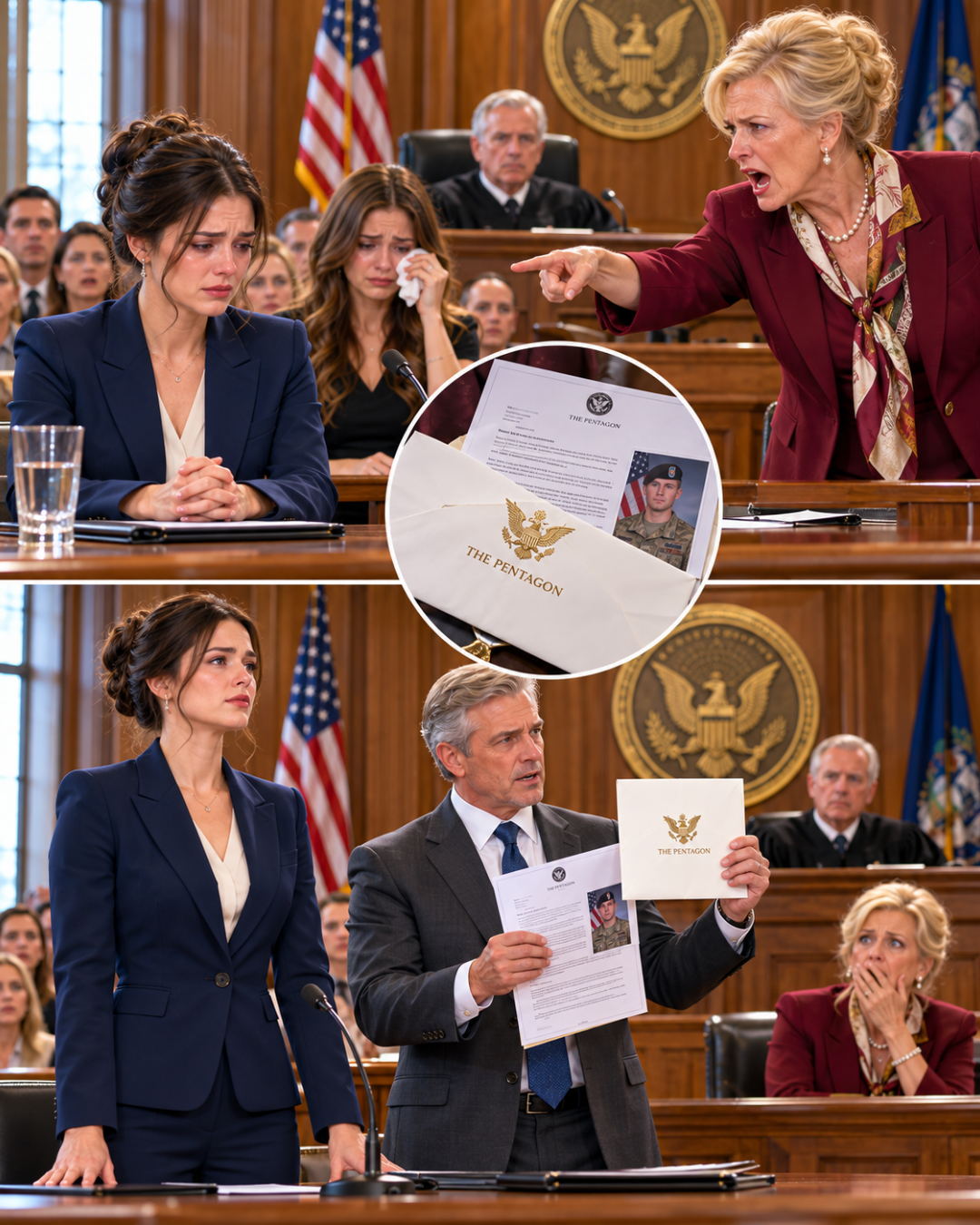
Because I had spent six weeks listening to people repeat my mother’s version of our relationship.
And suddenly, there was someone who remembered Dad’s.
A few days later, I ran into Walter Briggs outside the post office.
He was wearing the same VFW cap.
When he saw me, he stopped.
Then he held out his hand.
I shook it.
He didn’t offer a long apology.
He didn’t try to explain why he had looked at me with suspicion.
He simply said, “I’m sorry I let somebody else’s story become my opinion of you.”
I looked at him.
“Thank you, Mr. Briggs.”
He nodded.
“Your dad was a good man.”
“Yes,” I whispered.
“He was.”
Those apologies mattered.
But they did not undo the damage.
I had learned that public humiliation could spread through a town faster than truth.
And that even after the truth arrived, the person at the center of it still had to carry the memory of every face that had turned away.
I went back to work when my leave ended.
The Navy had been part of my life for eighteen years.
I did not suddenly become a different person because a court had verified it.
I still reported for duty.
Still followed orders.
Still worked within the restrictions of my assignments.
The difference was what I carried home.
For the first time, I stopped thinking that I needed to explain myself to anyone who demanded answers.
I had fulfilled my obligation to the court.
I had protected the information I was required to protect.
And I had honored Dad’s instructions.
That was enough.
Three weeks after the verdict, I visited my father’s grave.
It was a quiet Sunday morning.
The cemetery was nearly empty.
A breeze moved through the trees, scattering small leaves across the grass.
I wore ordinary clothes.
Jeans.
A dark blue sweater.
The old watch Dad had given me when I received my commission.
I brought fresh flowers.
Nothing elaborate.
Dad had always disliked expensive arrangements.
He used to say flowers ought to look like something a person might actually find growing in a garden.
I knelt beside his headstone.
For a while, I said nothing.
I brushed a few leaves away from the base.
Straightened the flowers.
Read his name.
Everett Voss.
It still seemed impossible.
I had spent years calling him from places where I could not tell him the time zone.
Now there was no number I could call.
I sat back on my heels.
“Hey, Dad.”
My voice sounded small in the open air.
“I guess you know what happened.”
A bird called from somewhere behind the cemetery wall.
I looked down at the grass.
“I’m sorry it turned into such a mess.”
The words came automatically.
I almost smiled.
Even alone at his grave, I was apologizing for something I hadn’t caused.
I could practically hear him correcting me.
That’s not a measurement you get to make alone.
I took a breath.
“I did what you asked.”
My voice cracked.
“I got the proper certification. I followed the process.”
I wiped my eyes.
“And I didn’t tell them anything I wasn’t supposed to.”
I looked at his name again.
“They believed me in the end.”
The wind moved through the trees.
I sat quietly.
Then I took out my phone.
Dad’s last voicemail was still saved.
I had tried to listen to it several times after the funeral.
Each time, I had stopped before pressing play.
I was afraid of hearing his voice and realizing I would never hear it again.
But that morning, I opened the message.
My thumb hovered over the screen.
Then I pressed play.
There was a brief rustle.
A soft cough.
Then Dad’s voice.
“Hey, sweetheart. It’s Dad.”
My eyes closed.
He sounded tired.
But he sounded like himself.
“Don’t worry about calling right away. I know you’re busy.”
A pause.
Then a little laugh.
“Your old man just wanted to say hello.”
I pressed my hand against my mouth.
His voice continued.
“I’ve been thinking about you. Hope you’re eating properly. Hope you’re getting some sleep.”
Another pause.
Then he said the words I had needed for weeks.
“I’m proud of you, Evelyn. Always have been.”
I bent forward.
The tears came so suddenly that I couldn’t stop them.
The message continued.
“Love you, sweetheart. Talk when you can.”
A click.
Silence.
I stared at the phone.
For eighteen years, I had believed that my father understood my life even when he couldn’t know the details.
I had believed he knew why I couldn’t always come home.
Why I couldn’t answer every question.
Why I sometimes had to put the phone down without explaining what had happened during my day.
And then my mother had spent six weeks trying to convince the world that he would have been ashamed of me.
But there he was.
His voice preserved in an ordinary voicemail.
Not discussing money.
Not discussing the trust.
Not asking where I had been.
Just telling me he loved me.
I played it again.
And again.
Then I placed the phone in my lap.
“I love you too, Dad.”
I stayed at the grave until the wind grew cold.
Before leaving, I touched the headstone.
“I’ll take care of what you left.”
I paused.
“And I’ll try not to let it turn me into someone you wouldn’t recognize.”
I did not give Liora an automatic share of the inheritance.
I did not rewrite Dad’s instructions simply because the result was painful.
My father had created that condition for a reason.
Ignoring it would have meant treating his final wishes as casually as my mother had.
But I didn’t decide that my sister was beyond redemption either.
Several weeks later, she called me.
I stared at her name on my phone for a long time before answering.
“Hello?”
“Evelyn?”
“Yeah.”
She sounded nervous.
“I wasn’t sure you’d pick up.”
“Neither was I.”
She gave a small, uncomfortable laugh.
Then silence.
Finally, she said, “I’m looking for a job.”
I leaned against the kitchen counter.
“A job?”
“A regular one.”
I waited.
“There’s a marketing position at a local company. Entry level. The pay isn’t great.”
“Have you applied?”
“Yes.”
“Good.”
She hesitated.
“I thought you’d laugh.”
“Why?”
“Because it’s entry level.”
I looked out the window.
“Liora, there’s nothing embarrassing about starting somewhere.”
She was quiet.
Then she said, “Dad used to tell me that.”
“I know.”
“I thought he was disappointed in me.”
I took a breath.
“He wanted you to have a life you could support.”
Her voice trembled.
“I wish I’d listened.”
I didn’t know what to say.
There was no sentence that could recover the years she had wasted.
There was no apology that could immediately repair what she had allowed our mother to do.
But she had made the call.
And for once, she wasn’t calling to ask me for money.
She was telling me she was trying.
“I hope you get the job,” I said.
“Thanks.”
She paused.
“Evelyn?”
“Yeah?”
“I’m sorry.”
I closed my eyes.
“For what?”
I needed to hear her say it.
She understood.
“For letting Mom call you a liar. For letting her say you abandoned Dad. For thinking about the money more than what she was doing to you.”
Her voice broke.
“I knew it wasn’t right.”
I stood quietly.
Then I said, “I appreciate you saying that.”
“Can we ever be okay?”
I looked at the old photograph of Dad on my kitchen shelf.
He was standing beside me on the morning I left for the Navy.
His arm was around my shoulders.
His smile was proud.
“I don’t know yet,” I told her.
She was quiet.
Then she said, “Okay.”
It was the first time I could remember my sister accepting an answer she didn’t want without asking someone to change it.
We talked for a few more minutes.
Nothing dramatic.
Nothing that would have made a courtroom gasp.
When the call ended, I felt sad.
But I also felt a little hopeful.
Not because we had repaired everything.
Because she had finally taken responsibility for something without expecting me to do the work for her.
My mother did not call to apologize.
She sent one message asking about the trust administration.
I referred her to the trustee and her attorney.
I would not use the estate to punish her, and I would not ignore any lawful rights or arrangements that needed to be respected.
But I was finished treating her demands as instructions.
I no longer answered accusations with desperate explanations.
I no longer tried to earn her approval by surrendering parts of myself.
And I no longer allowed her to decide what my father had felt about me.
His words were saved on my phone.
His instructions were written in the trust.
And his faith in me had existed long before either document became evidence.
Months later, I returned to our hometown for another short period of leave.
I drove past the courthouse.
The same tall windows caught the afternoon sunlight.
The same delivery trucks moved through the alley behind it.
I stopped at a red light.
For a moment, I remembered my mother standing in the center aisle.
Her finger pointed at me.
Her voice echoing against the oak walls.
She didn’t serve a single day.
I remembered the nine jurors turning their heads.
I remembered the disgust.
The investigator’s folder.
The silence.
Then I remembered the white envelope.
Judge Mercer removing his glasses.
The certification being passed from hand to hand.
And the moment the foreperson said I had satisfied my father’s requirement.
The light turned green.
I didn’t move immediately.
A car behind me tapped its horn.
I smiled faintly.
Then I drove.
I had once believed that winning the case would make everything return to normal.
That people would apologize, my family would understand, and the years of hurt would somehow rearrange themselves into a story with a clean ending.
But that wasn’t what happened.
My mother remained my mother.
My sister still had a great deal to learn.
My father was still gone.
And I still had eighteen years of experiences I could not discuss.
The verdict had not changed those things.
It had changed something else.
I no longer needed my mother’s approval to recognize the truth about my own life.
She had stood before nine jurors and tried to convince them that my service did not exist because she had never been allowed to see all of it.
She had mistaken secrecy for shame.
Distance for abandonment.
Silence for guilt.
And she had nearly convinced an entire town to make the same mistake.
But the white envelope had contained more than an employment certification.
For me, it had represented a choice.
I could continue allowing my mother to define me, or I could stand behind the life I had actually lived.
I had made that choice.
Eighteen years in the Navy.
Eighteen years of duty.
Eighteen years of missing birthdays, taking orders, working through nights, and carrying responsibilities I could not always explain.
My mother had tried to erase all of it with one sentence.
But the truth had outlasted her accusation.
And as I drove away from the courthouse, I finally understood something my father had been trying to teach me since the day he took me to the recruiting station.
I did not need to spend the rest of my life proving that I deserved to exist outside my mother’s expectations.
I had served my country for eighteen years.
I had loved my father until his final day.
And I had fulfilled the one responsibility he left for me.
For the first time in my life, I was finished serving my mother’s version of who I was supposed to be.
