

Part 1: The Stakes in My Meadow
Three weeks after my husband’s funeral, his older brother showed up at our Montana cabin with a surveyor, a thousand-dollar check, and documents he expected me to sign. He told me I had thirty days to leave the seventy acres Luke and I had shared as our home.
The folder Dale Tolliver set on my kitchen table was marked Property Transfer. Behind him, my mother-in-law, Arlene, surveyed the room while I read it. Her gaze lingered on the cabinets Luke had built and the cast-iron skillet he always kept hanging beside the stove.
Outside the window, a white pickup sat idling at the end of the driveway. A man wearing an orange vest was inside, with a tripod case beside him.
“You brought a surveyor?” I asked.
“We’re trying to make this easy,” Dale said. He tapped the folder. “There’s a relocation check in there. Ten thousand dollars.”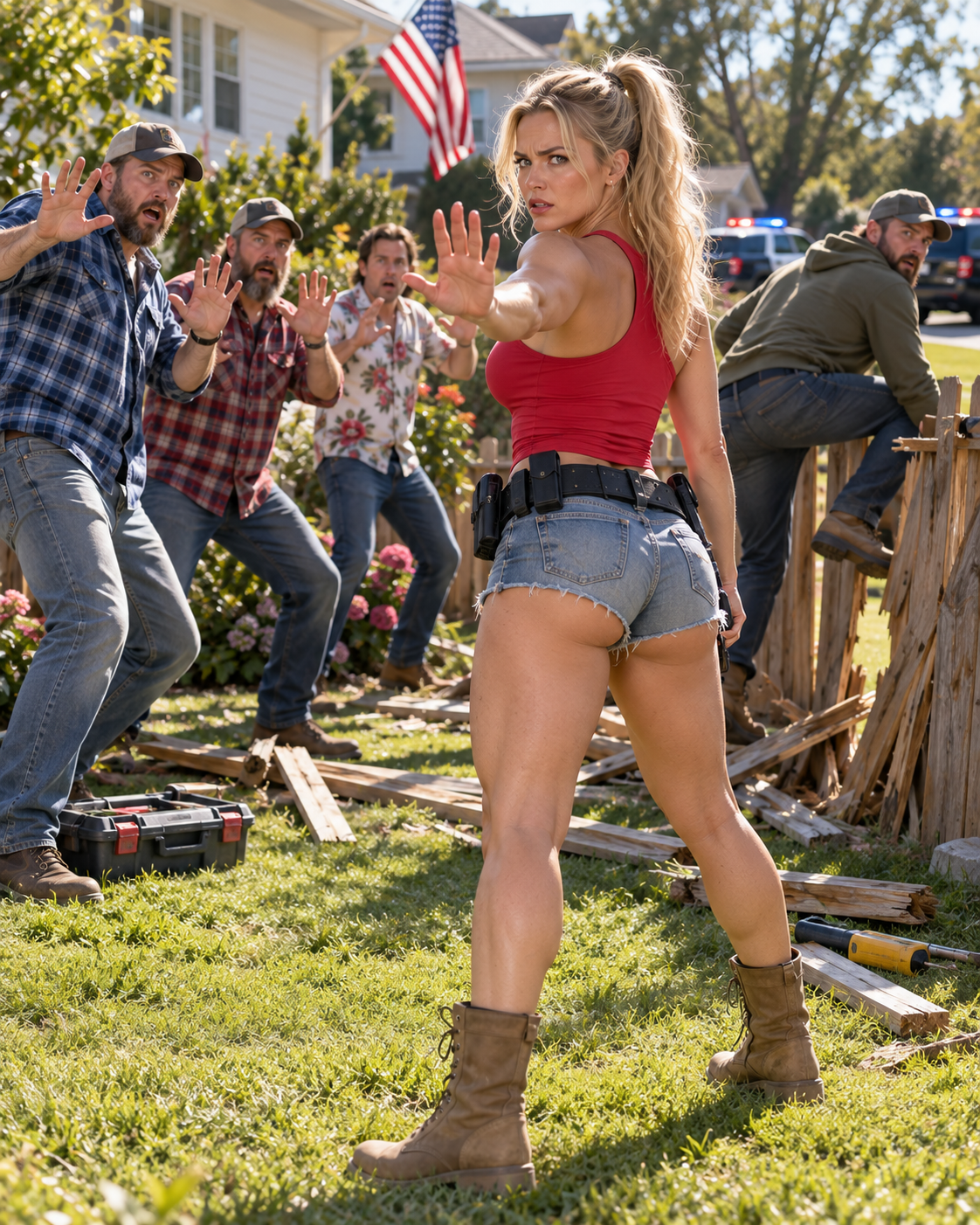
Luke had been gone twenty-three days. I still woke expecting to hear him making coffee. His boots remained beside the back door because I wasn’t ready to put them away, and now his family had brought someone to measure our land.
“What are you asking me to sign?”
Dale sat opposite me and opened the folder to a quitclaim deed. “The original acreage came through Dad’s family. Mom and I want it returned to the Tolliver trust. You take the check and find somewhere easier to manage.”
I turned to the final page. My name appeared beneath the signature line as Sloane Tolliver. I had never changed my last name when Luke and I married.
“You know I’m Sloane Mercer,” I said.
Dale waved dismissively. “That can be corrected.”
“It needs to be correct before you ask me to sign anything.”
Arlene moved closer to the table. “Luke should have sorted this out while he was here. He was always too sentimental about the place.”
I glanced toward the window. Luke and I had repaired fences there together, cleared the road after storms, and spent years saving to purchase the meadow beside the creek. Arlene had visited often enough to see the work, although she had never asked how we afforded it.
“Luke wanted to live here,” I said.
“And you can’t maintain it alone,” Dale answered. “The roads, the equipment, the taxes—it’s a lot for someone who spends her days behind a laptop.”
I did work behind a laptop. Dale had never cared much about what I did there, and I wasn’t going to explain it while he waited for me to pick up his pen.
“When did you have this deed prepared?” I asked.
He looked at Arlene. “That doesn’t matter.”
“It matters to me.”
Dale shut the folder. He said I was too upset to make practical decisions and that he would come back after I’d had time to think. I told him he could leave with the check and the unsigned deed.
After they left, I put on my coat and followed the tracks from the surveyor’s pickup. They crossed the barnyard, continued through the lower pasture, and headed toward the bend in the creek. Frost-covered grass crackled beneath my boots.
In the far meadow, four wooden stakes marked a boundary I had never agreed to survey. Pink ribbons fluttered in the cold wind. I knelt beside the closest stake and read the tag attached to it.
It listed the survey company, a job number, and the date the work had been completed. I checked it twice to make sure I had read it correctly.
The surveyor had marked our land nineteen days before Luke died.
Part 2: What the Deed Actually Said
I photographed the survey stakes before disturbing anything. Every tag carried the same job number, and the date was unmistakable. Someone had sent a surveyor into our meadow while Luke was still alive.
That evening, I sat at the kitchen table with my laptop and searched the Park County property records. Dale had been correct about one thing: Luke had inherited forty acres from his grandfather. The remaining thirty—the creek meadow and wooded slope—Luke and I had bought together with our savings.
The next record was more important. A year after purchasing the additional property, we had signed a deed placing all seventy acres in both our names as joint tenants with right of survivorship. I remembered sitting at the title office that afternoon. Luke had squeezed my hand while we waited for the documents to be copied and joked that neither of us was allowed to leave the other with all the fence repairs.
I read the recorded deed again. Under its terms, Luke’s interest in the property passed to me after his death. I still wanted an attorney to review everything, but Dale’s assertion that his mother’s trust owned the acreage didn’t match the county record.
The documents he had brought me would have transferred my interest away. His ten-thousand-dollar check was payment for a home and property he had no right to demand.
I closed the record and studied the photographs of the survey stakes. Dale had arranged the survey before Luke’s accident. I searched the Montana business registry and found Tolliver Land Partners, a company Dale had created nine weeks earlier. He was listed as its manager, with a mailing address at his car dealership in Bozeman.
Why would he create a land company if he didn’t own our property?
A search for the survey company brought up an article about a proposed luxury ranch development nearby. Its map showed plans extending almost to our creek. The article didn’t identify Dale as being involved, but the timing made me uneasy. I saved copies of the company filing, the article, and every property record I had reviewed.
As I spread them across the table, I remembered a Sunday afternoon a few weeks before Luke died. He had walked through the far meadow and returned unusually quiet. During dinner, he asked whether we could finally complete the conservation easement we had discussed for years.
“I don’t want anyone dividing that meadow after we’re gone,” he said.
We signed the documents at a notary’s office in Livingston. The next morning, Luke placed the envelope on the passenger seat of his truck. He planned to deliver it to the land trust on his way into town.
He never made it.
The highway patrol said black ice had caused his truck to leave the road. In the days that followed, I could think only about Luke. I assumed the envelope had been lost with the other belongings damaged in the crash. Now I needed to find out whether the land trust had ever received it.
At seven the following morning, I called Carolyn Voigt, the director. She knew Luke and me from our meetings regarding the easement. When I asked about the envelope, she fell silent.
“No,” she said gently. “It never reached us.”
I looked at the copy of the signed deed. The easement and my ownership were separate matters, but losing those documents would delay the protection Luke had wanted for the land.
“Has anyone else asked you about it?” I said.
Carolyn hesitated. “Last Thursday, a man called to ask whether your easement had ever been recorded. He said he was Luke’s family.”
“Did he give you a name?”
“He did.” Carolyn paused. “It was Dale.”
PART 3: THE ENVELOPE DALE TOOK
Carolyn’s call left me with one question: what had happened to the envelope sitting on Luke’s passenger seat?
Dale had collected Luke’s belongings after the accident. I remembered him coming to the cabin with a paper grocery sack containing Luke’s wallet, phone, jacket, and thermos. At the time, I could barely bring myself to look inside. I never asked whether anything else had been there.
That morning, I drove to the towing yard in Livingston. Hank, the manager, recognized me and removed his cap when I explained why I had come. He located the inventory from the day Dale had arrived.
“Your brother-in-law signed for the wallet, phone, jacket, and some tools,” he said, tracing a finger down the page. Then he stopped. “There was an envelope from the passenger side too. It said Land Trust across the front.”
I asked if I could see the signature. Dale had signed his name and identified himself as Luke’s next of kin.
“He told me you weren’t able to come,” Hank said. “I’m sorry. I thought he was helping.”
For the first time, I knew where the missing envelope had gone after the crash. Luke hadn’t lost it on the road. Dale had taken it from the towing yard and handed me the rest of Luke’s belongings without ever mentioning it.
With Hank’s permission, I photographed the inventory and contacted the sheriff’s office. Deputy Ray Lindell, who had responded to the accident, met with me later that day. He reviewed his report as I explained the survey stakes, the land company, and Carolyn’s call.
“The envelope was noted at the scene,” he said. “It went with the truck to the towing yard.”
He asked me to send him Hank’s inventory and the photographs I had taken in the meadow.
“Can you make Dale return it?” I asked.
“I can ask him about it. I can’t promise it’s still there.”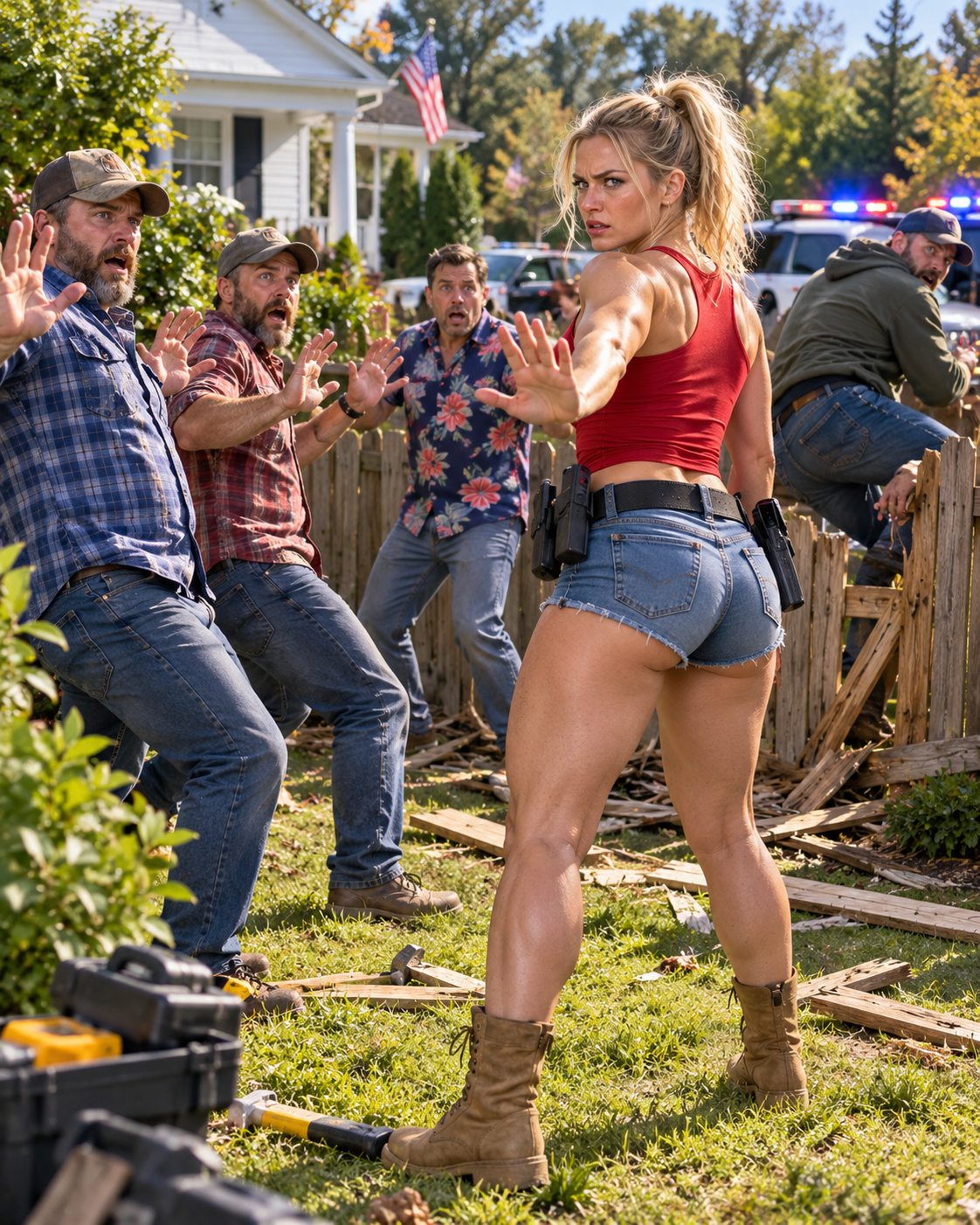
Ray closed the report. “You should also speak to an attorney about the deed he tried to have you sign.”
I made the appointment before leaving the diner. Then I drove home along the road Luke had traveled the morning of the accident. I had spent weeks trying not to imagine that drive. Now I couldn’t stop thinking about the envelope beside him and how determined he had been to deliver it.
Carolyn came to the cabin the following afternoon with the earlier drafts of our easement. Since the recorded deed listed me as the surviving owner, she said we could prepare a new easement for me to sign. The land trust’s board would still have to review it, but the appraisal and much of the other work had already been completed.
“Four weeks, if everything goes smoothly,” she said.
Dale’s thirty-day deadline was intended to frighten me; it had no authority behind it. Still, I wanted to protect the land before he found another way to pressure me. Carolyn and I worked through the remaining steps at the same table where he had placed his quitclaim deed.
Two days later, a deputy arrived carrying court papers. Dale had filed a lawsuit claiming Luke had promised to return the inherited forty acres to the Tolliver family. His attorney had also recorded a notice of the dispute against the property.
I called Carolyn. She explained that the board could not proceed with the easement while ownership was being challenged in court. I understood why, but the delay gave Dale time he hadn’t previously had.
That evening, I read through his lawsuit. Attached was a photocopy of a handwritten letter, supposedly signed by Luke in September. It promised the forty acres to Arlene and Dale “when the time is right.”
The handwriting looked like Luke’s. Then I reached the second line and noticed the address listed for our land: 1147 Mill Creek Road.
I opened the county notice I had saved the previous summer. Our road had not been assigned that address until October 1—three weeks after the date written on Dale’s letter.
PART 4: THE LETTER WITH AN ADDRESS THAT DIDN’T EXIST
I printed the county notice and set it beside the letter attached to Dale’s lawsuit. His exhibit was dated September 8. It listed 1147 Mill Creek Road, an address the county had not assigned until October 1.
Luke knew our old mailing address by heart. He would never have used an address that did not yet exist in a letter to his mother and brother. I sent copies of both documents to Walt Emery, the real estate attorney I had arranged to meet, and asked him to examine the original if Dale produced one.
Walt called later that day.
“That date is a serious problem for their claim,” he said. “Keep the county notice. I’ll request every version of the letter they have.”
I also gave him Luke’s recorded deed, the towing-yard inventory, and the photographs of the survey stakes. Each document answered a different question. The deed showed how Luke and I owned the land. The inventory showed Dale had taken the land-trust envelope. The stakes showed he had the meadow surveyed while Luke was still alive.
I wanted those facts organized before Dale came back. He had already attempted to make me sign away my home while I was grieving, and now his lawsuit was stopping the land trust from moving forward. Walt said he would challenge the claim and ask the court to address the notice clouding my title.
Two evenings later, headlights appeared on the road after dark. I recognized Arlene’s car before it reached the cabin. She came to the porch alone, holding a large envelope against her chest.
“May I come in?” she asked.
It was the first time I could remember her waiting for an invitation. I stepped aside, and she sat at the kitchen table without taking off her coat.
Arlene placed the envelope between us.
Land Trust was written across it in Luke’s handwriting. For a moment, I couldn’t bring myself to reach for it.
“Where did you get that?”
“Dale’s desk at the dealership. I still do the books there on Fridays.” She stared down at the table. “After I heard about the lawsuit, I went looking.”
Inside were the easement documents Luke and I had signed at the notary’s office. Our signatures were there, along with the stamp and date. The corners were bent, but every page remained intact.
“Why are you bringing them to me now?” I asked.
“Because he told me they were lost.” She clasped her hands tightly. “And because I know the letter he gave the court isn’t Luke’s.”
I thought about the address mistake, but Arlene wasn’t finished. She had seen Dale practicing Luke’s signature at her kitchen table. She had watched him fill page after page and allowed him to call it paperwork she didn’t need to understand.
“I should have stopped him,” she said.
I didn’t tell her it was all right. Luke had been buried while Dale kept the final documents he had tried to deliver, and Arlene had known enough to question her son before he submitted that letter to the court.
“Will you tell Walt what you saw?” I asked.
“Yes. I’ll put it in a statement.”
We sat in silence as I carefully put the original easement papers back in order. Arlene told me Dale’s dealership was heavily in debt. A resort developer had discussed paying him for land near our creek, although Dale couldn’t provide property he didn’t own. Luke had discovered the survey stakes before his accident and had told Dale he intended to protect the meadow.
That explained why Luke had been so determined to get the easement delivered. It did not establish anything about the accident, and I wasn’t going to invent an answer to something the highway patrol had already investigated. What I knew was that Dale had taken the envelope afterward and concealed it from me.
Arlene stood to leave, then paused.
“There’s one more thing behind the papers.”
I reached into the envelope and found a smaller sealed one. My name was written across it in Luke’s familiar, uneven handwriting. Beneath it were four words:
Open when it’s done.
PART 5: THE HEARING DALE HADN’T EXPECTED
I placed Luke’s sealed letter in the drawer beside our bed. I wanted to read it, but he had written Open when it’s done, and the meadow remained tied up in Dale’s lawsuit.
The next morning, Arlene met Walt at his office and gave him a signed statement describing what she had seen Dale doing with Luke’s signature. I brought the original easement papers, the county address notice, and the towing-yard inventory. Walt copied everything and arranged to keep the originals secure.
He examined the letter Dale had submitted to the court.
“The address tells us this couldn’t have been written on the date shown,” he said. “Arlene’s statement gives the court another reason to question it.”
“And the easement?” I asked.
“The land trust can’t record it while this dispute hangs over your title. We’ll ask the court to address Dale’s claim as soon as possible.”
Waiting was difficult. Every morning, I looked toward the far meadow and thought about Luke driving away with that envelope beside him. I had the documents back, but they still couldn’t accomplish what he had intended until the lawsuit was settled.
At the hearing, Dale sat beside his lawyer without looking in my direction. Arlene sat behind Walt and me. When Dale noticed her, he turned so abruptly that his lawyer touched his sleeve.
Walt started with our recorded deed. Then he presented Dale’s letter, dated September 8, along with the county notice establishing that 1147 Mill Creek Road did not become our address until October 1.
Dale’s lawyer examined both documents. He had submitted the letter on his client’s behalf, but he appeared to notice the date conflict for the first time. He requested time to review it.
The judge allowed him to confer with Dale. After a brief recess, he said his client could not explain the address. Walt then presented Arlene’s sworn statement and the towing-yard record showing Dale had collected Luke’s land-trust envelope.
Dale stood.
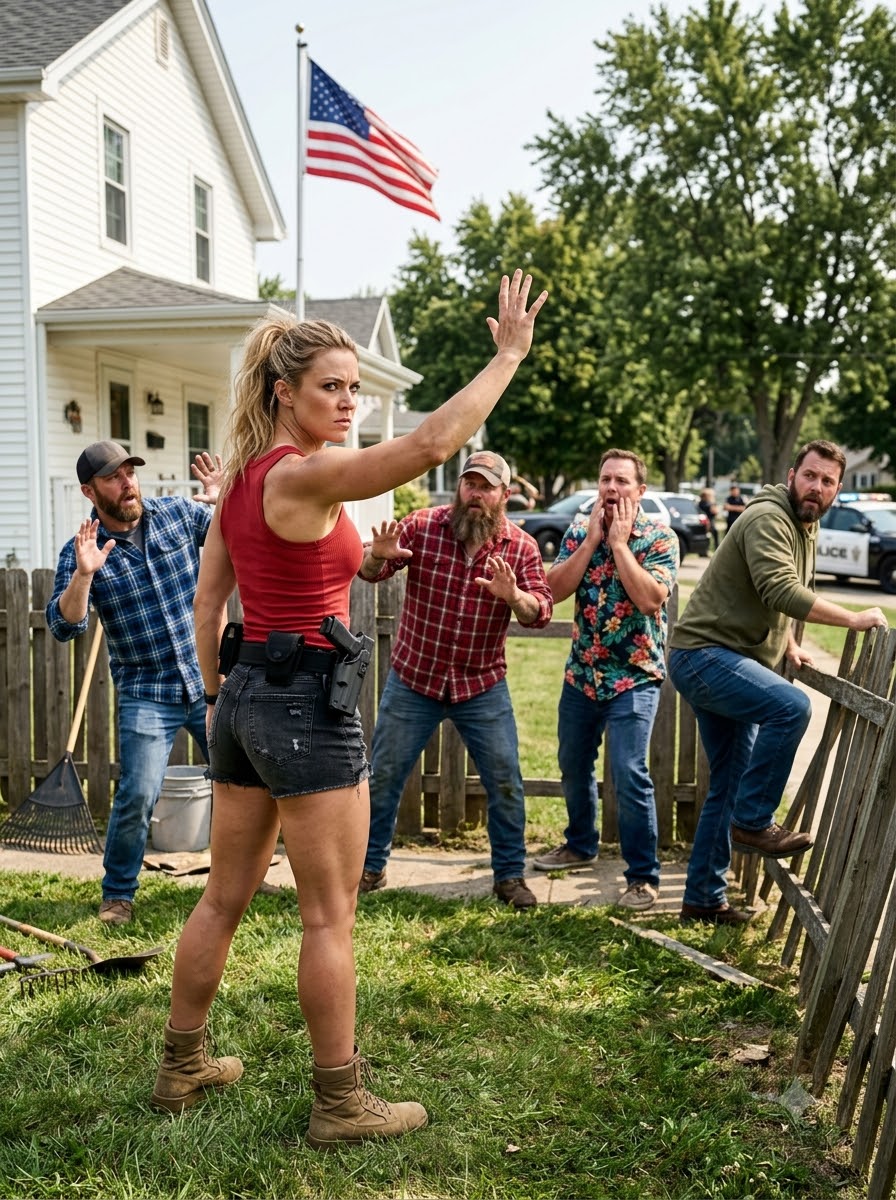
“Mom doesn’t know what she saw.”
The judge instructed him to allow his lawyer to speak. Dale sat down, his face red, while his attorney requested additional time to investigate the documents.
The judge did not resolve every issue surrounding the letter that morning. She did, however, state that Dale had failed to establish a sound basis for continuing to burden my recorded title with his claim. She ordered the notice lifted while the case continued and directed both sides to preserve the original documents.
Outside the courthouse, Arlene waited for me near the steps.
“I know this doesn’t make up for what I let happen,” she said.
“It doesn’t,” I replied. “But you told the truth today.”
She nodded, accepting both statements.
Over the next several weeks, Dale’s lawyer withdrew the property claim after the documents were examined further. Investigators also began examining the envelope and the letter submitted to the court. I gave statements and answered questions, then returned to the work Luke and I had begun.
Carolyn took the easement back to the land trust’s board. On December ninth, she called to tell me it had been approved. A notary would come to the cabin the next morning. After I signed, Carolyn planned to take the documents directly to the county clerk for recording.
I went to bed with Luke’s letter on the nightstand. For the first time since his death, I could imagine opening it soon.
At 2:14 a.m., an engine stopped at the bottom of my road. I got up without turning on a light and looked toward the barn.
A figure was walking through the snow, carrying a red gas can.
