

PART 1 — The Secret My Son Could No Longer Keep
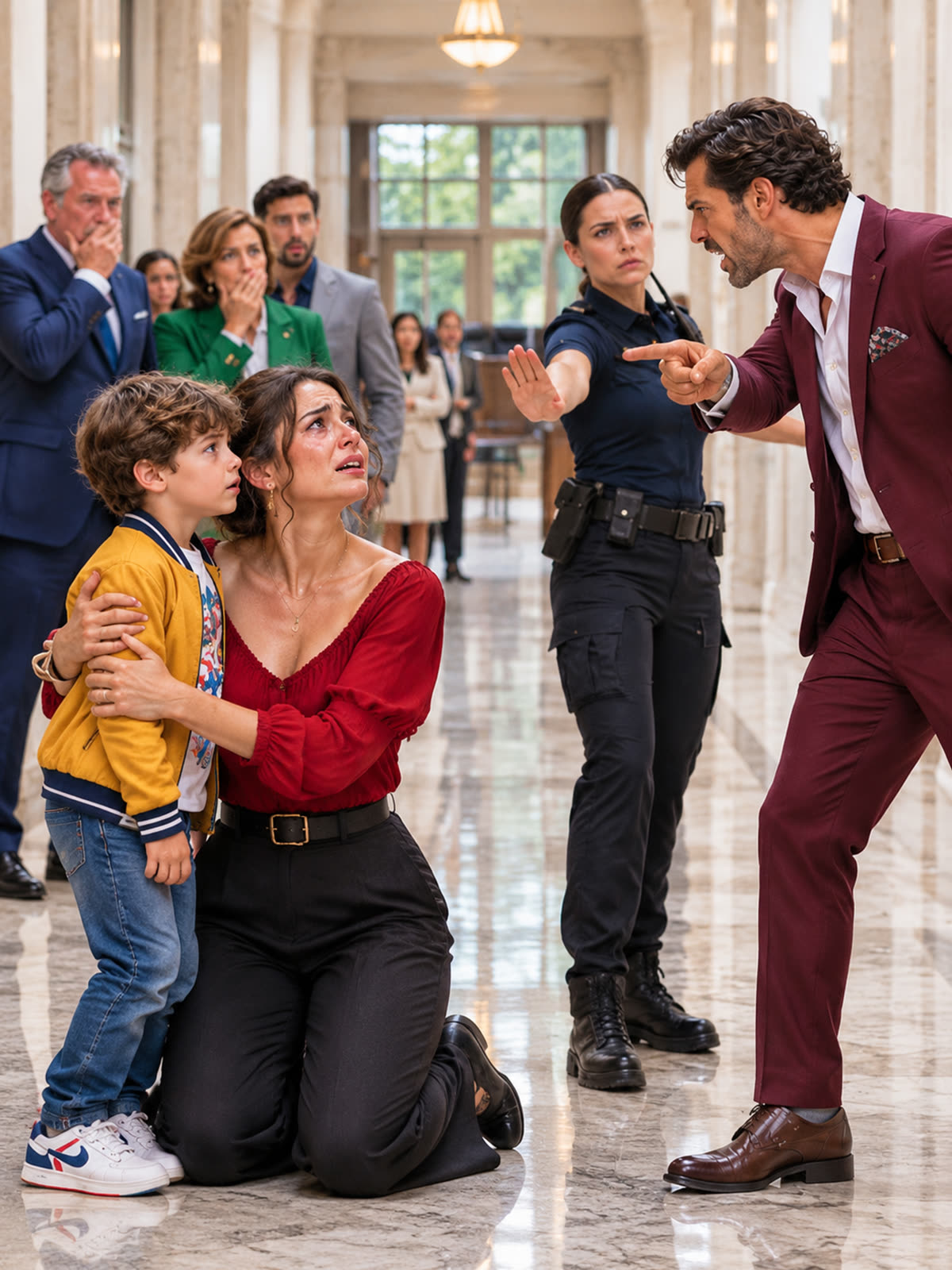
“The court is granting temporary custody of your son to his father.” The judge’s announcement made my stomach plunge. Across the courtroom, my husband smiled with the satisfaction of someone who had just claimed a prize. Beside him, our seven-year-old son stared down at his shoes. I searched Matthew’s face, hoping he might look up and give me something to hold on to. Instead, he seemed to draw farther into himself. The decision was supposed to concern his welfare, yet the person who frightened him most was the one preparing to take him home.
“Your Honor, please,” I begged. “My son is afraid of his father. You can’t send him back there.” The judge explained that the order was temporary. If further evidence became available, the court could revisit its decision. I understood the words, but they offered no comfort. Temporary still meant Matthew leaving with Richard. It meant another stretch of time during which I would not be there to protect him. The possibility of a later hearing did nothing to quiet the panic rising inside me as I watched my little boy sit silently beside his father.
My name is Danielle Harris. I was thirty-two and living in Charlotte, North Carolina. For eight years, I had been married to Richard Harris, a successful owner of an auto-parts business. At the beginning, he had seemed reliable and charming. After Matthew was born, however, our marriage gradually became something very different. Richard took charge of the money, challenged my friendships, and kept track of my telephone conversations. When I resisted, he threatened the one loss he knew I could not bear: he would take our son away from me.
His mother, Olivia, always stood behind him. “A good wife knows when to listen to her husband,” she often told me. “And a good mother doesn’t turn a child against his father.” Between them, they made my objections sound like failures of character rather than efforts to protect myself. I earned money altering clothes at home, but my income stretched only far enough to meet ordinary expenses. Once I filed for divorce, the difference between our resources became another weapon Richard could use. He could afford a legal fight that I could barely begin to finance.
Richard retained an expensive attorney and supplied statements from acquaintances who described me as emotionally unstable. His case emphasized his earnings, his property, and the business he had built. Mine depended on proving what had happened beyond other people’s view. To pay my attorney, I had sold the final pair of earrings my late mother had left me. Even that sacrifice had not been enough to counter what Richard’s legal team presented at the temporary hearing. The judge said the allegations against him had not yet been adequately supported by evidence.
I looked desperately at Matthew. His shoulders were rounded forward, and his hands were clenched together in his lap. “Sweetheart, please tell them what happens at home,” I whispered. Richard settled a hand on his shoulder. Immediately, Matthew dropped his head. It was such a small response that someone unfamiliar with our lives might have missed it. I did not. My son had learned that silence could be safer than drawing his father’s anger. Watching that lesson play out in a courtroom, where I had hoped someone would finally help us, broke my heart.
As the hearing neared its end, another memory returned. Six months before, I had delivered a little girl at a private clinic outside Charlotte. Richard had arranged everything. He said complications had developed and that an emergency cesarean section was necessary. When I regained consciousness after the anesthesia, he told me our daughter had not survived. I had never seen her. Whenever I asked for records or documentation, he became furious. “Stop asking questions, Danielle. She’s gone. Nothing will change that.” For months, I had mourned without understanding why I had never been allowed to hold her.
Now Richard leaned toward me. “It’s over,” he whispered. “Matthew’s coming home with me. You can go back to that miserable little apartment.” I tightened my hands into fists. “I won’t let you hurt him.” His answer was quiet and cruel. “Then prove it.” That was what everything seemed to come down to: what I could establish, what someone else would confirm, what could be placed before the court. I knew my son was frightened. I knew the man beside him. But knowledge and evidence had become two painfully different things.
The judge started gathering her papers. Before the hearing could end, Matthew lifted his hand. “Your Honor?” Everyone turned. The judge stopped what she was doing and answered him gently. “Yes, sweetheart?” Matthew glanced first at Richard and then at me. Tears filled his eyes. “If I have to live with Daddy, can I tell you something first?” The judge allowed him to continue. He drew a trembling breath, and I watched him struggle with whatever he had been holding inside. For once, his father’s hand and the fear behind it did not keep him silent.
“My daddy has kept my baby sister in Grandma’s old refrigerator for six months.” Silence swept across the courtroom. Richard’s smile vanished. I stared at Matthew, unable to make sense of the words coming from my little boy. Then he began to cry. “Daddy said if I ever told Mommy where my sister was, I would disappear too.” Richard sprang to his feet. “THAT’S A LIE!” A court security officer moved toward him. I could barely register the disturbance. All I could see was my son, terrified and crying after revealing something he had been threatened never to tell.
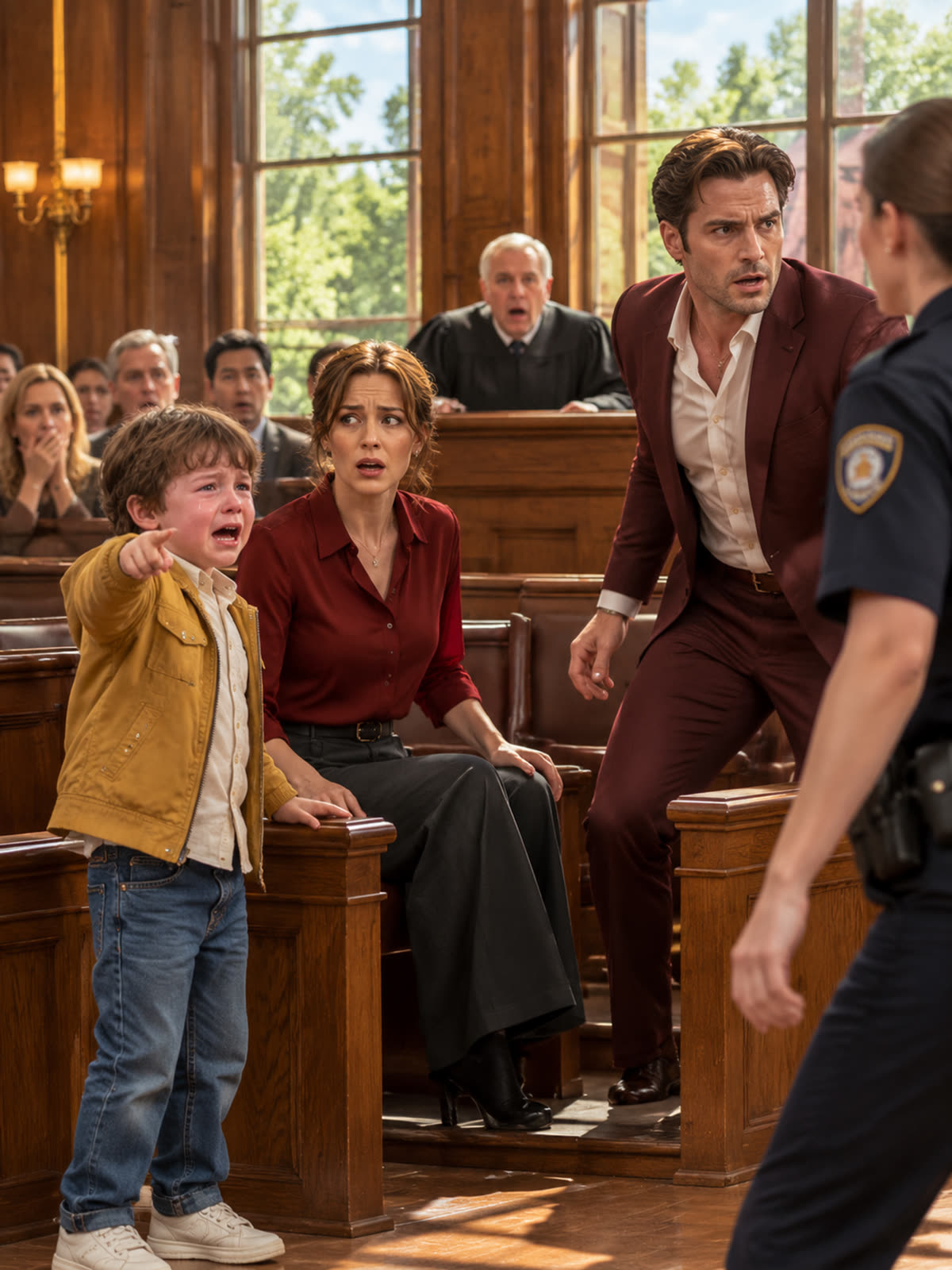
For half a year, I had accepted Richard’s claim that our daughter had died during delivery. Now Matthew was describing something concealed at his grandmother’s property, and the alarm on Richard’s face made it impossible to dismiss him. “THAT’S NOT TRUE!” Richard shouted, sending his chair backward. The security officer approached him at once. “Mr. Harris, sit down,” the judge ordered. “Your son is speaking.” I remained frozen. Matthew had said something so terrible that my mind kept returning to the words without finding any way to understand them.
The judge arranged for a child psychologist to assist Matthew so he could describe his memories without being subjected to unnecessary pressure. He was shaking as he spoke. “It happened when it was still cold outside,” he whispered. “Daddy brought a black bag to Grandma’s house and put it inside an old refrigerator.” I pressed a hand over my mouth. “Grandma moved the refrigerator into her storage shed and locked the door,” Matthew continued. “One day, she sent me to get some tools, and the shed was open.” Each detail made the secret he had carried seem more frighteningly real.
Richard shook his head. “He doesn’t understand what he saw.” The judge warned him against interrupting. Matthew brushed at his wet cheeks and continued. “There was something very small wrapped in a blanket. When I asked Daddy, he said it was my baby sister.” My chest tightened. “He told me never to tell Mommy. He said something bad would happen to me if I did.” Then he looked directly at me. “I’m sorry, Mommy. I wanted to tell you.” I went to him while court personnel managed the disruption. “You have nothing to apologize for,” I whispered, gathering him into my arms.
The custody proceedings were suspended. The judge requested an investigation by the appropriate authorities, and an investigator named Laura Sanders arrived to collect information. “Mrs. Harris, do you remember which clinic delivered your daughter?” I shook my head. “Richard arranged everything. I was almost nine months pregnant when he took me there. He said I needed an emergency C-section.” Laura asked, “Did you receive a death certificate?” “No.” “Any medical records?” “Richard wouldn’t let me see them.” As she recorded my answers, I was confronted again by how little I had been permitted to know about my own daughter.
That afternoon, investigators found Olivia’s property outside Charlotte. At first, she denied that there was an old refrigerator in her storage shed. Later, she said it held only spoiled food. An authorized search brought investigators to a locked outbuilding behind the house. Inside was an aging green refrigerator. They discovered a hidden package containing what appeared to be human remains. Until testing was completed, they could not say whose remains they were. Still, what they had found was close enough to Matthew’s account that I could no longer protect myself with the hope that he had simply misunderstood.
Laura called afterward. “Danielle, we’ve found something that may be connected to your daughter. We need forensic testing before we can confirm anything.” I leaned against the wall, struggling to remain upright beneath the weight of what she was telling me. “Please tell me Matthew was mistaken.” “I can’t tell you that yet.” I scarcely slept that night. Matthew stayed with specialized support personnel while the court reconsidered the immediate dangers raised by his disclosure. The custody decision that had seemed final only hours earlier was now entangled with questions I had never imagined having to ask.
The next morning, Laura contacted me again. Investigators had found a nurse who had worked at the private clinic where I delivered my daughter. She remembered the emergency operation. More importantly, after being instructed to alter an original record, she had kept a copy of a medical note. Laura set the document in front of me. “Your husband told you the baby was stillborn?” I nodded. “Then you need to see this.” I looked down, afraid of what the paper might say and equally afraid that it would tell me nothing.
The handwritten note described a female newborn who had arrived alive. She was breathing on her own, although she showed signs of distress, and the recommendation was for an immediate pediatric assessment. I read the same lines again and again. “My daughter was alive?” “The record indicates that she was born alive,” Laura answered. “We’re investigating what happened afterward.” For months, my grief had rested on a story Richard had given me while I was recovering from surgery. Now a few handwritten sentences had opened a terrible distance between that story and the truth.
The nurse looked down. “I kept something else,” she admitted. Reaching into her bag, she brought out her phone. “Someone threatened me that night. I was afraid to report what happened, but I saved a recording of a conversation between your husband and the doctor.” My hands started trembling. “What’s on it?” She hesitated before answering. “Your husband discussing what he wanted done with the baby.” I could hardly bear the thought of listening, but I needed to know what had happened while I was unconscious and unable to speak for my daughter.
She started the recording. A man explained that my newborn daughter was struggling to breathe and required urgent treatment at a hospital. Then Richard’s voice followed. I knew that voice, but I had never heard it in circumstances like these. The first thing he wanted to know was not whether our daughter could survive. It was not what anyone could do to help her. With my hands shaking and the medical note still before me, I listened as the question my husband cared about began to emerge: how much would saving our daughter cost?
PART 2 — The Truth Richard Tried to Bury
“How much is this going to cost me?” Richard asked on the recording. The doctor’s response was firm. “Mr. Harris, your daughter is having difficulty breathing. She needs to be transferred to a hospital immediately.” There was a short silence. I sat listening, unable to separate the man on that recording from the husband who had told me our daughter was already gone. While I had been unconscious after surgery, she had still been alive. Someone had recognized that she needed help. Someone had said clearly that she needed a hospital immediately.
Then Richard said the words I would never forget. “I already paid to make sure my wife believes the baby was stillborn. I’m not spending another dollar on a daughter I never wanted.” I clutched the edge of the table. A woman’s voice followed. “Without treatment, she could die,” she warned. Richard answered, “Then that’s your problem,” and continued, “I’m taking her, and none of you will mention this again.” There was a disturbance, then the sound of a closing door. The recording stopped, leaving me with words I could neither change nor escape.
For several moments, I could say nothing. My daughter had been born alive. She had needed medical care, and Richard had refused to allow the transfer while I lay unconscious after the operation. “Why?” I finally asked. “Why would he do that?” The nurse wiped her eyes. “Your husband wanted another son. He said only boys could carry on his family name. The doctor accepted money to falsify the records.” I had known Richard’s preference for another boy. Hearing it offered as an explanation for abandoning our daughter to danger made me feel sick.
“And you knew?” I asked. The nurse lowered her head. “They threatened me. I resigned shortly afterward, but I kept the recording because I knew what happened was wrong.” I stared at her. “You knew for six months that my daughter was born alive.” She could not answer. I had spent those months grieving a baby I thought had never taken a breath. All that time, the truth had existed in a saved recording and a copied note. Her fear did not erase my anguish over the silence that had kept me from knowing.
Laura explained that the recording needed to be authenticated before it could be used as evidence. However devastating it was to hear, investigators still had to establish its reliability and examine it alongside everything else they found. The investigation also uncovered money transferred from Richard to the physician responsible for my delivery. Recovered communications contained directions about changing medical records. The false account I had been given was no longer supported only by my husband’s refusal to answer questions. There were records, payments, and messages for investigators to trace.
Two days later, Laura asked me to return to her office. The forensic results were ready. Until that moment, there had remained a narrow space between what I feared and what had been confirmed. I had heard the recording. I had read that my daughter was born alive. I knew what investigators had discovered at Olivia’s property. Yet a part of me still recoiled from connecting those facts completely. Once Laura explained the test results, there would be no uncertainty left about whose child had been hidden inside that refrigerator.
DNA testing established that the remains recovered from Olivia’s refrigerator belonged to my daughter. I covered my face and cried. For six months, I had believed she had died during birth because of complications no one could prevent. Now I knew she had entered the world alive and needed treatment Richard had deliberately denied her. The confirmation did not simply reopen my grief. It changed the truth around which I had been grieving. My daughter had not been the baby Richard had described to me after I woke from anesthesia.
The medical examiner explained that the time that had passed made it difficult to determine exactly when she died or establish her precise cause of death. There were limits to what the remains could reveal, and those limits mattered. But the medical records, the witnesses, and the recording showed that she had required urgent care. Nothing about that uncertainty erased the warning Richard had received. He had been told she was struggling. He had been told a hospital transfer was necessary. I had heard his response myself, and I knew what he had chosen.
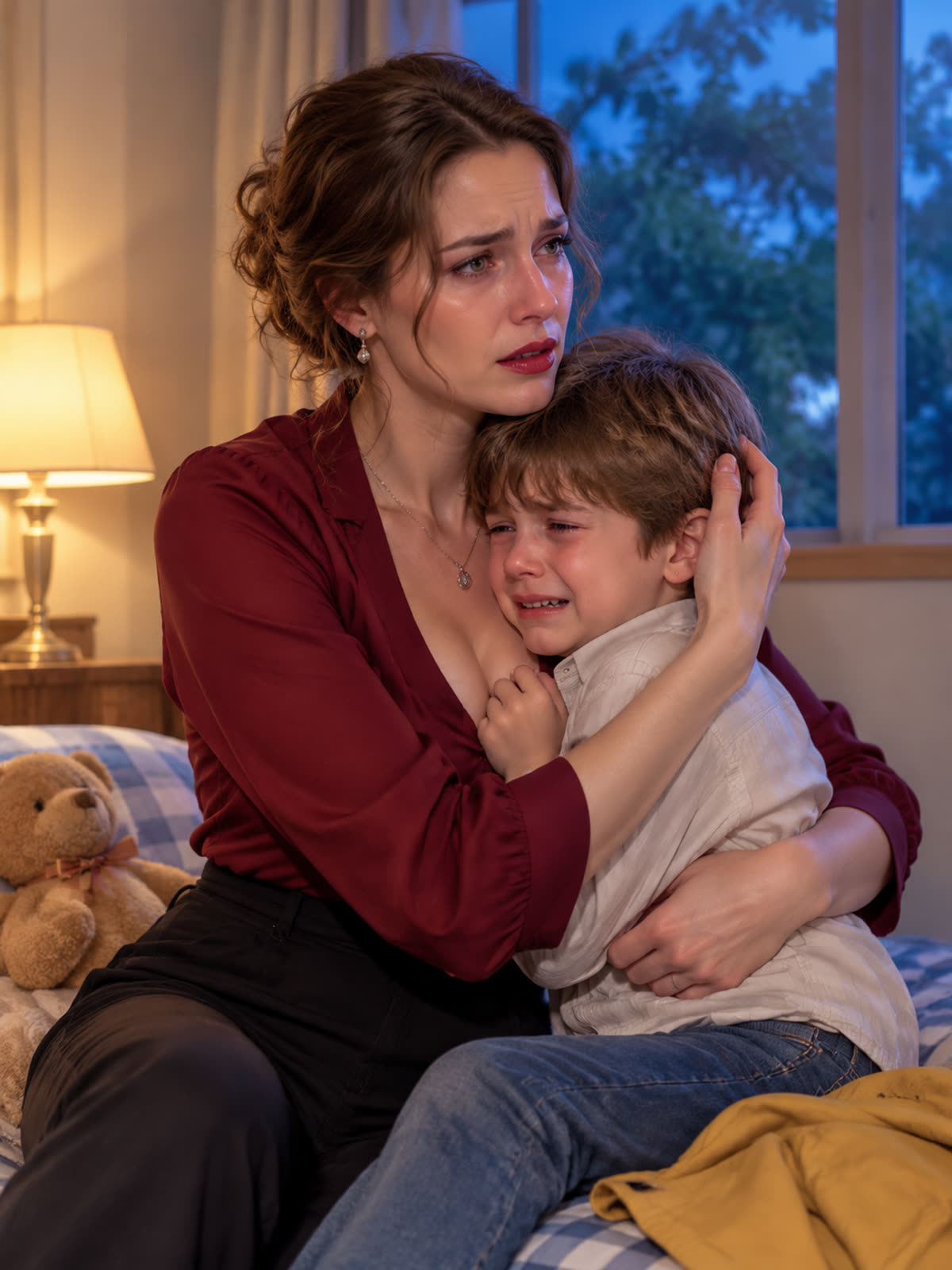
After investigators learned of threats connected to Richard, Matthew and I stayed in temporary accommodation. One night, he lay beside his teddy bear and seemed to be asleep. Then he opened his eyes. “Mommy, is my baby sister angry with me?” I sat down on his bed. “Why would she be angry?” His answer brought back the terror he had shown in court. “Because I didn’t tell you where she was. Daddy said he’d make me disappear.” Even after speaking, even after adults had begun uncovering the truth, he was still carrying blame that had never belonged to him.
I held him close. “Matthew, you were frightened because someone threatened you. None of this was your responsibility.” He began to cry. “I wanted to help her.” I kept my arms around him. “You helped us find her, sweetheart. You told the truth when you were very scared.” We stayed together until he fell asleep again. His father had made him afraid to speak, and now he was frightened that his silence had harmed his sister. All I could do in that moment was remain beside him and remind him that he had been a child facing a threat.
Later, I thought about the name I had chosen during pregnancy: Stella. Richard had made fun of it. Because he wanted another son, he had insisted there was no reason to choose a girl’s name. But my daughter had existed. His wishes could not undo that, and they did not get to decide whether she deserved a name of her own. I told Laura I wanted her remembered as Stella Harris. I had never been allowed to hold her, but I could refuse to let the story of her life remain the false one Richard had created.
During the weeks that followed, investigators assembled enough evidence to charge the doctor over his involvement in the altered records and the circumstances surrounding Stella’s care. Olivia was also investigated after messages showed she knew what had been concealed on her property. When asked about her part in it, she maintained that she had only been protecting her son. Laura asked whether her granddaughter had not deserved protection as well. Olivia offered no answer. Her defense of Richard had followed him even here, into something that had cost her granddaughter everything.
Richard was eventually taken into custody as the criminal proceedings moved forward. Through his attorney, he asked to speak with me under supervision. Initially, I said no. I did not want another conversation in which he tried to control what I knew or how I felt. Yet one question would not leave me alone. Since hearing the recording, I had wondered whether he felt any remorse. I knew that nothing he said could undo what had happened. Still, I wanted to know whether he understood the enormity of what he had done to our daughter.
When I finally agreed, he sat on the other side of the visitation glass looking thinner and worn out. He lifted the telephone. I waited, carrying the question that had brought me there. His first words were not about Stella. “None of this would have happened if Matthew had kept his mouth shut.” I stared at him. He faced criminal charges connected to our daughter’s death, and his first instinct was to accuse our seven-year-old son. Whatever I had hoped to learn from his expression, his words gave me an answer I had not wanted.
“None of this would have happened if Matthew had kept his mouth shut.” The accusation was still in my ears when I answered him. “Don’t you dare blame Matthew,” I said. Richard leaned forward. “He destroyed this family, Danielle. If he’d stayed quiet, none of us would be here.” I reminded him of what the investigation had established. “Our daughter was born alive, Richard. She needed medical treatment, and you refused to let her have it.” He looked away. “The doctor said she was weak.” Even then, he was searching for a way to turn his choice into someone else’s fault.
“Then you should have let them take her to a hospital.” His excuse came quickly. “We already had enough financial problems.” I could hardly believe what I was hearing. “You had money for expensive lawyers, a new truck, and payments to a doctor who falsified our daughter’s records.” Richard pressed his mouth closed before answering. “You don’t understand. My mother wanted another grandson. So did I.” I felt sick. “Because she was a girl, you decided she wasn’t worth saving?” He said nothing. There was no explanation he could offer that would make those choices defensible.
For years, I had tried to make him recognize how deeply his behavior wounded our family. Across that glass, I finally accepted that no argument could turn what he had done into something reasonable. I lowered the telephone. “You’ll answer for your actions in court. My responsibility now is to protect Matthew and raise him to become a completely different man.” I walked away without turning back. I had gone there wondering whether Richard regretted his actions. I left knowing that my son’s safety could not depend on his father ever accepting responsibility.
Over the following months, my attorney petitioned the family court to revisit its temporary custody decision. We provided material from the criminal investigation, records of Richard’s threats, and information showing Matthew’s fear of him. Protective measures were granted, and Matthew was eventually placed in my care. He also began counseling to help him understand and process what he had witnessed. When I explained that he would not have to return to his father’s house, he stayed quiet. Then he asked, “Mommy, can I sleep without worrying that Daddy will come get me?”
I drew him into my arms. “We’re going to do everything we can to keep you safe.” Meanwhile, the criminal case continued. I testified about my pregnancy, the clinic, and the six months during which I had believed Stella was stillborn. The nurse admitted that she had failed to report what she witnessed sooner. The doctor attempted to place all responsibility on Richard, but the financial records and recovered communications demonstrated his own part. The evidence was finally being heard together, instead of remaining scattered among people who had withheld it from me.
After a lengthy trial, Richard was sentenced to several decades in prison for the crimes proved against him. The physician was convicted as well. Olivia received a sentence for concealment and the related offenses established by prosecutors. I felt no triumph when the verdicts came. Nothing the court imposed could return Stella to me. Outside the courthouse, my attorney embraced me. “We finally got justice for your daughter.” I looked upward. “At least someone finally listened to her story.” I hoped we could begin to heal, not yet understanding that my son would face another kind of cruelty.
PART 3 — The Home We Still Had to Find
I had hoped the convictions would give Matthew and me room to recover. Instead, our tragedy became a subject of local news coverage. Some reporters approached the story with care, but others reduced it to sensational headlines. People who had never known our family began asking why I had not uncovered the truth earlier. They had not been in my marriage, my surgery, or that courtroom. Still, their questions followed the account of Stella’s death. After struggling so hard to have the truth heard, I discovered how painful it could be when strangers treated it as something to discuss.
Eventually, those stories reached Matthew’s school. One afternoon, his teacher called to tell me that several children had been repeating things they had heard adults say. When he returned home, his eyes were swollen from crying. “Mommy, the kids said I’m the son of a murderer. They said nobody should play with me.” I held him tightly as he told me what had happened. There had also been cruel comments about Stella. My little boy had already carried his father’s threats and the burden of revealing his secret. Now other children were making him suffer for it.
The school stepped in, but the intervention did not immediately undo the damage. Matthew began having nightmares and resisting going to class. A place where he should have been able to learn and make friends had become somewhere he expected to be hurt. I could tell him that the children were wrong, but I could not make their words disappear from his mind. The criminal proceedings had established responsibility in court. Outside it, my son was still being treated as though his father’s actions belonged to him too.
One evening, he asked something that frightened me more than anything he had said since the trial. “Mommy, if Daddy did terrible things, does that mean I’ll grow up to be like him?” I sat beside his bed. “Matthew, you aren’t responsible for your father’s choices. Being his son doesn’t mean you’ll become him.” He looked uncertain. “So I can be different?” “Absolutely. You get to decide what kind of person you become.” He leaned his head against my shoulder. I wanted him to believe those words as firmly as I did.
That night, I understood that the court’s decisions had not ended what Matthew was enduring. The people responsible for Stella’s death had been punished, but my son was still paying for his father’s conduct in ways no sentence could automatically stop. Winning custody had been necessary. It had not been the whole task. If he was going to have a childhood without fear following him into every part of his life, we needed more than distance from Richard. We needed somewhere he could begin to feel safe being an ordinary little boy.
After the conviction, I had imagined that the worst was behind us. Watching Matthew struggle forced me to accept that escape and recovery were different things. He needed classmates who were not repeating cruel accounts of his family. I needed work that would support us as we rebuilt. I began looking beyond our old neighborhood, searching for an opportunity that matched what I actually knew how to do. I had no college degree and no office background. What I had was years of sewing and altering clothing, often late into the night.
A counselor at the victim support center told me about a small clothing workshop with an opening. Its owner, Veronica Reynolds, made children’s clothes and school uniforms. I took examples of my sewing to the interview, anxious that she would recognize my name from the coverage. I had become accustomed to our family’s story arriving before I did, changing how people looked at us. At the workshop, however, Veronica examined the work itself. Her attention remained on the stitching I had brought, and for the moment I was being considered for something other than what had happened to my family.
“Your work is excellent, Danielle.” “Thank you. I really need this job.” When she asked when I could work, I explained that I was raising my son alone and needed to collect him after school. I expected that limitation to end the conversation. Instead, she gave me a gentle smile. “Twenty years ago, I was starting over with a little boy, too. Someone gave me a chance when I needed one.” She offered me a full-time job with dependable pay and benefits. She also knew someone who was renting a modest apartment near the workshop.
It was not charity. I would work for my wages and pay my rent like anyone else. That mattered to me. What Veronica had given me was an opening, a practical way to support my son and establish a life beyond the place where everything had happened. For the first time in years, rebuilding seemed like more than something I hoped to do after the next crisis passed. Two weeks later, Matthew and I moved into an apartment with two small bedrooms, a simple kitchen, and a living-room window facing a large oak tree.
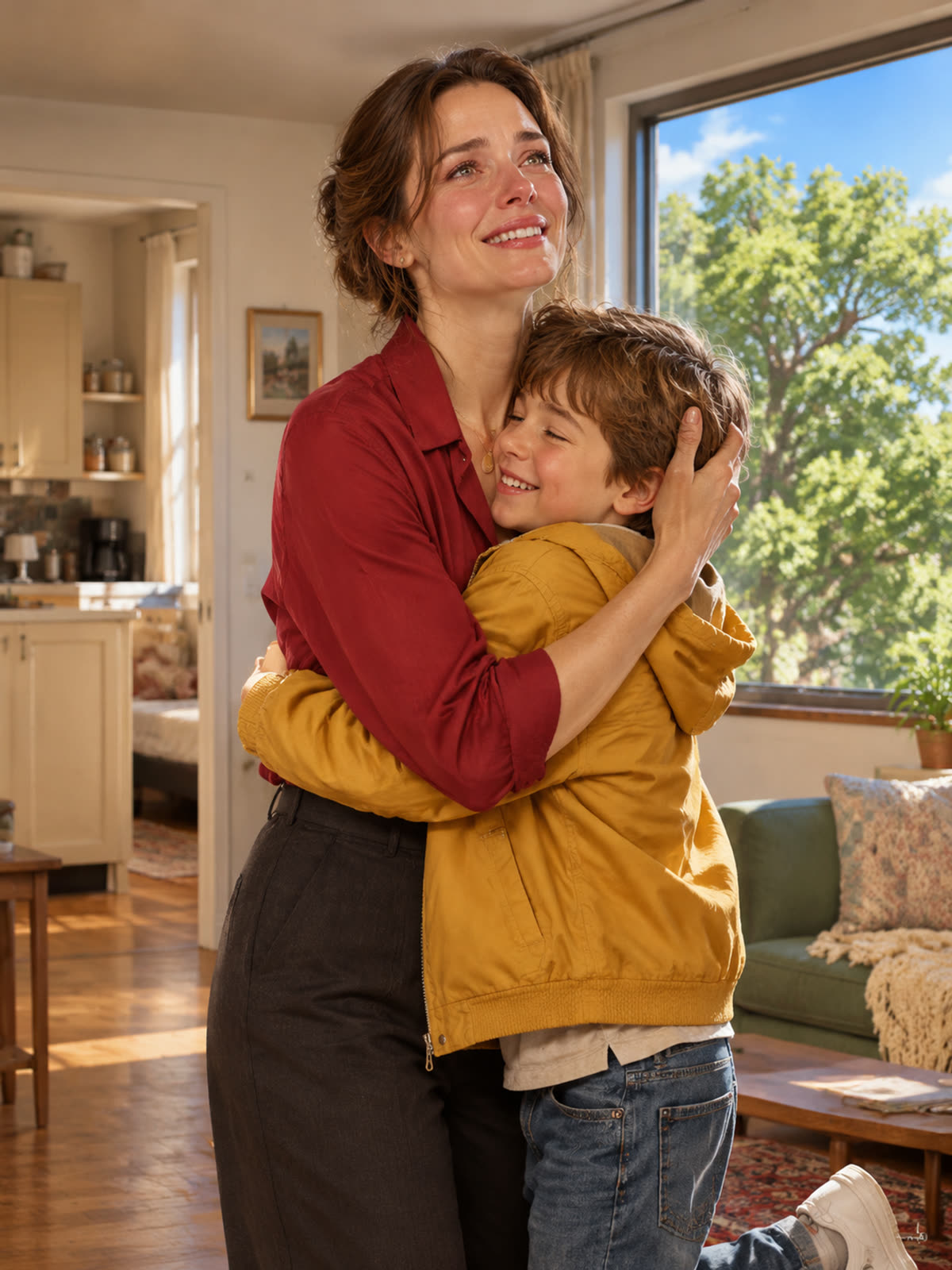
Matthew went through each room before coming back to me. “Mommy, is this house really ours?” “We’re renting it, sweetheart. But this is our home.” He put his arms around my waist. “Then I love it.” I held him and let myself take in what those words meant after everything he had endured. The apartment was modest, but he was not asking for anything grand. He wanted to know that this was where we belonged. For once, the answer I could give him was simple. We were here together, and this was our home.
With help from the support center, I arranged continued counseling for Matthew and transferred him to another school. The move did not instantly remove his fears. During those first weeks, he worried that the new children would find out what had happened to Stella. Sometimes he asked me to stay outside his classroom until his teacher arrived. I understood that a different address could not erase what he remembered. He needed time to discover whether this new place would be different, and reassurance while he worked up the courage to trust it.
Gradually, he began making friends. The change was not something that happened all at once. It appeared in the fact that friendship was becoming possible again, that his days could contain more than dread of what someone might say about Richard. I kept working at the workshop, and Matthew continued receiving help with what he had experienced. We were building an ordinary routine out of things that had once seemed difficult to imagine: a job I could depend on, a home we could return to, and a school where he was beginning to belong.
One Friday, he brought home a drawing. There was a little house, two figures holding hands, and a large yellow star over the roof. “That’s us,” he explained. I pointed to the star. “And who’s this?” He gave me a shy smile. “Stella. So she can always find our house.” I pulled him close, unable to stop my tears. Even as he made friends and learned his way around a new school, his sister remained part of the way he understood our family. He had given her a place above the home we were making.
His drawing held together things I had struggled to reconcile. We could move forward without acting as though Stella had never existed. We could have a new home without leaving her name behind. Matthew had spent so long afraid of what he knew about his sister that seeing him include her in something gentle mattered deeply to me. The memory of her did not have to belong only to a courtroom, an investigation, or a terrible secret. She was our daughter and his sister, and she still had a place in our lives.
A year after the custody hearing, we went to the place where Stella had been laid to rest. We brought white flowers and a small, colorful pinwheel. Matthew carefully set the pinwheel beside her name. “Hi, Stella,” he whispered. “I made new friends. And Mommy has a job she likes.” I knelt next to him. Hearing him tell her about our life made the distance we had traveled feel real. There was still sorrow, but there were also things he wanted his sister to know that were not about fear or his father.
For months, I had imagined that healing might mean somehow ceasing to hurt. Kneeling beside Stella’s resting place, I understood it differently. The loss remained. What had begun to change was our ability to live while carrying it. I touched her headstone. “I’m sorry I never got to hold you, sweetheart. But I promise you’ll never be forgotten.” I could not change the fact that I had never held my daughter. I could say her name, remember her, and make certain that Richard’s lie was not the final account of her life.
Matthew slipped his hand into mine. “Mommy, can we go home now?” I looked once more at Stella’s name. “Yes, honey. Let’s go home.” As we walked away, I remembered Richard’s satisfied smile in the courtroom. He had seemed so certain that he had taken everything from me. I remembered hearing the temporary custody decision and feeling helpless to stop my son from leaving with him. At the time, I had seen no way beyond what the judge had just said. Then Matthew had raised his hand and changed what everyone in that room knew.
More than anything else, I remembered the courage it had taken for him to speak. He had been seven, frightened of his father and afraid that telling the truth would make him disappear. The adults around him had concealed what happened, and he had been left carrying knowledge no child should have been made to bear. Yet, when given a chance to speak, he had revealed it. His words did not undo the loss of Stella. They made it possible to find her, uncover what had happened, and begin protecting him from the man who had threatened him.
Our life was not perfect. There were nights when I still cried for my daughter, and times when Matthew needed to hear again that he was safe. But he was laughing, making friends, and beginning to think about a future that did not have to follow his father’s example. One evening, while I tucked him into bed, he asked, “Mommy, are you proud of me?” I brushed his hair back from his forehead. “More than you could ever imagine.” He smiled and closed his eyes. I stayed in the doorway, thinking about everything he had survived.
Richard had trusted money, threats, and silence to keep his secrets hidden. He had not expected a frightened little boy to tell the truth. Matthew’s courage had helped expose what happened to his sister and given us a chance to make a life no longer controlled by his father. Still, as I watched him sleeping, I knew that neither a verdict nor a new home could promise that every fear was gone. We had finally begun again. What I could not yet know was whether the safety we were learning to trust would quiet the fear he still carried.
Disclaimer: This story is a work of fiction inspired by real-life themes. Names, characters, places and events are fictionalized, and any resemblance to real persons is purely coincidental. Images are for illustration purposes only.
