

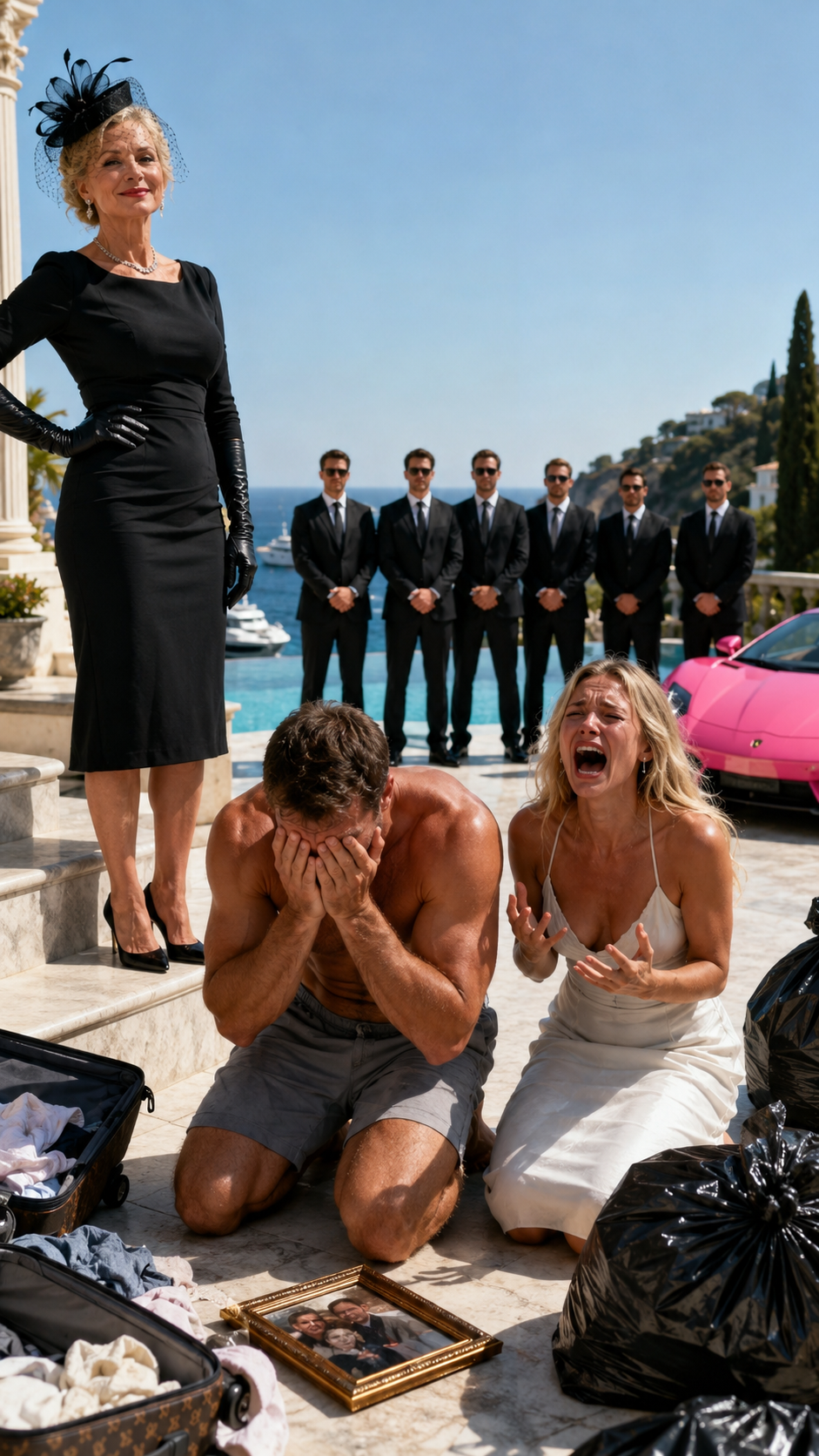
PART 1
I didn’t cry.
Instead, I contacted the private security company responsible for protecting the entire gated community—a company owned by my father.
As the security officers began arranging for his girlfriend’s car to be towed and deactivating his access credentials throughout the estate, my husband rushed outside in complete panic. I met his gaze without blinking and said, “You have five minutes to leave my property.”
My mother lay in a hospital bed taking her delicate final breaths when my phone vibrated.
A message from David, my husband: “Are you coming home to host the dinner? You can’t put your life on hold forever just because she’s sick.”
When I finally dragged myself back home, I found him leisurely enjoying a $500 bottle of vintage wine. “My mother is dying, David,” I whispered, emotionally hollow.
He sighed dramatically, looking every bit the suffering saint. “We all die, Sarah. But life goes on. Make sure you’re properly dressed for the funeral tomorrow; the press will be there.”
The exhaustion deep inside me hardened into something terrifyingly still.
A few days later, the soil had barely settled over my mother’s grave when another text arrived.
“I’ve changed the smart locks. You took too long to grieve, and I’m exhausted by your depression. Pack your things from the porch. My lawyer will be in touch.”
The grief I carried for my mother vanished in an instant, replaced by a cold, frightening calm.
He had locked me out.
That painfully average, arrogant man had truly convinced himself that a handful of shared bank accounts made him royalty.
He forgot one critical fact: the entire $15 million estate—and the elite private security force patrolling it—belonged entirely to my family’s trust.
My black town car rolled into the driveway. The scene waiting for me was almost absurd.
A bright pink Mercedes sat squarely in the center of my stone pavers. Beside it were six black garbage bags stuffed with my designer wardrobe and my grandmother’s heirloom jewelry, carelessly dumped near the entrance. I lifted my gaze toward the house. Through the glass of the master bedroom, I could see two silhouettes raising champagne glasses. David and his mistress.
They were celebrating the capture of my kingdom on the very day I buried my queen.
I didn’t yell.
I didn’t pound on the door.
Instead, I pulled out my phone and dialed an encrypted line connected directly to an underground operations center three miles away.
A calm, professional voice answered immediately. “Apex Command. Director Sarah, we are deeply sorry for your loss today. What are your orders?”
I stared directly at the man who had sworn to protect me while toasting another woman.
My voice became ice.
“Execute Protocol Eviction. Code Red. Full asset lockdown.”
One second later, deafening sirens tore through the evening air, and the smug expression on my cheating husband’s face upstairs disappeared instantly.
Inside the master suite, I knew exactly what was happening.
I had spent three years learning every detail of David’s particular kind of arrogance. He was probably leaning against the Italian marble vanity island, tapping his glass against Jessica’s.
“I told you she was weak,” I imagined him saying with a smug grin as he admired the three-thousand-square-foot room he had contributed nothing toward. “She’ll probably cry in some hotel. By tomorrow, I’ll have the lawyers shut her out of the operating accounts.”
I could practically hear Jessica’s laugh as she tossed her expensive extensions over her shoulder.
“I want to redecorate this room. Her taste is so depressing.”
They were enjoying every second of a kingdom they had stolen.
What they failed to understand was how my wealth was actually structured.
David believed a marriage certificate was the same thing as ownership. He had conveniently ignored the legal maze known as the Vance Family Trust—a multi-generational financial empire that owned the LLC, which owned the holding company, which owned the deed to the house itself.
I hadn’t merely married David.
I had permitted him to exist within my ecosystem.
And now I was changing the weather.
I sat in the backseat of my town car, hidden behind a line of towering cypress trees, monitoring the neighborhood security feeds on my encrypted tablet.
Three blocks away, at the heavily secured entrance to the community, the pleasant appearance of a residential gate vanished.
A massive military-grade steel barrier glided into place, sealing the neighborhood from the outside world. Delivery drivers and visitors were immediately denied access. The perimeter had entered full lockdown.
On the camera feeds, I watched four black Cadillac Escalades with heavily tinted windows and discreet gray Apex Guardian logos move silently down the palm-lined street in staggered tactical formation.
Close behind them followed a heavy-duty flatbed tow truck, its diesel engine rumbling low against the otherwise pristine silence of the neighborhood.
Miles away in the Apex command center, I knew a technician’s hands were moving rapidly across a mechanical keyboard.
On my tablet, the status indicators for my home network updated in real time.
Target Profile: David Thorne.
Facial Recognition Database: Deleted.
Biometric Access: Revoked.
Gate Transponder: Disabled.
Within moments, the mansion’s extensive smart-home network—which David proudly controlled through an app on his phone as though it were his personal toy—was completely disconnected.
I tapped a command on my screen.
The smell of rubbing alcohol mixed with dying lilies never truly leaves your clothing. It settles into the fibers, becoming a permanent reminder of the exact moment your world began to empty out. For three relentless, agonizing days, I had lived with that scent. I sat beside my mother’s bed in the private palliative care wing of Cedars-Sinai, watching the cruel, steady decline of her vital signs. My mother, Eleanor Vance, was a woman who had built an empire from stone, a woman capable of controlling boardrooms with a whisper. Now, her breaths were shallow and fragile, fluttering like trapped moths beneath her ribs.
My eyes burned from seventy-two sleepless hours.
I reached for a plastic cup of lukewarm water on the bedside table when my phone vibrated in my lap.
A sharp, demanding buzz broke through the quiet hum of the oxygen machine.
It was David.
I stared at his name.
My husband of three years.
A man I had once mistaken for an anchor before realizing he was a parasite.
I opened the message, some small exhausted part of me still hoping for comfort—a question about my mother, or even about me.
Are you coming home to host the charity dinner tonight? My investors are expecting us. You can’t put your life on hold forever just because she’s sick.
A cold numbness spread through my body.
No how are you.
No I love you.
Just another selfish demand wrapped in layers of narcissism.
David, a mid-level tech executive whose greatest achievement was marrying into my family, had spent the last thirty-six months carefully convincing himself that he was the architect of our entire world.
After leaving the hospital staff to watch over my mother during her final fading hours, I drove back toward our Bel Air estate. The winding roads through the hills normally carried a soothing rhythm, but that evening the sprawling mansions looked more like ornate tombs. Our home—a fifteen-million-dollar fortress of glass, steel, and imported Brazilian walnut—sat atop one of the most exclusive gated communities in the city. It was a neighborhood where even silence carried a price tag, protected by Apex Guardian Services, an elite private security company. What David constantly, and almost obsessively, failed to remember was that Apex, the estate, the vehicles, and every inch of land beneath his feet belonged entirely to my family’s trust.
I stepped through the massive front doors, the hush of the house pressing against my pounding temples. I found him downstairs in the custom-built glass wine cellar. The climate-controlled room hummed softly while David carefully uncorked a bottle of Château Margaux—a five-hundred-dollar vintage purchased years earlier by my grandfather.
“You look terrible,” he commented without bothering to lift his eyes as he poured the dark ruby wine into a crystal balloon glass. He didn’t offer me any. Instead, he took a slow sip and closed his eyes in an exaggerated performance of appreciation. “I had to cancel on the board. Do you have any idea how embarrassing it is to tell a table of venture capitalists that my wife is too depressed to host a simple dinner?”
“My mother is dying, David,” I whispered, my voice cracked and stripped of all strength.
He released a dramatic sigh, the very image of a suffering martyr. “We all die, Sarah. But life goes on. Make sure you’re properly dressed for the funeral tomorrow; the press might be there. I need this to look dignified.”
He casually adjusted his wrist, allowing the gold face of his Rolex Daytona to catch the cellar lighting. It was a gift I had bought for our first anniversary. He wore it like a crown, carrying himself as though he owned everything around him, completely oblivious to the lifeless calm settling behind my eyes. He mistook my silence for surrender. He confused grace with weakness.
Without another word, I turned and climbed the floating glass staircase to the master suite. My mother had built her empire on ruthless observation and strategic patience.
Never interrupt your enemy when he is making a mistake.
She used to repeat that often.
I removed my black funeral dress from the cedar-lined closet and carefully laid it across the silk duvet.
While packing a small clutch for the following morning, I heard David’s voice drifting faintly through the ventilation system. He was speaking on the phone in the hallway, his tone lowered into a conspiratorial murmur.
“She’ll be gone all afternoon,” he whispered, the smugness obvious in every syllable. “Bring your things. It’s time we upgrade your living situation.”
Los Angeles soil is naturally dry, turning into fine choking dust whenever it is disturbed. I watched cemetery workers throw the first shovels of dirt onto my mother’s polished mahogany casket. The muted impact of soil against wood was the final sound I had feared for two years. Heavy heat settled over the private cemetery, while the air carried the scent of expensive flowers and the metallic weight of grief.
I stood completely alone beneath the canopy.
Only thirty minutes earlier, before the minister had even completed his final prayer, David had leaned close. He smelled of expensive cologne and peppermint.
“I have a sudden emergency meeting with the developers,” he muttered, patting my arm with the stiff, artificial warmth of a politician greeting voters. “I’ll see you at home. Don’t linger.”
Then he had practically rushed toward his waiting sedan, eager to escape the inconvenient reality of death.
The dirt had barely settled across the bronze handles of the casket when my phone vibrated sharply against my thigh.
I pulled it from my black leather clutch.
A text from David.
I’ve changed the smart locks. You took too long to grieve, and I’m exhausted by your depression. Pack your things from the porch. My lawyer will be in touch.
I didn’t gasp.
I didn’t drop the phone.
The tears that had been flowing freely for my mother stopped immediately. They didn’t dry up—they simply transformed into something cold and heavy inside my mind. It felt like a violent emotional alchemy. The grief that had hollowed me out was instantly replaced with a dark, glittering, terrifying calm.
He locked me out.
It was an astonishing display of arrogance—a catastrophic error born from the delusions of an average man. He truly believed that because his name appeared on several shared accounts, he had conquered the mountain itself.
Twenty minutes later, my black town car glided through the wrought-iron entrance and rolled into the circular driveway of my estate.
The sight waiting for me felt almost absurd.
A neon pink Mercedes G-Wagon sat directly in the center of the herringbone stonework like a child’s toy abandoned in a museum. Beside it were six black garbage bags stacked carelessly against the custom oak doors. The plastic stretched tightly around my designer wardrobe, cashmere coats, and—judging by the familiar shape—a delicate jewelry box that had once belonged to my grandmother.
I stepped from the vehicle.
The cool California breeze lifted the edge of my black dress.
I stood perfectly still, a widow surrounded by the wreckage of her own life.
I looked at the garbage bags.
I looked at the obnoxious pink SUV.
Then I raised my eyes.
Through the vast glass wall of the master bedroom, I could clearly make out two silhouettes.
David.
And a woman with long flowing hair.
Standing close together.
Holding champagne flutes.
Toasting.
Celebrating the capture of my kingdom while I buried my queen.
I didn’t scream.
I didn’t pound on the door.
Instead, I reached into the hidden inner pocket of my purse and removed a thick matte-black keycard. There was no logo, only a microchip and a twelve-digit identification number.
Then I took out my phone and dialed a dedicated line that bypassed traditional emergency services—an encrypted frequency connected directly to an underground operations center three miles away.
A rough but highly professional voice answered instantly.
“Apex Command. Director Sarah, we are deeply sorry for your loss today. What are your orders?”
I stared directly at the master bedroom window, watching the man who had promised to protect me raise his glass to another woman.
When I spoke, my voice carried the sharp edge of ice forged from grief.
“Execute Protocol Eviction,” I whispered. “Code Red. Full asset lockdown.”
Inside the master suite, I knew exactly what was unfolding.
I had spent three years studying David’s unique form of arrogance.
He was probably leaning against the Italian marble vanity island, tapping his champagne flute against Jessica’s.
“I told you she was weak,” I imagined him saying with a smirk while surveying the three-thousand-square-foot room he had never contributed a cent toward. “She’ll probably go cry at a hotel. By tomorrow, I’ll have the lawyers freeze her out of the operating accounts.”
I could almost hear Jessica laughing while tossing her artificial hair extensions over her shoulder.
“I want to redecorate this room. Her taste is so depressing.”
They were soaking in the intoxicating comfort of a stolen kingdom.
What they fundamentally failed to understand was the structure of my wealth.
David believed a marriage license was the equivalent of a title deed. He had conveniently ignored the intricate legal maze known as the Vance Family Trust—a multi-generational financial empire that owned the LLC, which owned the holding company, which owned the property itself.
I hadn’t simply married David.
I had allowed him to exist inside my ecosystem.
And now I was changing the weather.
I remained in the back seat of my town car, hidden behind a line of towering cypress trees, monitoring neighborhood surveillance feeds through a secure tablet.
Three blocks away, the pleasant image of a residential entrance vanished.
A military-grade steel barricade slid smoothly into place, sealing the community from the outside world. Delivery drivers and visitors were automatically rejected. The perimeter had entered full lockdown.
Through the camera network, I watched four black Cadillac Escalades with tinted windows and discreet gray Apex Guardian insignias move silently down the palm-lined street in staggered tactical formation.
Behind them came a heavy-duty flatbed tow truck, its diesel engine rumbling low against the manicured silence of the neighborhood.
Miles away inside the Apex command center, I knew technicians were working rapidly behind their keyboards.
On my tablet, the mansion’s network status updated in real time.
Target Profile: David Thorne.
Facial Recognition Database: Purged.
Biometric Access: Revoked.
Gate Transponder: Disabled.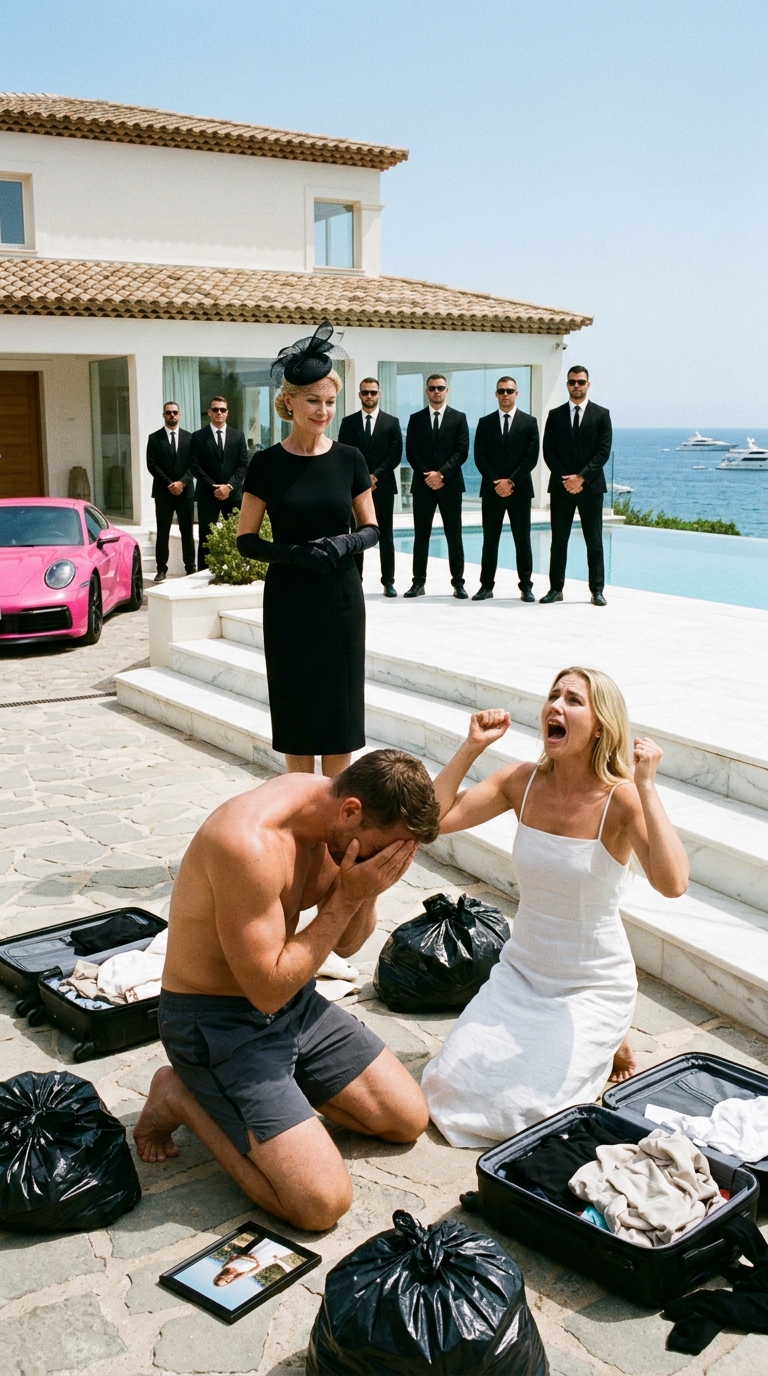
Within moments, the sprawling smart-home system—which David proudly controlled from his phone as though it were a personal toy—was disconnected.
I touched one command on the screen.
Inside the mansion, the soft background music abruptly died.
The central air-conditioning system, quietly battling the California heat, powered down with a fading mechanical groan.
The automated sheer curtains in the master suite instantly rolled upward, exposing the room to the harsh afternoon sunlight.
I zoomed in on the bedroom camera.
David frowned and lowered his champagne glass.
He pulled out his phone and began tapping furiously, irritation spreading across his face.
Damn smart home glitches.
I could practically hear the thought.
He was still convinced the collapse of his world was nothing more than a Wi-Fi issue.
He crossed the room toward the digital control panel beside the bedroom door and pressed the glass interface.
I tapped the final command.
Every screen in the mansion flickered violently.
The familiar blue interface vanished.
In its place appeared a pulsing crimson warning.
The built-in speaker system, usually reserved for jazz and soft background music, crackled to life.
“ACCESS DENIED. TRESPASSER DETECTED. PERIMETER BREACH IN 3… 2… 1…”
The automated countdown was immediately drowned out by the heavy, synchronized thud of combat boots striking the front porch.
The massive mahogany front doors didn’t simply open.
They were mechanically overridden and swung inward with precise force.
Four men dressed in black tactical gear stepped into the sunlit foyer. Kevlar vests bearing the Apex insignia covered their uniforms. They moved with the calm efficiency of former military contractors—which, in fact, they were.
“Hey! What the hell are you doing?!”
David’s voice cracked into a shrill note of outrage as he rushed from the master suite and appeared at the top of the glass staircase.
Still wearing his silk robe.
Still clutching a champagne flute.
His face flushed with indignation.
“I am a resident!” he shouted, gripping the railing so tightly his knuckles turned white. “I am the homeowner! Get out of my house before I call the police!”
The lead officer, a massive man named Vargas who had served alongside my father in Fallujah, didn’t blink.
Standing calmly at the foot of the staircase, his hands resting comfortably on his tactical belt, he looked at David not as a person—
but as an obstacle that needed to be removed.
“You are an unauthorized trespasser, sir,” Vargas said, his deep voice carrying the weight of absolute authority. There was no room for discussion. “You will step outside immediately, or you will be physically relocated.”
“I am David Thorne! My wife is—”
David’s outburst was suddenly interrupted by a loud mechanical grinding noise coming from outside. He froze instantly. The color drained from his face as recognition set in. The champagne flute slipped from his hand and shattered across the hardwood floor, but he barely noticed. Gathering his robe, he hurried down the staircase, nearly stumbling before bursting through the front doors.
I was already waiting.
Standing at the bottom of the steps, I positioned myself in front of the flatbed tow truck parked in the driveway. Thick steel chains were already secured around the axles of the neon pink G-Wagon. The moment David emerged, the hydraulic winch groaned to life, effortlessly lifting the gaudy vehicle from the pristine pavers and pulling it onto the steel platform.
“Stop! That’s illegal! Put her car down!” David shouted as he raced toward me, breathing heavily.
The guards in black uniforms shifted smoothly into position, forming an unbreakable protective semicircle behind me.
I stepped forward.
I was still wearing the same black high-necked dress I had worn while burying my mother.
The California sunlight beat down relentlessly, but I felt carved entirely from ice.
If anything, I probably looked like death itself arriving to collect what was owed.
David stopped abruptly.
The last traces of his aggression vanished the moment he looked at my face.
He took an uncertain step backward.
“Sarah…” he stammered, attempting to summon his usual superiority, though his voice shook noticeably. “Tell your father’s goons to put the car down. Have you lost your mind? You can’t just—”
I never raised my voice.
I didn’t have to.
My gaze dropped briefly to his bare feet, then to his trembling hands, before meeting his frantic eyes.
“You clearly never read the prenup, David,” I said quietly, each word landing with devastating precision. “You were too busy counting the zeros in the joint checking account to pay attention to the ownership structure.”
He swallowed visibly.
“What are you talking about? We bought this house together.”
“No,” I corrected gently as I stepped closer. “The trust bought this house. The trust owns the vehicles. The trust owns the security company. The trust owns the very pavement beneath your bare feet.”
I paused.
The silence stretched painfully between us.
“And as of my mother’s passing at 6:14 AM this morning, I am the sole, uncontested executor of the trust.”
I slowly glanced at my watch.
There wasn’t a trace of mercy in my expression.
“You have exactly five minutes to leave my property, David. If you are still standing in this driveway at 4:05 PM, Vargas and his team will physically remove you and deposit you in the street.”
Behind him, the front doors flew open again.
Jessica came running out, clutching an expensive handbag. Mascara streaked down her cheeks.
“My car! David, do something! They’re stealing my car!” she screamed, grabbing his silk sleeve.
David ignored her entirely.
A sudden realization flashed through his eyes.
Desperation.
He yanked his phone from his robe pocket.
“You can’t do this. I’ll call my lawyer. I’ll freeze the accounts. I’ll dry you out, Sarah!”
His fingers flew across the screen as he opened his banking app, reaching for what he believed was his leverage.
I watched carefully.
I saw the exact moment everything inside him collapsed.
His eyes locked on the display.
His jaw went slack.
The application was inaccessible.
A stark notification filled the screen:
All joint assets frozen indefinitely pending internal investigation for marital fraud and misappropriation of funds.
By midnight, the vast Bel Air estate had become a sanctuary of complete silence.
Meanwhile, the consequences of David’s arrogance settled into the stained wallpaper of a rundown Super 8 motel off the 405 freeway—the only room he could afford.
My security team monitored the aftermath.
Every platinum credit card in his wallet had been declined.
The so-called joint accounts that funded his extravagant lunches and secret trips had always been financed through an LLC under my control.
One phone call from the back seat of my car had legally dissolved the entity.
His financial lifeline vanished instantly.
Jessica, unsurprisingly, didn’t last even an hour.
The moment the fluorescent motel lights illuminated the cheap comforter and she realized David was no longer the captain of a luxury yacht but merely a broke passenger drifting through his own disaster, her affection disappeared.
She ordered an Uber.
Loaded her designer luggage.
Blocked his number before reaching the freeway.
Miles away, behind the secure iron gates of my community, I finally allowed myself to breathe.
The master suite had been professionally sanitized by my staff.
Every trace of David—his clothing, cologne, and expensive grooming products—had been packed into sealed boxes and transported to a storage facility he could no longer afford.
The bedding had been replaced.
The air filtration systems had cleansed the room.
I sat on the edge of the enormous bed.
The estate was locked down tighter than a military compound, yet somehow it felt lighter than it had in years.
The matte-black Apex keycard rested on the marble nightstand like a silent guardian.
I reached into my purse.
Past legal paperwork.
Past the muted ringing phone.
And withdrew a small silver-framed photograph.
It showed my mother and me at a charity gala five years earlier.
She was smiling.
Confident.
Sharp-eyed.
Perfectly poised.
The adrenaline from the day’s corporate execution slowly faded.
The cold satisfaction of dismantling David’s life drained away, leaving behind something sacred.
Something empty.
Something real.
I did it, Mom, I thought quietly. I didn’t let him take the castle.
For the first time all day, completely alone and protected within the walls my family had built, I lowered my guard.
The dam broke.
I curled my knees against my chest and finally cried.
Deep, shaking sobs tore through me.
I mourned my mother.
I cried not as the victim of a failed marriage but as the daughter of a titan.
I grieved for the woman who taught me that weakness is a choice, and that grief—though necessary—must never become an invitation for predators.
I cried until my eyes swelled shut.
Until my chest hurt.
Until I found a strange sense of comfort in absolute safety.
The following morning, the sun began rising over the Hollywood Hills, painting the horizon in bruised shades of gold and purple.
I entered the kitchen wearing a simple cashmere sweater.
Emotionally exhausted.
Completely clear-minded.
I had just poured my first cup of black coffee when a polite knock sounded at the back door.
Unlocking it, I found Vargas standing on the patio.
Today he wore a tailored dark suit instead of tactical gear.
His expression was serious.
In his hands rested a thick, heavily sealed manila dossier.
“Good morning, Director,” he said respectfully, deliberately omitting my married surname.
“Morning, Vargas. What is that?” I asked before taking a sip of coffee.
He hesitated.
Looking first at the envelope, then at me.
“My team completed the deep sweep of the estate last night. We discovered a hidden safe beneath the floorboards in his office.”
Vargas inhaled slowly and handed over the dossier.
“Ma’am, yesterday’s eviction was only the beginning. You need to see what he’s been quietly pulling from company servers over the past two years. He wasn’t just having an affair. He was selling our proprietary defense schematics.”
One year later, the Los Angeles skyline sparkled through the floor-to-ceiling windows of the Apex Guardian boardroom like scattered diamonds.
I stood at the head of a polished mahogany conference table.
A sharply tailored charcoal suit framed my posture.
My hair was pinned into an elegant twist.
Twenty of the most respected and ruthless executives in private security sat around the table.
Every eye was on me.
Waiting.
Below us, a small drama unfolded on the street.
I glanced toward a monitor embedded in the conference table.
A live drone feed showed a familiar figure exiting a federal courthouse.
David.
His cheap beige suit hung awkwardly from his thinner frame.
His face looked ten years older.
The headline on the Financial Times displayed beside him read:
TECH EXECUTIVE FACES 20 YEARS FOR CORPORATE ESPIONAGE AND WIRE FRAUD.
He paused at the courthouse entrance and looked upward, shielding his eyes from the sun.
His gaze landed on Apex Tower.
The glittering glass monument he once believed he could steal.
Now permanently beyond his reach.
He was a ghost.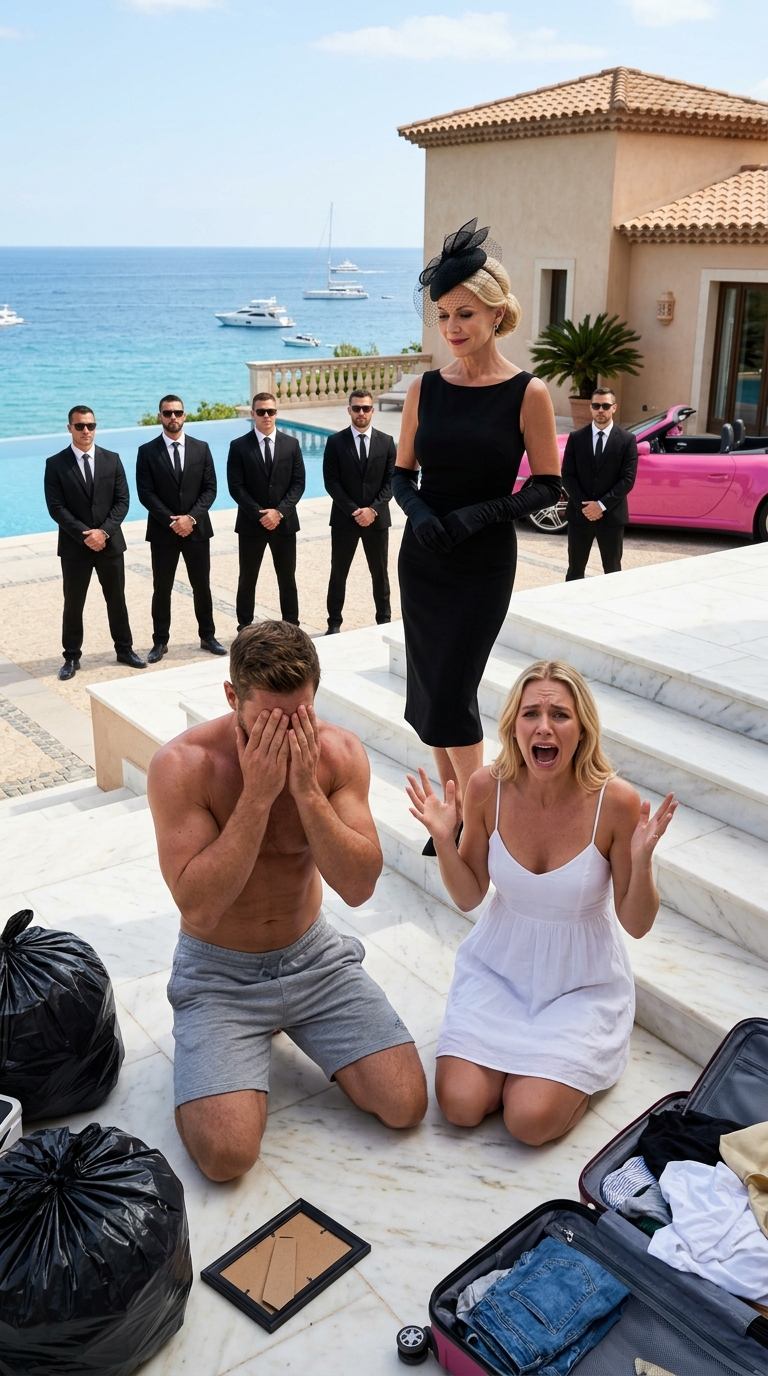
Far removed from my world.
Back inside the boardroom, I signed the final page of a thick legal document, completing the hostile acquisition of our largest competitor.
I slid the folder across the table.
A collective breath moved through the room.
My Vice President of Operations, a man who had known my father for decades, smiled as he gathered the paperwork.
“A flawless execution, Sarah,” he said, shaking his head in admiration. “You dismantled their board in three weeks. Tell me, how did you learn to be so deeply ruthless in business?”
I walked toward the enormous window and looked out across the city.
Millions of lives moved below through the arteries of Los Angeles.
A deep calm settled over me.
The day of my mother’s funeral hadn’t destroyed me.
It had burned away the last traces of innocence.
It had forged me.
“I learned it on the worst day of my life,” I replied softly, my breath lightly fogging the glass.
Far below, I watched the tiny figure of David disappear into the back seat of a yellow taxi.
“Someone once told me I took too long to grieve. It turns out, I just needed exactly five minutes to bury the dead weight.”
A ripple of laughter moved around the room.
As the meeting concluded and the executives departed, I remained alone amid the quiet hum of power.
I returned to my desk.
Before I could sit down, the red console on my secure private line began flashing.
The caller ID displayed a heavily encrypted sequence originating from the Department of Defense in Arlington.
I reached forward and wrapped my fingers around the receiver.
A small, dangerous smile appeared on my lips.
“Director Sarah Vance speaking,” I said, my voice carrying the unshakable authority of my mother’s legacy. “Let’s talk about the new contract.”
