


Part 1: The Hearing Begins
By nine o’clock on a rainy Thursday morning, Courtroom Three in Franklin County, Ohio, was nearly packed. The divorce had become something of a local spectacle because my husband, Barrett O’Connell, was the well-known CEO of O’Connell Logistics, one of the Midwest’s fastest-growing transportation companies.
His face regularly appeared in business magazines, charity bulletins, and photographs beside local politicians at fundraising galas. Mine, meanwhile, was almost never seen anywhere.
For thirteen years, I had quietly stood beside him at award ceremonies and corporate functions, smiling whenever reporters asked how proud I was of his accomplishments. They always described me as the supportive homemaker cheering from the sidelines, and I never bothered to correct them.
After our twin sons, Wyatt and Emmett, were born, I stepped almost entirely out of public view. I attended parent-teacher meetings, packed school lunches, scheduled doctor appointments, and kept our household running while Barrett traveled constantly from one business conference to the next.
Because I never sought attention, everyone assumed I had played no meaningful role in his success. That morning, Barrett entered the courtroom carrying a thick black binder, accompanied by three attorneys and the confidence of a man convinced the verdict was already his.
He wore a tailored navy suit, a platinum watch, and the composed expression he saved for television interviews. Seated beside him was Paige Delancy, the company’s public relations director and the woman he intended to marry the moment our divorce was finalized.
She looked flawless in a fitted cream dress, her hand resting comfortably on Barrett’s arm as though she already belonged there. Barrett’s lead attorney, Douglas Croft, had spent weeks presenting the same carefully crafted argument in every filing.
Douglas insisted Barrett had built the company entirely on his own, earned every dollar himself, and could provide our sons with a far brighter future. According to their paperwork, I had no independent career, no meaningful assets, and no realistic way to maintain the lifestyle Wyatt and Emmett had always enjoyed.
They argued that the prenuptial agreement protected nearly everything Barrett considered his property. He was equally convinced it would help him secure primary custody of our boys.
Judge Roberta Lawson entered the courtroom shortly after nine and took her seat. She reviewed the thick stack of legal files in front of her before lifting her eyes toward the empty chair at my table.
“Where is Mrs. O’Connell?” Judge Lawson asked, scanning the courtroom.
Barrett glanced at his platinum watch and offered his attorneys a faint smile. “Loretta has never been especially concerned with other people’s schedules, Your Honor.”
Paige covered a quiet laugh with her hand as she leaned toward Barrett.
Judge Lawson immediately fixed her with a stern stare. “Ms. Delancy, this is a formal court hearing, not a private conversation, so you will remain completely silent unless I address you directly.”
Paige’s pleasant smile disappeared instantly as she straightened in her chair.
Douglas rose and began presenting Barrett’s petition for primary custody. He spoke confidently about the sprawling stone home in Upper Arlington, the costly private school tuition, the family investment portfolio, and the stable lifestyle Barrett claimed only he could provide.
He had barely concluded his polished opening statement when the heavy courtroom doors swung open.
I walked inside holding the hands of our eight-year-old twin boys. Wyatt wore a small navy blazer and kept his eyes fixed on the floor. Emmett gripped my hand so tightly that his knuckles had turned white.
The moment Barrett saw the three of us together, his calm expression faltered.
Paige leaned closer and whispered softly, “Why on earth did she bring the boys here?”
Judge Lawson caught the remark immediately.
“Ms. Delancy, I have already warned you once about speaking out of turn.”
I approached my table with the boys and addressed the judge directly.
“I apologize for arriving late, Your Honor, but the boys asked to come with me today.”
Judge Lawson carefully studied both children before responding.
“Children usually should not be present during proceedings like this one, Mrs. O’Connell.”
“I understand that completely, Your Honor,” I replied calmly. “However, their father has already told them that I abandoned our family, that I have no way to support them, and that they will soon be living exclusively with him and Ms. Delancy, so I did not want them to hear only one side of the truth.”
Barrett straightened in his seat, frowning deeply.
“That is an entirely unfair accusation, Loretta!”
I neither looked at him nor acknowledged the interruption.
The judge instructed a court bailiff to seat the boys nearby—far enough from the legal teams, yet close enough to clearly see both of their parents.
Once Wyatt and Emmett were settled, Judge Lawson allowed Douglas to continue.
Part 2: Uncovering the Foundation
For the next twenty minutes, Douglas described me as though I had simply been an unemployed bystander throughout my own marriage. He painted Barrett as the sole architect of a thriving logistics empire built entirely through his own determination.
He spoke at length about the hundreds of employees Barrett supposedly supported, the contracts Barrett had negotiated, and the wealth Barrett had allegedly created single-handedly. He noted that I had not held a full-time job since the twins were born, carefully avoiding any explanation for why.
According to him, I relied entirely on Barrett’s income and lacked the financial stability necessary to raise our sons without his support. He conveniently ignored the fact that I had managed every aspect of Wyatt and Emmett’s daily lives for the past eight years.
When Douglas finished, he formally requested primary physical custody for Barrett while asking the court to limit me to supervised visitation until I could demonstrate complete financial independence.
Judge Lawson shifted her attention toward my table.
“Mrs. O’Connell, who is representing you in these proceedings today?”
“I am representing myself, Your Honor,” I answered clearly.
Barrett leaned back in his leather chair, unable to hide his satisfaction.
Judge Lawson removed her reading glasses and placed them on the bench.
“Do you truly understand that your husband has a full team of experienced attorneys, and that the issues before this court are extremely serious?”
“Yes, Your Honor, I understand perfectly.”
“Then you may respond to his petition.”
I opened my leather handbag, removed a single sealed manila envelope, and handed it directly to the court clerk.
Inside were the certified original incorporation documents for O’Connell Logistics.
Judge Lawson broke the wax seal and quietly reviewed the paperwork. Her expression remained neutral as she turned each page.
Then she reached the official ownership allocation.
She stopped.
The courtroom fell completely silent as she studied the page a second time before lifting her eyes directly to Barrett.
“Mr. O’Connell, why is your wife’s maiden name listed as the original majority owner of this corporation?” Judge Lawson asked sharply.
Barrett opened his mouth, but nothing came out. Every ounce of confidence disappeared from his face.
Douglas turned toward his client so abruptly that several legal documents slid across the polished wooden table.
Paige frowned in confusion.
“Barrett, what on earth is the judge talking about?” she whispered loudly.
Judge Lawson raised her voice over the murmurs spreading through the courtroom.
“Loretta Bellamy is clearly listed as holding seventy-four percent of the company shares at the time of incorporation.”
A wave of whispers swept through the public gallery behind us.
Barrett finally managed to answer.
“Your Honor, that simple document cannot possibly be correct after all these years.”
Judge Lawson responded without hesitation.
“This is an original corporate filing certified directly by the state government. Are you officially claiming that a state document is fraudulent?”
Barrett shot a nervous glance toward Douglas before looking back at me.
“She only signed those initial papers because we were married at the time, but the business had absolutely no actual financial value back then!”
Judge Lawson’s expression hardened.
“So you explicitly acknowledge that this official state document is completely genuine?”
The color drained from Barrett’s face instantly.
Douglas rose at once, adjusting his suit jacket.
“Your Honor, my team requests a brief recess to thoroughly review these unexpected materials.”
“You may have exactly ten minutes,” Judge Lawson declared, striking the gavel once. “I suggest you use every second of them wisely.”
Part 3: Confrontation in the Hallway
The moment we stepped into the carpeted hallway, Barrett strode straight toward me, fury burning in his eyes. His voice remained low, but every trace of his earlier confidence had been replaced by disbelief.
“What game are you playing, Loretta?” Barrett demanded, his fists clenched tightly.
“I simply brought the complete truth into the courtroom,” I answered quietly.
Paige hurried over and stopped beside him.
“Barrett, what does she mean by seventy four percent ownership?” He ignored Paige completely, never taking his eyes off me. That silence told her far more than any explanation ever could.
Fifteen years earlier, O’Connell Logistics had not been a successful company employing hundreds of people across several states. It had been a single rusted delivery van, a folding table squeezed into our tiny apartment, and a stack of unpaid invoices that seemed to grow by the day.
Barrett had endless ambition, effortless charisma, and an incredible gift for convincing people to believe in his vision. What he did not have was startup capital, solid credit, administrative skills, or the patience to handle the endless operational work required to keep a business alive.
I had every one of those things.
My late aunt had left me a small property in Lakewood along with a modest investment fund. I sold both to provide the startup money for the company Barrett and I had dreamed of building together.
I completed the original business registration paperwork myself. I negotiated our first commercial vehicle lease with a local dealership.
I arranged the insurance policies, secured transportation permits, created payroll systems, and prepared balance sheets long after midnight while Barrett drove the early morning routes. For the first two years, I also kept my full-time position in medical administration so my reliable paycheck could cover our rent while the business slowly expanded.
Back then, Barrett proudly referred to it as our company.
Everything changed after Wyatt and Emmett were born.
Wyatt needed specialized physical therapy for nearly a year, while Emmett battled chronic respiratory problems that required constant medical appointments. I stepped away from the daily business because I believed it was only a temporary sacrifice for our family.
Gradually, Barrett began introducing himself publicly as the company’s founder.
Eventually, magazine interviews described him as the man who had built a multimillion-dollar business entirely through his own determination. At first, I stayed silent because I did not want to embarrass my husband.
Later, I remained silent because correcting his story would have revealed just how far apart we had already drifted.
But the moment he convinced our sons that I had contributed nothing to the life they enjoyed, my silence ended.
Douglas approached us in the hallway, his confident posture noticeably less certain.
“Mrs. O’Connell, are there any other historical records we should be made aware of before we return inside?”
“Yes, quite a few,” I answered calmly.
“What specific records are you referring to?” Douglas asked, pulling out a notepad.
“I have complete capital contribution receipts, early tax returns, meeting notes, personal loan guarantees, payroll records, corporate emails, and certified copies of every equity agreement,” I replied clearly.
Barrett stared at me in disbelief.
“You actually kept all of those old papers for over a decade?”
“I kept every single piece of paper, Barrett,” I said, meeting his eyes.
Paige slowly turned toward him, her confidence beginning to crumble.
“You explicitly assured me that she had nothing whatsoever to do with the origin of the business.”
“Paige, please, this is not the right time or place for this,” Barrett snapped, refusing to look at her.
The expression on her face changed immediately. She no longer looked like the future wife of a powerful executive. Instead, she looked like someone realizing she had believed an elaborate lie.
Across the hallway, Wyatt and Emmett stood quietly beside the court officer. Wyatt pretended to study a poster on the wall, but Emmett was clearly listening to every word.
I walked over, knelt in front of them, and smiled gently.
“Are you two holding up okay?”
Wyatt lowered his eyes to his shoes before quietly asking,
“Mom, did Dad lie to us about everything?”
I drew a slow breath, refusing to let my own hurt shape how they viewed their father.
“Your father did not explain the entire history honestly to you boys, but this is an adult matter that you do not need to worry about fixing.”
Emmett reached over and squeezed my hand.
“Are we still going to live with you in our house?”
“I am doing everything in my power to keep your daily life safe, steady, and comfortable,” I reassured him.
Wyatt glanced toward Barrett and Paige before leaning closer.
“Dad told us last night that Paige had already picked out our new bedrooms in his house.”
Before I could answer, the court clerk stepped into the hallway and announced that the hearing was resuming.
Part 4: Shifting Tides
When everyone returned to the courtroom, the atmosphere had completely shifted. Barrett no longer lounged comfortably in his chair. Paige had stopped whispering altogether, and Douglas chose every word with visible caution.
Judge Lawson gestured toward me.
“Mrs. O’Connell, please clarify the nature of these financial documents for the record.”
“I provided the entire founding capital for the enterprise,” I explained clearly. “The company was established using my personal inheritance funds and secured by my individual loan guarantees. Barrett managed daily dispatch operations, while I oversaw administration, regulatory compliance, and financial management until our sons required full-time care.”
Douglas rose to challenge my testimony.
“Mrs. O’Connell, did you ever receive an official corporate salary during those initial years?”
“No, I did not.”
“Then legally speaking, you were never an official employee of the company, correct?” Douglas argued.
“I deliberately postponed paying myself because the business desperately needed every available dollar to survive,” I answered.
Douglas lifted a bound folder from the table.
“The signed prenuptial agreement explicitly states that all business assets held in Mr. O’Connell’s name remain his exclusive personal property.”
“That is technically correct,” I replied.
“Then why should that legal agreement not apply to O’Connell Logistics today?” Douglas pressed.
“Because the majority shares were originally issued in my name and were never legally transferred into his name,” I answered firmly.
Douglas stopped midsentence, unable to respond immediately.
Judge Lawson turned another page inside the file.
“I also notice a proposed stock transfer agreement dated six years ago, but it appears to be entirely unsigned by the majority shareholder.”
“I refused to sign that document,” I told the court.
Before his attorney could stop him, Barrett blurted out,
“She refused purely out of spite!”
I calmly looked toward him.
“You handed me those papers three days after my mother’s funeral, claiming they were just routine administrative filings that needed my signature.”
Judge Lawson studied the paperwork through her glasses.
“This agreement would have transferred her entire seventy four percent ownership stake to you for the nominal sum of ten dollars.”
Paige quietly gasped.
Barrett lowered his eyes to the table without saying another word.
I turned back toward the bench.
“Your Honor, I did not bring these historical records today to humiliate my husband. I brought them because he asked this court to believe I was a completely helpless dependent with no professional skills, no income, and no role in creating the life our sons now enjoy.”
Judge Lawson nodded thoughtfully.
“Where have you and the children been residing since the initial separation?”
“In a rented home near their elementary school, Your Honor.”
“And who pays the monthly rent on that property?”
“I pay it myself.”
“Using what source of personal income?” the judge asked.
I handed another slim folder to the court clerk.
“For the past eighteen months, I have worked as an independent operations consultant for mid-sized logistics companies, helping them improve insurance compliance, prepare contract proposals, and manage corporate licensing.”
Douglas quickly reviewed the attached financial records. His jaw tightened as he realized the income was more than enough to comfortably cover rent, tuition, insurance, and savings.
Barrett looked at me in complete disbelief.
“You told me you were just helping out a few old friends with their small businesses!”
“I was helping clients who eventually became close friends, Barrett,” I replied softly.
“Why didn’t you ever tell me you were earning that kind of money?” he asked, his voice strained.
“Because you stopped asking any real questions about my personal life a very long time ago,” I said quietly. The courtroom remained completely silent for several long moments as Barrett sat staring down at his hands.
Douglas cleared his throat, making one final attempt to regain momentum.
“Mrs. O’Connell, are you officially claiming that Mr. O’Connell is an unfit father?”
“No, I am not claiming that at all,” I replied directly.
Barrett slowly looked up, genuine surprise crossing his face.
“He loves Wyatt and Emmett deeply,” I continued with care. “He takes them to baseball games whenever his demanding work schedule allows, and he knows that Emmett likes his pancakes without syrup, even though he often forgets that Wyatt gets extreme anxiety before school public speaking events. He is not a monster, but he has been far more focused on winning this court case than on protecting his sons’ emotional well being.”
Wyatt lowered his head, trying to hide his face, while Barrett looked toward him with unmistakable guilt in his eyes.
Part 5: The Unfolding Mystery
Judge Lawson did not issue a final custody decision that afternoon. Instead, she ruled that the boys would remain primarily with me during the school week, while Barrett would have alternating weekends and one dinner visit during the week.
She also ordered both parents to stop discussing any part of the legal dispute with the children. In addition, she authorized a full financial audit of O’Connell Logistics, including every corporate transfer, equity structure, and historical tax filing.
That audit frightened Barrett far more than the temporary custody ruling ever did.
When the hearing ended, there was no dramatic confrontation—only the quiet closing of folders and the steady rhythm of rain against the courtroom windows. Wyatt and Emmett immediately hurried to my side, each taking one of my hands as we walked toward the parking lot.
As we reached the car, Emmett looked up at me.
“Mom, did you really help start Dad’s entire company?”
“Yes, sweetie, I helped build it alongside him from the very beginning,” I answered gently.
“Why didn’t you ever tell us about that before?”
For a moment, I thought about how I had mistaken silence for peace, and how protecting Barrett’s public image had nearly erased my own place in our family’s story.
Instead of placing that burden on him, I smiled.
“Because I wanted you to see your father simply as your father, not as someone I was competing with.”
Wyatt considered my answer for a moment.
“Can someone be a good person but still do bad things sometimes?”
I brushed the rain from his hair.
“Yes, Wyatt, most human beings are far more complicated than a single mistake.”
Later that night, after the boys were asleep, I sat alone at the kitchen table surrounded by stacks of legal paperwork. The only sound in the house was the gentle hum of the refrigerator.
Then my phone vibrated across the table.
Barrett.
I waited until the third ring before answering.
“Loretta,” he said, his voice completely drained.
“Yes, Barrett?”
“I honestly never believed you would actually produce those old formation documents in court today,” he admitted quietly.
“And I never believed you would walk into court and tell our young sons that I abandoned them,” I replied coldly.
Silence lingered between us.
Finally, he spoke again.
“I panicked, Loretta.”
“What exactly were you panicking about losing?”
“Everything I spent my life building,” he answered softly.
I looked around my modest kitchen. Wyatt’s unfinished homework rested on the counter, while Emmett’s sneakers sat beside the front door.
Those simple things reminded me that the greatest parts of my life had never appeared on a financial statement.
“You walked into court with three high-powered attorneys and asked a judge to take my children away from their home,” I reminded him.
“I didn’t realize it would turn into such an ugly mess,” he murmured.
“It became an ugly mess because you chose to make it one, Barrett.”
He let out a long breath.
“So what do you actually want from me now?”
“I want complete honesty—with the court, with the boys, and with yourself.”
He hesitated before finally asking what had clearly been on his mind all along.
“And what are you planning to do about your majority stake in the company?”
There it was.
Not an apology.
Not concern for our sons.
Only worry about the company and his public reputation.
“I have not made up my mind yet,” I answered plainly.
“The board of directors will completely panic if these equity records leak to the press,” he warned anxiously.
“Then perhaps the board ought to learn how the company was actually created in the first place,” I replied coolly.
His voice softened unexpectedly.
“You sound completely different than you used to, Loretta.”
“That is because I am completely different now.”
“No,” Barrett said quietly. “You sound exactly like the woman I first met all those years ago, before any of the wealth and business stress.”
For one brief moment, I remembered the younger Barrett standing beside our broken delivery van, laughing in the pouring rain because the passenger door refused to close.
I remembered believing with all my heart that we were building a future together as equal partners.
“That young woman trusted you completely, Barrett,” I said softly before ending the call.
The next morning, as I stepped outside to collect the mail, I noticed a plain white envelope taped to my front door.
There was no name.
No address.
No postage stamp.
Inside was a faded copy of a corporate resolution dated nine years earlier stating that I had voluntarily surrendered all voting rights shortly before the twins were born.
My signature appeared at the bottom.
At first glance, it looked authentic.
A closer inspection revealed it was an expertly forged copy.
Tucked behind the document was another sheet containing a single typed sentence.
“You need to investigate what was altered while you were recovering in the hospital.”
A chill spread through my body as I read it again.
Written beneath the typed message in bright blue ink was one handwritten note.
“Ask Barrett why your mother called his private number the night before she passed away.”
For years, Barrett had insisted he never spoke to my mother during her final week in the hospital.
Upstairs, Wyatt and Emmett laughed as they brushed their teeth, filling the house with the comforting sounds of an ordinary morning.
I stood frozen in the doorway, holding proof that the ownership documents had only uncovered the first layer of the truth.
Somewhere beyond that first discovery lay a secret Barrett had spent years making sure I would never find.
Remaining silent to preserve a family can sometimes give someone else the opportunity to rewrite your story, erase your sacrifices, and convince the world that everything you helped create belonged solely to them. Real strength is not always loud. Sometimes it belongs to the person who carefully preserved every document, remembered every promise, and waited patiently until the truth could no longer be ignored.
Unpaid work may never appear on a company payroll, but it can still hold a family together, build a successful business, protect children, and become the foundation of another person’s public success. Trust is not weakness, but continuing to ignore repeated dishonesty after the truth becomes clear can slowly cost someone their confidence, their voice, and their rightful place in their own story.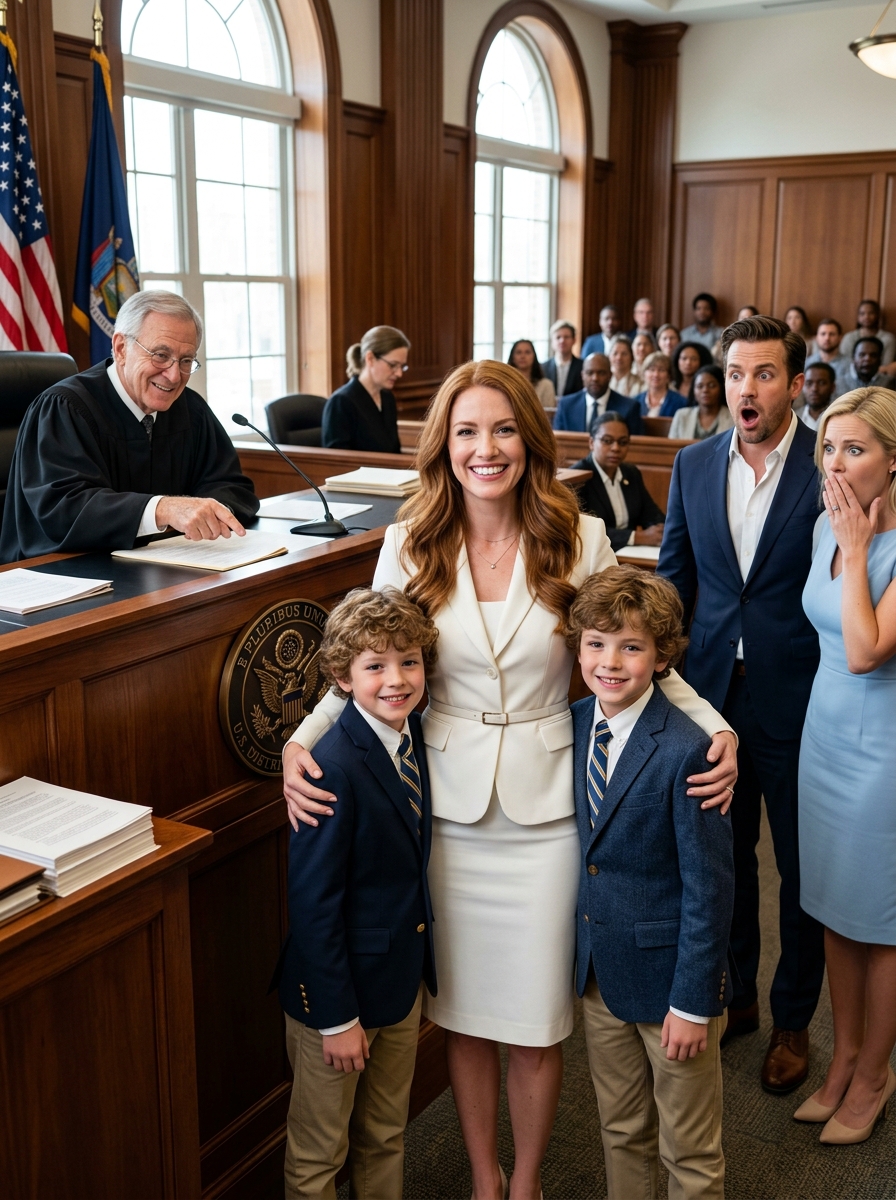
Children should never become bargaining chips in an adult conflict. Their sense of security matters far more than either parent’s pride, reputation, or desire to win. Financial independence is about much more than money—it is the freedom to make choices without fear, pressure, or dependence on someone who no longer values your worth.
The truth can remain buried beneath years of deception, but one preserved document, one forged signature, or one honest question can instantly expose what polished appearances were carefully built to conceal. Protecting an ungrateful partner’s reputation should never require erasing your own contributions, especially when your silence is later used as proof that you never mattered.
Sometimes the end of a marriage becomes the beginning of genuine self-respect. Losing a relationship does not erase the intelligence, courage, or ability that existed long before it began. The greatest victory is not taking everything away from someone in revenge—it is standing firmly in the truth, protecting your children, and refusing to let anyone write you out of your own story again.
THE END.
