

PART 1: THE MAN WHO WANTED ME TO DISAPPEAR
The second my husband smiled across that courtroom, I realized something terrifying.
Keith Simmons hadn’t come to end our marriage.
He had come to erase me.
Not just from his life.
From the bank accounts.
From the house.
From the twelve years I had spent standing beside him while he built a life he now insisted had never belonged to me.
And judging by the expression on his face, he was enjoying every second.
Courtroom 304 was freezing.
The fluorescent lights buzzed overhead, washing everything in a sickly white glow. The wooden benches smelled of floor polish and old paper. Somewhere behind me, a woman coughed into a tissue.
I sat at the respondent’s table with my handbag in my lap and an empty chair beside me.
Across the aisle, Keith looked like he belonged on the cover of a financial magazine.
His navy suit was perfectly tailored.
His silver watch caught the light when he adjusted his diamond cufflinks.
And beside him sat Garrison Ford.
Not the actor.
The attorney.
The man New York tabloids had nicknamed the Butcher of Broadway.
Garrison had built his reputation representing wealthy people who wanted to leave their marriages without surrendering much of what they owned.
He was expensive.
Aggressive.
And apparently very pleased with himself.
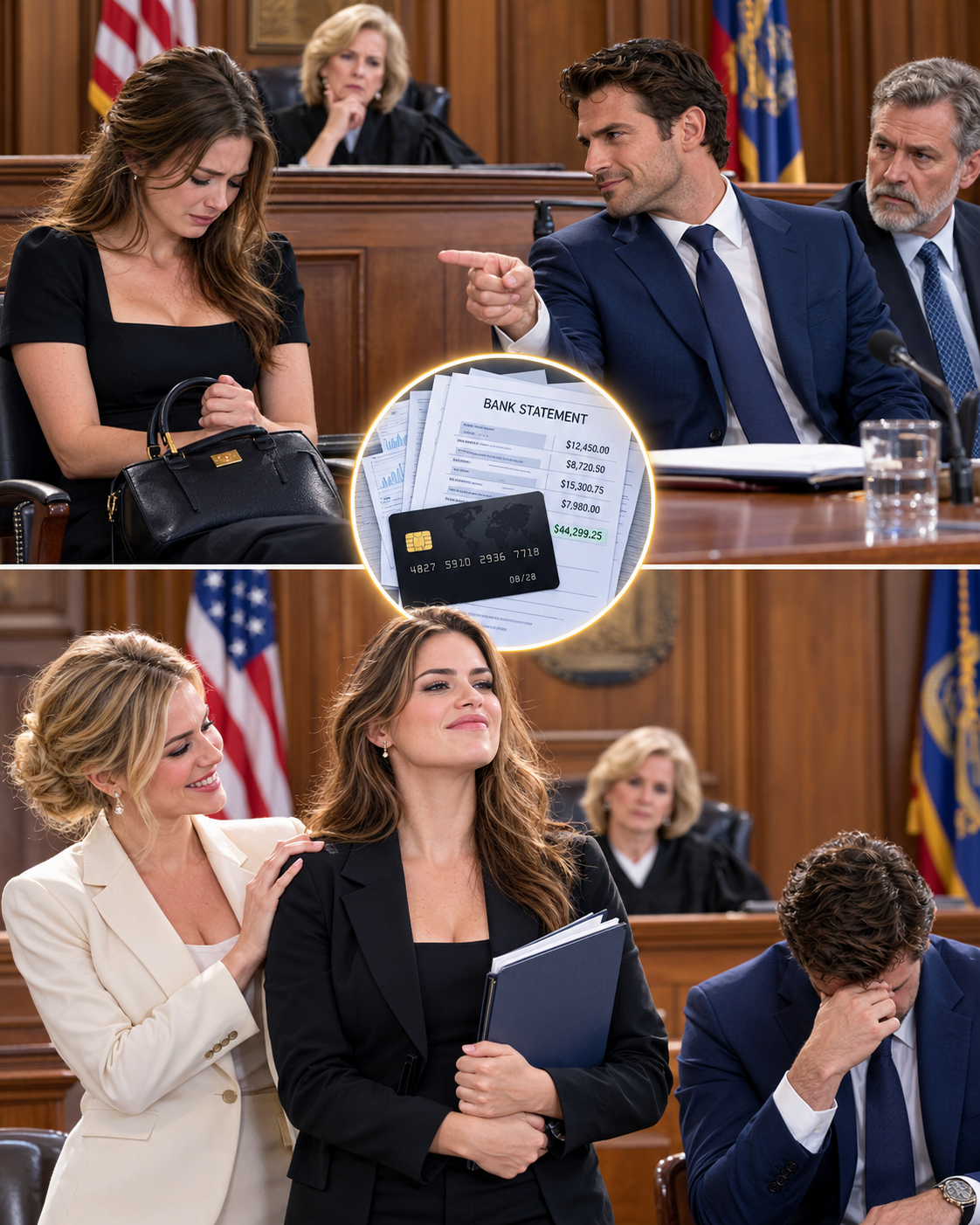
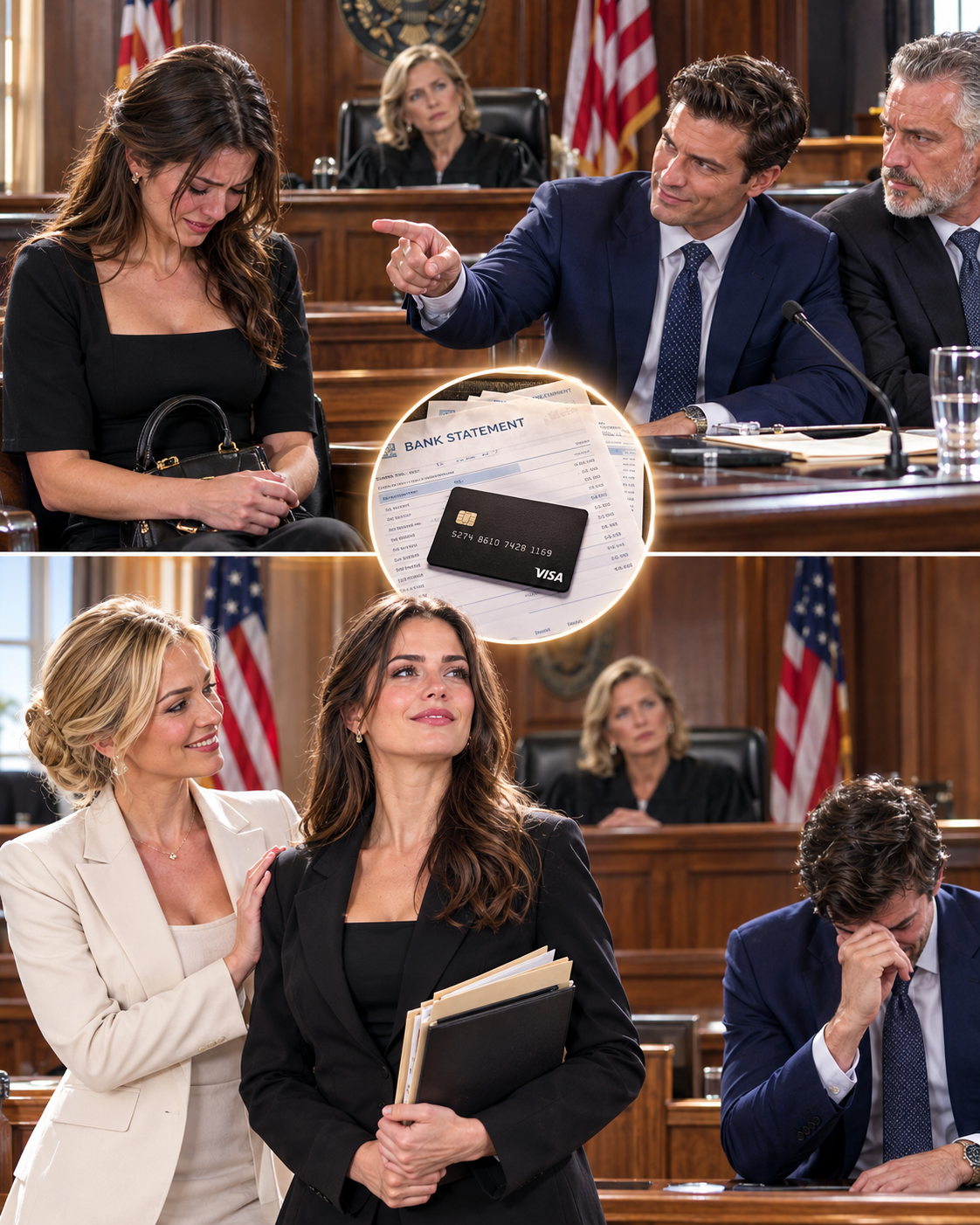
Keith leaned toward him, glanced at the empty chair beside me, and smirked.
“She’s got nobody.”
He didn’t whisper quietly enough.
Several people in the gallery turned.
I felt their eyes moving over my inexpensive black dress, the scuffed handbag resting against my knees, and the pale indentation on my finger where my wedding ring had been.
Heat climbed up my neck.
I looked down.
That was my first mistake.
Keith noticed.
Of course he noticed.
After twelve years of marriage, he knew exactly how to make me feel small.
He knew I hated public attention.
He knew I struggled to speak when someone raised their voice.
And he knew that when I felt humiliated, my first instinct was to disappear.
He had spent years teaching me that instinct.
That morning, he intended to use it to finish me.
My name is Grace Simmons.
I was thirty-eight years old, an artist, and married to a man who had managed to convince almost everyone around us that I was a helpless woman who couldn’t function without him.
Three weeks earlier, Keith had informed me that our marriage was over.
He hadn’t cried.
He hadn’t apologized.
He’d simply walked into my studio, watched me cleaning a paintbrush, and announced that he wanted a divorce.
“I’ve outgrown this marriage, Grace.”
Those were his exact words.
Outgrown.
As though I were an old coat.
I remember looking at him, waiting for the rest of the conversation.
There wasn’t one.
He placed a folder on my worktable.
Inside was a proposed settlement.
Fifty thousand dollars.
Our old Lexus.
And a collection of legal language that required me to surrender virtually every other financial claim against him.
I stared at the pages.
“Keith, we’ve been married twelve years.”
“I know how long we’ve been married.”
“The house. The savings. Everything we built—”
“Everything I built.”
He said it so calmly that I almost believed him.
Almost.
Then he glanced around my studio.
At the canvases leaning against the walls.
At the brushes arranged in old coffee tins.
At the unfinished painting on my easel.
“You’ve had twelve years to play artist,” he said. “Most women would have been grateful.”
Something inside me went very still.
I had heard variations of that sentence for years.
It had simply never sounded so final.
I refused to sign.
The following morning, my credit cards stopped working.
By lunchtime, I couldn’t access our joint savings.
Keith had moved money out of the account I used for household expenses and arranged restrictions on the remaining accounts.
The card I used for groceries was declined.
The card I used to purchase paint supplies was canceled.
Even my little coffee card, the one connected to our household credit account, became useless.
When I called Keith, he answered on the third ring.
“My card isn’t working.”
“I know.”
“What did you do?”
“I’m protecting my assets.”
“Our assets.”
He laughed.
“Grace, don’t start.”
Then he hung up.
Within forty-eight hours, our friends began avoiding me.
A woman I had known for nine years told me she didn’t want to become involved.
Another said Keith had warned her I was going through an emotional crisis.
One friend actually suggested I seek treatment before making any major decisions.
I sat on the edge of my bed that evening, holding my phone, trying to understand how the people who had celebrated our wedding could suddenly act as if I were dangerous.
Keith had called them first.
He had told them I was unstable.
Bitter.
Unable to accept reality.
By the time I reached out, my version of events sounded like the desperate explanation of a woman who had already been discredited.
And now I was sitting alone in a courtroom, facing an attorney whose hourly fee probably exceeded what I had spent on groceries in an entire month.
Garrison straightened his silver tie.
“She has no liquidity, no representation, and no leverage,” he told Keith.
He wasn’t particularly concerned about being overheard.
“Without counsel, she’ll eventually take whatever settlement we put in front of her.”
Keith smiled.
“Fifty thousand and the old Lexus was generous.”
Then he looked directly at me.
“But Grace always enjoyed pretending she mattered more than she did.”
My fingers tightened around my handbag.
Inside it were three things.
A packet of bank statements.
A small notebook.
And my mother’s photograph.
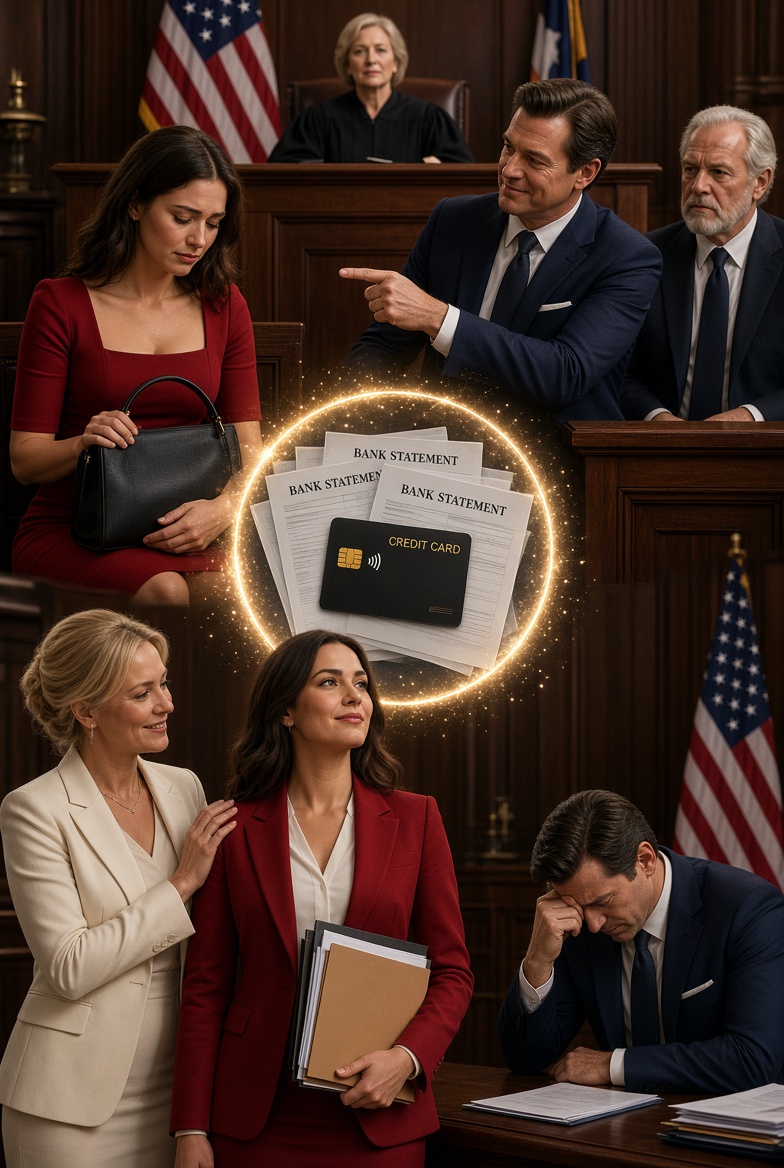
The photograph had been there since the day Keith told me he wanted a divorce.
I couldn’t explain why I’d kept carrying it.
Maybe because my mother had been the last person who could look at me and immediately know when I was lying about being okay.
She had died fifteen years earlier.
And I had never missed her more than I did that morning.
“All rise.”
The bailiff’s voice snapped me back into the room.
Judge Lawrence P. Henderson entered.
He was an older man with tired eyes and the expression of someone who had already heard too many people confuse cruelty with legal strategy.
He sat down, opened the file, and surveyed the room.
His gaze stopped on the empty chair beside me.
“Mrs. Simmons, are you expecting counsel?”
I stood.
My knees trembled.
“Yes, Your Honor.”
“Is your attorney present?”
“Not yet.”
The judge checked the clock.
“We were scheduled to begin several minutes ago.”
“I understand.”
“Do you know when your attorney will arrive?”
I swallowed.
“Any minute, Your Honor.”
Keith coughed.
It was an obvious attempt to hide his laughter.
Judge Henderson looked toward him.
“Something amusing, Mr. Simmons?”
Garrison rose smoothly.
“My client is under considerable emotional strain, Your Honor.”
“Then he may suffer quietly.”
A few people shifted in their seats.
Keith’s smile vanished.
For one beautiful second, I thought he might finally shut up.
Instead, he leaned forward.
“Your Honor, my wife doesn’t understand reality. She has no income, no resources, and she rejected an extremely generous settlement.”
Garrison put a hand on his arm.
Keith ignored it.
“She’s wasting everyone’s time because she can’t accept that the marriage is over.”
I stared at him.
I hadn’t contested the divorce itself.
I hadn’t begged him to come home.
I hadn’t even asked him why he’d stopped loving me.
I had asked for enough money to survive and a fair accounting of the property accumulated during our marriage.
But Keith had transformed that into proof that I was unreasonable.
He looked at me.
“You don’t even have a lawyer, Grace.”
My throat tightened.
“Nobody wants a charity case.”
Judge Henderson’s expression hardened.
“Mr. Simmons, you will address the court, not your wife.”
Garrison stood again.
“Your Honor, we request that the scheduled proceedings continue. Mrs. Simmons has had sufficient time to obtain representation. Further delay would unfairly prejudice my client.”
The judge turned toward me.
“Mrs. Simmons, this matter involves temporary financial support, access to marital funds, and a proposed settlement with significant long-term consequences.”
He paused.
“Representing yourself under these circumstances would be extremely unwise.”
“I know.”
“Then where is your attorney?”
I looked at the doors.
Nothing.
My stomach dropped.
Keith followed my gaze.
Then he laughed.
“Who exactly is coming to save you?”
“Keith,” Garrison warned.
But my husband was enjoying himself too much.
“Your father fixed cars in Queens. Your mother died fifteen years ago. Your artist friends can barely pay rent.”
He spread his hands.
“What did you do, call Ghostbusters?”
A few people in the gallery looked uncomfortable.
I wanted the floor to open beneath me.
Because for one horrible moment, I wondered whether he was right.
What if she didn’t come?
What if the phone call had been a mistake?
What if I had finally reached out for help only to discover that I had waited too long?
Judge Henderson lifted his gavel.
“Enough.”
Keith leaned back, satisfied.
The judge looked at me.
“Mrs. Simmons, I’m sorry, but we cannot hold the calendar indefinitely. Unless your attorney arrives immediately, we will have to proceed with—”
BAM.
The courtroom doors flew open.
The brass handles struck the walls with a sound like a gunshot.
Every head turned.
A woman stood in the doorway.
She wore a perfectly tailored white suit and carried a leather briefcase in one hand.
Her dark hair was swept neatly away from her face.
She looked neither hurried nor apologetic.
She looked dangerous.
Not because she was angry.
Because she was calm.
Her heels echoed across the courtroom.
Click.
Click.
Click.
Garrison Ford’s pen slipped from his fingers.
Keith straightened so abruptly that his chair scraped the floor.
And when the woman turned toward him, I watched the color drain from my husband’s face.
He knew her.
He knew exactly who she was.
But he had spent so many years convincing me that I was alone that he had forgotten something important.
I had a family before I met Keith Simmons.
And one member of that family had just walked through the door.
PART 2: THE WOMAN IN WHITE
“Your Honor, I apologize for the interruption.”
The woman’s voice was low and controlled.
She stopped beside my chair.
“My name is Olivia Mercer. I am appearing on behalf of Grace Simmons.”
Judge Henderson studied her.
“Ms. Mercer.”
“Your Honor.”
“I wasn’t aware you were involved in this matter.”
“Neither was opposing counsel, apparently.”
She turned slightly toward Garrison.
He had recovered his pen, but his expression remained unusually stiff.
“Olivia.”
“Garrison.”
They spoke like two people who had met across enough courtroom tables to know precisely what the other was capable of.
Judge Henderson glanced at the papers in her hand.
“Have you filed your notice of appearance?”
“With the clerk this morning, Your Honor. I have a stamped copy and copies for counsel.”
She handed one to the bailiff.
Then she placed her briefcase on the table beside me.
She looked at my hands.
They were still trembling.
“Grace.”
I couldn’t speak.
She lowered her voice.
“I’m here.”
Three ordinary words.
But after everything Keith had done, they felt like someone had opened a window in a room where I’d been suffocating.
I looked up at her.
For a second, I didn’t see the formidable attorney in the expensive white suit.
I saw a twenty-four-year-old woman standing in our mother’s hospital room, holding my hand while a doctor explained that there was nothing more he could do.
I saw the girl who used to braid my hair before school.
The sister who had worked two jobs through law school and still found time to help me prepare my college art portfolio.
Olivia Mercer.
My older sister.
The person Keith had spent eight years convincing me I no longer needed.
“You’re late,” I whispered.
A tiny smile touched her mouth.
“The clerk had questions about my filing.”
Then she leaned closer.
“And I wasn’t about to walk in here without it.”
I almost laughed.
Almost cried.
Instead, I moved my handbag off the table so she could sit.
Across the aisle, Keith stared at her.
“This is ridiculous.”
Judge Henderson looked at him.
“Mr. Simmons.”
Keith gestured toward us.
“She’s her sister.”
Olivia turned.
“Very observant.”
Garrison stood.
“Your Honor, we were not informed that Ms. Mercer intended to represent the respondent.”
“You have now been informed,” the judge replied.
Garrison adjusted his tie.
“This is highly irregular.”
Olivia opened her briefcase.
“What’s irregular, Mr. Ford, is attempting to push an unrepresented spouse into signing a comprehensive settlement while her access to marital funds has been restricted.”
“That is a mischaracterization.”
“Then I’m delighted you’re here to clarify the facts.”
She removed a thin folder.
I recognized it immediately.
It was mine.
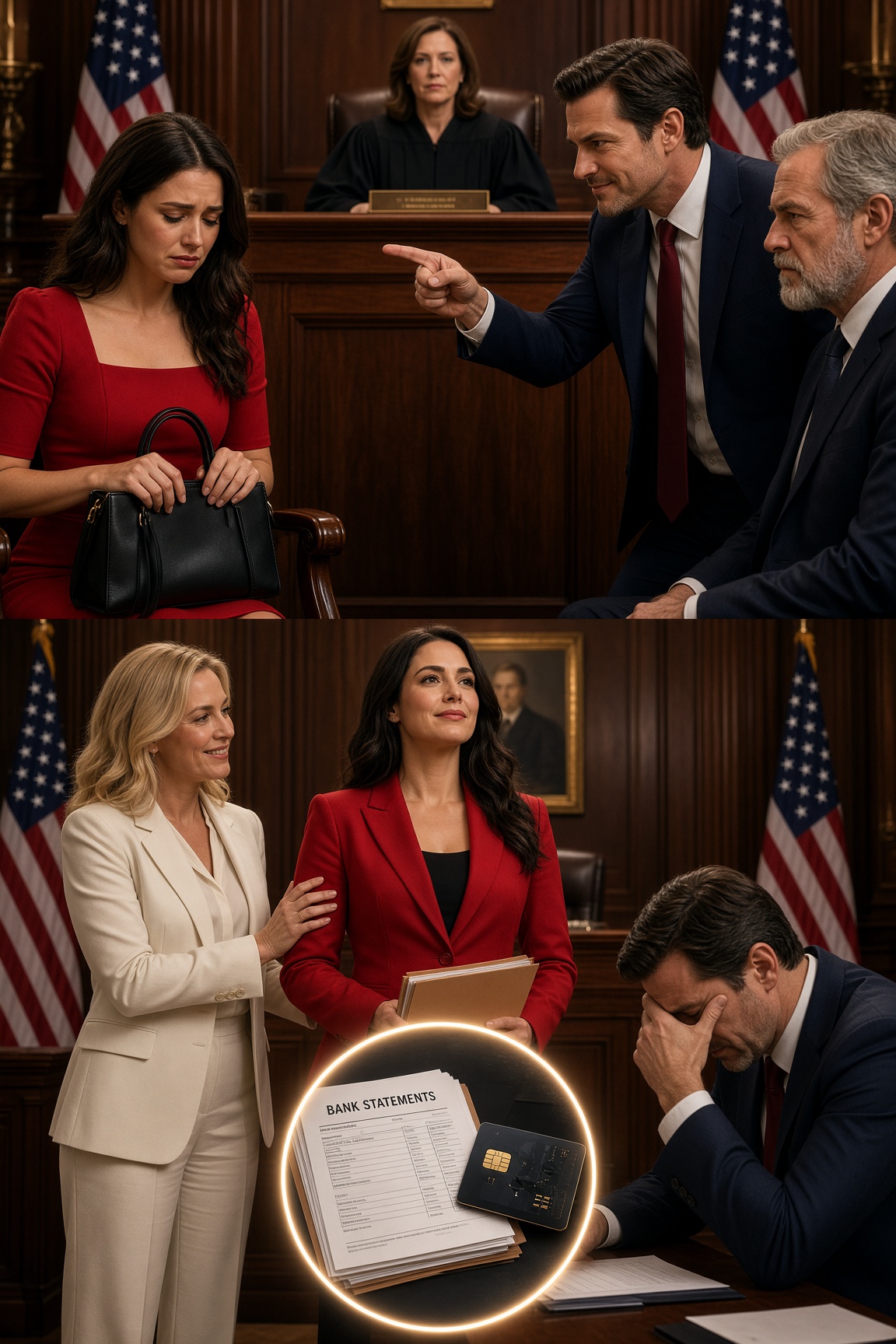
The folder I had spent three sleepless nights assembling at my kitchen table.
Bank statements.
Credit-card notices.
Photographs of my studio.
Copies of the household expenses I had paid.
And the settlement Keith had delivered to me.
For three weeks, he had told me I was too emotional to understand financial documents.
Now those same documents were sitting in front of a lawyer he clearly hadn’t expected to face.
Judge Henderson raised a hand.
“We will proceed in an orderly fashion.”
“Of course, Your Honor,” Olivia said.
She sat beside me.
For the first time that morning, the chair wasn’t empty.
But before I could fully understand what was happening, Keith leaned toward Garrison and whispered something.
His lawyer’s jaw tightened.
I had seen Keith frightened only a handful of times during our marriage.
He usually disguised it as anger.
That morning was no exception.
He pointed at Olivia.
“She has no business being involved in my marriage.”
Olivia didn’t look at him.
“Your marriage is the subject of the proceeding, Mr. Simmons. Your wife’s legal representation is not yours to approve.”
Judge Henderson gave Keith a warning look.
“One more interruption, and we’ll have a different conversation.”
Keith leaned back.
I looked down at the folder.
My name was written across the front in my own handwriting.
GRACE SIMMONS.
For some reason, seeing those letters made my eyes burn.
I had nearly thrown that folder away.
Two nights earlier, I had been sitting alone at the kitchen counter in the small apartment Keith had allowed me to remain in temporarily.
The electricity was on.
The refrigerator contained half a carton of milk, a bruised apple, and three eggs.
My bank card had been declined that afternoon when I tried to purchase groceries.
I had come home and opened Keith’s settlement again.
Fifty thousand dollars.
The old Lexus.
And a promise that he would not pursue me for certain expenses if I signed quickly.
I remember staring at the amount.
Fifty thousand sounded enormous when I couldn’t afford groceries.
But I also remembered the house we had purchased together.
The savings accumulated during our marriage.
The investment statements Keith used to leave on the dining-room table before he decided I didn’t need to see them anymore.
Twelve years.
Was that really what twelve years were worth?
I had opened my mother’s photograph.
There were three of us in it.
Mom.
Olivia.
Me.
We were standing outside my father’s garage in Queens.
Mom had one arm around each of us.
Olivia was smiling at the camera.
I was looking at her.
Even then, I’d always looked to my sister when I didn’t know what to do.
I hadn’t spoken to Olivia properly in eight years.
Not because we’d had some enormous fight.
There had been no dramatic explosion.
No unforgivable betrayal.
Just Keith.
A thousand small comments.
A thousand little suggestions.
“Your sister thinks she’s better than us.”
“She doesn’t respect your choices.”
“She treats you like a child.”
“Every time you talk to Olivia, you come home questioning everything.”
At first, I defended her.
Then I started hiding our conversations.
Eventually, Keith convinced me that choosing my marriage meant putting distance between myself and the people who criticized it.
I stopped answering Olivia’s calls.
She continued trying for a while.
Then the calls became less frequent.
Finally, they stopped.
I told myself she had given up on me.
Now, staring at the photograph, I had wondered whether I had been wrong.
My hands had shaken as I searched for her number.
I still had it.
Of course I did.
I had never been able to delete it.
She answered after two rings.
“Grace?”
I heard the shock in her voice.
I nearly hung up.
“Hi, Liv.”
There was a pause.
Then she said something that almost broke me.
“Are you safe?”
Not hello.
Not where have you been.
Not why haven’t you called me.
Are you safe?
I started crying.
I tried to stop.
I couldn’t.
“Keith wants a divorce.”
“Okay.”
“He’s frozen the accounts.”
Her voice changed.
“All of them?”
“The ones I can use.”
“Where are you staying?”
I told her.
“Do you have money for food?”
That question destroyed the last of my composure.
I covered my mouth with my hand.
“No.”
Olivia stayed quiet for a moment.
Then she said, “Listen to me. I need you to do something.”
“What?”
“Stop apologizing.”
I cried harder.
“I should have called you years ago.”
“We can talk about that later.”
“But—”
“Grace. Right now, we have something more important to handle.”
She asked me to tell her everything.
And for the first time in years, I did.
Not just about the divorce.
About the money.
The isolation.
The way Keith spoke to me.
The way I had gradually stopped painting large canvases because he complained they occupied too much space.
The way I had stopped asking friends to visit because he always found a reason to make them uncomfortable.
Olivia listened.
When I finished, she didn’t immediately promise that everything would be fine.
She was too honest for that.
Instead, she asked, “Do you still have your financial records?”
“Some.”
“Good. Gather them.”
“I don’t know what matters.”
“We’ll sort that out.”
“Keith has Garrison Ford.”
“I know who represents him.”
I heard something in her voice then.
Not fear.
Recognition.
“Olivia, I can’t afford you.”
She gave a short, humorless laugh.
“Grace, you spent half your childhood protecting my law-school textbooks from Dad’s leaking garage roof.”
I wiped my face.
“What?”
“You remember that cardboard box?”
I did.
Of course I did.
“And you made me sandwiches when I studied until three in the morning.”
“Liv—”
“You don’t owe me a retainer.”
I pressed my forehead against the kitchen cabinet.
“Why would you help me after I stopped talking to you?”
She was silent for several seconds.
Then she said, “Because you called.”
That night, for the first time in three weeks, I slept.
Not well.
Not peacefully.
But I slept.
And now Olivia was sitting beside me in Courtroom 304.
Her fingers tapped once against the folder.
“Grace.”
I looked at her.
“Remember what we talked about.”
I swallowed.
“The truth.”
“Exactly.”
Across the aisle, Garrison rose.
“Your Honor, before we continue, I must address the obvious conflict created by Ms. Mercer’s personal relationship with the respondent.”
Olivia stood.
“There is no general prohibition on an attorney representing a sibling, Your Honor. My client has retained me knowingly. I am fully prepared to address any specific ethical concern opposing counsel can identify.”
Garrison’s mouth tightened.
“I merely believe the court should consider—”
“Then identify the actual concern.”
Silence.
Judge Henderson looked at Garrison.
“Do you have a concrete objection, Mr. Ford?”
Garrison adjusted his cuff.
“Not at this time.”
“Then let’s proceed.”
Olivia sat.
Under the table, she briefly squeezed my hand.
I thought the worst humiliation was finally behind me.
Then Garrison opened his own folder.
And placed Keith’s financial declaration on the table.
PART 3: THE PRICE OF TWELVE YEARS
“Your Honor, the petitioner has offered Mrs. Simmons a settlement considerably more favorable than her financial contributions would justify.”
Garrison spoke with practiced confidence.
He placed a document on the lectern.
“Mr. Simmons has been the primary income earner throughout the marriage. Mrs. Simmons has not maintained regular employment and has contributed little measurable income to the marital estate.”
Keith stared straight ahead.
I recognized the expression on his face.
It was the same look he wore when explaining to dinner guests why I didn’t have a real career.
He had rehearsed those sentences for years.
And now his attorney was repeating them under oath’s shadow, in a room where words could become legally consequential.
Garrison continued.
“My client has nevertheless offered fifty thousand dollars, a vehicle, and a clean division of future obligations.”
Olivia wrote something in her notebook.
“Is Mrs. Simmons expected to be grateful?” she asked.
Garrison glanced at her.
“She’s expected to be reasonable.”
“What is the complete value of the marital estate?”
“We have provided the required financial disclosures.”
Olivia lifted the document from her folder.
“The materials provided so far do not fully account for the balances and transfers shown in the bank statements my client retained.”
Garrison’s expression changed slightly.
Not much.
Just enough.
Olivia continued.
“We are requesting complete statements and supporting records before anyone suggests this court approve a final distribution.”
Judge Henderson nodded.
“That seems appropriate.”
Garrison recovered.
“The respondent has no evidence that my client has concealed assets.”
“We have not alleged concealed assets,” Olivia said. “We have identified gaps in the information necessary to evaluate this settlement.”
She held up the proposed agreement.
“And we have a serious concern about the circumstances under which this agreement was presented.”
Keith shifted.
I watched his fingers tighten around a pen.
Olivia turned toward me.
“Grace, may I discuss the account restrictions?”
I nodded.
The judge noticed.
“Mrs. Simmons, you’ll have an opportunity to speak directly. For now, counsel may address the application.”
Olivia faced the bench.
“My client lost access to the household funds she had used throughout the marriage shortly after declining the settlement. Her cards were canceled. Her access to the joint accounts was restricted. She is asking for temporary financial support and access to funds necessary to obtain independent advice.”
“Mr. Simmons has no obligation to subsidize frivolous litigation,” Garrison replied.
Olivia’s expression didn’t change.
“Would you characterize grocery money as litigation?”
A few people in the gallery shifted.
Garrison ignored them.
“The respondent has her own earning potential.”
“That does not answer the question.”
“She is a professional artist.”
Keith let out a sharp laugh.
“Professional?”
The judge looked at him.
Keith pressed his lips together.
Olivia continued.
“Then we agree she has a professional skill. Her earning history and current income are separate questions, and we’ll address them with the records.”
I looked at her.
She wasn’t claiming I had been financially successful.
She wasn’t pretending I had sold paintings for millions of dollars.
She was refusing to let Keith turn my lack of steady income into proof that I had no value.
And for the first time, I began to understand the difference.
The judge reviewed the paperwork.
“Mrs. Simmons, I want to hear from you.”
Olivia turned.
“You can do this.”
I stood.
My legs felt unsteady.
Judge Henderson’s voice softened.
“Tell me what happened after you received the proposed settlement.”
I looked at Keith.
He was watching me closely.
Waiting.
I knew that look.
It meant he expected me to remember all the times he had told me not to embarrass him.
All the times he’d interrupted me at parties.
All the times he’d corrected small details in my stories until I stopped speaking.
I took a breath.
“Keith gave me the settlement three weeks ago.”
“Did you sign it?”
“No, Your Honor.”
“Why not?”
“Because I didn’t understand how fifty thousand dollars and a car could represent my share of a twelve-year marriage without seeing a complete accounting of our finances.”
Garrison rose.
“Your Honor—”
“Let her answer.”
I swallowed.
“I asked Keith for time to get advice.”
“What happened?”
“The next morning, my cards stopped working.”
I heard Keith move in his chair.
“I called the bank. I learned that I couldn’t access the accounts I’d used before.”
“Did you have other funds available?”
“Very little.”
“Could you pay an attorney?”
“No.”
I hesitated.
The judge waited.
I looked at my sister.
Olivia nodded once.
I turned back.
“I couldn’t buy groceries.”
The room became very quiet.
Garrison rose.
“Mrs. Simmons had access to a vehicle and continued to occupy a residence paid for by my client.”
Judge Henderson looked at him.
“Mr. Ford, she was asked whether she could purchase groceries.”
Garrison sat.
The judge turned toward me.
“Continue.”
I gripped the edge of the table.
“I called Keith and asked him to restore access.”
“What did he say?”
“He told me he was protecting his assets.”
“Those words?”
“Yes.”
“What did you say?”
“I told him they were our assets.”
I could feel Keith staring at me.
“He laughed and hung up.”
The judge made a note.
I had spent three weeks feeling ridiculous for being upset about a declined grocery card.
Now I heard myself describing it aloud and realized how different it sounded when nobody interrupted me.
I wasn’t upset because Keith had stopped buying me things.
I was upset because money accumulated during our marriage had been used to pressure me into surrendering my rights.
Judge Henderson asked another question.
“Mrs. Simmons, did you understand that you could seek temporary financial relief?”
“No, Your Honor.”
“Why not?”
I looked down.
“Keith told me that if I didn’t sign, I would spend whatever money I received fighting him.”
I hesitated.
“And he told me nobody would represent me without money.”
Keith leaned forward.
“That’s not what I said.”
The judge’s head snapped toward him.
“Mr. Simmons.”
Keith stopped.
“If you wish to testify, your attorney can address that at the appropriate time. You will not interrupt.”
My heart hammered.
But something had changed.
Keith was angry because I was speaking.
And I was speaking anyway.
Olivia asked whether she could refer to my supporting documents.
The judge agreed.
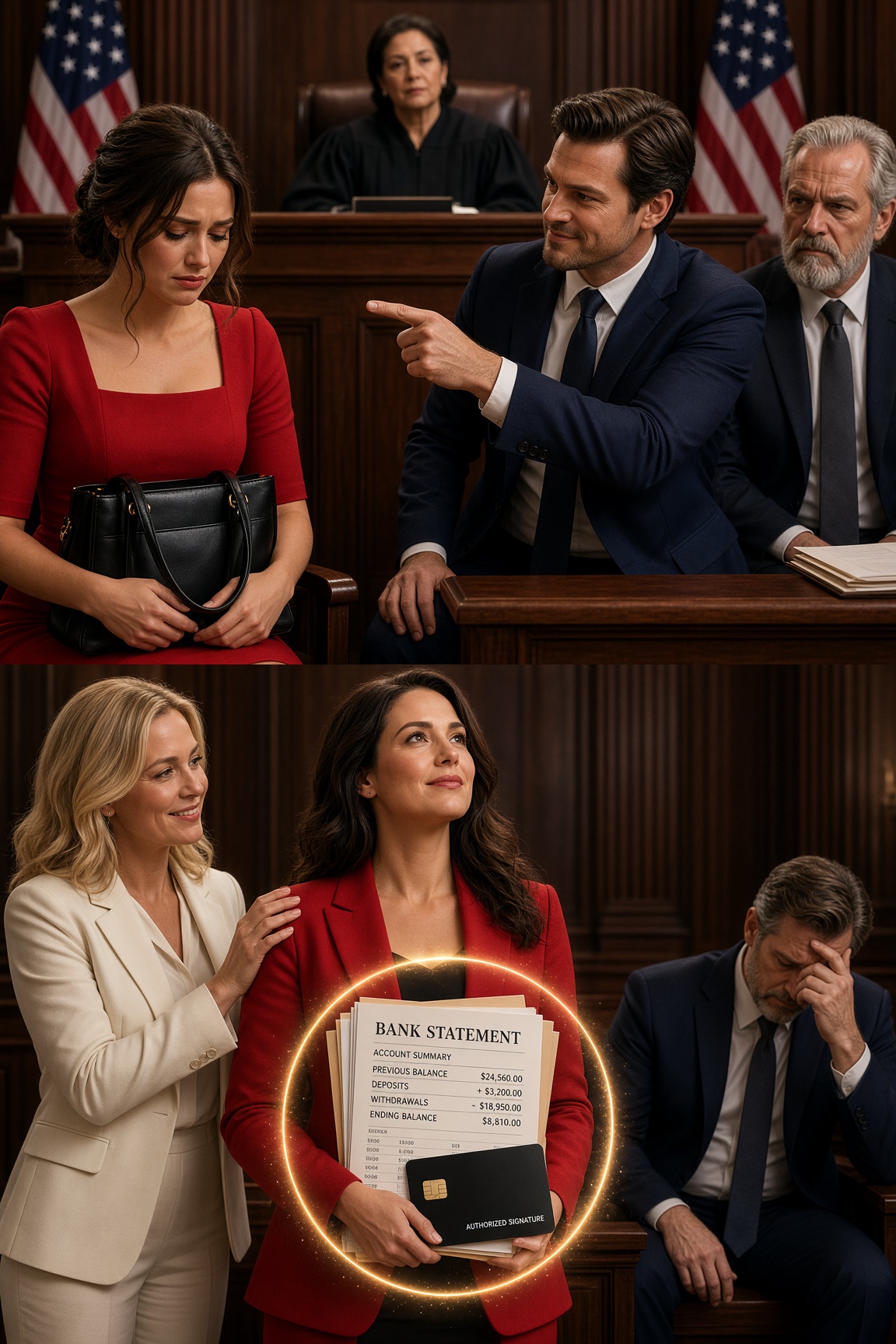
She submitted the account notices and statements through the proper procedure, identifying them as records we had brought to support the temporary application.
There was no secret recording.
No mysterious document.
No astonishing hidden confession.
Just the ordinary paperwork Keith had assumed I was too overwhelmed to preserve.
The dates mattered.
The settlement had been delivered.
I had refused to sign.
The financial restrictions had followed.
Olivia didn’t claim the timing alone proved every allegation.
She didn’t need to.
It was enough to raise a serious question about whether I had been placed under financial pressure while being asked to waive substantial rights.
Garrison stood.
“Your Honor, my client is entitled to manage his individual accounts.”
“Certainly,” Olivia replied. “And the court is entitled to examine the financial circumstances of both parties when considering temporary relief and legal fees.”
Judge Henderson leaned back.
“Mr. Ford, I want a clear accounting of the relevant accounts and the changes in access.”
Garrison nodded.
“Of course.”
Olivia turned another page.
“There’s a second issue.”
Keith’s jaw tightened.
I knew what was coming.
We had discussed it the previous evening.
Still, hearing Olivia say the words felt like standing at the edge of a cliff.
“The petitioner’s presentation suggests Mrs. Simmons contributed nothing of value during the marriage.”
Garrison opened his hands.
“We have acknowledged her domestic contributions.”
“No. Your papers acknowledge that she lived in the marital home.”
Olivia paused.
“Those are not the same thing.”
I stared at the table.
She was right.
Keith always said I had lived in his house.
As though I were a guest.
As though twelve years of shopping, cleaning, arranging repairs, keeping household records, hosting clients, and adjusting my schedule around his work amounted to nothing because there wasn’t a paycheck attached.
Olivia continued.
“Mrs. Simmons also maintained her artistic practice. Some of her work generated income. Other periods did not. The records will show what she earned and how funds were used.”
Garrison shrugged.
“Minimal earnings.”
“Then we will evaluate the actual amounts.”
She turned toward the judge.
“But the larger question is why Mr. Simmons believes that being the higher earner entitles him to treat the entirety of the marital estate as his separate property.”
Keith’s face reddened.
“My money paid for everything.”
His voice rang through the courtroom.
The bailiff turned.
Judge Henderson lowered his pen.
“Mr. Simmons, I have warned you.”
Keith pointed toward me.
“She painted pictures while I worked eighty hours a week.”
Something hot moved through my chest.
I stood before Olivia could stop me.
“I know you worked hard.”
Every head turned.
My voice shook.
But I kept going.
“I never said you didn’t.”
Keith stared.
“I know what you sacrificed for your career.”
My eyes burned.
“But you don’t get to pretend I wasn’t there.”
For a moment, there was no sound.
Then Keith smiled.
That cruel, familiar smile.
“Grace, don’t embarrass yourself.”
The words struck with almost physical force.
I saw my sister’s hand move toward mine.
But I didn’t sit down.
I looked directly at my husband.
“No.”
His smile faltered.
I swallowed.
“You don’t get to say that to me anymore.”
Judge Henderson raised a hand.
“Mrs. Simmons, please be seated. You’ll have a full opportunity to present your position.”
“Yes, Your Honor.”
I sat.
My heart was pounding so hard I could feel it in my teeth.
Olivia slid a glass of water toward me.
Across the aisle, Garrison leaned close to Keith.
His voice was too low for me to hear.
But I saw his expression.
For the first time, he looked like a lawyer who was worried about what his client might say next.
Then Judge Henderson turned a page.
And asked the question Keith had spent three weeks trying to avoid.
“Mr. Ford, what is the basis for the proposed fifty-thousand-dollar settlement?”
PART 4: THE LIFE HE SAID I NEVER BUILT
Garrison didn’t answer immediately.
He checked the financial declaration.
Then he looked toward Keith.
“My client believes the offer reflects the circumstances of this marriage, Your Honor.”
Judge Henderson folded his hands.
“I asked for the basis of the figure.”
Garrison cleared his throat.
“The parties have differing views regarding the classification and distribution of certain assets.”
“Then that requires analysis, doesn’t it?”
“Yes, Your Honor.”
“Not merely an assertion that one party earned the income.”
Olivia said nothing.
She didn’t have to.
Keith stared at the documents in front of him.
The judge continued.
“Marriage is not simply an arrangement in which the higher earner automatically receives everything. We will examine the relevant facts, the applicable law, and the evidence.”
I watched Keith’s expression harden.
He had spent years explaining finances to me as though the subject were too complicated for my small artistic brain.
Now a judge was asking him to explain them.
And suddenly, the situation wasn’t nearly as amusing.
The hearing continued.
There were discussions about household expenses.
Account balances.
Temporary support.
Legal fees.
Documents that needed to be exchanged.
The details were complicated, and I didn’t understand every word.
But Olivia did something Keith had never done.
When she noticed confusion on my face, she wrote a short explanation in the margin of her notebook and slid it toward me.
Temporary support.
Not final settlement.
Then:
Financial disclosure first.
I looked at her.
She gave me a small nod.
I wasn’t being asked to surrender my future that morning.
We were establishing the conditions under which I could fight for it fairly.
That distinction mattered more than I could explain.
At one point, Garrison suggested that I could immediately return to full-time employment and therefore had no need for meaningful temporary support.
Olivia stood.
“My client is prepared to work, Your Honor. Her willingness to earn income has never been in dispute.”
She glanced at Keith.
“But her current finances cannot be evaluated as though she has instant access to a salary she does not presently receive.”
The judge nodded.
“We’ll consider the actual circumstances.”
Then he turned toward me.
“Mrs. Simmons, what are your intentions regarding employment?”
I stood again.
“I want to continue painting, Your Honor.”
Keith made a small sound of disbelief.
I ignored it.
“But I also know I need reliable income. I’ve already started looking for additional work. I can teach classes. I’ve done commissions before.”
“Have you earned income through your artwork?”
“Yes.”
“Do you have records?”
I touched the folder.
“Some of them.”
The judge nodded.
“Those can be reviewed as part of the financial process.”
I sat.
Keith leaned toward Garrison.
Then, without waiting for his lawyer’s response, he spoke.
“Your Honor, she hasn’t sold a significant painting in years.”
I looked at him.
It wasn’t entirely false.
And somehow that made it worse.
My art career had slowed dramatically during our marriage.
There had been a time when I worked six hours a day in my studio.
Then Keith’s career became more demanding.
He needed me to organize dinners.
Handle repairs.
Keep track of bills.
Make sure the house looked presentable when business associates visited.
He complained whenever a commission interfered with those responsibilities.
Then he complained that I wasn’t earning enough.
It was a circle I could never escape.
If I painted, I was neglecting the marriage.
If I didn’t paint, I was lazy.
If I earned money, it wasn’t enough.
If I asked for money, I was dependent.
I had lived inside that circle for so long that I stopped noticing it.
Olivia looked toward the bench.
“Your Honor, my client can address her work history without commentary from the petitioner.”
The judge turned toward Keith.
“I agree.”
Keith’s face flushed.
Olivia continued.
“There’s also a relevant distinction between income generation and contribution to a marriage.”
Garrison replied, “We are not disputing that Mrs. Simmons performed household tasks.”
I felt a sudden flash of anger.
Household tasks.
As if twelve years could be folded neatly into two dismissive words.
Olivia looked at him.
“Good. Then perhaps we can stop suggesting she did nothing.”
Garrison’s lips tightened.
The judge called a short recess to review the submissions and allow counsel to confer.
The moment he left, Keith stood.
He came toward our table.
Garrison followed immediately.
“Grace.”
I looked up.
Keith wasn’t smiling anymore.
His voice was low.
“Can I talk to you?”
Olivia remained seated.
“Through counsel, Keith.”
He glared at her.
“This is between me and my wife.”
“You’re in the middle of a divorce proceeding. I’m her attorney.”
He ignored her and looked at me.
“Do you understand what you’re doing?”
My stomach tightened automatically.
There it was.
The voice he used when I’d made a mistake.
The voice that meant consequences were coming.
I almost apologized.
Instead, I asked, “What do you mean?”
He leaned closer.
“You’re turning this into a war.”
I stared at him.
“You froze the accounts.”
“I’m protecting myself.”
“You canceled my cards.”
“You were spending money we didn’t have.”
I almost laughed.
Keith was wearing diamond cufflinks.
His watch was worth more than my studio equipment.
And he was standing in front of me explaining that the grocery card had been canceled because we couldn’t afford it.
“You offered me fifty thousand dollars to walk away from twelve years,” I said.
His eyes narrowed.
“An offer you should have taken.”
Olivia stood.
“Keith, this conversation is over.”
He turned on her.
“You always hated me.”
She looked at him calmly.
“I warned Grace that she shouldn’t have to make herself smaller to keep you comfortable.”
He scoffed.
“There it is.”
“Yes,” Olivia said. “There it is.”
For a moment, I was back in our apartment eight years earlier.
Keith had been angry after a family dinner.
Olivia had noticed that he kept answering questions directed at me.
She had asked me privately whether I was happy.
I told her I was.
She asked again.
Not accusing.
Not pushing.
Just asking.
Keith later told me she’d tried to undermine our marriage.
I believed him.
I had wanted to believe him.
Because accepting that my sister was right would have meant examining everything I had worked so hard to keep together.
Now Keith looked at me.
“You’re really going to let her destroy us?”
I felt the old guilt rise.
Twelve years of reflex.
Twelve years of believing that if Keith was unhappy, I had done something wrong.
I looked at his face.
At the anger.
At the expectation that I would fix it.
And something became painfully clear.
He wasn’t asking me to save our marriage.
He was asking me to protect him from the consequences of ending it unfairly.
“You already ended us,” I said.
He stared.
I continued.
“I’m trying to make sure I can still live when this is over.”
His mouth opened.
Nothing came out.
Garrison placed a hand on his shoulder.
“Keith. Come with me.”
My husband looked at Olivia.
Then at me.
“This isn’t finished.”
I held his gaze.
“I know.”
He walked away.
My hands started shaking only after he disappeared into the corridor.
Olivia sat beside me.
“That was hard.”
I nodded.
I couldn’t speak.
She waited.
Then I whispered, “He still makes me feel like I’m doing something terrible.”
“I know.”
“I keep thinking maybe I should just take the money.”
Olivia looked at me carefully.
“If that’s what you decide after understanding the complete financial picture, we’ll discuss it.”
I stared at her.
She continued.
“But I don’t want fear making that decision for you.”
Tears filled my eyes.
“How did I let it get this bad?”
My sister leaned back.
“Grace, I don’t think you woke up one morning and chose this.”
I looked down.
“He wasn’t like this at first.”
“Tell me.”
So I did.
I told her about our first apartment.
How Keith used to bring home flowers when I sold a painting.
How he stayed up late helping me pack canvases for an exhibition.
How proud he seemed when someone complimented my work.
Then his career accelerated.
The business dinners began.
The bigger house.
The expectations.
At first, he asked me to attend events because he wanted me there.
Later, he insisted I attend because appearances mattered.
Then he started criticizing what I wore.
What I said.
How much I spoke.
He began calling my paintings a hobby.
Eventually, he stopped introducing me as an artist.
He introduced me as his wife.
I didn’t object the first time.
Or the second.
By the hundredth time, I barely noticed.
“I kept thinking the man I married would come back,” I whispered.
Olivia listened.
Then she asked, “When was the last time you finished a painting just because you wanted to?”
I thought about it.
I couldn’t remember.
The realization hit harder than anything that had happened in court.
Keith hadn’t simply restricted my money.
He had gradually taken up so much space in my life that there was almost none left for me.
I covered my face.
Olivia waited until I lowered my hands.
Then she said, “I missed you.”
I looked at her.
Her eyes were wet.
“I missed you, too.”
“I tried calling.”
“I know.”
“I thought you didn’t want me around.”
“I thought you hated Keith so much you couldn’t stand me anymore.”
She shook her head.
“I didn’t hate you, Grace.”
My throat tightened.
“I know that now.”
We sat quietly for a moment.
Then Olivia reached into her briefcase.
“There’s something I want you to see.”
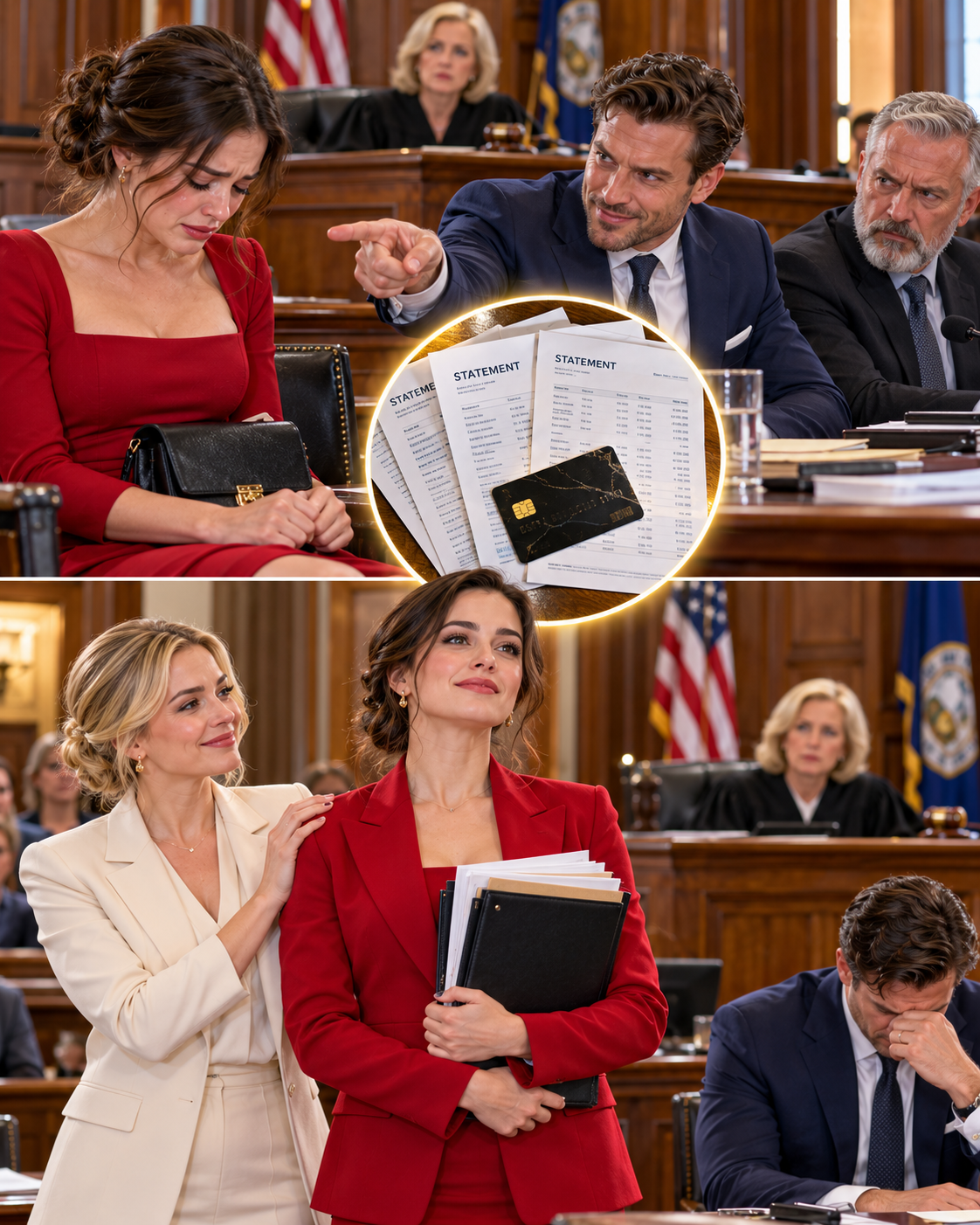
She removed a copy of Keith’s proposed agreement.
She placed it beside the financial records I had collected.
“Look at the difference.”
I examined the pages.
The proposed settlement contained neat, confident statements about property.
The bank records contained dates.
Amounts.
Transfers.
Account histories.
Numbers that didn’t explain themselves and couldn’t be dismissed with one sentence about how Keith had earned the money.
Olivia pointed to the pages.
“Do you see why we need the complete records?”
I nodded.
“Because I don’t know what I’m giving up.”
“Exactly.”
I stared at the agreement.
For three weeks, I had viewed that document as my only escape.
Now it looked different.
Not like an exit.
Like a door Keith wanted me to close before I saw what was on the other side.
The bailiff appeared.
“Counsel, court is reconvening.”
Olivia gathered the papers.
I stood beside her.
Across the room, Keith returned with Garrison.
My husband wouldn’t look at me.
His attorney carried a new stack of documents.
The judge entered.
We rose.
He sat down and began speaking.
And within minutes, the settlement Keith had tried to force on me was no longer the most important document in the room.
PART 5: THE WOMAN HE COULDN’T ERASE
Judge Henderson had reviewed the submissions.
He spoke carefully.
The court would not approve a final financial settlement that morning.
The parties needed to exchange complete financial information before the property questions could be resolved.
The judge also addressed my temporary financial situation.
There would be interim arrangements for support and access to necessary funds, based on the financial information presently available and subject to further review.
He addressed my request for attorney’s fees.
He explained that the court would consider the parties’ financial circumstances so that an imbalance in access to money did not automatically prevent one side from obtaining meaningful representation.
Garrison made objections.
Olivia responded.
The judge listened to both.
There was no dramatic explosion.
No single sentence that magically transferred everything Keith owned into my name.
No instant victory.
But something infinitely more important happened.
The court refused to treat Keith’s version of reality as the only version.
When the judge finished outlining the next steps, Garrison stood.
“Your Honor, my client remains willing to resolve this matter amicably.”
Olivia glanced at the proposed settlement.
“With complete disclosure and meaningful negotiation, so does mine.”
Judge Henderson nodded.
“Then I strongly encourage counsel to proceed accordingly.”
He looked toward Keith.
“And I expect both parties to conduct themselves appropriately.”
Keith stared at the bench.
“Yes, Your Honor.”
The hearing ended.
For several seconds, I remained seated.
I could hear chairs moving.
Papers rustling.
Footsteps.
My body didn’t seem to understand that I was allowed to stand up and leave.
Olivia closed her briefcase.
“Grace?”
I looked at her.
“It’s over?”
“For today.”
I stared across the aisle.
Keith was speaking angrily to Garrison.
His attorney listened with an expression I couldn’t read.
Then Garrison shook his head.
Keith turned away.
I realized something.
He had walked into that courtroom expecting the divorce to become a performance.
He would be powerful.
I would be helpless.
His lawyer would speak.
I would cry.
And everyone would leave understanding that Keith Simmons had won.
Instead, he was walking out with questions to answer.
I stood.
My knees were still trembling.
But I was standing.
In the corridor, Keith caught up with us.
“Grace.”
Olivia stopped.
I stopped beside her.
Keith looked exhausted.
The smug confidence he’d worn that morning had disappeared.
“Can we talk for a minute?”
Olivia glanced at me.
It was such a small gesture.
But it mattered.
She wasn’t deciding for me.
She was asking what I wanted.
I nodded.
“Here.”
Keith looked toward his attorney, who remained several feet away.
Then he lowered his voice.
“You’ve made your point.”
I waited.
“I understand you’re upset.”
I almost smiled.
After everything that had happened, he still believed the problem was that I was upset.
“Keith, I’m not trying to make a point.”
“Then what do you want?”
The question sounded genuine.
And that made me sadder than his cruelty had.
After twelve years, he truly seemed unable to imagine that I might want something other than his approval.
“I want a fair divorce.”
He exhaled sharply.
“You’re going to drag this out?”
“I want the financial records.”
“You think I’m hiding money?”
“I think you asked me to sign away rights without explaining what I was giving up.”
He looked offended.
As though my refusal to trust him were the betrayal.
“After everything I gave you?”
I felt the familiar pain.
Then I remembered the judge’s words.
The records.
The shared life.
The distinction between income and contribution.
“You didn’t give me twelve years, Keith.”
I looked directly at him.
“We lived them together.”
He stared.
“I was your wife. Not a guest in your house.”
His face tightened.
“You would have had nothing without me.”
I felt Olivia move slightly beside me.
But this time, I didn’t need her to speak.
“Maybe I wouldn’t have had the same house.”
I swallowed.
“Maybe I wouldn’t have had the same bank account.”
My voice steadied.
“But I would still have had a life.”
Keith looked away.
For one fleeting second, I thought he might apologize.
Instead, he said, “Your sister’s turning you against me.”
I shook my head.
“No.”
He looked back.
“You did that when you tried to leave me without enough money to buy dinner.”
Silence.
Garrison approached.
“Keith. We should go.”
My husband looked at Olivia.
“This is what you wanted?”
My sister answered calmly.
“I wanted Grace to be able to make decisions without being threatened or humiliated.”
Keith scoffed.
“You always thought she deserved better.”
Olivia glanced at me.
Then she said, “I always thought she deserved to decide that for herself.”
Keith had no answer.
He walked away with his attorney.
I watched them disappear around the corner.
Then I sat down on a wooden bench.
And cried.
Not beautifully.
Not quietly.
I cried with my face in my hands, my shoulders shaking, and tears dripping onto my black dress.
Olivia sat beside me.
She didn’t tell me to stop.
She didn’t tell me to be strong.
She simply stayed.
Eventually, I wiped my eyes.
“I’m sorry.”
She raised an eyebrow.
“Didn’t we discuss that?”
I laughed through my tears.
“Right.”
She handed me a tissue.
“You’re allowed to be upset.”
I looked down at my hands.
“I thought when the judge listened to me, I’d feel better.”
“And?”
“I do.”
I hesitated.
“But I also feel like I’ve lost my entire life.”
Olivia considered that.
“Some parts of it are ending.”
I nodded.
“That hurts.”
“It does.”
She looked toward the courthouse windows.
“But not everything you were before Keith is gone.”
I followed her gaze.
Outside, Manhattan continued moving.
Yellow taxis.
Pedestrians.
Delivery trucks.
People carrying coffee and rushing toward places they needed to be.
The city hadn’t stopped because my marriage was over.
For weeks, that had seemed cruel.
Now it felt strangely comforting.
Life continued.
And somehow, I would continue with it.
The months that followed were not easy.
That is the part I wish someone had told me.
Walking out of a courtroom with your dignity intact doesn’t automatically rebuild your life.
I still had difficult mornings.
I still woke up reaching for a man who had made me afraid to speak.
I still caught myself wondering what Keith would think before I made ordinary decisions.
Sometimes, I opened my refrigerator and felt a sudden wave of panic because the shelves were nearly empty.
Then I remembered I had access to money again.
I could purchase groceries without asking permission.
The first time I stood in a supermarket with my own debit card, I almost cried in the produce section.
I bought strawberries.
Real coffee.
Fresh bread.
And a small bunch of yellow flowers.
I didn’t need the flowers.
That was why I bought them.
I wanted something simply because I wanted it.
My sister helped me understand the legal process, but she didn’t make my decisions for me.
She explained documents.
Outlined options.
Asked questions.
Sometimes, I got frustrated.
Sometimes, I wanted her to tell me exactly what to do.
She refused to turn into another person who controlled my choices.
“Grace, I can explain what each option means.”
“I know.”
“But the decision belongs to you.”
At first, I hated hearing that.
Then I began to appreciate it.
Keith’s complete financial records arrived through the disclosure process.
They required time to review.
There were accounts I knew about but hadn’t been able to access, investments accumulated during our marriage, and financial details Keith had always handled himself.
The records didn’t reveal some extraordinary hidden fortune.
They revealed something simpler.
The financial picture was substantially more complicated than the one-page story Keith had presented when he offered me fifty thousand dollars and a car.
Our marital property required actual evaluation.
My contribution required consideration.
My future needs mattered.
And the agreement Keith had wanted me to sign would have surrendered significant rights before I understood them.
When Olivia explained the numbers, I sat across from her at her office and stared at the documents.
“I almost signed.”
She looked up.
“I know.”
“I was so close.”
“You didn’t.”
I shook my head.
“Only because something felt wrong.”
Olivia closed the folder.
“Then trust that part of yourself a little more.”
I looked toward the window.
It had been so long since anyone encouraged me to trust my own judgment.
I didn’t know how to respond.
So I nodded.
And tried.
I also started working again.
Not the way Keith used to suggest.
Not frantically accepting anything that might prove I was useful.
I contacted people who had commissioned paintings from me before.
I applied to teach evening art classes.
I put together a portfolio of work I had completed over the years.
Some people didn’t respond.
Some opportunities disappeared.
One potential client told me my style was no longer fashionable.
I spent an entire afternoon feeling like a failure.
Then I went back to my easel.
And painted anyway.
The first painting I completed after the separation was terrible.
I hated the colors.
The composition was awkward.
Nothing looked the way I had imagined.
I nearly threw it away.
Then I remembered how Keith used to walk into my studio, glance at a canvas, and ask whether I thought anyone would actually pay for it.
I placed the painting against the wall.
And started another.
The second one was better.
The third made me cry.
Not because it was beautiful.
Because I finished it.
For the first time in years, I painted until midnight without worrying that someone would come into the room and complain that I was neglecting him.
I forgot to eat dinner.
I got blue paint on my sleeve.
I listened to music Keith had always disliked.
And when I finally stepped back from the canvas, I felt something I hadn’t experienced in a very long time.
Pride.
Quiet.
Private.
Mine.
Keith tried to contact me several times during the divorce.
Sometimes, his messages were angry.
Sometimes, they were strangely gentle.
He reminded me of vacations.
Restaurants.
Anniversaries.
He asked whether I really wanted to spend so much time and money fighting.
He suggested we could have resolved everything privately if Olivia hadn’t become involved.
I read the messages.
Then I sent the relevant ones to my attorney.
I didn’t engage in arguments about our marriage.
I didn’t defend my memories.
I didn’t try to persuade him that he’d hurt me.
That was one of the hardest lessons.
For years, I had believed that if I explained myself clearly enough, Keith would finally understand.
But understanding had never been the only issue.
He often understood perfectly well.
He simply didn’t agree that my feelings should change his behavior.
Eventually, our attorneys began discussing settlement terms based on the actual financial information.
There were disagreements.
Some were significant.
We had to address the house, savings, investments, household property, and our respective financial circumstances.
I didn’t receive everything I requested.
Neither did Keith.
But the final agreement was nothing like the one he’d pushed across my studio table.
It reflected a negotiated division of the marital property, financial arrangements that allowed me to establish an independent household, and a resolution of the outstanding issues without the expense of a prolonged trial.
Most importantly, I understood what I was signing.
I had reviewed the records.
Asked questions.
Challenged figures that didn’t make sense.
And made decisions with advice rather than fear.
The day the divorce was finalized, I returned to the same courthouse.
Courtroom 304.
Same fluorescent lights.
Same wooden benches.
Same cold air.
Olivia sat beside me.
Keith sat across the aisle with Garrison.
But this time, nobody laughed at the empty chair.
There wasn’t one.
The proceedings were brief.
The judge confirmed that the necessary steps had been completed and the agreement was being entered appropriately.
I answered the questions put to me.
Clearly.
Without looking at Keith for permission.
When it was finished, I stood.
My marriage was over.
Twelve years reduced to a signed judgment and a folder of documents.
I expected to feel triumphant.
Instead, I felt quiet.
There had been real happiness in that marriage once.
I wouldn’t erase it merely because Keith had tried to erase me.
I remembered dancing with him in our first apartment while rain struck the windows.
I remembered him bringing me flowers.
I remembered the man who had once been proud to introduce me as an artist.
And I mourned him.
Or perhaps I mourned the person I had believed he would remain.
Either way, I allowed myself to grieve.
But I didn’t confuse grief with regret.
Those were different things.
And I was finally learning to recognize the difference.
Outside the courthouse, Keith approached me one last time.
Olivia remained a few steps away.
My former husband looked older.
His suit was still expensive.
His watch still gleamed.
But the easy arrogance had disappeared.
For several seconds, he said nothing.
Then he looked at the folder in my hand.
“Are you happy now?”
I thought about the question.
Was I happy?
I was divorced.
I was rebuilding my finances.
My career was uncertain.
My sister and I were still trying to repair eight years of silence.
Some nights, I still cried.
Some mornings, I still felt afraid.
But I could open a bank account without Keith’s approval.
I could answer my sister’s calls.
I could paint.
I could make mistakes without preparing for a lecture.
I could disagree with someone without expecting punishment.
And when I looked toward my future, I no longer saw Keith standing in the doorway, telling me what I wasn’t allowed to do.
“I don’t know yet,” I answered.
He seemed surprised.
I smiled faintly.
“But I think I have a chance.”
His eyes moved over my face.
For a moment, I saw something like regret.
Maybe he missed me.
Maybe he missed the comfort of having someone arrange her entire life around his needs.
I couldn’t know.
And for the first time, I didn’t need to.
He looked toward Olivia.
“She really came when you called.”
I followed his gaze.
My sister stood near the courthouse steps, speaking briefly with someone on the phone.
White coat.
Leather briefcase.
The same calm confidence she’d carried into Courtroom 304.
“Yes,” I said.
Keith shook his head.
“I thought you two weren’t speaking.”
“We weren’t.”
He looked back at me.
“Then why did she come?”
I thought about the years of silence.
About my mother’s photograph.
About Olivia answering the phone after two rings.
About the simple question that had made me cry.
Are you safe?
“Because I called her.”
Keith stared at me.
Then he gave a small, defeated nod.
“Goodbye, Grace.”
“Goodbye, Keith.”
I walked away.
I didn’t turn around to see whether he was watching.
I didn’t need to know.
Six months later, I hosted a small exhibition of my paintings.
Nothing extravagant.
A modest gallery.
White walls.
A few dozen guests.
Wine in plastic cups.
People standing in front of canvases and discussing colors.
I had sold several works before the opening ended.
Not enough to become wealthy.
Not enough to erase every financial worry.
But enough to remind me that my work could have a future.
My father came from Queens wearing his best jacket.
He spent twenty minutes examining a painting of an old garage before quietly asking whether I had used his workshop as inspiration.
I smiled.
“Maybe.”
He looked at the painting again.
Then he cleared his throat.
“Your mother would have loved this.”
My eyes filled.
“I hope so.”
He kissed my forehead.
“She would.”
Olivia arrived carrying flowers.
She was late.
Again.
I laughed when I saw her.
“You’re developing a habit.”
She handed me the bouquet.
“Important entrances require timing.”
I hugged her.
For a long moment, neither of us spoke.
Then she stepped back and examined the largest painting in the gallery.
It showed a woman standing at the end of a long corridor.
Behind her were heavy wooden doors.
Ahead of her, sunlight spilled across an open street.
I hadn’t painted the woman’s face.
I didn’t need to.
Olivia studied it.
“What’s it called?”
I looked at the canvas.
“The Empty Chair.”
She glanced at me.
I smiled.
“It’s about that day.”
“The hearing?”
“Yes.”
Her expression softened.
“I remember.”
“I thought you were going to abandon me.”
She reached for my hand.
“I know.”
I looked around the gallery.
At my father.
At the friends who had returned.
At the paintings I had nearly convinced myself I could no longer create.
Then I looked back at my sister.
“But I think something else happened that day.”
“What?”
I took a breath.
“I realized I could stop abandoning myself.”
Olivia’s eyes filled with tears.
She squeezed my hand.
And for once, I didn’t feel the need to apologize for making someone emotional.
We stood together in front of the painting.
Two sisters.
Older now.
Changed.
Trying to rebuild something that should never have been lost.
And I thought about Keith.
About his smile across the courtroom.
About the way he’d looked at the empty chair beside me and decided it meant I had no one.
He had been wrong about my sister.
He had been wrong about the law.
He had been wrong about what twelve years of marriage had meant.
But his biggest mistake had been something much simpler.
He had mistaken my silence for agreement.
My kindness for weakness.
My dependence for worthlessness.
And my love for permission to destroy me.
He had arrived in Courtroom 304 convinced that he could erase my existence with a financial settlement and a few carefully chosen insults.
He had forgotten that I was a daughter.
A sister.
An artist.
A woman with a history that began long before he entered my life.
And a future that would continue after he left it.
That morning, Olivia Mercer had walked through the courtroom doors in a white suit and reminded him that I came from people who loved me.
But she had done something even more important for me.
She had reminded me that I wasn’t property.
I didn’t belong to Keith.
I didn’t belong to a bank account.
I didn’t belong to the house where I’d spent twelve years trying to be the perfect wife.
And even though my sister would always be my family, I didn’t belong to her, either.
I belonged to myself.
I looked at my painting one last time.
The woman in the corridor stood with her back straight.
The doors behind her were closed.
The street ahead was bright.
And for the first time in my life, I wasn’t waiting for someone to tell me I was allowed to walk through.
I already had.
THE END.
