

Chapter 1: The Price of Admission
The hangover of a half-million-dollar destination wedding is rarely physical. It is a suffocating, administrative exhaustion, a bone-deep weariness born of financing other people’s fantasies.
For the past five days, the sun-drenched, aggressively exclusive island of St. Marina had been my personal financial bleeding ground. I had paid for the chartered twin-engine flights. I had paid for the oceanfront villas that smelled of jasmine and sea salt. I had paid for the vintage champagne tower that my sister-in-law, Ashley, insisted was absolutely vital to her “coastal chic bridal aesthetic.”
I had done it all because my husband, Greg, had pleaded with me in the weeks leading up to the trip. “Just be the bigger person, Clara,” he had begged, his hands resting on my shoulders in our Chicago penthouse. “Show my mother you aren’t the cold, calculating corporate machine she thinks you are. Show them you’re part of this family.”
I thought I was buying family peace. I didn’t realize I was financing my own execution.
The friction had reached its breaking point the night before we were scheduled to leave. The wedding was over, the guests were drunk on my dime, and I had retreated to our villa to review a quarterly audit for my company—a logistics and supply-chain tech firm I had built from a cramped garage into a multi-million-dollar enterprise.
Greg had walked in, his mother, Diane, trailing behind him like a royal shadow. Diane was a woman who wore her insecurity wrapped in cashmere, constantly compensating for her family’s dwindling generational wealth by demanding obedience from everyone around her.
“We need to discuss the gift, Clara,” Diane had announced, bypassing pleasantries.
I looked up from my laptop. “I paid for the entire wedding, Diane. That is the gift.”
“That is logistics,” she sniffed, waving a manicured hand. “Greg and I were talking. Ashley is starting a new life. She needs stability. We believe it would be a beautiful gesture for you to transfer a minority stake of your founder’s shares to her. Just thirty-five percent. As a nest egg. A true welcoming into the family.”
I stared at them, waiting for the punchline. When none came, I laughed. It wasn’t a warm sound. “You want me to hand over thirty-five percent of my company—the controlling voting block—as a wedding favor?”
“You have more money than God, Clara!” Greg had snapped, his face flushing. “You have no siblings, no parents, no legacy! Why are you so obsessed with hoarding everything? You treat this family like your employees!”
“I treat my company like a business, Greg, not a family piggy bank,” I replied, my voice dropping to that deadly, flat tone my board of directors knew well. “The answer is no. Now, I have an early flight to catch. We are done here.”
Diane had glared at me with a hatred so pure it practically vibrated. She whispered something in Greg’s ear, turned, and walked out. Greg had slept on the villa’s sofa.
When I woke up the next morning, the tropical air bleeding through the silk curtains, the villa was eerily silent. The sprawling, immaculate emptiness on the left side of the mattress was my first clue.
I sat up, brushing the grit of sleep from my eyes. I assumed he had gone to the lobby to arrange the luggage transport. But as I walked into the living area, I noticed the closet doors were wide open. Greg’s tailored suits were gone. His grooming kit was gone.
And, most chillingly, the heavy leather travel vault where we kept our passports was sitting open on the coffee table.
My passport was inside. His was not.
I stood in the center of the quiet room, the steady hum of the air conditioning suddenly sounding like a countdown.

Chapter 2: The Departure Lounge of Betrayal
I didn’t panic. Panic is a useless emotion reserved for those who don’t know how to audit a crisis. I dressed quickly, grabbed my oversized leather tote bag, and hailed a resort golf cart to take me to the international terminal.
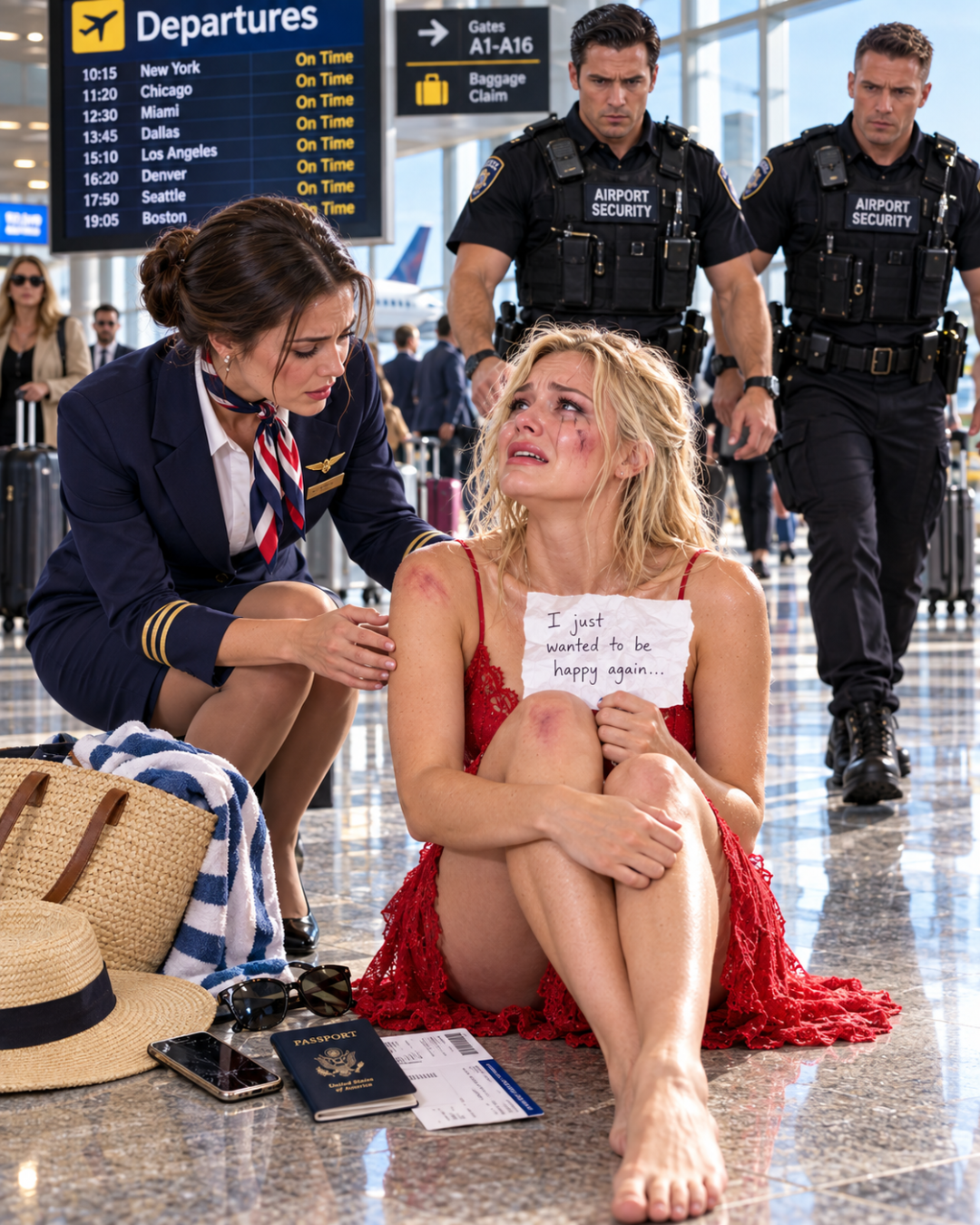
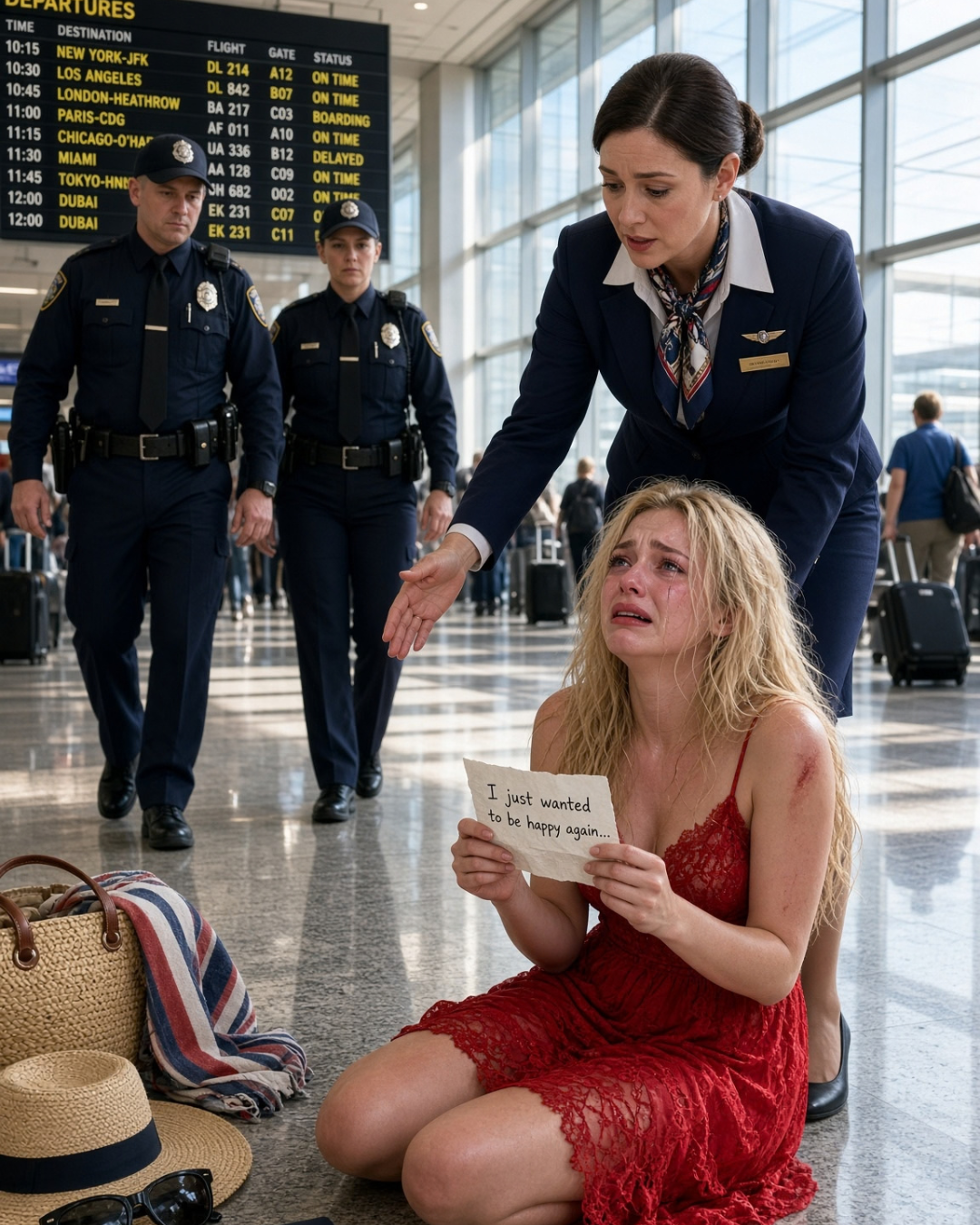
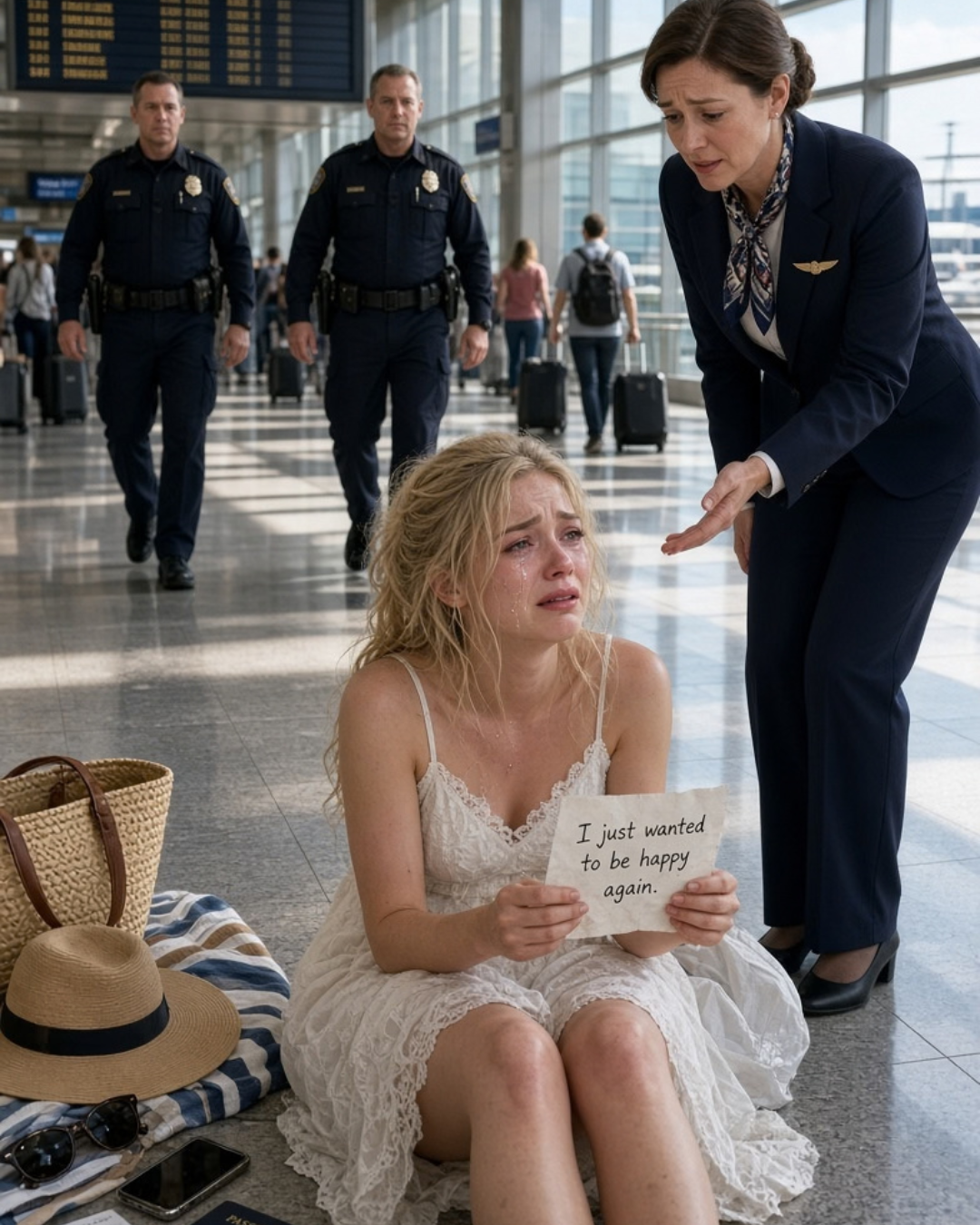
The airport was a chaotic symphony of sunburned tourists and screaming children. I bypassed the snaking economy lines and headed straight for the premium first-class check-in counter. I was exhausted, craving the sterile, quiet sanctuary of my pod on the flight back to Chicago.
“Good morning, Mrs. Bennett,” the agent purred, her fingers dancing across the keyboard. “Let me just pull up your itinerary for the 10:00 AM direct flight…”
Her smile faltered. The rhythmic clicking of her acrylic nails stopped. She frowned at the monitor, tapping a few more keys with a distinct lack of enthusiasm. She looked over her shoulder, signaling a supervisor.
“Is there a problem with the manifest?” I asked, checking my gold wristwatch.
“I apologize, Mrs. Bennett, but there seems to be a complication.” She looked at me with a mixture of pity and professional caution. “Your business-class ticket on the 10:00 AM flight is no longer active in our system. It was canceled.”
I blinked, the ambient noise of the bustling terminal suddenly sounding very far away. “Canceled? By whom? I certainly didn’t authorize it.”
“No, ma’am. It was canceled at 6:15 AM this morning by the primary account holder, Mr. Gregory Bennett. The system notes show he rebooked you.”
“Rebooked me?” A cold, metallic taste began to pool in the back of my throat. “On what flight?”
The agent printed a flimsy, thin boarding pass and slid it across the marble counter. “You are confirmed on a standby ticket for our partner airline’s economy flight. It departs the day after tomorrow, with layovers in Miami and Atlanta. You are currently seventh on the waitlist.”
My brain refused to process the syntax. Two days? Standby? Waitlist? Greg was the primary account holder for our joint travel miles, a logistical quirk we set up years ago, but I was the one who funded the account.
He hadn’t just left early. He had actively sabotaged my transit.
I reached blindly into my leather tote bag to grab my phone, my fingers seeking the familiar, cool glass. I needed to call him, to scream, to demand he fix this catastrophic, childish tantrum immediately.
My hand met the soft silk of the bag’s lining. Nothing else.
I dumped the contents of the bag onto the granite counter. Lip balm, a paperback novel, a pair of Tom Ford sunglasses, a compact mirror. No phone. I tore open the concealed side zipper where I kept my slim designer wallet containing my black-tier corporate credit cards and driver’s license.
Empty.
The fog of morning confusion evaporated, replaced by a crystalline, terrifying clarity. My hands frantically patted down the pockets of my linen blazer. My fingers brushed against a piece of folded hotel stationery. I pulled it out.
The handwriting was unmistakably Greg’s—hurried, sharp, slanting aggressively downward.
If you want to come home, pay for it yourself, just like you always love to remind us you can. Let’s see how long your arrogant independence lasts when you don’t have this family to prop you up. Figure it out.
He had taken my phone. He had taken my financial lifeline. He had left me stranded in a foreign country, completely severed from the digital infrastructure of my life. My entire existence—banking applications, dual-factor authentication, flight itineraries, executive email servers—was trapped inside a six-inch rectangle of glass currently flying over the Atlantic Ocean in Greg’s pocket.
I stood there, a woman who commanded a board of directors, utterly paralyzed by the sheer, petty malice of a man I had promised to love.
“Ma’am?” the agent asked softly. “Would you like me to direct you to the standby seating area?”
Let’s see how long your arrogant independence lasts.
I looked down at the pathetic standby ticket, and the paralysis broke. It shattered into a thousand jagged pieces of pure, unadulterated rage. If Greg wanted a war of independence, he was about to discover just how brutally independent I could be.
But as I turned away from the counter, a horrifying thought struck me. Greg was a weak man. He was petty, but he wasn’t strategic. He didn’t have the stomach for this level of calculated cruelty.
This had Diane’s fingerprints all over it. And Diane didn’t do anything just to be petty. She did things for profit.
They hadn’t just stolen my phone. They had stolen my digital identity.
Chapter 3: Protocol Blackout
I didn’t collapse into a weeping mess in the middle of the terminal. I didn’t beg the check-in agent for mercy. I took a deep, steadying breath, gathered my belongings, and walked purposefully away from the economy counters. I bypassed the chaotic main terminal and headed straight for the frosted glass doors of the VIP Passenger Liaison office.
The woman behind the mahogany desk looked up, her expression guarded as she took in my appearance—perfectly tailored suit, no luggage, absolute murder in my eyes. “May I help you, ma’am?”
“My name is Clara Bennett,” I said, my voice eerily calm, channeling every ounce of corporate authority I possessed. “I have been the victim of a targeted theft on your premises. My communication devices and corporate financial instruments were stolen by a departing passenger. I require the immediate use of a secure, outbound international landline.”
She hesitated, her hand hovering over a radio. “Ma’am, if you’ve been robbed, I need to call airport security and local police—”
“You will call security in exactly five minutes,” I interrupted, leaning over the desk so she could see the absolute zero in my gaze. “Right now, I need to call my general counsel to freeze my corporate assets, or the liability for my shareholders will be catastrophic. I am the CEO of Apex Logistics. The phone. Now. Please.”
Perhaps it was the tone, or perhaps it was the mention of corporate liability, but she pushed the black desktop phone toward me.
Years ago, my founding partner and Chief Legal Officer, Marcus Thorne, had instituted a mandatory safety drill. He forced every C-suite executive to memorize his direct, unlisted office line in Chicago. I had mocked him relentlessly for it. No one memorizes numbers in the digital age, Marcus, I had laughed over drinks. Exactly, he had replied, utterly humorless. Technology is a crutch. Memory is a weapon.
I punched in the ten digits. The line clicked and hissed over the oceanic cables.
He answered on the second ring. “Thorne.”
“Marcus. It’s Clara.”
A beat of heavy, stunned silence. “Clara? You sound like you’re on an analog landline. You’re supposed to be in the air. Why aren’t you on your encrypted device?”
“Because my husband stole it, along with my credit cards, and canceled my flight.”
I heard a sharp intake of breath on the other end. Marcus was a former corporate litigator who treated crises the way other men treated fine wine—with deep appreciation and surgical precision. The atmosphere on the line shifted instantly. The casual colleague vanished; the wartime consigliere arrived.
“Are you in immediate physical danger?”
“No. I’m in the VIP liaison office at St. Marina airport.”
“I am initiating Protocol Blackout,” Marcus said, the rapid, percussive sound of his keyboard clacking fiercely in the background. “I am severing your mobile device from the company servers. It will be a brick in thirty seconds.”
“Do it. I also need you to contact your connections at the airline. Get me on a plane today. I don’t care what it costs, wire the funds directly from the company’s emergency discretionary account.”
“Already on it. I need to verify your identity to authorize the wire transfer. I’m pinging the internal board portal now to send you an audio-auth code…”
Marcus’s voice trailed off. The rapid clicking of his keyboard stopped abruptly.
“Marcus?”
When he spoke again, his voice was deathly quiet, stripped of all its usual confidence. “Clara. I can’t access your primary equity portfolio.”
“What do you mean you can’t access it? You’re the Chief Legal Officer.”
“I mean the system has locked me out.” The sound of Marcus breathing heavily filled my ear. “Clara, I am looking at the secure executive ledger. Someone is inside the vault.”
“Explain.”
“A digital transfer of shares was initiated exactly ninety minutes ago. It’s currently locked in the mandatory state verification queue.”
My blood ran cold. The ambient noise of the airport seemed to vanish entirely. “What shares, Marcus?”
“Yours,” he whispered. “Thirty-five percent of your founder’s equity. The controlling block. It’s being transferred out of your portfolio and into a newly created holding trust.”
“Under whose name?” I asked, though the answer was already forming in the darkest, most cynical corner of my mind.
“The beneficiary is listed as Ashley Bennett. The transfer was authorized using your digital signature… and the one-time authentication passcode sent to your mobile phone.”
The petty airport abandonment hadn’t been a punishment for my defiance.
It had been a meticulously planned corporate heist.
Chapter 4: The Trojan Horse
I sank into a plush leather chair in the liaison office, the sheer audacity of the betrayal washing over me like a tidal wave.
Greg hadn’t just thrown a tantrum over my refusal to give his sister an obscene wedding gift. He, guided undoubtedly by Diane’s venomous whisperings, had decided to simply forge my consent and steal it.
“Talk to me, Marcus,” I said, my voice barely a rasp. “How did they bypass the legal safeguards? My digital signature requires secondary biological authentication.”
“It’s a loophole,” Marcus explained, his tone laced with lethal professionalism. “They filed the transfer under the ‘Spousal Emergency Proxy’ clause.”
I closed my eyes. Three years ago, I had suffered a severe health scare—a ruptured appendix that led to sepsis. I was in a medically induced coma for four days. During that time, the company had nearly stalled because critical documents couldn’t be signed. When I recovered, Marcus and I drafted a strict emergency protocol, allowing Greg to initiate transfers or sign documents only if I was incapacitated, provided it was backed by my device’s OTP and my master digital signature, which he kept in a safe at home.
He had memorized the signature passcode. And now, he had the physical phone.
“I am not incapacitated, Marcus.”
“The state registry system doesn’t know that, Clara. It only knows that the correct alphanumeric codes were entered and the OTP was verified.” Marcus paused, and I could hear the sheer disbelief in his voice. “Clara, this is brilliant in its absolute sociopathy. Do you realize what they’ve done by leaving you stranded with a standby ticket?”
“They created a blind spot,” I realized, the horrifying geometry of their plan clicking into place.
“Exactly. The transfer has a mandatory forty-eight-hour contestation window. It’s a failsafe to prevent exactly this kind of fraud. If the primary shareholder—you—does not physically or digitally flag the transfer as fraudulent within that window, the state registry automatically clears it to the recipient. It becomes legally binding.”
“And a flight from St. Marina with three layovers takes exactly forty-eight hours.”
“If you took that standby flight,” Marcus said grimly, “by the time you landed in Chicago and got a new phone, Ashley would legally own the controlling interest in the company you built. Diane and Greg would control her proxy. They would vote you out of the CEO chair by Monday morning. You’d be an employee in your own empire.”
Greg wasn’t punishing my independence; he was actively stealing it. He wanted me to sit in this airport, crying over my ruined marriage, entirely oblivious to the fact that my life’s work was being looted from under me.
“Can you freeze the transfer from your end?” I asked, gripping the phone so hard my knuckles turned white.
“I can flag it to the board, but I can’t unilaterally cancel an authorized founder’s transfer without a formal police report confirming the authorization device was stolen prior to the transaction timestamp. Otherwise, to the SEC and the state, it just looks like a rich couple having a vicious divorce dispute over assets.”
I looked up at the VIP agent, who was watching me with wide, terrified eyes. She had clearly deduced that this was no longer a simple case of a stolen wallet.
“Get airport security down here,” I told her, my voice echoing in the quiet room. “Right now.”
I brought the phone back to my ear. “Marcus. I will get you the police report. I will get the timestamps. But I am not flying commercial. I cannot risk a delay in Miami.”
“Commercial is out of the question,” Marcus agreed. “I am calling the leasing company we use for executive travel. I’m sending a Gulfstream G650. It’s currently stationed in Nassau. It will be on the tarmac in St. Marina in two hours.”
“Clear my schedule for the rest of the week,” I said, standing up, smoothing the wrinkles from my linen trousers. I wasn’t a stranded, heartbroken wife anymore. I was a CEO preparing for a bloodbath.
“What do you want me to do about the board of directors?” Marcus asked.
“Call an emergency meeting for tomorrow morning at 9:00 AM in the main conference room. Do not tell them why.” I stared out the glass windows at the tarmac, visualizing Greg sitting comfortably in first class, sipping champagne, believing he had just outsmarted me.
“And Marcus? Alert the Chicago Cyber-Crimes Division. Tell them we have a multi-million dollar corporate espionage and wire fraud case. Tell them the perpetrators are flying straight to us, and we are going to build them a cage.”
Chapter 5: Forging the Weapon
Getting a police report in a Caribbean island nation is usually an exercise in agonizing bureaucracy. It is vastly different when you are the CEO of a major tech firm and your general counsel is threatening international litigation over a landline.
Within thirty minutes, I was sitting in a windowless room with the head of airport security and a local police inspector whose uniform was crisp despite the oppressive humidity.
“Mrs. Bennett, you are alleging that your husband stole your device to commit wire fraud?” the inspector asked, his pen hovering over a formal document.
“I am not alleging it, Inspector. It is a mathematical fact,” I stated, tapping the desk. “The fraudulent transfer of shares was initiated at 7:15 AM local time. I need you to pull the security camera footage from the premium check-in and security screening queues between 6:00 AM and 7:00 AM. I need visual proof that I was not in possession of that device.”
The security chief tapped his keyboard, bringing up the high-definition feeds on a large monitor. We watched the black-and-white ghost of my husband standing near the security conveyor belts.
There it was. Clear as day.
While I had been distracted by a TSA agent asking me to remove my shoes and open my laptop, Greg casually reached into my open tote bag on the adjacent table. His movements were smooth, practiced. He slipped my sleek black phone and my designer wallet out, palmed them, and slid them effortlessly into the concealed inner pocket of his carry-on luggage. He even offered a polite smile to the agent scanning his boarding pass a moment later.
The inspector exhaled a long breath. “Well. That is quite definitive. He didn’t even hesitate.”
“I need a certified digital copy of this footage,” I demanded. “And I need this police report stamped with the exact time of the theft, proving I did not possess the device when the digital transfer was authorized from his location.”
By the time I walked out of the security office, I held a thick manila envelope containing the legal kryptonite to Greg’s entire master plan.
An hour later, I bypassed the commercial gates entirely, escorted by a private concierge directly to the private aviation tarmac. The sleek, silver Gulfstream was waiting, its engines whining softly, heat shimmering off the asphalt.
As I climbed the stairs and sank into the plush leather seat of the private jet, a flight attendant offered me a glass of sparkling water and a warm towel. I took the water, staring out the oval window as the island of St. Marina shrank into a tiny green dot against the vast azure ocean.
I didn’t sleep during the four-hour flight to Chicago. I didn’t cry over the death of my marriage. I borrowed the pilot’s satellite phone, spread my legal pads across the mahogany table, and stayed on the line with Marcus.
We didn’t talk about my feelings. We talked strategy. We moved pieces on a chessboard. We laid a trap so devastating, so perfectly inescapable, that Diane and Greg wouldn’t even know they were dead until the dirt hit their coffins.
“I have the state registry on hold,” Marcus’s voice crackled over the satellite link. “With the police report timestamp, I can legally freeze the transfer under the ‘Theft and Coercion’ statute. The shares will not move.”
“Don’t tell them,” I said sharply.
“Don’t tell the state?”
“Tell the state to freeze it, but do not send an automated notification to my stolen device. Let Greg think the transfer is still pending. Let him think the forty-eight-hour clock is still ticking.”
“Clara, if we let them walk into the office believing they own the company…”
“Then their intent to commit fraud goes from a digital anomaly to a physical, premeditated crime,” I finished. I took a sip of the water, the ice clinking against the crystal glass. “I wasn’t flying home to save my marriage, Marcus. I was flying home to burn his to the ground.”

Chapter 6: The Long Flight Home
The Gulfstream cut through the atmosphere at forty thousand feet, a silent silver bullet aimed straight at the heart of Chicago.
“They land at O’Hare at 7:00 AM tomorrow,” Marcus reported, the sound of a printer churning in his office. “They’ve already made their first move.”
“Tell me.”
“Greg used your phone to email your executive assistant. He impersonated you. The email states that you are taking an extended ‘mental health retreat’ in St. Marina following a family dispute, and that Ashley and Diane are coming to the office at 9:00 AM to ‘sign some routine paperwork’ regarding a wedding gift.”
I let out a dry, hollow laugh that startled the flight attendant. “They are marching right into the headquarters.”
“They think you are currently sitting on a plastic chair in the Miami airport, waiting for a standby flight, without a dime to your name,” Marcus noted. “Diane actually CC’d me on an email this morning, stating that she and Greg would handle any ‘minor corporate fires’ in your absence.”
The sheer, breathtaking arrogance of it. Diane genuinely believed that because I was an orphan, because I didn’t come from a sprawling, chaotic family tree like hers, I was fundamentally weak. She thought money had made me soft, that without her son to anchor me, I would simply fold under pressure.
She forgot that you don’t build an empire by being soft. You build it by surviving the cold, and by knowing exactly where to slide the knife when you are backed into a corner.
“Let them come,” I told Marcus as the Chicago skyline appeared through the clouds, cold and sharp and beautifully indifferent. “Make sure the boardroom is prepared. I want the coffee hot, the pastries fresh, and the police waiting in the adjoining room.”
“Detective Reynolds from Cyber-Crimes is already briefing his team,” Marcus confirmed. “Because the transfer crossed state lines and involved stolen digital identities, it’s federal wire fraud. The FBI is technically interested, but Reynolds wants the collar.”
“He can have it. Just make sure the cuffs are tight.”
The jet touched down at Midway just after midnight. A black SUV was waiting on the tarmac. As I rode through the quiet, sleeping streets of the city I had conquered, I felt a strange sense of peace. The anxiety of a failing marriage had haunted me for two years—the constant gaslighting, the passive-aggressive comments from Diane, the feeling that I was never quite enough for a family that viewed me solely as a bank account.
Now, the ambiguity was gone. They had shown me exactly who they were.
And tomorrow morning, I was going to show them who I was.
Chapter 7: The Spider’s Web
The next morning, the glass-walled boardroom of Apex Logistics headquarters on the 40th floor offered a panoramic, God’s-eye view of the city. The sky was the color of bruised iron, promising a storm.
At 8:45 AM, the office was quiet. The board members wouldn’t arrive until 9:30, but the trap was set.
I was seated at the head of the massive mahogany table. I wore a tailored, charcoal-grey power suit—the armor I wore when I was preparing to fire executives. My hair was pulled back into a severe, unforgiving knot.
To my right sat Marcus, a stack of legal briefs resting perfectly squared in front of him. To my left sat Detective Reynolds, wearing a plain suit, sipping bad coffee, and radiating an aura of profound, professional boredom. Two uniformed officers were stationed out of sight in the adjoining catering kitchen.
“You doing okay, Clara?” Marcus asked quietly, adjusting his tie.
“I have never been better,” I replied, and it was the absolute truth.
At exactly 8:58 AM, the chime of the private executive elevator echoed down the marble hallway.
“Showtime,” Reynolds muttered, placing his coffee cup down.
I heard Diane’s voice first. It was loud, nasal, and dripping with unearned authority. “Just set the catered breakfast on the side table, please,” she was telling my confused executive assistant. “Ashley, darling, sit near the center. You are the guest of honor today. You’ll need to get used to these chairs.”
“Mom, keep your voice down,” Greg hissed, though he sounded more excited than reprimanding. “Let’s just get the papers signed and filed before Marcus starts asking questions.”
They walked in.
Diane led the charge, wrapped in a gaudy cashmere shawl, a triumphant, predatory smile plastered on her face. She was completely ready to assume the throne she believed she had orchestrated the theft of. Greg followed, looking smug and deeply tanned in a casual blazer, his hand resting protectively on the pocket where I knew my phone resided.
Ashley, clutching a designer handbag, trailed behind them, followed by her brand-new husband, a dull-eyed real estate agent who looked entirely confused by the corporate setting.
Diane turned toward the table. Her eyes swept over the empty leather chairs and finally landed on the head of the table.
Her eyes met mine.
The smile didn’t just fade; it shattered. It was as if someone had physically struck her. She recoiled, staggering backward in her heels and colliding with Greg, who let out a sound that was half-gasp, half-choke.
“Clara,” Greg whispered, his face draining of all blood until he looked like a wax corpse. His hand instinctively flew to his blazer pocket.
“Good morning, Greg,” I said, my voice smooth, even, and entirely devoid of warmth. “Diane. Ashley. You’re right on time. Please, take a seat. We have a lot of corporate business to discuss.”
No one moved. The air in the room became so thick you could carve it.
Chapter 8: The Execution
Ashley looked frantically from her brother to me, her knuckles turning white on her handbag. “Dad… Greg… why is she here? You said she was in Miami! You said she wanted to stay in St. Marina!”
“I took a faster route,” I said gently. “Commercial airlines can be so unreliable. Marcus, would you mind bringing our guests up to speed on this morning’s agenda?”
Marcus stood up, casually buttoning his suit jacket. “Certainly, Clara. Item one on the agenda: The immediate and permanent freezing of the fraudulent transfer of thirty-five percent of company equity to Ashley Bennett.”
“Fraudulent!” Diane screeched, recovering her voice, though it trembled violently with panic. She pointed a finger at Marcus. “That was a gift! She authorized it! We have the digital footprint! You can’t stop a founder’s proxy!”
“You have a footprint, Diane,” Marcus corrected, sliding a manila folder across the polished wood until it stopped directly in front of Greg. “What you do not have is context. Or legal standing.”
I picked up a small remote from the table and pressed a button. The massive, wall-to-wall screen at the end of the boardroom flickered to life.
It played the high-definition security footage from the St. Marina airport. It looped endlessly, a silent, damning movie. Greg, looking around nervously. Greg, reaching into my bag. Greg, stealing my phone and wallet.
Ashley’s new husband took a massive step away from her, staring at the screen in absolute horror. “Ashley… what is this? What did you people do?”
“She didn’t know!” Greg stammered, holding his hands up defensively, sweating profusely. His eyes darted around the room, looking for an exit that didn’t exist. “Ashley didn’t know how we got the shares, I swear! Clara, please, I can explain!”
“Oh, so you admit how you got the shares,” Detective Reynolds noted dryly, standing up. He flipped open his badge, tossing it onto the mahogany table with a heavy, final thud.
“Mr. Gregory Bennett,” Reynolds said, his voice dropping into an official, authoritative cadence. “I am placing you under arrest for felony wire fraud, grand larceny, and corporate espionage. The device currently in your right blazer pocket—which has been pinging our local cell towers for the last hour—is stolen property and the primary instrument in a federal cyber-crime.”
Greg’s knees literally buckled. He grabbed the back of a leather chair to keep from collapsing onto the carpet.
The two uniformed officers stepped out of the catering kitchen, handcuffs gleaming in the harsh fluorescent light.
“You can’t do this!” Diane screamed, her voice cracking as an officer grabbed Greg’s arms and pulled them behind his back. She lunged toward the table, pointing a trembling, manicured finger at me. “You are his wife! You owe this family! We gave you a home when you had nothing!”
I stood up slowly. I walked around the massive table, my heels clicking rhythmically against the hardwood floor, until I was standing mere inches from my mother-in-law. She smelled of expensive perfume and desperate, animal fear.
“I don’t owe you a damn thing, Diane,” I whispered, my voice cutting through her hysteria like a scalpel. “You wanted to teach me a lesson about independence. You wanted to isolate me, trap me in an airport, and strip me of everything I built, just so you could feel powerful.”
I looked at Greg. He was weeping silently now, the cuffs clicking tightly around his wrists. The officer reached into his pocket and retrieved my phone and wallet, placing them in an evidence bag.
“Clara, please,” Greg sobbed. “I’m sorry. We just wanted a piece of what you have. Why couldn’t you just share?”
“You thought because I didn’t have a mother or a father to rescue me, I was defenseless,” I continued, ignoring his plea, addressing Diane but making sure Greg heard every word. “You forgot that I didn’t inherit my life. I forged it. And the people standing in this room aren’t here because of blood. They are here because I earned their loyalty, their respect, and their protection. You earned nothing but a jail cell.”
Ashley burst into hysterical tears, sinking to the floor. Her husband, realizing he had just married into a family facing a massive federal indictment and public ruin, turned on his heel and walked out of the boardroom without looking back.
“Take him away,” Reynolds instructed the officers.
As they dragged Greg toward the elevator, he looked back at me one last time. There was no defiance left, only the hollow realization of a man who had played a game of chess against a grandmaster and realized too late he was only a pawn.
Chapter 9: The Final Ledger
The destruction of the Bennett family was not televised, but in the circles of Chicago high society and corporate finance, it was absolute.
Greg was formally indicted on three felony counts. Because the transfer involved corporate assets exceeding fifty million dollars in valuation, it triggered a federal investigation. He avoided a maximum sentence in federal prison only by pleading guilty and turning over every text message, email, and recording proving that Diane was the mastermind behind the coercion and planning.
The divorce took less than three months. Because he was a convicted felon who had actively attempted to defraud our marital estate and my business, the judge invalidated our prenuptial agreement entirely in my favor. I retained one hundred percent of my assets, the penthouse in Chicago, the investment accounts, and, most importantly, absolute control of my company.
Diane was not criminally charged—she had cleverly avoided putting her signature on any documents or typing out explicit instructions—but her social and financial destruction was total. Greg’s exorbitant legal fees bankrupted her retirement accounts. The country club she prized so dearly quietly revoked her membership, citing a “morality clause.” She was forced to sell her home and move into a small condominium in a suburb she used to mock.
Ashley’s husband filed for an annulment three weeks after the boardroom ambush, citing fraud. She lost the fairy-tale life before the wedding photos were even developed.
I never saw any of them again, save for the final day in divorce court.
As Greg sat at the respondent’s table, wearing a cheap suit he had bought off the rack, looking ten years older and stripped of his arrogant smirk, I instructed my attorney to hand his counsel a sealed envelope.
Greg watched me cautiously, opening it with trembling hands. Inside was a certified cashier’s check drawn from my personal account.
It was made out for exactly $412.50.
Attached to the check was a yellow sticky note. It read:
This is the exact cost of the economy standby ticket you bought me in St. Marina. I am returning your money. Never assume you can put a price on my independence.
Months later, I stood on the balcony of my penthouse, holding a glass of cabernet, looking out over the glittering, electric grid of Chicago. The air was cold, bracing, and wonderfully clear.
The ordeal had fundamentally changed me. It had burned away the last lingering illusion I held about the sanctity of obligation. Blood does not make a family, and a marriage certificate does not guarantee a partner.
When those who demand your loyalty use it as a weapon to strip you of your power, you learn a vital truth. The strongest armor you will ever wear is not the love of a family who resents you; it is the unbreakable infrastructure of your own competence, your legal protections, and the allies you build in the trenches of your own life.
They wanted to see what would happen if nobody came to rescue me.
They found out. I rescued myself.
If you want more stories like this, or if you would like to share what you would have done in my place, I would love to hear from you. Your perspective helps these stories reach more people, so don’t be shy about commenting or sharing.
