

PART 1: The Doctor Who Saw What My Husband Had Hidden
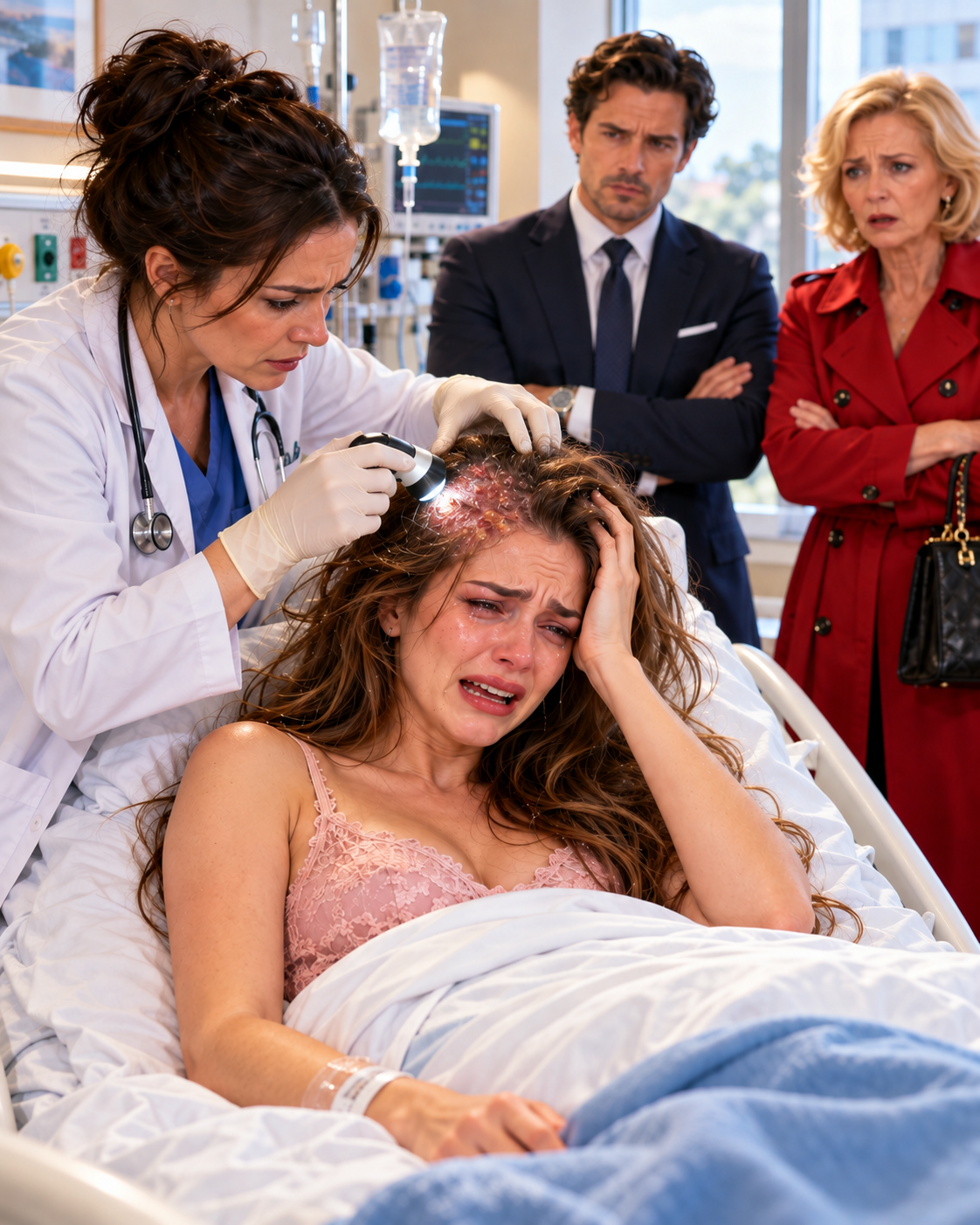
The doctor was examining me when he suddenly froze and shouted toward the hallway, “Call the police immediately!”
I lay on the examination bed, stunned, beginning to understand that my husband had been concealing something far more frightening than anything I had imagined.
For seven consecutive days, a merciless headache had tormented me. It felt as though someone were drilling directly through my skull, and by the seventh morning, I could barely think clearly enough to stand.
I emptied the pockets of my bathrobe, gathering every crumpled dollar bill and loose coin I could find.
There was just enough money for a taxi.
I was going to the hospital.
The same hospital my husband had forbidden me to visit.
I left the house barefoot, wearing borrowed shower slippers and my husband’s oversized sweatpants over my nightgown. My feet were so numb that they felt like blocks of wood, yet thousands of tiny needles seemed to pierce them whenever I moved.
By the time I reached the emergency department in Houston, Texas, I was trembling.
A short while later, Dr. Michael Hayes entered my examination room.
He was a tall man in his late fifties, with slightly hunched shoulders, weary eyes, and unexpectedly gentle hands.
He began by checking my reflexes.
When he tapped my knees with a small reflex hammer, my legs barely moved.
The response was so faint that I almost missed it myself.
“How long have you been experiencing this numbness?” he asked, recording his observations.
“Months,” I whispered. “I thought it was because of the grief after my parents died. My husband kept insisting it was all in my head, just my body reacting to the stress. He told me over and over that I didn’t need a doctor.”
Dr. Hayes nodded, but his expression grew more serious.
He shone a small flashlight into my eyes, checked how my pupils responded, and asked me to squeeze his fingers.
Then he gently turned my left wrist to feel my pulse.
My loose sleeve slipped toward my elbow.
The doctor stopped.
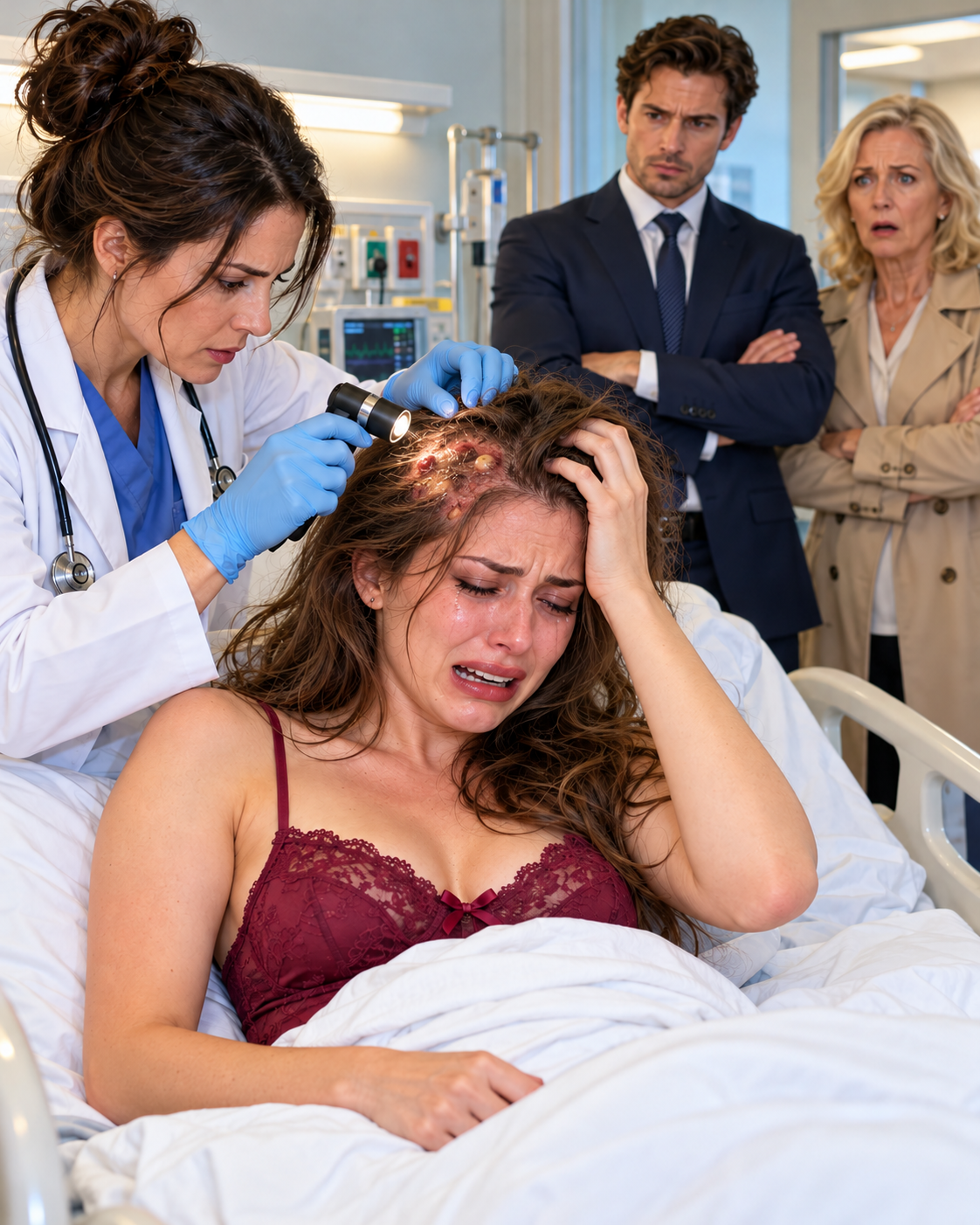
Four dark, oval bruises marked the inside of my wrist.
They formed an almost perfect line, resembling the impressions left by fingers gripping someone with excessive force.
His expression changed immediately.
“Who did this to you?”
I stared at the pale linoleum floor.
“My husband… He was just… helping me when I almost fell.”
Dr. Hayes said nothing.
Instead, he examined my hands more carefully.
Thin white lines stretched horizontally across every fingernail.
His fingers remained wrapped gently around my hand, but he had become completely still.
The atmosphere in the examination room seemed to change.
Without warning, Dr. Hayes turned toward the nurses’ station.
“Call the police right now! And nobody, under any circumstances, is to let this patient leave this floor!”
My breath caught.
At that exact moment, the phone resting on my lap vibrated.
A message from Ethan illuminated the screen.
I know which hospital you’re at. Don’t let them give you anything. My mother and I are on our way.
My fingers went cold.
I had believed that the unbearable headache was the worst thing happening to me.
I was wrong.
The danger was not somewhere inside the hospital.
It was coming straight toward me.
My heart pounded as I stared at the message.
Ethan was tracking my location.
I raised my eyes toward Dr. Hayes.
“He’s coming,” I managed to whisper. “My husband… he’s tracking my phone.”
The doctor’s jaw tightened.
He did not look at me with pity. Instead, he seemed to be assessing the situation with the concentration of someone who had recognized an immediate threat.
He released my wrist, moved a rolling stool beside the bed, and positioned himself between me and the doorway.
“Victoria,” he said quietly, “I need you to listen to me very carefully. The bruises on your wrist suggest that someone has been restraining you against your will. But these white lines on your fingernails…”
He indicated my trembling fingers.
“In medicine, we call them Mees’ lines. They aren’t caused by grief, and they aren’t something we can simply dismiss as a normal reaction to stress.”
He leaned closer.
“These lines can be associated with prolonged exposure to certain toxic substances, including heavy metals. Given your other symptoms, I’m concerned about possible arsenic poisoning.”
The room seemed to tilt.
Arsenic.
The word echoed through my head, somehow louder than the pain itself.
“Who prepares the food in your house?” Dr. Hayes asked.
I opened my mouth.
I wanted to tell him about the ginger tea Margaret, my mother-in-law, insisted I drink every evening.
I wanted to explain how she stood beside me until I finished every drop.
But before I could answer, the heavy doors leading into the emergency department flew open.
“Victoria! Where the hell are you?”
Ethan’s voice thundered through the hallway.
I knew that voice.
It was the voice he used when I questioned him.
When I asked why he checked my phone.
When I refused the tea his mother prepared.
It was the voice that had taught me to apologize even when I had done nothing wrong.
Dr. Hayes stepped into the doorway.
“Sir, this is a restricted treatment area. You need to stop right there.”
“I’m her husband!” Ethan snapped. “She’s confused. She’s been acting strangely for weeks. She has a history of emotional problems, and she ran away from home without telling anyone. I’m here to take her home.”
Margaret Collins stood behind him.
She wore a cream-colored coat and carried an expensive leather handbag.
Her expression appeared full of concern.
“Victoria, sweetheart,” she called, forcing a trembling smile. “You’ve frightened us terribly. You know how worried Ethan gets about you.”
I wanted to scream that Ethan had never been worried about me.
He had been worried about losing control.
But fear tightened my throat.
Margaret stepped closer.
“Doctor, my daughter-in-law has been grieving her parents for months. She barely eats, hardly sleeps, and sometimes says things that make no sense. We’ve been doing everything we can to help her.”
Dr. Hayes remained where he stood.
“Your daughter-in-law is undergoing a medical evaluation. Neither of you will take her anywhere until we’re finished.”
Ethan’s face hardened.
“You have no idea who you’re dealing with.”
“Actually,” Dr. Hayes replied, “I have a pretty good idea that your wife needs protection right now.”
Two hospital security officers appeared behind Ethan.
A uniformed police officer followed them, accompanied by a female officer holding a small notepad.
For the first time since our wedding, I watched Ethan realize that he was not the most powerful person in the room.
His expression changed instantly.
“Officer, thank goodness you’re here. My wife is ill. She’s been confused, and we’re afraid she might hurt herself. Please help us get her home.”
The female officer looked at me.
“Ma’am, do you want to go home with your husband?”
Every face turned in my direction.
Ethan gave me the familiar reassuring smile he used in front of our neighbors and friends.
Margaret clasped her hands.
“Tell them you’re fine, sweetheart. Let’s go home, take your medicine, and get some rest.”
My hands shook.
For months, I had learned that contradicting them carried consequences.
A broken glass.
A locked bedroom door.
Fingers clamped around my wrist until bruises appeared.
Sometimes Ethan simply ignored me for days until I apologized.
I looked at him.
He gave me a tiny nod.
It was not reassurance.
It was a warning.
“No,” I whispered.
The room fell silent.
I swallowed.
“No. I don’t want to go home with them.”
Margaret’s smile disappeared.
Ethan lunged a step toward my bed, but the security officers blocked him.
“Victoria, don’t do this,” he said through clenched teeth. “You’ll regret it.”
The female officer approached me.
“Ma’am, you’re safe here. Can you tell me why you don’t want to leave with them?”
I looked at my bruised wrist.
“My husband has been hurting me. And I think they’ve been putting something in my food.”
Margaret gasped so dramatically that I nearly doubted myself.
“How dare you?” she cried. “After everything we’ve done for you!”
Ethan shook his head, wearing an expression of wounded disbelief.
“This is insane. She’s making things up because she’s angry with us.”
Dr. Hayes spoke before I could answer.
“Her symptoms are concerning enough that we need to investigate possible toxic exposure. Her neurological examination is abnormal, and her fingernails show changes that warrant further testing. She is not leaving this hospital until we understand what’s happening.”
The officer faced Ethan.
“Sir, I need you to step into the hallway and answer a few questions.”
For once, Ethan had nothing ready to say.
Margaret did.
She turned toward me, and the concern vanished from her face.
“You ungrateful little liar,” she hissed. “You have no idea what you’ve done.”
The female officer heard her.
“Ma’am, step back.”
Margaret lowered her eyes and immediately began crying.
I stared at her, astonished by how effortlessly she could change her expression.
Then Ethan’s phone rang.
He glanced at the screen.
All the color drained from his face.
I couldn’t see the caller’s name, but I heard his whispered response.
“No. Not yet. She wasn’t supposed to find out.”
Dr. Hayes turned toward him.
“What wasn’t she supposed to find out?”
Ethan ended the call.
“That’s none of your business.”
The police officer stepped closer.
“Actually, at this point, it might be.”
Then I noticed Margaret staring at something.
A nurse had placed a small plastic evidence bag on the counter beside Dr. Hayes.
It contained the clothing I had worn to the hospital and the bottle of water I had brought from home.
Margaret was staring directly at the bottle.
Her expression was not ordinary fear.
It was recognition.
Suddenly, I remembered the previous evening.
I had been desperately thirsty and reached for a bottle of water inside the refrigerator.
Ethan appeared behind me and snatched it from my hand.
“Not that one,” he’d said sharply. “Mom bought it for something else.”
He handed me a different bottle.
At the time, I had been too exhausted to question him.
Now I looked at Margaret.
“Officer,” I whispered, “please don’t let them touch anything I brought from home.”
The officer turned.
“Why?”
I stared at my mother-in-law.
“Because I think they know what’s in it.”
For the first time, Margaret looked genuinely frightened.
And I began to understand that my illness might be only one part of a much larger secret.
The female officer immediately instructed the security guards to keep Ethan and Margaret away from the counter.
“Don’t touch anything,” she told the nurse. “We’ll need to document everything that came in with the patient.”
Ethan laughed bitterly.
“Are you seriously treating my mother and me like criminals because my wife has a headache?”
“No,” the officer replied. “We’re investigating because your wife has reported possible abuse and poisoning. Those are serious allegations.”
“Then test her!” Ethan shouted. “Test everything! You’ll find nothing!”
Dr. Hayes studied him.
“That is exactly what we’re going to do.”
During the following hour, nurses collected blood and urine samples.
Dr. Hayes ordered additional testing for possible heavy-metal exposure.
The police arranged for my clothing and the water bottle to be documented and examined.
I lay beneath a thin hospital blanket, shivering.
Part of me still wanted to believe that everything had been a terrible misunderstanding.
Perhaps another illness explained my symptoms.
Perhaps Ethan and Margaret were innocent.
But whenever I closed my eyes, I remembered the tea.
For almost six months, Margaret had prepared it for me every evening.
She called it her special ginger remedy.
“Drink every drop, Victoria,” she would say, standing beside me until I finished. “It’s good for your nerves. You need to stop being so anxious.”
At first, I had been grateful.
After my parents died in a car accident, I struggled to sleep and often felt exhausted.
Margaret moved into our house temporarily, claiming she wanted to help me recover.
Then the headaches began.
My hands started trembling.
My feet became numb.
Some mornings, I could barely stand without holding the furniture.
Whenever I complained, Ethan told me I was imagining things.
He took my phone whenever I mentioned seeing a doctor.
He told our friends that grief had made me unstable and asked them not to encourage my fears.
And every night, Margaret brought another cup of tea.
“Did you ever notice anything unusual about the tea?” the female officer asked.
I nodded.
“Sometimes it tasted bitter. Other nights, it had a strange metallic taste. When I asked Margaret about it, she said the ginger was stronger than usual.”
“Did you ever refuse to drink it?”
“Once.”
I remembered pouring the tea into the sink when nobody was watching.
Margaret discovered the empty cup and demanded to know why I hadn’t finished it.
Ethan locked me in our bedroom that night.
He told me I was becoming impossible to live with.
The following morning, he brought another cup and watched until I drank it.
I began crying.
The officer gently squeezed my hand.
“You don’t have to remember everything right now. We’ll investigate.”
Across the room, Ethan paced beside the nurses’ station.
Margaret sat staring at the floor.
Neither looked like the person who had entered the hospital an hour earlier.
They looked like people waiting for something dreadful to happen.
Then Dr. Hayes returned with another physician.
“Victoria, we’ve received some preliminary results that concern us,” he said carefully. “Your symptoms and the findings so far make toxic exposure a serious possibility. We need more specific testing to determine whether a heavy metal is involved and, if so, which one.”
My heart hammered.
“Am I going to die?”
Dr. Hayes pulled a chair beside my bed.
“We’re taking this seriously, and we’re treating your symptoms. I can’t promise an outcome before we have the full results, but you’re in the right place. We won’t let anyone interfere with your care.”
I desperately wanted to believe him.
Then the female officer returned.
“Victoria, there’s something else you should know. Your husband has asked to speak with you privately.”
My stomach tightened.
“I don’t want to see him.”
“You don’t have to,” she assured me. “But he made a statement that we need to follow up on. He says your mother-in-law has been preparing your meals and drinks because she believes you have a medical condition.”
I stared at her.
“What condition?”
“He claims you have been taking unprescribed medication and that he was afraid you might hurt yourself.”
A cold wave passed through me.
It was the perfect lie.
If I died, they could suggest my death resulted from my own behavior.
If I survived, they could insist I was mentally unstable.
They had been constructing that story for months.
“Officer,” I whispered, “please check my parents’ estate.”
She frowned.
“Your parents’ estate?”
“My father left me money. A house and an investment account. Ethan handled most of the paperwork after they died because I couldn’t cope with everything.”
I swallowed.
“Three weeks ago, I found a letter from my father’s attorney. It said there was a problem with the transfer of my inheritance. When I asked Ethan about it, he told me the money was tied up in legal fees.”
“Did you keep the letter?”
I nodded.
“It’s hidden in the back of my closet, inside an old shoebox.”
She wrote that down.
“Do you know why your husband might have taken an interest in your inheritance?”
I closed my eyes.
Ethan had changed after my parents died.
He stopped keeping regular working hours.
He began making mysterious phone calls.
I overheard arguments about debts and deadlines.
Once, I discovered a bank letter warning him that a substantial loan was overdue.
When I questioned him, he called it a business matter and told me not to interfere.
A week later, Margaret moved into our home.
Two weeks afterward, she started making my tea.
Soon after that, my health began deteriorating.
I opened my eyes.
“I think they wanted my money.”
The officer exchanged a glance with Dr. Hayes.
Then she said something that made my blood run cold.
“Victoria, your husband has just asked the hospital whether he can make medical decisions for you if you become unconscious.”
I couldn’t speak.
He wasn’t merely trying to bring me home.
He was already preparing for the possibility that I might never wake up.
PART 2: The Tea, the Inheritance, and the Evidence
By late afternoon, police had gathered enough information to begin a more extensive investigation into the circumstances surrounding my illness.
A detective arrived to interview me.
His name was Daniel Brooks.
He carried a thick folder containing notes from the officers who had responded to the hospital.
He didn’t promise me that everything would turn out well.
He didn’t assume every suspicion I voiced was already proven.
He simply sat beside my bed and listened.
I described the headaches.
The numbness.
The bruises.
The nightly tea.
The money my parents had left me.
And the way Ethan had slowly taken control of nearly every decision in my life.
When I finished, Detective Brooks asked one question.
“Did your husband ever tell you that you were dying?”
I stared at him.
“Yes.”
“When?”
“About two weeks ago. He said the doctor he had spoken to believed my symptoms were caused by an incurable neurological disease. He told me I needed to stay home and avoid hospitals because the stress would make everything worse.”
The detective made a note.
“Did you ever meet that doctor?”
“No.”
“Did your husband give you a name?”
I shook my head.
“He said everything was being handled.”
Detective Brooks closed his folder.
“That’s something we’ll need to verify.”
I lay back against the pillows.
For months, I had accepted Ethan’s explanations because I was too weak, frightened, and exhausted to challenge them.
He had told me that my headaches came from grief.
That the numbness in my feet was caused by stress.
That my trembling hands were a sign of emotional instability.
He said my parents’ deaths had changed me.
He said I needed to trust him.
Whenever I questioned his decisions, he reminded me that he was the one keeping our household together.
And whenever I became frightened enough to ask for medical help, he insisted that doctors would only make my anxiety worse.
I had gradually stopped trusting my own judgment.
Now I was lying in a hospital bed, listening to a detective ask questions that Ethan had never allowed me to consider.
An hour later, a nurse entered carrying a small paper bag.
“Victoria, the police recovered a few personal items from your home. They wanted to make sure you had these.”
Inside were my old phone charger, a hairbrush, and a small notebook.
I recognized the notebook immediately.
Several weeks earlier, I had begun recording my symptoms.
At first, the entries were brief.
Monday: headache worse.
Tuesday: couldn’t feel my toes.
Wednesday: hands shaking again.
But as my condition deteriorated, I had started writing down more details.
I recorded the evenings Margaret prepared the tea.
The mornings when I could barely stand.
The days when the headache became so severe that I couldn’t tolerate bright light.
Near the end of the notebook, I found an entry that made me cover my mouth.
I skipped the tea last night. This morning, I felt slightly better.
The next line read:
Ethan watched me drink it tonight. I feel sick again.
Detective Brooks read the entries twice.
“This could be important,” he said. “We’ll preserve it and compare the dates with your medical findings.”
I nodded.
I remembered the evening I had avoided drinking the tea.
Margaret had gone upstairs, and I poured the contents of the cup into the kitchen sink.
The next morning, the pressure inside my head seemed slightly less intense.
For the first time in days, I could walk across the bedroom without immediately reaching for the wall.
I had almost convinced myself that I was recovering.
But that evening, Ethan brought the tea himself.
He sat beside me and waited.
I drank it because I was afraid of what would happen if I refused.
By morning, the pain had returned.
At the time, I had considered it another unpredictable symptom.
Now the sequence terrified me.
Detective Brooks turned another page.
“Did you know your husband had recently contacted your father’s attorney?”
“No.”
“The attorney’s office confirmed that someone using your husband’s name requested information about the estate and the conditions under which the assets could be transferred.”
My hands went cold.
“What does that mean?”
“It means we have questions about the inheritance. It doesn’t establish why he made the request, but we’re looking into it.”
His phone rang.
He stepped into the hallway.
When he returned, his expression was more serious.
“We’ve spoken to your mother-in-law’s doctor. She hasn’t been treating you, and she has no medical training that would qualify her to prescribe anything. We’re also checking whether the man your husband mentioned actually exists.”
I swallowed.
“And the tea?”
“The police have secured the items from your home. They’ll be examined by forensic specialists. We don’t have a confirmed substance yet.”
For the first time, I felt something stronger than fear.
Hope.
Not because I already knew exactly what had happened.
But because someone was finally investigating instead of demanding that I remain silent.
Another call came through.
Detective Brooks listened carefully.
Then he looked at me.
“We’ve located the attorney who handled your parents’ estate.”
My breath caught.
“And?”
“He says your inheritance was supposed to remain under your control. He also says he contacted you three weeks ago because he noticed irregularities in the paperwork.”
I remembered the letter I had hidden in the shoebox.
“What irregularities?”
“The attorney couldn’t discuss every detail over the phone, but he agreed to meet with us. He believes someone may have attempted to obtain control of your assets without your authorization.”
Tears filled my eyes.
My parents had worked for decades to build a secure future for me.
My father had always been careful about financial decisions.
My mother used to remind me that independence mattered, even when I was married to someone I loved.
After they died, I had been too overwhelmed to handle the estate.
Ethan offered to take care of the paperwork.
I believed he was helping me.
I signed documents he placed in front of me without always understanding their purpose.
Whenever I asked questions, he became impatient.
He told me that I needed rest, not financial complications.
Now I wondered whether my grief had given him the opportunity he needed.
“Detective,” I whispered, “what if they really did this to me because of the money?”
He pulled his chair closer.
“Then we’ll follow the evidence. You don’t have to prove everything tonight. That’s our job.”
Later that evening, Dr. Hayes returned with another update.
The preliminary medical assessment had strengthened the concern about toxic exposure.
But specialized testing was still needed to identify the substance and determine whether it explained my symptoms.
My condition remained serious.
The medical team would continue monitoring my neurological problems while awaiting the results.
Dr. Hayes explained that the white lines across my fingernails could be associated with certain toxic exposures, but they did not prove arsenic poisoning on their own.
I appreciated his honesty.
For months, Ethan had spoken as though every question had one simple answer.
Grief.
Anxiety.
Stress.
He never admitted uncertainty.
He never suggested a proper examination.
Dr. Hayes was different.
He told me what he knew.
What he didn’t know.
And what he intended to investigate.
For the first time in months, I felt like a patient rather than a problem.
Then a nurse informed us that the police had received new information from the laboratory examining items recovered from my home.
Detective Brooks arrived shortly afterward.
“We have a preliminary finding,” he said.
My heart seemed to stop.
“What did they find?”
“The laboratory has identified a substance of concern in one of the items submitted for testing. Further analysis is underway, and we need to establish exactly where it came from and whether it matches anything in your medical results.”
He paused.
“We’re also investigating financial records connected to your husband.”
I gripped the blanket.
“What did you find?”
“Several unusual transfers from an account associated with your parents’ estate. The bank is helping us establish who authorized them.”
My throat tightened.
“Was it Ethan?”
“We’re not making that conclusion yet. But we have enough reason to continue investigating.”
Then he asked whether I would provide a formal statement about the bruises on my wrist and the threats I had described.
“Yes,” I answered immediately.
For months, I had been afraid of what Ethan would do if I told anyone the truth.
Now I was more afraid of what might happen if I remained silent.
I described the evening he had grabbed my wrist.
I had been walking toward the front door, hoping to ask a neighbor for help.
My legs were weak, and the room seemed to move whenever I stood.
Ethan caught me before I reached the door.
He gripped my wrist so tightly that I cried out.
He told me I was embarrassing him.
Then he forced me back into the house.
Later, he claimed that he had only been preventing me from falling.
That was the explanation I repeated to Dr. Hayes when he first noticed the bruises.
The detective wrote everything down.
He asked about the locked bedroom door.
The broken glass.
The confiscated phone.
The times Ethan prevented me from seeking medical care.
I answered as carefully as I could.
Some memories were clear.
Others seemed tangled together by exhaustion and fear.
Detective Brooks didn’t pressure me to invent details I couldn’t remember.
He told me that the investigation would compare my account with medical findings, documents, messages, and witness statements.
That mattered.
I no longer had to rely on my memory alone.
Two days later, the hospital received the results of my specialized testing.
Dr. Hayes came into my room with another physician.
His expression was serious, but he spoke calmly.
The tests confirmed that my arsenic levels were elevated and consistent with significant exposure.
The doctors began appropriate treatment and arranged continued monitoring.
The results did not establish who had exposed me or exactly how it had happened.
But they provided medical evidence supporting the concern that something toxic had entered my body.
I stared at Dr. Hayes.
For months, I had been told that the illness existed only in my mind.
Now there was a measurable substance in my body.
Something that could explain at least part of what had been happening to me.
I began crying.
Not because the news was reassuring.
It was terrifying.
But at least I finally knew that my suffering was real.
The police investigation intensified.
Forensic specialists continued examining the water bottle, the clothing, and the items collected from our home.
Investigators interviewed people who had seen Margaret preparing my drinks.
They reviewed financial records.
They questioned people connected to my parents’ estate.
And they began examining the documents that appeared to authorize transfers of my inheritance.
My father’s attorney confirmed that I had inherited a substantial investment account and a house held in my name.
The assets were supposed to remain under my control.
Yet someone had attempted to redirect money using paperwork that appeared to carry my authorization.
I had never signed those documents.
A handwriting specialist was asked to examine the signatures.
Detectives began investigating whether they had been forged.
Meanwhile, investigators uncovered Ethan’s financial problems.
He had accumulated enormous debts through a failed business venture.
He had concealed those debts from me.
Several creditors had demanded payment months before my parents died.
The inheritance could have offered him a way out.
But there was a problem.
My father had arranged for the assets to remain protected while the estate was settled.
Ethan could not simply move everything into his own accounts.
According to the investigators, he had been attempting to gain control of the money while keeping me dependent on him.
The police still needed evidence to determine whether those financial efforts were connected to my illness.
Then Margaret made a mistake.
During a recorded interview, she insisted that she had prepared only ordinary ginger tea for me.
When detectives asked her to describe the ingredients, she mentioned a particular container kept inside a locked kitchen cabinet.
She claimed it held a harmless herbal powder.
But investigators had never told her that they had found anything in that cabinet.
They returned with the appropriate authorization and secured the container for testing.
The results gave them another important lead.
The powder was not the harmless herbal ingredient Margaret had described.
Forensic analysis identified a toxic compound containing arsenic.
The discovery was alarming.
But investigators still had to establish who handled the container, how its contents were used, and whether it was connected to my exposure.
They continued examining messages, physical evidence, and financial records.
Then they recovered communications between Ethan and Margaret.
The messages suggested that they had discussed my deteriorating health and the possibility that I might soon be unable to manage my own affairs.
One message had been sent by Ethan shortly before I took the taxi to the hospital.
It read:
If she goes to a doctor, everything falls apart. Make sure she takes the tea tonight.
I read those words several days later in Detective Brooks’s office.
For a long time, I couldn’t move.
I had spent months wondering whether I was losing my mind.
I had apologized for being sick.
Apologized for asking questions.
Apologized for needing help.
And all that time, the people I trusted had been discussing my worsening condition behind my back.
“Did they know the tea was poisoning me?” I whispered.
Detective Brooks sat across from me.
“The messages and physical evidence are significant, but we’re still establishing exactly what each person knew and did. We’ll continue to pursue that.”
I nodded.
I didn’t need him to promise a perfect ending.
I needed the truth to be handled properly.
Then he told me the investigation had reached a turning point.
Three days later, police arrested Ethan and Margaret on suspicion of crimes connected to the alleged poisoning and financial misconduct.
The charges were based on the evidence collected during the investigation.
The case would now proceed through the courts.
Ethan insisted that everything was a misunderstanding.
Margaret claimed she had only been trying to help me.
But their explanations no longer controlled the story.
The messages would be examined.
The laboratory findings would be reviewed.
The financial records and witness statements would be considered.
And for the first time, the truth would not depend on whether Ethan allowed me to speak.
Yet even after their arrests, I was left with one painful question.
How was I supposed to rebuild my life after discovering that the people closest to me might have been responsible for destroying it?
PART 3: The Letter My Father Left Behind
The days following Ethan and Margaret’s arrests were not the sudden, peaceful ending I had imagined.
I was still sick.
The headaches did not disappear overnight.
My legs remained weak.
Some mornings, my hands trembled so badly that holding a glass of water required both hands.
There were days when walking across the hospital room felt like climbing a mountain.
The doctors explained that recovery from significant toxic exposure could take time and that some neurological symptoms might persist.
They continued treating me, monitoring my condition, and arranging follow-up care.
I was grateful to be alive.
But I was also frightened.
For months, I had been told that my suffering was imaginary.
Now I knew there was a physical reason for my illness.
Yet knowing the cause did not instantly erase the damage.
I had to learn to trust my body again.
I had to stop treating every symptom as evidence that I was somehow failing.
And I had to accept that recovery would not happen simply because Ethan and Margaret could no longer control my daily life.
Some mornings, I woke expecting to hear Margaret’s footsteps outside the bedroom.
I would remember the familiar sound of a cup being placed on the nightstand.
I could almost hear her voice insisting that I finish the tea.
Then I would open my eyes and see the hospital room.
No Margaret.
No Ethan.
No one standing over me, waiting for me to drink something I didn’t want.
The relief was enormous.
But so was the grief.
I had married Ethan because I believed we would build a life together.
I had trusted him when my parents died.
I had believed he was protecting me during the most difficult period of my life.
Instead, the investigation had uncovered financial deception, threatening behavior, and evidence suggesting that my illness was not accidental.
I struggled to understand how the man I had loved could have become someone I feared.
There were moments when I remembered our wedding.
The promises we had made.
The years when I believed we were happy.
I wondered whether those memories had been real.
Or whether I had simply failed to recognize the warning signs.
Then I reminded myself that I did not need to answer every question immediately.
The criminal investigation was continuing.
The financial dispute would require additional legal work.
The court would examine the evidence.
And my own recovery deserved attention too.
Eventually, the doctors determined that my condition was stable enough for me to continue recovering outside the hospital.
I was relieved, but leaving frightened me.
For so long, home had been a place where my illness was dismissed and my decisions were controlled.
I couldn’t imagine returning to the house where Margaret had prepared the tea.
I didn’t want to walk into the kitchen and see the cabinet investigators had searched.
I didn’t want to sleep in the bedroom where Ethan had locked me inside.
With the support of people I trusted, I arranged to stay in a temporary apartment while my medical and legal matters continued.
The apartment was modest.
It had a small living room, a simple kitchen, and a window that let in the afternoon sunlight.
There were no expensive decorations.
No carefully arranged furniture.
Nothing about it resembled the home I had shared with Ethan.
But the first evening I sat there alone, I felt something I had almost forgotten.
Freedom.
I could decide when to eat.
I could choose what to drink.
I could leave the apartment without asking permission.
I could call a doctor whenever I needed help.
I could keep my phone beside me without worrying that someone would take it away.
Those freedoms seemed ordinary.
They should have been ordinary.
But after months of fear, they felt extraordinary.
I changed my phone number.
I worked with my attorney to protect my assets.
I arranged follow-up medical appointments and continued treatment.
Some days, I could accomplish only a few small tasks before exhaustion forced me to rest.
Other days, I felt strong enough to walk outside and enjoy the sunlight.
Progress was uneven.
But it was progress.
A few weeks after leaving the hospital, I met with the attorney who had handled my parents’ estate.
He brought copies of the original documents my father had signed.
He explained how the investment account and house were supposed to be managed.
He also outlined the legal steps needed to protect my inheritance while the investigation continued.
I listened carefully.
For months, Ethan had convinced me that financial matters were too complicated for me to understand.
He had treated my questions as interruptions.
He had insisted that I should leave everything to him.
Now I sat across from a professional who answered my questions without becoming angry.
When I didn’t understand something, he explained it again.
He showed me the documents.
He identified which matters were settled and which remained under investigation.
He did not expect me to surrender control simply because I was grieving or recovering from an illness.
That alone felt like another part of my life returning to me.
Near the end of our meeting, the attorney opened a drawer.
He removed a sealed envelope.
“Your father asked me to give you this if you ever needed help protecting what he left you,” he said.
I stared at it.
My father’s handwriting was on the front.
For a moment, I couldn’t breathe.
My parents had died in a car accident.
I had never been able to say goodbye.
I had spent months grieving them while my marriage slowly became a place of fear.
Now, unexpectedly, I was holding something my father had prepared for me.
My hands trembled as I opened the envelope.
Inside was a short handwritten letter.
Victoria, if you’re reading this, I hope you’re safe. Your mother and I wanted you to have a future where you never had to depend on anyone who treated you badly. Money cannot protect you from every danger, and it cannot buy happiness. But it can give you choices. Never let anyone convince you that you must surrender your freedom to deserve love.
I read the words once.
Then again.
By the third time, tears were running down my face.
I pressed the letter against my chest.
For months, I had believed that I was weak because I couldn’t stand up to Ethan.
I had blamed myself for believing his explanations.
For drinking the tea.
For trusting Margaret.
For allowing him to handle the estate paperwork.
For waiting so long to seek medical help.
But my father’s letter reminded me of something I had forgotten.
I had been frightened.
I had been isolated.
I had been physically ill.
And the people who were supposed to care for me had repeatedly discouraged me from seeking help.
That was not the same as weakness.
Despite everything, I had found a way out.
On the seventh morning of my unbearable headache, I had gathered loose change and crumpled dollar bills from my bathrobe.
I had pulled on borrowed slippers.
I had taken a taxi to a hospital I had been forbidden to visit.
I had been terrified.
But I went anyway.
And that decision had changed everything.
I stayed in the attorney’s office for a while, holding my father’s letter.
When I finally stood to leave, I felt exhausted but steadier.
There were still difficult months ahead.
The criminal case would take time.
The financial investigation was not finished.
The disputed documents and transfers would need to be resolved through the appropriate legal process.
My medical recovery would continue at its own pace.
I couldn’t undo what had happened.
I couldn’t know exactly how long it would take to feel healthy again.
But I could make decisions about my own life.
I could protect the future my parents had wanted me to have.
And I could choose who was allowed to be part of that future.
One evening, while sitting beside the window of my temporary apartment, I received a letter from the county jail.
It was from Ethan.
I recognized his handwriting immediately.
For several minutes, I simply held the envelope.
Part of me wanted to throw it away without opening it.
Another part wanted to know what he could possibly say after everything that had happened.
Eventually, I opened it.
Ethan wrote that he missed me.
He said Margaret had made mistakes.
He claimed that he had been under enormous pressure.
He asked me to remember the good years of our marriage.
The words were familiar.
Even from jail, he seemed to want me to focus on his difficulties rather than what I had endured.
He wrote about stress.
Financial pressure.
Family loyalty.
He reminded me of the years we had spent together.
But none of those explanations changed the bruises on my wrist.
They didn’t erase the months when I had been denied medical help.
They didn’t change the arsenic found in my body.
They didn’t undo the messages investigators had recovered or the questions surrounding my inheritance.
At the bottom of the letter, he had written one final sentence.
You know I never wanted things to go this far.
I read it twice.
Then I folded the letter.
I placed it back inside its envelope.
And I handed it to my attorney.
I did not reply.
For years, Ethan had made me feel responsible for his emotions.
When he was angry, I apologized.
When he was disappointed, I tried harder.
When he accused me of being unreasonable, I questioned myself.
Even when I was sick, I worried about making his life difficult.
I had spent so much time trying to avoid upsetting him that I stopped listening to my own suffering.
But I no longer needed to explain my pain to someone who had repeatedly dismissed it.
I no longer needed to prove that I deserved medical care.
And I no longer needed to convince Ethan that my life belonged to me.
The investigation would continue.
The courts would determine the legal consequences.
My attorneys would handle the matters that required legal attention.
My doctors would guide my recovery.
And I would concentrate on rebuilding the parts of my life that had been neglected for far too long.
There were still difficult nights.
Sometimes I woke frightened by memories of the house.
Sometimes I dreamed about the hospital corridor and heard Ethan shouting my name.
Sometimes I remembered Margaret standing beside my bed with another cup of tea.
Those memories did not vanish simply because I was safe.
But they no longer controlled every decision I made.
When I felt unwell, I contacted my medical team.
When I was uncertain about a legal document, I asked my attorney.
When I needed rest, I rested.
And when I wanted to speak to someone I trusted, I picked up my phone without fear.
Each of those choices helped me reclaim something that had been taken from me.
My independence.
My judgment.
My sense of safety.
My right to decide what happened to my own body.
I kept my father’s letter in a drawer beside my bed.
On difficult mornings, I took it out and read it again.
Money cannot protect you from every danger, and it cannot buy happiness. But it can give you choices.
My parents had wanted me to have choices.
Ethan had tried to take those choices away.
But he had not succeeded.
One afternoon, as sunlight filled the apartment, I sat quietly and thought about the day everything changed.
I remembered the taxi ride.
The borrowed slippers.
The unbearable pressure inside my head.
I remembered Dr. Hayes examining my wrist and suddenly recognizing that something was terribly wrong.
I remembered him standing between me and the doorway when Ethan arrived.
I remembered the female officer looking directly at me.
“Ma’am, do you want to go home with your husband?”
At the time, every part of me had been trembling.
Ethan stood there wearing his familiar smile.
Margaret waited beside him.
I knew what they expected me to say.
I knew what could happen if I contradicted them.
For months, fear had kept me silent.
But that day, something inside me finally refused.
“No,” I whispered.
Then I said it again.
“No. I don’t want to go home with them.”
Those words had not solved everything.
They had not immediately cured my illness.
They had not restored the money that investigators believed someone had tried to take.
They had not erased the emotional damage of living with fear.
But they had opened the door to something I desperately needed.
Help.
Real help.
From people who listened.
From people who investigated.
From people who understood that my life and safety mattered.
I had spent seven days believing the headache was the worst thing happening to me.
In reality, it had been one warning among many that something was terribly wrong.
The truth was more frightening than I could have imagined.
But discovering it gave me the chance to survive.
I still had a long road ahead.
There would be more medical appointments.
More legal discussions.
More difficult memories.
And more days when I would need patience with myself.
Yet for the first time in months, I could imagine a future that did not revolve around Ethan’s anger or Margaret’s demands.
A future where I could sleep without fear.
Where my decisions were respected.
Where I could trust the people around me.
Where love did not require obedience.
And where asking for help was never treated as a betrayal.
The most important lesson I learned wasn’t how to expose a lie or protect an inheritance.
It was that love should never require me to ignore my own suffering.
The morning I gathered my last few dollars and took a taxi to the hospital was the morning I began saving my own life.
I still remember Dr. Hayes standing between me and the doorway, refusing to let anyone take me away.
I remember the female officer asking whether I wanted to go home.
And I remember the first time I managed to say no.
It was only one word.
But it was the beginning of everything.
THE END.
