

PART 1 — THE RING
Thirty-two people went silent.
Not politely silent.
Not the comfortable silence that sometimes follows a child saying something strange at an adult dinner.
This was the kind of silence that changed the temperature in a room.
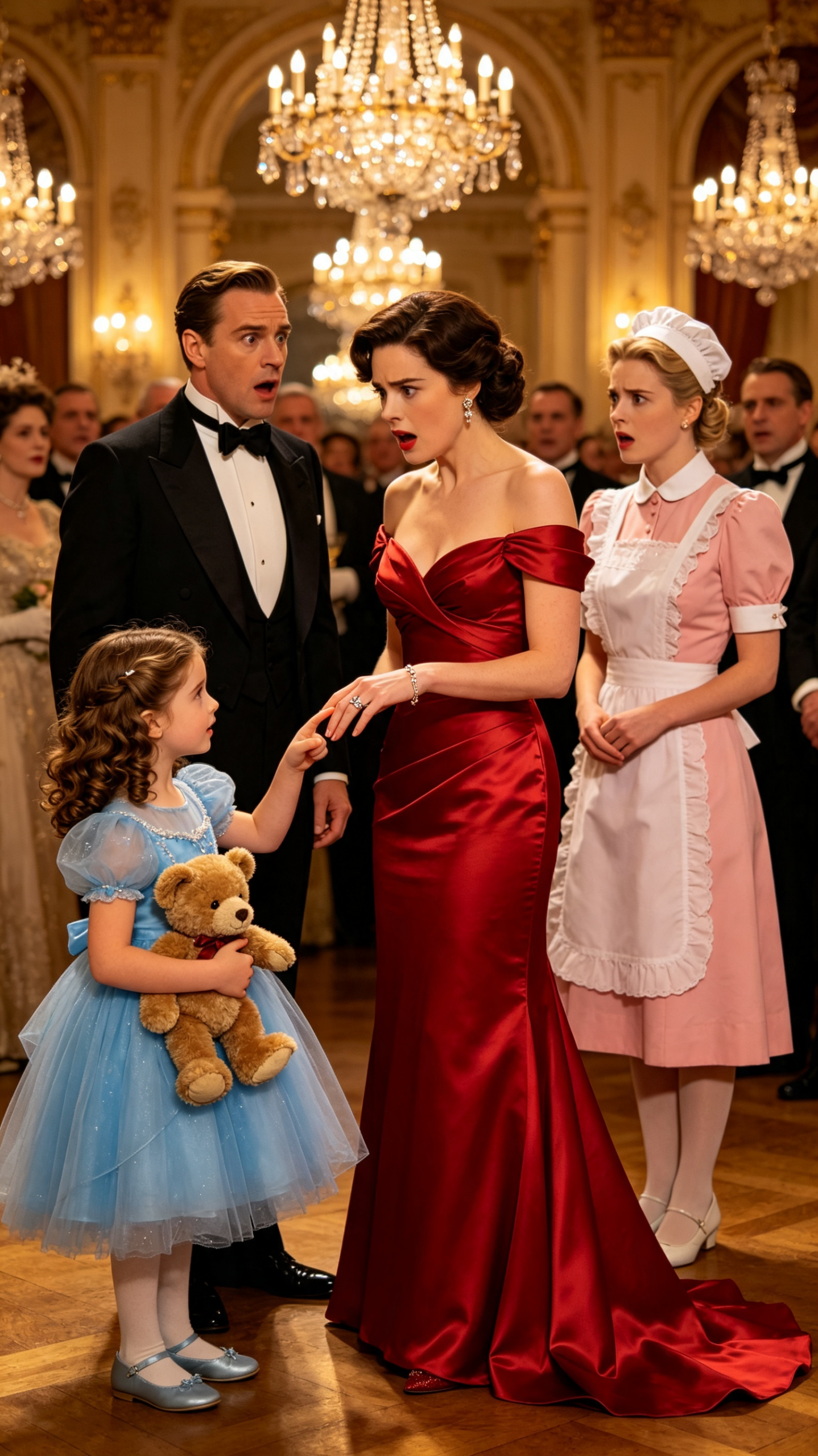
Rain struck the tall windows of my Long Island estate in hard November sheets, and the crystal chandelier above us trembled almost imperceptibly whenever the wind leaned against the house.
Rosie Carter stood barefoot beside the service door.
Three years old.
Pink pajamas.
Dark curls tangled from sleep.
A stuffed rabbit squeezed beneath one arm.
And her eyes were fixed on my fiancée’s left hand.
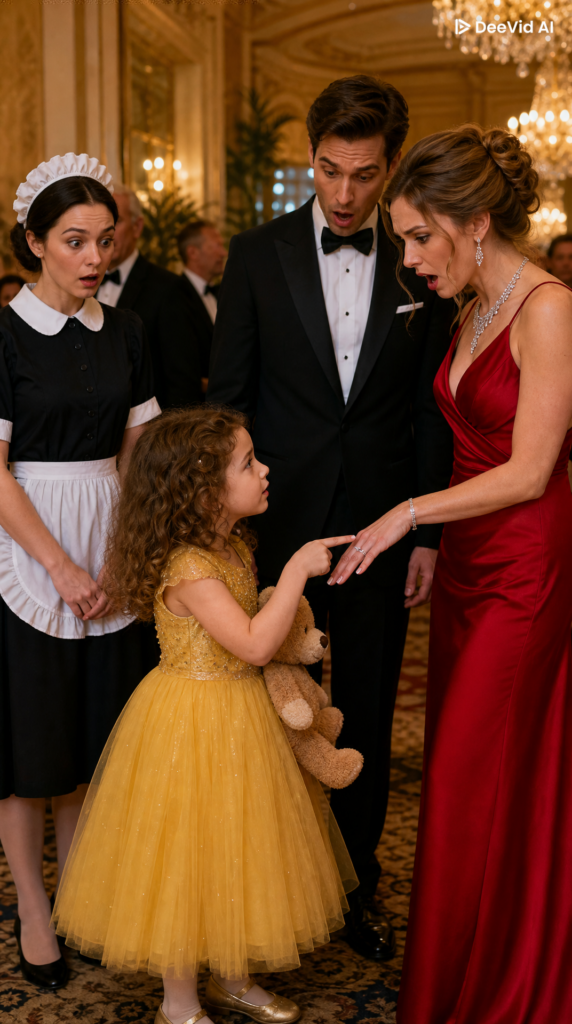
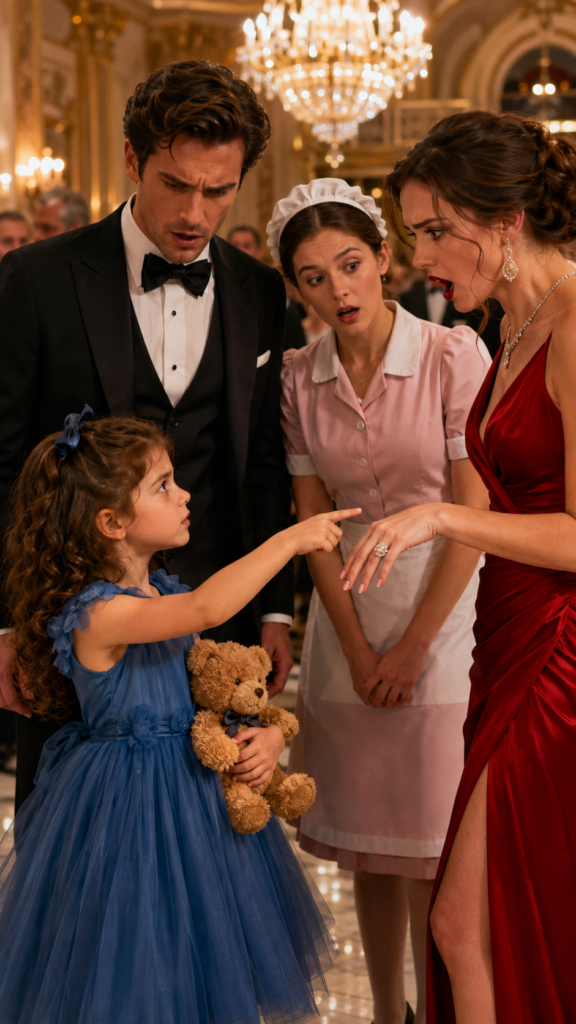
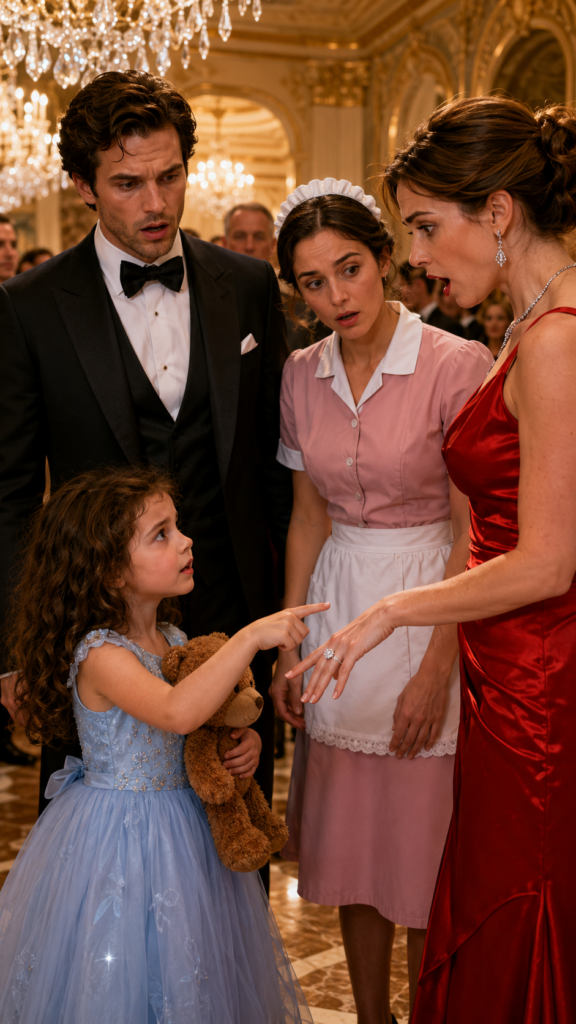
“That ring belongs to my mommy.”
Vivienne smiled.
She was very good at smiling when things went wrong.
“Oh, sweetheart,” she said softly. “I’m sure it only looks like—”
“That’s Mommy’s.”
Rosie’s little voice cracked.
Vivienne’s right hand moved over her left.
Just enough to cover the ring.
That was the moment everything changed.
I watched her fingers close.
Not fast.
Not dramatically.
Instinctively.
Like a person protecting something she should never have possessed.
“Show me your hand,” I said.
The room remained frozen.
Vivienne turned toward me.
“Damian.”
“Your hand.”
“Don’t do this.”
I looked at her.
“Do what?”
“Humiliate me because a sleepy child is confused?”
Rosie hugged the rabbit more tightly.
“She’s not confused.”
Vivienne’s jaw hardened.
One of my uncles cleared his throat at the opposite end of the table.
No one else moved.
The engagement dinner had been planned for months. Thirty-two guests. Family. Attorneys. Senior partners. Two judges. Three men who had flown in from Zurich. The chef had spent seventy-two hours preparing a menu no one would remember by morning.
Vivienne wore a sapphire silk gown chosen specifically because she said blue looked elegant beneath candlelight.
She looked beautiful.
She always did.
That had once impressed me.
Now I watched the pulse beating rapidly beneath her jaw.
“Damian,” she whispered, “she is three.”
“Yes.”
“She just lost her mother.”
“I know.”
“So perhaps we shouldn’t encourage—”
“Put your hand on the table.”
She stared at me.
Then, slowly, she did.
Her fingers were cold when I took them.
The platinum ring was narrow. Simple. Nothing compared with the engagement diamond I had given her.
Earlier that evening, I had noticed it.
“New?” I had asked.
“Vintage,” she had replied, lifting her champagne. “From an estate dealer.”
I had accepted the answer because I had spent most of my adult life accepting answers that did not seem important.
That was my first mistake.
I rotated the band.
And there it was.
A tiny star.
Scratched into the inner platinum.
The shape was uneven. One side longer than the others.
Hand-carved.
My thumb stopped.
Something old moved inside my chest.
A memory without a name.
I had seen that star before.
Not only on Sofia Carter’s hand when she served my coffee one morning years earlier.
Somewhere else.
Much earlier.
But the memory vanished before I could reach it.
I looked toward Rosie.
“Where did your mommy keep this?”
“In her box.”
“What box?”
“The wood one.”
“Where?”
“By her bed.”
Vivienne ripped her hand from mine.
“This is absurd.”
Rosie flinched.
I lowered my voice.
“Rosie.”
She looked at me.
“Did your mother ever let anyone borrow the ring?”
She shook her head.
“No. Mommy said it was family.”
A faint sound moved around the table.
Not quite a gasp.
Vivienne stood.
“You are interrogating the daughter of a dead employee during our engagement dinner.”
Employee.
The word struck me strangely.
Sofia had been dead nineteen days.
Thirty-five years old.
A stroke, according to the emergency physician.
She had been found on the floor of the small cottage on the eastern edge of my property where she lived with Rosie.
I had paid for the funeral.
I had arranged flowers.
I had told my accountant to put money into an educational trust for Rosie.
Then I had returned to work.
I had convinced myself that generosity was the same thing as grief.
That money was the same thing as paying attention.
It wasn’t.
Sofia had served breakfast in my house for nearly eight years.
She knew I hated sugar in coffee and liked windows cracked open even in winter.
She knew which meetings made me angry by the sound of my footsteps afterward.
Once, during a February blizzard, she had quietly left a bowl of soup outside my study because I had worked through dinner.
I had thanked her the following morning.
I could not remember ever asking where she had grown up.
I could not remember asking her father’s name.
I could not remember asking why she wore that thin platinum ring every single day.
A woman had spent eight years inside my home, and I had mistaken familiarity for knowing her.
Behind the dining-room doorway, my security chief had appeared.
Marco Bell.
He had worked for me for seventeen years.
He was six feet four, prematurely gray, and capable of crossing a crowded room without drawing attention until he wanted to.
I raised two fingers.
Marco stepped forward.
“Escort everyone to the drawing room.”
My aunt Evelyn stared at me.
“What?”
“Nobody leaves.”
Vivienne’s face changed.
“Damian.”
Marco didn’t question me.
“Phones remain with their owners,” I added, “but no calls until I say otherwise.”
One of my business partners pushed his chair back.
“You cannot seriously intend to detain thirty people over a ring.”
I turned toward him.
“You’re free to walk outside.”
Thunder rolled behind the windows.
“Through the gates,” I continued, “once I know who entered Sofia Carter’s house after she died.”
Nobody moved.
I looked back at Vivienne.
She had gone pale.
“Damian, what exactly are you accusing me of?”
“Nothing yet.”
“Then stop treating me like a criminal.”
I watched her.
There are moments when you suddenly realize that the person standing in front of you has been performing a version of themselves for years.
Nothing about their face changes.
You do.
I had known Vivienne Lancaster for four years.
She was intelligent, disciplined, graceful under pressure.
She could host a charity dinner for four hundred people without raising her voice once.
She remembered birthdays.
Sent handwritten notes.
Never arrived late.
When my father died two years earlier, she slept beside me for six nights without asking why I never cried.
I had believed that restraint meant kindness.
Now she looked at a frightened three-year-old and saw an inconvenience.
“Marco.”
“Yes?”
“Watch every door.”
Vivienne stared at me.
“Damian, what are you doing?”
I stood.
My chair slid backward across the polished floor.
“Making sure nobody leaves until I find out how a dead woman’s ring ended up on my future wife’s hand.”
Rosie began crying six minutes later.
Not loudly.
That made it worse.
She sat on the edge of a sofa in the library while my housekeeper, Mrs. Alvarez, wrapped a blanket around her shoulders.
I knelt in front of her.
The stuffed rabbit stared at me with one button eye.
“Did I make trouble?” Rosie whispered.
My throat tightened.
“No.”
“Miss Vivi is mad.”
“That’s not your fault.”
She looked toward the closed door.
“Mommy said not to make rich people mad.”
I felt something inside me turn.
“Who told her that?”
Rosie shrugged.
Children do that when they are repeating something they do not understand.
“Did your mommy talk about Miss Vivienne?”
She pushed a finger beneath the rabbit’s torn ear.
“Sometimes.”
“What did she say?”
Mrs. Alvarez gave me a warning glance.
Do not push.
I softened my voice.
“Only if you remember.”
Rosie thought.
Then she whispered, “Mommy said blue lady keeps asking questions.”
My skin went cold.
“Blue lady?”
“The pretty one.”
Vivienne wore blue constantly.
“About what?”
Rosie’s small forehead wrinkled.
“Grandma.”
I stopped.
“Whose grandma?”
“Mommy’s.”
I looked at Mrs. Alvarez.
She looked as confused as I felt.
“Did you know Sofia’s mother?”
“No, sir.”
“Did she ever mention family?”
Mrs. Alvarez hesitated.
“Almost never.”
“Almost?”
“She once told me her mother had worked in a house like this.”
“When?”
“Years ago.”
Rosie leaned toward me.
“Mommy said Grandma had stars.”
I looked back at her.
“What kind of stars?”
“She scratched them.”
Something moved through my memory again.
A woman’s laugh.
Warm hands.
Sunlight.
A gold sewing box.
I stood too fast.
The room tilted.
“Damian?”
Marco had entered quietly.
I turned.
“What?”
“We checked Miss Lancaster’s evening bag.”
Vivienne had agreed only after I reminded her that refusing would answer more questions than cooperating.
Marco held a folded piece of paper.
“What is it?”
“A receipt.”
“For the ring?”
He nodded.
“Latham Estate Jewelry. Manhattan. Dated twelve days ago.”
That should have been enough.
It should have ended everything.
Except Marco was holding the receipt by its edge as though it offended him.
“What?”
“I called the number.”
“And?”
“Disconnected.”
My pulse slowed.
Danger had always done that to me.
The more frightened everyone else became, the quieter my body grew.
“Business registry?”
“Nothing.”
I took the receipt.
Beautiful paper.
Embossed lettering.
Professional invoice number.
Payment listed as cash.
“Fake.”
“Looks that way.”
“Where is Vivienne?”
“Drawing room.”
“Keep her there.”
I turned toward Rosie.
She was watching me with enormous brown eyes.
“Rosie.”
“Yes?”
“I need to go to your house.”
Her expression immediately changed.
“No.”
“I won’t touch anything unless I have to.”
“No.”
She slipped off the sofa and grabbed my sleeve.
“Mommy doesn’t like people in her room.”
I swallowed.
“Your mommy isn’t there now.”
Rosie’s lower lip trembled.
Then she said the sentence that kept me awake for months afterward.
“She is when the light is off.”
Sofia’s cottage stood three hundred yards from the main house.
Rain had transformed the path into black mud.
Marco walked beside me beneath an umbrella neither of us needed anymore.
My suit was soaked from the knees down.
The cottage door still carried the small strip of police tape left after the medical examiner released the scene.
The county had classified Sofia’s death as natural.
There had been no sign of forced entry.
No obvious trauma.
No suspicion of foul play.
Inside, everything smelled faintly of lavender detergent and cold wood.
A child’s yellow rain boots sat beside the door.
Three crayons lay beneath the kitchen table.
There was a cup in the sink with dried tea along the bottom.
Ordinary things.
That was what made death unbearable.
The dead left behind a thousand objects that still seemed to expect them back.
We entered Sofia’s bedroom.
Single bed.
Old oak dresser.
A framed photograph of Rosie covered in birthday cake.
And on the bedside table—
An empty rectangle in the dust.
Marco saw it too.
“The wooden box.”
“Gone.”
We searched carefully.
Closet.
Dresser.
Under the bed.
Nothing.
Then I noticed scratches on the brass plate surrounding the lock on the back door.
“Someone used a key.”
“Could have been Sofia.”
“After she died?”
Marco said nothing.
I walked to the dresser.
One drawer sat slightly crooked.
When I pulled it out, something caught beneath the wood.
An envelope.
Taped flat beneath the drawer.
My name was written across the front.
Not Mr. Vale.
Not Damian Vale.
Just:
Damian.
My hands became strangely numb.
I removed the tape.
Inside was one sheet of paper.
Sofia’s handwriting was narrow and clean.
Damian,
If you’re reading this, something happened before I could tell you myself.
There are things about your family you were never told.
I know that sentence sounds like manipulation. I know what your father taught you about people who arrive carrying secrets.
So I won’t ask you to trust me.
Ask yourself instead why my ring feels familiar.
Ask yourself who taught you to draw crooked stars.
And then look in the old nursery at Blackthorne.
Your father missed one thing.
I didn’t.
Please take care of Rosie until you understand.
She has already lost enough.
Sofia
For several seconds, the only sound in the room was rain ticking against the glass.
Marco finally spoke.
“What is Blackthorne?”
I could not answer.
Because I knew.
Blackthorne House was the estate where I had lived until I was nine years old.
The house my father had sealed after my mother’s death.
The house no one had entered in more than thirty years.
And suddenly I knew where I had seen that crooked star.
I was six.
My mother had removed her ring while kneading bread in the kitchen.
I had stolen it from the counter and taken it beneath the table with a sewing needle.
I had scratched a star inside the platinum.
A terrible, crooked little star.
When she discovered it, she stared at me in horror.
Then she laughed.
My father did not.
He struck me across the face so hard I fell against a chair.
My mother dropped to her knees and held me.
Later that night, she whispered into my hair:
“Never be sorry for leaving a mark that proves you were here.”
I had forgotten.
Until now.
I looked down at Sofia’s letter.
Then at the missing wooden box.
Then toward the rain-dark window.
“Marco.”
“Yes?”
“Get the car.”
“Where are we going?”
I folded Sofia’s letter carefully.
“To the house where my mother died.”
Vivienne was waiting in the foyer when I returned to the main house.
Her face was colorless.
“You’re leaving?”
“Yes.”
“Where?”
“Blackthorne.”
For the first time that night, she looked truly afraid.
Not angry.
Not offended.
Afraid.
And I saw it.
“You know that name.”
She recovered too late.
“I’ve heard you mention it.”
“No, you haven’t.”
“Damian—”
I stepped closer.
“Have you been there?”
“No.”
“Did Sofia tell you about it?”
“No.”
“Then why did you react?”
Her eyes flicked toward Marco.
It lasted perhaps half a second.
But I saw it.
So did he.
Vivienne whispered, “You are destroying us over the word of a dead maid and a three-year-old child.”
I stared at her.
“No.”
I moved past her.
“If we’re being destroyed by the truth, then there was never an us to save.”
PART 2 — THE HOUSE MY FATHER BURIED
Blackthorne looked smaller than it had in my nightmares.
The estate sat forty minutes west, beyond bare trees and a stone wall smothered in ivy.
My father had stopped maintaining it after my mother’s funeral.
No one sold it.
No one rented it.
No one spoke about it.
He once told me some houses should be allowed to die.
At forty-three, standing beneath the ruined portico while rain dripped from the roof, I finally wondered why a man as obsessed with money as my father would leave fifty acres of valuable property untouched for three decades.
Marco forced the swollen front door.
Cold air came out first.
Then dust.
Then memory.
The staircase.
The faded wallpaper.
The indentation on the floor where my mother’s piano had once stood.
I walked slowly.
“Old nursery,” Marco said.
“Second floor.”
Every step creaked.
My room had been at the end of the east corridor.
The door still bore the faint outline of wooden letters that had once spelled DAMIAN.
Inside, a small iron bed frame remained against the wall.
Clouds covered the moon.
Marco’s flashlight moved across faded sailboats painted above the baseboard.
I remembered my mother sitting there at night.
I remembered her perfume.
Jasmine and soap.
I remembered her telling me she was going away for two days.
Then my father sitting beside me the following morning.
Your mother was in an accident.
She won’t be coming home.
Closed casket.
No goodbye.
No body.
I had cried until I vomited.
My father had never cried at all.
“Sofia said he missed one thing,” I murmured.
“What would that mean?”
I scanned the room.
Closet.
Window.
Old shelving.
Then I remembered.
When I was small, I used to hide beneath the loose floorboard behind the radiator because my father never bent low enough to find me.
I crossed the room.
The radiator was rusted.
The board behind it still shifted when I pressed down.
Marco helped pry it loose.
There was a space beneath.
And inside—
A metal biscuit tin.
My knees weakened.
The lid showed painted blue flowers.
My mother used to keep buttons in that tin.
I opened it.
No buttons.
Letters.
A small passport.
A photograph.
A birth certificate.
And a newspaper clipping.
I picked up the photograph first.
My mother stood beside a lake.
Older than I remembered her.
Alive.
She was holding a baby.
On the back, in her handwriting:
Sofia Elena Vale. Six weeks old. She has Damian’s eyes.
I sat down on the floor.
I could hear Marco breathing somewhere behind me.
I read the words again.
Sofia Elena Vale.
My surname.
My mother’s name.
My eyes.
“No,” I whispered.
But denial means nothing when evidence has weight in your hands.
The birth certificate listed the mother as Elena Vale.
The father’s line had been left blank.
Date of birth:
Eight months after my mother’s supposed death.
My fingers tightened around the paper.
“She survived.”
Marco crouched beside me.
“Your mother?”
“She didn’t die in the accident.”
I opened the passport.
Issued eighteen months after the funeral.
Elena Anne Vale.
My mother.
Alive.
Another document contained a name change.
Elena Vale to Elena Carter.
My stomach turned.
Carter.
Sofia Carter.
I stared at the photograph until the woman’s face blurred.
“My mother left.”
I had spent thirty-four years grieving a dead woman.
She had not been dead.
Marco spoke quietly.
“Maybe she had a reason.”
“She left me.”
My voice cracked on the last word.
I hated that.
At forty-three years old, I was still capable of becoming the nine-year-old boy standing beside a coffin that contained someone else’s ashes.
I opened the first letter.
It was addressed to me.
Damian,
Your father will tell you I abandoned you.
I need you to believe one thing even if you never learn anything else.
I tried to take you with me.
He promised that if I came near you again, he would have me arrested for kidnapping and make certain I never saw you.
I had no money.
No family left that he had not frightened.
And I was pregnant.
I told myself I would return when I was strong enough.
I am ashamed that strength took longer than love.
I stopped reading.
My vision had gone white around the edges.
Marco turned away.
That was the kindness of men who had seen each other bleed.
Sometimes you preserved dignity by pretending not to witness its collapse.
I forced myself through the remaining pages.
My mother had escaped my father after years of coercion and violence.
The “accident” had been staged.
Not by her.
By him.
He declared her dead socially before she was dead physically because it was easier than explaining that his wife had run from him.
She changed her name.
Gave birth to Sofia.
Worked as a seamstress.
Then a receptionist.
Then, later, a bookkeeper.
She wrote to me dozens of times.
None of the letters had been mailed.
She was terrified my father would trace them.
The final letter was dated eleven years after she vanished.
The writing was weaker.
Cancer.
Advanced.
She was dying.
Sofia was eleven years old.
The letter ended with:
I have told your sister about you.
She knows you are not the man your father says you are.
Perhaps someday she will be braver than I was.
I hope you forgive us both.
I lowered the page.
Thirty-four years.
I had spent thirty-four years thinking grief was the wound.
The wound was that my grief had been manufactured.
“There’s more,” Marco said.
At the bottom of the tin was a photograph of two children.
Me at six.
Sofia at perhaps four months.
Impossible.
Then I realized it was a composite—two separate photographs cut and carefully joined.
On the back, written later in a different hand:
I wanted one picture with my brother.
—S.
I pressed my thumb against the ink.
A sound came out of me.
Not a sob.
Something smaller.
More humiliating.
“Eight years,” I whispered.
Marco didn’t speak.
“She worked in my house for eight years.”
“Yes.”
“I saw her every morning.”
“Yes.”
“I complained when the coffee was too hot.”
Marco lowered his eyes.
“I asked her to order flowers for Vivienne.”
Silence.
“I made her arrange my mother’s memorial charity dinner.”
That broke something.
I bent forward, elbows against my knees.
My sister had stood beneath a portrait of our mother while I thanked strangers for attending a memorial to a woman I thought had died before Sofia was born.
And Sofia had said nothing.
Why?
The question nearly suffocated me.
Then I saw another envelope.
Sofia’s handwriting.
Again.
Do not blame yourself for not knowing me.
I came to your house because I wanted to see you before I told you.
At first, I planned to stay one month.
You looked so much like Father when you were angry that I nearly left.
Then I saw you sit on the kitchen floor at two in the morning feeding an injured stray dog from your hand.
I stayed another month.
Then Rosie came.
You paid my hospital bill before I even asked.
You never knew.
I kept waiting for the right moment.
Then every year the truth became heavier because I had waited another year.
I am sorry.
I was afraid that if I told you, you would think I wanted something.
I did.
I wanted a brother.
That was all.
I closed my eyes.
There are sentences that do not feel like language.
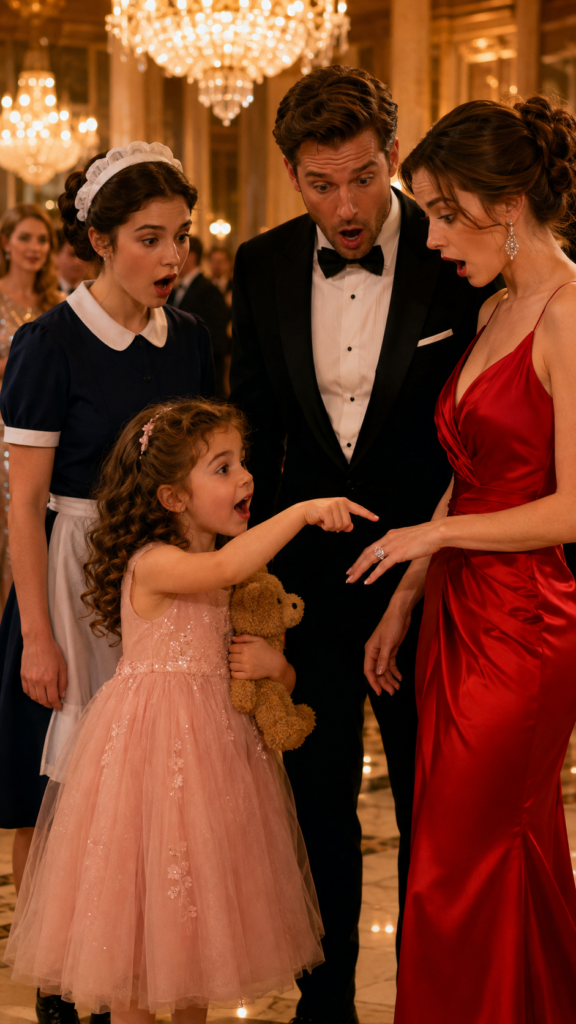
They feel like being struck.
We returned to the main estate shortly before three in the morning.
No one had left.
I found Vivienne alone in the conservatory.
She had removed her earrings.
The ring was gone from her finger.
It sat on a silver table between us.
I remained standing.
“Who was Sofia?”
Vivienne looked at me.
I said nothing.
Her face changed.
“You know.”
“Yes.”
She closed her eyes.
“For how long?” I asked.
“Three months.”
The answer almost made me laugh.
Not from humor.
From the absurdity of pain arriving with such precise measurements.
“Three months.”
“Yes.”
“You knew she was my sister for three months.”
“I suspected at first.”
“And then?”
“I found documents.”
“Where?”
“In her cottage.”
My hands curled.
“While she was alive?”
“Yes.”
“Why were you searching her home?”
Vivienne stood.
“Because she was investigating me.”
That stopped me.
“What?”
“She knew about the trust restructuring.”
“What trust?”
She stared.
And I understood that whatever she said next would finish what Rosie had begun at dinner.
“The Vale family holding trust.”
I shook my head.
“There is no active family trust.”
“There is.”
“No. My father dissolved it.”
“He told you he dissolved it.”
A small smile touched her face.
Bitter.
Almost pitying.
“Your father lied about a great many things, Damian.”
I wanted to strike something.
Instead I put both hands into my pockets.
“Continue.”
“The trust owns approximately forty percent of the waterfront properties your grandfather acquired before you were born.”
“Managed by whom?”
“Nathaniel Shaw.”
My father’s oldest attorney.
My godfather.
A man who attended every birthday dinner from the time I was twelve.
A man sitting downstairs at that very moment.
Vivienne continued.
“When we began preparing our prenuptial agreements, Nathaniel discovered a problem.”
“Sofia.”
“If your mother had another legally recognized child, certain old provisions divided beneficial ownership equally among her surviving descendants.”
I stared at her.
“So Sofia owned half.”
“Potentially.”
“And you knew.”
“Yes.”
“Did she?”
“Yes.”
“Did she ask for money?”
“No.”
That answer came quickly.
Too quickly.
“What did she ask for?”
Vivienne looked away.
“An audit.”
Of course.
Sofia had not wanted my money.
She had wanted the truth.
“What would an audit have found?”
“I don’t know everything.”
“Then tell me what you know.”
“Nathaniel had been moving assets for years.”
“How much?”
“I don’t know.”
“Vivienne.”
“Perhaps eighty million.”
The rain had stopped.
That somehow made the silence worse.
“Perhaps?”
“Maybe more.”
“And your role?”
“I signed preliminary restructuring documents.”
I looked at her.
She lifted her chin.
“I was protecting our future.”
“By helping steal from my sister?”
“I didn’t know she was your sister when I signed them.”
“But you knew later.”
“Yes.”
“And said nothing.”
“Yes.”
“Why?”
Her eyes filled with tears.
For four years, I had believed Vivienne cried beautifully.
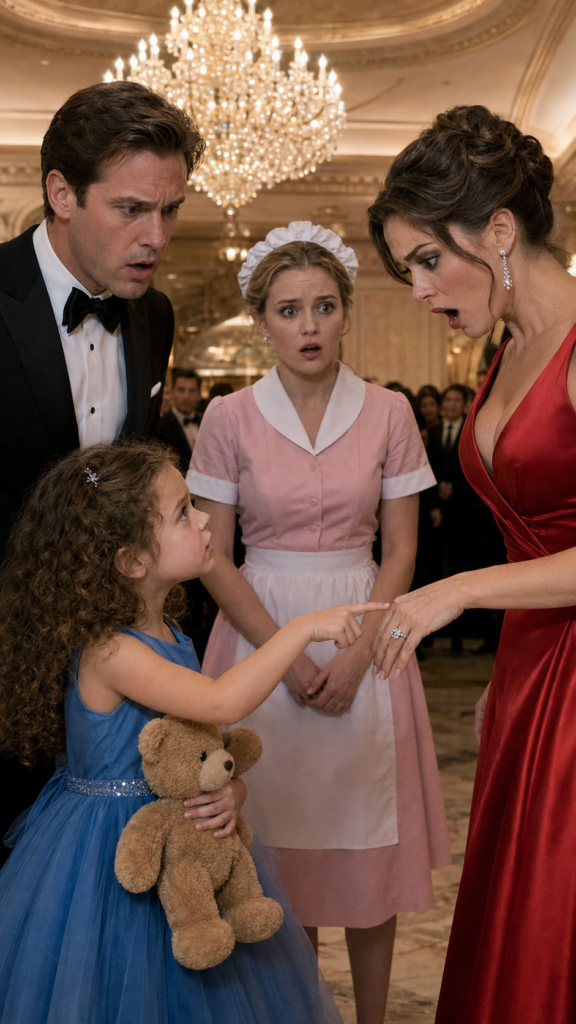
That night I discovered all tears look ugly when trust has already died.
“Because I thought if you found out, everything would change.”
“It has.”
“I loved you.”
I said nothing.
She stepped toward me.
“You don’t understand what Sofia was doing.”
“Then explain.”
“She confronted Nathaniel. She told him she was going to you.”
“When?”
“The afternoon before she died.”
My chest tightened.
“Were you there?”
Vivienne hesitated.
“Yes.”
I crossed the room before I knew I had moved.
Not touching her.
Stopping inches away.
“What happened?”
“She told me I could still fix it.”
“Fix what?”
“Tell you everything.”
“And?”
“I told her she had no idea what she was destroying.”
Vivienne’s voice broke.
“She laughed at me.”
“Sofia?”
“She said, ‘If the truth destroys it, maybe you should stop calling it a future.’”
The words sounded exactly like Sofia.
Quiet.
Precise.
Enough to make a liar furious.
“What happened next?”
“Nathaniel arrived.”
“Why?”
“I called him.”
My stomach turned.
“You called him to her house?”
“Yes.”
“What happened?”
“They argued.”
“About the audit?”
“Yes.”
“And then?”
“I left.”
“You expect me to believe that?”
“I left.”
“Why?”
“Because I couldn’t listen anymore.”
“When did you return?”
Her eyes shifted toward the ring.
“The night after the funeral.”
There it was.
“What did you take?”
“The ring.”
“What else?”
“Nothing.”
“The wooden box beside Sofia’s bed is gone.”
“I didn’t take it.”
“Vivienne.”
“I swear.”
“Why take the ring?”
She covered her face.
When she spoke, her voice had shrunk.
“Because I remembered Nathaniel asking about it.”
I stared.
“What did he say?”
“He asked if she still wore her mother’s platinum band.”
“Why would he care?”
“I didn’t know.”
“So after my sister was buried, you entered her bedroom and stole it.”
She nodded.
“Then you wore it to our engagement dinner.”
“I know how that sounds.”
“No.”
I looked at the woman I had planned to marry.
“I don’t think you do.”
“I was frightened.”
“You wore a dead woman’s ring because you were frightened?”
“I thought if Nathaniel wanted it, I needed to keep it where he couldn’t quietly take it.”
“In a safe?”
“He knows your safe systems.”
“A bank?”
“He has people everywhere.”
“So you put it on your finger?”
Her expression collapsed.
“I didn’t know what else to do.”
For the first time, I wondered if I had misread one part of the night.
Not her guilt.
Her fear.
“Why didn’t you come to me?”
She gave a broken laugh.
“Because by then I had already helped him.”
“How much did you know?”
“Enough to lose you.”
“And you chose silence.”
“Yes.”
I looked at the ring.
My mother’s.
Then Sofia’s.
Then Vivienne’s.
Three women.
Three different forms of fear.
“Did Nathaniel kill Sofia?”
Vivienne went still.
“I don’t know.”
“That’s not an answer.”
“I saw him put something in his pocket when I left.”
“What?”
“A prescription bottle.”
My blood chilled.
“Sofia’s?”
“I think so.”
I turned toward the door.
Vivienne grabbed my arm.
“Damian.”
I looked down at her hand.
She released me.
“There is something else.”
“What?”
“Nathaniel called me the morning Sofia died.”
“What did he say?”
Vivienne’s lips trembled.
“He said the family problem had resolved itself.”
PART 3 — THE LAST CROOKED STAR
Nathaniel Shaw was drinking my father’s whiskey when I found him.
Of course he was.
He sat alone in the drawing room while the remaining guests whispered in small groups farther away.
Silver hair.
Charcoal suit.
Perfect posture.
At sixty-eight, Nathaniel still looked like the kind of man judges trusted before he opened his mouth.
He had taught me to tie a Windsor knot.
Taken me to my first Yankees game.
Sat beside me at my father’s funeral.
When I approached, he lifted his glass.
“Quite a night.”
“Everyone out.”
Conversation stopped.
“Damian?”
I turned toward Marco.
“Clear the room.”
Nathaniel’s eyebrows lifted.
Within two minutes, only the three of us remained.
I sat opposite him.
He looked at my wet trousers.
“Blackthorne?”
I felt my pulse in my teeth.
There was no reason for him to know.
Not unless—
“You knew about the house.”
He gave a tired sigh.
“I knew your father.”
“That’s not what I said.”
He drank.
I placed Sofia’s birth certificate on the table.
His eyes lowered.
Not surprised.
That was enough.
“How long?”
“Damian—”
“How long did you know my sister was alive?”
He set the glass down carefully.
“Long enough.”
“Years?”
“Yes.”
“How many?”
“Nearly nine.”
The room narrowed.
“She worked in my house eight.”
“I know.”
“You let her.”
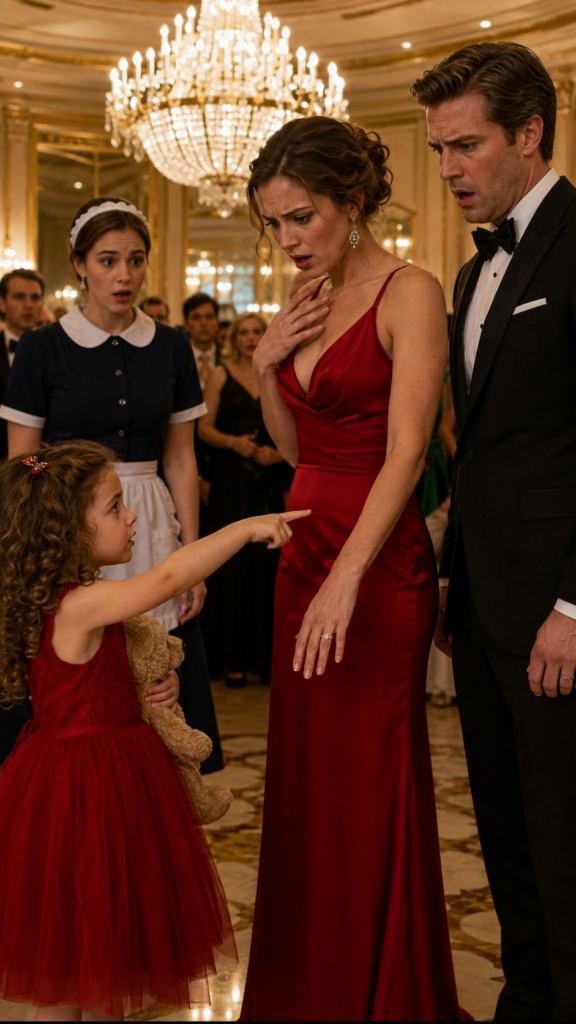
“She applied under her married name. By the time I discovered who she was, removing her would have raised questions.”
“You knew my mother survived.”
“Yes.”
“How long?”
He looked exhausted.
“Since the beginning.”
I stood.
Marco moved half a step forward.
Not to stop me.
To remind me I was still capable of becoming someone I would regret.
I sat again.
“Was there ever an accident?”
Nathaniel looked down.
“No.”
The word barely made a sound.
But it killed the last version of my father I had carried inside me.
“He lied to me.”
“Yes.”
“You helped him.”
“Yes.”
“Why?”
“Because I was his attorney.”
“That isn’t an answer.”
“It was to me then.”
Nathaniel looked older suddenly.
“I was thirty-four. Ambitious. Your father controlled every meaningful client I had. Your mother wanted to leave him. He told me she was unstable. Reckless. That she would destroy you.”
“And you believed him?”
“I believed whatever preserved my career.”
At least he did not insult me with excuses.
I leaned forward.
“Did you kill Sofia?”
His face did not change.
“No.”
“Vivienne saw you with her medication.”
“I took it.”
“Why?”
“Because I panicked.”
“About the audit?”
“Yes.”
“What did you do to the medication?”
“Nothing.”
“Then why take it?”
“Because she had written notes on the pharmacy receipts.”
I frowned.
“What notes?”
“She was tracking dates.”
“Of what?”
“Payments.”
I felt the puzzle shift.
Nathaniel continued.
“The pharmacy was owned by a holding company connected to one of the accounts I had been using. Sofia found it by accident while reviewing old trust records.”
“How?”
“She was smarter than I gave her credit for.”
“You mean smarter than a maid?”
He winced.
Good.
“She had bookkeeping experience.”
“Yes.”
“She worked as one before coming here.”
“Yes.”
“You knew that too.”
“Yes.”
Every answer was another nail.
“Did you go to her cottage the day before she died?”
“Yes.”
“Did you threaten her?”
“I asked her to reconsider.”
“That’s not what I asked.”
“I told her that exposing the trust could damage you.”
I laughed once.
“And by damage me, you meant expose you.”
He looked away.
“Mostly.”
“Did you touch her?”
“No.”
“Did you give her anything?”
“No.”
“Did you harm her?”
“No.”
I studied him.
Men like Nathaniel built careers on believable sentences.
But something in him looked different from Vivienne.
She had been calculating.
Nathaniel looked ashamed.
There is a difference.
Not innocence.
But a difference.
“Then why did she die twelve hours later?”
“I don’t know.”
Marco spoke for the first time.
“The medical examiner retained blood samples.”
Nathaniel looked at him.
Marco continued.
“I requested an independent toxicology review two hours ago.”
Nathaniel’s eyes returned to me.
“You think I poisoned her.”
“I think thirty-four years of lies earned you the inconvenience.”
He leaned back.
“Fair.”
The word enraged me more than denial would have.
“Where is the wooden box?”
“What box?”
“Sofia kept one beside her bed.”
Nathaniel stared.
“I don’t know.”
Vivienne had said the same thing.
Marco’s phone vibrated.
He looked at the screen.
Then at me.
“Damian.”
Something in his voice made me stand.
“What?”
“The original responding paramedic from Sofia’s death returned my call.”
“And?”
“He remembers something that wasn’t in the county report.”
My mouth went dry.
“What?”
“Sofia was conscious when they arrived.”
I froze.
“The report says unresponsive.”
“She became unresponsive in the ambulance.”
“Did she say anything?”
Marco’s face tightened.
“Yes.”
“What?”
“He says she kept repeating a name.”
Nathaniel went pale.
“Whose?”
Marco looked directly at him.
“Rosie.”
I exhaled.
Then Marco added:
“And yours.”
At five eighteen that morning, I sat in the kitchen with Rosie.
The enormous formal house had finally emptied.
Vivienne had been moved to a guest suite under guard.
Nathaniel remained with Marco and two attorneys.
I didn’t care.
For the moment, I could not absorb another adult lie.
Rosie sat in Sofia’s old chair wearing wool socks Mrs. Alvarez had found in a laundry basket.
She ate toast cut into squares.
I watched her carefully spread strawberry jam all the way to the crust.
Sofia had done that.
Not for me.
For Rosie.
I had seen it dozens of mornings without understanding I was watching my sister mother her child.
Rosie looked up.
“Are you sad?”
“Yes.”
“Because Mommy’s gone?”
“Yes.”
She nodded as though this made sense.
Then she pushed one piece of toast toward me.
“Mommy gives me food when I’m sad.”
I took it.
“Thank you.”
We ate in silence.
After a moment she asked, “Are you Mommy’s brother?”
I stopped chewing.
“Did she tell you that?”
Rosie nodded.
“When?”
“She said maybe.”
“Maybe?”
“She said, ‘Maybe Uncle Damian will know soon.’”
The toast became impossible to swallow.
“What else did she tell you about me?”
Rosie thought hard.
“You don’t like bananas.”
I laughed.
It came out broken.
“No. I don’t.”
“And you snore.”
I stared.
“How would she know that?”
“Mommy heard you on the sofa.”
Christmas.
Two years ago.
I had fallen asleep in the library after drinking half a bottle of bourbon on the anniversary of my father’s death.
Sofia must have covered me with the blanket I found there the next morning.
I had assumed Mrs. Alvarez did it.
Rosie swung her feet.
“Mommy said you look scary when you don’t smile.”
“That’s probably true.”
“But you aren’t scary.”
I looked at her.
“How do you know?”
“Dogs like you.”
My breath caught.
Sofia’s letter.
The injured stray.
That was why she stayed.
Rosie slid off the chair.
“I have Mommy’s box.”
I stopped breathing.
“What?”
She walked toward the pantry.
Mrs. Alvarez, standing near the stove, turned sharply.
Rosie disappeared behind a row of storage shelves and returned dragging her stuffed rabbit by one ear.
“No, sweetheart,” I said gently. “I mean the wooden box.”
“I know.”
She turned the rabbit upside down.
There was a zipper beneath its patched stomach.
Inside the stuffing was a small brass key.
Rosie held it up.
“Mommy said box is hiding.”
“Where?”
“Big house.”
My pulse accelerated.
“Which big house?”
“This one.”
“Where?”
She pointed toward the ceiling.
“Where music sleeps.”
My mother’s piano room.
Except the piano at this estate had belonged to my father.
The other one—the one from Blackthorne—had been moved here after my father’s death and stored in the unused ballroom on the third floor.
I stood.
“Marco!”
The piano was covered in a white sheet.
Dust floated through the morning light as Marco and I pulled it away.
A black Steinway.
My mother’s initials still engraved beneath the keyboard.
E.A.V.
I had not touched it since childhood.
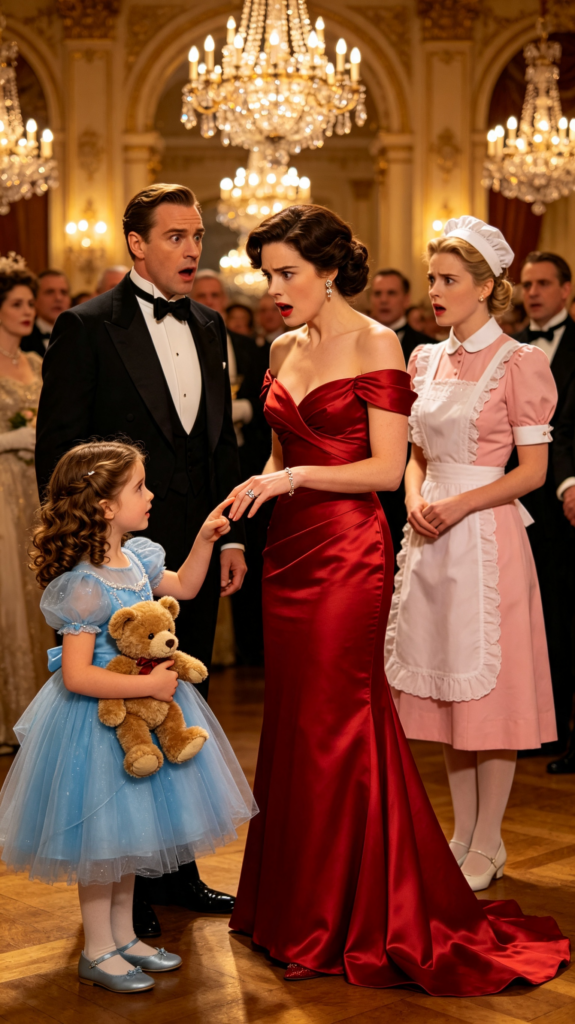
Rosie waddled behind us clutching her rabbit.
“Mommy put box in there.”
“Where?”
She pointed beneath the bench.
Nothing.
Then at the underside of the piano itself.
A narrow compartment had been added behind the pedal assembly decades earlier.
The brass key fit.
Inside sat the wooden box.
My hands shook so badly Marco had to lift it out.
The lock opened.
Documents.
A flash drive.
Bank records.
An old newspaper clipping.
And a sealed letter with a single word:
Brother.
I could not open it.
Not yet.
Marco inserted the flash drive into an offline laptop.
Folders appeared.
Trust records.
Transfer authorizations.
Emails.
Scanned signatures.
Years of theft.
Nathaniel had siphoned more than one hundred and twelve million dollars.
But there was something else.
A folder marked MEDICAL.
Sofia’s recent tests.
CT scans.
Neurology reports.
I opened the first document.
Then the second.
Then I understood.
“No.”
Marco leaned closer.
“Damian.”
“No.”
Sofia had not suffered an unexpected stroke.
Three months before her death, doctors had discovered a cerebral aneurysm.
Large.
Dangerous.
Surgery had been recommended.
She had postponed it.
Again.
And again.
Why?
There was a handwritten note scanned beside the reports.
If I go into surgery before I finish this, Nathaniel buries the records.
If I tell Damian before I prove everything, he’ll think I’m using our blood to force him to believe me.
One more week.
Then I’ll tell him everything.
My eyes burned.
Vivienne had not killed her.
Nathaniel had not killed her.
Not directly.
Sofia had known she might die.
And still she had spent her final months trying to bring me a truth she believed she had to earn.
Marco sat down.
“She died naturally.”
I couldn’t answer.
Another file appeared.
Audio.
Recorded the night before Sofia died.
I pressed play.
Her voice filled the empty ballroom.
Quiet.
Tired.
Alive.
“If you’re listening, I probably lost my nerve again.”
I covered my mouth.
Sofia laughed softly on the recording.
“I’ve been trying to tell my brother who I am for eight years, which is either very patient or very stupid.”
Rosie looked toward the laptop.
“Mommy.”
I shut my eyes.
Sofia continued.
“I don’t want the money. I never did. Nathaniel thinks this is about the trust. Vivienne thinks this is about protecting her future. Everybody in Damian’s world thinks people only hide things because they want leverage.”
A pause.
“You taught him that, Father.”
She was speaking to a dead man.
Our father.
“But Mom taught me something else.”
Another pause.
“She said when someone has been lied to long enough, the truth can feel like another attack. So I wanted proof before I gave it to him.”
Paper rustled.
“The doctor says I should have surgery next week.”
My chest seized.
“If I don’t make it, Rosie goes to Mrs. Alvarez until Damian knows the truth. If he doesn’t want her, don’t force him. He has already had enough family forced on him.”
Rosie climbed into my lap.
I held her.
Sofia’s voice softened.
“But I think he’ll want her.”
I began crying.
No dignity left to protect.
No guests.
No board.
No father.
Just a brother listening too late.
“He pretends he doesn’t notice children,” Sofia said. “But last month Rosie fell asleep under the dining table during the Christmas inventory, and he moved three meetings to another room because he didn’t want anyone waking her.”
I remembered.
I had told myself I was avoiding noise.
Sofia had noticed the truth before I did.
“He’s kinder than he thinks,” she continued. “That’s why I stayed.”
The recording paused.
Then:
“Damian, if this reaches you… don’t waste time being angry that I didn’t tell you sooner.”
I broke.
Rosie’s tiny hand touched my cheek.
“It’s okay.”
No.
It wasn’t.
Sofia spoke again.
“I got to know my brother.”
Her voice trembled for the first time.
“He just didn’t get to know me.”
I bent forward around Rosie and wept.
There are losses that happen when someone dies.
And there are worse losses—the ones where you discover the love was already there, living beside you, waiting for a name.
By noon, the toxicology report confirmed there had been no poisoning.
The aneurysm had ruptured.
Nathaniel had not murdered Sofia.
He had, however, stolen from the trust, destroyed correspondence, hidden my mother’s survival, and allowed my father to maintain a fraudulent death record decades earlier.
He would eventually plead guilty to conspiracy, fraud, obstruction, and multiple financial crimes.
Vivienne had not murdered Sofia either.
She had simply done something smaller.
More ordinary.
Perhaps, in its own way, more revealing.
She had learned the truth.
And chosen herself.
When she realized Sofia’s inheritance could complicate our marriage, she concealed it.
When Sofia confronted Nathaniel, Vivienne called him instead of me.
When Sofia died, Vivienne entered her room searching for documents that might implicate her.
She found the ring.
She took it.
And then, twelve days later, she wore it at our engagement dinner.
Not because she was a killer.
Because she truly believed that what belonged to a dead maid no longer mattered.
That was enough.
I ended the engagement that afternoon.
Vivienne did not scream.
She did not beg.
She stood near the front doors in the same sapphire gown she had worn the night before, now wrinkled at the waist.
“You’ll hate me for the rest of your life.”
I looked at her.
“No.”
That seemed to hurt her more.
“I won’t?”
“I don’t think I’ll know you long enough.”
She swallowed.
“I did love you.”
“I believe you.”
“Doesn’t that matter?”
“Yes.”
I opened the door.
Cold sunlight flooded the foyer.
“That’s why what you did matters.”
She left without another word.
Three weeks later, I attended a second funeral.
Not Sofia’s.
My father’s.
His body had been buried years earlier.
But that December morning, I buried the version of him I had carried all my life.
I removed his portrait from the main hall.
Took down the brass plaque from the family foundation.
Opened the archives.
Released my mother’s letters.
Restored Sofia’s name to every trust document where Nathaniel had erased it.
Half of the recovered assets legally belonged to Sofia’s estate.
Which meant they belonged to Rosie.
At three years old, my niece became wealthier than most adults could imagine.
She cared only that the kitchen kept strawberry jam.
I moved her belongings from the cottage into the main house.
Mrs. Alvarez suggested the bedroom beside mine because it received morning sunlight.
Rosie rejected it.
She chose a smaller room at the end of the corridor because there was a window seat shaped like a little house.
On her first night, she refused to sleep.
I sat beside her bed.
“You don’t have to be scared here.”
“I’m not scared.”
“Then why aren’t you sleeping?”
She looked at me as if I were slow.
“You didn’t say the thing.”
“What thing?”
“Mommy says the thing.”
My throat tightened.
“What did she say?”
Rosie held the rabbit beneath her chin.
“Stars know where home is.”
I stared at her.
Of course.
My mother.
The crooked stars.
I touched Rosie’s hair.
“Stars know where home is.”
She nodded.
Then closed her eyes.
Within minutes, she slept.
I remained beside the bed until sunrise.
In January, I finally opened Sofia’s last letter.
I had carried it inside my jacket for forty-one days.
Some forms of courage come slowly.
Brother,
If Rosie gave you this, then at least one of my plans worked.
You probably have questions.
Why didn’t I tell you?
Why did I wait?
Why did I let you call me Sofia instead of sister?
The answer changes depending on which year you ask me.
The first year, I was afraid.
The second, I was angry.
The third, I thought you were about to marry someone awful and decided you already had enough problems.
I laughed through tears.
The fourth year, Rosie was born and everything became complicated.
The fifth, you sat outside the pediatric ICU all night when she had pneumonia even though I told you to go home. You told me it was because you had paperwork.
You didn’t do any paperwork.
You slept in a plastic chair.
That was the year I almost told you.
I stopped reading.
I remembered the hospital.
Rosie had been eleven months old.
Sofia’s husband had died before Rosie’s birth in a construction accident. She had no one.
I had stayed because leaving felt wrong.
I never examined why.
The letter continued.
The sixth year, I became embarrassed by how long I had waited.
The seventh, I found the trust records.
The eighth, I decided that when the audit was finished, I would walk into your office, put Mom’s ring on your desk, and ask whether you remembered ruining it with a sewing needle.
Then I would tell you that you were not alone.
You were never alone.
I pressed the paper against my mouth.
There was one final paragraph.
If there is one thing I wish I had done differently, it isn’t telling you sooner.
It’s calling you what you were.
Just once.
So I will do it now.
Goodbye, big brother.
Please teach my little girl that family can arrive late and still be real.
Sofia
I sat at my desk until evening.
Outside, snow began covering the estate.
At some point Rosie entered without knocking.
She climbed into my lap.
“Reading Mommy?”
“Yes.”
“Sad?”
“Yes.”
She considered this.
Then opened her fist.
The platinum ring rested in her palm.
I had returned it to her after the investigation.
“It fits me?” she asked.
“Not yet.”
She pushed it toward me.
“You keep.”
“No, sweetheart. It’s yours.”
“Mommy said family ring.”
“It is.”
She frowned with the stubborn seriousness only a three-year-old could possess.
“You family.”
The words dismantled me.
I took the ring.
Rosie turned it between my fingers until the inside faced upward.
The tiny carved star caught the winter light.
A mark made by a six-year-old boy who had no idea that one careless scratch would travel through three decades, through a frightened mother, through the daughter she raised in hiding, through a funeral, a stolen truth, an engagement dinner, and finally into the hands of the brother who had spent his whole life believing everyone left him.
Rosie touched the crooked star.
“Mommy made that?”
I shook my head.
“No.”
“Who?”
I looked toward the window.
Snow softened the hedges outside Sofia’s cottage.
For the first time, the little house did not seem empty.
It seemed like evidence.
That someone had been there.
That someone had loved me quietly.
That I had been loved even when I hadn’t known enough to recognize it.
“I did,” I whispered.
Rosie’s eyes widened.
“You broke Mommy’s ring?”
A laugh escaped me through tears.
“I suppose I did.”
“You were naughty.”
“Very.”
She leaned against my chest.
After a while, she fell asleep there.
I remained perfectly still.
On my desk lay Sofia’s letter.
In my palm lay our mother’s ring.
And upstairs, inside a blue metal tin retrieved from a house full of ghosts, waited thirty-four years of letters proving that the dead had never abandoned me as completely as I had been taught to believe.
For most of my life, I thought family was the people who stayed.
I had been wrong.
Sometimes family was the person who spent eight years standing three feet away, quietly waiting for you to recognize the same crooked star.
And that night, with Sofia’s daughter asleep against my heart and our mother’s damaged ring warm in my hand, I finally understood what she had meant: some marks do not prove that something was ruined—they prove that someone was here.
