

PART 1
My father asked me not to return home for Christmas because my Army career might “overshadow” my stepbrother. Without making an argument, I canceled my plane ticket and signed up for the overnight shift. Hours later, while his guests sat watching the national news, footage of a rescue operation revealed exactly how I had spent Christmas Eve. When the anchor announced my name, the wineglass slipped from my father’s hand.
“Don’t come this year.”
My father delivered those words three nights before Christmas as I was securing my office at an Army base in Colorado.
He didn’t begin with a hello. He didn’t ask about my travel arrangements or try to disguise how deliberate his decision was.
I stood there with my coat draped over one shoulder, listening with my phone against my ear.
“I’m sorry,” I said. “What?”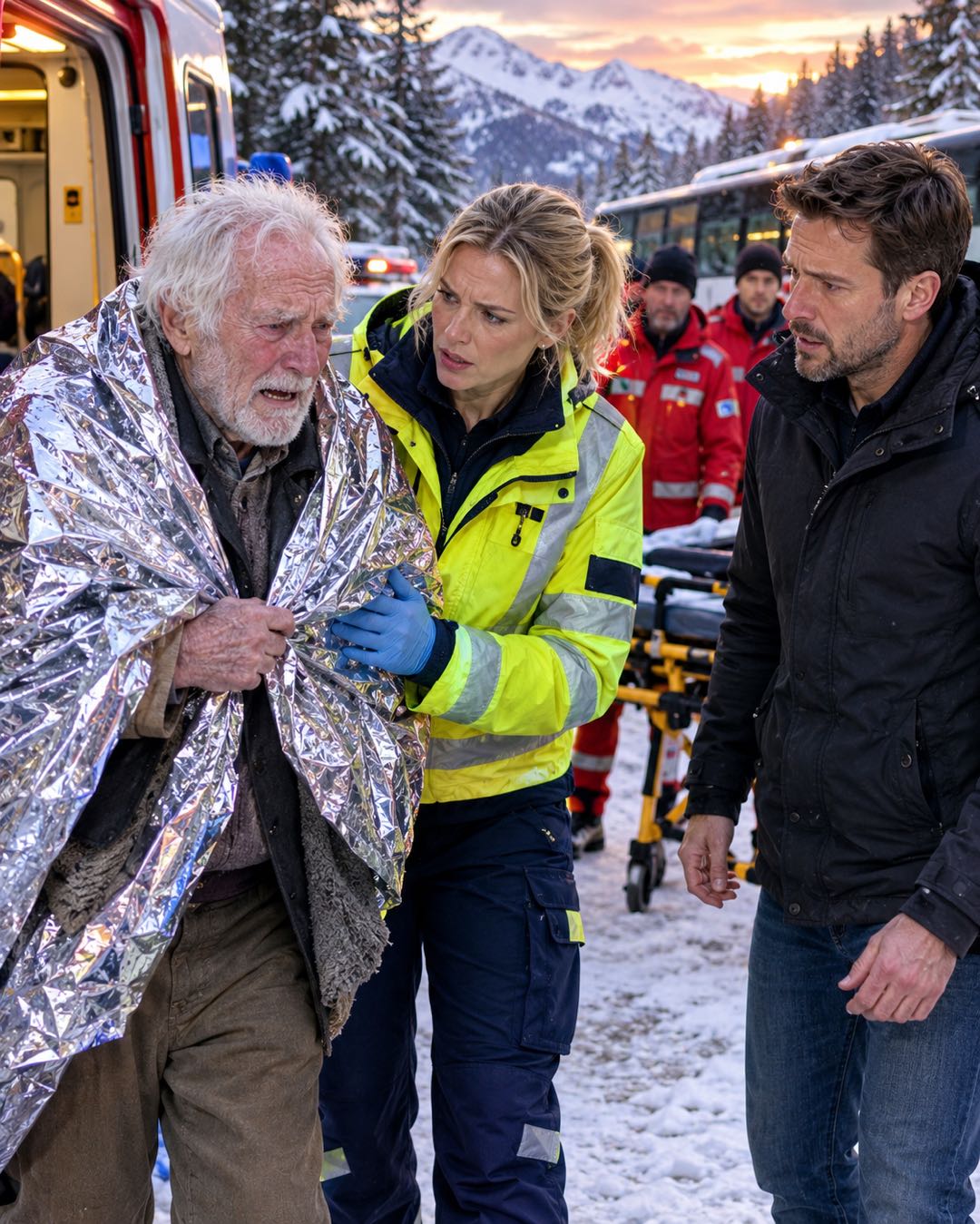
“Jason’s going to be here.”
Jason was my stepbrother. He had recently married, and his wife’s parents were expected to attend my father’s yearly Christmas dinner.
“So?” I asked. “I haven’t seen him in months.”
My father exhaled slowly.
“I don’t want you making things uncomfortable for him.”
My fingers tightened around the phone.
“By doing what?”
“People will ask about the Army. Your deployments. Your rank. Jason just got promoted, and this is important to him. He’s finally building something with Erica.”
I had spent eighteen years in the military without expecting my family to change their schedules for me. Birthdays, funerals, and Thanksgiving gatherings had passed without me because my responsibilities came first.
And now my father seemed to believe that my mere presence at his dinner table could pull attention away from the son he wanted everyone to celebrate.
“I understand,” I said.
I didn’t fight him.
I didn’t mention that my ticket was already purchased or that I had exchanged holiday shifts to make the trip possible.
Instead, I went home, opened my laptop, and canceled my flight.
Two days later, Sergeant Alvarez asked when I planned to head to the airport.
“Plans changed.”
She looked closely at me but chose not to ask anything else.
About an hour later, she came across me near the motor pool.
“My sister has room at her table,” she said. “You’re coming with me.”
“I’ll probably take the overnight duty.”
“Major—”
“Half the unit has children waiting at home.”
That was the end of it.
Two young soldiers got to spend Christmas with their families because I took over their assignments. One had a six-month-old daughter he had hardly gotten to see. The other had assured his mother he would arrive before dinner was served.
I decided that giving up my flight was worth it if they could be home.
By late afternoon on Christmas Eve, the weather forecast in Colorado had changed from a little snow to a serious winter emergency.
The interstate was filling with stranded vehicles, overturned cars, and motorists caught in blinding snow.
At 1800 hours, our unit received orders to help state and county emergency crews.
As I put on my cold-weather equipment, my thoughts briefly returned to my father’s dining room.
My mother’s old tablecloth would be laid beneath the good china. Jason would be discussing his promotion while my father gave him the warm, attentive smile I had spent years trying not to miss.
I fastened my jacket and pushed the thought aside.
The mission came first.
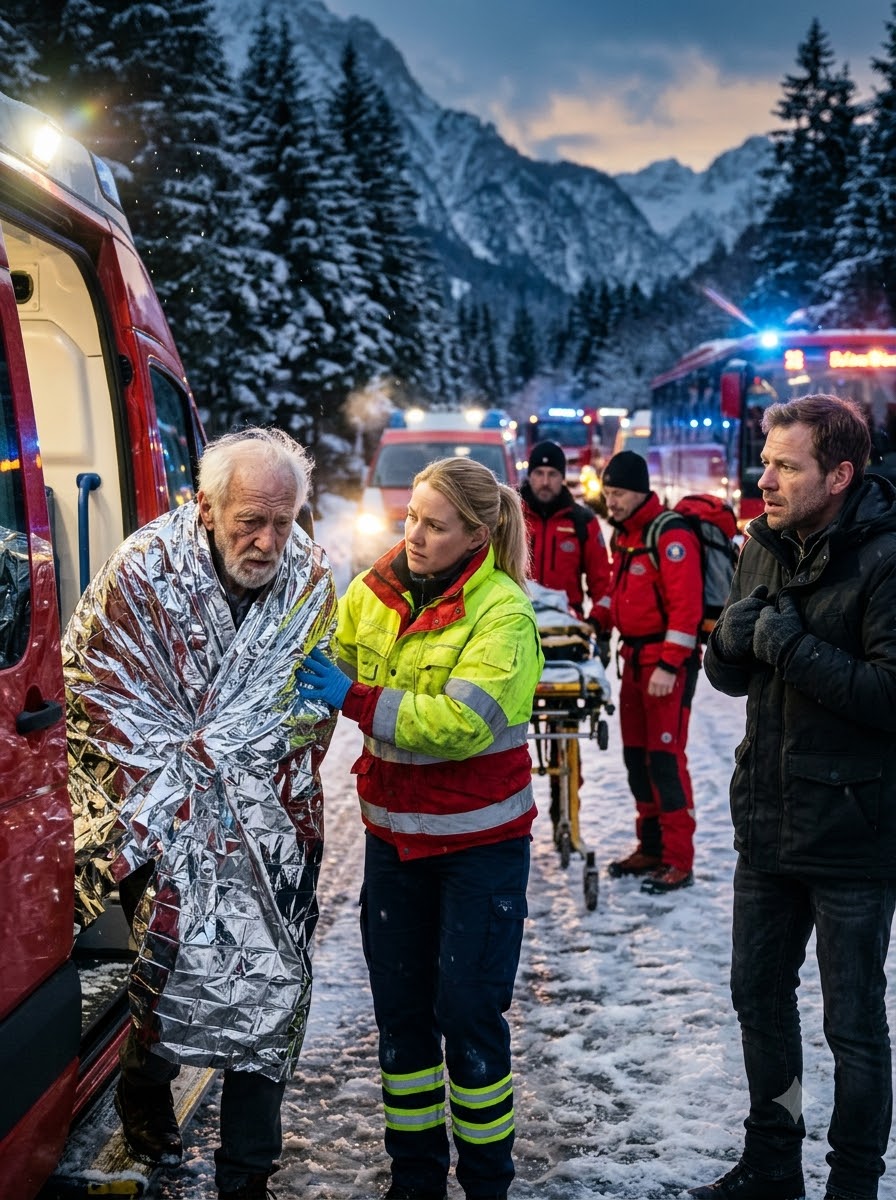
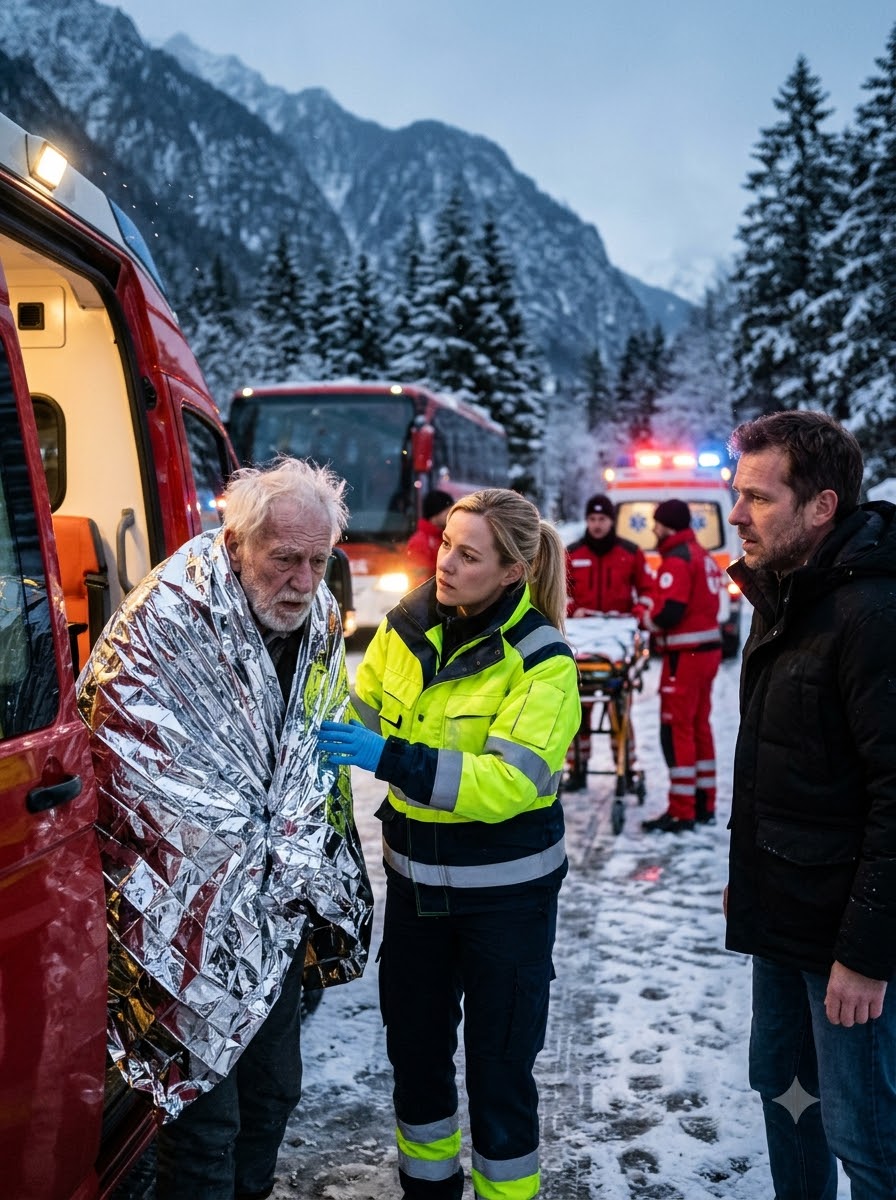
We arrived at mile marker 214 not long after a charter bus carrying almost forty passengers had skidded off the highway and overturned onto its side.
Snow hit the windshield with such force that our driver struggled to make out the emergency lights ahead.
A pickup truck had jackknifed behind the bus. Farther up the hill, a fuel tanker was tilting dangerously toward the frozen shoulder.
Our unit was the first organized response team to reach the location.
I stepped into snow that came nearly to my knees and immediately began directing the teams.
“Alvarez, coordinate with the Colorado State Patrol. Move the ambulances downhill.”
“Yes, Major.”
“Keep everyone away from that tanker until we know whether it’s stable.”
Inside the bus, passengers were trapped at uncomfortable angles. Parents were calling for their children through shattered windows. A number of people were hurt, while others were frightened and confused.
I climbed onto the exposed side of the bus and opened the emergency exit.
We lowered the passengers one at a time to the troopers waiting below.
A boy who looked about six grabbed the sleeve of my jacket. His grip was so tight that his knuckles had turned white.
“You’re safe now,” I told him, crouching until we were eye to eye. “You did exactly what you were supposed to do.”
At last, he let go.
Then a shout came from the direction of the tanker.
The driver was still alive.
His name was Walt. He was in his sixties, and the damaged dashboard had trapped one of his legs. Each gust of wind caused the tanker to shift slightly.
My team leader believed we should wait for the hazardous-materials crew.
In normal circumstances, that would have been the proper choice.
But the cab was moving, and Walt was growing less responsive.
I instructed everyone else to retreat, then climbed up with a state trooper helping hold the door steady.
Walt had a cut across his forehead, and his breathing was shallow.
“Stay with me,” I said.
“My leg…”
“I know. Tell me about your family.”
He blinked a few times.
“Four grandkids.”
“Which one causes the most trouble?”
A weak smile appeared on his face.
“The youngest. She just learned to walk.”
I kept him talking as I worked to free his leg.
When the metal finally gave way, I pulled him out of the cab and helped carry him through the snow.
We had only just reached a safer distance when part of the tanker’s undercarriage shifted farther toward the shoulder.
That was when I finally realized my hands were trembling.
What I hadn’t realized was that a local news crew had been recording everything from behind the police perimeter.
Their footage showed the overturned bus, children being brought to safety, and Walt being removed from the unstable cab.
By the time a medical helicopter found a safe route through the storm, every passenger had been rescued alive.
We arrived back at the base shortly after eleven that night.
I finished my report, made sure my soldiers were all right, and sat down with a cup of coffee that had already turned cold.
Alvarez was watching the television mounted in the corner.
“Major,” she said quietly.
My face appeared on the screen.
The local station showed me moving across the bus as snow blew sideways through the flashing emergency lights.
Breaking: Army officer leads highway rescue during Colorado blizzard.
My phone started vibrating before the broadcast was over.
A cousin I hadn’t spoken to in years called first. An old classmate followed. Then reporters started reaching out to the base.
Forty minutes away, my father’s Christmas gathering had progressed to pie and coffee.
Jason was looking through his phone when someone switched on the television for the national evening broadcast.
The rescue footage played again.
PART 2
At first, nobody around the table recognized what they were seeing.
Then the camera zoomed closer.
Snow covered my collar. My face filled the screen as I shouted directions to the responders waiting nearby.
Jason lowered his phone.
He leaned toward the television and whispered one word.
“Major.”
The room went still. Erica’s parents glanced at each other. Someone turned the volume up. The anchor’s voice cut through the quiet.
“Army Major Daniel Reeves is credited with coordinating the rescue of thirty-eight passengers and the driver of a fuel tanker during whiteout conditions near Denver. All victims are reported stable.”
My father’s wineglass slipped from his fingers and shattered on the hardwood. Red wine spread across the tablecloth my mother had ironed that morning. No one moved to clean it. Jason stared at the screen, mouth slightly open, the phone still in his hand. Erica reached for his arm but he didn’t seem to notice.
Back at the base I watched the same footage on the corner television while my phone continued to light up. Alvarez muted the sound without being asked. I set the cold coffee down and opened the messages. Most were from people I barely remembered. One was from my father. It contained only my name and a question mark. I locked the screen and stood.
“Get some rest,” I told Alvarez. “We’ll debrief at 0700.”
She nodded. Outside, the snow had finally begun to ease. I walked to my office, closed the door, and sat in the dark with the heater rattling. The phone rang again. This time the caller ID showed Jason. I let it go to voicemail. A second call followed from my father. I answered on the fourth ring.
“Daniel.” His voice was rough. “We saw the news.”
“I know.”
“You were supposed to be on a plane.”
“I canceled it.”
Silence stretched. I could hear the low murmur of guests in the background, the scrape of a chair.
“Why didn’t you tell me you were working?” he asked.
“You told me not to come,” I said. “I didn’t see the point in explaining the rest.”
He exhaled. “Jason’s wife’s parents are still here. They’re asking questions. They want to know why you weren’t at dinner.”
“Tell them the truth,” I answered. “Or don’t. It’s your table.”
“Daniel—”
“I have a report to finish,” I said. “Merry Christmas, Dad.”
I ended the call before he could reply. For a long moment I stayed in the chair, listening to the wind against the window. Then I opened the laptop and began typing the after-action summary. The words came easily. Names, times, decisions. The boy who had gripped my sleeve. Walt talking about his granddaughter learning to walk. The moment the tanker’s undercarriage shifted and we were already clear. When I finished I saved the file and sat back. My hands had stopped trembling.
By morning the story had moved beyond local news. National outlets ran the footage. My commander called to say the base public affairs office would handle media requests. I approved a short statement that listed the unit’s actions and thanked the state troopers and paramedics. I declined interviews. Alvarez found me in the motor pool checking equipment.
“Your father’s been calling the main line,” she said. “Twice already.”
“I’ll call him back when the debrief is done.”
She studied me. “You don’t have to.”
“I know.”
The debrief lasted two hours. We reviewed what had worked and what needed adjustment for the next storm. Afterward I drove into town for coffee that wasn’t from a machine. My phone showed seventeen missed calls and a string of texts from relatives I hadn’t spoken to in years. I opened only one, from a cousin who had written, “Proud of you. He should have been too.” I didn’t reply.
That afternoon Jason called again. This time I answered.
“They keep playing it,” he said. No greeting. “Erica’s mom recorded it on her phone. She showed it to everyone at breakfast.”
“I’m sorry it interrupted the dinner.”
“That’s not—” He stopped. I heard him move into another room. “Dad told us you canceled because of work. He didn’t say he asked you not to come.”
“He didn’t want the conversation to turn into an Army story,” I said. “I understood the request.”
Jason was quiet long enough that I thought the call had dropped. “I got promoted to senior associate,” he said finally. “It’s a good step. Erica’s parents were impressed. Then the news came on and none of that mattered. They wanted to know about you instead.”
“That wasn’t my intention.”
“I know.” His voice lowered. “I’m not angry at you. I’m angry that he made you choose. You shouldn’t have had to cancel a ticket so I could talk about a promotion without competition.”
I watched snow slide off the roof of the coffee shop across the street. “You didn’t ask him to do that.”
“No,” he said. “But I didn’t stop him either. I heard him on the phone with you. I told myself it was his house and his decision. That was easier than saying it was wrong.”
We stayed on the line without speaking for a moment. Outside, a plow moved slowly down the main road, pushing the night’s accumulation into dirty ridges.
“I’m not coming home for New Year’s,” I said. “Or the next holiday. If he wants to talk, he knows how to reach me. I’m not rearranging anything else.”
“That’s fair,” Jason answered. “For what it’s worth, Erica thinks you did the right thing. Both with the rescue and with the ticket.”
“Tell her thank you.”
After we hung up I sat with the coffee until it cooled. The base called to confirm that Walt was stable and the boy from the bus had been released with his parents. I drove back, finished the remaining paperwork, and slept for six hours. When I woke, a single new message waited from my father.
“I was wrong to ask you to stay away. The glass is cleaned up. The tablecloth is ruined. Call when you can.”
I read it twice, then set the phone aside and went to check on the soldiers who had covered the night shift. They were fine. The interstate had reopened. Life on base returned to its ordinary rhythm of training schedules and maintenance. I did not call my father that day, or the next. On the third morning I sent a short reply.
“Glad everyone is safe. I’ll be in touch when the schedule allows.”
He answered with a single word: “Understood.”
Weeks passed. The footage faded from the news cycle. Jason texted once to say Erica’s parents had asked for my address so they could send a thank-you note; I gave it to him. A card arrived with a photograph of their grandchildren and a handwritten line: “Thank you for bringing people home.” I kept it in the drawer with my deployment orders.
In late January my father called again. I was in the middle of a range exercise and let it go to voicemail. The message was brief. He said the house felt quieter than it used to. He said he had watched the full local segment online and seen the moment I told the boy he was safe. He said he was sorry he had made me feel that my presence would be a problem. He did not ask me to visit. I listened to the message once, saved it, and returned to the range.
Spring arrived. Alvarez received orders to a new post and we shared a quiet dinner before she left. She asked if I had spoken to my father. I told her the truth: once, briefly, and that was enough for now. She nodded and did not press. On the drive back to base I thought about the boy’s grip on my sleeve and Walt’s weak smile when he talked about his granddaughter. Those were the conversations that had mattered on Christmas Eve. The ones waiting at my father’s table could wait until I decided they were worth the trip. Until then the work continued, steady and clear, and the phone stayed silent in my pocket.
