

PART 3
Some days, simply getting out of bed felt like an accomplishment.
Other days, I found myself laughing with Lily as she kicked her tiny feet beneath a blanket, and I realized I hadn’t thought about Marcus for several hours.
Those moments became more frequent.
Slowly, my life began to belong to me again.
Six months after Lily’s birth, I stood in a small courtroom waiting for a hearing related to the assault allegations and the continuing protective measures.
I wore a simple navy dress.
My hair was tied back.
The bruises on my neck had long since faded, although I sometimes caught myself touching the places where Marcus’s fingers had been.
Dad sat behind me.
He had put his hearing aids back in.
When I looked over my shoulder, he gave me a small nod.
The detective testified about the investigation.
Medical records were presented.
The relevant recordings and messages were reviewed through the proper evidentiary process.
Marcus’s attorney challenged the interpretation of the evidence and argued that the marriage had been troubled but that the prosecution was treating private family conflict as something more serious.
My attorney responded with the documented injuries, the recorded threats, and the pattern of conduct supported by the evidence.
The judge listened carefully.
She did not appear interested in the Vance family’s reputation.
She was interested in what could be established.
At one point, Marcus took the stand.
He wore an expensive suit and spoke with the confidence of someone accustomed to being believed.
He described himself as a devoted husband who had been overwhelmed by the arrival of his first child.
He claimed that my father had influenced me.
He suggested that the recordings had been taken out of context.
Then the judge asked him a question.
“Mr. Vance, regardless of your disagreement with your wife’s account, can you explain why your recorded statements repeatedly refer to her as property and describe physical force as a way to teach her obedience?”
Marcus shifted in his seat.
“I was angry.”
“Does anger give you the right to hurt another person?”
“No, Your Honor.”
“Then why did you do it?”
He stared at the table.
For the first time, I saw him without the familiar mask of certainty.
He looked like a man who had finally encountered a question he couldn’t answer by threatening the person asking it.
“I don’t know,” he muttered.
The judge waited.
Marcus said nothing more.
The hearing continued, and the court considered the evidence under the applicable law.
The outcome wasn’t determined by my father’s reputation, Harrison’s fear, or Marcus’s wealth.
It was determined by the facts established through the proceedings.
When the judge issued her decision on the matters before her, the protective measures remained in place, and the case continued through the appropriate legal channels.
I walked out of the courtroom with my attorney and Dad beside me.
I hadn’t received every answer I wanted.
I hadn’t solved every problem.
But I had done something I once believed was impossible.
I had told the truth in a room where Marcus couldn’t silence me.
Outside, Dad stopped beside the courthouse steps.
“How are you feeling?”
I thought about it.
“Tired.”
He smiled faintly.
“That makes sense.”
“And relieved.”
“That makes sense too.”
I looked up at the sky.
“I thought winning would feel different.”
Dad shook his head.
“Sometimes winning is simply getting your life back.”
I let those words settle inside me.
Then I reached for his arm.
“Can we go home?”
“Of course, sweetheart.”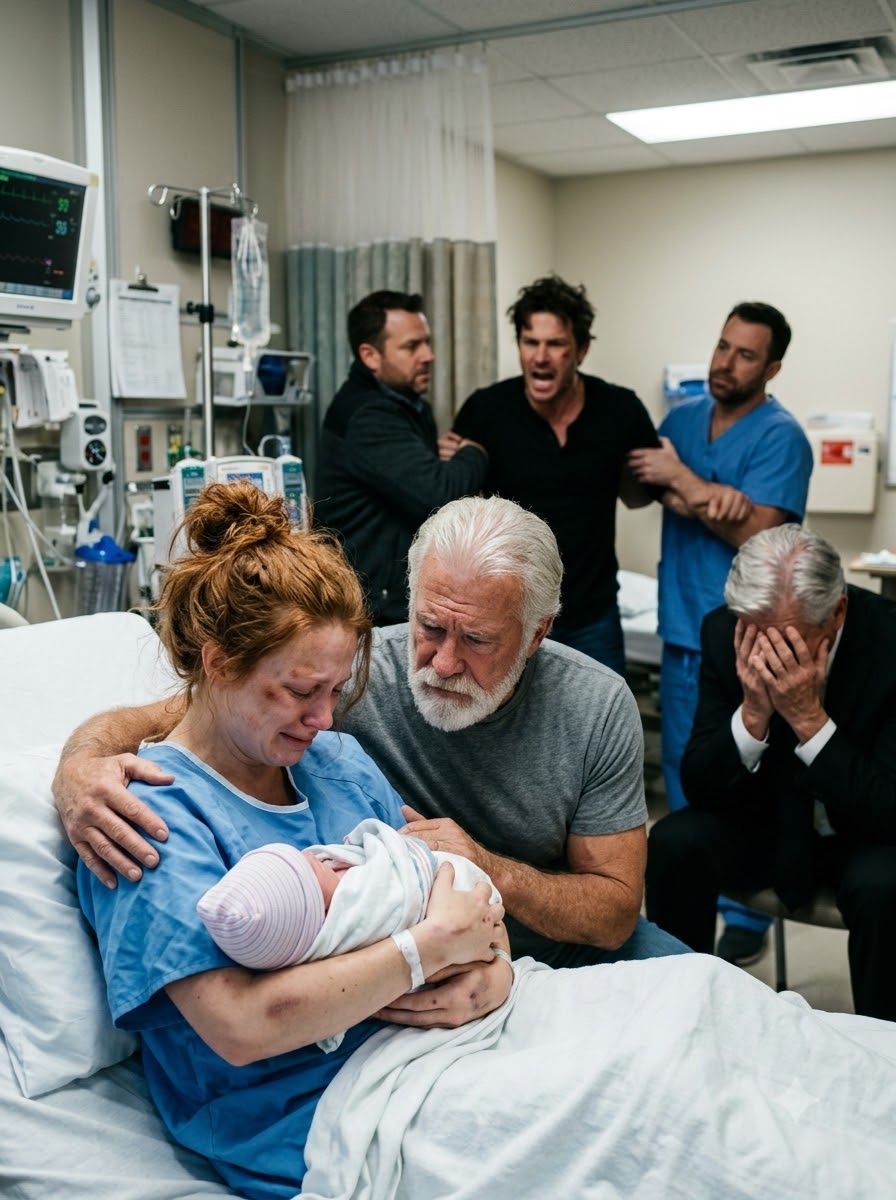
For the first time, home meant a place where I could sleep without fear.
Harrison contacted me once through my attorney.
He asked whether I would consider meeting him.
I declined at first.
I wasn’t ready.
He respected that decision and didn’t attempt to contact me directly.
Several months later, I agreed to receive a letter from him.
It was handwritten.
He didn’t ask me to forgive him.
He didn’t blame Marcus’s childhood, his business pressures, or the expectations placed on wealthy families.
He admitted that he had helped create an environment in which his son believed control was a right and cruelty could be excused as discipline.
He acknowledged that he’d known enough to intervene long before I gave birth.
And he admitted that he had chosen the family’s reputation over my safety.
The final paragraph was short.
He wrote that Lily deserved to grow up knowing that a person’s character mattered more than their last name.
I folded the letter and placed it in a drawer.
I didn’t respond.
Perhaps one day I would.
Perhaps I wouldn’t.
His remorse was his responsibility.
My recovery was mine.
As for the military history that connected him to my father, Harrison eventually cooperated with requests for additional records related to the old investigation. That matter belonged to the people who had served, the families who had waited for answers, and the institutions responsible for reviewing the evidence.
Dad didn’t celebrate Harrison’s embarrassment.
He didn’t seek revenge.
When I asked him why he hadn’t used the encounter to destroy Harrison’s business or humiliate him publicly, Dad gave me an answer I would remember for the rest of my life.
“Because the point was never to make him afraid of me.”
He looked toward Lily, who was sleeping in her bassinet.
“The point was to make sure nobody could use fear to control you again.”
A year after Lily was born, we celebrated her first birthday in Dad’s backyard.
There were balloons tied to the fence, a small cake on the table, and a blanket spread beneath the shade of an old tree.
A few close friends attended, along with Rachel, the advocate who had helped me navigate those first frightening days.
Lily wore a pale yellow dress and spent most of the afternoon trying to grab the ribbons on her presents.
Dad sat on the grass beside her, patiently allowing her to pull at his shirt and explore the buttons on his jacket.
At one point, she grabbed his finger with her tiny hand and refused to let go.
Dad looked at me.
“Well, I suppose I’m officially under her command.”
I laughed.
“Be careful. She’s already learned how to get what she wants.”
“Then she’ll fit right in.”
He leaned down and kissed Lily’s forehead.
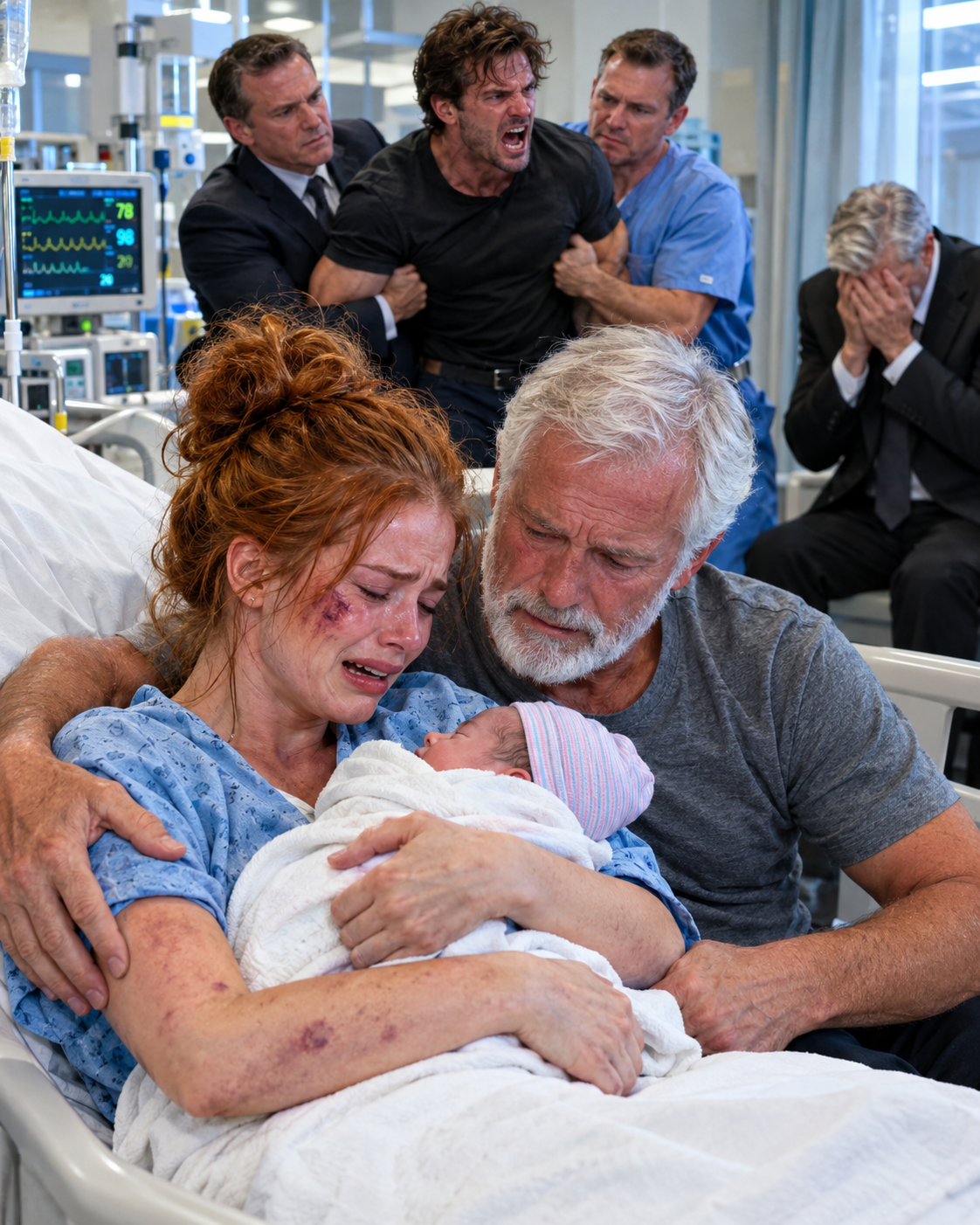
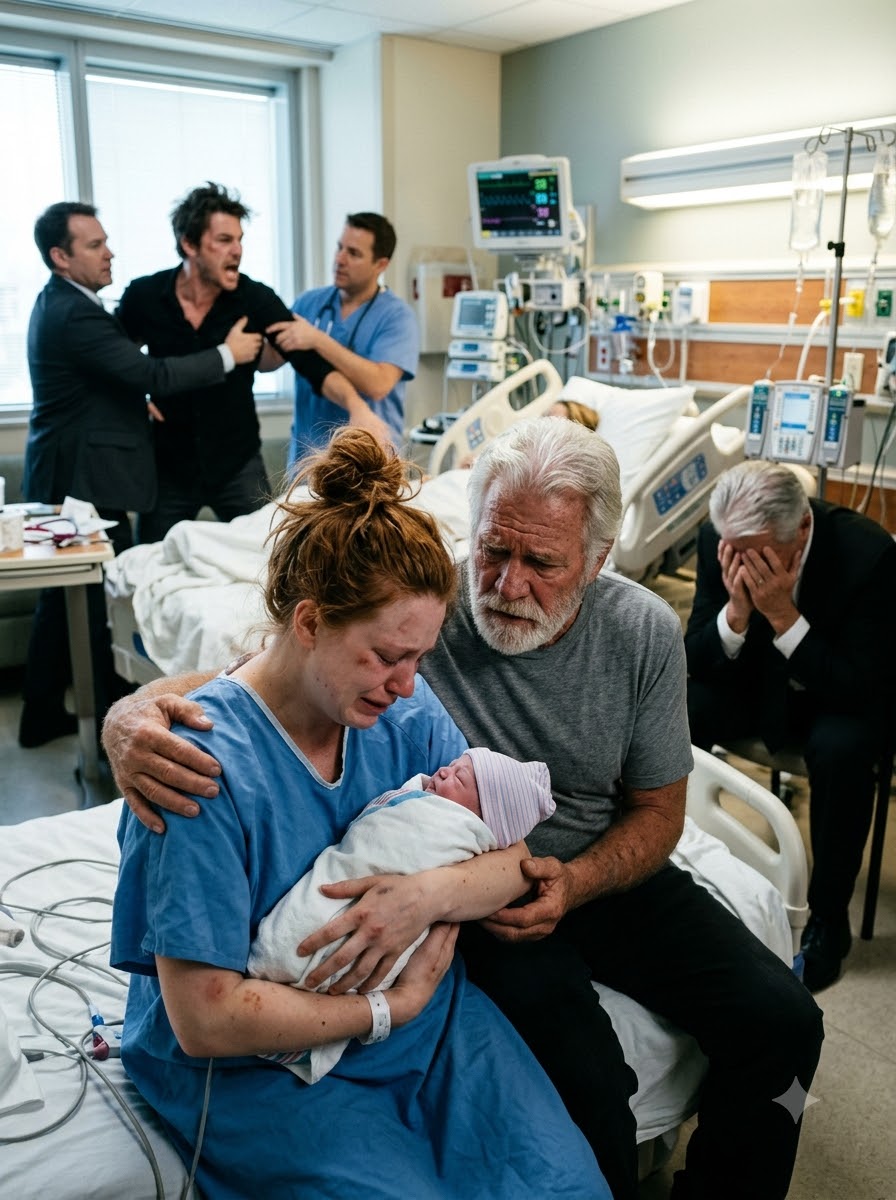
For a moment, I watched them together and remembered the hospital room.
The fluorescent lights.
The bruises.
Marcus’s smug smile.
Harrison vomiting into the trash can.
The sound of Dad asking me to close my eyes.
Back then, I’d thought the turning point was the moment my father-in-law recognized the tattoo on Dad’s arm.
I’d imagined that recognition was what had saved me.
But I understood something different now.
The tattoo hadn’t saved me.
My father’s history hadn’t saved me.
Marcus’s fear hadn’t saved me.
What changed everything was that I finally stopped believing I had to endure the abuse in silence.
I gathered evidence.
I asked for help.
I told the truth.
And when my father arrived, he didn’t take my voice away from me.
He helped make sure other people could hear it.
That was the difference.
As the afternoon sun settled over the backyard, Dad sat beside me on the steps while Lily crawled across the blanket toward a bright red toy.
“Do you ever think about that day?” I asked him.
“Sometimes.”
“Were you really planning to do something when you closed the curtains?”
He considered the question.
“I was planning to make sure you were safe. I didn’t know how Marcus would react, and I wasn’t going to give him another opportunity to hurt you.”
“And the hearing aids?”
Dad smiled slightly.
“I wanted him to understand that I wasn’t there to argue with him. I didn’t need to hear his excuses.”
I laughed softly.
“That sounds like you.”
He looked at me.
“I also wanted you to know that you didn’t have to watch any of it if you didn’t want to.”
My throat tightened.
Even then, when he had walked into that room and seen what Marcus had done to me, Dad had thought about my comfort.
He had given me a choice.
He had protected my dignity when my husband had treated it as something he owned.
I leaned my head against his shoulder.
“Thank you.”
Dad wrapped an arm around me.
“You don’t have to thank me for loving you.”
Across the lawn, Lily let out a delighted squeal as she managed to grab the red toy.
We both turned to watch her.
She was small, curious, and completely unaware of the battles that had taken place before her first birthday.
I hoped she would grow up knowing a different kind of strength.
Not the strength Marcus had mistaken for dominance.
Not the power Harrison had confused with influence.
But the quiet courage of a person who could admit when they were wrong, respect another person’s boundaries, and protect someone without demanding ownership in return.
I wanted Lily to know that love didn’t require fear.
That family wasn’t a debt she had to repay with obedience.
That nobody had the right to make her feel small so they could feel powerful.
And above all, I wanted her to know that she could always come to me.
No matter what she’d done.
No matter how frightened she was.
No matter how long it had taken her to find the words.
I would listen.
Because I knew what it felt like to sit in a room with the person who had hurt you and wonder whether anyone would believe you.
I knew what it felt like to believe that leaving would cost you everything.
And I knew how easily a person could mistake silence for peace.
That afternoon, as Lily toddled toward us with the red toy clutched in both hands, Dad opened his arms.
She stumbled into his lap.
He caught her effortlessly.
Then he looked at me, his eyes warm.
“She’s going to be all right.”
I watched my daughter smile up at the man who had helped me find my way out of the darkest period of my life.
For the first time, I believed it without hesitation.
“Yes,” I whispered. “She is.”
And as I sat there beside them, surrounded by sunlight, laughter, and the quiet comfort of people who wanted nothing from me except my happiness, I realized that Marcus had been wrong about almost everything.
The house hadn’t made him powerful.
The money hadn’t made him untouchable.
His family name hadn’t made him superior.
And my fear had never made him my owner.
He had mistaken my patience for weakness, my love for permission, and my silence for surrender.
But the moment I told the truth, his version of our family began to fall apart.
I hadn’t destroyed my marriage by speaking up.
His choices had destroyed it long before that hospital morning.
I had simply stopped helping him hide what he’d done.
Now I had a daughter to raise, a life to rebuild, and a future that no longer depended on keeping a dangerous man happy.
It wasn’t the future I’d imagined when I married Marcus.
It was something better.
It was a future in which I could breathe.
A future in which Lily could grow up without learning to confuse fear with love.
A future in which my father’s quiet strength reminded me every day that real protection never demanded that I surrender my freedom.
And that was the greatest gift he had ever given me.
Not revenge.
Not power.
Not the fear on Harrison Vance’s face when he recognized the faded tattoo on my father’s arm.
It was the chance to begin again.
This time, on my own terms.
