

PART 1: THE LIVING CORPSE
“They’re poisoning me… They want me dead. Lock the door. Now.”
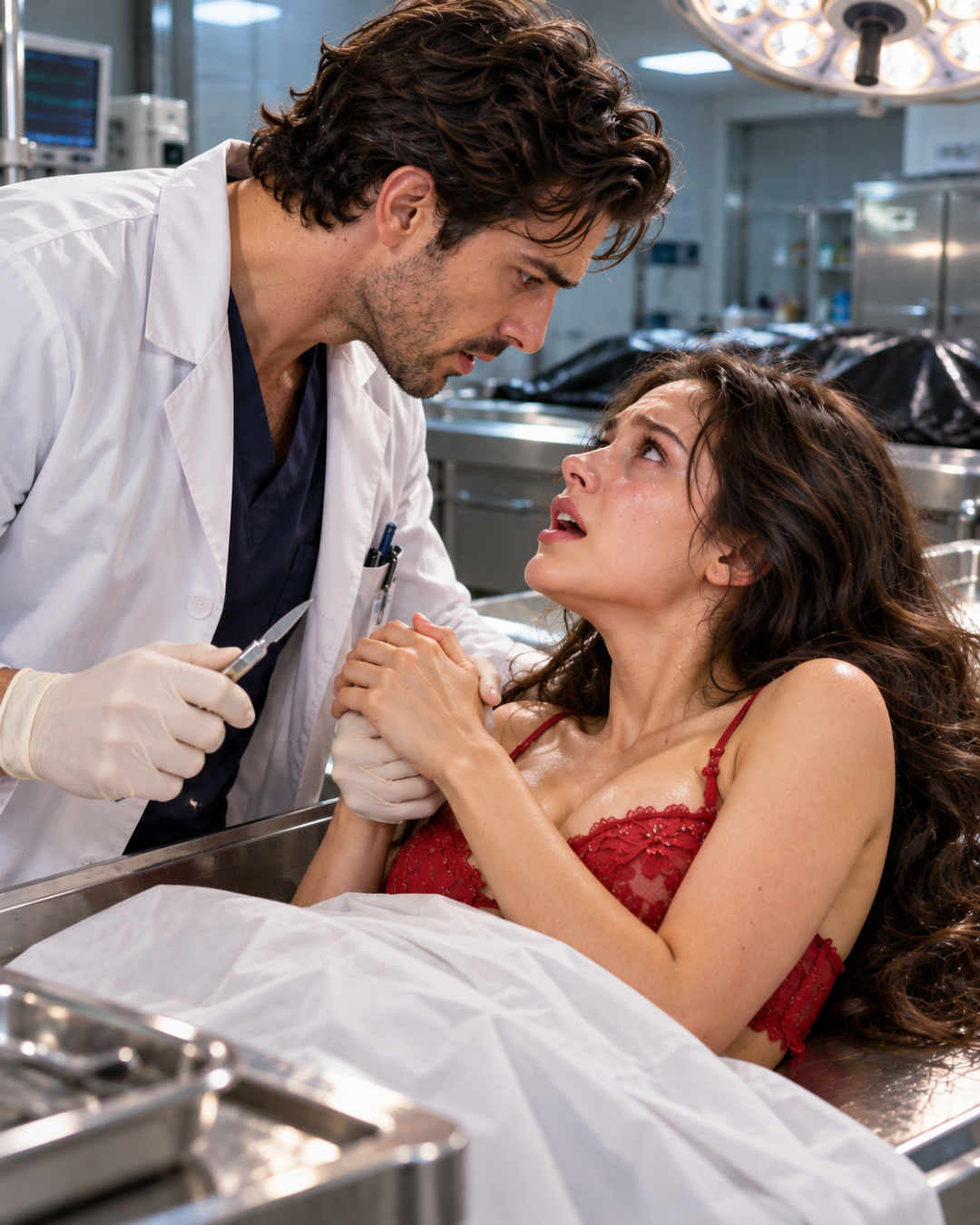
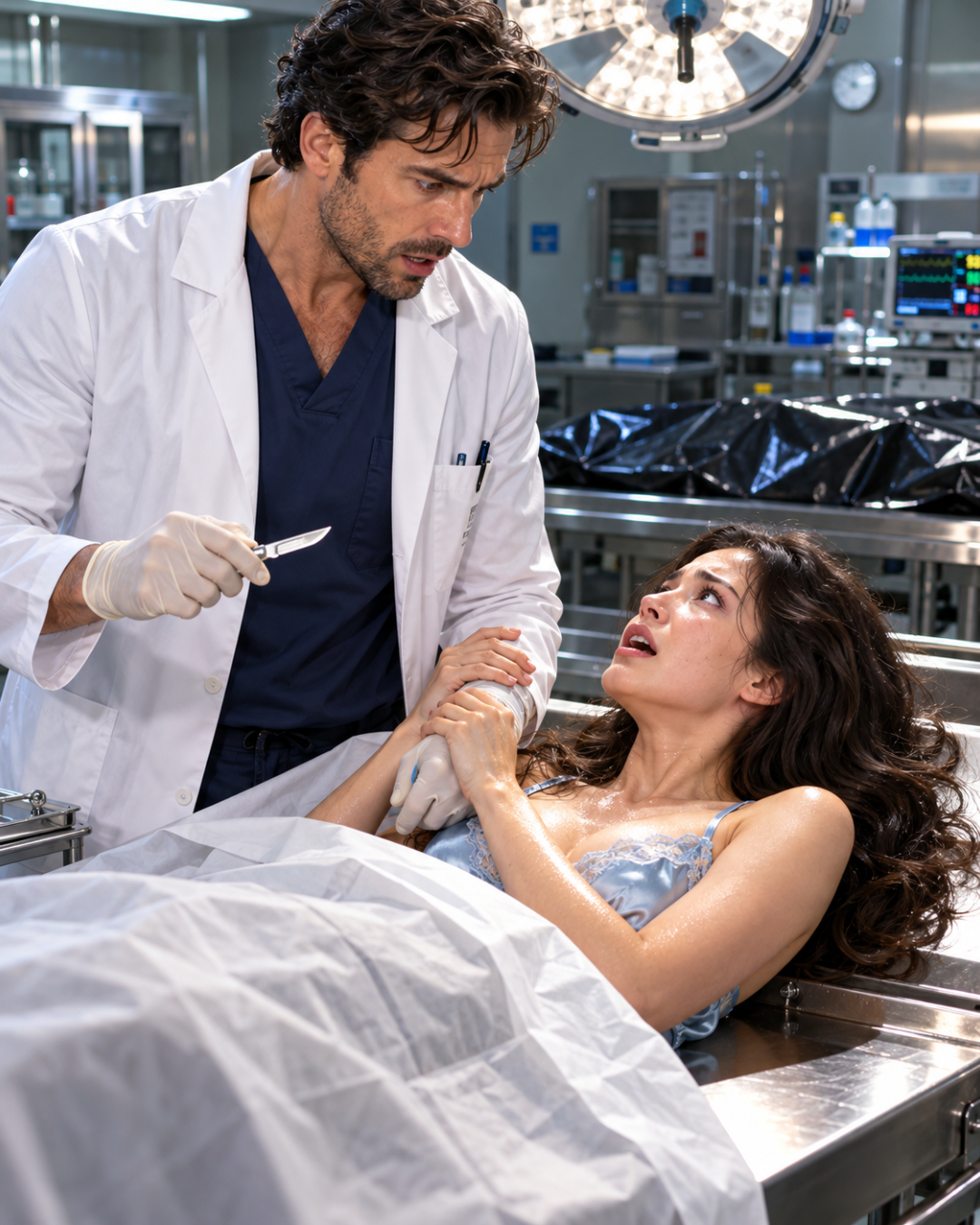
The young woman’s ice-cold fingers closed around Dr. Javier Robles’s wrist just as his scalpel hovered inches above her chest.
Javier froze.
He had worked as a forensic pathologist in Guadalajara for twenty-three years. He had seen horrific accidents, murders, unidentified bodies, and families torn apart by tragedy. But never had he heard someone speak who, according to every document in front of him, had been dead for more than two hours.
He slowly pulled the scalpel away.
“Don’t move. And keep your voice down.”
He locked the examination room door and returned to the metal table.
The admission form read:
Valeria Mendoza Ortega. Age 26. Automobile accident. Death confirmed at 2:20 p.m.
But Javier had already noticed something strange before beginning the autopsy.
She had no injuries consistent with a fatal car crash.
There was only a superficial wound on her temple and a bruise on her arm.
And now there was something else that didn’t add up.
Valeria smelled like a hospital: rubbing alcohol, medical adhesive, and medication.
“Who certified your death?”
“A doctor at Salgado Clinic… My father-in-law controls everything there.”
Valeria was breathing with such difficulty that she seemed to fade away between words.
Seven months earlier, her husband, Daniel Salgado, had died from an unexpected aneurysm. Javier remembered that autopsy.
After Daniel’s death, Valeria had inherited 38% of the shares in the family’s private clinic. Her father-in-law, the prestigious Dr. Roberto Salgado, retained 41%.
A month after the funeral, Roberto had brought her a power-of-attorney document.
“Sign it, sweetheart. You’re grieving. I’ll take care of everything.”
Valeria refused.
She had studied finance and had helped Daniel with the accounting for years. She knew the clinic was purchasing medical equipment through an intermediary company at inflated prices.
She wanted to order an audit.
Two weeks later, she began feeling ill.
Roberto personally admitted her to the hospital and gave her a devastating diagnosis: an inoperable brain tumor. Four to six months to live.
“They showed me an MRI,” Valeria whispered. “I saw a spot. I believed them.”
Then came the pills, injections, and IV drips.
Every day, her condition worsened.
Her hands stopped responding. Her face became rigid. Sometimes she would spend an entire hour staring at the wall, fully conscious of everything around her but unable even to blink.
A week earlier, she had overheard Roberto speaking outside her room.
“The dosage is almost at the right level. She’ll be ready by Friday.”
That morning, they had given her a different injection.
After that, she remembered a stretcher.
A zipper being pulled across a black bag over her face.
And voices talking about an accident.
“I could hear everything,” she said, trembling. “They put me in a body bag while I was still alive.”
Javier remained silent for several seconds.
Then he opened the receiving compartment.
The body bag was still there.
It had a tag bearing Valeria’s name, a registration number, and a signature.
“This is evidence,” he said.
He collected four blood samples and began filling out paperwork.
Valeria stared at him in terror.
“What are you going to do with me?”
“Something that is probably the only way to keep you alive.”
“What?”
Javier looked up.
“I’m going to certify that you’re dead.”
Over the next twenty minutes, he falsified an autopsy report consistent with the supposed accident. Then he added a word that made his stomach turn:
“Cremation.”
“Your father-in-law is going to want you cremated as quickly as possible. We need him to believe his plan worked.”
Behind the refrigeration unit was an old medical records room that had been closed for years. Javier led her there through a service corridor.
He left her water, food, a jacket, and a small space heater.
“No one can know you’re here.”
Before he left, Valeria asked:
“Why are you risking your career for me?”
Javier took a few seconds to answer.
“Because I’ve spent twenty-three years signing death certificates stating how people died. Today, someone tried to force me to certify the death of a woman who is still alive.”
The following morning, he took the samples to an independent laboratory.
Thirty-six hours later, he received the results.
Javier read one line.
Then another.
And then he went back to the first because he couldn’t believe what he was seeing.
Valeria showed no evidence of cancer.
Instead, her blood contained dangerous levels of haloperidol, traces of other sedatives, and a muscle relaxant capable of leaving someone fully conscious but completely paralyzed.
They weren’t treating her.
They were turning her into a living corpse.
That night, Javier went down to the old records room with the test results in his hand.
But he still had no idea that, among those abandoned shelves, he was about to discover something far more unbelievable than an attempted murder.
Something that would change his own life as well.
And no one could have imagined what he was about to uncover…
