

PART 3
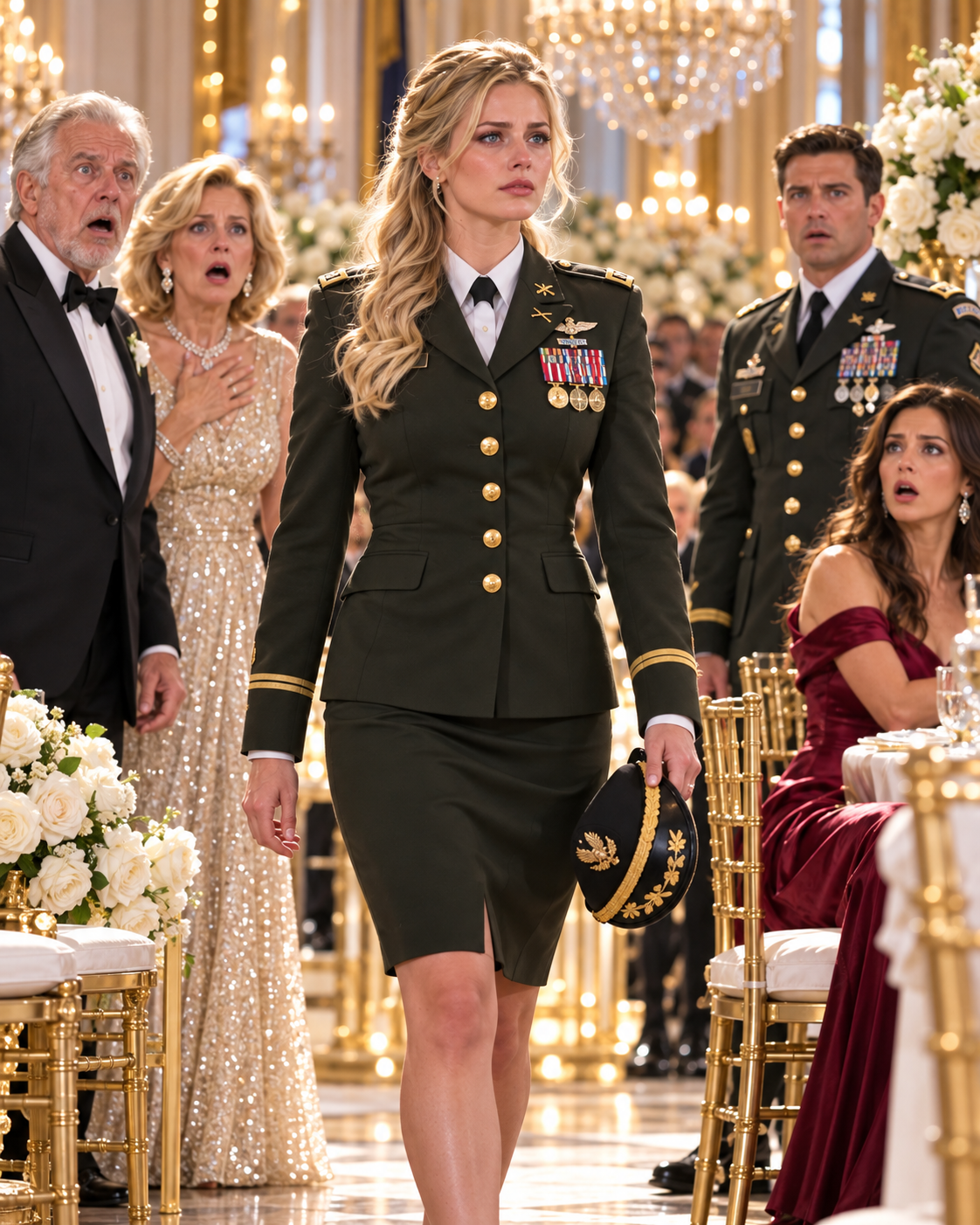
The room grew quiet.
“Today, I watched people stand for Claire—not because they were told to, but because they respected her. And I think that is a powerful reminder that we should never judge someone’s life by the parts we happen to see.”
He lifted his glass.
“To Claire, and to everyone who serves quietly while the people they love are still learning how to understand them.”
The guests raised their glasses.
I lowered my eyes, fighting the sudden sting behind them.
I had never wanted a public tribute.
I had never wanted my father to feel small.
All I had wanted was for my family to recognize that my life had value even when it didn’t resemble theirs.
As the applause faded, I caught sight of my father near the edge of the dance floor.
He was watching me.
This time, he did not look angry.
He looked ashamed.
And perhaps, for the first time, he looked curious.
Later that evening, after the cake had been cut and the dance floor had filled, my father approached me again.
He stood beside my chair, holding two cups of coffee.
“Can I sit?”
I nodded.
He placed one cup in front of me and sat down.
For a while, we watched the guests dance.
Then he spoke.
“I owe you an apology.”
I turned toward him.
He stared at his coffee.
“I have spent years telling myself that I was disappointed in your choices because I wanted what was best for you. But I think I was more afraid of being wrong than I was concerned about what you needed.”
His voice faltered.
“When you became successful, I should have been proud. Instead, I kept finding reasons to dismiss it.”
He swallowed.
“I told people you were difficult because it was easier than admitting I didn’t understand you.”
I felt my throat tighten.
He finally looked at me.
“I’m sorry, Claire.”
Three simple words.
I had imagined hearing them so many times that I had almost forgotten what they might sound like.
For years, I had wanted an apology that would erase the hurt, explain every insult, and somehow return the years we had lost.
But no apology could do all of that.
“I appreciate you saying that,” I replied.
He nodded.
“I don’t expect you to forgive me tonight.”
I looked at him carefully.
“That’s good, because I can’t promise that everything will change overnight.”
“I understand.”
“And I don’t need you to suddenly become an expert on the Navy.”
A faint smile touched his face.
“That would be asking a lot.”
I smiled, too.
“But I need you to stop treating my life as something I should be ashamed of.”
His expression grew serious.
“I will.”
I wanted to believe him, but I had learned to judge people by what they did after the conversation ended.
So I nodded and took a sip of coffee.
For that evening, it was enough.
My father stayed beside me for several minutes. He asked about my retirement, where I planned to live, and whether I intended to travel.
They were ordinary questions.
Perhaps that was why they mattered.
For the first time, he seemed interested in the woman sitting across from him rather than the daughter he had spent decades trying to correct.
Before he left, he said something that surprised me.
“I would like to hear about your career sometime. If you’re willing to tell me.”
I looked at him.
“Some of it isn’t something I can discuss.”
“I understand.”
“But there are stories I can share.”
He nodded.
“I’d like that.”
Then he stood and walked back toward the reception.
I watched him go, feeling no sudden triumph, no dramatic sense of victory.
Just a quiet realization that something had shifted.
Not everything.
But something.
The next morning, I returned to Norfolk.
The drive was peaceful, the sky bright after the storm. I stopped once at a small roadside café, ordered breakfast, and sat by the window watching the world wake up.
My phone buzzed.
A message from Melanie.
Thank you for coming. I love you, Claire. Let’s not wait another year to see each other.
I smiled and typed back.
I love you, too. Congratulations again. And next time, we’re having dinner without Dad’s wedding planner telling us where to sit.
She replied with a string of laughing emojis.
A few minutes later, another message arrived.
It was from my father.
I know I have a lot to make up for. When you’re ready, I’d like to visit Norfolk. Maybe you could show me where you worked.
I read it twice.
Then I placed my phone on the table and looked out the window.
I had spent much of my life waiting for my family to see me.
Now that they were finally beginning to look, I understood something important.
Their recognition could be meaningful without becoming the foundation of my self-worth.
I had earned my place long before anyone stood up in that ballroom.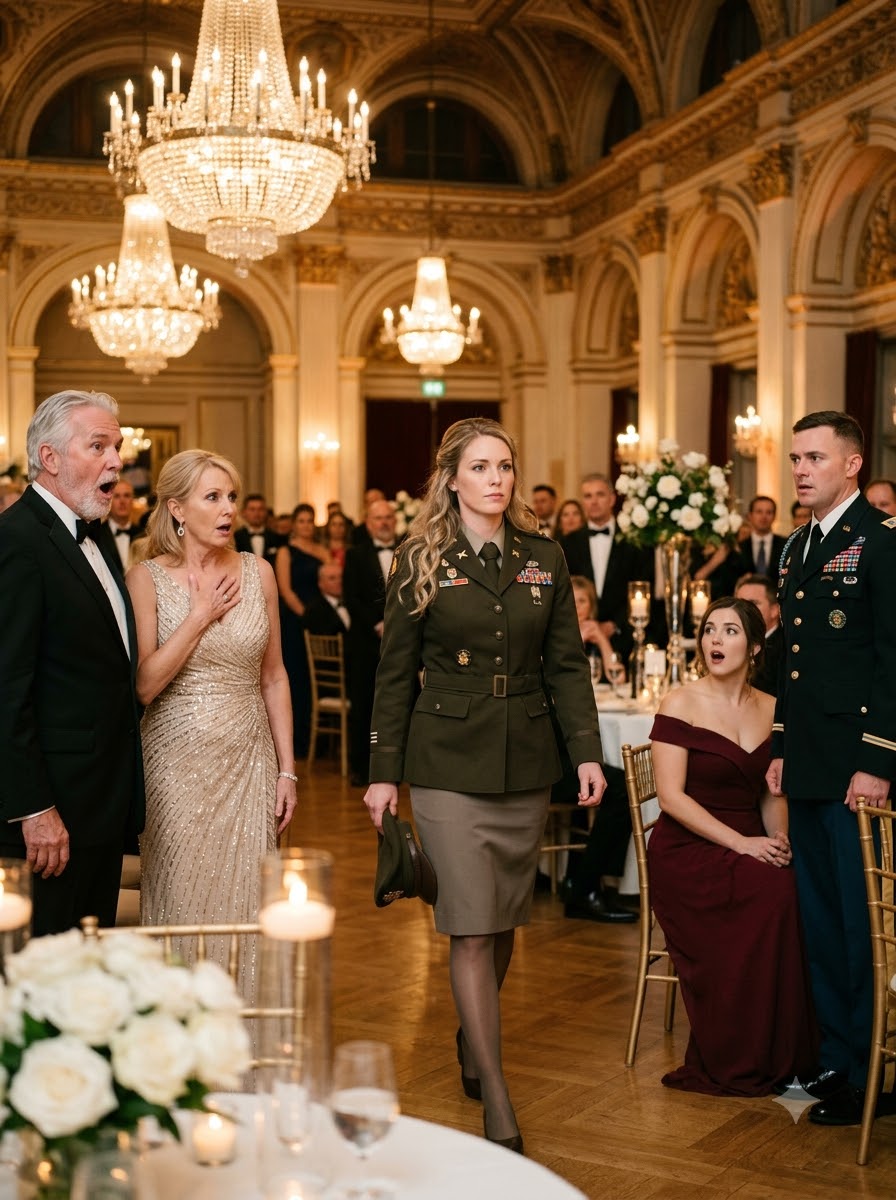
I had earned it on the days when nobody was watching, when the work was difficult, when the decisions were painful, and when the only reward was knowing I had done my best for the people who depended on me.
My father’s approval could not create that achievement.
And his disapproval could never erase it.
Three weeks later, he came to Norfolk.
He arrived wearing an old navy-blue jacket, carrying a small paper bag of pastries, and looking more nervous than I had ever seen him.
I took him through the portions of the base I was permitted to show him and introduced him to a few colleagues.
He listened.
Really listened.
He asked questions about leadership, deployments, and the responsibility of commanding people whose lives depended on your decisions.
When one of my former colleagues described an operation in which I had insisted on delaying a mission until conditions improved, my father looked at me with an expression I couldn’t quite name.
“She was always stubborn,” he said.
My colleague laughed.
“Yes, sir. That’s one of the reasons we trusted her.”
For once, my father didn’t argue.
Later, we sat together near the water.
The harbor stretched before us, sunlight dancing across the surface. Ships moved slowly in the distance, their silhouettes familiar against the horizon.
My father watched them for a long time.
“I used to think the Navy took you away from us,” he said.
I looked at the water.
“Sometimes it did.”
He nodded.
“I suppose I never considered what it gave you.”
I turned toward him.
“It gave me a purpose. Friends who became family. A chance to do work I believed mattered.”
I paused.
“But it never stopped me from wanting a family, either.”
He looked down at his hands.
“I wish I had understood that sooner.”
“So do I.”
We sat quietly.
There was no dramatic embrace, no sudden transformation that erased decades of hurt. My father was still the same man who had once told a seventeen-year-old girl that she did not belong on a warship.
And I was still the daughter who had spent years wishing he would take those words back.
But we were trying.
For the first time, we were trying without pretending that the past had never happened.
As we stood to leave, my father turned toward me.
“Claire?”
“Yes?”
He hesitated.
“I’m proud of you.”
The words were quiet, almost awkward.
But they were real.
I felt the familiar ache rise in my chest, followed by something gentler.
“Thank you, Dad.”
He reached for my shoulder, then seemed uncertain whether he had the right to touch me.
I closed the distance myself and hugged him.
It was not a perfect reconciliation.
It was not the end of every difficult conversation we would ever have.
But it was a beginning.
And for the first time in a very long time, I was willing to see where it might lead.
On the day I officially retired, I stood alone in my office for a final few minutes.
The paperwork was complete. My desk had been cleared. The uniform I had worn for so many years hung neatly in its garment bag.
Outside, the harbor moved beneath a pale morning sky.
I thought about the seventeen-year-old girl who had announced that she wanted to attend Annapolis.
She had been frightened.
She had been stubborn.
She had been told she was wrong by people whose opinions mattered more to her than she understood.
But she had gone anyway.
I wished I could tell her that the road would be harder than she imagined. That she would lose people she loved, question decisions she could never undo, and spend years trying to explain herself to people who had already decided who she was.
I would also tell her something else.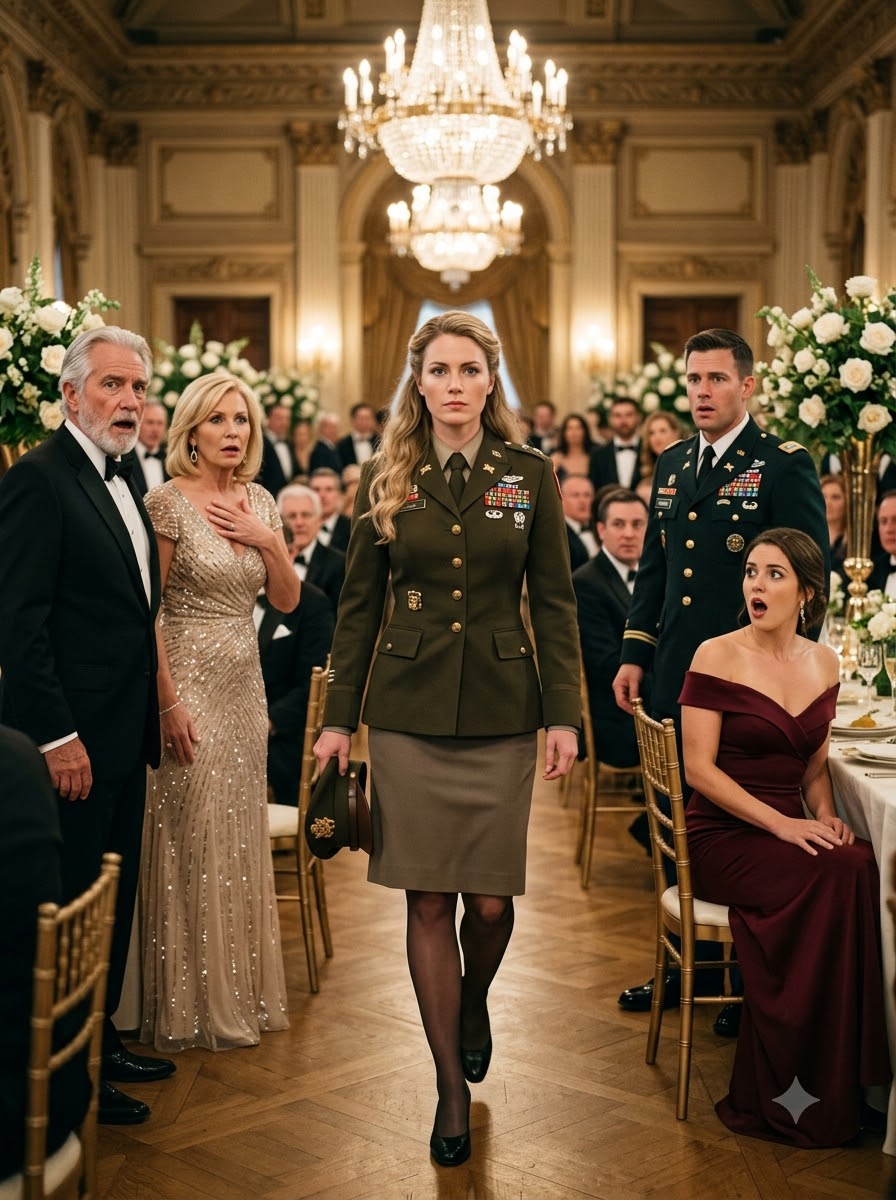
That she would find extraordinary people along the way.
That she would learn to lead without needing to be liked by everyone.
That she would discover courage was not the absence of fear, but the willingness to do what mattered despite it.
And that one day, she would walk into a ballroom filled with two hundred SEALs who would stand to honor the woman she had become.
Not because her father had finally recognized her.
Not because her sister had apologized.
Not because four stars rested on her shoulders.
But because she had earned their respect, one difficult decision at a time.
I closed the office door and walked toward the harbor.
My military career was over, but my life was not.
I would have new mornings, new challenges, and the freedom to decide what came next.
Perhaps I would travel. Perhaps I would mentor young officers. Perhaps I would finally take the long vacation I had postponed for thirty-six years.
And perhaps, slowly, I would build a different kind of relationship with my family.
One based not on expectations, guilt, or the need to prove myself, but on honesty and respect.
I could not change the past.
I could not recover the holidays I had missed or the years my father had spent misunderstanding me.
But I could decide what those years meant.
They had not been wasted.
They had shaped me into the woman I was.
And no one—not even the person whose approval I had wanted most—could take that away.
Sometimes, the most important moment in a person’s life is not the moment the world finally recognizes their worth.
It is the moment they realize their worth was never waiting for permission.
I had spent thirty-six years serving my country.
I had spent far too many years trying to convince my family that my life mattered.
Now, at last, I was ready to stop doing the second thing.
And that felt like the beginning of a different kind of freedom.
