

Part 1
When my plane touched down at Portland International Airport, I barely flinched at the tires shrieking against the runway. Three days earlier, something inside me had stopped reacting normally to sudden sounds, because that morning, in a small village in northern Portugal, I had buried my husband.
My name is Amelia Brandt. I was thirty-five, newly widowed, and still naively hoping someone from my family might be waiting outside the terminal. Before the plane even reached the gate, I switched on my phone and opened our family group chat.
“My flight arrives at 5:00 p.m. Can someone please pick me up?”
My brother Troy responded almost instantly.
“We’re overwhelmed today. Just get an Uber.”
A few seconds later, my mother replied.
“Why didn’t you plan this more carefully? You know Tuesdays are difficult for everyone.”
I stared at her words, wondering how I was supposed to have arranged James’s fatal brain aneurysm around everyone else’s appointments, dinners, and book clubs. I didn’t argue or remind them of everything I had endured over the previous five days.
“No problem.”
At baggage claim, Dad sent another message telling me to drive carefully on my way home, apparently forgetting that my car was sitting in my garage. Mom then reminded me that she and Dad already had dinner plans with friends from church, making it obvious that neither of them planned to alter their evening.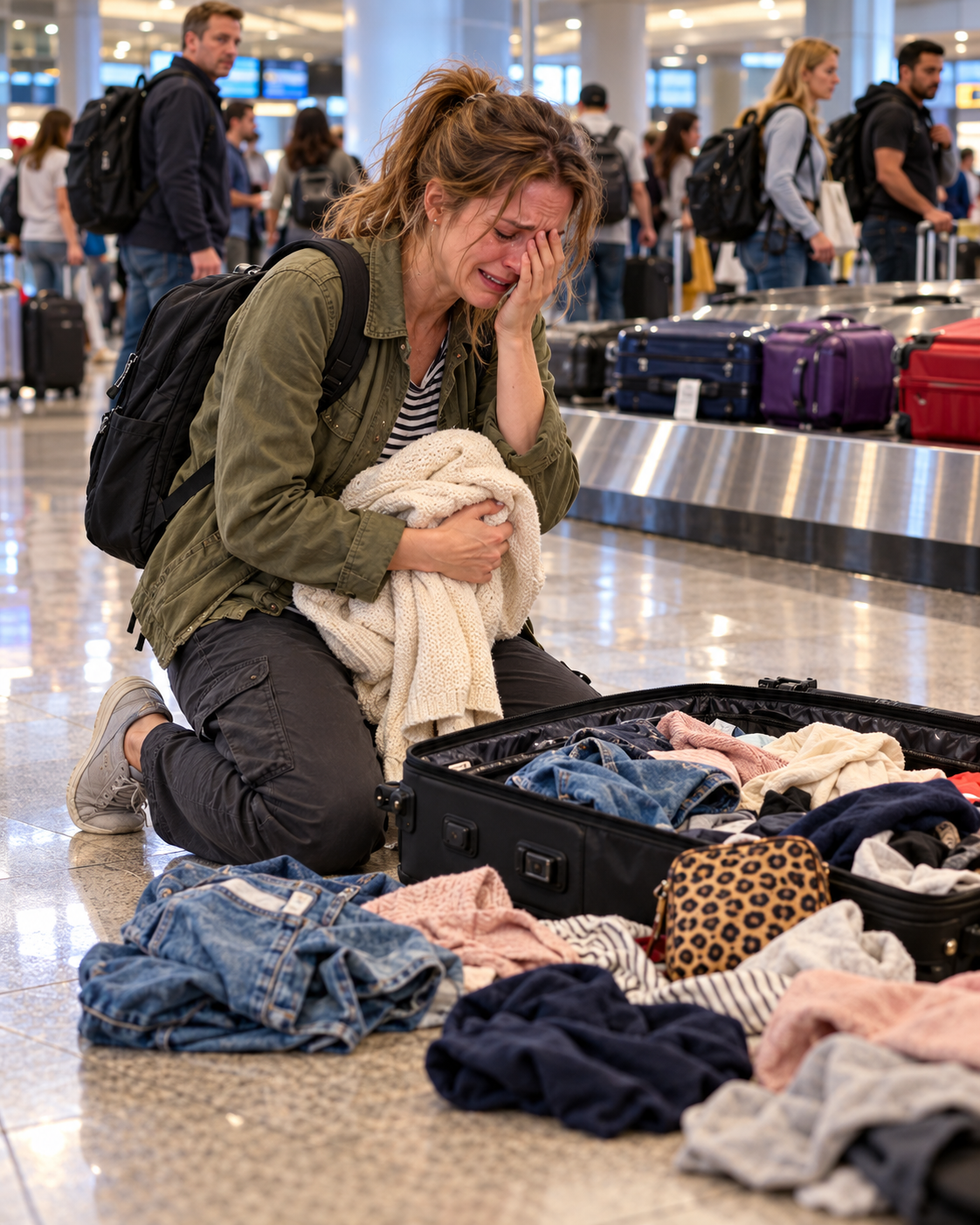
James’s suitcase finally appeared on the carousel, filled with the belongings I had folded that morning in Portugal exactly as he preferred. His shoes, shaving kit, gray hoodie, and the navy tie he wore every anniversary because I had once told him it made his eyes look darker were all inside.
When my luggage cart suddenly jammed, the suitcase fell hard onto the floor and burst open, sending James’s belongings scattering across the terminal. I dropped to my knees and frantically gathered everything while travelers moved around me, but when I picked up his navy tie, I suddenly couldn’t breathe.
An older woman in pink hospital scrubs knelt beside me and immediately started helping. She didn’t ask invasive questions or give me hollow condolences. She simply folded James’s clothes and used an elastic strap from her own bag to secure the broken suitcase.
“These your husband’s?”
I nodded, unable to say anything else.
“Somebody picking you up?”
“Yes. They’re outside.”
It was a lie, and judging by the way she looked at me, I suspected she knew it. My family lived less than an hour away, yet this stranger had shown me more practical kindness in two minutes than they had during the five worst days of my life.
James had died while we were in Portugal for a building-safety conference. We had planned to stay longer afterward and revisit Ponte de Lima, the village where we had honeymooned eight years earlier. On the second morning of the conference, he returned to our hotel room complaining of an unbearable headache, lay down, told me he loved me, and asked me to wake him at three.
At three, I couldn’t wake him, and the doctors later told me that an aneurysm had ruptured without warning. There was nothing anyone could have done, but knowing that didn’t make standing alone in a foreign hospital any easier.
That night, I called Mom from the hospital hallway and told her James was dead. After explaining everything, I finally admitted that I couldn’t manage the arrangements by myself and begged someone from my family to come.
“Honey, we can’t just drop everything and fly to Portugal.”
Mom explained that Dad’s knee made such a long flight difficult and that Troy had work and children to worry about. Rather than sending anyone, she reminded me of the role I had apparently filled in our family for years.
“You’ve always been so capable. You’ll be fine.”
So I handled everything myself. Bringing James home to the United States would have taken weeks and cost more than we had in savings. While trying to decide what to do, I remembered something he had told me during our honeymoon in Ponte de Lima.
“If I die first, don’t ship me anywhere. I hate that idea. Just put me somewhere with a view.”
I found a small cemetery on a hill overlooking the river, and a local priest agreed to bury a man he had never known. That morning, I stood beside James’s grave with only the priest, a funeral director, and two elderly gravediggers, who respectfully removed their caps as his coffin was lowered into the ground.
Hours later, I packed James’s belongings and boarded the flight back to Portland. After burying my husband alone in a foreign country, I asked my family for just one simple thing when I returned home: a ride from the airport.
They told me to take an Uber, so that was exactly what I did. None of us knew that before the night ended, another decision James had made before his death would prove he was still watching over me, and it would save far more than just my life.
