

PART 1 — The Voice on the Phone
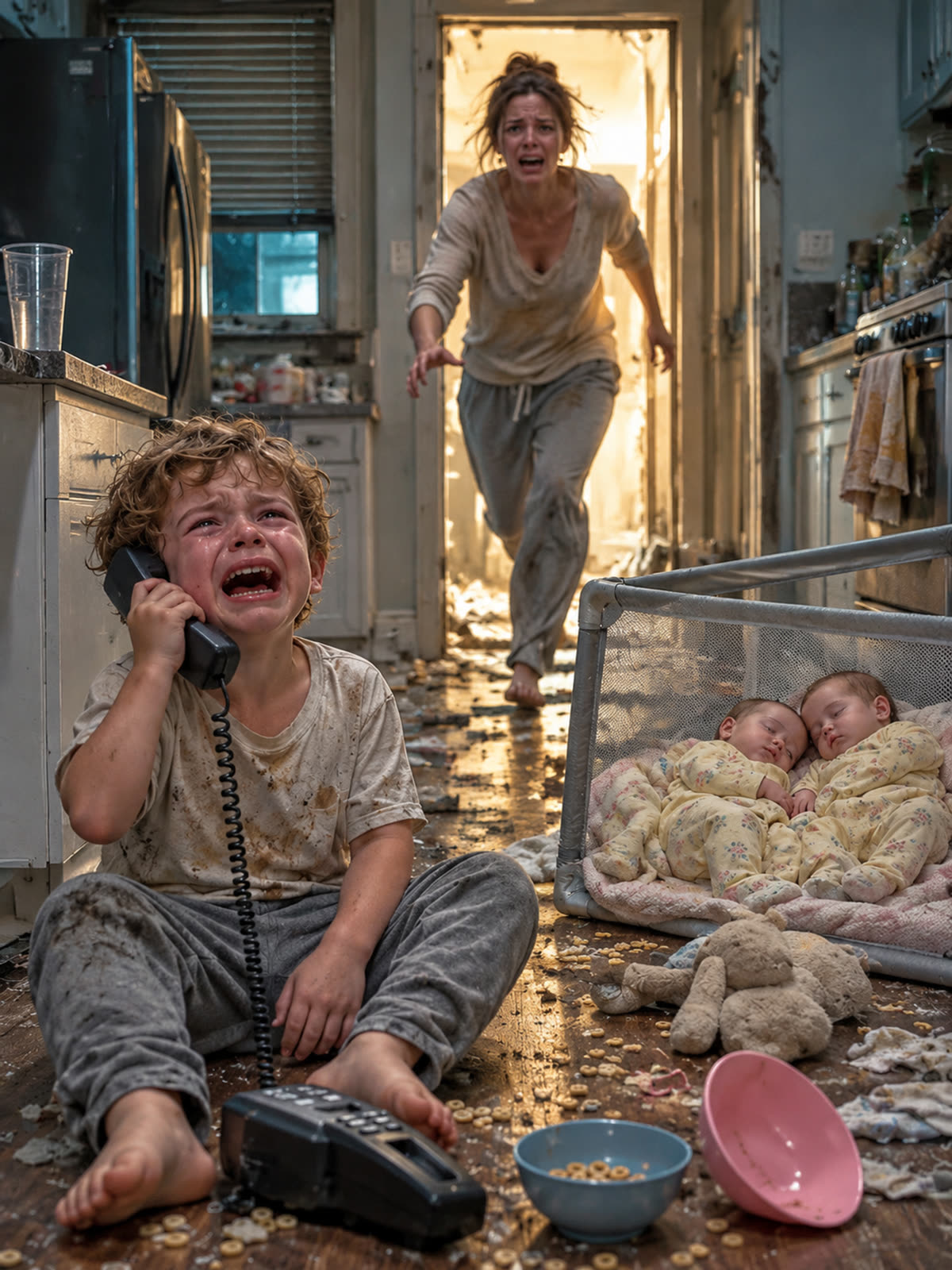
“Mommy… there is no more water left in the toilet… and Oliver will not wake up.” The ceramic mug slid from my shaking hand and broke across the kitchen tiles. I barely registered the crash. Ruby’s thin, frightened voice had already driven everything else out of my awareness, leaving only a sudden, piercing panic that seemed to stop the breath inside my chest.
“Ruby, sweetheart, stay on the phone with me right now and do not move!” I screamed into the receiver, reaching for my purse and searching desperately for my keys. My hands would not cooperate. Objects that belonged in familiar places seemed impossible to find, and all I could hear was my daughter telling me that her baby brother would not wake up.
I could not remember pulling on my shoes. One moment I was standing among pieces of broken pottery; the next, I was running toward my sedan. As I drove across Minneapolis, the same terrible thought kept circling through my mind: something had happened to my children, and every moment between us mattered. There was no room for anything beyond reaching them.
Traffic pressed around me as I sounded the horn at intersections and begged silently to have misunderstood Ruby. Through the handsfree system, I called Gavin again and again. Every attempt ended with the same smooth recording. “You have reached Gavin Mercer, and I am currently out of town on an important business trip,” his voice announced, maddeningly composed while my world was coming apart.
“Pick up the phone, Gavin, please just pick up!” I shouted toward the dashboard. My fingers tightened around the steering wheel until my knuckles blanched. He was supposed to be with them. Whatever explanation existed for Ruby’s call, whatever had gone wrong inside that apartment, their father should have been there answering her instead of leaving me listening to a recorded greeting.
I could not make sense of an eight-year-old searching a toilet bowl for drinking water. I understood even less how Oliver could be unresponsive while Ruby sounded too weak to speak clearly. Gavin had legal responsibility for the children while I attended my work seminar. Yet the person entrusted with them remained unreachable, and the little girl calling me sounded utterly alone.
When I reached his upscale apartment building, I stopped at the curb and left the engine running. I hurried through the glass lobby without waiting for the elevator, taking the concrete stairs two at a time. By the fourth floor, urgency had swallowed every other sensation. I went straight to Suite 408 and reached for the digital keypad beside the door.
Its screen was black. Nothing happened when I touched it. “Ruby, baby, can you hear Mommy out here?” I shouted, pressing my palm against the door. Heat radiated through the wood with an intensity that made my terror sharpen. I entered the access code three times, refusing for a moment to accept that the lock would not respond. Inside, I heard nothing.
A red emergency cabinet stood farther along the deserted corridor. I broke its protective glass with my elbow, seized the steel fire extinguisher, and rushed back. “Step back from the door, Ruby, Mommy is coming in!” I swung the cylinder into the electronic lock. Four crushing blows jolted through my shoulders before the damaged latch finally surrendered and the door moved inward.
Stale, suffocating heat struck my face as I crossed the threshold. The living room was almost completely dark beneath lowered blackout shades. Then Ruby emerged beside the kitchen counter, gripping a dirty plastic cup in both hands. Her lips were cracked, her face frighteningly pale. “I tried really hard, Mommy, I promise I did,” she whispered in a raspy voice. “The fridge got warm and all the baby milk turned sour.”
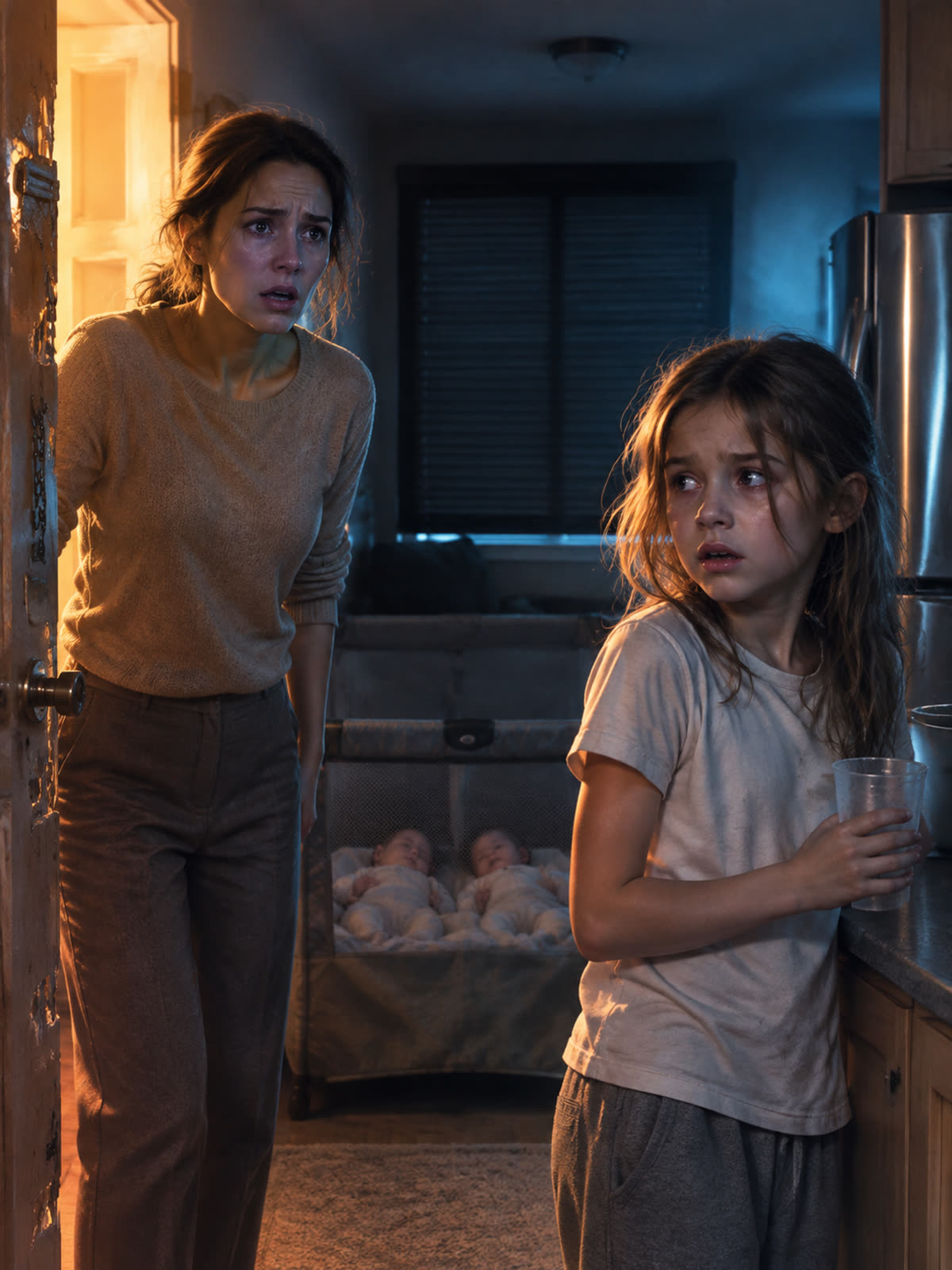
She swayed where she stood, as though staying upright required more strength than she had left. I wanted to gather her against me immediately, to stop that terrible explanation and tell her she did not have to keep trying anymore. But there were two babies somewhere in that darkness, and I could not let even my need to comfort her delay me.
The apartment’s expensive conveniences had become useless around her. The refrigerator no longer hummed. No overhead light came on, and the air conditioning had stopped completely. With the automated shades covering every window, afternoon sunlight could not reach the rooms. What should have been an ordinary home had become a sealed space filled with unmoving heat, and my children had been trapped inside it.
“Ruby, where are you, honey, please answer me!” was the call I had brought into that darkness, searching for any sign of her. Now that I could see her, the sound of her voice was almost worse than the silence. She had been trying to care for two infants while becoming dangerously weak herself, with no cold milk and no clean water left.
I crossed the living room to the mesh playpen. Oliver and Caleb lay motionless inside. Neither boy shifted when I called his name, and neither offered the small, familiar movement I was desperate to see. For an instant, the sight sent such an icy shock through me that the overheated room seemed to fall away. Then my nursing training took over.
Years in pediatric intensive care had taught my hands what to do even when my heart could scarcely bear it. I checked their tiny wrists and found pulses that were far too quick and frighteningly faint. Both boys were severely dehydrated and suffering from the heat. This was not something I could correct in the apartment. They needed hospital treatment immediately.
I lifted them against my chest, securing one limp little body on either side. The urgency was merciless: I had to carry both babies and get Ruby out without leaving any of them behind. “Ruby, sweetheart, grab the back of my sweater and hold on tight,” I instructed softly. “Do not let go of me for anything, okay?”
She gave a weak nod and caught the hem of my shirt. Together we moved through the broken doorway into the brightness of the hall. “Somebody help us right now, please call 911!” I screamed, looking down at the babies in my arms. “My babies are unresponsive and need an ambulance immediately!” The words finally brought doors opening along the corridor.
Neighbors appeared and reached for their phones. I stayed focused on Oliver and Caleb while Ruby held on behind me, the three of them depending on whatever strength I could keep steady. I had broken through the door, but reaching them was not the same as knowing they would survive. That distinction was suddenly the only thing in the world that mattered.
My phone vibrated in my pocket. For one brief moment, I expected Gavin’s name to appear, followed by some explanation for his absence. Instead, the screen displayed an automated notification from the electric utility. I looked down at the message while people around us called for emergency help, and the meaning of its orderly, impersonal words slowly became clear.
Electrical service to Suite 408 had been permanently disconnected at five o’clock on Friday afternoon. The shutoff had been requested directly by the account holder. I stared at the notice, struggling to make it mean something other than what it plainly said. This had not been a neighborhood outage. It had not been a missed payment or an unexpected technical failure.
Gavin had ordered it himself. He knew the apartment depended on electricity for its locks, ventilation, and motorized shades. He knew three children were staying there under his care. Yet the message described a deliberate instruction carried out at an exact time, and I could not fit that fact beside the limp weight of our sons without feeling horror spread through me.
Before I could untangle any of it, paramedics arrived with stretchers. The corridor filled with the purposeful movement of people who understood how quickly children in this condition could deteriorate. My own professional knowledge made their urgency painfully clear. I did not need anyone to explain why they were moving so fast, and I could not bear to imagine them moving any slower.
They took my children to Northstar General Hospital. The journey from that apartment to the emergency department seemed to belong to the same unbroken moment: Ruby’s voice, the dark keypad, the heat, the motionless babies. Each image kept returning before I had finished understanding the one before it. Beneath all of them was the same desperate hope that I had arrived in time.
At the hospital, doctors and nurses gathered around Oliver and Caleb, connecting intravenous fluids and heart monitors. I knew the equipment, the routines, and the language of urgent treatment. None of that familiarity offered the protection I might once have imagined. These were my sons beneath those hands, and I was their mother before I was a nurse.
Ruby received a hydration line of her own. Seeing her finally being cared for should have eased something in me, but the sight also revealed how much she had endured before I reached her. She had sounded frightened on the phone. In the hospital, surrounded by people responsible for helping her, she looked unbearably small, an exhausted child who had been left with an impossible responsibility.
I remained close to the trauma bay, watching the medical team work and praying without finding any new words. All the questions about Gavin still existed, but they hovered behind the immediate need for three children to recover. I could confront the reason later. For the moment, I needed pulses to strengthen, fluids to work, and my babies to respond.
Then a tall man in a charcoal suit approached my corner of the waiting area. “Claire, I am Detective Miller with the Special Victims Unit, and we need to talk right now,” he said. His introduction drew my attention away from the treatment rooms, but only barely. Whatever he needed to tell me had to fit around the fear already occupying every part of me.
“Please tell me you found Gavin, Detective, because he left our kids in a locked apartment with no power!” I said, brushing tears from my face. Even after the utility notification, I was still waiting for an explanation I could understand. I wanted him located. I wanted someone to put him in front of what his children had suffered and demand an answer.
Detective Miller answered quietly, without the hesitation of someone still following a vague lead. “We located his cell phone signal twenty minutes ago, Claire, and he is not out of town on any business trip,” he told me. The recorded greeting I had heard repeatedly in the car came back with sickening clarity, every calm word of it suddenly exposed as a lie.
“He has been checked into the Riverview Grand Hotel just three blocks away from his building since Friday afternoon, and I need you to come with me.” Three blocks. Not another city, not a distant business meeting, not somewhere beyond reach. While Ruby searched for water and our sons lay in the heat, their father had been close enough to walk home.
PART 2 — Three Blocks Away
Leaving the children at the hospital felt like pulling away from the only place I could possibly belong. Every instinct demanded that I remain beside their beds, watching every breath and every movement. Detective Miller needed me to go with him, but my body resisted the idea before I could even consider it. I had only just reached them. Walking away felt unbearable.
Dr. Adeyemi, the attending pediatric specialist, stepped forward with a firm, reassuring nod. “Go with the detective, Claire, because your kids are stable under my direct watch and nobody gets past those doors without my permission,” Dr. Adeyemi promised. “Make sure that man answers for what he did to these babies.” The assurance did not make leaving easy, but it made leaving possible.
I followed Miller to his unmarked cruiser and settled into the passenger seat. As we moved through the evening streets, the blind panic that had carried me to the apartment began changing into something colder and more focused. My children were under medical supervision now. Gavin, meanwhile, had been resting three blocks from the place where they were slowly becoming unresponsive.
“We pulled the utility records and financial logs for Suite 408 before coming to the hospital,” Detective Miller explained, tapping the rugged laptop mounted beside him. “The power was not cut off by mistake, Claire, and it was not a billing error.” Hearing him confirm what the notification had already suggested made it harder to retreat into disbelief. The shutdown had been deliberate.
“What are you saying, Detective, that he planned this whole thing?” I asked, turning toward him. There was a difference between reading that someone had requested a disconnection and accepting that the request belonged to a plan involving his own children. My mind kept resisting that final step, as though refusing to understand it might somehow make the facts less monstrous.
“Put this earpiece in and listen to the recorded call Gavin made to the electric company on Thursday afternoon,” Miller said, passing me a small black receiver. I held it against my ear. An automated greeting sounded first, ordinary and forgettable, followed by a customer service representative. Then Gavin began speaking in the same easy voice that had greeted my unanswered calls.
“Good afternoon, I need the electrical service at Suite 408 disconnected tomorrow at five o’clock sharp,” Gavin told the representative smoothly. “You do not need a forwarding address because the unit is going to sit completely empty all week.” His delivery was casual, almost effortless. There was nothing in it that suggested hesitation over what he was asking someone to do.
The representative paused to confirm that he understood what a loss of electricity would mean for smart appliances and security locks. Gavin did not sound uncertain. “Yes, I am fully aware of how the deadbolts engage when the power drops,” he answered. “Go ahead and process the shutoff for five tomorrow evening.” The warning had been given, and he had knowingly brushed past it.
I removed the earpiece and stared through the windshield. He had understood the apartment’s systems perfectly. When electricity failed, the front door engaged a heavy mechanical deadbolt that required a physical master key from outside. The blackout shades stayed lowered across the windows. Ventilation stopped. The intercom went dead. Every feature I had encountered in desperation was something he had already considered.
“He knew Ruby would not be able to reach the top manual latch or override the keypad,” I whispered, my voice sounding hollow even to me. “He knew the shades would trap them in the dark while the heat climbed higher every hour.” I could see her again beside the counter, trying to stand with that plastic cup between her hands.

“That is exactly right, Claire,” Detective Miller said grimly as he guided the cruiser toward the riverfront district. “He told the utility company the apartment was vacant while leaving an eight-year-old girl and two infants locked inside.” There was no misunderstanding left to hide behind. Gavin had described an empty home while knowing exactly who would be inside when the power disappeared.
“Why would he do something so cruel to his own children?” I asked, my stomach tightening. “He was staying three blocks away at a hotel and could have walked back over there in five minutes!” The distance kept returning to me because it made his absence impossible to excuse. Nothing had prevented him from going home. He had simply chosen not to.
“Because your final custody hearing is scheduled for next Tuesday morning,” Miller replied, looking toward me with grave eyes. “He wanted to stage a crisis where you looked reckless, except he badly miscalculated how fast that apartment would turn into an oven.” The explanation settled between us, colder than the fury holding me upright. My children had been placed inside a strategy.
“He wanted me to find them like that,” I murmured. I had thought I was racing against a terrible accident, then against his neglect. Now I understood that my arrival itself had been part of what he anticipated. He had counted on my fear, my urgency, my inability to stand outside a locked door while one of our children begged for help.
“That is what the digital evidence shows,” Detective Miller confirmed as we stopped beside the sleek glass tower of the hotel. “Hotel security let us inspect his room twenty minutes ago, and his tablet was still open to a live security camera feed inside Suite 408.” I turned toward him, struggling to absorb another fact that seemed more unbearable than the last.
“He was watching them on a camera?” I gasped. Fresh nausea rose inside me. Until that moment, I had been trying to understand how he could leave without checking on them. The possibility that he had watched made the silence surrounding Ruby even worse. He had not merely failed to imagine what might happen. He had been able to see it.
“The hallway camera had an internal backup battery that lasted roughly nineteen hours after the power went out,” Miller explained quietly. “He watched Ruby trying to take care of the babies until the battery died on Saturday afternoon, and then he simply stayed in his hotel suite.” Even after the image disappeared, he had remained where he was while they remained trapped.
I remembered Gavin’s fury when the family court judge rejected his request for sole custody the previous month. The court had ordered a three-day trial parenting period during my nursing certification workshop in Milwaukee. He had been told to demonstrate that he could manage the children alone. Outside the courtroom, he had sneered, “You will see just how well I manage everything, Claire.”
At the time, those words had sounded like another performance of his injured pride. Remembering them outside the hotel, I could no longer separate that performance from the apartment’s locked door. The court had asked him to show he could care for three children. Somehow, he had turned that opportunity into a plan to make their mother appear dangerous instead.
“His plan was simple,” Miller continued while two uniformed patrol officers joined us near the entrance. “He knew Ruby had your cell phone number memorized and would eventually call you crying for help.” Of all the things he had relied upon, that was among the cruelest: our daughter’s trust that I would come, and my certainty that I had to.
“And when she called, I would panic and break down his door,” I said, finishing the thought with a bitter laugh. “Exactly,” Miller nodded. “He intended to walk in ten minutes later with his attorney, photograph the smashed lock, and claim you violated the court order by breaking into his home and endangering the children instead of calling 911.”
“He tried to turn me rescuing our babies into courtroom evidence against me,” I whispered, closing my hands into fists. “He assumed the kids would last a day or two without power and look just distressed enough to make you look hysterical,” Miller said softly. “Once the heat spiked and the milk spoiled, things spiraled far beyond his script, and he was too cowardly to step in and admit what he had done.”
Miller instructed me to remain in the lobby while he and the officers went upstairs. I heard him, but when they entered the elevator, my feet carried me after them. By then I knew too much to wait below while Gavin continued moving through his polished surroundings as though the children in the hospital were merely a complication he could explain away.
On the sixth floor, the elevator opened onto a carpeted corridor. Gavin stood near the far end in a crisp, tailored suit, a leather legal portfolio tucked under his arm. Beside him was an older man wearing gold-rimmed glasses. They were heading toward the elevators, talking calmly, until Gavin looked up and stopped in the middle of whatever he was saying.
“Claire, what on earth are you doing here?” he asked, arranging his face into a familiar, condescending smile. “You are violating our custody agreement by showing up unannounced like this.” Even then, his first instinct was to accuse me. “Where are our children right now, Gavin?” I demanded, my voice carrying through the quiet hallway. I wanted to hear him answer.
“They are safe at home with a certified nanny I hired for the afternoon,” Gavin lied smoothly, looking toward his attorney. Detective Miller raised his gold badge. “Gavin Mercer, step away from the wall and place your hands behind your back,” he ordered. “You are under arrest for felony child endangerment and unlawful restraint of minors.” Gavin’s carefully arranged smile collapsed.
Color drained from his face. The older man beside him immediately retreated two steps, his expression changing to realization and disgust. Gavin looked from the badge to the officers, no longer able to control the scene with his usual practiced confidence. For the first time since I had known him, the words he wanted seemed unable to arrive quickly enough.
“I want to speak with my lawyer right now!” Gavin stammered. “Your lawyer is already backing away from you, Mr. Mercer,” Detective Miller replied evenly, fastening the steel handcuffs around his wrists. I watched the movement without feeling any satisfaction strong enough to reach past the hospital. An arrest could stop him from walking away. It could not tell me when Oliver would wake.
As the officers led him toward the elevator, Gavin turned his head toward me. The charm was gone. In its place was naked terror mixed with bewilderment, as though I had somehow spoiled something he still considered clever. “They were supposed to be completely fine, Claire!” he shouted as the doors opened. “Ruby is eight years old and smart, and I only needed twenty-four hours!”
“Oliver is eleven months old, Gavin,” I replied quietly. He offered nothing more before the elevator closed between us. The man who had arranged the blackout was finally in custody, but that did not end the emergency he had created. My answer remained on the other side of those closing doors, while the answer I needed was still waiting beside two hospital cribs.
PART 3 — What the Darkness Left Behind
Oliver and Caleb spent four exhausting days in pediatric intensive care. Specialists followed their kidney function and electrolyte levels while I stayed close enough to watch the smallest changes. Oliver had been hit hardest by dehydration. His sodium levels were dangerously high, and beneath the clear monitoring tubes he looked pale and fragile in a way no mother should have to remember.
Knowing how to read a monitor did not make those days easier. It gave every number meaning, and sometimes meaning was the last thing I wanted. I understood why the doctors were checking, why fluids had to be managed carefully, and why nobody offered reassurance carelessly. My professional experience remained with me, but it could not stand between me and the fear.
“We caught them just in time, Claire,” Dr. Adeyemi told me gently on the second evening while I sat between the cribs. “Another ten hours in that heat would have been a very different conversation, but their kidneys are responding well to the fluids.” I held on to the promise in the final words because I could scarcely bear the possibility contained in the first.
For ninety-six hours, I barely left the space between my sons. I kept a small warm hand in each of mine whenever I could and counted the steady rise and fall of their breathing. After everything that had happened, those ordinary movements felt immense. A breath, a pulse, a little warmth beneath my fingers: I had never wanted anything more complicated.
On the fifth morning, Oliver opened his dark eyes and found my face. Then he cried loudly for his bottle, the sound demanding and wonderfully alive. “There is my strong boy,” I sobbed. I was laughing and crying together, unable to separate relief from everything that had come before it, until a nurse on the floor placed a box of tissues beside me.
Ruby had been admitted farther down the hall to a regular pediatric room for intravenous hydration and rest. After arriving, she slept for nearly twenty hours. That long sleep made painfully visible the exhaustion she had been carrying. She was not the little caretaker Gavin had pretended she could be. She was a child whose body had finally been allowed to stop struggling.
When she woke, her large brown eyes were solemn, and guilt still lingered in them. “Mommy, I kept the front door shut the whole time,” she whispered softly. “Daddy told me never to open the door for strangers.” I listened to the rule she had followed while trapped behind a door she could not open, and my heart broke for her again.
“I know you did, sweetheart, and you listened so well,” I assured her, brushing the tangled hair away from her forehead. She needed comfort, not another question to solve or another responsibility to carry. Whatever Gavin had told himself about her age and intelligence, none of it changed what I saw in that bed: my exhausted, frightened eight-year-old daughter.
“I tried to give Oliver and Caleb water from the bathroom faucet, but nothing came out after a while,” Ruby said, her lower lip shaking. “Did I do a bad job taking care of them?” I moved carefully onto the edge of her bed. After everything she had endured, she was still measuring herself against the needs of her brothers, still wondering whether she had failed them.
I held her small face gently between my hands. “You did everything right, baby girl,” I told her firmly. “You remembered my phone number, you stayed beside your brothers, and you were the bravest person in that entire building.” I wanted every word to reach the place where she had stored that terrible guilt. The responsibility had never belonged to her.
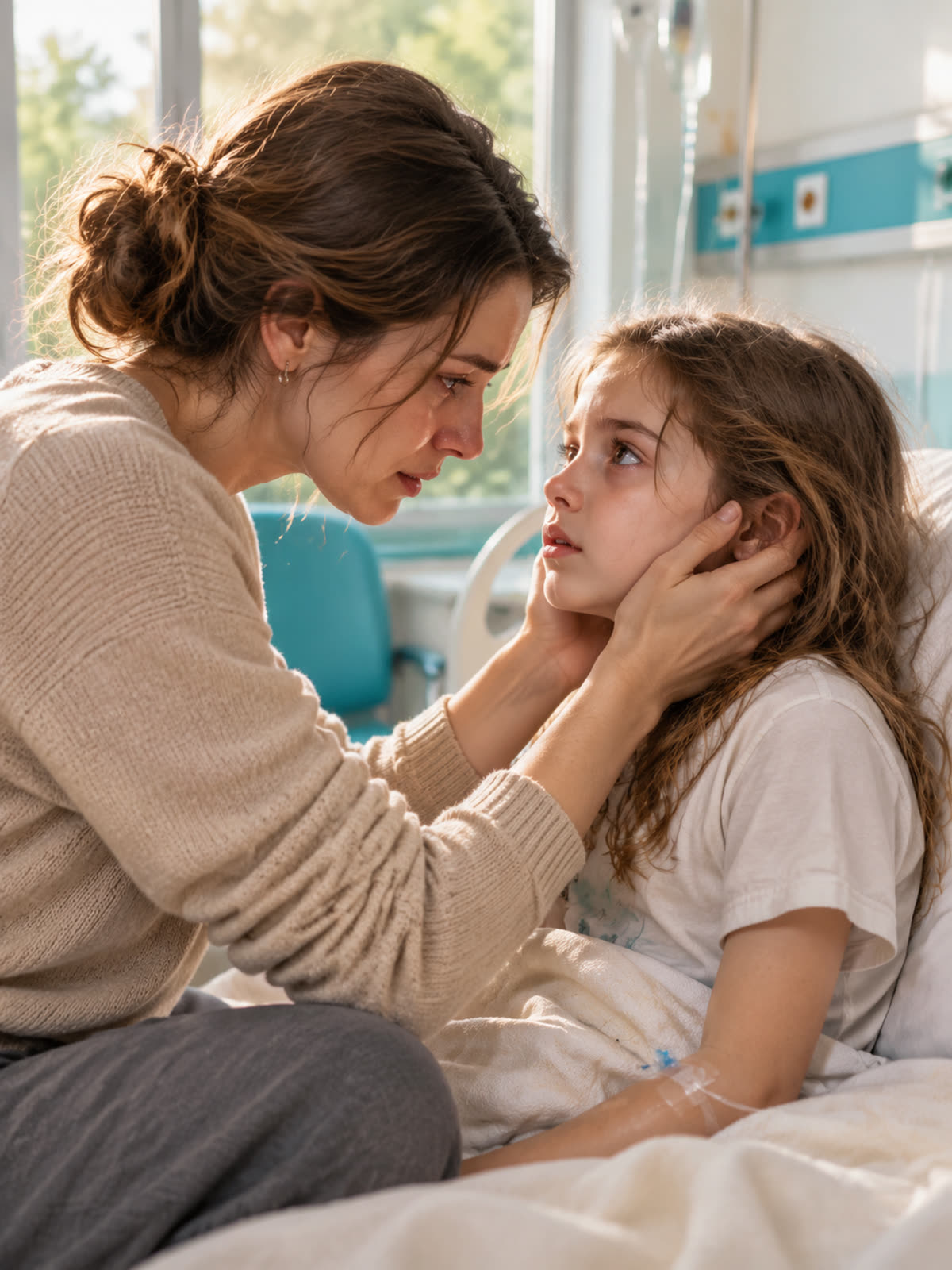
“I was really scared the whole time, Mommy,” she admitted quietly against my shoulder. “Being brave means doing the right thing even when you are terrified,” I whispered. I held her until she slept again, letting her rest against me without asking anything more of her. For once, someone else would remain awake, someone else would watch, and she could simply be a little girl.
The criminal investigation moved quickly once the records were assembled. There were the utility recordings, the hotel’s security video, and the apartment camera’s backup logs. Each piece supported what the others revealed. Gavin had not wandered away and forgotten the time. He had arranged the conditions, remained nearby, and allowed the children to stay inside while the consequences grew steadily worse.
A digital forensics specialist recovered something else from Gavin’s computer: a draft petition seeking emergency custody. It had been dated two days before the electricity was disconnected. Blank spaces remained where the date of my forced entry was supposed to go. The broken lock he had intended to use against me had already been assigned a place in his account of events.
“He literally scripted the entire emergency before cutting the electricity,” Assistant District Attorney Patricia Gomez told me at our pretrial meeting. “We have him dead to rights on every single felony count.” Hearing it described so plainly did not make it easier to understand. The draft made his preparation undeniable, down to leaving room for the moment he expected my terror to serve his purpose.
For almost six weeks, Gavin rejected every plea offer. He kept insisting that a jury would understand once he explained himself. That familiar arrogance survived longer than I would have thought possible, even with the recordings and the children’s hospital treatment laid beside it. He still seemed to believe that a sufficiently polished explanation could replace the reality of what he had done.
Then his private defense attorney reviewed the recorded utility call and withdrew. Gavin’s confidence disappeared almost overnight. He accepted a plea agreement carrying a mandatory twelve-year state prison sentence for felony child endangerment and unlawful restraint. After all his attempts to control the story, the words that mattered most were his own, calmly confirming that he understood exactly how the locks would work.
At sentencing, the same family court judge who had denied him custody months earlier permanently revoked all of his parental rights. I sat through the hearing knowing that no ruling could erase what Ruby remembered or give the boys back those days. Still, there was meaning in hearing a courtroom place responsibility where it had belonged from the very beginning.
“Mr. Mercer, you stood in my courtroom and boasted that you could care for three young children entirely on your own,” the judge stated coldly. “In twenty-five years on the bench, I have rarely seen a claim disproven in such a cruel and cowardly manner.” Gavin stared at the floor. There was no persuasive smile left for him to offer the bench.
Bailiffs led him away in shackles. He never looked toward my row, and I did not turn to watch him leave. I had already spent too many years searching his behavior for a decency that was not there. My children needed the strength I still had. I would not spend another piece of it waiting for him to become someone different.
In early March, we packed our belongings and moved twenty minutes north to a comfortable red-brick house. A broad wooden porch stretched across the front, and a tall oak stood nearby. From the kitchen window, I could look directly into a fenced, grassy backyard. The place offered no elaborate systems to admire. What mattered to me was that its ordinary protections were easy to understand.
Every door opened with a traditional brass key. There were no automated blackout shades, no smart-home hubs, and no locks that needed electricity to release from inside. Before signing the lease, I tested every window latch twice. I wanted to know how each one worked with my own hands, without relying on a glowing screen or an assurance that everything would function as intended.
As spring arrived, Oliver and Caleb recovered quickly. They spent afternoons crawling after our orange tabby across the living room rug, bringing movement and noise back into a home that belonged to us. By autumn, they were pulling themselves upright at the coffee table. Whenever they managed two uncertain steps, their proud squeals filled the room, and I treasured the sound.
Ruby attended weekly sessions with Dr. Bennett, a kind counselor whose desk held colorful jars of smooth glass marbles. Ruby sorted them while they talked. Healing did not arrive all at once for her, and we did not pretend that it should. For the first two months in the new house, she wanted the hallway light left on outside her bedroom.
One evening, as I tucked her blankets around her shoulders, she asked, “What if the power goes out while we are asleep tonight, Mommy?” I went to her nightstand and switched on a crescent-moon lantern. Its battery-powered light spread a soft golden glow over the walls. I wanted her to see something simple, something that would remain useful even if the rest of the house went dark.
“This lantern runs on batteries, and we keep extra packs right inside your top drawer,” I explained, showing her the switch. “You also know how to dial 911 first, call me second, and call Aunt Rachel third, and I promise you will never have to carry that responsibility alone again.” The instructions mattered, but the promise mattered more. She had already carried far too much.
“I still think I did okay taking care of them,” Ruby murmured thoughtfully. “You were amazing, sweetheart, but an eight-year-old child should never have to be a hero like that,” I replied, kissing her forehead. I would never take her courage away from her. I only wanted her to understand that being brave did not mean the burden should ever have been hers.
On the first anniversary of that afternoon, I packed a picnic basket and drove all three children to Lake Minnetonka. Oliver and Caleb laughed in the warm sand while Ruby worked on an elaborate sandcastle, building pebble walls and setting a pinecone tower in place. I watched them in the sunlight, grateful for an afternoon whose demands were as ordinary as sand, food, and play.
After an hour, Ruby came over, brushed sand from her knees, and sat beside me on the blanket. “Mommy, I think I am not afraid of the dark anymore,” she announced seriously, squinting toward the bright water. I slipped an arm around her shoulders. “Are you completely sure about that?” I asked. She paused, considering the question with the care she now gave honest answers.
“Mostly sure, and if I ever do get scared at night, I will just come wake you up,” she said, smiling brightly. “That sounds like the smartest plan in the world to me,” I laughed, drawing her against my side. A white sailboat moved across the lake, and I let myself watch it while my daughter rested comfortably beneath my arm.
I thought of the mug shattered across my old kitchen floor, the fire extinguisher in my hands, and the distance I had crossed after hearing her voice. Strength had not felt like strength that day. It had felt like terror refusing to stand still. A mother never truly knows what lives inside her until one frightened little voice whispers her name—and she discovers what she must do next…
Disclaimer: This story is a work of fiction inspired by real-life themes. Names, characters, places and events are fictionalized, and any resemblance to real persons is purely coincidental. Images are for illustration purposes only.
