

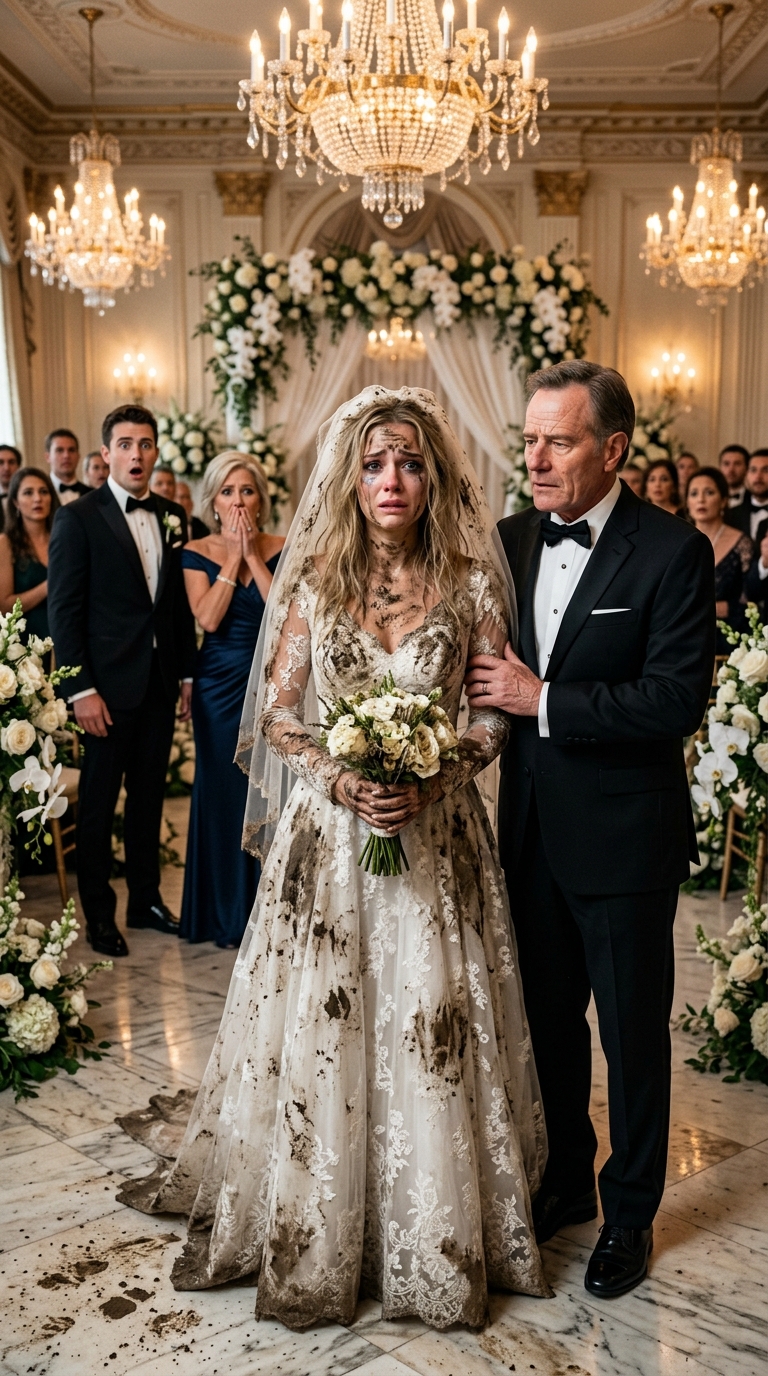
My mother-in-law dumped something foul across my wedding dress and left a note: “Know your place.” In front of 200 guests, I wore it anyway, took my father’s arm, and walked down the aisle without crying once. Then I smiled at the groom and whispered, “Your mother forgot one thing — I know the secret that will destroy you both.”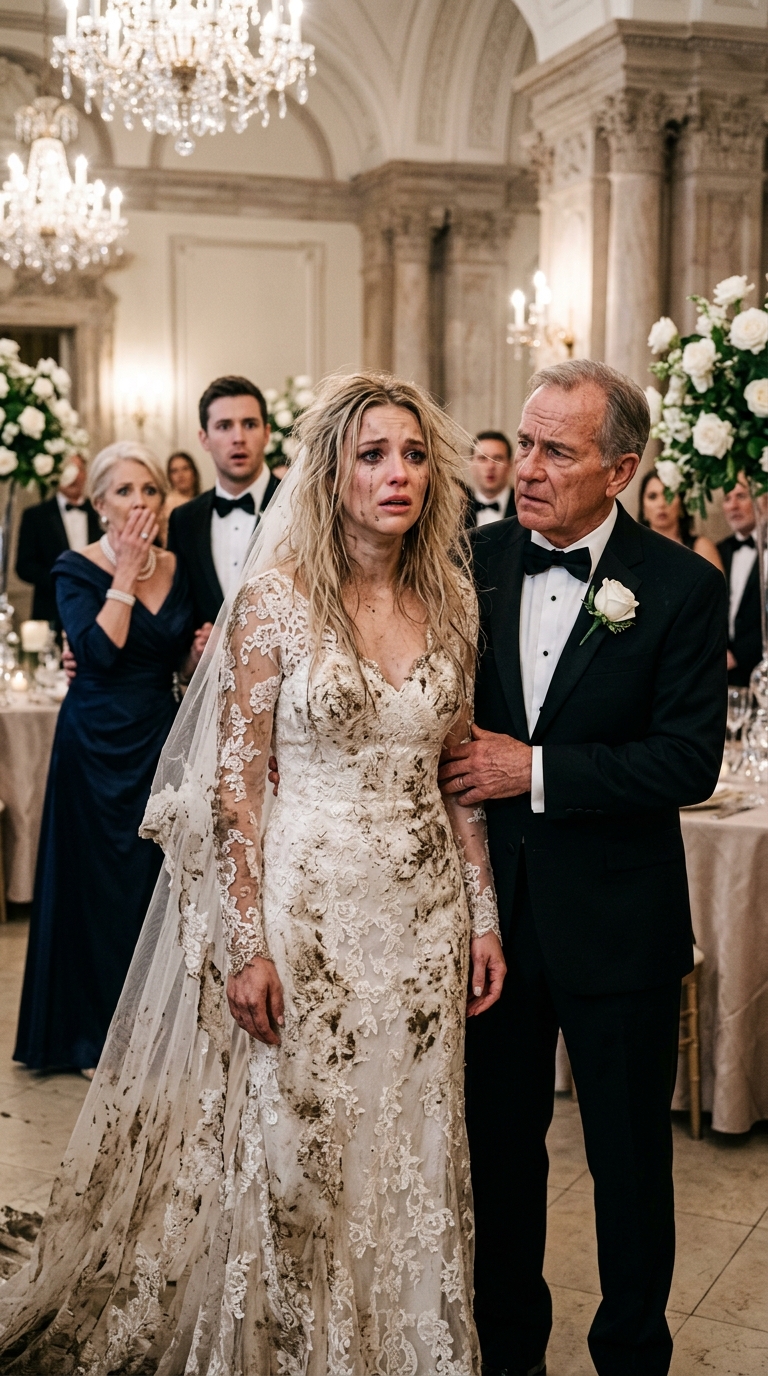
My mother-in-law ruined my wedding gown three hours before I was meant to marry her son. She poured black, rancid waste water over the silk bodice, slipped a note into the lace, and wrote, “Know your place.” BridalWear
For ten seconds, I only stared. The dress hung from the closet like an injured spirit. Pearl buttons. Hand-stitched sleeves. My mother’s veil placed carefully beside it. The stain had spread across the front in a dark, ugly burst, dripping onto the wooden floor of the bridal suite.
Behind me, my maid of honor, Tessa, gasped. “Maya… who did this?”
I picked up the note with two fingers.
I recognized the handwriting.
Eleanor Whitmore wrote every insult as if it were a polite note.
For two years, I had been smiled at, corrected, judged, and dismissed by that woman. She called me “sweetheart” when she meant servant. She asked if my father was “comfortable” paying for his suit. She told her friends I was “pretty enough, for someone without background.”
And Daniel, my fiancé, would kiss my forehead and say, “She’s just protective.”
Protective.
That was his word for cruelty wearing pearls.
Tessa grabbed her phone. “We’re calling security.”
“No,” I said.
She looked at me. “No?”
I looked at myself in the mirror. My hair was perfectly pinned. My makeup was soft, expensive, flawless. My hands were steady.
The woman staring back didn’t look broken.
She looked done waiting.
My father knocked once and stepped in. He saw the dress. His face went pale, then red. “Maya.”
“I’m wearing it,” I said.
“No, baby.”
“Yes.”
Tessa whispered, “You can’t walk in front of two hundred people like that.”
I turned to her. “That’s exactly why I can.”
Downstairs, the string quartet had already begun. Guests were seated under white roses and crystal chandeliers. The Whitmores had invited judges, bankers, donors, senators—people who adored polished reputations and hidden rot.
They believed I was a lucky girl marrying above her station.
They had no idea I had spent six months marrying beneath myself with my eyes wide open.
I stepped into the ruined dress. The cold stain pressed against my skin. My father’s jaw tightened, but he offered his arm.
At the chapel doors, he whispered, “Tell me what to do.”
I squeezed his hand.
“Walk slowly.”
Part 2
The doors opened, and every conversation stopped.
Two hundred guests turned. Smiles came first. Then confusion. Then shock.
The stain was impossible to ignore. It ran from my chest to my waist like an exposed wound. Someone dropped a program. Someone whispered, “Oh my God.” Cameras rose, lowered, then rose again.
At the altar, all color drained from Daniel’s face.
Beside him, Eleanor Whitmore smiled.
Not openly. She was too controlled for that. It was small, sharp, satisfied.
She thought I would break. She thought I would run. She thought humiliation would prove her point in front of everyone she cared about.
I kept walking.
My father’s arm shook slightly, but I did not. Step after step, under chandeliers, through white roses, toward the man who had lied to me in restaurants, in bed, and in front of my mother’s memory. Momand baby
Daniel leaned forward as I reached him. “Maya,” he hissed, “what are you doing?”
I smiled like a bride.
“Your mother forgot one thing,” I whispered. “I know the secret that will destroy you both.”
His eyes flicked to Eleanor.
Good.
Fear recognized fear.
The priest cleared his throat. “Dearly beloved—”
“Wait,” I said.
A ripple moved through the room.
Daniel grabbed my wrist. “Don’t embarrass yourself.”
I looked at his hand until he let go.
Then I faced the guests.
“I apologize for the delay,” I said evenly, my voice carrying through the microphone hidden in the floral arch. “Before we continue, I want to thank Eleanor Whitmore for the note she left on my dress.” Dresses
A murmur spread.
Eleanor’s smile vanished.
I held up the stained paper. “Know your place,” I read.
Daniel whispered, “Maya, stop.”
I didn’t.
“For a long time, I believed my place was beside Daniel. I ignored the warnings. The secret calls. The missing money. The way his mother answered questions meant for him.” I looked at him. “But I remembered my real place.”
I pulled a silver flash drive from my bouquet.
“My place is senior forensic accountant for the state attorney’s financial crimes division.”
Silence dropped so hard it felt physical.
Most people knew I worked in finance. Few knew where, because Daniel always described it as “government numbers,” like it was meaningless.
I nodded to Tessa.
At the back, the projection screen lowered. Instead of a wedding slideshow, the first image appeared: transfers, shell companies, signatures, dates.
Daniel stepped forward. “Turn it off.”
Tessa’s voice came through the speakers. “Touch her and I send everything to every device in this room.”
I faced the guests again.
“Daniel and Eleanor used Whitmore Foundation funds to cover personal debt, gambling losses, and bribes for their hotel project. They also planned to have me sign liability documents after this wedding.” Momand baby
Eleanor stood. “She’s lying.”
I clicked the remote.
The screen changed to hallway footage.
Eleanor entering my room. Opening my closet. Pouring the liquid over my dress. Sliding the note into the lace. Dresses
The room erupted.
Part 3
“Turn it off!” Eleanor screamed, and for the first time everyone saw what lay beneath her composure.
Daniel lunged for the remote, but my father stepped in. Sixty-four, calm, and a retired boxing coach who didn’t need to raise his voice twice.
“Sit down, son,” he said.
Daniel froze.
Two men in dark suits entered through the side doors—investigators.
Eleanor recognized one and nearly collapsed.
I hadn’t come to create chaos. I came with affidavits, records, evidence, and a warrant set to activate after the ceremony. The dress was never the plan.
It was just packaging.
One investigator approached Daniel. “Daniel Whitmore, you need to come with us.”
Daniel looked at me like I had betrayed him.
Almost funny.
“You set me up,” he said.
“No,” I replied. “You wrote everything down in emails and copied me because you thought I wouldn’t understand them.”
Eleanor pointed at me. “You wanted our name.”
I stepped closer. “Your name is about to appear in a fraud case file.”
Her mouth opened. Nothing came out.
Phones began buzzing.
Tessa had sent the evidence packet to every guest. Not rumors—documents, transfers, voicemails, messages. Momand baby
People began standing, whispering, leaving.
Daniel tried one last time. “Maya, please. I love you.”
I looked at the ruined dress.
Then at him.
“You don’t love me,” I said. “You loved what you thought I would sign.”
The investigator took his arm.
Eleanor pushed forward. “You can’t do this to my family!”
“My family,” I said, turning to my father, “is right here.”
The doors opened again.
Daniel and Eleanor were led out beneath the white roses.
I removed the veil and handed it to my father.
“Ready to leave?” he asked.
I looked around.
“No,” I said. “I paid for the reception.”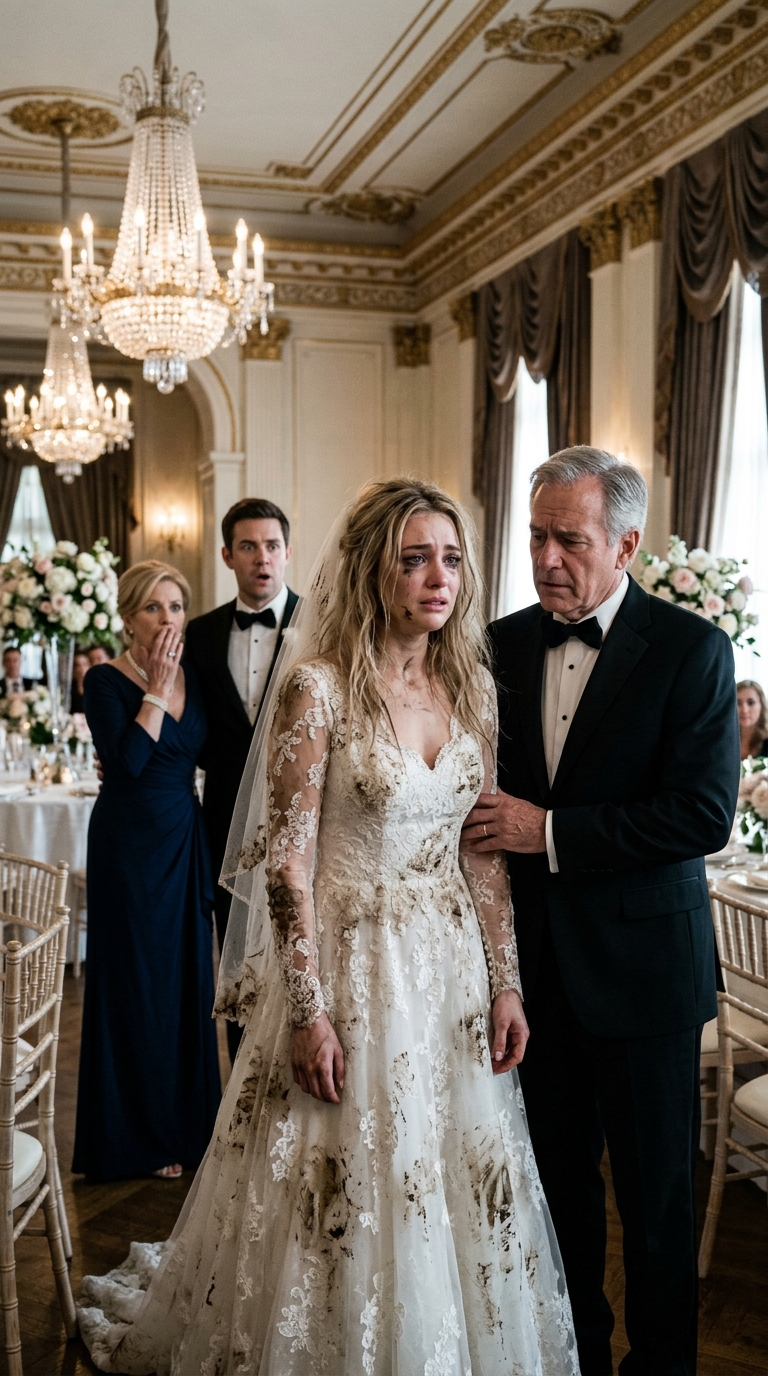
I changed into the spare ivory dress Tessa had hidden, entered the ballroom, and danced with my father while the cake sat untouched. By dessert, apologies had begun. By midnight, statements followed. By morning, headlines spread. Dresses
Six months later, the foundation was dissolved. Eleanor pleaded guilty. Daniel’s project collapsed, accounts frozen, reputation gone.
I kept my mother’s veil, sold the wedding gown as evidence, and moved into a quiet home full of light.
Sometimes people ask if I regret walking down the aisle in a ruined dress.
I don’t.
That wasn’t humiliation.
That was exposure.
