

PART 4
Then I decided I would hear what she wanted to say, provided she remained outside and respected my boundaries.
I spoke through the gate’s intercom.
“What do you need, Patricia?”
She looked directly toward the camera.
“I’d like to speak with you.”
“About what?”
She hesitated.
“Ryan.”
I waited.
“He’s having a difficult time.”
I felt no surprise.
“I’m sorry to hear that.”
“He’s under a great deal of pressure. The company is struggling, and the family is arguing constantly. Everyone blames him for what happened at your house.”
I took a slow breath.
“Patricia, I didn’t create those problems.”
“I know.”
The words were so unexpected that I almost asked her to repeat them.
She adjusted her handbag.
“I didn’t understand the situation at the time.”
“You had an email describing the plan.”
Her face tightened.
“I know what the email said.”
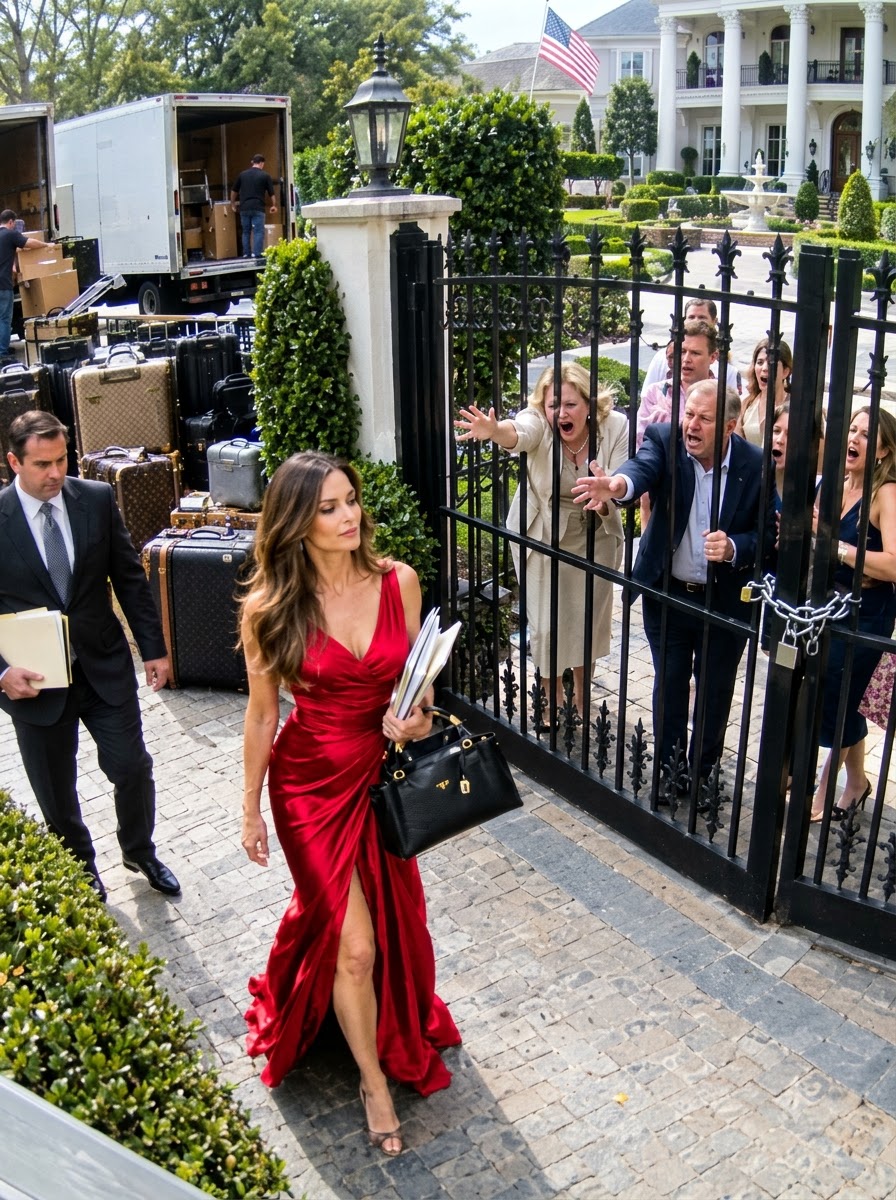
“And you still came with two moving trucks.”
She looked away.
For several seconds, neither of us spoke.
Then she said something I had never expected to hear.
“I thought if I could get inside, I could make you reconsider the divorce.”
I stared at the intercom.
“What?”
She lifted her eyes.
“Ryan told me you were still uncertain. He said you might change your mind if the family could sit down together. I thought being in the house would force a conversation.”
I felt a bitter sadness settle over me.
Even now, Patricia seemed unable to distinguish between a conversation and a confrontation.
“You believed you could use my home to pressure me into returning to a marriage I had already decided to leave?”
She pressed her lips together.
“When you say it like that…”
“How else should I say it?”
She had no answer.
For the first time since I had known her, Patricia looked genuinely uncertain about what to do with herself.
“I was wrong to bring the trucks,” she said eventually.
I remained silent.
“I was wrong to assume the house belonged to Ryan. And I was wrong to treat your decision as something I could override.”
The apology was awkward.
It wasn’t polished.
It didn’t sound like something she had rehearsed in front of a mirror.
But I still didn’t know whether it came from genuine understanding or from the consequences she had faced.
I didn’t need to decide that day.
“Thank you for acknowledging it,” I said.
She nodded.
“Will you forgive me?”
I considered the question.
“I don’t know yet.”
Her expression fell.
“But I won’t argue with you about it,” I continued. “You can decide what kind of person you want to be from here. I have to do the same.”
She looked toward the mansion.
“I suppose you won’t ever let me stay there.”
I almost smiled.
“No, Patricia. I won’t.”
She nodded slowly.
For once, she didn’t argue.
She turned and walked back toward her car.
I watched until she drove away.
Then I closed the intercom and returned to the house.
I didn’t feel triumphant.
I felt free.
A year later, I occasionally heard updates about Ryan through mutual acquaintances.
His family had been forced to make difficult decisions about its finances. The construction company restructured some of its obligations, sold certain assets, and reduced its expenses.
Ryan continued working, but his circumstances changed.
He no longer spoke as confidently about wealth and influence.
Vanessa became less active online.
Brandon kept his distance from the financial matters that had caused so much conflict.
Patricia, according to one mutual friend, had begun staying with relatives when she needed help rather than assuming that someone else would accommodate her.
I hoped those changes were genuine.
But I no longer considered it my responsibility to monitor them.
My own life had moved forward.
I returned to a project I had postponed during the marriage and began expanding my business. I spent more time with friends who had quietly supported me through the divorce.
I also began to appreciate the ordinary moments I had once taken for granted.
Coffee in the kitchen on a quiet morning.
Dinner with friends beneath the chandelier.
The sound of rain against the windows while I read in the study.
The scent of roses drifting through the garden in spring.
None of those things required a public victory.
None required the Montgomerys to admit defeat.
And none depended on Ryan’s approval.
One evening, I stood in the entrance hall and looked at the framed photograph of my parents.
My mother was laughing.
My father had one arm around her shoulders.
They looked happy, relaxed, and entirely unaware that the photograph would one day become one of the things I treasured most.
I thought about the house they had helped me buy.
They had never imagined that it would become the center of a divorce dispute.
They had never imagined that someone would try to use it as leverage.
But I knew what they would have wanted me to do.
They would have wanted me to protect what I had built.
They would have wanted me to stand up for myself.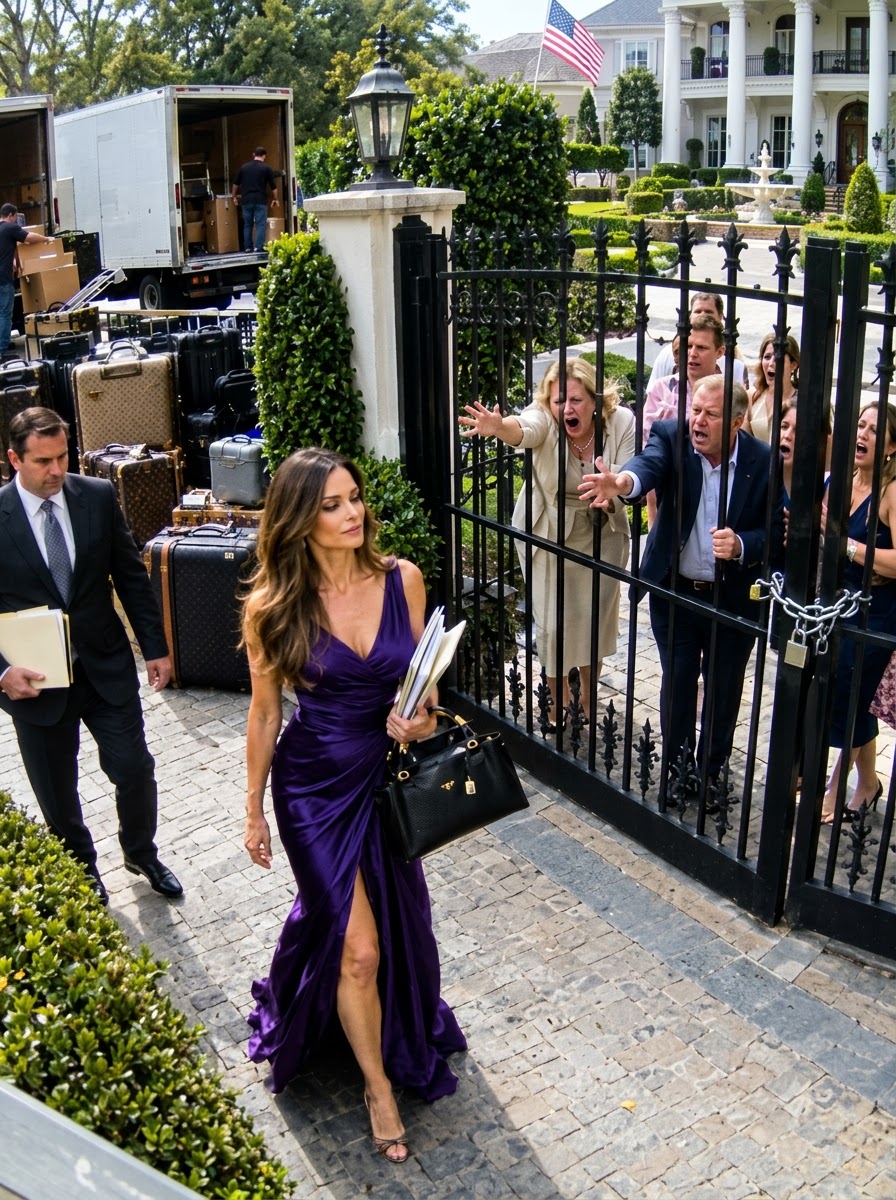
And they would have wanted me to understand that love was not a debt I owed to anyone who demanded it.
I touched the edge of the photograph.
“I’m all right,” I whispered.
For the first time in a long time, I believed it completely.
The mansion remained quiet behind its gates.
The property records remained in my name.
The locks were secure.
The garden was flourishing.
And my life belonged to me again.
Looking back, I sometimes think about that afternoon when Patricia arrived with two moving trucks.
She believed she was about to take control of my home.
Ryan believed the divorce would leave me vulnerable enough to accept whatever his family demanded.
Vanessa believed a camera could turn their actions into my humiliation.
They had all made the same mistake.
They assumed that because I had once loved Ryan, I would always put his family’s wishes ahead of my own.
They assumed that because I had remained quiet during years of conflict, I had no intention of fighting back.
They assumed that because I wanted a peaceful divorce, I would surrender my rights to avoid an uncomfortable scene.
They were wrong.
I didn’t need to shout.
I didn’t need to insult them.
I didn’t need to threaten anyone or turn the confrontation into a spectacle of my own.
I needed only to know the truth, protect my property, and allow the facts to speak for themselves.
The gate had been locked for a reason.
The deed was in my name for a reason.
And my attorney had arrived because I had prepared for the possibility that the people who claimed to care about me might not respect my boundaries.
In the end, the most important thing I reclaimed wasn’t the mansion.
I had never lost ownership of it.
What I reclaimed was the confidence to trust my own judgment.
The freedom to say no without explaining myself a dozen different ways.
The ability to recognize that someone else’s disappointment did not automatically make me responsible for fixing it.
And the certainty that a relationship could end without taking my dignity along with it.
The Montgomerys had arrived expecting to move into my future.
Instead, they were forced to confront the consequences of their own choices.
I remained in the home my parents had helped me secure, surrounded by the memories they had left me and the life I was finally free to build.
And every time I passed through those gates, I remembered the lesson that had taken me five years to learn.
A person who loves you may ask you to share your life. But someone who respects you will never assume that loving them means surrendering your right to say no.
