

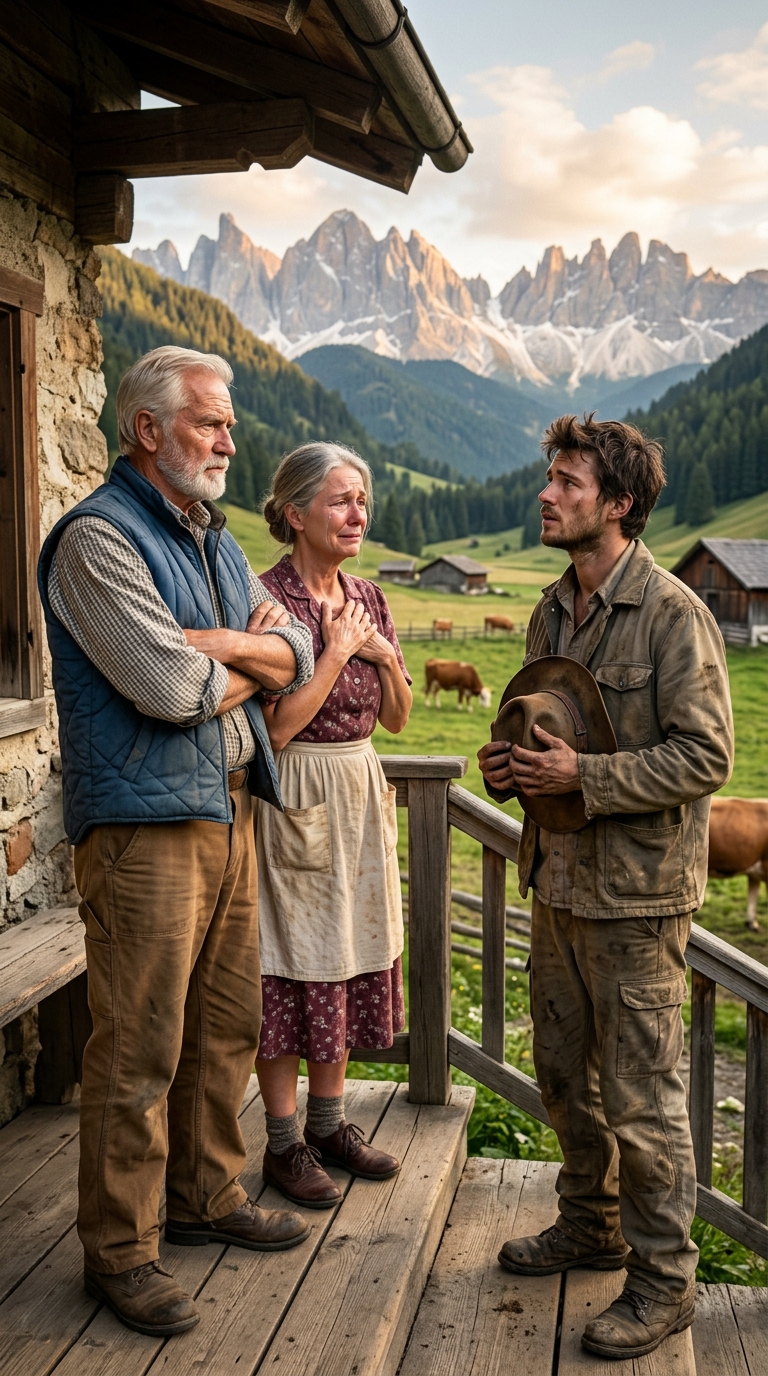
The young man who arrived at the ranch
“Get out of here!”
That was the first thing Don Evaristo Robles almost shouted when he saw the young man standing in front of the gate of his ranch, soaked by the rain and covered in mud up to his knees. It was a cold morning in the Altos de Jalisco, one of those mornings when the sky seems to descend to touch the corrals and the smell of wet earth mixes with the restless lowing of the cattle.
The young man didn’t ask for money. He didn’t ask for food. He didn’t ask for pity either.
He simply took off the old hat he was holding in his hand and said in a tired but firm voice:
“Let me stay for a few days, boss. I can take care of the cattle, repair fences, clean the water troughs. I won’t be in your way.”
Doña Luz, Evaristo’s wife, appeared behind the door with a shawl over her shoulders. She looked him up and down. He appeared to be about 27 years old, with a grown beard, eyes sunken from exhaustion, and a backpack so worn it looked like it had crossed half the country.
“What’s your name, son?” she asked.
“Mauricio Rivas.”
Don Evaristo crossed his arms. For years he had trusted no one who showed up unannounced. Much less a stranger who appeared just when the El Encino ranch was going through its worst season.
“We don’t hire people just like that here,” he said harshly. “Especially without references.”
Mauricio nodded, as if he had heard that answer many times before.
“I understand. But if you let me show you what I can do, you won’t have to pay me today. I just need a corner to sleep in.”
Evaristo was about to refuse when, from the corral in the back, a sharp thud was heard. Then another. Then came the agitated lowing of several cows.
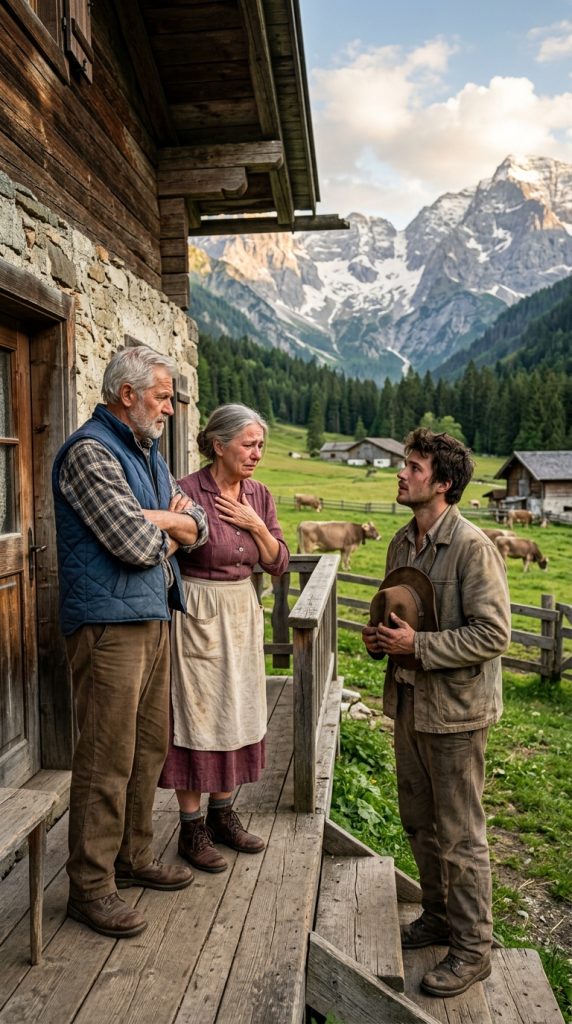
The old man turned his head immediately.
“The fence in the north pasture,” he muttered.
Mauricio looked toward the field, squinting under the rain.
“If you don’t stop them now, they’re going to head toward the ravine.”
Don Evaristo looked at him with distrust.
“And how would you know that?”
“Because the land slopes down that way. And because that wire was already giving way when I was walking along the road.”
No one answered. For a second, the old man only heard the rain falling on the metal roof. Then he took some keys out of his pocket and tossed them to him.
“The quad bike is under the shed. If you do anything stupid, I’ll kick you out.”
Mauricio caught the keys and ran off.
When Evaristo and Luz reached the pasture, the young man was already working. He wasn’t yelling or waving his arms like many beginners. He moved calmly, cutting off the cattle’s path and guiding them little by little toward a safe area. Then Canela appeared, the ranch’s herding dog. She was an old, wary border collie who had only obeyed Evaristo since Emiliano, the couple’s son, had died 8 years earlier.
Mauricio crouched down when the dog approached growling.
“Easy, girl. You know more than all of us.”
Canela sniffed him, took a step back, and then, to Evaristo’s surprise, ran to his side as if she had known him all her life. Together they managed to get the cows back into the corral before any of them were lost in the ravine.
An hour later, Mauricio returned covered in mud, with scraped hands and his shirt stuck to his body. He didn’t ask for praise. He simply pointed toward the hill.
“The big break is over there, but there’s an even worse section further up. If another storm hits, the whole fence will come down.”
Don Evaristo went to check. It was true. The fence had been on the verge of collapsing for weeks and no one had noticed.
That night, Mauricio had dinner in the ranch kitchen. Doña Luz served beef broth, freshly made tortillas, and beans from the pot. The young man ate slowly, like someone who doesn’t want to seem desperate, even though hunger made his hands tremble.
“Where did you learn to work like that?” Luz asked.
Mauricio looked down.
“My father had a ranch in Zacatecas.”
“And what happened?”
The young man took a moment to answer.
“I lost it.”
The kitchen fell silent. Don Evaristo didn’t ask any more questions, but from that night on, he allowed him to sleep in a room next to the stable.
In the following days, Mauricio got up before dawn. He repaired fences, cleaned water troughs, organized tools, and checked on the cattle without anyone telling him to. Sometimes Doña Luz would find notes on the table: “The calf of the spotted cow has already eaten,” “The water trough in corral 3 is no longer working,” “The fence by the mesquite tree has been reinforced.”
Don Evaristo didn’t say thank you. He wasn’t a man of easy words. But every morning he had fewer things to check, because he knew Mauricio had already done them.
Over time, something began to change at El Encino. The house, which for years had seemed too big for two people, began to fill with footsteps, voices, and sounds of work. Canela slept in front of the door to Mauricio’s room. Doña Luz started making coffee for three again. And Don Evaristo, although he wouldn’t admit it, waited for the young man every afternoon to check the cattle together.
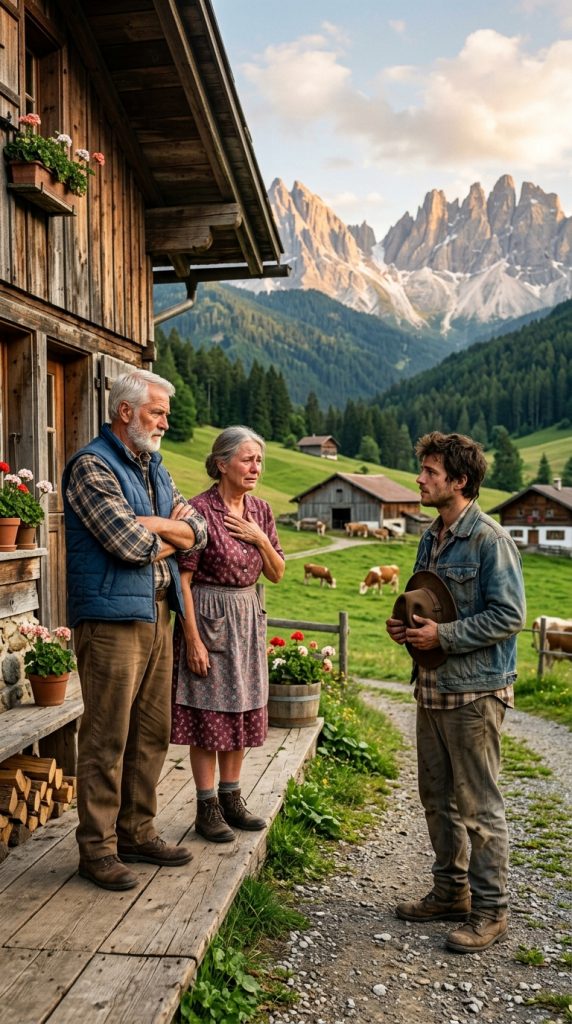
One morning, Mauricio found an abandoned shed behind a hill. It was covered in weeds, with a broken door and rusted tools hanging on the wall. Without asking permission, he cleaned the place, fixed the door, and organized the nails, hammers, and ropes.
When Evaristo saw it, he turned pale.
“Who told you to fix this?”
Mauricio wiped the sweat from his face with his sleeve.
“No one. But it’s still part of the ranch.”
The old man didn’t respond. Those were the same words his son Emiliano had said years earlier, when he still dreamed of growing El Encino and turning it into the most beautiful ranch in the region.
That night, Doña Luz took out a wooden box from the closet. Inside were old photographs. In many of them was Emiliano: smiling, covered in dirt, carrying calves, riding horseback next to his father. Mauricio picked up one photo and smiled sadly.
“He looks like he was stubborn.”
Don Evaristo let out a short laugh, the first sincere laugh Doña Luz had heard from him in a long time.
“Like a mule.”
But that peace didn’t last.
At the end of November, a man arrived at the ranch in a black truck. He wore clean boots, an expensive watch, and a smile that didn’t reach his eyes. His name was Arturo Montalvo, and for years he had been trying to buy El Encino to build luxury cabins and a country club.
“Don Evaristo,” he said, extending a folder, “my offer is still on the table. And this time it’s better.”
“My answer is still the same,” replied the old man. “I’m not selling.”
Arturo looked around: the old fences, the patched roof, the damp corrals.
“With all due respect, you can’t handle this anymore. Neither can your wife. What will happen when you get sick? Who’s going to take over?”
Mauricio, from the stable, heard the conversation. He saw how Don Evaristo’s hand trembled just a little.
“I’m not selling my life,” said the old man.
Arturo slowly closed the folder.
“Sometimes life is also lost because of pride.”
He left, leaving a heavy tension in the courtyard.
That night, Don Evaristo went over the accounts until late. Veterinary bills, pending repairs, small debts that together seemed like a mountain. Mauricio saw him from the door and felt a strange fear. For the first time in years, he was afraid of losing a place he already felt was his.
Two days later, the worst happened.
During a heavy storm, someone opened the gate of the main corral. The cows ran wildly toward the road, just when the rain made it impossible to see more than a few meters ahead. Canela barked desperately. Mauricio ran without thinking, jumped on the quad bike, and followed the cattle toward the ravine.
Don Evaristo went after him, but slipped in the mud and fell, hitting his leg. Doña Luz screamed his name. The water flowed like a river down the path. If the cattle advanced a few more meters, they would fall into the gorge.
Mauricio accelerated, positioned himself in front of the cows, and began guiding them back. Canela ran beside him, barking with all her strength. In the middle of the chaos, a calf separated from the group and got trapped near the edge. Mauricio got off the quad bike and threw himself toward it. The mud reached his knees. The ground was crumbling under his boots.
“Mauricio!” Doña Luz shouted from afar.
He grabbed the calf around the neck and pushed with all his strength. For a moment it seemed both would fall, but Canela bit his shirt sleeve and pulled backward, as if she understood she had to save him.
When it was all over, Mauricio lay on the ground, shivering from the cold, with the living calf beside him. Don Evaristo, leaning on Luz, looked at him with eyes full of tears.
“You’re crazy, boy,” he said in a broken voice.
Mauricio tried to smile.
“I wasn’t going to let another ranch be lost because of me.”
That sentence opened a wound that had been closed for too long.
Later, by the fire, Mauricio confessed the truth. His father had died leaving him a ranch in debt. At 20 years old, he had taken out loans, trusted the wrong people, and ended up selling the family land. His mother fell ill shortly after, and his younger sister stopped speaking to him. Since then, he had wandered from place to place, working seasonally, carrying the guilt of having destroyed the only thing his father had left him.
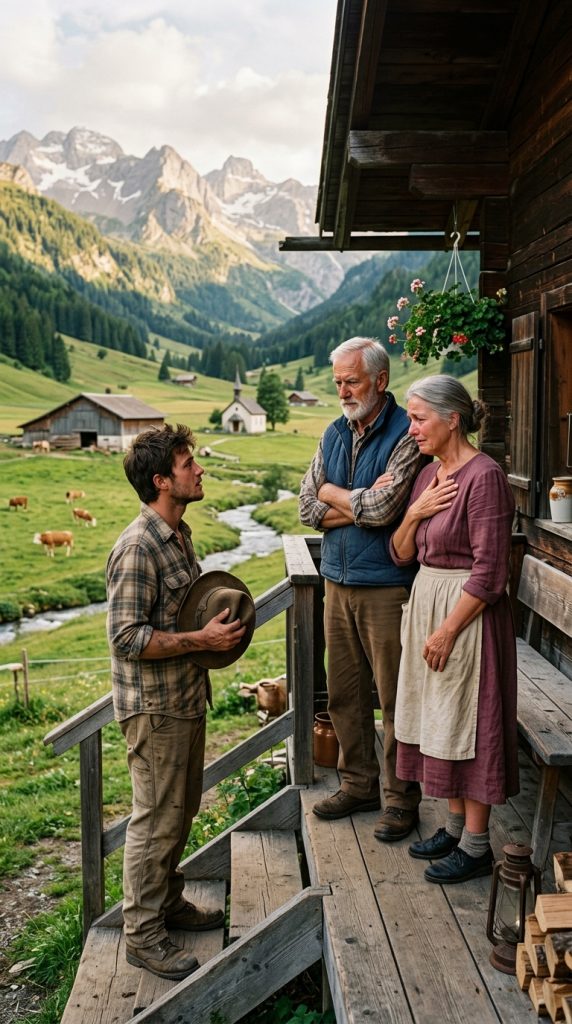
“I didn’t come here looking for work,” he said with tears in his eyes. “I came running from myself.”
Doña Luz approached and put a hand on his shoulder.
“Then you’ve run enough, son.”
The next day, Mauricio found tire tracks near the corral. He checked the gate and discovered that the lock hadn’t been broken by the storm: someone had cut it. Don Evaristo wanted to go confront Arturo, but Mauricio stopped him.
“Not without proof.”
The proof arrived that same afternoon. One of Arturo’s workers, scared and remorseful, showed up at the ranch. He confessed that he had been paid to open the corral and cause a tragedy. The idea was to make it seem that Don Evaristo could no longer take care of his land and pressure him into selling.
When Arturo returned with his folder and his smile, he found Don Evaristo, Doña Luz, Mauricio, and two municipal police officers waiting for him in the courtyard.
For the first time, the businessman lost his composure.
“This is an exaggeration.”
Mauricio stepped forward.
“No. The exaggeration was thinking that a family can be bought by taking advantage of their pain.”
Arturo was reported. His project was halted and, with the scandal, other ranchers in the area joined together to protect their lands. El Encino was no longer alone.
Weeks later, spring arrived. The pastures turned green again, the calves ran near the stream, and Doña Luz sang again while making tortillas. Don Evaristo walked with a cane because of his injured leg, but he smiled more than before.
One night, after dinner, he placed a folder on the table. Mauricio thought it was ranch accounts, but when he opened it, he was speechless.
“What is this?”
“A proposal,” said Evaristo. “Not to sell. To make you a partner.”
Mauricio shook his head.
“I can’t accept that.”
“Yes, you can.”
“I lost my father’s ranch.”
“And you learned from that pain,” replied the old man. “This ranch doesn’t need an employee. It needs someone who will love it when we can no longer take care of it alone.”
Mauricio looked at Doña Luz. Her eyes were shining.
“For years,” she said, “we thought this house had been waiting for someone who was never going to return. But sometimes God doesn’t return what we lost in the same form. Sometimes He sends someone different to teach us how to keep living.”
Don Evaristo swallowed hard. It was difficult for him to say what came next, but he said it:
“My son Emiliano would have been proud of you.”
Mauricio lowered his head. He couldn’t respond. He cried silently, as men cry who have carried too much and finally find a place to set down the weight.
That night he didn’t accept an offer. He accepted staying.
Months later, El Encino opened a small family cheese factory. Doña Luz served the customers, Don Evaristo told exaggerated stories to visitors, and Mauricio took care of the cattle with a patience that everyone admired. One day a young woman arrived at the ranch. It was Renata, his younger sister. She had received a letter from Doña Luz and decided to look for him.
Mauricio thought she had come to reproach him for the past. But Renata simply hugged him.
“It’s been enough losing each other, hasn’t it?”
He closed his eyes and hugged her as if recovering another part of his life.
At sunset, Don Evaristo saw Mauricio hang an old hammer in the restored shed, in the exact same place where Emiliano used to leave it years ago. The old man said nothing. He simply nodded.
Canela lay down by the door. The wind gently moved the mesquite trees. Doña Luz called everyone for dinner.
And Mauricio, who had arrived one morning with no roof, no family, and no forgiveness for himself, looked at the lit-up house and understood that some second chances don’t come with speeches or promises. They come with work, trust, and people willing to open the door when the heart had already gotten used to closing it.
The El Encino ranch was not saved by money. It was saved because someone decided to stay.
And in that Mexican land marked by absence, a family was born again.
