

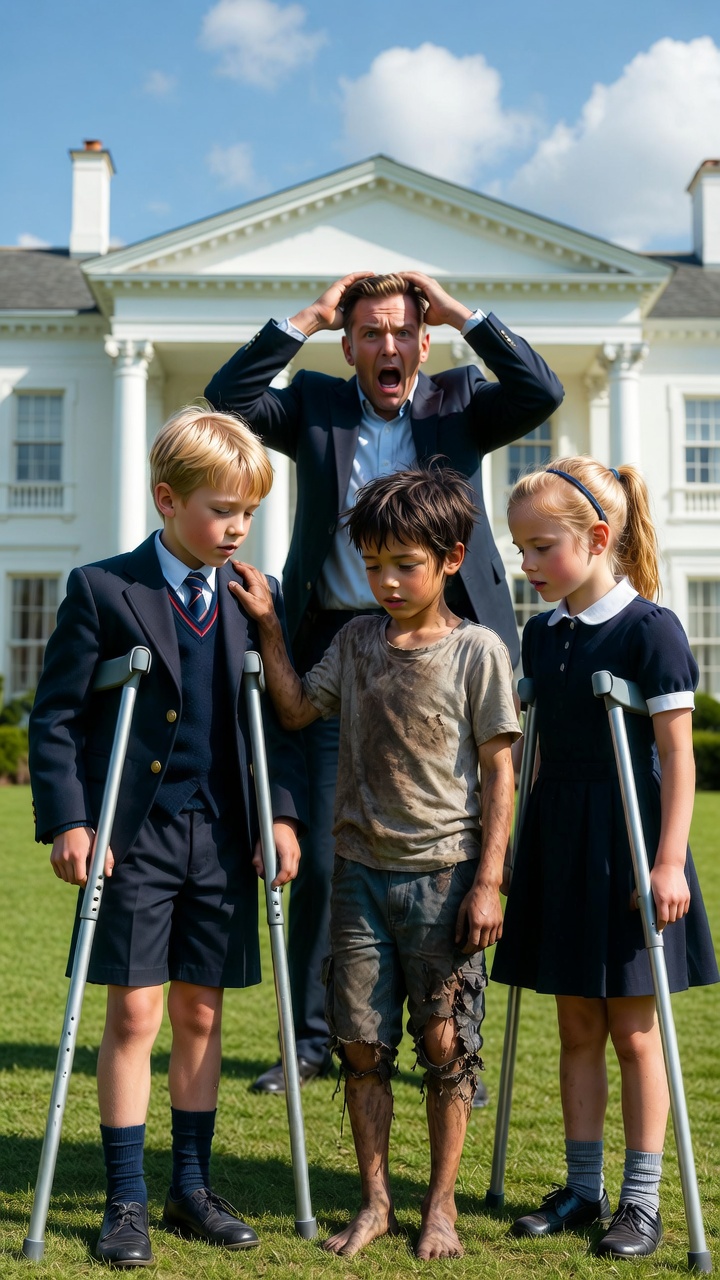
You wake before the city begins to move, your eyes opening to a pale sky and the hard surface beneath you.
A park bench is your bed, the open air your roof. You still whisper “Good morning,” as though someone might hear, and thank the silence for not leaving you.
Sitting up aches; hunger makes your small body feel even smaller. You are seven years old, and each morning you start the day believing—without quite knowing why—that you are not alone.
You wander to a cracked faucet near the square, splash cold water across your face, and drink carefully so none is wasted. You murmur a simple request to the air. “I need food today. If you can.” Then you walk into the waking streets as if you have somewhere important to be.
People pass you like you’re something in the way. Shoes rush by, eyes slide past. Some look irritated, most don’t look at all. You notice it, but you don’t grow bitter. Beneath the dirt and hunger rests a quiet certainty that your life still matters.
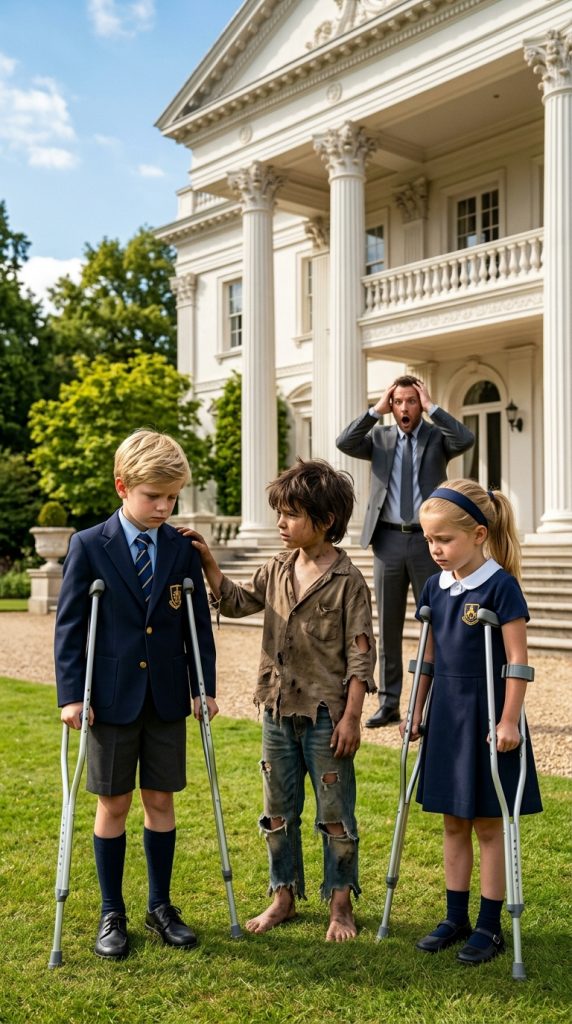
Across the city, Jonathan Reeves rises in a mansion that feels more like a tomb. At forty-four, wealthy and powerful, he carries a kind of exhaustion that money cannot cure.
His name commands respect, yet peace never answers it. The house remains silent until the sound that always breaks him reaches his ears—crutches scraping softly across marble.
His twins, Ethan and Lily, move through pain with stubborn grace. Three years ago, they could run. Three years ago, Jonathan was behind the wheel, distracted, chasing another deal. The crash changed everything. Doctors said the damage would never heal. He paid anyway, because guilt never asks about the cost.
His wife, Isabella, drifts through the house like a shadow. Pills cover her nightstand. They live side by side, sharing grief but never touching it. Even the staff lowers their voices. Samuel, the driver, still believes in faith. Jonathan no longer mocks it—he’s simply too tired.
Work becomes his escape. The car stops at a red light, and a soft knock interrupts his thoughts. He ignores it until Samuel lowers the window. “What do you need, son?”
“Food,” a thin voice answers.
Samuel offers his lunch. Jonathan glances over—and stops breathing for a moment. The boy is barefoot, painfully thin, but his eyes are clear. He accepts the food with quiet respect. “Thank you.” Then he looks straight at Jonathan and whispers, “Your kids will be okay.”
Jonathan’s breath tightens. No one knows his fear that way. He snaps, “Drive,” yet the words follow him all day like a rhythm he cannot silence.
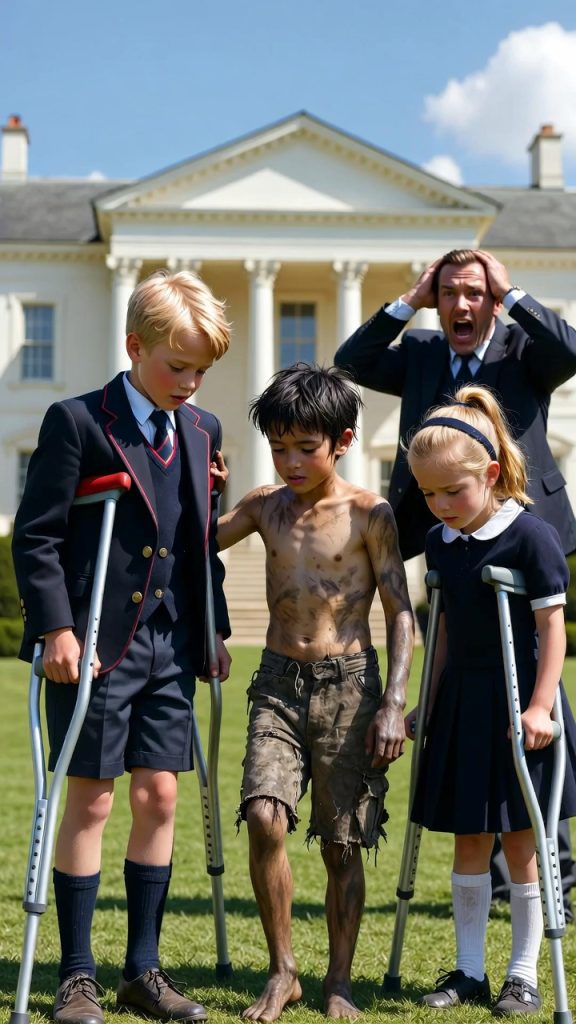
That evening, a charity gala fills the estate with light and laughter. Guests praise Jonathan for his resilience. Isabella stands beside him, hollow. Ethan and Lily move carefully among the crowd. Outside the gates, the forgotten still wait.
That’s when Jonathan notices the boy again, standing calmly near the entrance. His sister, Victoria Reeves, steps forward to remove him with polished cruelty. The twins see him first.
“What’s your name?” Lily asks.
“Daniel,” the boy replies.
Something draws them closer. Jonathan pushes through the crowd, irritated and exposed. Fueled by grief and alcohol, he laughs too loudly. “If you can heal my kids, I’ll adopt you.”
The laughter fades when Daniel calmly asks, “Can I try?”
He walks toward the twins carefully, kneels, and gently places his hands on their legs. The room holds its breath. Lily gasps. Ethan whispers, “I feel something.” A crutch falls. Then another. They stand. They walk. They fall into each other’s arms, crying.
Isabella sinks to the floor, sobbing. Samuel drops to his knees in prayer. Jonathan cannot move.
“What did you do?” Jonathan whispers.
“I asked for help,” Daniel answers.
Chaos erupts. Phones appear. Victoria’s smile turns sharp. Jonathan remembers his promise.
“I keep my word,” he says. “He stays.”
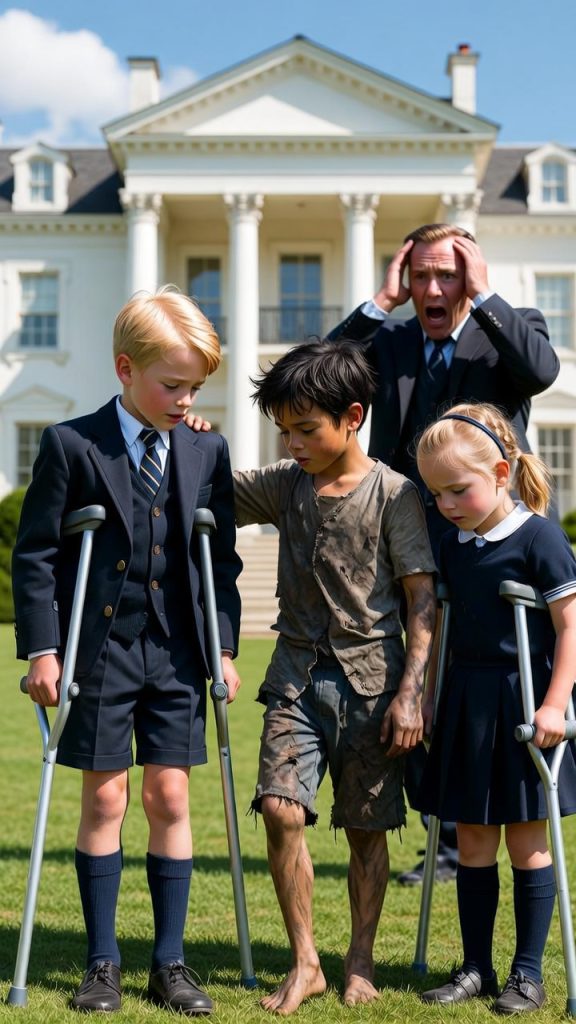
The battle that follows is fierce. Victoria challenges the adoption, calling Daniel a manipulator. Courtrooms replace ballrooms. Jonathan learns humility. Isabella speaks about the silence that once ruled their home. The twins talk about running again. Daniel never begs.
When Jonathan testifies, he does not defend his reputation. He confesses his failures. “This child didn’t manipulate me,” he says. “He reminded me how to be human.”
The decision arrives quietly. Adoption approved.
Isabella cries. The twins cheer. Daniel only smiles.
Life rebuilds slowly. The house breathes again. Jonathan learns gentleness. One night, Daniel gazes at the stars and says, “I used to thank the sky every morning. I believed someone was walking with me.”
Jonathan finally understands. The miracle wasn’t the healing of legs. It was the return of a heart that had forgotten the way home.
