

PART 4
And David was no longer carrying it alone.
His teaching record was reviewed, and the school that had dismissed him agreed to correct parts of its public account after receiving new evidence. The correction did not erase the damage, but it gave him something he had not possessed in years: a documented acknowledgment that the original accusations were not established facts.
A few months later, David received an interview offer from a community education program that worked with students who had fallen behind in traditional schools.
He wore a clean navy suit to the interview.
I helped him choose a tie, but I waited in the car while he went inside.
When he returned, his expression was unreadable.
“Well?” I asked.
He stood beside the passenger door for a moment.
Then he smiled.
“They offered me the position.”
I burst into tears.
He laughed softly.
“Madison, it’s a teaching job, not the presidency.”
“I know.”
I wiped my face.
“But it’s yours.”
He nodded.
“Yes. It’s mine.”
He began work two weeks later.
The salary was modest, the classrooms were crowded, and the building needed repairs. But he came home exhausted in the way people become exhausted after doing something meaningful.
He told me about students who finally understood a difficult lesson, about a girl who had started reading again after months of refusing to open a book, and about a boy who had decided he might actually graduate.
Each story restored a little more of the person he had been before my family took so much from him.
One evening, after a long day at the education center, we sat on a bench outside the building.
The sky over Dallas had turned a soft shade of orange.
David leaned back and closed his eyes.
“I forgot what it felt like to have somewhere to be in the morning,” he said.
I looked at him.
“What does it feel like now?”
He thought for a moment.
“Like I might have a future again.”
I swallowed the lump in my throat.
“You always deserved one.”
He turned toward me.
“Madison, I need you to understand something.”
I waited.
“I don’t want us to return to the way things were before.”
My heart tightened, but I nodded.
“I understand.”
“Our marriage ended for a reason. Even if your family hadn’t done what they did, we had problems. We allowed other people to influence us. And when things became difficult, we stopped trusting each other.”
I looked down at my hands.
“You’re right.”
“I can’t pretend that none of it happened.”
“I’m not asking you to.”
He studied my face.
“Then what are you asking for?”
I took a deep breath.
“A chance to know you again. Not as my husband. Not as the man I lost. Just as David.”
For several seconds, he remained silent.
Then he gave me a small, tired smile.
“That sounds possible.”
It was not a promise of reconciliation.
It was something better suited to the truth.
A beginning without guarantees.
The legal case against my family continued for many more months. Eventually, formal proceedings established that significant financial irregularities had occurred within the business and that certain documents had been falsified. My father and Andrew faced serious legal and financial consequences, while the company underwent restructuring and independent oversight.
Not every allegation ended in a conviction, and not every question received a clear answer. But the evidence was sufficient to dismantle the story my family had used to destroy David’s reputation.
The charitable foundation began recovering misused funds through legal agreements and asset recovery efforts. It established new controls to protect donations and ensure that future scholarships reached the students they were intended to help.
My father’s public reputation collapsed.
The same people who had once praised his generosity began distancing themselves from him.
Andrew’s business relationships unraveled.
My mother withdrew from several charity boards.
For the first time, the Parker name no longer opened every door.
I did not celebrate their humiliation.
I had once loved them without reservation, and part of me still grieved for the family I had believed we were.
But I no longer confused love with obedience.
When my mother eventually asked to see me, I agreed to meet her at a quiet restaurant.
She looked older than I remembered.
Without the polished smile she wore at charity events, she seemed smaller and more uncertain.
“I never thought things would end this way,” she said.
I stirred my tea.
“Neither did I.”
She stared at her hands.
“Your father believed he was protecting the family.”
“From what?”
“Exposure. Shame. Losing everything.”
I looked at her.
“And David?”
She closed her eyes.
“He became a problem.”
The words were quiet, but their meaning was unmistakable.
“You knew he was innocent?”
“I knew he had found something he shouldn’t have found.”
My chest tightened.
“And you let me divorce him believing he had betrayed me.”
She began crying.
“I thought you would be safer if you stayed away from him.”
“Safer from whom, Mom? David?”
She shook her head.
“From your father.”
For the first time, my mother admitted what she had spent years hiding.
She had known that my father could be ruthless. She had watched him silence employees, intimidate business partners, and manipulate situations to protect his interests.
She had convinced herself that those actions were necessary.
That his success justified the harm he caused.
And when David discovered the truth, she had chosen the family’s reputation over his life.
“I was afraid,” she whispered.
“So was David.”
She looked up at me.
“I know.”
I wanted to forgive her.
Part of me desperately wanted to reach across the table and return to the comforting belief that mothers always knew what was best for their children.
But forgiveness could not erase what had happened.
“I’m not ready to pretend everything is fine,” I told her. “Maybe someday we can build a different relationship. But it has to be honest.”
She nodded through her tears.
For once, she did not ask me to protect her from the consequences of her choices.
I left the restaurant feeling neither victorious nor relieved.
Only free.
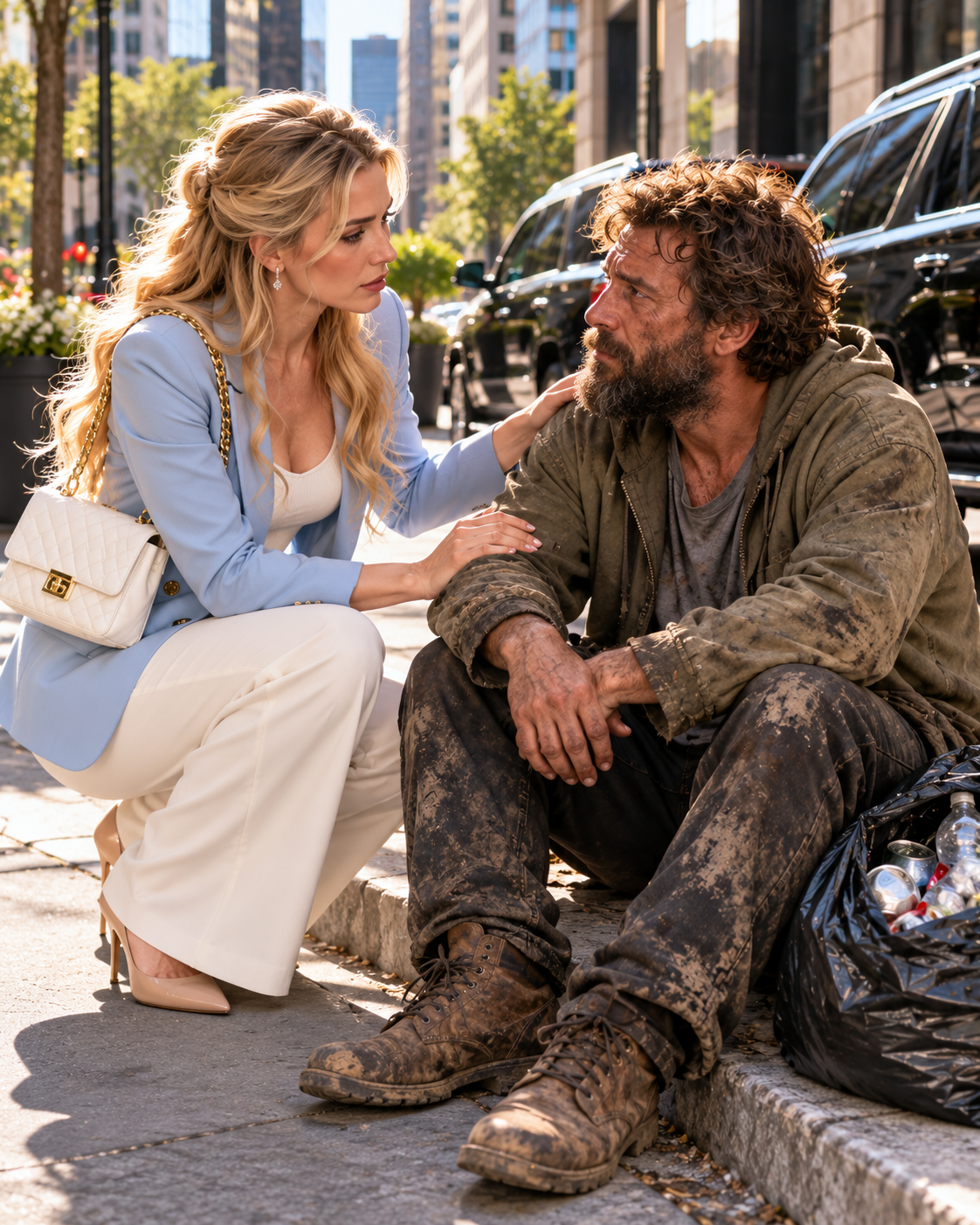
A year after I found David searching through trash, I returned to the street where our lives had collided again.
The summer heat was just as brutal.
Cars honked at the traffic lights.
Pedestrians hurried past the storefronts.
A man stood beside a garbage bin, collecting discarded cans.
For a moment, I remembered the way David had looked that afternoon: frightened, exhausted, and ashamed of being seen by the woman he had once loved.
Then my phone vibrated.
A message from David appeared on the screen.
The students surprised me with a birthday card today. One of them wrote that I’m the first teacher who ever made him believe he could graduate.
I think I’m keeping this job.
I smiled through my tears.
I typed back.
I think they are lucky to have you.
A moment later, another message arrived.
Coffee this weekend? My treat.
I laughed aloud.
It was such a small invitation.
A cup of coffee.
A quiet conversation.
No promises about the future.
No attempt to pretend that the past had never happened.
And yet, it meant more to me than any grand gesture could have.
Because David was no longer asking me to rescue him.
He was inviting me to meet him where he stood.
That weekend, we met at the same café where he had first told me to talk to my family.
He arrived wearing a clean shirt and a navy jacket. His beard was neatly trimmed, and there was a little more color in his face.
He looked healthier.
Not completely healed, but no longer disappearing beneath the weight of what he had endured.
When he saw me, he smiled.
“You’re early.”
“So are you.”
He laughed.
We ordered coffee and cinnamon rolls.
This time, David ate without rushing.
We talked about his students, my work, and the ordinary details of our lives. We spoke about the divorce, too, but without the desperate need to assign every hurt to one person.
There were things we still disagreed about.
There were wounds that would take years to heal.
But neither of us ran away.
When we finally stepped outside, the afternoon sun was beginning to soften.
David paused beside my car.
“Madison?”
“Yes?”
“I want you to know that I don’t regret protecting you.”
My eyes filled with tears.
“But I do regret believing that I had to do it alone.”
I reached for his hand.
“I wish you had trusted me enough to let me stand beside you.”
“I know.”
He squeezed my fingers gently.
“And I wish you’d trusted me enough to ask one more question before walking away.”
I lowered my head.
“I’ll carry that regret for the rest of my life.”
“Don’t turn it into a punishment,” he said. “Learn from it.”
I looked up at him.
For the first time, I understood that his greatest sacrifice had not been his money, his home, or even his career.
It had been his willingness to let me hate him if he believed that hatred would keep me safe.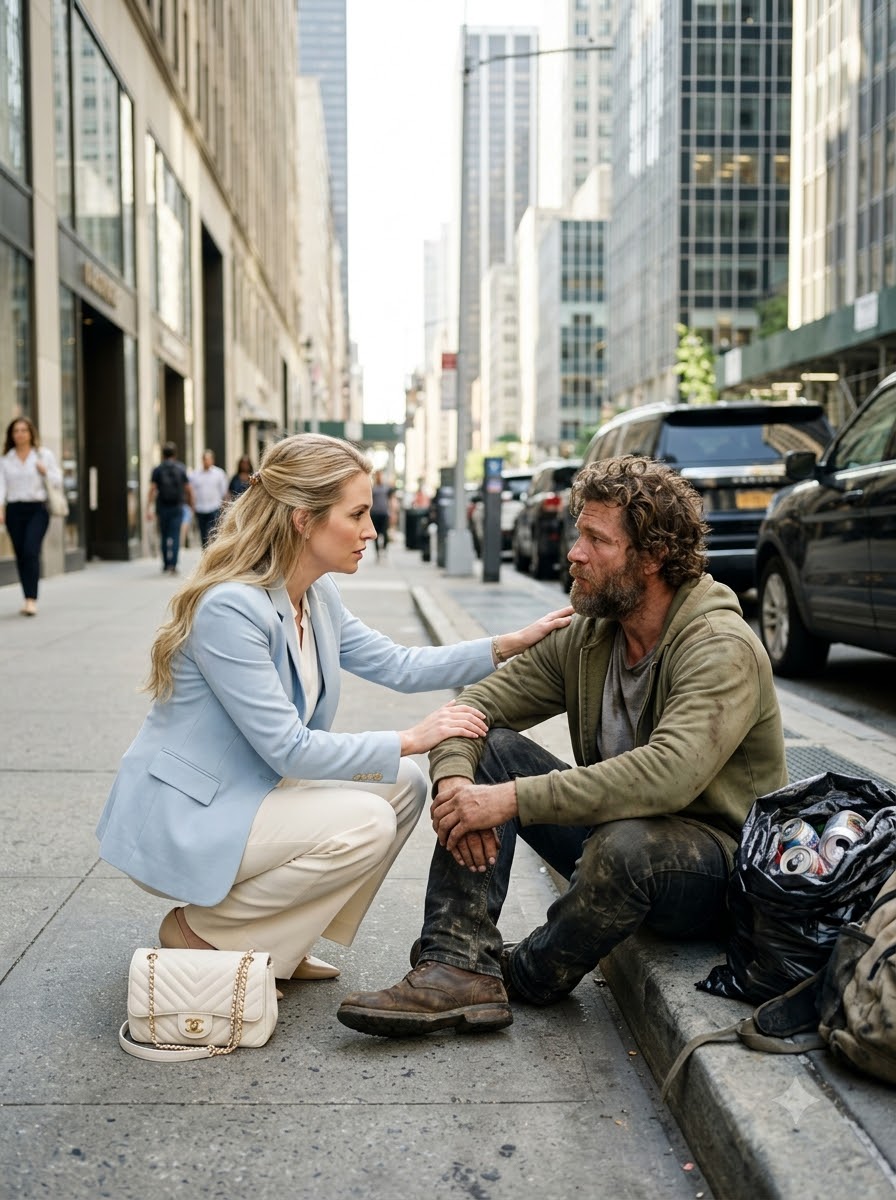
And my greatest mistake had not been marrying into a family that valued appearances.
It had been believing that love required me to ignore the truth when the truth became inconvenient.
David and I did not rush back into a relationship.
We spent months rebuilding trust, learning how to communicate without fear, and discovering who we had become after everything that happened.
Sometimes we had dinner together.
Sometimes we argued.
Sometimes we simply sat in comfortable silence.
Eventually, we began to speak about the future—not as a return to our old marriage, but as two people deciding whether they could build something healthier from what remained.
I never forgot the sight of David standing beside that garbage bin.
I never forgot the shame in his eyes when he thought I might see him as a failure.
And I never forgot the words he had spoken in that café.
“I did everything to protect you.”
For a long time, I had believed that my family was the foundation of my life.
Now I understood that a family name could be inherited, a fortune could be lost, and a reputation could be manufactured.
But character revealed itself through choices.
David had lost nearly everything because he refused to help powerful people bury the truth.
My family had nearly destroyed me because they believed their comfort mattered more than anyone else’s dignity.
And I had lost the man I loved because I trusted appearances more than the person who had stood beside me through everything.
Today, David still teaches.
He rents a small apartment, drives an old used car, and spends his weekends helping students who remind him of the children he once struggled to protect.
He isn’t wealthy.
He doesn’t attend glamorous charity galas.
His name no longer appears in society magazines.
But when he walks into a classroom, young people sit a little straighter because they know he believes in them.
And when he comes home at the end of the day, he knows he has earned his place in the world.
As for me, I have learned to ask questions, to demand evidence, and to recognize that loyalty without honesty is simply another form of control.
I don’t know exactly what the future holds for David and me.
But I know that the next chapter will not be built on secrets, threats, or the fear of disappointing the people who raised me.
It will be built on truth.
And if there is one lesson I will carry with me for the rest of my life, it is this:
Sometimes, the person everyone tells you to distrust is the only one who has been trying to protect you.
And sometimes, the people who claim to love you most are the very ones you must find the courage to stand up against.
THE END
