


Part 1: My Husband Gave My Bedroom to His Sister While I Lay in the Hospital, Then Told Me to Stop Complaining
“Your things are in the garage, Rebecca. Vanessa and her family need the master bedroom.”
Those were the very first words my husband spoke to me after I came home from six days in the hospital.
I was standing in our front doorway with my discharge papers gripped in one hand and a small overnight bag hanging from the other. After my abdominal surgery, my surgeon had warned me not to lift anything heavy, yet my husband had apparently decided I didn’t deserve a bedroom in my own house at all.
My name is Rebecca Collins. I’m forty-six years old, an accountant in Charlotte, North Carolina, and at that point I had been married to Michael for twenty-one years.
Until that afternoon, I had honestly believed our marriage had problems we could still work through. Then I stepped into my living room.
My family photographs were gone from the walls. Cardboard boxes were stacked all along the hallway, and my sister-in-law, Vanessa, was giving orders to two movers who were hauling out our bedroom furniture.
“Careful with that dresser,” she called. “Put it in the garage with the rest of Rebecca’s stuff.”
I stared at her, unable to make sense of what I was seeing. “Why are you moving my furniture?”
Vanessa turned around, looking more annoyed than startled. “Oh, you’re home already. Michael said you wouldn’t be discharged until tomorrow.”
“I was discharged this morning. What’s going on?” She traded a quick glance with my husband, the kind of look two people share when they have already agreed on a story.

Michael stepped forward. “Vanessa and her family are staying here for a while. They’ve been having financial problems, and we have plenty of space.”
“Then why are my belongings in the garage?”
“Because they need the bigger bedroom. There are four of them, Rebecca.”
I glanced toward the staircase, my heart beating harder than it should have after a week of recovery. “You moved my things without asking me?”
Michael sighed as though I were the one being unreasonable. “You’ve been in the hospital all week. Somebody had to make decisions.”
A sharp ache bloomed beneath my surgical bandage. For twenty-one years I had covered most of our household expenses, paid our daughter’s school fees, and kept our finances in order while Michael drifted from one sales job to the next. I had never once held any of it over his head.
And yet there he was, standing in the house my father had left me, explaining why his sister deserved my bedroom more than I did.
Vanessa folded her arms across her chest. “Honestly, Rebecca, you’re making this unnecessarily difficult. We’re family. You should be grateful Michael is helping his sister.”
“Helping her doesn’t mean giving away my bedroom.”
Michael’s expression hardened. “After twenty years of marriage, this is my house too. You don’t get to make every decision just because your father bought it.”
My father had bought that house long before I ever met Michael. When he died eight years earlier, he had arranged for the property to remain in a family trust. Michael knew Dad had left the house to me, but he had never shown much interest in the legal paperwork. Apparently he had convinced himself that living there made him the owner.
Vanessa pointed toward the small guest room off the downstairs hall. “You can sleep there until you’re feeling better. The children need space upstairs.”
I looked at my husband and waited for him to object. I waited for him to say that his wife had just come out of surgery and deserved her own bed.
He didn’t. Instead, he picked up his car keys from the table. “I’m taking Vanessa to get groceries. Try not to upset everyone while we’re gone.”
They walked out and left me standing beside the staircase, my bag still hanging from my hand. I wanted to cry, but I was far too exhausted even to argue.
Slowly, I made my way into the guest room. Someone had propped a narrow folding bed against the wall. My medications sat in a plastic grocery bag beside it, along with two changes of clothes. Everything else I owned had been packed away somewhere I couldn’t see.
I lowered myself onto the edge of the bed, careful not to pull at my stitches. That was when my phone began to ring.
It was Emma, my nineteen-year-old daughter, calling from college. “Mom, are you home? Dad told me Aunt Vanessa was moving in.”
“Yes, sweetheart.”
There was a pause on the line, one long enough that I knew something was wrong. “Mom, there’s something you should know. Dad and Aunt Vanessa were talking about Grandpa’s house while you were in surgery.”
I sat up straighter, ignoring the pull in my abdomen. “What were they saying?”
“They mentioned the bank. And Aunt Vanessa said they needed your signature before anyone started asking questions.”
My stomach tightened into a knot. When the call ended, I pushed myself up and walked down the hall to Michael’s home office.
A folder lay open on his desk. The first page carried the name of a lending institution, our home address, and a proposed loan amount of $420,000. Below that was a section labeled Property Owner Authorization, and my name was already printed there.
I photographed the page, then set the folder back exactly as I had found it. For the first time since walking through the front door, I understood that Vanessa hadn’t taken my bedroom simply because she needed somewhere to stay.
I returned to the guest room, dug an old business card out of my purse, and dialed the attorney who had helped my father establish his trust. When David Mercer answered, I told him what I had found. He asked me to send the photograph right away, and I did. Then I sat beside the folding bed and waited while he studied the document.
David called back twenty minutes later. “Rebecca, I need you to listen carefully. Have you signed anything concerning your father’s house recently?”
“No. Why?”
“Because someone appears to be preparing a substantial loan using that property as collateral.”
I looked toward the closed guest room door. “Michael says the house belongs to both of us because we’ve been married for twenty-one years.”
“That doesn’t give him authority to mortgage it,” David replied. “Your father placed the property in a trust, and you became its successor trustee after his death. Any transaction involving the house must comply with the trust documents.”
I remembered sitting in David’s office eight years earlier, struggling to follow the papers my father had prepared. Dad had been a careful man. He had worked as a civil engineer for nearly forty years and had purchased our Charlotte home before I was born.
Shortly before his death, he had insisted on reviewing his estate plan. “I want you to have something that remains yours, Rebecca,” he had told me. “No matter what happens in your marriage, you’ll always need somewhere safe to live.”
At the time, I had thought he was being overly cautious. Now I understood exactly why he had worried.
David asked me to email every page I could safely get from the folder. He also advised me not to confront Michael until we knew what had been submitted to the lender.
The following morning, while Michael drove Vanessa’s children to school, I photographed the rest of the documents. The proposed loan was for $420,000. Michael was listed as the applicant, and the paperwork named the house as security for the debt.
But something else caught my eye. In the section describing the purpose of the loan, someone had written business consolidation and expansion.
Michael didn’t own a business. Vanessa did.
Three years earlier, she had opened a home renovation company with her husband. She was always talking about large contracts and expensive clients, but lately she had been complaining that customers weren’t paying their invoices.
I sent every page to David. An hour later, Emma called again. “Mom, did you find anything?”
I told her about the proposed loan, and she went quiet. “That’s what they were talking about.”
“What do you mean?”
“Dad and Aunt Vanessa were in the kitchen the night before your surgery. I heard Aunt Vanessa say she couldn’t keep her business open unless they found four hundred thousand dollars.”
My fingers tightened around the phone. “Did Dad say anything?”
“He told her not to worry because the house was worth more than enough.”
Emma hesitated, and I could hear her breathing. “Then Aunt Vanessa asked what would happen if you refused to sign.”
My chest went tight. “What did he say?”
“He said you wouldn’t have to worry about it.”
I sat there without moving. While I had been preparing myself for an operation that frightened me, my husband had apparently been discussing how to use my inheritance.
That afternoon brought another shock. While checking an old email account I rarely opened, I found a message from a lending company asking for additional verification of the property’s ownership. It had arrived four days earlier, while I was still in the hospital, and it carried a reference number that matched the papers on Michael’s desk.
I forwarded it to David. He contacted the lender through its official channels, explained that he was counsel for the trustee, and asked that the application be flagged while the ownership and authorization documents were reviewed. He also told me to keep the email and not to open any unfamiliar attachments.
By evening, Michael was home. He found me at the kitchen table with my medication and a glass of water.
“Vanessa says you were asking questions about her business,” he said.
“I asked why she’s moving into our bedroom.”
“She lost a major contract. I’m trying to help her get back on her feet.”
“By borrowing against my father’s house?”
His face changed. “Who told you that?”
“I found the loan application.”
Michael pulled out a chair and sat across from me. “Rebecca, you’re making this sound worse than it is. We have equity sitting in this house doing nothing while my sister is struggling.”
“It’s not money sitting around waiting for you to spend.”
“We’re married. We’re supposed to help each other’s families.”
“Then why didn’t you ask me?”
He looked away. “Because you would’ve said no.”
For a moment, neither of us said anything. The refrigerator hummed behind him. Then Michael leaned forward. “Vanessa needs this money. If her business collapses, she’ll lose everything. You can’t be that selfish.”
I looked at the man I had spent twenty-one years trusting. He wasn’t apologizing for planning to use my inheritance without my permission. He was angry that I had found out.
The next morning, David called with an update. The lender had acknowledged the disputed authorization and paused its review until the facts could be verified. It had also supplied a copy of a document submitted in support of Michael’s application, and David sent it to me through a secure link.
At the top were the words Limited Power of Attorney. At the bottom was a signature that looked disturbingly like mine.
The document was dated three days earlier, when I had still been lying in a hospital bed.
I stared at that signature for several minutes while the room seemed to tilt around me. Someone had submitted a paper claiming I had given Michael permission to act on my behalf.
And I knew with absolute certainty that I had never signed it.
Part 2: My Husband Used My Hospital Stay to Forge My Signature, Then My Daughter Revealed What She Overheard
The signature on the power of attorney looked almost exactly like mine. Someone had copied the way I curve the first letter of my name and join the last two letters together.
But it was the date beneath it that frightened me most. According to the document, I had signed it at two-thirty on a Tuesday afternoon, at the very moment I had been recovering from surgery, barely able to sit upright without help.
I called David immediately. “Someone forged my signature.”
“That’s a serious possibility, Rebecca. But we need to establish exactly how this document was prepared and submitted.”
He explained that the paper claimed to authorize Michael to handle certain financial transactions involving the house. It also carried a notarial certificate, although David had already spotted discrepancies that needed further investigation.
“Don’t discuss the signature with Michael yet,” he advised. “Let’s secure the records first.”
The next morning, I contacted the hospital’s medical records department and requested documentation of my treatment and recovery. I also asked whether the hospital kept visitor records or anything else that could show who had been with me that afternoon.
By lunchtime, Emma had arrived unexpectedly from college. She found me in the downstairs guest room, surrounded by medication bottles and paperwork.
“Mom, why are you sleeping in here?”
“Your aunt needed the master bedroom, apparently.” Emma stared at the folding bed. “You just had surgery. Why would Dad let them do this?” I tried to reassure her, but she was already pulling out her phone.
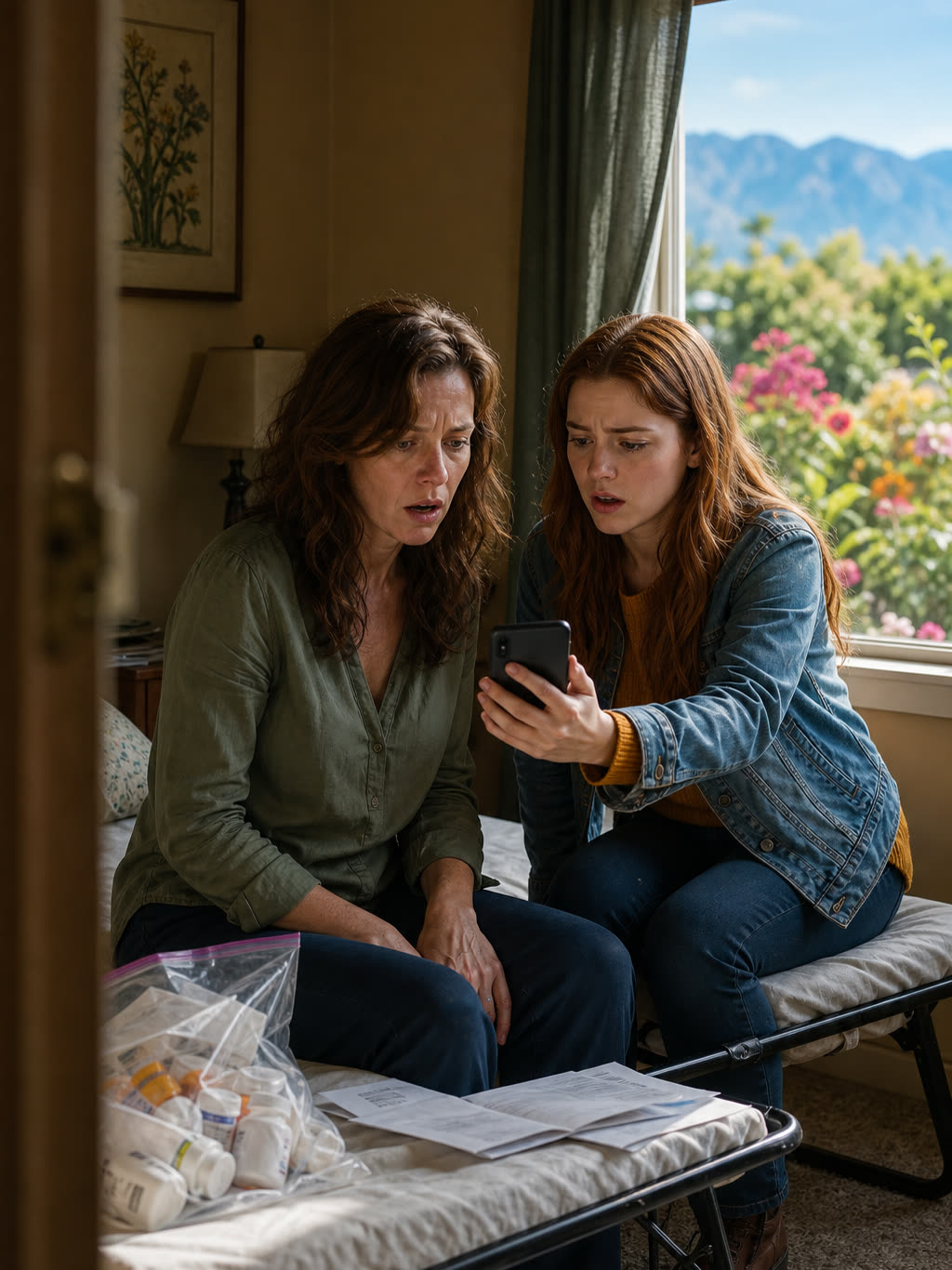
“There’s something else I need to tell you.”
She showed me a message Michael had sent her while I was in the hospital. Bring your mother’s laptop when you visit tomorrow. I need to check some household documents.
Emma explained that she had taken my laptop to the hospital, but Michael had met her before she reached my room and collected it from her.
“He said you were sleeping and he’d give it back later.”
“Did he?”
“No. I found it in his office when I came home yesterday.”
I looked toward the hallway. My laptop held scanned copies of my identification, my financial records, and old documents from my father’s estate. Michael knew the password because I had trusted him with it years ago.
Emma sat down beside me on the narrow bed. “Mom, I heard Aunt Vanessa talking to Dad that night.”
“What did she say?”
“She said once the bank approved the loan, you wouldn’t be able to make them leave because the house would be tied to the debt.”
I felt my stomach clench. “Are you sure?”
Emma nodded. “Dad told her to stop worrying. He said you were too exhausted to question anything.”
For several seconds I couldn’t speak. My husband hadn’t merely taken advantage of my absence to move his sister into our home. He had apparently counted on my illness to keep me from discovering what they were doing.
That afternoon, David arranged for the relevant records to be preserved and advised me to report the suspected misuse of my identity through the proper channels. He also contacted the lender’s fraud department with the disputed document and the supporting information.
Two days later, my hospital records arrived. They confirmed that I had been receiving postoperative care on the afternoon the power of attorney was supposedly signed. They did not, on their own, prove who had written the signature, but they gave David important evidence to work with.
He also obtained confirmation that the lender had suspended the application while it carried out its review.
I was reading his email when Michael walked into the guest room.
“Vanessa says the bank won’t return her calls,” he announced. “Did you interfere with the loan?”
“I told them I never authorized it.”
His expression darkened. “You had no right to do that without talking to me.”
I stared at him in disbelief. “You submitted paperwork using my name.”
“We’re married, Rebecca. I was trying to help my sister.”
“Did you sign my name on that power of attorney?”
He looked toward the window. “Vanessa handled most of the documents.”
“That wasn’t my question.”
Michael rubbed his forehead. “Do you understand what happens if she loses her business? Her employees could lose their jobs.”
“Then she needs to deal with her creditors. She doesn’t get to use my father’s house without my consent.”
He stood up abruptly. “You’ve always cared more about that property than about my family.”
I looked at the folding bed, the medication beside it, and the boxes of my belongings visible through the garage door. “Your family moved me out of my bedroom while I was recovering from surgery. And you’re calling me selfish?”
Michael didn’t answer. He walked out of the room and slammed the door behind him.
That evening, Emma helped me carry some of my personal belongings back into the house. We were careful not to disturb Vanessa’s things while David reviewed the proper steps for dealing with the living arrangements.
For the first time since leaving the hospital, I didn’t feel completely alone.
The next morning, David called with another update. The lender had found an additional document that showed where the proposed loan money was supposed to go.
A substantial portion was earmarked to pay debts owed by Vanessa’s renovation company, including several overdue commercial accounts. David sent me the payment schedule, and I recognized Vanessa’s business name at once.
Then I noticed something else. The document had been prepared nearly three weeks before my surgery.
Michael and Vanessa hadn’t come up with this plan while I was lying in a hospital bed. They had been arranging it long before I ever became ill.
And while I was getting ready for an operation that terrified me, my husband had been getting ready to use my father’s home to rescue his sister’s failing business.
I read the date again, then a third time, and slowly pushed the laptop away. My hands were shaking. I had no idea yet how far the two of them were willing to go now that the bank had stopped answering their calls, but I understood one thing clearly: they would not let this go quietly.
Part 3: My Husband Called Me Selfish for Protecting My Home, Until the Bank Exposed His Sister’s Plan and I Took Back My Life
Three days after David uncovered the payment schedule, Vanessa marched into the kitchen while I was making breakfast. “You’ve ruined everything,” she announced, dropping a stack of unpaid bills onto the counter.
I was still recovering from surgery, and standing for long stretches made my abdomen ache. Vanessa barely glanced at the medication beside my coffee.
“The bank won’t approve our loan because you reported those documents,” she went on. “Do you understand what you’ve done to my family?”
I turned to face her. “Your loan? Vanessa, you were trying to borrow $420,000 against a house you don’t own.”
“Michael said we could use it!”
“Michael doesn’t own it either.”
She stared at me as though I had said something outrageous. “We’ve been family for twenty-one years, Rebecca. I thought that meant something.”
“It does. But being family doesn’t give you permission to sign my name or put my home at risk.”
Vanessa’s expression hardened. “My company is going under. I owe suppliers nearly $180,000, and the bank is threatening to collect on another business loan.”
For the first time, she admitted how serious her money troubles really were. She had accepted deposits for renovation projects, fallen behind on materials, and borrowed more money just to keep the business running. The $420,000 loan was supposed to pay off those debts and leave enough cash to continue working.
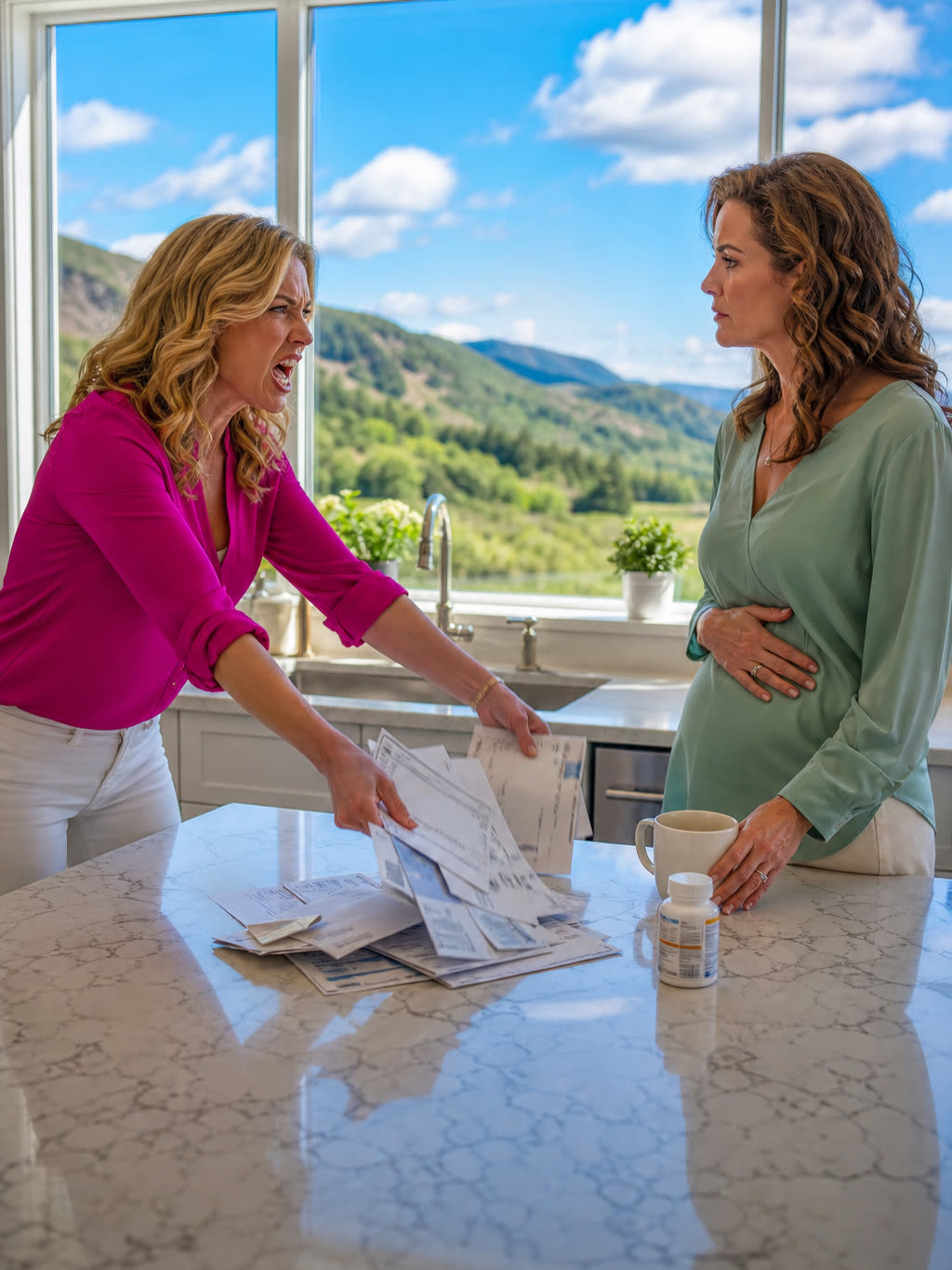
I listened without interrupting. Then I asked the question that had bothered me since the moment I found the paperwork.
“Why didn’t you tell me you needed help?”
Vanessa looked away. “Because Michael said you’d refuse.”
“So instead of asking, you decided to use my house.”
She didn’t deny it.
That afternoon, David called with news from the lender’s fraud department. The bank had confirmed that the disputed power of attorney could not be relied on to authorize the transaction. The application would not move forward, and the lender was keeping the submitted records for further review.
There were also questions about the notarial certificate and the circumstances under which the document had been prepared. David explained that those matters would be referred through the appropriate investigative channels.
“Does this mean Michael and Vanessa will be arrested?” I asked.
“Not necessarily,” he replied. “We have evidence that warrants investigation, but determining responsibility is a separate process.”
I appreciated his honesty. I had no interest in making accusations I couldn’t prove. I wanted the truth established, my identity protected, and my father’s house secured.
David also confirmed that he had begun preparing the documents needed to address my marriage and the living arrangements.
Because Michael had lived in the house for more than two decades, David warned me not to change the locks or try to remove his belongings without following the proper process. I agreed. I had already spent enough years living with decisions Michael made without consulting me, and I wasn’t going to repeat his behavior.
That evening, Michael came home and found Emma helping me sort paperwork in the dining room. Vanessa stood beside him, visibly upset.
“Rebecca, we need to settle this,” Michael said.
“I’ve already told the bank I didn’t authorize the loan.”
“Vanessa could lose everything because of you.”
Emma looked up from the papers. “Dad, Aunt Vanessa’s business isn’t Mom’s responsibility.”
Michael turned toward her. “Emma, stay out of this.”
“No.”
Her answer surprised both of us.
“Mom was in the hospital,” Emma continued. “You moved her things into the garage, gave away her bedroom, and tried to borrow money against Grandpa’s house without asking her.”
“I was trying to help my sister.”
“Then why did you need Mom’s signature when she hadn’t agreed?”
Michael fell silent.
Vanessa stepped forward. “You don’t understand how hard things have been for us.”
Emma looked straight at her aunt. “Mom just had surgery. Did either of you ask how hard things were for her?”
Neither of them answered. Beneath the table, I reached for Emma’s hand.
For years I had tried to keep my disagreements with Michael away from our daughter. Now she was nineteen, old enough to see what had happened without anyone having to explain it to her.
Michael finally sat down. “What do you want from me, Rebecca?”
“I want you to stop making decisions about my property without my consent. And I want us to separate.”
He stared at me. “After twenty-one years, you’re ending our marriage over one loan?”
“No, Michael. I’m ending it because you used my illness as an opportunity to take something you knew I wouldn’t give you.”
His face shifted. For a moment, I thought he might apologize. Instead, he looked toward Vanessa. “We’ll figure something out.”
In that instant I realized he was still more concerned with rescuing his sister than with understanding what he had done to me.
Over the next two weeks, David helped me begin the separation process and address the disputed use of the house. Michael sought legal advice of his own, and arrangements were made for him and Vanessa’s family to move their belongings out without any confrontation.
The investigation into the loan documents continued on its own track. One afternoon, David sent me confirmation that the lender had closed the application without advancing any funds. I printed the notice and slipped it into the folder that held my father’s trust documents.
The house was no longer being considered as collateral for Vanessa’s debts.
But the larger change was taking place inside me. I had spent twenty-one years believing that protecting my marriage meant making room for everyone else’s needs. Now, while I was still healing, I was finally learning that protecting myself mattered too.
When Michael began packing his things, I knew I would not ask him to stay.
The morning he moved out, I found him in the hallway holding a cardboard box of family photographs. In his hand was a picture from our twentieth wedding anniversary. We were smiling beside a birthday cake, and Emma stood between us with her arms around our shoulders.
“Twenty-one years, Rebecca,” he said quietly. “Are you really going to throw all that away?”
I looked at the photograph. “I didn’t throw our marriage away, Michael. I trusted you to take care of me when I was sick. Instead, you gave my bedroom to your sister and tried to use my father’s house without my permission.”
He lowered the picture. “I thought I could fix Vanessa’s problems before you found out.”
“That was the problem. You thought hiding things from me was easier than respecting my decisions.”
For once, he didn’t argue.
Vanessa and her family had already moved into a rental house across town, and Michael had arranged to stay in a nearby apartment while we worked through our separation. The arrangements had taken several weeks, with attorneys helping us sort out the practical and legal details. There had been no dramatic scene at the front door. There were only boxes, moving trucks, and the uncomfortable realization that the life we had built together was ending.
Before leaving, Michael paused beside the staircase. “I never thought you’d actually leave me.”
“I didn’t think you’d ever treat me this way.”
He nodded slowly, carried his box outside, and drove away. I closed the door behind him.
For several minutes, I stood in the quiet hallway listening to the refrigerator hum in the kitchen. Then I went upstairs.
My bedroom was empty except for the bed frame and a few boxes Vanessa had left behind. The curtains I had chosen years earlier still hung beside the windows. I opened them and let the afternoon sunlight pour into the room. For the first time since my surgery, I felt as if I could breathe easily in my own home.
Over the following months, I kept healing and returned to work part-time. David helped me complete the steps needed to protect the trust’s records and address the unauthorized loan application. The lender confirmed that no money had been advanced against the property. The disputed documents remained part of an ongoing investigation, and I provided information whenever the proper authorities asked.
I didn’t know exactly what consequences Michael and Vanessa would eventually face. But I no longer needed to control that outcome. My responsibility was to protect myself and make sure my father’s home would never again be used without proper authorization.
Emma came home from college one Saturday in early spring and found me in the garage, going through the boxes Michael and Vanessa had moved there while I was hospitalized.
“Mom, you shouldn’t be lifting those,” she said, hurrying over.
“I’m only looking through them.”
She sat beside me and opened a dusty cardboard box. Inside were old family albums, Christmas decorations, and several framed photographs. Near the bottom, wrapped in a faded blue towel, was a picture of my father standing in front of the house shortly after he bought it.
He looked about thirty-five, wearing a plaid shirt and smiling proudly beside the front steps. I turned the frame over, and there was a handwritten message on the back.
Rebecca, may this always be a place where you feel safe. Love, Dad.
I read it twice before tears blurred the words. Emma leaned against my shoulder. “Grandpa really loved this house.”
“He did,” I whispered. “But I think he loved knowing I’d always have somewhere to go even more.”
We carried the photograph inside and set it on the mantel. That afternoon, Emma helped me rearrange the living room. We hung the family photographs back on the walls, moved my favorite reading chair beside the window, and cleared the guest room of everything that reminded me of those miserable days after my surgery.
I decided to turn it into a small home office. For years I had worked at the dining room table while Michael complained about my paperwork taking up space. Now I could have a room of my own.
A few weeks later, Emma visited again. We spent the morning planting flowers along the front walkway. My doctor had cleared me for more activity, although Emma still insisted on carrying the heavy bags of soil.
As we worked, she asked whether I regretted ending my marriage. I thought carefully before answering.
“I regret that your father and I couldn’t build the marriage I believed we had. But I don’t regret protecting myself.”
Emma nodded. “I used to think being married meant you had to forgive everything.”
“So did I, sweetheart.” I brushed the dirt from my gloves. “But forgiveness doesn’t mean allowing someone to keep hurting you. And loving your family doesn’t mean giving them everything they demand.”
She smiled. “I think Grandpa would be proud of you.”
I looked toward the house. For most of my adult life, I had tried to be a good wife, a good mother, and a dependable member of Michael’s family. Somewhere along the way, I had begun treating my own needs as inconveniences.
My surgery had frightened me because it reminded me how quickly life can change. But coming home to find my belongings in the garage had taught me something just as important. I could spend the rest of my life waiting for Michael to respect me, or I could begin respecting myself.
That evening, after Emma left, I made a cup of tea and carried it upstairs. The bedroom was peaceful. Fresh sheets covered the bed, the windows stood open, and the photograph of my father rested on the dresser. I sat beside the window and watched the last sunlight settle over the backyard.
The house still held painful memories. I couldn’t erase the afternoon Michael told me I no longer had a say in my own home, or the fear I felt when I discovered the documents bearing my signature. But those memories no longer controlled what happened next.
My father had left me a place where I could feel safe. It had taken me years to understand that protecting that gift also meant protecting the woman he had given it to.
And as I turned off the bedroom light that night, I knew I would never again apologize for wanting peace in my own home.
Disclaimer: This story is a work of fiction inspired by real-life themes. Names, characters, places and events are fictionalized, and any resemblance to real persons is purely coincidental. Images are for illustration purposes only.
