

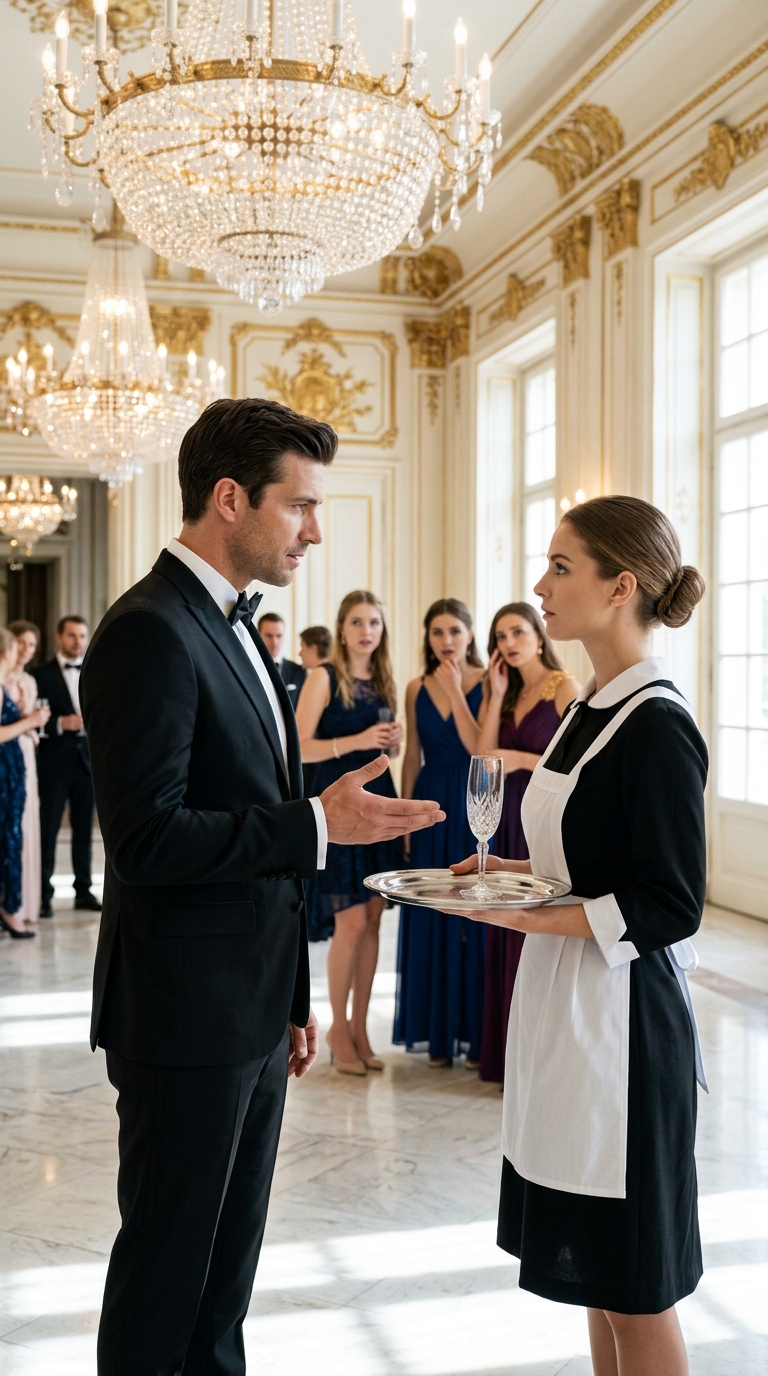
The Grand Ballroom of the Montoro Palacio shimmered under a thousand crystal droplets suspended from the ceiling, each one catching the light like captured stars. It was the night of the annual Montoro Charity Ball, the most anticipated event on Madrid’s social calendar. Diplomats, industrialists, old aristocratic families, and the new wave of tech billionaires had gathered beneath the frescoed ceilings painted by Goya’s students two centuries earlier. Champagne flowed from fountains carved in the shape of leaping stags, and the orchestra—imported from Vienna—played with the precision of a Swiss watch. This was more than a party; it was a throne room where alliances were forged, marriages arranged, and the future of empires quietly negotiated.
Adrián Montoro, thirty-six years old and the sole heir to one of Spain’s oldest fortunes, stood at the center of it all like a man carved from marble. Tall, dark-haired, with the sharp jawline and stormy gray eyes that had graced the covers of every European business magazine, he had spent the evening moving through the crowd with practiced charm. Yet beneath the tailored tuxedo and the easy smile, something restless stirred inside him. For eighteen years he had lived as though half his soul had been amputated on the night of his eighteenth birthday. Elina’s death had left a wound that wealth could not suture and time had only deepened. He smiled at the right people, signed the right checks, and shook the right hands, but joy had become a foreign language.
Until tonight.
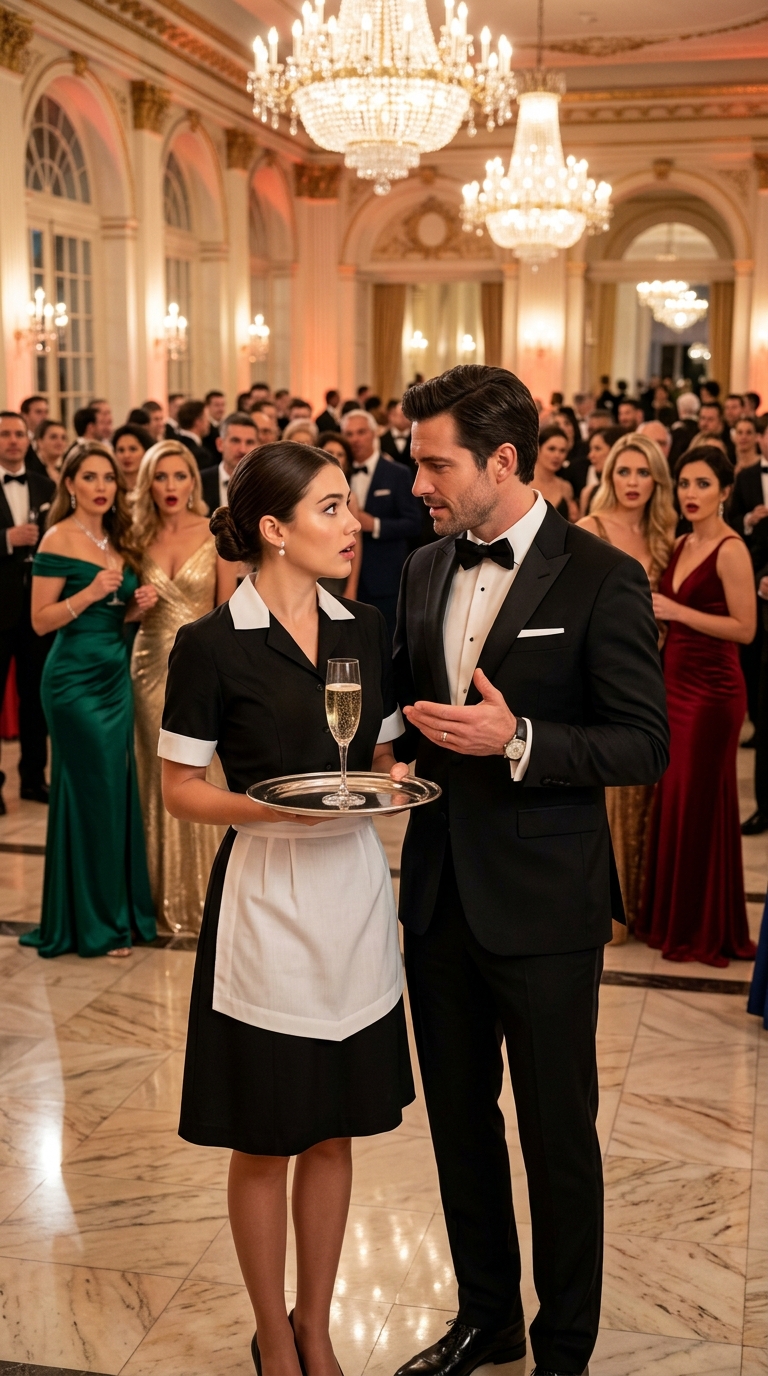
He had noticed her earlier, moving along the edges of the ballroom like a shadow in plain sight. Lía Vega wore the simple black uniform of the household staff: crisp white apron tied at her waist, dark hair pulled into a neat knot at the nape of her neck, a silver tray balanced on one palm. She was twenty-three, or so the employment records said, and she had worked in the Montoro household for the past two years—quiet, efficient, never once drawing attention to herself. Yet something about the way she carried herself tonight, the quiet dignity in her posture as she refilled glasses without a single wasted motion, pulled at him like gravity.
He crossed the marble floor before he could talk himself out of it.
Lía had just set down a tray of crystal flutes when she felt the shift in the air. The chatter around her dimmed. She looked up and found Adrián Montoro standing directly in front of her, his presence so commanding that the rest of the room seemed to recede.
“Will you dance with me?” he asked, voice low and steady, the six quiet words slicing through the evening like a blade through silk.
The ballroom froze.
Every head turned. Heiresses in couture gowns—some of whom had spent months angling for this very invitation—stared in open disbelief. A duchess actually gasped. Adrián’s mother, Doña Beatriz Montoro, went pale beneath her perfectly applied makeup, her diamond choker suddenly looking like a noose. Board members exchanged sharp, calculating glances; this was not the calculated image the Montoro empire projected. Whispers rippled outward like stones dropped into still water.
But Adrián saw only Lía.
Her hazel eyes, flecked with gold in the chandelier light, widened in pure disbelief. A faint flush rose beneath her olive skin. “Me?” The single syllable trembled on her lips.
“Yes,” he said, softer this time, as if the word itself were a vow. “You.”
The orchestra, sensing the moment, held its breath. The conductor’s baton hovered.
Lía glanced at the sea of watching faces—jewels glinting, lips curled in cruel amusement or scandalized horror. She looked down at her apron, at the faint stain of red wine on one cuff from an earlier spill, at her practical black shoes meant for long hours on hard floors. “I… I shouldn’t.”
A venomous whisper cut across the silence. “She’s staff.”
Adrián’s jaw tightened, but his gaze never left hers. “She has a name.”
For the first time, Lía looked at him not as employer to employee, not as billionaire to servant, but as one human being to another—searching, questioning, almost afraid to hope that this was real. Slowly, as though the decision cost her every ounce of courage she possessed, she placed her hand in his. Her fingers were warm, slightly calloused from work, and they fit against his palm with a strange, undeniable rightness.
The first notes of a waltz rose, tentative at first, then swelling with quiet defiance.
Gasps followed them as Adrián led her onto the marble floor. Lía’s steps were hesitant at the beginning; she was painfully aware of every eye, every lifted eyebrow, every diamond smile sharpened into something predatory. Her heart hammered so loudly she was certain the entire room could hear it. She had spent her life moving invisibly through these gilded halls, polishing silver and arranging flowers, never once imagining herself at the center of them.
“You’re shaking,” Adrián murmured, his voice a gentle anchor.
“So is the whole room,” she whispered back, a tiny, nervous smile breaking through.
A faint, genuine smile touched the corner of his mouth—the first real one in years.
Then they moved.
And everything changed.
Lía did not stumble. She flowed. Step after gliding step, she matched him with a grace that seemed impossible for someone who had spent her days in service. Her body remembered the rhythm as though the music had been woven into her bones long before this night. The crowd’s initial mockery dissolved into confusion, then reluctant awe. Even the most jaded aristocrats found themselves leaning forward, captivated.
As they turned beneath the chandeliers, Adrián felt something long buried crack open inside his chest. For years he had lived entombed in silk and obligation—rich beyond measure, admired by millions, yet untouched by anything that felt like joy. Elina’s memory had haunted him since that rain-soaked night outside the estate gates when she had whispered her final words: “You’ll find her someday. But you must learn how to see.” He had never understood what she meant. Until now.
“Who taught you to dance?” he asked, voice low enough that only she could hear.
“My mother,” Lía answered. “And someone else, I think. When I was very small. The memory is like a half-remembered dream.”
“You think?”
Her eyes flickered with uncertainty. “I don’t remember everything from when I was little. Just fragments. A fountain splashing in the rain. The scent of jasmine. A woman singing.”
Before he could press further, Doña Beatriz Montoro stepped forward from the edge of the floor, her silk gown whispering like a threat. “Adrián,” she said, her voice cold enough to frost the champagne. “Enough.”
The orchestra faltered, strings trailing off into uneasy silence.
Adrián stopped dancing but did not release Lía’s hand. “No.”
The single word rang through the hall like a challenge.
Beatriz’s face tightened, the elegant lines of her features sharpening with fury. “You embarrass this family.”
“For once,” Adrián replied, calm and devastating, “perhaps this family deserves embarrassment.”
A murmur swept through the guests like wind through dry leaves. Some looked away in discomfort; others leaned in, hungry for the scandal.
Lía tried to pull away, mortified. “Please don’t do this because of me.”
“I’m not,” he said, his grip gentle but firm. “I’m doing it because I should have done it years ago.”
Then Marisol Vega, Lía’s mother and the longtime head of the Montoro household staff, pushed through the crowd. Her face was ashen, eyes wide with a fear that went far deeper than professional repercussions. “Lía,” she whispered urgently. “Come with me. Now.”
But Beatriz had already seen her, and the air between the two older women crackled with sudden, electric recognition.
“You know each other,” Adrián said, his voice sharpening.
Marisol lowered her eyes, but her hands trembled. “I worked here before.”
“When?”
No one answered. The silence stretched, heavy and suffocating.
“When?” he repeated, more insistent.
Marisol’s lips trembled. “Eighteen years ago.”
The chandeliers suddenly seemed blindingly bright. Adrián’s pulse thundered in his ears.
He turned toward his mother. “What is this?”
Beatriz’s legendary composure cracked for the first time that evening. “A servant’s melodrama. Nothing more. Let it go, Adrián.”
But Lía was staring through the tall glass doors at the illuminated fountain in the courtyard, her face drained of all color. “I know that fountain,” she whispered, almost to herself. “I’ve dreamed of it my whole life. The way the water sounds when it rains. The gates creaking open. A woman singing in the storm.”
Marisol grabbed her daughter’s arm. “Stop. Please.”
“No,” Lía said, voice shaking but resolute. “And the gates. The rain. A woman singing. Her hands… they smelled like turpentine and jasmine.”
Adrián staggered as though physically struck. Elina’s hands had always carried that exact scent—oil paints from the small studio he had secretly given her, and the jasmine soap she favored. He had buried that detail so deep he had almost forgotten it existed.
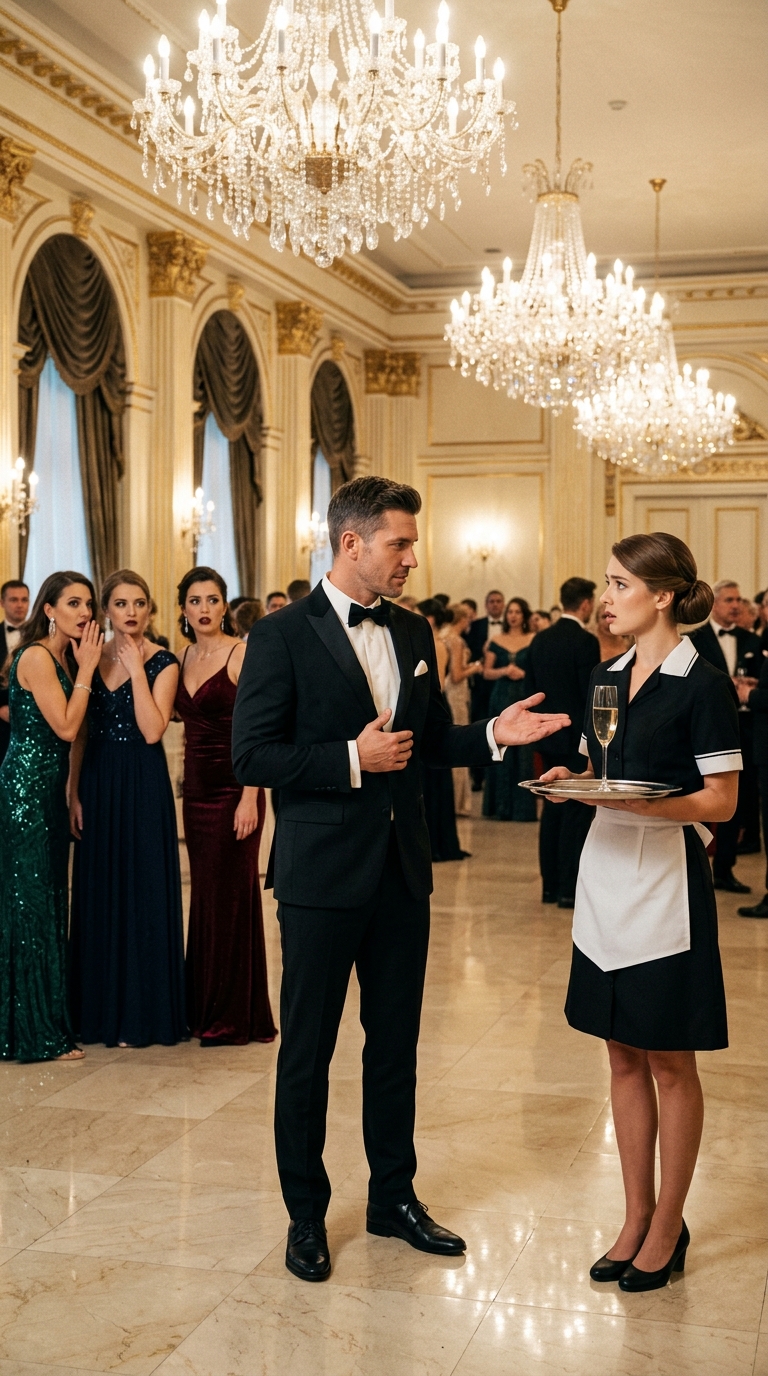
Beatriz snapped, “This is absurd. Security—”
Marisol suddenly began to cry, shoulders shaking with the weight of eighteen years of silence. “I’m sorry,” she sobbed. “I was trying to protect her. I swore I would never speak of it.”
Adrián’s voice dropped to a dangerous quiet. “Protect who?”
Marisol looked first at Lía, then at him, tears carving clean paths down her cheeks.
“Your daughter.”
The room erupted.
Gasps, cries, the clatter of a dropped glass shattering on marble. Lía went deathly white. Adrián stood motionless, the word echoing in his skull like a bell.
“My… daughter?” he repeated, barely audible.
Marisol nodded, tears falling freely now. “Elina was pregnant when she left the house that night. She survived the accident long enough to give birth a few weeks later in a small clinic outside the city. Your mother paid doctors, nurses, even the priest who buried her. Everyone was told Elina died at the gates. But she lived long enough to name the baby Lía. Then she slipped away.”
“No,” Adrián whispered, the single syllable raw with disbelief and grief.
Beatriz’s face hardened into a mask of cold resolve. “I did what was necessary. You were eighteen. A scandal with the housekeeper’s daughter would have destroyed everything your father built. The company, the name, your future—”
Adrián turned on her with a fury that had been simmering for nearly two decades. “She was my future.”
Lía backed away, shaking her head violently. “No. This can’t be true. I’m just… I’m just the girl who folds the linens.”
Marisol reached beneath her collar and withdrew a worn silver locket on a thin chain. With trembling fingers she opened it. Inside was a tiny, perfectly preserved portrait: Elina, young and radiant, her dark hair loose, holding a newborn wrapped in a white blanket embroidered with the Montoro family crest—the same crest that hung above every doorway in the palacio.
Adrián covered his mouth with one hand, eyes burning.
Lía stared at the portrait, then lifted her gaze to Adrián’s face. The connection between them, which moments earlier had felt like the spark of something romantic, now revealed itself as something deeper, stranger, more devastating. It had never been desire. It had been blood calling to blood across eighteen stolen years.
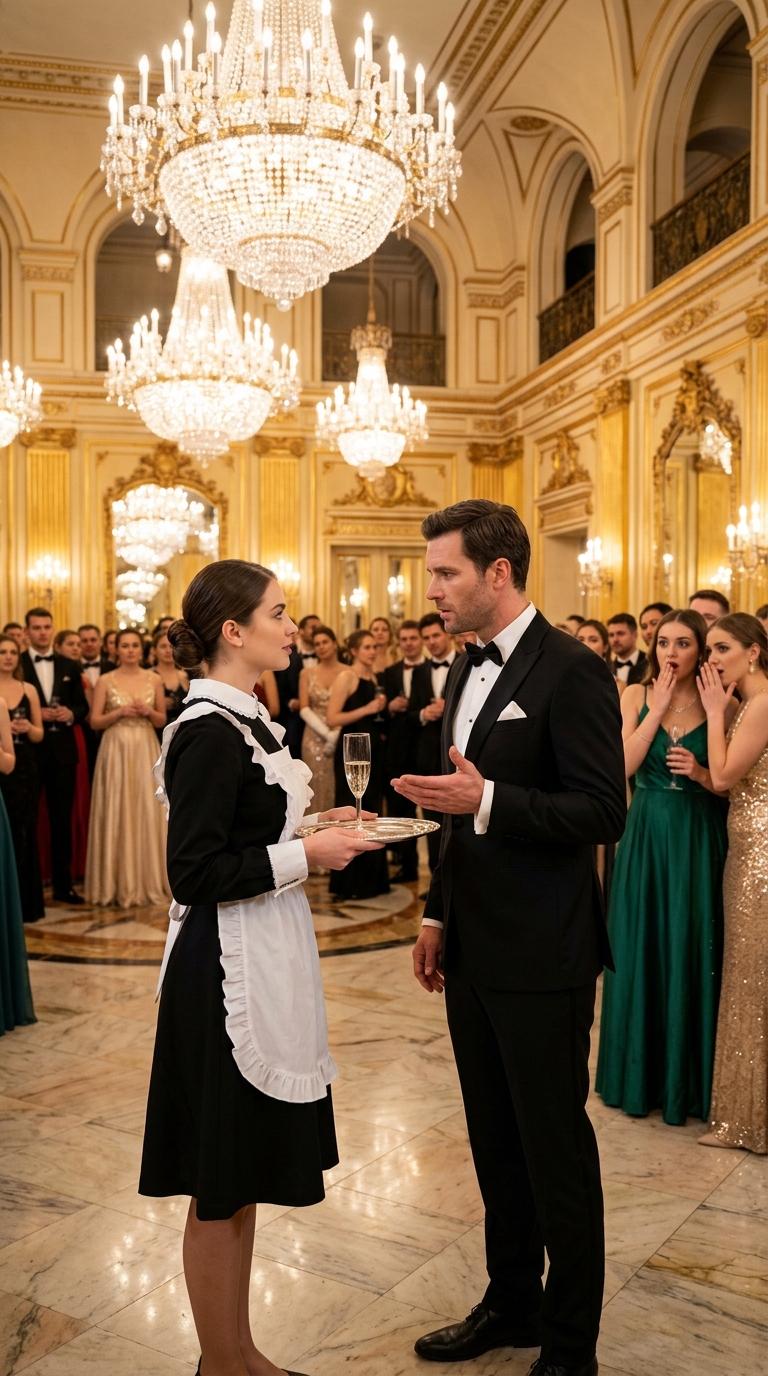
Adrián stepped toward her slowly, as though approaching something sacred. “Lía…”
She broke then, a single sob tearing from her throat. “You didn’t know?”
“No.” His voice shattered on the word. “I swear on her grave, I didn’t know. I would have torn the world apart looking for you.”
The guests stood in stunned silence, no longer spectators at a ball but ashamed witnesses to a miracle and a crime that had been hidden in plain sight.
Beatriz lifted her chin, regal even in defeat. “Think carefully, Adrián. A scandal like this will destroy us. The board, the investors, our reputation—”
Adrián looked at her as though seeing her for the first time. The woman who had orchestrated the erasure of his first love and their child. “No,” he said quietly. “Truth will set us free. Or it will burn the lies to the ground. Either way, we will finally be honest.”
He turned to the stunned crowd, voice carrying clearly across the ballroom. “Tonight, every person here will remember one thing above all else: Lía Vega is my daughter. Elina’s daughter. And the rightful heir to everything my mother tried to bury. From this moment forward, she is no longer staff. She is family.”
Lía sobbed once, pressing the open locket to her chest as though it were the only solid thing left in the world.
Adrián approached her carefully, stopping just short of touching her, giving her the choice. “I lost eighteen years,” he said, voice thick with emotion. “I cannot ask you to forgive me for what I didn’t know. But I can ask—humbly, desperately—for the chance to spend the rest of my life proving that you were never unwanted. That you were loved before you even drew your first breath.”
For a long moment Lía only stared at him, hazel eyes swimming with tears and the weight of a lifetime suddenly rewritten. Then she stepped forward and collapsed into his arms.
Adrián held her tightly, like a man who had spent decades underground finally clutching daylight. He felt the years of emptiness dissolve in the warmth of her against him, the quiet hitch of her breathing, the faint scent of lavender soap that reminded him somehow of home.
Across the room, Beatriz sank slowly into a velvet chair, defeated not by public scandal, but by love that had returned from the grave wearing a simple black uniform and a white apron.
Outside the tall windows, fireworks began to bloom over the Madrid skyline—gold and crimson and silver exploding against the night in celebration of some unrelated festival. But inside the ballroom, the explosions felt like punctuation to a story that had waited eighteen long years to be told.
For the first time since the night rain had fallen on the estate gates, Adrián Montoro did not feel haunted.
He felt, at long last, home.
