

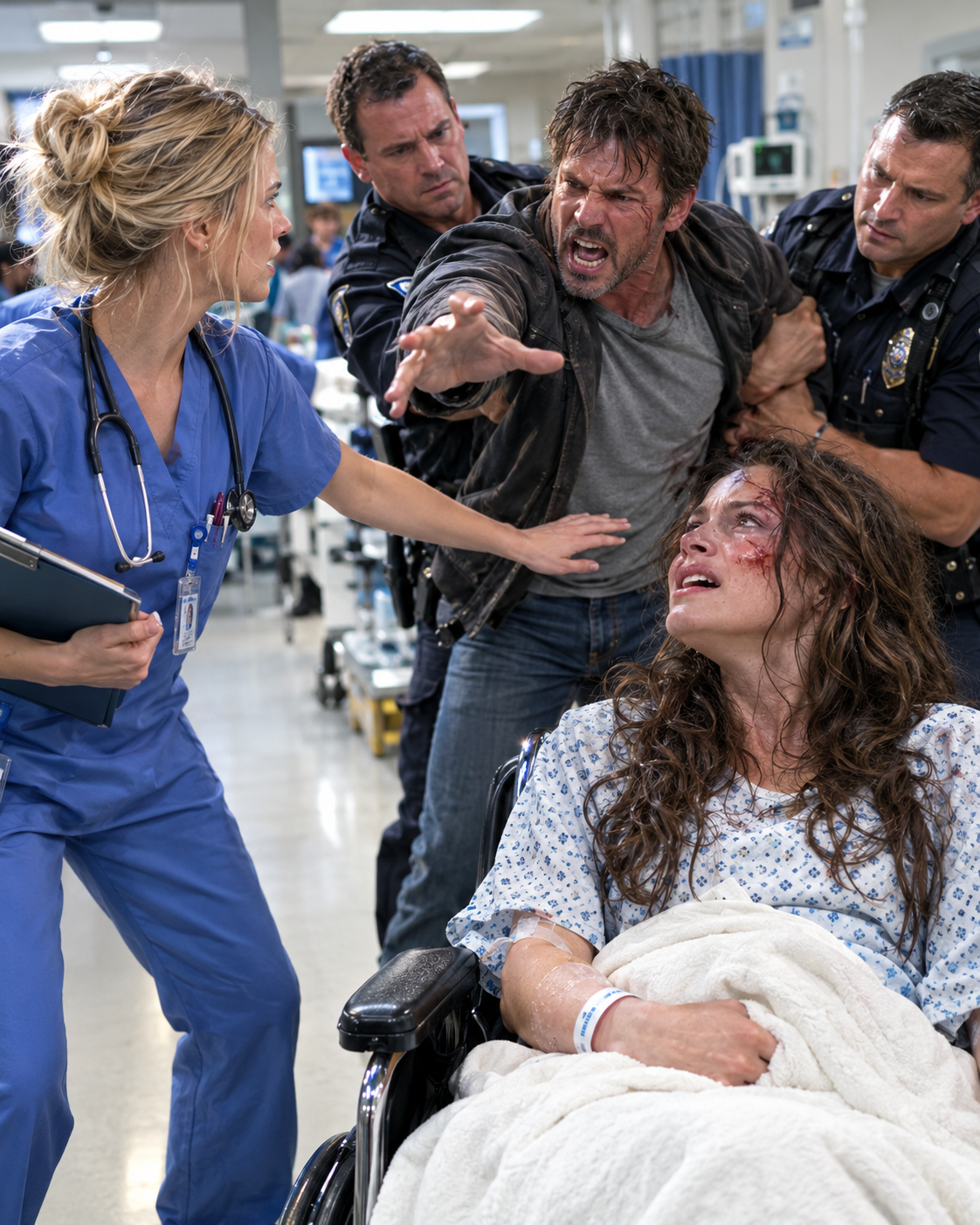
I could barely see when we walked into the hospital. My nose and orbital bone were broken, blood covered my lips, and every small movement sent another wave of pain through my face. But somehow, the worst part was hearing his voice beside me, calm and controlled as he repeated the story he had made me memorize.
“Just tell them what happened.”
What he actually meant was: tell them what I told you happened.
At registration, he reached for the clipboard before I could. He filled in the first few lines while I sat there trying not to move. Then, when the nurse approached, he answered for me.
“Car accident.”
The nurse looked at him before shifting her attention toward me.
“What happened?”
His version immediately played inside my head.
Lost control.
Hit something.
Steering wheel.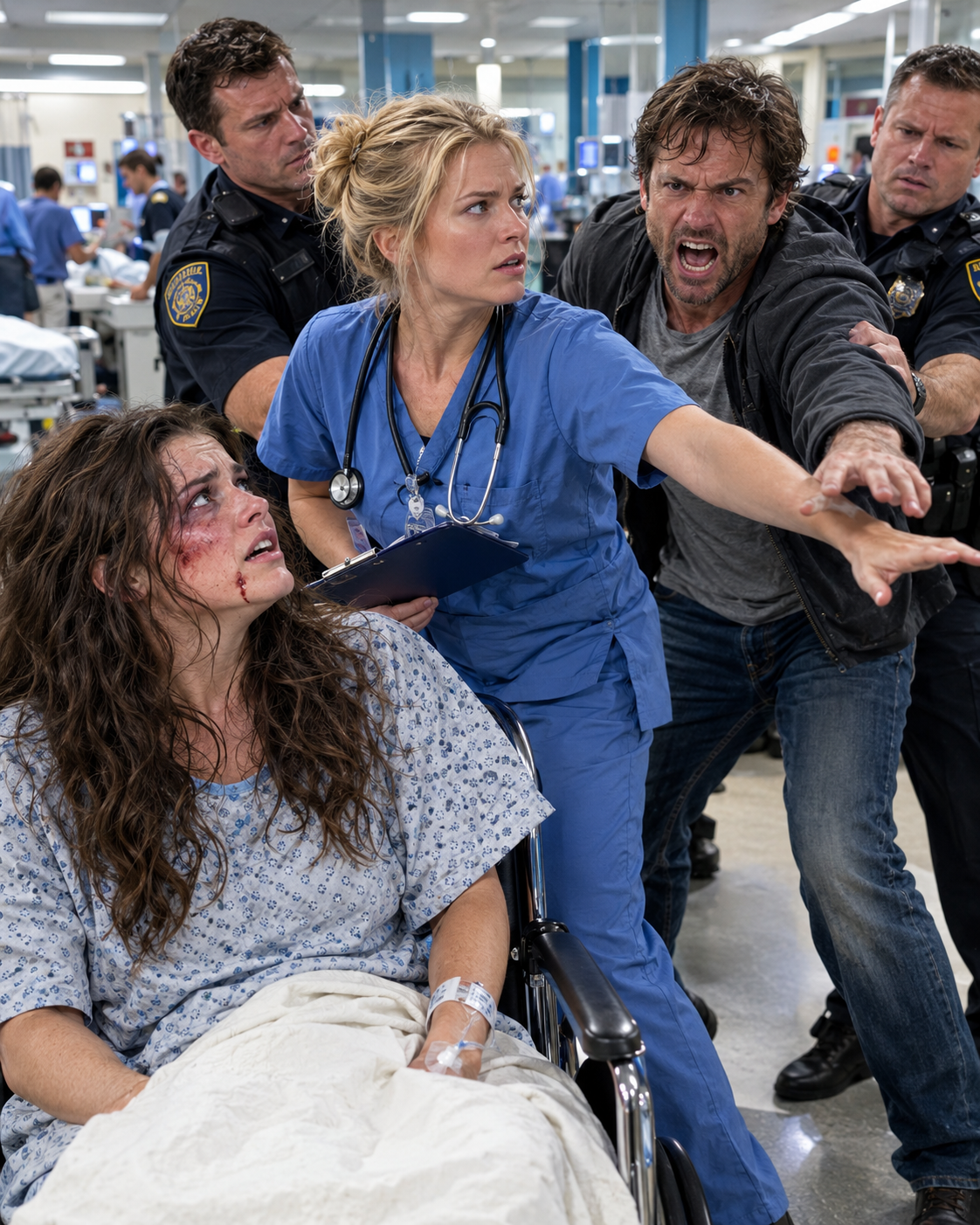
“I lost control of the car,” I whispered.
He stayed beside me, watching carefully, ready to correct anything that came out of my mouth. But the nurse never stopped looking at me.
She continued asking questions.
And whenever he tried to answer for me, she calmly redirected the question back to me.
Finally, she said, “I need a few minutes with her alone.”
He objected immediately.
“She’s confused. I should stay.”
“She needs me.”
The nurse looked straight at me.
“Do you want him to stay?”
My first instinct was yes.
That frightened me.
Because even with my face shattered, I was still thinking about what would happen afterward if I gave the wrong answer.
I whispered, “Yes.”
But the nurse didn’t dismiss it. She told him to wait outside while she examined me.
Before he walked away, he looked directly at me.
He didn’t have to threaten me.
I already knew the script.
Inside the examination room, she carefully examined my injuries and asked me the same question again.
“What happened?”
I repeated the lie.
Then she looked down at her notes and asked something I will never forget.
“Is that the version you want documented as your account?”
Not his version.
Not the story I had been forced to repeat.
My account.
Mine.
I looked toward the closed door.
Then I finally said the words I had been too afraid to say.
“No.”
My hands started trembling.
“He did it.”
The nurse didn’t say anything.
“The man outside. He slammed my face into the steering wheel. The accident story is what he told me to say.”
Then she asked the question that changed everything.
“Do you feel safe with him?”
This time, I didn’t hesitate.
“No.”
The nurse told me to remain where I was and stepped into the hallway.
Through the small opening in the door, I saw him still holding the clipboard he had taken at registration.
He moved toward her.
But she took the clipboard from his hands, turned back toward me, and closed the door between us.
For the first time that night, the story was no longer his to control.
The room became strangely quiet.
I could hear the machines around me, the distant sound of footsteps in the hallway, and my own uneven breathing.
The nurse came back and pulled the chair closer.
“You did the right thing by telling me.”
I wanted to believe her.
But fear was stronger than relief.
“He knows where I live,” I said.
She nodded.
“We’ll take that into consideration.”
“He’s going to know I told you.”
“He may,” she said carefully. “But you’re not going back out there alone.”
Those words broke something inside me.
Not because they solved anything.
Because nobody had said them before.
For so long, every decision had been about avoiding his anger. Avoiding his questions. Avoiding the look that told me I had done something wrong without him ever needing to say it.
Now someone was talking about what happened to me.
Not what he wanted.
Not what would make things easier for him.
Me.
A doctor entered a few minutes later. He examined my face, asked about my pain, and explained that I would need further evaluation for the injuries around my eye and nose.
Then he asked how they happened.
I looked at the nurse.
She didn’t answer for me.
She simply waited.
“He hit me,” I said.
The words felt impossible.
Once they were out, I couldn’t take them back.
The doctor nodded and continued documenting what I told him.
He didn’t ask me why I stayed.
He didn’t ask what I had done to make him angry.
He didn’t ask why I hadn’t left sooner.
He simply recorded what had happened.
A little later, another staff member came in and spoke quietly with the nurse.
Then she looked at me.
“There are people here who can help you make a plan for tonight.”
Tonight.
That word mattered.
I had been thinking about tomorrow.
About what he would say.
What he would do.
How I would explain the hospital.
How I would explain everything.
But suddenly, I only had to survive tonight.
The door opened.
For a second, I thought it was him.
My entire body tightened.
But it was a hospital security officer.
He stayed near the doorway.
“He’s asking to see you,” the nurse said.
My stomach dropped.
“What did you tell him?”
“That you’re receiving medical care and cannot have visitors right now.”
I closed my eyes.
“He’s going to be furious.”
The nurse pulled the chair closer again.
“That is not your responsibility.”
I wanted to accept that.
I really did.
But fear doesn’t disappear because someone gives it a different name.
It stays inside your body.
It waits.
I heard his voice somewhere beyond the hallway.
I couldn’t make out every word, but I knew it was him.
My heart began pounding.
The security officer noticed.
“You don’t have to see him.”
I shook my head.
“No.”
It was the second time that night I had said that word.
The first had been to the nurse.
The second was for myself.
No.
I didn’t want to see him.
No, I didn’t want to explain myself.
No, I didn’t want to repeat the story.
And no, I didn’t want to pretend anymore.
The nurse helped me contact someone I trusted.
When the call connected, I struggled to speak.
“It’s me.”
There was silence on the other end.
Then the voice asked what happened.
I started crying.
Not because I didn’t know.
Because I finally didn’t have to lie.
“He hurt me.”
The words came out broken.
“He told me to say it was an accident.”
There was another pause.
Then came the only response I needed.
“I believe you.”
I pressed my eyes shut.
For the first time that night, I allowed myself to cry without worrying about whether he would hear me.
The examination continued.
The hospital documented the injuries.
Photographs were taken as part of the medical record.
The nurse wrote down my account separately from anything he had said.
And somewhere outside that room, the version he had prepared was beginning to fall apart.
Because he had expected everyone to believe him.
He had expected me to help him.
He had expected fear to keep me silent.
Instead, one question had changed everything.
Do you feel safe with him?
No.
That answer opened a door I had been too afraid to touch.
Eventually, I was told that I would not be discharged into his care.
I stared at the ceiling.
I couldn’t remember the last time someone had made a decision based entirely on whether I was safe.
The realization was painful.
So was the relief.
Hours passed.
The pain medication dulled the sharpest edges of the pain, but it couldn’t quiet my thoughts.
I kept replaying the moment at registration.
The clipboard.
His voice.
The nurse asking me what happened.
The lie leaving my mouth.
Then that question.
Is that the version you want documented as your account?
I understood something that night.
He had spent so much time controlling the story that I had started believing the story was more important than what actually happened.
It wasn’t.
The truth was still the truth, even when I was afraid to say it.
The next morning, I woke to sunlight coming through the hospital blinds.
For a few seconds, I didn’t remember where I was.
Then I felt the pain in my face.
Everything returned.
The fear.
The lie.
The confession.
The door closing between us.
A social worker came to speak with me.
She didn’t pressure me.
She explained my options and asked what I wanted to do.
I told her I didn’t know.
“That’s okay,” she said.
Nobody had said that to me in a long time.
I didn’t know.
I didn’t know what would happen next.
I didn’t know where I would go.
I didn’t know whether I was ready to face everything that came after telling the truth.
But I knew one thing.
I didn’t want to go back to the way things had been.
She helped me make a plan for leaving the hospital safely.
My trusted person arrived later.
When I saw them walk through the door, I started crying again.
This time, I didn’t hide it.
I had spent so long believing that needing help was weakness.
Now I understood that accepting help could be the first thing that allowed me to become strong again.
Before I left, the nurse came to say goodbye.
I thanked her.
She shook her head.
“You did the hard part.”
I looked at her.
“What part?”
“Telling the truth when you were terrified.”
I carried those words with me when I left.
The days that followed were not easy.
There were appointments.
Questions.
Paperwork.
Conversations I didn’t want to have.
There were moments when I doubted myself.
Moments when I wondered whether I had made everything worse by speaking.
Then I would remember the hospital room.
The nurse asking whether I felt safe.
And my own voice answering.
“No.”
I had spent years believing that one word could destroy my life.
Instead, it became the beginning of getting it back.
Eventually, the truth of that night was documented clearly.
The accident story he had given the hospital was contradicted by my account and the injuries that had been recorded.
I didn’t control what happened after that.
I couldn’t control every decision made by other people.
But I could control one thing.
I would never again help him rewrite what he had done to me.
Months later, my face was healing.
Some marks remained.
Some pain lingered.
But the deepest changes were invisible.
I stopped apologizing for everything.
I stopped checking the room before speaking.
I stopped wondering whether every sentence would make someone angry.
And slowly, I started trusting my own voice again.
One afternoon, I found myself standing in front of a mirror.
For a long time, I had avoided mirrors.
They reminded me of that night.
That morning, I looked carefully at my reflection.
I saw the changes.
The healing.
The scars.
The exhaustion.
But I also saw someone I barely recognized.
Someone who had survived.
I touched my reflection with my fingertips.
“I believe you,” I whispered.
It was the same thing someone had told me on the phone that night.
Only now, I was saying it to myself.
I believe you.
For years, I had waited for someone else to give me permission to trust what I knew had happened.
I didn’t need permission anymore.
The story had never belonged to him.
He had only convinced me that it did.
That hospital room taught me otherwise.
He could control the words he wanted me to repeat.
He could take the clipboard.
He could stand beside me and tell me exactly how to lie.
But he could not control the moment when someone finally asked me what I wanted documented as my account.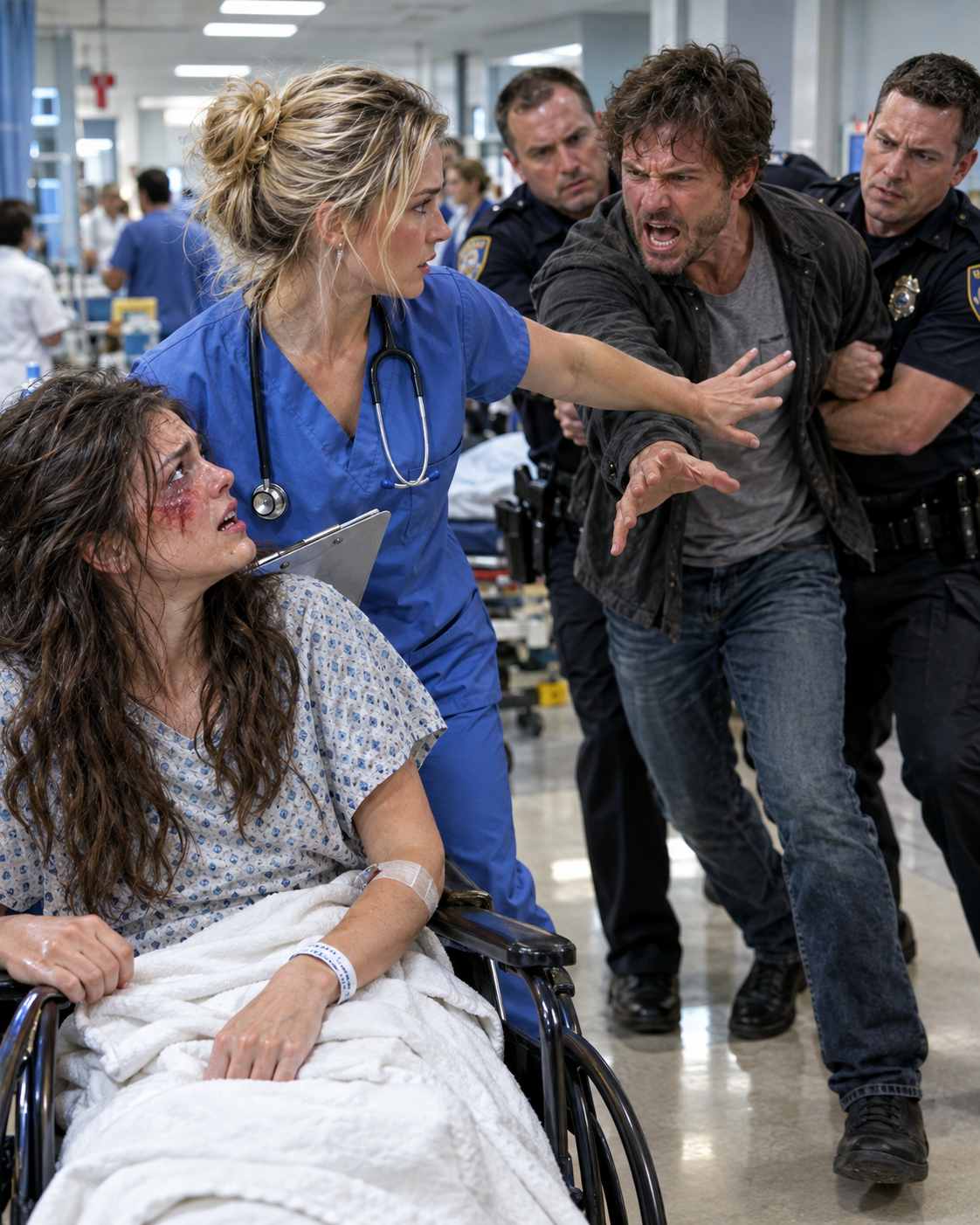
And he could not control my answer.
“No.”
That one word changed everything.
Because sometimes the first step toward getting your life back isn’t knowing exactly where you’re going.
Sometimes it’s simply refusing to keep walking in the direction someone else chose for you.
And that was where my life truly began again.
Not when the injuries healed.
Not when the fear disappeared.
Not when the paperwork was finished.
It began in that small hospital room, behind a closed door, when I finally understood that my voice still belonged to me.
And this time, I used it.
