

PART 1
The Night My Daughter Found a Letter Inside Her Teddy Bear
For five years, I accepted that my husband and our three sons had vanished in a fierce mountain storm. Then, at two in the morning, my eleven-year-old daughter uncovered a letter tucked inside her teddy bear, and everything I believed about my family started to come apart.
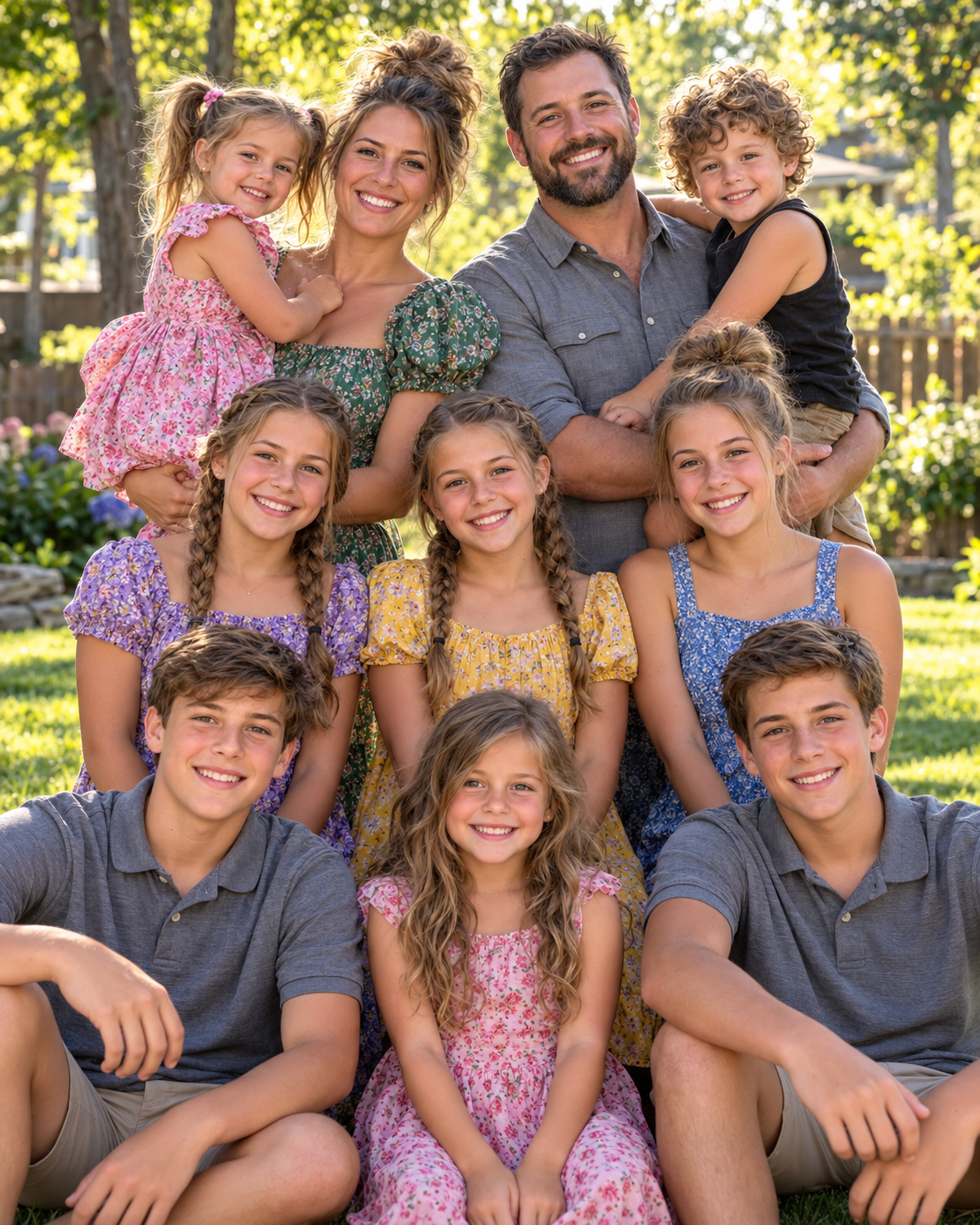
There had once been a time when I considered the constant noise filling our house the greatest blessing, from the squabbles over bathroom turns to the laughter echoing down the hall long after bedtime. My husband, Andrew Whitmore, and I raised eight children, five daughters and three sons, and though our home in a quiet Pennsylvania town was seldom calm, I would have given nearly anything to reclaim those ordinary, crowded mornings.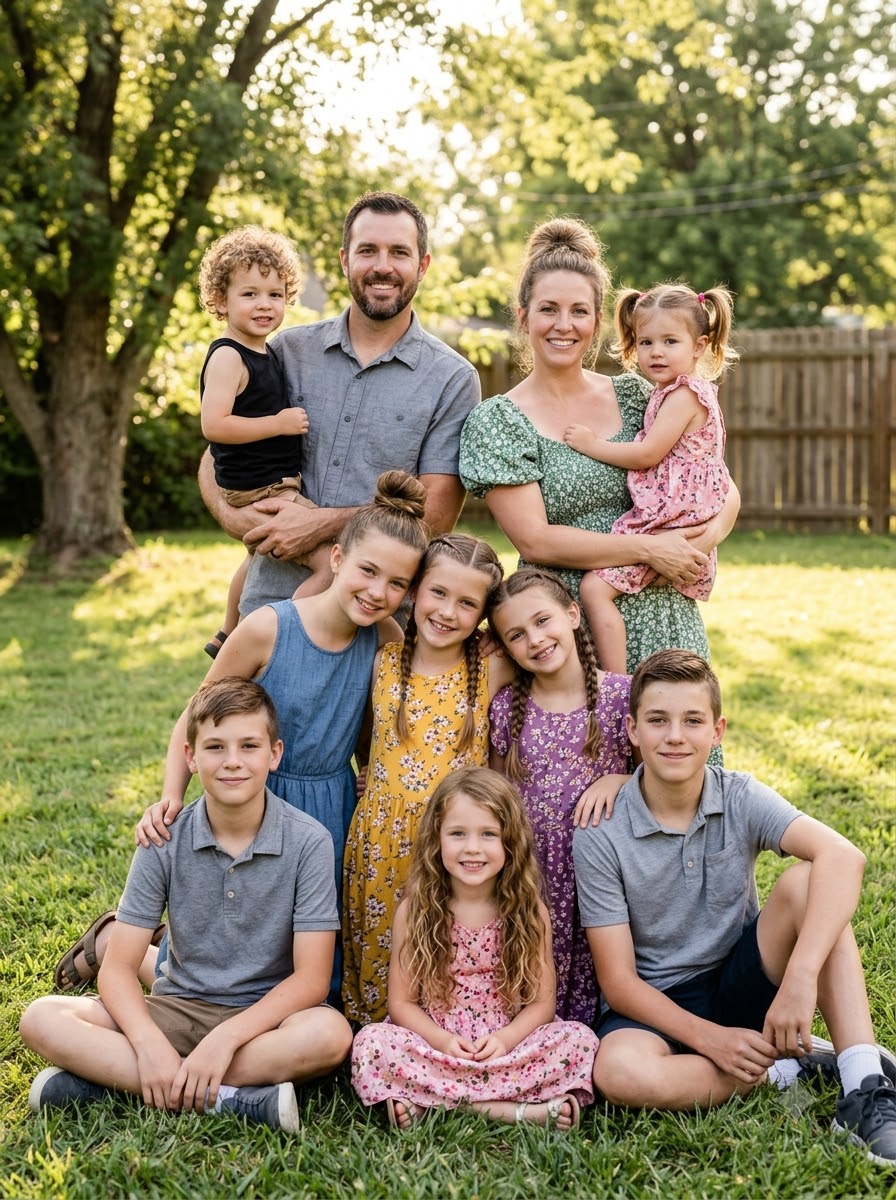
Andrew worked as a land conservation consultant, a job that matched his patient temperament and lifelong love of the mountains. Every autumn, he took our three boys to a simple cabin that had belonged to his grandfather, where they spent weekends fishing, fixing old furniture, and sharing stories around the fireplace.
Five years earlier, Andrew had left for one of those trips with our sons: seventeen-year-old Caleb, fourteen-year-old Owen, and twelve-year-old Benjamin.
They never came back.
Authorities reported that their vehicle had left a mountain road during a severe storm, and a family friend, Deputy Nathan Brooks, delivered the news in person. He said poor visibility and slick pavement had caused the accident, though I could never grasp how Andrew, who knew every bend of that road and checked weather reports almost constantly, could have erred so badly.
Nathan supported me through the months afterward, handling paperwork, looking in on the girls, and quietly managing details I barely had the energy to notice. Gradually, his steady presence grew into something more, and I started to think that perhaps life was offering me another chance at happiness.
Then, one October night, my youngest daughter, Lily, appeared beside my bed holding the faded teddy bear she had kept since she was six.
“Mom, I found something inside Oliver,” she whispered, her voice trembling as she held out a folded piece of paper and a tiny brass key.
The stitching under the bear’s arm had loosened, and while trying to mend it, Lily had found the items hidden in the stuffing.
I recognized Andrew’s handwriting before I finished unfolding the paper.
If anything happens during our trip, please don’t accept the first explanation. The truth is hidden where we spent our happiest summers. Fourth board. Fireplace.
Below those words was another sentence.
Someone I trusted knows more than he should.
I had barely finished reading when someone knocked on my bedroom door.
“Madeline? Are you awake?”
It was Nathan.
The bedside clock read 2:17 a.m.
When I opened the door, he stood in the hallway in a dark jacket, saying he had seen a light while driving through the neighborhood, although our street lay nowhere near his usual path.
His gaze shifted toward Lily’s teddy bear, lingering on its torn seam.
“What happened to her little friend?” he asked.
“Just an old stitch coming loose,” I answered.
He offered to fix it, something he had never shown any interest in before, and when I politely refused, he seemed oddly unwilling to leave.
After his truck finally drove away, I locked the doors, held Lily close, and read Andrew’s message once more.
For the first time in five years, I questioned whether the person who had comforted me through my family’s disappearance might have been keeping me from the truth.
The next morning, while my older daughters rushed through breakfast and grumbled about homework, I could not focus on anything except the note hidden under my pillow.
Once the girls had left, Lily and I went through Andrew’s old filing cabinet, where he had stored property records, maps, and receipts from the mountain cabin.
The folder labeled CABIN held almost nothing, and the original accident report was missing from the folder Nathan had arranged after the funeral.
Behind the cabinet, Lily found an old photograph of Andrew standing beside our sons, their faces bright with the easy happiness of a weekend outdoors.
On the back, Andrew had written a date three weeks before their disappearance and a troubling note about someone trying to purchase the surrounding property.
A check of public records showed that a development company called Stonehaven Resources had repeatedly offered Andrew far more than the land’s assessed value. The company had vanished from business records shortly after the accident, but its registered address linked it to Nathan’s older brother, Victor Brooks, a contractor who had supposedly moved away years earlier.
That afternoon, I went to the county records office and requested the full accident file.
The clerk gave me the basic report but explained that several supplementary documents had been restricted. As I reviewed the pages, I saw that Nathan had recorded the estimated speed, described the weather, and signed the initial reconstruction request.
More troubling was the timeline.
The report placed Nathan at the scene almost twenty minutes before the first emergency call.
Outside the courthouse, I met an elderly former service-station owner named Harold Mercer, who remembered Andrew stopping with the boys that evening.
“There was a dark pickup across the road,” Harold told me. “It followed your husband when he left, and I told Deputy Brooks about it afterward.”
I asked why that information had never appeared in the report.
Harold looked uncomfortable.
“He said I must have been mistaken, but I remember something else, Mrs. Whitmore. The rain hadn’t started when your husband drove through. Those roads were dry.”
I drove home feeling as though the familiar world around me had quietly changed shape.
Nathan was already at my house, supposedly checking a problem in the basement, and when I found him standing beside Andrew’s filing cabinet with one drawer open, I knew I could no longer trust his explanations.
That evening, after making sure my daughters were safely together, I decided to visit the cabin.
I took Lily’s brass key, Andrew’s note, and a flashlight, then drove into the mountains alone.
The cabin looked much as Andrew had left it, with fishing rods leaning against the wall and a chipped coffee mug beside the kitchen sink, although five years of dust had settled over everything.
I stood for several minutes looking at the initials Benjamin had carved into the dining table, remembering how Andrew had pretended to be furious before secretly smiling at our youngest son.
Then I approached the fireplace.
Counting from its stone hearth, I located the fourth floorboard, which sounded hollow when I tapped it. Beneath the loose plank was a narrow metal box, and Lily’s key opened its lock.
Inside were geological surveys, financial records, photographs, a flash drive, and a letter addressed to me.
Andrew explained that Stonehaven Resources had discovered valuable minerals beneath the ridge, but the proposed excavation threatened groundwater used by several neighboring communities. When he refused to sell, he uncovered altered environmental reports and suspicious payments to local officials.
He had intended to present his evidence to state investigators immediately after the weekend trip.
The final paragraph mentioned two men he feared were involved, including Victor Brooks.
Before I could finish examining the documents, footsteps sounded outside.
A man entered the cabin, went directly to the fireplace, and stopped when he noticed the open floorboard.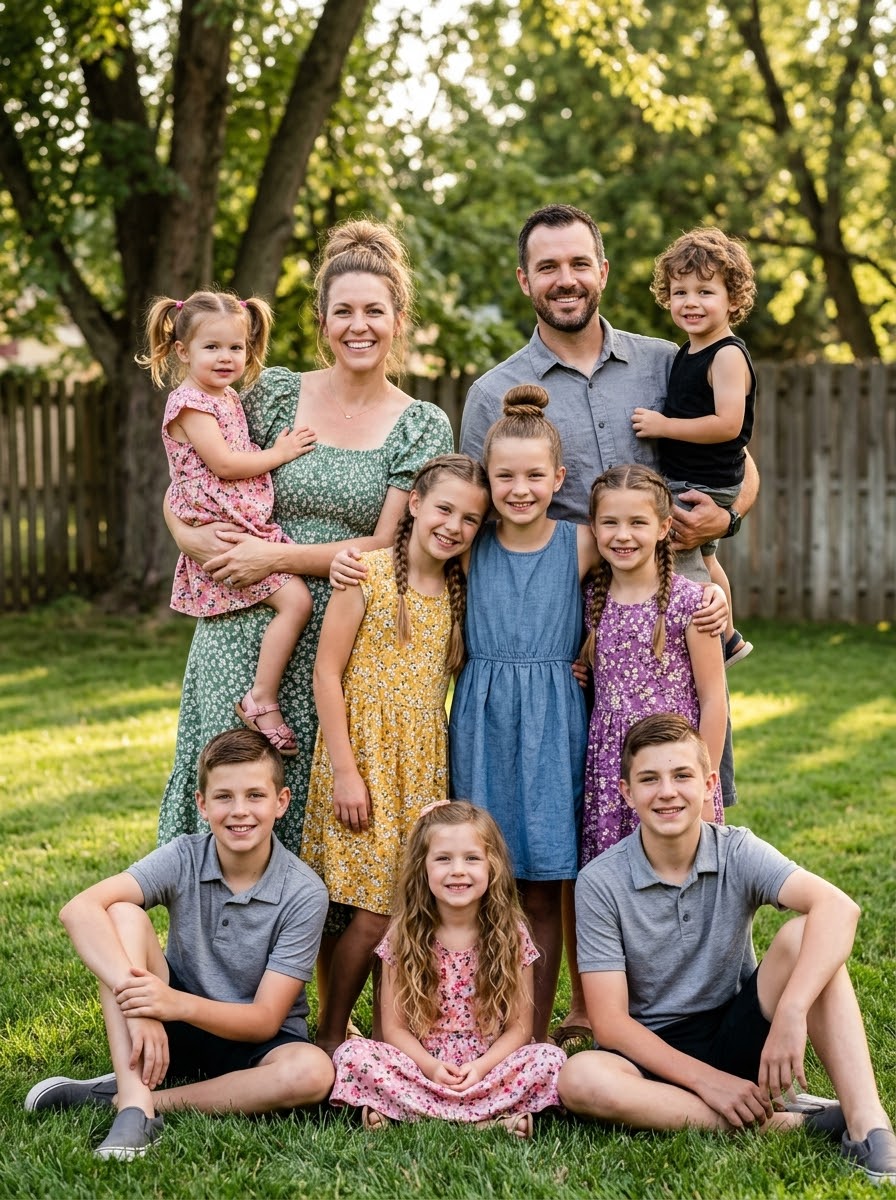
It was Victor.
“Madeline, you shouldn’t be here,” he said, staring at the box in my hands.
“Then tell me what happened to Andrew.”
Victor’s expression tightened.
“Your husband discovered something that powerful people wanted hidden, and the situation became much bigger than anyone expected.”
Headlights suddenly illuminated the windows, and Nathan appeared moments later.
I demanded an explanation, but instead of denying everything, he looked at the documents and lowered his head.
“The vehicle went over the ridge,” he admitted, “but Andrew and the boys weren’t inside.”
I stared at him, unable to reconcile his words with five years of funerals, anniversaries, and birthdays spent beside four graves.
Nathan explained that Andrew had planned a temporary disappearance to protect the children while his evidence reached investigators. Nathan had helped arrange the abandoned vehicle, believing Andrew would contact him within forty-eight hours.
But Andrew never called.
The sheriff had subsequently altered the official records, turning what should have been a brief disappearance into a permanent story of loss.
“You let me believe my family was gone,” I whispered.
Nathan’s eyes filled.
“I thought telling you would put you and the girls in danger, and then I kept waiting for a chance to make it right.”
Before I could answer, several vehicles arrived outside.
Sheriff Lawrence Hale called from the porch, demanding the flash drive, and then announced that Andrew was still alive.
At almost the same moment, an unfamiliar number sent a photograph to my phone.
The man in the picture resembled Andrew, older and thinner, and beneath it appeared a message claiming that our sons were alive too. Then another message arrived.
One of the boys is outside.
A young man’s voice came through the cabin door. “Mom?”
I recognized him before I saw his face.
Caleb.
My eldest son had been seventeen when I last held him, all long arms and restless energy, but the young man standing on the porch was twenty-two, with a deeper voice, a short beard, and the same gray-blue eyes he had inherited from his father.
When he stepped toward me, I forgot the sheriff, the documents, and everyone else standing in the rain.
I wrapped my arms around him, touching his face and shoulders as though I needed to convince myself that he was real.
“I wanted to come home, Mom,” he whispered. “Every single day.”
Sheriff Hale interrupted, demanding the flash drive, and Caleb quietly urged me to surrender it.
Then he tapped his fingers against his leg in a pattern Andrew had taught the boys during their hiking trips.
Two taps, one, then two.
It meant that his spoken words were not to be trusted.
I understood that Caleb was trying to protect me, and when he suddenly pushed away from the sheriff, Nathan and Victor helped us escape through a concealed rear entrance.
We traveled through the woods to an abandoned ranger station, where Caleb finally told me what had happened.
Andrew had taken the boys to a farmhouse after leaving their vehicle behind, promising they would return within two days. But when unfamiliar men began searching for them, he separated the brothers and placed them with different trusted families.
Caleb had remained with Andrew for nearly a year before losing contact with him.
He had seen Owen only once since then and had no reliable information about Benjamin.
“I was angry at Dad,” Caleb admitted. “I knew he thought he was protecting us, but I wanted my mother and sisters, and I wanted to be a normal kid again.”
I held his hand across the table, thinking about the birthdays and school graduations we had missed, and told him that he should never have been asked to carry such a burden.
Together, we opened Andrew’s flash drive.
The password hint read Eight made one, and I remembered Andrew saying that our children were eight different personalities belonging to one family.
Their initials, entered in birth order, unlocked the files.
The records revealed a network of falsified permits, improper payments, and hidden ownership arrangements connecting Stonehaven Resources to a respected former state official, Eleanor Wexler.
But the most troubling discovery concerned Andrew’s estranged older brother, Peter Whitmore, whom I had never known existed.
Peter had helped develop the mineral project years earlier and had remained loyal to the company after Andrew questioned its environmental impact.
A photograph of Peter showed such a strong resemblance to Andrew that I suddenly wondered whether the picture sent to my phone had been deliberately misleading.
Then my phone rang.
A familiar voice answered when I picked up.
“Maddie, it’s me.”
I asked a question about the name we had almost given our first daughter, something Andrew and I had discussed privately before she was born.
He answered correctly.
It was my husband.
Andrew guided us to a secluded farmhouse belonging to an elderly couple, Walter and Elaine Foster, who had sheltered him during the years he was missing.
When I entered their kitchen, he was standing beside the window.
His hair had turned gray around his temples, and worry had left unfamiliar lines across his face, but I knew his expression as well as I knew my own reflection.
For a moment, I could only stare.
Then I crossed the room and embraced him, overwhelmed by the impossible mixture of love, anger, relief, and sorrow that came with discovering the man I had mourned was standing before me.
“You should have trusted me,” I said against his shoulder.
“I know, Maddie. I thought I was keeping you safe, but I made choices that took years away from all of us.”
Caleb stood nearby until Andrew reached for him, and although our son hesitated, he eventually stepped into his father’s arms.
PART 2
That night, Andrew explained that Peter had gained control of the development operation and had used threats and misleading information to keep the family separated.
Benjamin, our youngest son, had been persuaded that his parents had abandoned him, while Owen had remained hidden with people Andrew believed were trustworthy.
Andrew had spent years gathering enough evidence to expose the operation, but every attempt to contact us seemed to alert someone watching our family.
When I asked why he had not trusted me with the truth, he had no satisfying answer.
“I was afraid,” he finally admitted. “And after a while, I was ashamed of what my fear had done.”
Before dawn, my phone rang again.
This time the caller was Peter, using Lily’s phone.
He had entered our home and was demanding the flash drive.
My daughters were frightened, and I could hear Lily trying to remain calm.
“Mom, I’m okay,” she whispered. “Please come home.”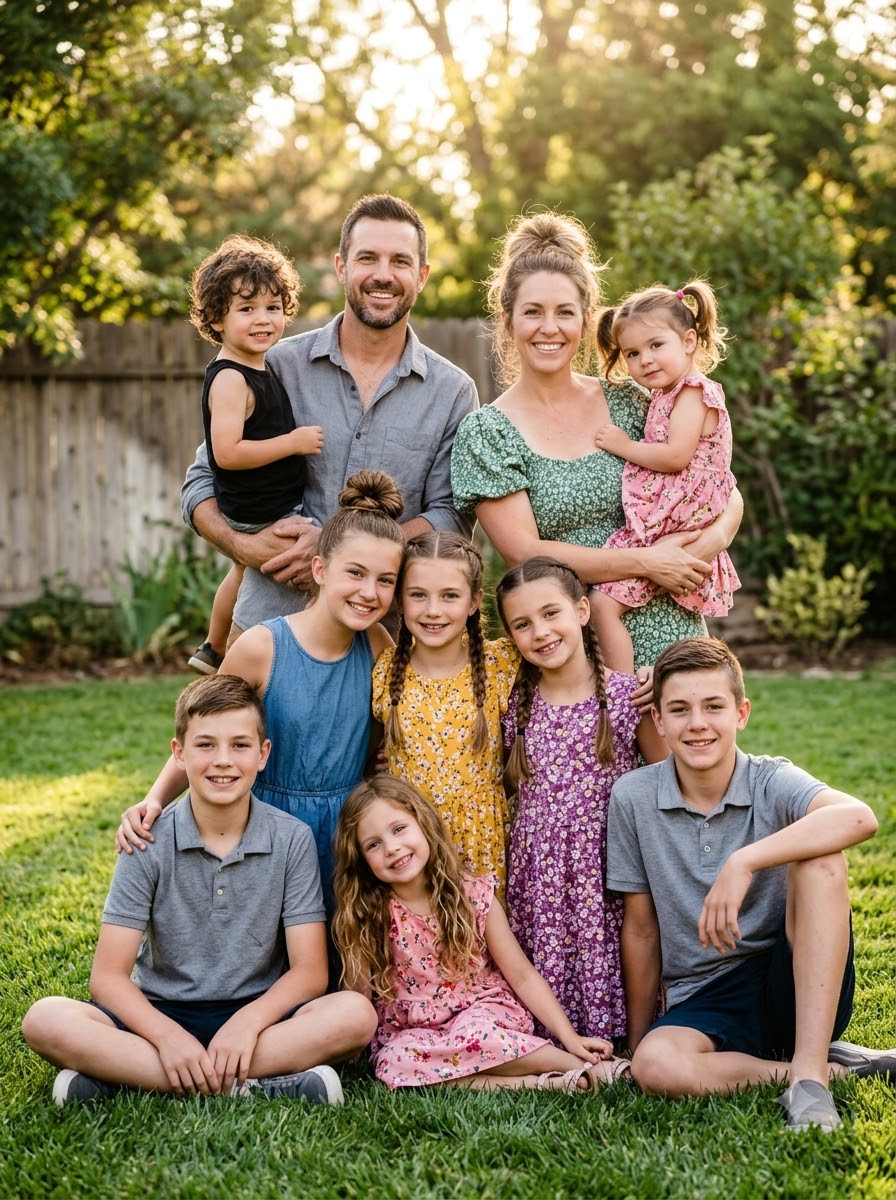
I told her I was coming, while Andrew and Nathan contacted an independent state investigator who had been quietly reviewing the corruption allegations.
For five years, other people had decided what I should know and how I should live.
This time, I intended to make my own decisions.
When I returned home, Peter was waiting in our living room, and the resemblance between him and Andrew was so remarkable that I understood how easily photographs and distant sightings could have confused people.
Lily sat on the sofa, holding Oliver tightly against her chest.
I offered Peter the flash drive in exchange for letting my daughter leave, but he insisted on checking its contents first.
Before I could respond, Lily spoke.
“That picture you sent wasn’t my dad,” she said firmly.
Peter studied her.
“And what makes you think that?”
“The watch belonged to Benjamin. Dad gave it to him years ago, and the face in the picture didn’t look right when I enlarged it.”
She had noticed that someone had altered the photograph to make a younger figure resemble Andrew.
Peter’s confident expression faltered.
At that moment, a young man entered through the side door.
He was tall, with dark hair and Andrew’s familiar eyes, and although five years had changed him almost beyond recognition, I knew immediately who he was.
Benjamin.
My youngest son looked from Peter to Lily, then toward me, his face filled with uncertainty.
“Mom?”
I stepped closer, remembering the little boy who used to fall asleep against my shoulder after long car rides.
“Yes, sweetheart. It’s Mom.”
Peter ordered him to retrieve the drive, but Benjamin instead moved between Peter and Lily, giving his sister enough room to reach me.
Caleb entered moments later, and when the brothers recognized one another, they embraced with the kind of desperation that comes from years of believing a reunion might never happen. State investigators arrived soon afterward, taking Peter into custody along with Sheriff Hale and several associates.
The evidence Andrew had preserved revealed a long history of property manipulation, improper payments, and efforts to silence residents who opposed the mineral project.
Eleanor Wexler, whose company had financed much of the operation, had already begun cooperating with federal investigators after recognizing how far Peter had taken it. But the revelation that mattered most to me came from Benjamin.
He had left the farmhouse as a frightened twelve-year-old, believing his father cared more about documents than bringing the family together. Peter had found him and gradually convinced him that there was no home waiting for him anymore.
“I believed him, Mom,” Benjamin said through tears. “I thought you didn’t want us back.”
I pulled him close.
“You were a child, honey. You should never have had to figure any of this out alone.”
For a long time, he held on without speaking.
Three days later, investigators located Owen at a remote retreat center near the Canadian border, where he had been living under another name with a caretaker Andrew had once trusted.
We gathered at a small regional airport to meet him.
When Owen stepped from the plane, carrying a worn duffel bag, he stopped at the sight of his brothers.
Caleb reached him first, Benjamin followed, and soon all three were holding one another, laughing and crying while their sisters hurried toward them.
I joined them in the middle of the airport, unable to remember the last time I had felt so completely surrounded by the people I loved.
Andrew stood a little distance away, waiting rather than assuming he belonged in the center of our reunion.
Owen eventually approached him.
“I’m still angry with you, Dad,” he said.
Andrew nodded.
“I understand. You don’t have to pretend otherwise.”
My son studied him for a moment before offering a hesitant embrace.
It was not forgiveness, but it was a beginning.
The investigation continued for months, eventually bringing accountability to the officials and business executives who had manipulated the land records. The proposed mineral operation was permanently blocked, and our mountain property remained protected.
Yet rebuilding our family proved more complicated than any legal proceeding.
Caleb moved home but struggled to make decisions without looking over his shoulder. Benjamin needed time to understand that he no longer had to keep moving, while Owen returned to school and slowly began imagining a future of his own.
Our daughters responded differently too, some welcoming Andrew immediately, others asking questions he could barely answer.
As for me, I loved Andrew, but I could not simply return to the marriage we had shared before his disappearance.
Nathan had become important to me during those five years, and although I eventually ended our romantic relationship, I did not pretend that his kindness had meant nothing.
Andrew rented a small apartment nearby and became a steady presence in the children’s lives without asking me to make promises I was not ready to give.
One afternoon, Lily asked him why he had hidden the key inside her teddy bear.
Andrew looked puzzled.
“I wrote the note, sweetheart, but I never put the key in Oliver.”
Nathan later explained that he had hidden the key in Andrew’s old desk after learning about the concealed box.
Eventually, we discovered that Eleanor Wexler had arranged for it to be placed inside the teddy bear she had sent Lily after the funeral, hoping the evidence would remain safe until someone in the family could retrieve it.
The truth had traveled through more hands than any of us realized.
A year after Lily found the letter, we returned to the mountain cabin together.
Caleb repaired the porch, Owen installed a new water-filtration system, and Benjamin built a long dining table from pine boards he had carefully restored.
The girls painted the bedrooms, rearranged the furniture, and argued cheerfully over who would sleep where, while Lily repaired Oliver’s torn seam but deliberately left a small portion visible.
“Why not finish stitching it?” I asked.
She smiled.
“Because sometimes something broken can still protect something important.”
I looked at my daughter and realized how much wisdom children can carry without knowing it.
That evening, all eight children gathered around the table, talking over one another and laughing about memories I had once believed we would never share again.
Andrew stood beside me on the porch, listening to the noise through the open window.
“I missed this more than I can explain,” he said.
“So did I.”
He glanced at me, but he did not ask whether I was ready for him to come home.
For the first time, he seemed to understand that love could not repair trust by demanding it.
Two years later, we returned to the cabin for another family gathering, and while the children prepared an enormous dinner, I asked Andrew whether he would like to come to my house the following evening.
He looked surprised.
“For dinner?”
“Just dinner,” I answered, smiling. “And please don’t arrive an hour early.”
He laughed, a familiar sound I had not heard with such ease in years.
“Seven o’clock?”
“Seven exactly.”
Before he could answer, Lily called everyone toward the lake for a family photograph.
Caleb wrapped an arm around Owen, Benjamin stood behind them making rabbit ears, and our daughters crowded around, laughing as they tried to arrange themselves in some reasonable order.
Nathan, who had remained a family friend, offered to take the picture.
Andrew stood beside the group and waited for me instead of reaching for my hand.
That small courtesy meant more than he could have imagined.
I walked over and stood among our children.
When the camera clicked, I realized that we were not the family we had been before that autumn storm, nor would we ever be again. We had grown older, made mistakes, carried disappointments, and learned that even the people who love us most can make choices that hurt us deeply.
But we had also learned to listen, to apologize, and to give one another the freedom to begin again.
Later, Lily printed the photograph and placed it above our fireplace, with a small handwritten card beneath the frame.
We Found Our Way Home.
I stood looking at those words for a long time, remembering the frightened little girl who had entered my bedroom with a torn teddy bear and a folded letter.
For years, I had believed that healing meant returning to the life I remembered, with every person in the same place and every question finally answered.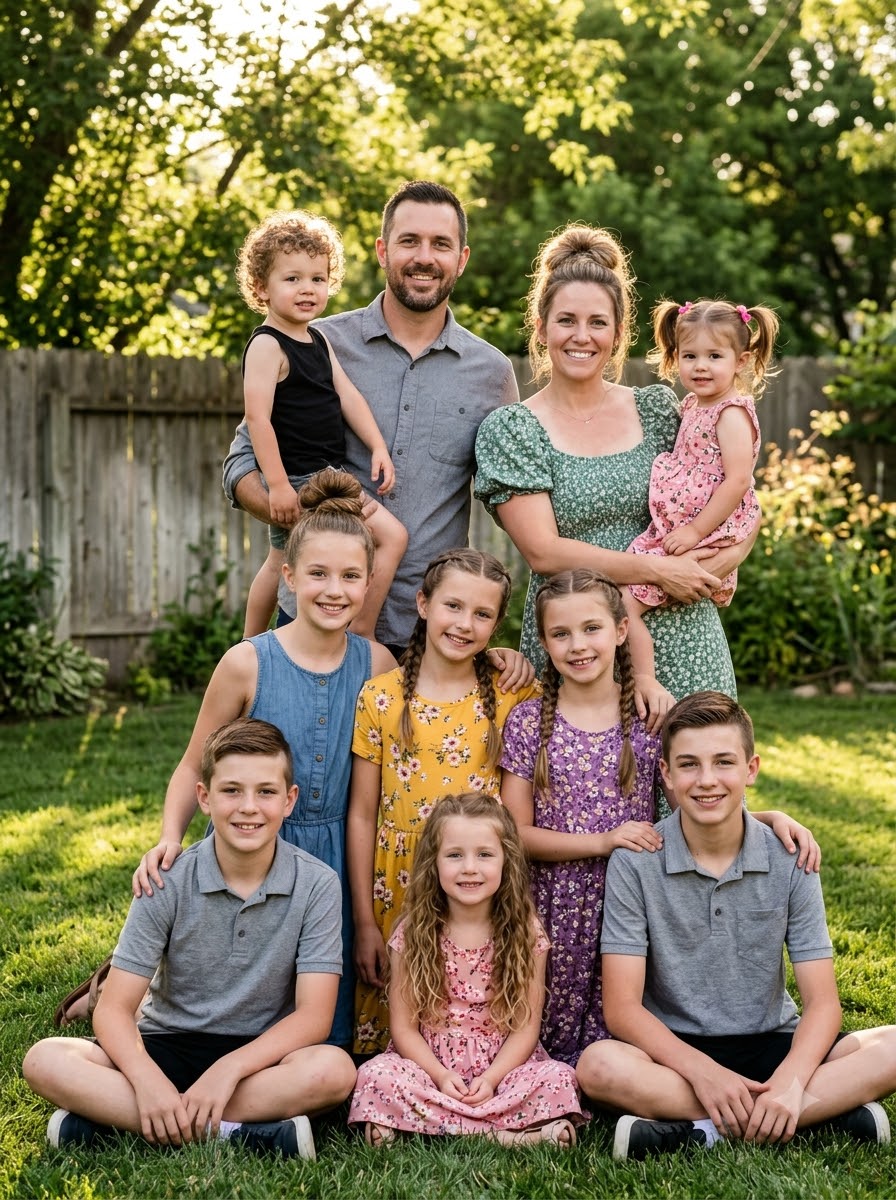
Now I understood that healing was something quieter and more difficult: allowing the truth to change us without allowing it to take away our capacity for love.
Our family had not recovered the five years we had lost, and there were still conversations we needed to have, hurts that required patience, and relationships whose futures remained uncertain.
Yet that evening, when I heard my children laughing together in the kitchen and saw Andrew helping Benjamin carry another chair to the table, I felt something I had not experienced in a very long time.
I felt at home.
And for the first time, I knew that home was not simply the place where everyone returned.
It was the place where, after everything, we were finally free to tell one another the truth.
