

Alexander “Alex” Whitman stepped out of the glass elevator at his firm’s headquarters, moving with the steady confidence of a man who had built everything on discipline and control.
His charcoal suit fit flawlessly, his silk tie rested perfectly at his collar, and his phone buzzed nonstop with congratulatory messages—another acquisition closed, another seven-figure deal finalized, another headline praising his success.
He crossed Fifth Avenue like someone untouchable.
And yet, beneath that polished exterior, it was there again—that empty space inside his chest. A quiet, suffocating room no achievement could ever fill. The city roared around him—horns blaring, vendors calling out, heels tapping against concrete—but Alex moved as if separated from it all by invisible glass.
That was when a small hand brushed against his sleeve.
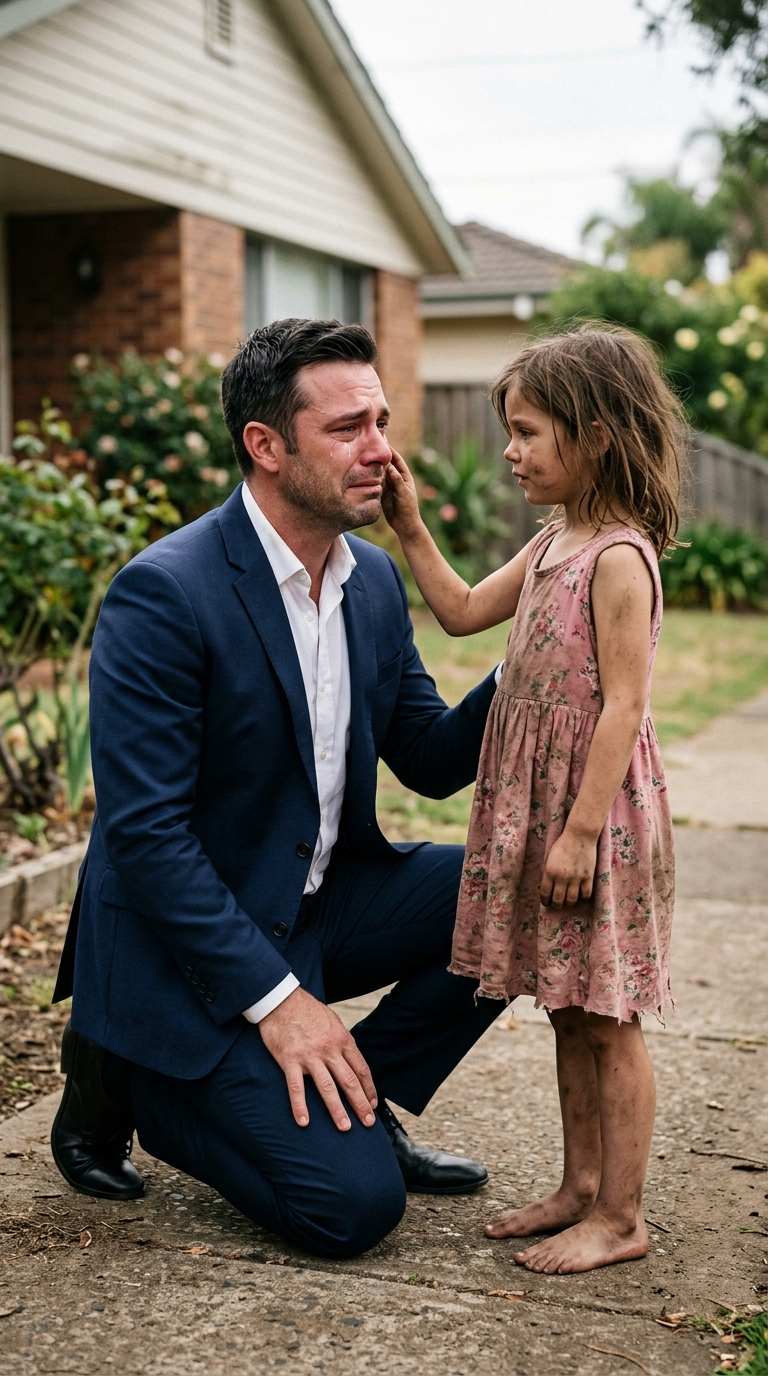
He stopped, irritation rising at first. In front of him stood a little girl, no more than five. Her curls were tangled around her face, her oversized T-shirt fell past her knees, and her sneakers were nearly worn through. But her eyes—clear, steady, unafraid—met his directly.
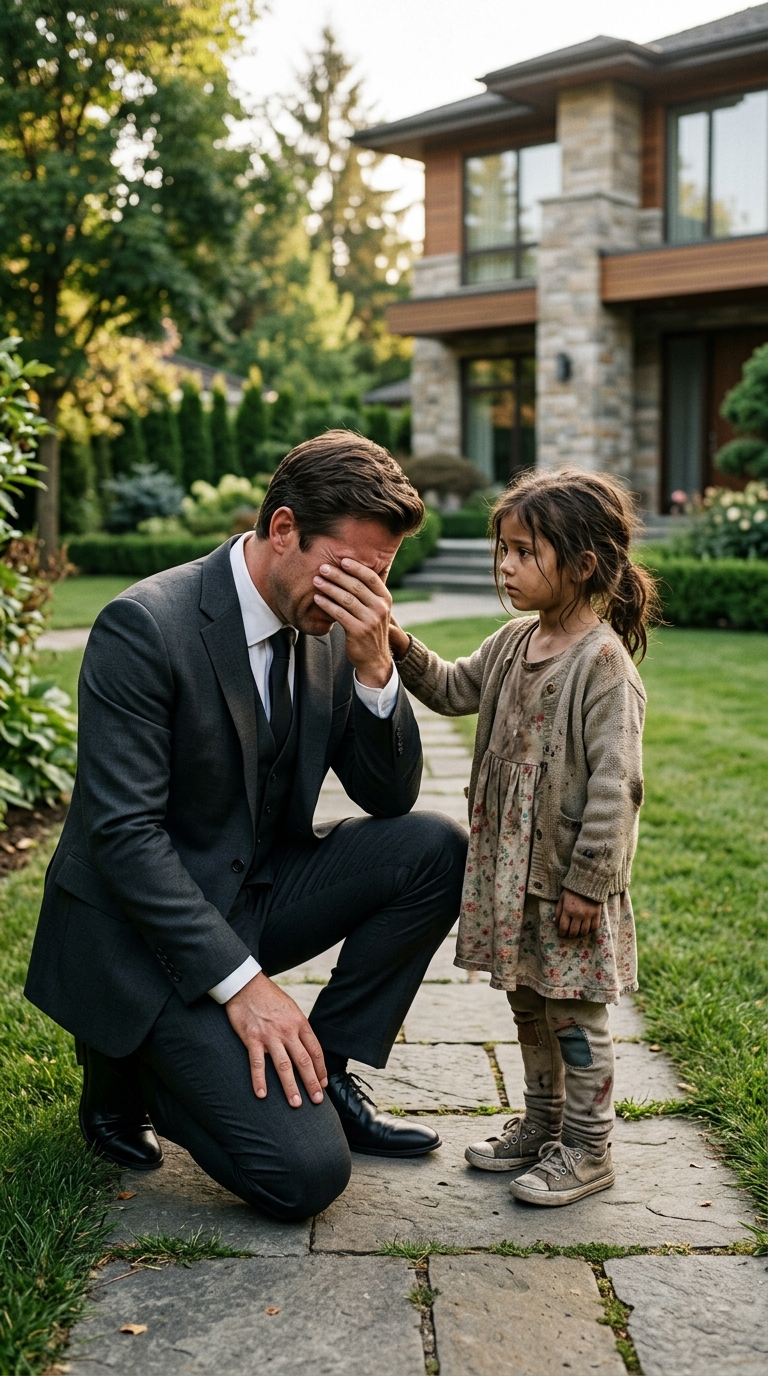
“You look sad,” she said gently.
Alex let out a short, automatic laugh. The kind meant to deflect.
“Sad? I’m doing just fine. What would you know about that, kid? Where are your parents?”
She didn’t step away. She didn’t ask for anything.
Instead, she clasped her small hands together and closed her eyes.
“Can I pray for you?”
Alex glanced around, expecting laughter, a hidden camera, someone recording the moment. But there was no one. Just the restless city and this child standing quietly in front of him.
“I don’t believe in that stuff,” he muttered, already shifting his weight as if to leave.
But she had already begun.
“Heavenly Father… please take care of this man who smiles with his mouth but not with his heart. He lost someone he loves very much. He thinks it was his fault. Please help him forgive himself.”
Alex’s smirk disappeared instantly.
What kind of child says something like that?
Then she continued, soft and certain:
“And please watch over Emily… the one he still talks to at night when no one can hear.”
The world tilted.
Emily.
No one said that name. Not for years. Not since the accident. Not since the hospital hallway and the silence that followed.
Alex’s breath caught. He reached for a nearby streetlight to steady himself.
“How do you know that name?” His voice cracked in a way it hadn’t in over a decade.
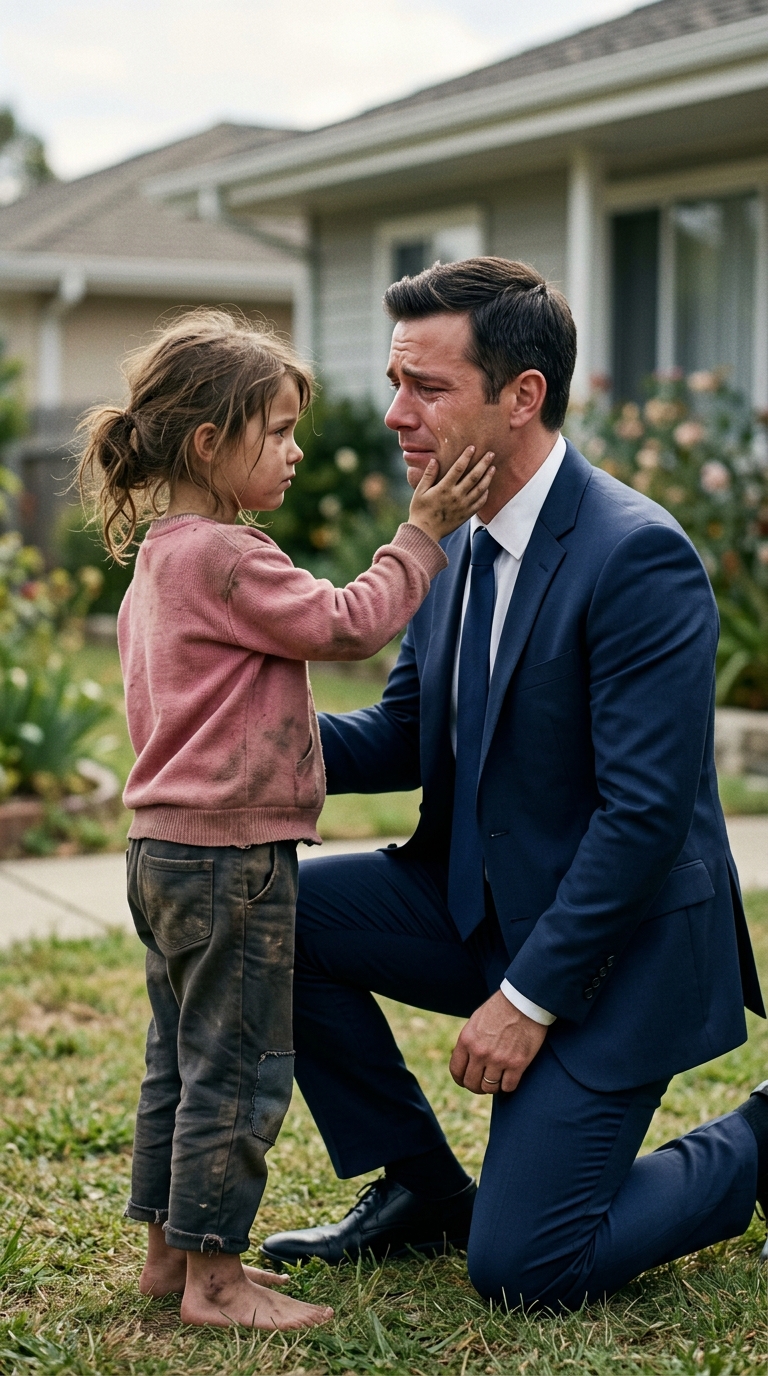
The girl opened her eyes, studying him with quiet curiosity.
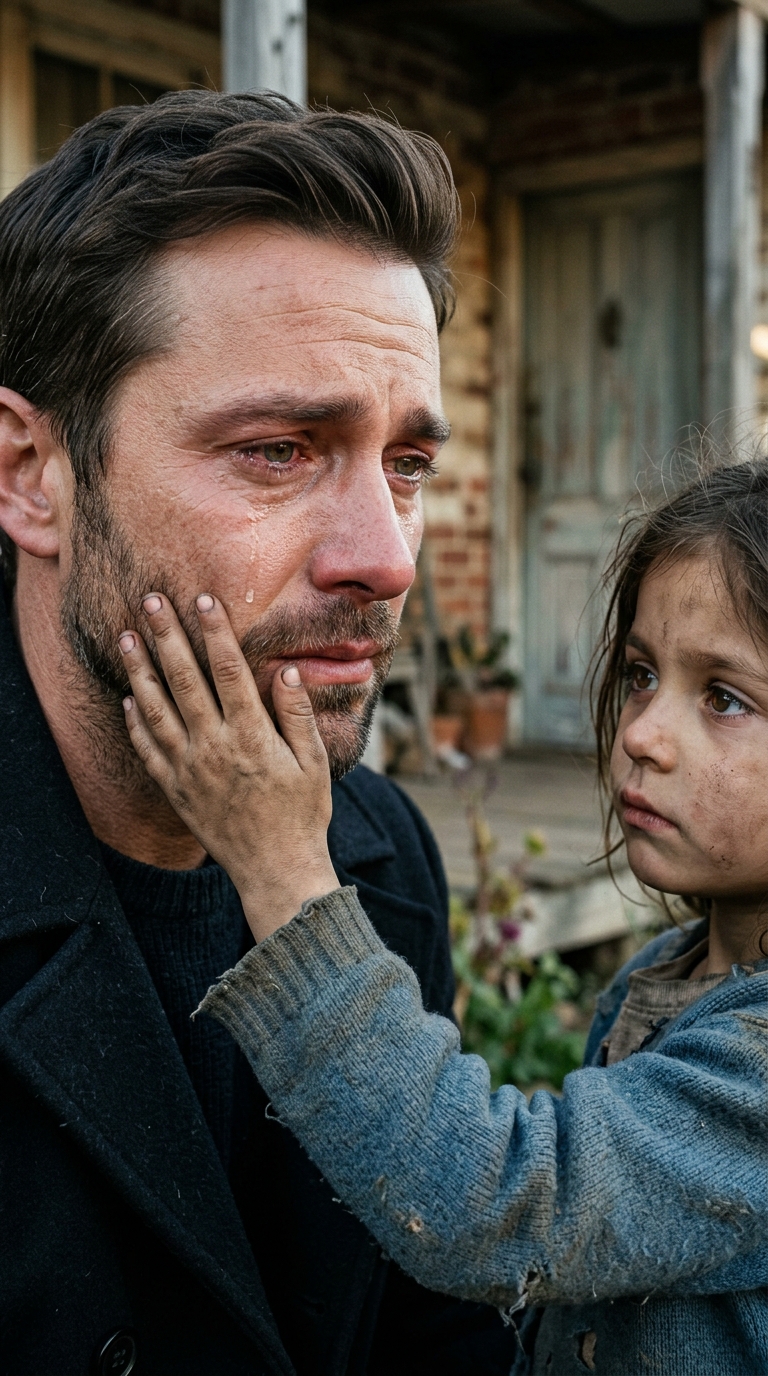
“Sometimes when you pray,” she said simply, “God tells you the right words. Your face is wet.”
He touched his cheek. Tears. He hadn’t even realized they were falling.
“What’s your name?” he asked hoarsely.
“Grace Parker. But Grandma Evelyn calls me Gracie. We live right over there.”
She pointed toward a narrow side street Alex had passed countless times without ever noticing—a thin gap between towering steel and marble buildings.
“I’ll walk you home,” he said quietly. “And maybe I can help your grandmother out.”
Gracie shook her head with surprising seriousness.
“You don’t have to give money. I promised Grandma I would pray for people who look lonely. You’re number nine today.”
Number nine.
Something tightened painfully in his chest. When was the last time anyone noticed his loneliness without expecting something in return?
They walked down the narrow street together. The sounds of Manhattan softened—laughter, a radio playing old songs, the clatter of dishes. Hidden behind the towering skyline was a small neighborhood of aging brick apartments and modest storefronts. Laundry hung between fire escapes. Children chased a dented soccer ball.
A different world.
Gracie stopped in front of a pale yellow building with peeling paint.
“Here.”
The door opened before they even knocked. A slender woman in her late sixties stood there, her silver hair tied back, her eyes both sharp and warm. When she saw Alex, her expression shifted—confusion, disbelief, then something deeper.
“Oh… my,” she whispered.
“Grandma, this is the sad man,” Gracie said proudly. “He came with me.”
The woman didn’t smile. She stared at Alex as if time itself had folded inward.
“What did you say your name was?” she asked carefully.
“Alexander Whitman.”
Her hand trembled slightly against the doorframe.
“Whitman?” she repeated. “Your father wasn’t Thomas Whitman, was he?”
Alex went still.
“Yes. He was.”
The woman drew in a sharp breath.
“I’m Evelyn Carter,” she said softly. “Your mother’s sister.”
The world fell silent again—but this time, in a different way.
“I… I was told my mother had no family,” Alex said, his thoughts racing.
“That’s what your father wanted you to believe,” Evelyn replied gently. “After the fight. After he took you away.”
Memories flickered—voices raised behind closed doors, a suitcase by the wall, his mother crying quietly at the kitchen table. He had been seven.
“I searched for you for years,” Evelyn continued. “But your father closed every door.”
Alex felt the air around him grow thin.
Gracie looked up at both of them, confused but sensing something meaningful unfolding.
“You lost someone,” Evelyn said softly, studying his face. “Your eyes carry it.”
“My wife,” Alex whispered. “Emily. Ten years ago. Car accident. I was driving.”
Evelyn stepped forward without hesitation and gently placed her hand over his.
“Guilt is a prison you build yourself,” she said. “But love was never meant to end in punishment.”
Something inside him finally broke open completely.
They sat together inside the small apartment, sunlight filtering through thin curtains. Family photographs lined the walls—faces he had never known, yet somehow recognized in himself.
For the first time in years, Alex spoke about Emily. About the argument before the crash. About that single moment of distraction. About the weight he had carried alone ever since.
Gracie climbed into his lap halfway through, as if it were the most natural thing in the world.
“You’re not alone anymore,” she said simply.
He held her gently, afraid he might fall apart.
In that small living room, surrounded by people who had almost nothing materially, Alex felt something he hadn’t felt in years: warmth.
He began visiting every week. Then twice a week. He quietly funded renovations in the neighborhood—anonymously. Not as charity, but as connection. He created a foundation in Emily’s name to support families affected by road accidents.
But more importantly, he allowed himself to grieve.
He allowed himself to forgive.
Months later, standing once again on Fifth Avenue, the city still roared the same way. His phone still buzzed with business calls. His suit still fit perfectly.
But the hollow space inside his chest was no longer empty.
Because a barefoot little girl had looked at him and seen what he had hidden from the world.
And with a simple prayer, she had returned the part of him he thought was lost forever.
