

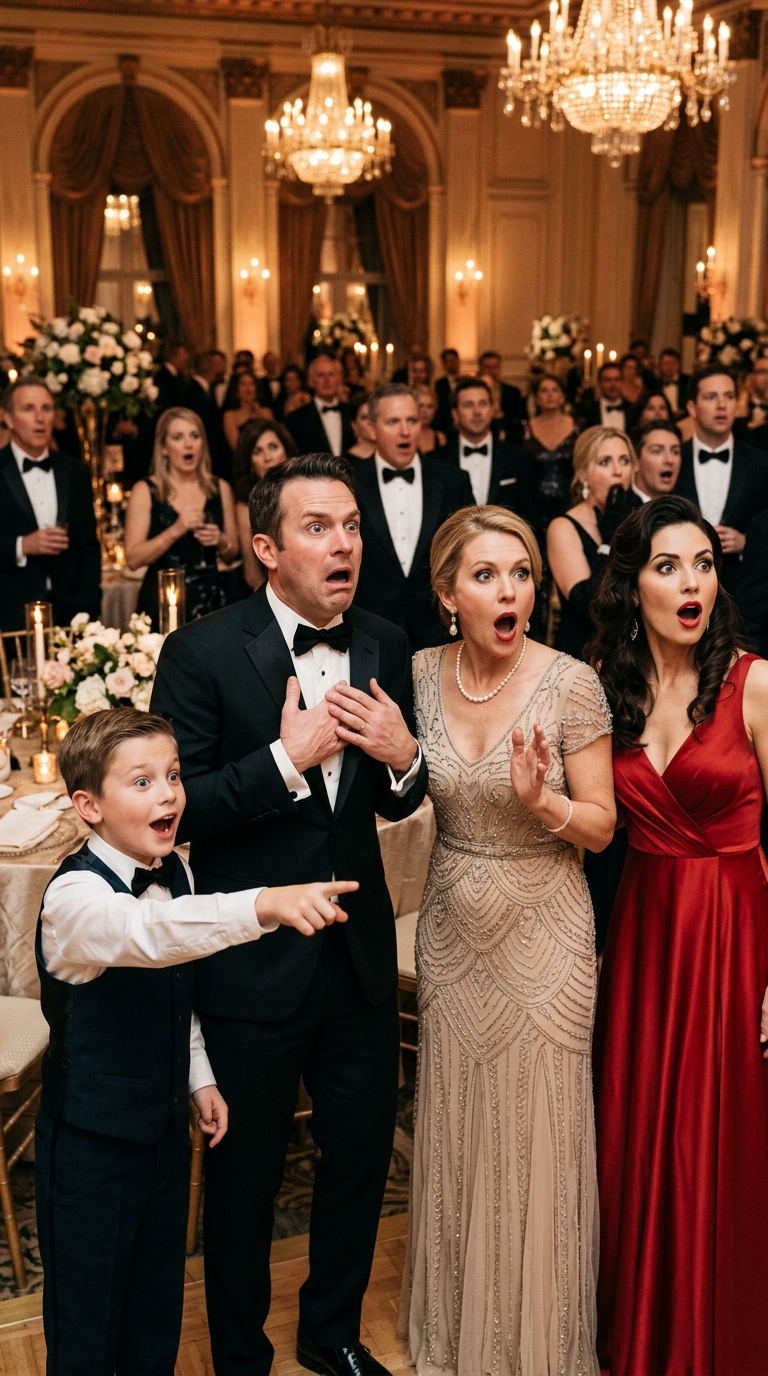
It was supposed to be perfect—Michael’s 45th birthday, an evening meant for warmth, laughter, and familiar company.
Sarah had spent weeks planning every detail: the softly glowing backyard, the gentle drift of jazz in the air, and the comforting aroma of food blending with the cool autumn breeze. She had even rearranged the string lights three times the night before, just to make sure they looked “right,” telling herself it mattered because moments like this held a family together.
Their six-year-old son, Lucas, stayed close beside her, quietly observing everything, while Michael moved easily among the guests, charming everyone as he always did. A few colleagues from his firm laughed a little too loudly at his jokes, and someone raised a toast early, as if afraid the evening might slip away if they didn’t secure its happiness.
Then, in a single moment, everything fell apart. Lucas tugged gently on her sleeve, his voice suddenly serious. “Mom… I saw Dad kissing that lady outside.”
Sarah felt her stomach drop. For a second, she almost asked him to repeat it—almost told herself he must have misunderstood—but the look on his face stopped her. She followed his eyes and noticed a tall woman in a red dress standing near the gate, half-turned toward the streetlight, her posture tense.
The lively mood of the night seemed to drain away. Conversations stalled mid-sentence. Michael stood frozen, a glass paused in his hand, while the woman turned her face away as if trying to disappear into the shadows. Even the music from the speaker felt suddenly too loud, too exposed.
“Lucas, you’re mistaken,” Michael said quickly, though uncertainty slipped into his voice. He set the glass down too carefully, the clink louder than it should have been.
But Lucas shook his head. “No. It was Dad. Near the car.”
A wave of whispers spread through the guests. Someone awkwardly excused themselves to check on food inside. Another pretended to take a phone call. Sarah stood still, gripping her glass so tightly her fingers ached as shock slowly turned into a heavy numbness.
One by one, guests began to leave, unwilling to remain in the rising tension. Chairs scraped softly against the patio tiles, laughter replaced by uncomfortable silence. Even the lights seemed colder now.
Michael stepped closer to her. “It’s not what you think.”
“Then explain it,” she said quietly. “Our son saw you.”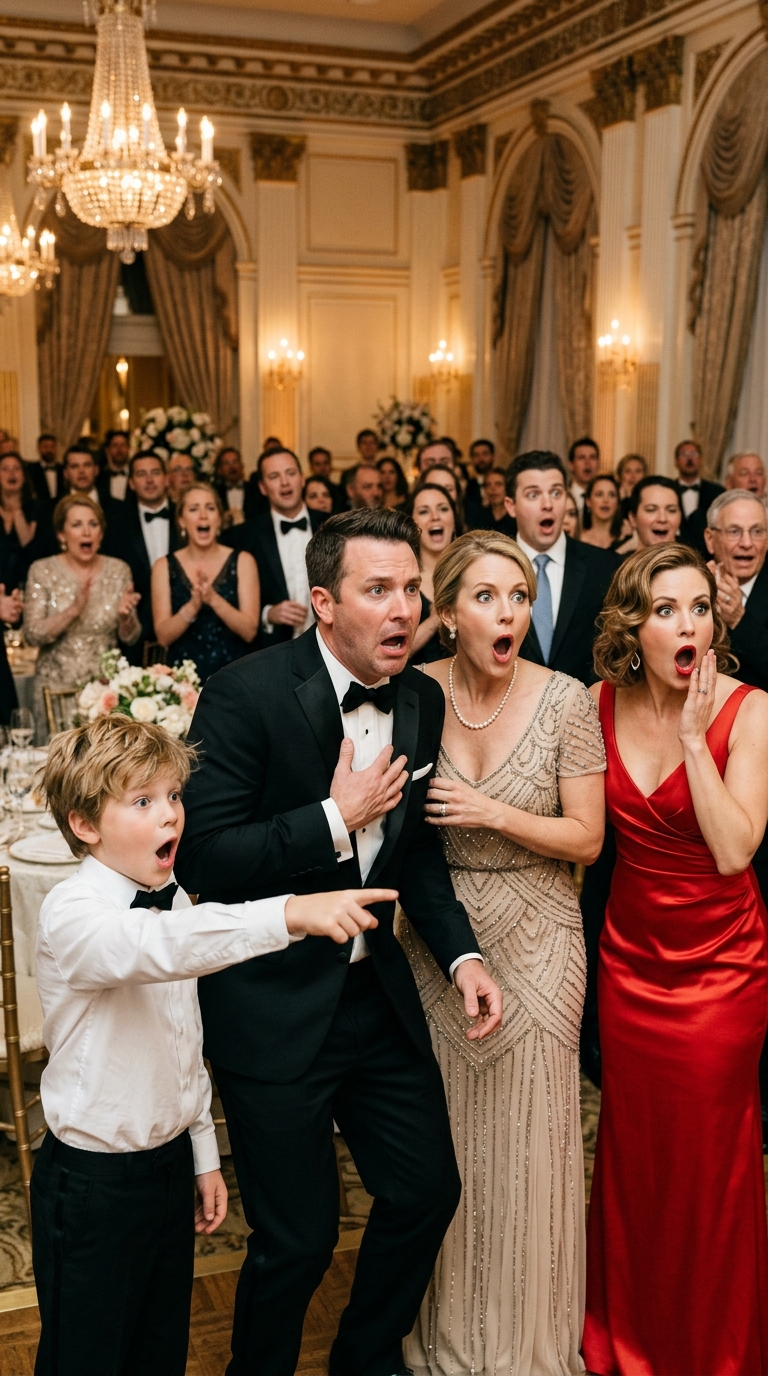
A long silence followed. Somewhere in the yard, a decorative wind chime tapped faintly, absurdly normal. Then Michael finally spoke. “I messed up.” Those words broke something inside her. Tears came slowly, silently, as if even her body refused to make it louder than it already was.
Later that night, after Lucas was asleep, Sarah sat alone scrolling through old photos—fragments of moments that now felt distant, almost чужие. She paused on one image of a beach trip, where everything looked lighter, simpler, as if that version of her life belonged to someone else entirely.
When Michael said he would sleep in the guest room, she only nodded, too drained to respond. The sound of his footsteps down the hall felt heavier than any argument.
In the weeks that followed, the story moved beyond their home. Sarah stayed strong for Lucas, even as everything around her shifted. School drop-offs became quieter; she avoided other parents’ eyes, sensing unspoken curiosity. Lucas, though young, stopped asking why Daddy wasn’t sleeping in their room. He simply adjusted in the way children do—silently, carefully.
Michael tried to apologize again. Once at the house, once over a phone call that ended too quickly. Each time, Sarah replied calmly: “You didn’t just hurt me—you broke his trust too.”
At night, she sometimes heard Lucas moving in his bed, and she would sit outside his door longer than necessary, listening just to make sure he was asleep.
Months later, she sat on a park bench, watching Lucas laugh as he chased pigeons. Her wedding ring was gone, the divorce finalized. The air felt different now—not lighter exactly, but less suffocating.
Michael now visited on weekends; their conversations were polite, but distant. He brought snacks Lucas liked and always tried a little too hard to sound normal, as if normal could be rebuilt through effort alone.
One afternoon, as they exchanged Lucas’s school bag, Michael spoke quietly. “You’re stronger than I ever realized.”
Sarah offered a faint, tired smile. “I had to be. For him.”
“I wish I could undo it,” he said.
“You can’t,” she replied softly. “But you can show him what responsibility looks like.”
That night, alone in the quiet of her home, Sarah felt the weight of pain ease—just enough for a small sense of hope to return. Not forgiveness, not forgetting, but something steadier: acceptance.
A few weeks later, she posted a photo of Lucas online—his face covered in ice cream, smiling without a care. The image was slightly blurry, taken mid-laugh, the kind of imperfection that made it feel real.
The caption read: “Some truths break you. Others set you free.” Messages came in from people who understood, some sharing their own quiet versions of the same story. She didn’t reply to most of them, but she read every one.
Her story wasn’t unusual, but the way she chose to move forward made it hers.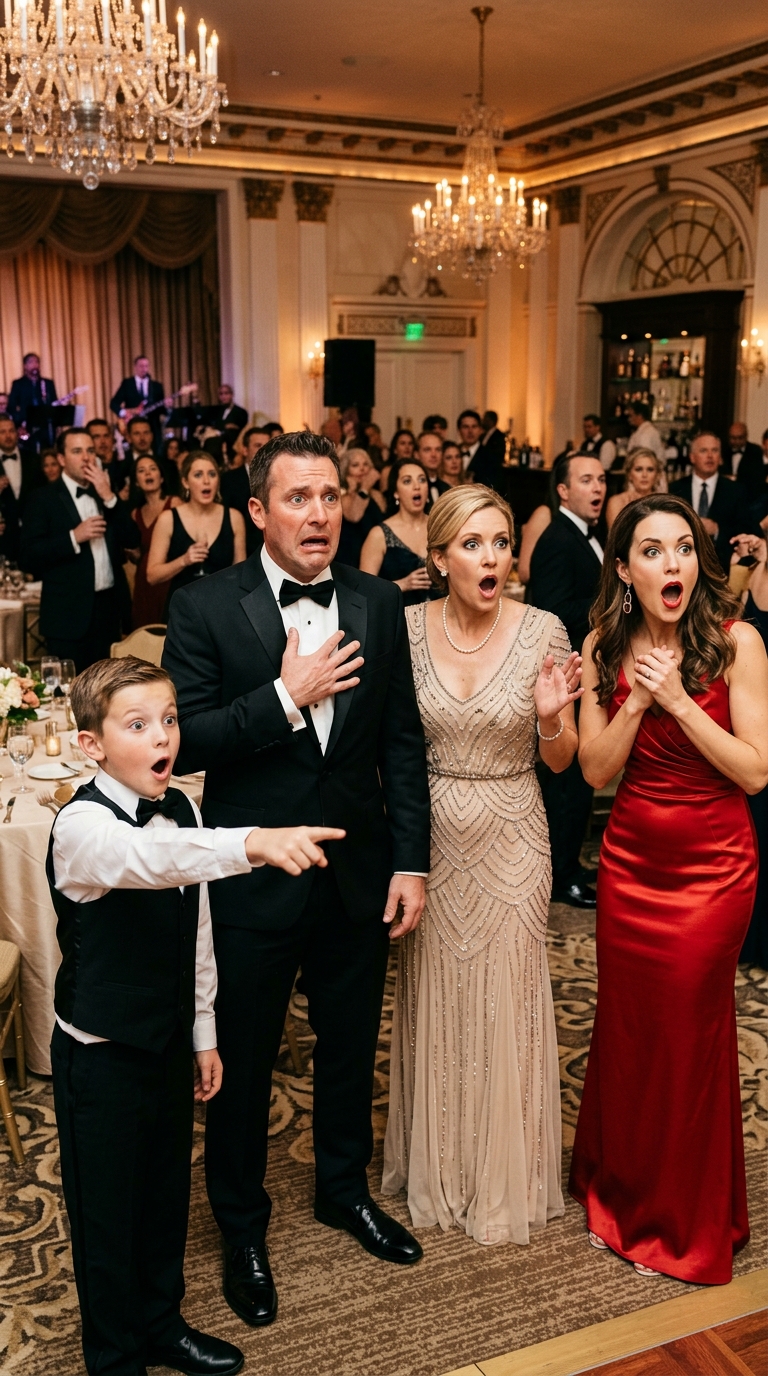
That evening, as she tucked Lucas into bed, he looked up at her. “Mom, are you still sad about Dad?”
“A little,” she admitted, kissing his forehead. “But we’ll be okay.”
He smiled sleepily. “Yeah… we’re okay.”
In that quiet moment, Sarah understood something important: life hadn’t turned out as expected—but it had become more honest, more real, and, in time, stronger than before.
