

PART 1
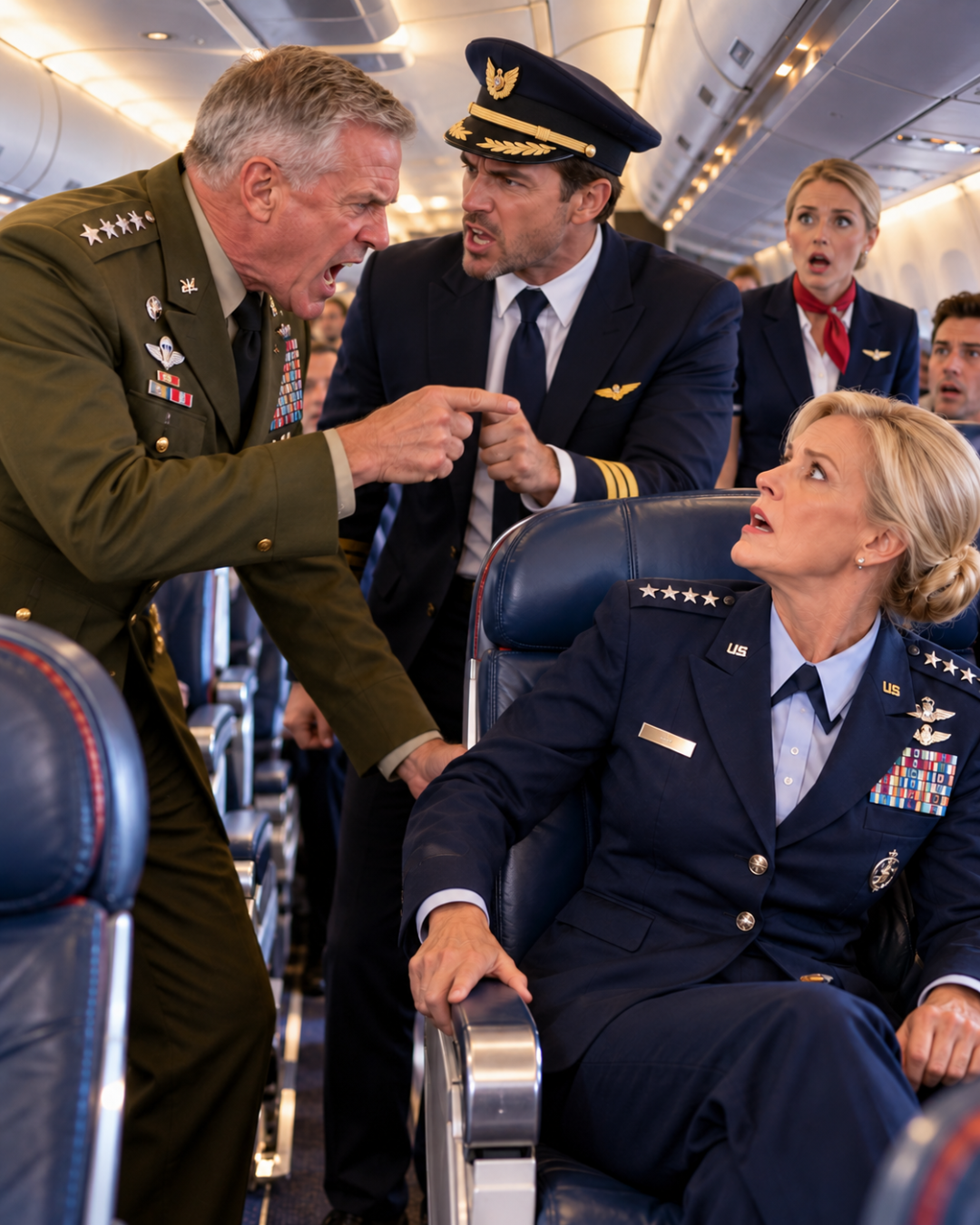
“You’re in my assigned seat.”
The Army major barely raised his eyes toward me. He slid his worn leather briefcase beneath seat 2A, made himself comfortable beside the window, and answered without concern.
“Apparently, not anymore.”
My name is Rebecca Hale. I was fifty-two years old, a newly retired Chief Master Sergeant of the United States Air Force, and less than twelve hours had passed since my retirement ceremony in Colorado.
After twenty-six years of military service, I wanted nothing more than to get home to Montana.
At the boarding gate, an airline employee had unexpectedly offered me a complimentary upgrade to first class.
My new assignment was seat 2A.
I had boarded early, stowed my carry-on in the overhead bin, and stepped aside so an elderly passenger could pass.
During those few seconds, Major Daniel Mercer of the United States Army had taken my seat.
I showed him my boarding pass.
“Major, I believe you’ve been assigned a seat in a different row.”
His eyes dropped to the retirement insignia on my lapel before moving toward the old Air Force garment bag above us.
“You served as enlisted?”
“That’s right.”
A contemptuous little laugh escaped him.
“Well, I happen to be a commissioned officer.”
A flight attendant quickly approached and stood between us.
“Sir, may I see your boarding pass, please?”
Mercer handed it over as though the outcome were already decided.
She checked the information and politely explained.
“Major Mercer, your seat assignment is 3C.”
His smug expression vanished.
“I’m not going to sit behind an enlisted military member.”
For a moment, I wondered whether I had misunderstood him.
The attendant appeared equally stunned.
“Sir, military rank has nothing to do with airline seating assignments.”
“She was upgraded. Move her to another seat.”
“Major, please—”
I raised one hand gently.
“It’s okay.”
The attendant faced me immediately.
“Ma’am, you are under absolutely no obligation to do that.”
“I’m aware.”
Mercer leaned comfortably against the seat, wearing the satisfied expression of a man who believed he had won.
I retrieved my bag from the overhead compartment.
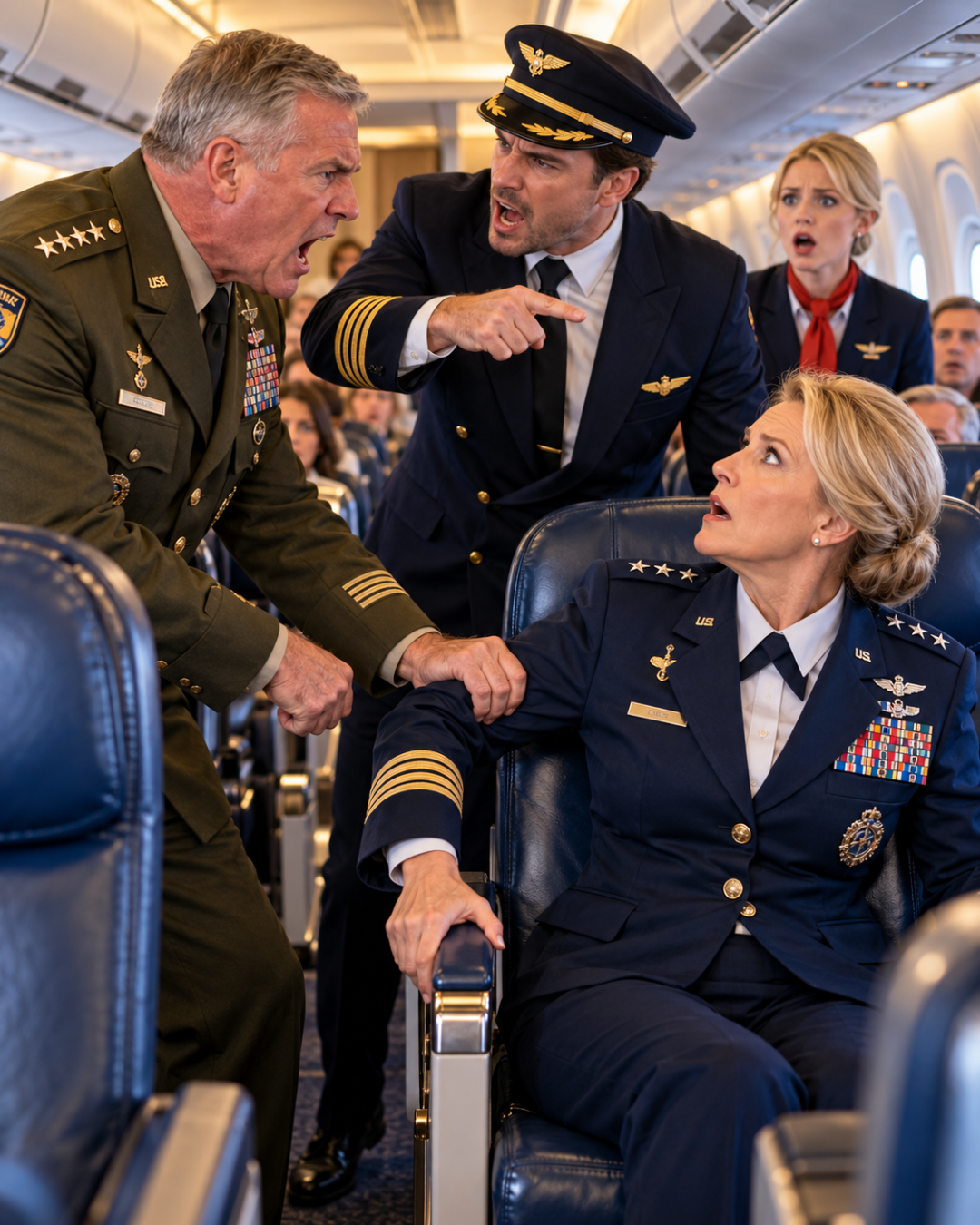
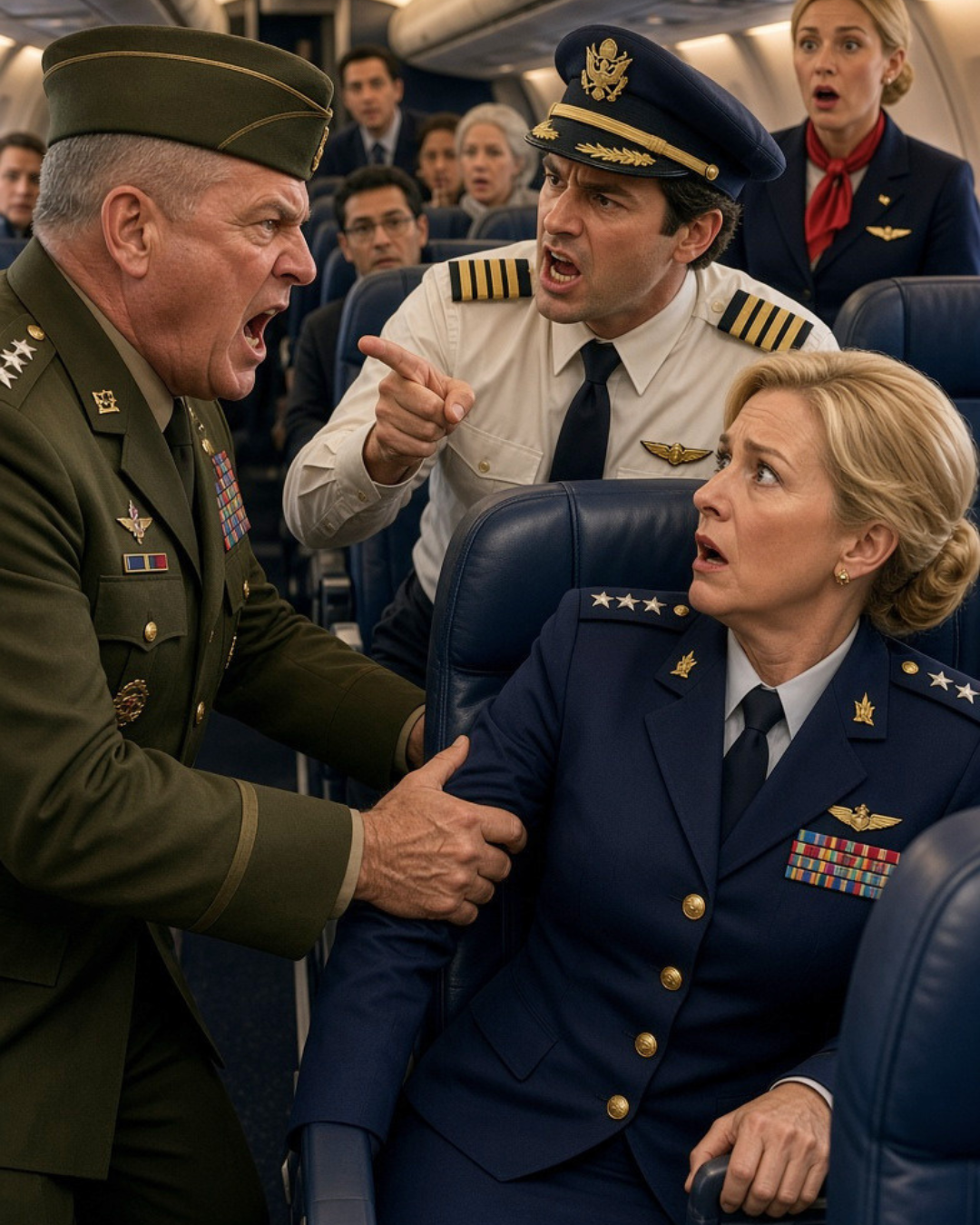
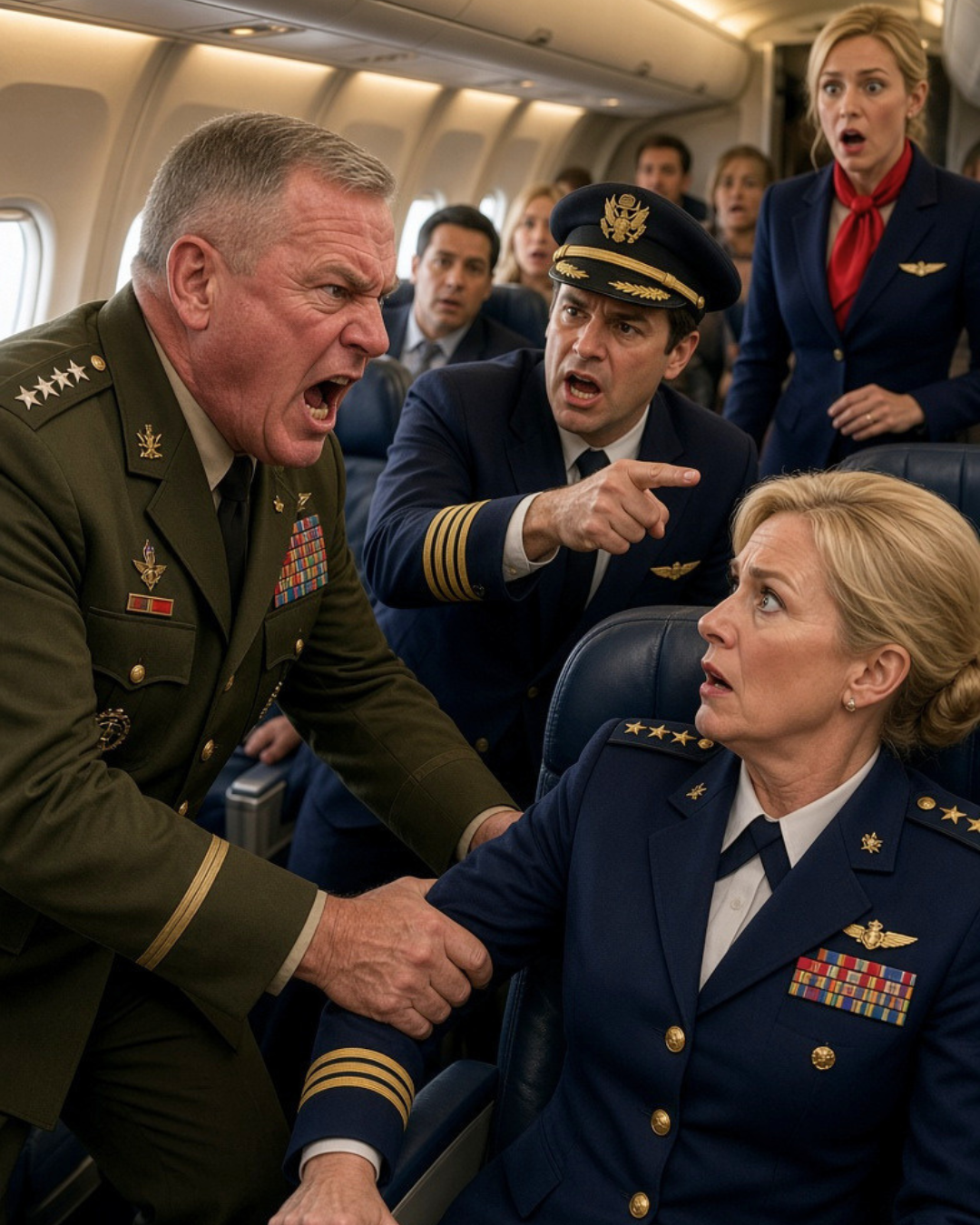
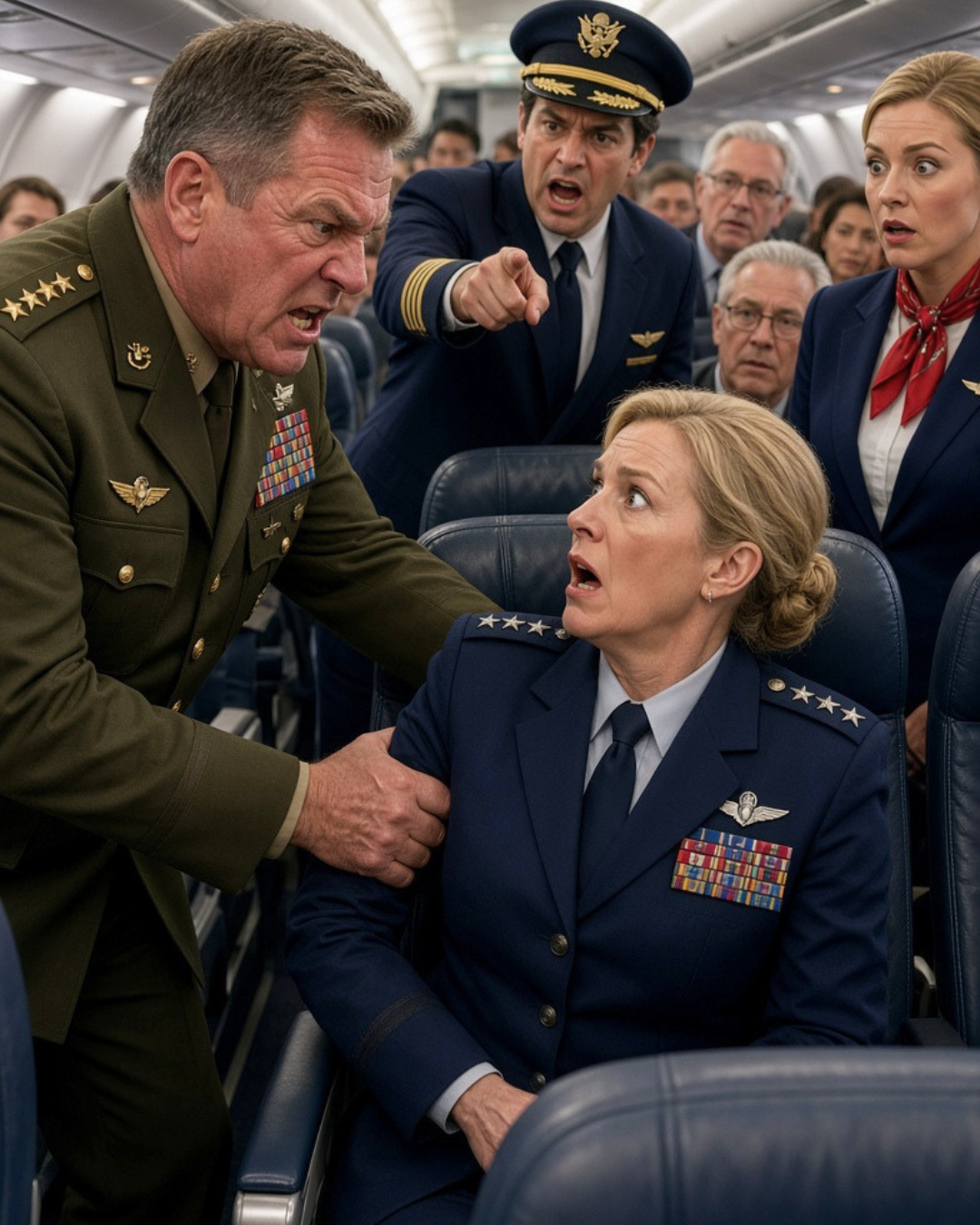
But when I turned to leave, his fingers suddenly closed around my wrist.
He wasn’t squeezing hard enough to injure me. His grip was simply firm enough to stop me.
“You’re forgetting something.”
He pressed my folded retirement ceremony program against my chest.
I looked down at his hand, then slowly raised my eyes.
“Let go of me.”
My voice was quiet, but something in it made him release me immediately.
Without another word, I continued down the aisle until I found the only unoccupied seat remaining.
31B.
A middle seat near the back.
Beside me sat an elderly gentleman wearing a Vietnam veteran baseball cap. He shifted closer to the window to give me room.
“Not having much luck getting promoted to the front of the airplane today?”
Despite everything, I laughed.
“You witnessed that?”
“I’d say at least half the passengers on this plane saw everything.”
He offered his hand.
“Walter Briggs.”
“Rebecca Hale.”
Recognition flickered across his face.
“Chief?”
“As of this morning, officially retired.”
His handshake was surprisingly strong.
“Well, congratulations, Chief. You’ve certainly earned it.”
Those simple, sincere words touched me more deeply than he could have known.
Soon afterward, the cabin doors were secured.
I had just fastened my seat belt when the cockpit door opened.
A tall pilot emerged, apparently in his mid-forties, with dark hair beginning to turn silver around his temples.
He walked directly into first class.
Mercer immediately rose halfway from his seat and extended his hand.
“Captain.”
The pilot passed him without stopping.
He continued through the forward cabin, moving past row ten, then fifteen, then twenty.
Passengers began turning their heads.
A peculiar silence spread through the aircraft as the captain continued toward the rear.
When he reached row thirty-one, he stopped directly in front of me.
Our eyes met.
Neither of us spoke for several seconds.
Then recognition transformed his expression.
“Chief Hale?”
My heart seemed to stop.
I knew that voice.
But the last time I had heard it, it belonged to a frightened twenty-year-old airman who believed his future had already been ruined.
Now the man before me wore four gold stripes on his shoulders.
“Evan?” I whispered.
Captain Evan Cole broke into a warm, unmistakably genuine smile.
He straightened into a position of attention.
Then, speaking loudly enough for the surrounding passengers to hear, he said:
“Ma’am, I’ve spent the last fifteen years trying to find you.”
For a moment, the only sound I could register was the soft airflow circulating through the cabin.
Evan remained standing at attention beside my row.
I remembered him with a duffel bag beside his boots and a letter clutched in his hand, convinced that his military career had ended almost before it had begun.
Now he stood before me as an airline captain.
Older. Calmer. More confident.
Yet somehow still the same young man.
I started to rise, limited by my seat belt.
“Captain Cole,” I said quietly, “you don’t have to stand at attention.”
His smile widened, though his eyes were beginning to shine.
“I know, Chief. I wanted to.”
Passengers nearby leaned subtly toward the aisle.
Walter watched us with obvious curiosity but remained respectfully silent.
Evan lowered his voice.
“May I sit here for a moment?”
I nodded.
He moved into the narrow space beside my row, steadying himself against the overhead compartment while I loosened my belt.
The flight attendant returned from the galley with a folding jump seat.
“Captain, you can use this,” she whispered.
“Thank you.”
He unfolded it and sat opposite me, facing the cabin.
His knees were almost touching mine.
Looking past him, I noticed Mercer standing in the first-class aisle.
He had not resumed his seat.
One hand rested on the seatback ahead of him, and his face remained pale.
Evan glanced in his direction once before returning his attention to me.
“I’m sorry,” he said.
The apology surprised me.
“For what?”
“For taking so long.”
I studied his face.
Behind the polished uniform and captain’s stripes, I could still recognize the airman who had appeared outside my office at two in the morning, certain that needing help meant he was weak.
“You didn’t take too long,” I said. “You had a life to live.”
“I did.”
He lowered his gaze.
“Because you made sure I got one.”
The cabin seemed even quieter.
I glanced toward the cockpit.
“Are you flying this plane?”
“I’m the captain.”
“I gathered that.”
He laughed softly.
“My first officer is handling the preflight checks. We’re still waiting for clearance to push back. I saw your name on the passenger manifest when I reviewed it before boarding.”
“You saw my name?”
“I thought it was a coincidence. Rebecca Hale is not exactly an uncommon name.”
“Not in Montana.”
“Not in Colorado either.”
His gaze settled on the insignia pinned to my lapel.
“Then one of the gate agents mentioned that a retired Air Force chief had received an upgrade. I asked to see the passenger list again.”
“And came looking for me.”
“I came to confirm it was you.”
He paused.
“Then I saw you sitting in the back.”
I looked toward the first-class cabin.
“And saw Major Mercer in my seat.”
Evan’s expression tightened slightly.
“I saw enough.”
“Evan, please don’t make this about him.”
“It isn’t.”
He leaned closer.
“That’s the part I need you to understand. I didn’t come out here because of the major. I came because I found you.”
His sincerity weakened the defenses I had been holding in place all day.
Walter adjusted his position beside me, quietly trying to give us some privacy.
I lowered my voice.
“You said you’d spent fifteen years trying to find me.”
“I did.”
“Why?”
Evan drew a long breath.
“Because you disappeared.”
“I was reassigned.”
“You stopped answering my letters.”
“I never received any letters.”
The change in his face was subtle but unmistakable.
It was the expression of someone discovering that a painful belief had rested on a misunderstanding.
“You never received them?”
“No.”
He leaned back.
“I sent twelve.”
I stared at him.
“Where?”
“To the address listed in your personnel records. I thought you were stationed at Ramstein.”
“I was at Ramstein for three years. Then I went to Korea.”
“I sent them to the base postal address.”
“Which one?”
He named a housing complex near the installation.
I recognized it at once.
“That wasn’t my address,” I said. “It was my former unit’s family housing office. I moved out before I left Germany.”
“I didn’t know that.”
“Evan, you could have contacted the squadron.”
“I did.”
I frowned.
“To whom?”
“Your first sergeant.”
A strange heaviness settled over me.
My first sergeant in Germany had been Master Sergeant Harold Vance, an organized and respected man who seemed incapable of losing paperwork or forgetting anyone’s birthday.
“He told you what?”
Evan looked down.
“That you didn’t want any contact with me.”
My stomach tightened.
“I never said that.”
“I know that now.”
“Who told you?”
He hesitated.
“Does it matter?”
“Yes.”
Before he could explain, the attendant approached.
“Captain, we’ve received clearance to close the cockpit door.”
Evan acknowledged her but stayed seated.
She looked between us.
“Would you like me to ask the first officer to handle the departure announcement?”
“For a few minutes,” he said.
She nodded discreetly and headed forward.
When she was gone, Evan looked directly at me.
“Chief, I need to tell you why I tried to find you.”
I placed my hands together in my lap.
“I’m listening.”
He suddenly seemed older, not because of his appearance but because of the burden visible in his expression.
“After you left Germany, I stayed in the Air Force. I made staff sergeant in four years, then applied for officer training. I was turned down twice.”
“That doesn’t sound like you.”
“It wasn’t because of performance. It was because of the recommendation in my file.”
A chill passed through me.
“What recommendation?”
“A note from my commander stating that I had difficulty accepting responsibility and relied excessively on senior enlisted personnel for personal guidance.”
I stared at him.
“Who wrote that?”
“I don’t know. It was never signed.”
“That’s not how official recommendations work.”
“I learned that later.”
From his uniform pocket, he removed an old envelope with worn, softened edges.
“I kept a copy.”
He handed it to me.
Inside was a photocopied document.
I read it once.
Then again.
Its language was formal and controlled, but the accusations were devastating.
It characterized Evan as unreliable under pressure, evasive when questioned, and unfit for command responsibility.
At the bottom was a typed name.
Master Sergeant Rebecca Hale.
I felt the breath leave my lungs.
“That isn’t my signature.”
“I know.”
“I never wrote this,” I said.
“I know that too.”
“Then why did it exist?”
Evan held my gaze.
“That’s what I spent fifteen years trying to discover.”
The page trembled slightly between my fingers.
For the first time since boarding, the argument over seat 2A seemed utterly insignificant.
Someone had used my name to damage the future of a young airman I had once promised to help.
And the man sitting before me had carried that betrayal for fifteen years.
PART 2
I kept staring at the photocopied report.
My name appeared at the bottom, yet the signature was not mine.
Everything about the document felt wrong.
“Why didn’t you report it?” I asked.
“I did. The investigation concluded there wasn’t enough evidence to determine who had created the document. They called it an administrative error.”
“Administrative errors don’t imitate signatures.”
“This one did.”
My fingers tightened around the paper.
“I never had access to your evaluation files.”
“You had access to my training reports.”
“I was your flight chief, not your commander.”
“I know.”
“And I would never have written anything like this.”
“I know,” he repeated.
There was no accusation in his voice.
That almost made it harder.
“Then how did it affect your career?”
“For a while, it didn’t. I was still promoted, but every board saw the note. I became the person everyone considered almost qualified.”
He gave a small, humorless smile.
“Almost dependable. Almost ready.”
I looked back at the document.
“What changed?”
“You did.”
“I wasn’t there.”
“No. But the things you taught me were.”
His voice grew softer.
“I remembered what you told me the night I came to your office. You said that a bad report was information, not a verdict. You told me to stop trying to prove I wasn’t weak and start becoming dependable.”
The memory returned immediately.
Evan had been twenty, overwhelmed by guilt after a trainee under his supervision experienced a medical emergency.
The trainee had hidden a medical condition, and the incident had not resulted from Evan’s negligence.
But he blamed himself anyway.
For three hours, I had helped him understand the difference between responsibility and guilt.
“You were always going to recover,” I said.
“No. I wasn’t.”
“You were.”
“I was ready to leave.”
“You told me that.”
“I had already packed.”
I could still picture the duffel bag, the loose bootlaces, and his eyes fixed on the floor.
“I told you not to make a permanent decision during a temporary crisis,” I said.
“You told me to wait seventy-two hours.”
“And you did.”
“I waited seventy-two hours. Then I waited another seventy-two. After that, I reported for duty.”
I smiled.
“And eventually applied for officer training.”
“Eventually.”
“Why didn’t you tell me?”
“I tried.”
He touched the envelope.
“After my first rejection, I wrote to you. I wanted to tell you that I hadn’t quit. I wanted you to know that the young airman who had shown up in your office was still trying.”
“I never received it.”
“I know.”
We sat quietly while the cabin ventilation hummed around us.
For years, I had assumed Evan had continued with his life.
Sometimes I remembered him when another young service member struggled with shame or self-doubt.
I always hoped he had found his way.
Never once had I imagined he was searching for me.
“What happened after the second rejection?” I asked.
“I requested a formal review. The review board found that the note had been improperly added to my file.”
“Then they removed it?”
“They removed the document. They didn’t erase the impression it had created.”
He glanced toward first class.
“I was told, privately, that people remembered concerns even after paperwork disappeared.”
“That’s not fair.”
“No. But the military is made of people, and people remember what frightens them.”
He clasped his hands.
“I could have left then. Many friends told me to. Instead, I applied for a different commissioning route. The process took two years.”
“And you got in.”
“On the third attempt.”
“I’m not surprised.”
“Neither was my wife.”
I looked at him with renewed interest.
“You’re married?”
“For eleven years.”
“Children?”
“Two daughters. Nine and six.”
Warmth spread through my chest.
“I’m glad.”
“So am I.”
His eyes returned to the envelope.
“I wanted to find you before my oldest daughter was born. I wanted to tell you that the person you helped became someone worth trusting.”
“Evan, you didn’t need to prove that to me.”
“I needed to prove it to myself.”
There was nothing I could say to diminish the meaning of that admission.
The first officer’s voice came over the speakers, welcoming passengers and beginning the safety announcements.
Evan remained in the jump seat.
Then a shadow appeared beside us.
Mercer had come down the aisle from first class.
He stopped and addressed Evan.
“Captain,” he said.
Evan turned.
“Major.”
“I believe there has been a misunderstanding.”
“No,” Evan replied. “There hasn’t.”
Mercer’s jaw tightened.
“I was unaware that the passenger was personally known to you.”
“That has nothing to do with her seat assignment.”
“I wasn’t trying to cause a scene.”
“You placed your hands on her.”
Mercer’s expression hardened.
“I only stopped her from leaving.”
“That is not your decision to make.”
Evan never raised his voice.
He didn’t need to.
“I apologized.”
“You did not,” I said.
Mercer looked toward me.
For the first time, his face showed something beyond entitlement.
It wasn’t quite genuine remorse, but it was closer.
“I’m sorry,” he said.
The words sounded rehearsed.
Still, even rehearsed apologies had to begin somewhere.
“Thank you.”
He gave a short nod and returned to first class.
Evan watched him leave.
“You really don’t want to make this about him,” he said.
“I don’t.”
“Why did you give up your seat?”
I looked toward the darkening runway outside.
“Because I was tired.”
“That’s not an answer.”
“It’s the truth.”
He waited.
“I had just retired. I didn’t want my last memory of military life to be an argument in an airplane. I thought moving would be easier.”
“Was it?”
“No.”
“Then why did you do it?”
I considered my answer.
“Because I spent twenty-six years choosing which battles mattered. Sometimes people mistake that for surrender.”
His expression softened.
“I never did.”
“You were twenty years old.”
“I was paying attention.”
The answer affected me more than I expected.
A galley chime sounded.
The flight attendant returned and motioned toward the cockpit.
Evan stood.
“I have to go.”
“Of course.”
He put the report back inside its envelope.
Then he paused.
“I’d like to speak with you after we land.”
“I’m going home to Montana.”
“So am I.”
I blinked.
“You’re flying this route?”
“I’m based in Seattle. This flight continues there after a short stop in Helena.”
“I’m getting off in Helena.”
“So am I.”
His smile turned playful.
“Then perhaps the Air Force has finally decided to give me one thing without making me apply three times.”
I laughed.
He produced a business card with a handwritten number and address on the reverse.
“My family lives near Helena,” he said. “My wife knows about you.”
“Your wife knows about me?”
“I’ve told her the story many times.”
“Which story?”
“The one about the chief who refused to let me quit.”
“I didn’t refuse.”
“You made quitting inconvenient.”
“That sounds more accurate.”
He smiled before glancing toward the cockpit.
“There’s one more thing.”
“What is it?”
“The forged document wasn’t the only reason I wanted to find you.”
I waited.
He briefly looked toward Mercer, then back at me.
“When the investigation reviewed my personnel file, they found a second copy of the report.”
“Where?”
“In a sealed packet inside my original training records.”
“That doesn’t make sense.”
“No. It doesn’t.”
“Who had access to those records?”
“Several people. But the packet had been opened and resealed years after you left Germany.”
My stomach tightened.
“Who found it?”
“A records officer at the Air Force Personnel Center.”
“Did they identify the person who opened it?”
“Not exactly.”
“What does that mean?”
Evan grew serious.
“The packet contained something written on the back of the original report.”
He removed a small photograph from his pocket.
It showed the reverse side of the page.
Initially, I noticed only faint pencil markings.
Then I recognized the handwriting.
My own.
My pulse quickened.
The message was brief.
Evan Cole is not the problem. Look at who benefits from making him one.
A date appeared underneath.
I knew that date.
It was the day before my departure from Germany.
“I wrote this.”
“I believe you.”
“But I don’t remember writing it.”
He nodded.
“That’s why I’ve been trying to find you. I think you knew something back then. Something you were afraid to put in the official record.”
The cockpit called for him.
Evan gave me another searching look.
“Chief, what happened the day before you left Germany?”
I studied the photograph.
Something shifted in my memory.
A locked office.
A folder hidden beneath my desk.
Harold Vance standing in the doorway.
A quiet warning that if I cared about Evan’s future, I needed to forget what I had seen.
Evan started toward the cockpit.
“Rebecca?”
I raised my head.
“I remember the folder,” I said.
“What folder?”
“The one that disappeared before my transfer.”
He stopped.
I turned the photograph over.
A name had been written on the back in ink.
It wasn’t mine.
It wasn’t Evan’s.
Daniel Mercer.
I stared at the name while the captain’s voice sounded again from the front.
“Chief?”
“Go,” I said. “You need to fly the plane.”
He remained where he was.
“What are you going to do?”
“I’m going to remember.”
Concern crossed his face.
“I’ll come back as soon as we’re airborne.”
He disappeared into the cockpit.
The door closed.
I sat motionless with the photograph in my hand.
Walter watched me for a moment.
“Trouble?”
“I’m not sure.”
“That usually means yes.”
I managed a faint smile.
“Do you believe people can forget something important without knowing they’ve forgotten it?”
Walter adjusted his Vietnam cap.
“I believe the mind puts things away until a person is ready to look at them.”
“That sounds very wise.”
“No. It sounds like something my wife used to say.”
“Used to?”
“She passed six years ago.”
He turned toward the window.
“She was right about most things. I just didn’t appreciate it until after she was gone.”
His voice held tenderness rather than self-pity.
I looked again at the name.
Daniel Mercer.
Fifteen years earlier, I remembered someone connected with personnel administration in Germany.
The memory remained fragmented.
An operations corridor.
A folder beneath my desk.
Harold Vance at the doorway.
Mercer’s low, impatient voice somewhere nearby.
I closed my eyes.
The aircraft began pushing back from the gate.
Passengers settled into their seats.
The engines grew louder.
I had spent twenty-six years learning not to panic when information was incomplete.
In maintenance operations, emergency response, investigations, and command decisions, panic rarely improved anything.
You separated facts from assumptions and decided what needed to happen next.
So I started with what I knew.
The handwriting belonged to me.
I had written the note before leaving Germany.
I could not remember doing so.
Mercer’s name had been added to the photograph, although the ink appeared darker than the original markings.
And someone had intercepted Evan’s letters while a fraudulent report continued damaging his career.
The aircraft accelerated and rose into the evening sky.
I felt an uncomfortable pressure in my chest, as though a long-locked door were opening.
Walter glanced toward me.
“Chief, you don’t have to explain anything.”
“I know.”
“That’s not what I meant.”
I turned.
He touched the photograph lightly.
“Whatever it is, you’ve got time to decide what to do with it. Don’t let someone else’s urgency become yours.”
His advice was exactly what I needed.
“Thank you.”
He nodded and looked outside.
For the next twenty minutes, I remained silent, trying to reconstruct my final week in Germany.
I had been a senior enlisted leader in a communications support unit.
My stateside transfer was approved.
My belongings were already being packed.
Evan was a talented young airman in my section, not directly under my command but close enough that he often came to me for advice.
His crisis had begun after a trainee suffered an undiagnosed medical episode during a field exercise.
The trainee recovered, but Evan blamed himself for failing to recognize the warning signs.
I had tried to teach him that courage was not the absence of fear.
Sometimes courage meant returning to work after a mistake, accepting correction, and asking for help before things became worse.
Eventually, he had learned.
Or so I believed.
In first class, Mercer sat motionless, his arms folded.
Once, he glanced back.
Our eyes met.
He immediately turned away.
That reaction troubled me more than his earlier arrogance.
Arrogance was familiar.
Recognition was something else.
Had he known who I was before boarding?
Had he recognized my name?
Or had the photograph awakened a memory of his own?
When the seat-belt sign went off, I unfastened mine and walked forward.
The flight attendant stepped into the aisle.
“Ma’am, can I help you?”
“I need to speak with Major Mercer.”
She glanced toward first class.
“Would you like me to ask him to come to the galley?”
“That would be fine.”
A moment later, Mercer followed her into the forward galley.
I stayed several feet away.
Without the comfort of his first-class seat, he appeared less intimidating and considerably more uncertain.
“You wanted to speak with me?” he asked.
“I wanted to ask you a question.”
“About the photograph?”
“Yes.”
His gaze fell to my hand.
“I didn’t write that.”
“I didn’t say you did.”
“No, but you’re thinking it.”
“I’m thinking your name was written on the back of a document connected to an investigation into Captain Cole’s career.”
Mercer breathed slowly.
“Then you know more than I expected.”
“That isn’t an answer.”
He glanced toward the cockpit.
“Captain Cole shouldn’t be involved in this.”
“He has been involved for fifteen years.”
“He should have let it go.”
“Perhaps you can explain why he was supposed to.”
His jaw tightened.
Finally, he answered.
“I was a lieutenant assigned to personnel administration in Germany.”
“I remember.”
“No, you don’t.”
He spoke quietly.
“Most people didn’t remember me. I was the officer who approved forms, reviewed assignment packets, and signed recommendations when someone senior told me to sign them.”
“Did you sign Evan’s report?”
“No.”
“Did you see it?”
“Yes.”
My grip tightened around the photograph.
“When?”
“After it had already been placed in his file.”
“Who wrote it?”
“I don’t know.”
“Who told you to accept it?”
He looked away.
“A colonel in the group commander’s office.”
“Which colonel?”
“That’s the problem. I don’t know whether I should say his name.”
“Why?”
“Because he’s dead.”
I fell silent.
Mercer continued.
“He died eight years ago. Retired as a general. He had a respected career, a long list of decorations, and people who would describe him as a mentor.”
“And you’re afraid of damaging his reputation?”
“I’m afraid of pretending I know more than I do.”
“That’s not the same thing.”
“No.”
He rubbed his mouth.
“But it matters.”
I examined his face.
The officer standing before me was different from the man who had humiliated me during boarding.
Yet both versions could exist in the same person.
“Why did you take my seat?” I asked.
He looked startled.
“I told you. I didn’t want to sit behind an enlisted military member.”
“That was the answer you gave me.”
He looked away.
“I saw the chief’s insignia and assumed you were someone who had spent years taking orders from people like me.”
“That’s not what you said.”
“No.”
“Why didn’t you say it?”
“Because it sounded worse when I heard it in my own head.”
At least he was finally being truthful.
“Do you know what happened to Evan’s letters?”
“No.”
“Did you know there was a forged report in his file?”
“Yes.”
“Did you know someone had written my name on it?”
“I saw the signature.”
“Did you recognize it as false?”
“Not at first.”
My heartbeat accelerated.
“When did you realize?”
“After you left.”
“That doesn’t answer the question.”
Mercer glanced toward the cockpit.
“I was the one who told the records office to pull the report.”
“You?”
“Not officially. I was working late. I saw a discrepancy between the report and the rest of Cole’s evaluations. The language didn’t match the rest of his file. It sounded like someone describing a person they wanted removed, not an airman they had actually supervised.”
“Why didn’t you report it immediately?”
“Because the document was already part of a formal packet. I was twenty-seven years old, junior to everyone involved, and convinced that challenging it would end my career.”
“That is not an excuse.”
“No. It’s an explanation.”
I had no answer to that.
He continued.
“I made a copy. I intended to take it to the inspector general. Before I could, the file disappeared.”
“Disappeared?”
“The original packet was transferred to another office. The copy was gone from my desk the next morning.”
“Did you tell anyone?”
“I told the colonel who had instructed me to process the packet.”
“And what did he say?”
“That I was confused. He told me to stop digging.”
“Who was he?”
Mercer looked directly at me.
“Colonel Thomas Bell.”
PART 3
The name Thomas Bell meant nothing to me at first.
I searched my memory for a face, a uniform, an office, anything that might connect him to my final days in Germany.
Nothing came clearly.
“You expect me to believe that a colonel forged a report, intercepted letters, and manipulated personnel records?” I asked.
“I don’t know what he did.”
“You said he instructed you to process the packet.”
“He did.”
“That doesn’t prove he created it.”
“No.”
“Then why is your name on the back of the report?”
Mercer’s expression shifted.
“You have no reason to believe I wrote that.”
“It was written years after I left Germany.”
“Was it?”
I frowned.
“What do you mean?”
He lowered his voice.
“The paper was photographed after it had been stored in the records archive. The ink on the back may be older than the ink on the front. The lab could not establish an exact date, but it determined that the note was written before the report was photocopied.”
“That doesn’t tell me who wrote it.”
“No.”
“Did you see the note before?”
“I saw something like it.”
I felt my breath catch.
“When?”
“The day you left.”
Everything around me seemed suddenly distant.
“Tell me exactly what happened.”
He looked toward the passengers.
“Not here.”
“Then where?”
“When we land, I’ll meet you at the terminal.”
“I’m not agreeing to anything until you answer.”
He hesitated.
“You may not want to hear it.”
“That has never stopped me before.”
For the first time, genuine respect appeared in his expression.
He nodded.
“On the day before your transfer, I was sent to Colonel Bell’s office. He had a folder on his desk. Your name was on the tab.”
“What kind of folder?”
“I don’t know. It wasn’t a personnel file. It was marked with a project number.”
“What project?”
“I never saw the contents.”
“Then how do you know it involved Evan?”
“Because his name was on one of the pages.”
I looked at the photograph.
“What else did you see?”
“A handwritten note.”
“My note?”
“I didn’t know it was yours then.”
“What did it say?”
He paused.
“Something about Evan not being the problem.”
My heart pounded.
“What were the rest of the words?”
“Look at who benefits from making him one.”
Exactly what I had written.
“Where was the note?”
“On the back of the report.”
“Who had written it?”
“I assumed you had.”
“Why?”
“Because Colonel Bell said you had become emotionally involved in Cole’s situation and needed to be removed from the process.”
“I was already being transferred.”
“Yes. But he said you were preparing to file a complaint.”
“Against whom?”
“I don’t know.”
“You know more than that.”
“No.”
Frustration entered his voice.
“I heard pieces. That was all. Bell told me the project concerned a communications contract and a security review. He said Cole had been exposed to information he wasn’t authorized to access.”
“Evan was a junior airman.”
“Exactly.”
“Why would he be involved in a classified communications contract?”
“He wasn’t intentionally involved. His team maintained equipment near the project office.”
A memory surfaced.
Evan had once told me he was asked to repair a damaged terminal after hours.
I had considered it ordinary maintenance.
He seemed uncomfortable, however, and mentioned that officers overseeing the site had issued contradictory instructions.
“What kind of equipment?” I asked.
“Satellite communications,” Mercer said. “At least, that’s what I was told.”
“Was anything stolen?”
“No.”
“Was anything compromised?”
“That was the allegation.”
“Against Evan?”
“Against several people.”
“What happened to the project?”
“It was shut down quietly. The contract was reassigned. The official report blamed procedural failures.”
“And Evan?”
“He became the convenient explanation.”
The pieces were beginning to fit, though the picture remained incomplete.
“Why would someone want him blamed?”
Mercer looked down the cabin.
“Because he had seen something.”
“What?”
“I don’t know.”
“You’ve had fifteen years to find out.”
“So have you.”
The words struck me.
I stepped backward.
“You’re right.”
He softened.
“I’m sorry.”
“Don’t apologize. Tell me what happened next.”
“When I saw the note, I took it from the folder.”
“You took it?”
“I thought it might protect Cole.”
“What did you do with it?”
“I made a copy.”
“Where is that copy?”
“I gave it to Colonel Bell.”
I stared at him.
“Why?”
“Because I was young, afraid, and believed that if I showed him I had found it, he would explain the situation.”
“Did he?”
“He told me it was a warning from you. He said you had written it because you were trying to shield Cole from disciplinary action.”
“That was a lie.”
“Yes.”
“Why did you believe him?”
“Because he was my commander. Because he had access to information I didn’t. Because I had been taught that people above me knew what they were doing.”
He swallowed.
“I don’t believe him now.”
“But you did then.”
“Yes.”
His honesty did little to remove my anger.
“Did you sign anything?”
“No.”
“Did you add my name to the report?”
“No.”
“Did you tell anyone that I had written it?”
“I told Bell I had found it.”
“And after that?”
“He ordered me to return the original.”
“Did you?”
“No.”
I looked at him sharply.
“What did you do with it?”
“I put it in a sealed packet with Cole’s training records.”
“Why?”
“Because I thought someone would eventually investigate. I wanted the note preserved.”
“Then how did it end up in Evan’s file?”
“It didn’t. The note remained in the training records. The forged report was inserted into a separate personnel packet.”
“Who had access?”
“Bell, his executive officer, the records staff, and me.”
“And Harold Vance?”
Mercer’s mouth tightened.
“Vance knew about the project.”
My stomach dropped.
“He told Evan that I wanted no contact with him.”
“I don’t know whether Vance intercepted the letters.”
“But he knew they were sent?”
“I saw him holding one.”
“When?”
“A week after your transfer.”
“Why didn’t you tell me?”
“Because I didn’t know how to reach you.”
“That’s not true. You had my personnel information.”
“I had your old assignment address. By then, you were gone.”
“You could have contacted the squadron.”
Shame crossed his face.
“I was told not to.”
“By Bell?”
“Yes.”
“Why?”
“He said you were under review.”
“For what?”
“I never found out.”
“Did you believe him?”
“I believed enough of him to remain silent.”
The admission lingered between us.
I remembered Harold Vance as a dependable first sergeant.
Had he obeyed orders he knew were wrong?
Or had he been actively involved?
“Is Vance still alive?” I asked.
“Yes.”
“Where is he?”
“San Antonio, as far as I know. He retired years ago.”
“Do you have contact information?”
“I can get it.”
“Do that.”
He nodded.
The cockpit door opened.
Evan appeared, having briefly left the first officer in charge.
He looked between us.
“Everything all right?”
“No,” I said. “But I know more than I did.”
Mercer straightened.
“I’ll meet you in Helena,” he said. “I’ll bring what I have.”
Evan examined him.
“What do you have?”
“Records. Notes. A copy of a report.”
Evan’s face hardened.
“Why should I trust you?”
“You shouldn’t.”
The answer surprised us both.
Mercer continued.
“Trust is earned. I’m only asking you to hear what I know.”
Evan looked toward me.
I nodded.
“Meet us at the terminal,” I said.
Mercer returned to first class.
Evan remained.
“What did he tell you?”
“Enough to make the past more complicated.”
“That’s not difficult.”
I handed him the photograph.
He studied it.
“Where did you get this?”
“From the sealed packet.”
He examined the handwriting.
“Is this your handwriting?”
“Yes.”
“You don’t remember writing it?”
“No.”
He carefully folded the photograph.
“What happened the day before you left?”
“I don’t know yet.”
He glanced forward.
“Did Mercer say Bell’s name?”
“Yes.”
His expression changed.
“You know him?”
“Not personally. I know the name.”
“How?”
Evan moved into the nearby empty seat.
“After the report was removed from my file, I found references to Bell in the review documents. His name had been redacted from several pages, but not all.”
“Why didn’t you tell me?”
“I didn’t have proof.”
“You had fifteen years.”
“And no reason to believe you would want to be pulled back into it.”
I lowered my eyes.
“I spent fifteen years believing you didn’t want me in your life.”
“I never stopped wanting you in it.”
The quiet words hurt more than an accusation.
“I’m sorry,” I said.
“For what?”
“For not finding you.”
He shook his head.
“You were living your life.”
“So were you.”
“I was searching for the person who helped me begin mine.”
My throat tightened.
Evan glanced toward the cockpit.
“I need to return.”
“Go.”
He began to rise, then stopped.
“After we land, I have something for you.”
“What?”
“An address.”
“Whose?”
He looked at the photograph.
“Colonel Bell’s.”
I stared.
“He’s dead.”
“Yes.”
“Then why does his address matter?”
“Because he left his estate to someone.”
“Who?”
Evan looked troubled.
“The records officer who first discovered the forged report.”
“Who was that?”
He held my gaze.
“Harold Vance.”
I couldn’t speak.
“Vance didn’t just know about the file. He was the person who requested it be reopened eight years ago.”
“Why would he do that?”
“I don’t know.”
“Did you speak with him?”
“Once. He refused to explain.”
“And now?”
“Now he’s been trying to contact me.”
“Did he contact you before today?”
“Three times.”
“What did he say?”
“That he had something that belonged to you.”
My pulse quickened.
“What?”
Evan took another envelope from his pocket.
This one was older, secured with yellowing tape.
He placed it in my hand.
My name was written on the front in familiar block letters.
Rebecca Hale.
Below it was the date before my departure from Germany.
The seal had been broken and carefully repaired.
Something flat and rigid rested inside.
“What is it?” I whispered.
“I didn’t open it.”
“Who gave it to you?”
“No one.”
“Then how did you get it?”
“Vance mailed it to me six months ago. He said I would know when to give it to you.”
“Why today?”
“I don’t know.”
His expression suggested he feared the answer.
My fingers touched the repaired seal.
Then the captain’s announcement came over the intercom.
“Ladies and gentlemen, we’ll be beginning our descent into Helena shortly. On behalf of the crew, thank you for flying with us tonight.”
Evan stood.
“I’ll come back before we land.”
I nodded.
He returned to the cockpit.
The aircraft descended through clouds, and Montana’s lights appeared below.
Somewhere beneath those lights was the home I had wanted to reach all day.
But my past had followed me.
Walter glanced at the envelope.
“Something important?”
“I think so.”
“Then open it when you’re ready.”
I studied the tape.
I had always believed closure came from discovering answers.
Now I wondered whether answers simply created different uncertainties.
At last, I slid a finger beneath the seal.
The envelope opened.
Inside lay a single key attached to a narrow paper tag.
An address in Colorado Springs was written on it.
Beneath the address were the words:
Storage Unit 214.
And underneath, in Harold Vance’s unmistakable handwriting:
The folder was never destroyed. It was moved.
PART 4 (THE END)
The key felt surprisingly heavy against my palm.
I looked once more at the paper tag.
Colorado Springs.
Storage Unit 214.
The folder was never destroyed. It was moved.
Helena’s lights spread beneath the descending aircraft.
Only hours earlier, I had expected my journey home to mark the peaceful beginning of retirement.
Instead, I was holding the possible answer to fifteen years of secrets.
Walter studied my expression.
“Bad news?”
“I don’t know yet.”
He nodded.
“Those are often the hardest kind.”
I returned the key and note to the envelope.
“A friend of mine has been waiting fifteen years for answers.”
“Then perhaps you’re not the only one who needs them.”
His words stayed with me as the wheels touched the runway.
Some passengers applauded quietly after the smooth landing.
I remained seated until the aisle began clearing.
Evan emerged from the cockpit after we reached the gate and came directly toward me.
“Are you all right?”
“I’m not sure.”
He noticed the envelope.
“You opened it.”
“I did.”
“What was inside?”
“A key to a storage unit in Colorado Springs.”
His expression grew serious.
“Storage Unit 214?”
I looked up.
“You knew?”
“Vance told me the number. He said the contents had been moved there after Colonel Bell’s death.”
“Why didn’t you tell me?”
“I wanted you to decide whether you were ready.”
“I don’t know if I am.”
“You don’t have to decide tonight.”
Passengers began retrieving their belongings.
Walter stood and collected his bag.
“Chief,” he said, “if you’re going to chase a mystery, take someone sensible with you.”
I smiled.
“Are you volunteering?”
“I’m eighty-four. I’m not volunteering for anything that involves airport parking.”
I laughed for the first time since opening the envelope.
Evan smiled too.
At the end of the jet bridge, Mercer waited against a terminal wall.
His uniform jacket hung over one arm.
Without it, he looked like an exhausted man uncertain whether he was welcome.
“I’ll call you tomorrow,” he said.
“You said you’d bring what you had.”
“I will.”
“Bring everything.”
He nodded.
Then he turned toward Evan.
“I’m sorry.”
Evan studied him.
“For which part?”
Mercer’s expression tightened, but he didn’t argue.
“For the report. For staying quiet. And for today.”
Each apology concerned a different failure.
One involved a wrong left uncorrected.
Another involved years of fear and silence.
The last concerned what had happened only hours earlier.
Evan looked toward me before answering.
“Start by telling the truth.”
“I intend to.”
“Then we’ll see what comes after.”
Mercer accepted the answer.
Outside, cold Montana wind swept across the airport parking lot.
I had booked a shuttle to a nearby hotel because my home was still several hours away, and I was too exhausted to drive through the night.
Evan walked beside me.
“My wife is meeting me here,” he said. “She and the girls are staying with her sister until tomorrow.”
“You should go to them.”
“I will.”
“Evan.”
He stopped.
“I mean it. Go home to your family.”
He met my eyes.
“You’re part of my story, Rebecca. That doesn’t mean you have to become responsible for everything that happened afterward.”
His insight left me quiet.
“I don’t want to be responsible,” I said. “I want to understand.”
“That’s different.”
“Yes.”
He nodded.
“Then we’ll understand it together.”
His phone rang.
He checked the screen and answered.
“Hi, Mara.”
His face softened as he listened.
“Yes, I landed. No, I haven’t eaten yet.”
He glanced toward me.
“I’m with someone you’ve heard about.”
Then he offered me the phone.
I hesitated.
“Me?”
“She wants to say hello.”
I accepted it.
“Hello?”
A warm voice answered.
“Chief Hale?”
“Please, call me Rebecca.”
“I’ve been waiting years to say that.”
I smiled.
“Evan has told you too much.”
“He has told me enough to know that you’re the reason he kept going when he wanted to quit.”
“I only gave him advice.”
“He says you gave him permission to believe he wasn’t defined by one bad day.”
I looked toward Evan.
He had turned away, pretending to study the departure board.
“I’m glad he remembered that,” I said.
“So am I. He’s a wonderful husband and father. He would have been anyway, but I think some people need to hear their own worth from someone else before they can carry it for themselves.”
Her words touched a part of me that had grown weary over the years.
“Thank you,” I said.
“For what?”
“For raising such a good man.”
She paused.
“He would say you helped raise him first.”
When our conversation ended, I handed Evan the phone.
“My wife is very direct.”
“She is.”
“And she likes you.”
“She has never met me.”
“She knows what matters.”
A dark SUV pulled up.
A brown-haired woman stepped out, followed by two little girls wearing warm coats.
The instant Evan saw them, his expression brightened.
His daughters ran into his arms.
He crouched and caught them both.
One hugged his neck while the other excitedly pushed a paper airplane into his hand.
Mara stood nearby, smiling.
I watched from a short distance, grateful to witness the life he had built.
Evan introduced us.
“This is Rebecca.”
His older daughter examined me.
“The Chief?”
I laughed.
“That’s me.”
“Dad says you helped him become a pilot.”
“I helped him stay in the Air Force.”
“Same thing,” she said with certainty.
Her younger sister offered me a crayon drawing.
“This is for you.”
I took it carefully.
“It’s beautiful.”
“That’s Dad flying.”
The airplane had enormous wings, six windows, and a bright yellow sun.
“I can tell he’s a very good pilot.”
“He is,” she said. “He always comes home.”
Something inside me shifted.
Always comes home.
Evan grew quiet for a moment.
Then he kissed his daughter’s hair.
“I do my best.”
Mara gently touched my arm.
“I’m glad we finally met.”
“So am I.”
Evan handed me another card.
“Call me in the morning. We can drive to Colorado together, or I can send someone to open the unit.”
“I’ll drive.”
“I thought you might.”
Mara looked at her husband.
“You’re not going to leave her to handle this alone, are you?”
“No.”
“Good.”
Evan laughed.
“I’ve been married to her for eleven years. I know when I’m being assigned a task.”
Mara turned toward me.
“He does need supervision.”
“I’m beginning to understand that.”
Their laughter stayed with me as I headed toward the shuttle.
For the first time, the mystery felt less like something pulling me backward and more like a choice I could make.
The following morning, Evan and I drove south toward Colorado Springs.
We had agreed not to bring the children.
Mara would take them to school and meet us later if we finished early enough.
The mountain road felt strangely familiar.
During my years at Peterson Air Force Base, I had traveled it repeatedly, usually focused on schedules, briefings, and responsibilities.
Now I noticed the scenery.
Bare cottonwoods.
Snow along distant ridgelines.
Small towns that seemed barely changed.
Evan kept both hands on the steering wheel.
“Do you remember Colonel Bell?” he asked.
“No.”
“He remembered you.”
I turned.
“How do you know?”
“Vance told me Bell kept a file on you.”
“A file?”
“Not a personnel file. A private one.”
“What was in it?”
“I don’t know. Vance said it contained copies of correspondence, transfer paperwork, and notes about the communications project.”
“Why would Bell track me?”
“Because you noticed things.”
“That sounds vague.”
“Vance said you asked questions other people avoided.”
I thought about who I had been at thirty-seven.
I had believed that careful attention could prevent almost every serious problem.
Asking questions was part of my job.
Then I remembered one question in particular.
A communications terminal had shown activity after its project was supposedly discontinued.
I had asked why the access logs were altered.
Someone explained that the system had suffered a synchronization error.
I hadn’t believed it.
A week later, I discovered an unsigned warning beneath my keyboard telling me to stop examining records outside my duties.
I had thrown it away.
At least, I thought I had.
“Evan,” I said slowly, “I may have remembered something else.”
He glanced over.
“There was a terminal log. I found discrepancies in it.”
“Connected to the project?”
“I think so.”
“Did you report it?”
“I told Vance.”
“What did he say?”
“He told me the issue was being handled.”
“Did you follow up?”
“I was transferred.”
“Convenient.”
“Yes.”
We drove in silence.
The storage facility stood behind a commercial district on the outskirts of Colorado Springs.
Nothing about it looked remarkable.
Inside, a woman in her fifties checked our identification.
“I’m looking for Unit 214,” I said.
She examined the key.
“Do you have authorization?”
I presented the envelope and the letter Evan had received from Vance.
She read both.
“This unit is under an estate account,” she said. “The account was paid through the end of this month.”
“Who rented it?”
“Colonel Thomas Bell.”
“Is there a record of when the unit was opened?”
She checked her computer.
“Looks like the account began fourteen years ago.”
“Shortly after he retired,” Evan said.
The manager nodded.
“You’ll need to sign here. Once you open the unit, I’ll need to make a copy of your identification.”
I signed the paperwork.
She guided us through rows of metal doors.
We stopped at Unit 214.
The key turned easily.
I lifted the door.
Inside were twelve cardboard boxes, two metal filing cabinets, a battered desk lamp, and a framed photograph of Colonel Bell beside a communications installation.
Dust coated most of the contents.
But the boxes near the entrance looked recently disturbed.
Evan noticed.
“Someone has been here.”
The manager frowned.
“I was told the unit hadn’t been accessed in six months.”
“Can we review the access log?” I asked.
She hesitated.
Then nodded.
“I’ll bring it.”
After she left, I entered.
The room smelled of old paper and cardboard.
The nearest box bore a date written in black marker.
The day before I left Germany.
My hands went cold.
Evan stepped beside me.
“Do you want me to open it?”
“No.”
I removed the lid myself.
Inside were installation diagrams, reports, and personnel notes arranged in folders.
There was no single spectacular piece of evidence.
Instead, the truth appeared in layers.
A communications contract had been awarded to a private company connected to Colonel Bell’s brother-in-law.
Equipment had been diverted from the authorized supply chain.
Access records had been altered to conceal unauthorized testing.
Evan’s team had discovered irregularities because a terminal transmitted data during a maintenance period.
He hadn’t stolen anything.
He had simply been present when other people did something they wanted hidden.
The forged report had been created to undermine his credibility before anyone could question him as a witness.
I continued reading until my eyes blurred.
Then I found a folder labeled with my name.
Inside was a copy of my handwritten warning.
Beneath it appeared a typed recommendation:
Hale has become aware of discrepancies in the project records. Recommend immediate transfer and removal from all related administrative channels.
Evan took the document.
His expression hardened.
“She knew,” he said.
“Who?”
He turned the page over.
A signature appeared at the bottom.
Harold Vance.
I sat on the edge of the old desk.
For fifteen years, I had remembered Vance as a competent first sergeant who might have made a terrible mistake.
The documents suggested something more deliberate.
Another folder contained copies of Evan’s intercepted letters.
Every envelope had been opened.
Every letter had been dated.
Several carried handwritten instructions in Vance’s distinctive script.
Hold.
Do not forward.
Await guidance.
I read them one by one.
The first was written three months after my transfer.
Evan described being accepted into an advanced training program and hoped I was doing well.
The second explained his rejection from officer training.
The third revealed he was considering leaving the Air Force.
The room seemed to close around me.
“He knew,” I said.
Evan stood nearby.
“Vance knew.”
“And he chose not to send them.”
“Why?”
The answer waited in the final folder.
It was a handwritten letter from Harold Vance, dated six months earlier.
My hands shook as I read.
He explained that Colonel Bell had pressured him to suppress the correspondence because he feared I would submit a complaint exposing the contract scheme.
Vance had worried about losing his retirement benefits and damaging the careers of others in the unit.
He convinced himself that remaining silent would protect everyone until an investigation concluded.
But no investigation came.
Bell concealed the records.
The contract moved elsewhere.
Vance retired with his pension and spent years trying to justify his silence.
After Bell’s death, Vance discovered the private file among the colonel’s estate papers.
He requested that the matter be reopened.
He found Evan.
Eventually, he contacted him.
The letter ended with words that left me motionless.
Rebecca, I have no right to ask your forgiveness. I only hope you will believe that fear was the reason I failed you, not indifference.
I folded the paper.
“I’m not sure forgiveness is something he gets to request.”
“No,” Evan said. “But perhaps it’s something you get to choose.”
I looked at him.
“You sound like a chaplain.”
“I’ve had a lot of time to think.”
The manager returned with the access records.
“Someone entered this unit three days ago,” she said. “The authorization was under Harold Vance’s name.”
“Is he still alive?” I asked.
She checked.
“Yes. The access code was used by him personally.”
Evan looked at me.
“Then he’s expecting us.”
We found Vance at an assisted-living community about twenty minutes away.
The receptionist called his room.
After a long wait, she informed us he would receive us.
He had aged considerably.
He sat beside a window overlooking a courtyard, dressed in a cardigan and collared shirt.
His hair was white.
His hands trembled slightly when he reached for a glass of water.
Seeing me, he lowered his eyes.
“Chief Hale.”
“Rebecca is fine.”
“I don’t deserve even that.”
“No,” I said. “You don’t.”
He accepted the answer.
Evan sat beside me.
Vance looked at him.
“I’m sorry,” he said.
Evan remained calm.
“You’ve said that before.”
“I know.”
“What do you want from us?”
“Nothing.”
“Then why did you call me?”
“Because the truth belonged to you.”
I placed his letter on the table.
“You kept my mail.”
“Yes.”
“You lied to Evan.”
“Yes.”
“You allowed a forged report to damage his career.”
“I did not create it.”
“But you knew it existed.”
“Yes.”
“And you stayed silent.”
His eyes filled.
“I was afraid.”
“So was everyone else,” I said. “You were the first sergeant. People trusted you to stand between them and the worst decisions made above them.”
“I know.”
“No, I don’t think you do. Fear explains what happened. It does not make it smaller.”
He nodded.
“I have spent fifteen years knowing that.”
Evan leaned forward.
“Why did you send me the envelope now?”
“Because I learned I was ill.”
He spoke without embellishment.
“I didn’t want to die with the records hidden. I contacted Mercer because he had kept his own copies. He told me he would help reopen the review, but I wanted you to have the truth whether or not the military accepted it.”
“Did you know Bell was profiting from the contract?”
“I suspected. I didn’t know the full extent until after he retired.”
“Why didn’t you report him then?”
“Because by then I had convinced myself it was too late.”
I looked out the window.
Two elderly residents moved along the path, one pushing the other’s wheelchair.
“Too late is a phrase people use when they are afraid of what action might cost them,” I said.
Vance lowered his head.
“Yes.”
Evan sat silently for a moment.
Then he asked:
“Did you intercept every letter?”
“Yes.”
“Why did you let me believe Rebecca wanted nothing to do with me?”
Vance closed his eyes.
“Because Bell told me that if you contacted her, you might repeat what you had seen. He said you were vulnerable and easy to influence.”
Evan’s jaw tightened.
“I was twenty.”
“I know.”
“You let me think I had been abandoned.”
“I know.”
The room fell silent.
Finally, Evan stood.
“I’m not ready to forgive you.”
Vance nodded.
“I understand.”
“But I don’t want to carry your choices for the rest of my life.”
Vance looked up.
“What does that mean?”
“It means I’m going to tell the truth. After that, what you do with it is yours.”
A tear moved down Vance’s cheek.
“Thank you.”
Neither Evan nor I reached toward him.
Some apologies could be acknowledged without being forgiven.
We left in the late afternoon.
Evan stopped beside the car.
“How do you feel?”
“Tired.”
“That’s fair.”
“I thought the truth would feel larger.”
“It usually doesn’t.”
“No.”
I looked toward the mountains.
“It feels like a room after people have left. The furniture is still there, but the noise is gone.”
Evan leaned against the car.
“I’m sorry you had to remember all of this.”
“I’m sorry you had to live through it.”
“You gave me a reason to keep going.”
“I gave you advice.”
“You gave me enough.”
I turned to him.
“Evan, you became who you are because you chose to. I may have helped you take the first step, but I didn’t walk all fifteen years for you.”
He smiled.
“I know.”
“Do you?”
“I’m learning.”
The following day, we returned to Helena.
Mercer met us at the airport carrying his own documents.
He had contacted the Air Force inspector general and a legal office prepared to examine the evidence.
The review would take time.
There would be interviews, records, paperwork, and questions that should have been asked years before.
Nothing could restore the opportunities Evan had lost.
Nothing could give back the years when I believed our connection had ended.
But the official record could still be corrected.
That mattered.
Mercer also submitted a written statement acknowledging his silence and the way he had treated me aboard the flight.
He didn’t ask for forgiveness.
He signed his name beneath an honest account of what he had done.
A month later, Evan brought his family to visit my home in Montana.
His daughters played in the yard while Mara helped me prepare dinner.
Evan stood on the porch, looking across the fields.
“You seem different,” he said.
“I’m retired.”
“That’s not what I mean.”
I considered his observation.
“I spent years believing strength meant carrying everything quietly.”
“And now?”
“Now I think strength may be deciding what no longer belongs on your shoulders.”
He nodded.
His older daughter appeared at the screen door.
“Dad, can we show Chief Rebecca the fort?”
“Of course.”
She turned to me.
“Come on.”
I followed them around the house.
They had constructed a little fort using blankets, lawn chairs, and considerable determination.
A handmade sign above the entrance read:
AIRPORT LOUNGE.
The younger girl offered me a cardboard ticket.
“Your seat is first class.”
I looked at Evan.
He lifted both hands.
“I had nothing to do with that.”
I accepted the ticket.
“Thank you. Do I have to give it up if someone important arrives?”
His older daughter shook her head firmly.
“No. It’s your seat.”
The girls disappeared inside, happily arguing over who would fly the imaginary plane.
Evan stayed beside me.
“You know,” he said, “I never actually wanted your seat.”
“I know.”
“I wanted to be the kind of person who deserved one.”
I looked at him.
“You already were.”
He drew a breath.
“For fifteen years, I thought the most important thing you gave me was the advice to stay. But it wasn’t.”
“What was it?”
“You remembered me.”
The answer touched me deeply.
“I never forgot you.”
“I know that now.”
A breeze stirred the dry grass.
A hawk called somewhere beyond the fields.
The girls laughed inside their makeshift airport lounge.
The past had not vanished.
It remained in letters, documents, signatures, and memories that would always hurt a little.
But it no longer controlled the meaning of our lives.
Fifteen years earlier, a frightened young airman had come to my office believing one mistake could determine his entire future.
I had told him that a bad report was information, not a verdict.
Now I understood that the same lesson applied to all of us.
A betrayal did not have to become the whole story.
Neither did a missed opportunity.
One cruel decision, years of silence, or fifteen years of misunderstanding could not determine everything that came afterward.
Evan’s daughter called from inside the fort.
“Chief! We need a co-pilot!”
I smiled.
“Coming.”
And for the first time since my retirement ceremony, I no longer felt as though I were leaving an important part of my life behind.
I felt as though I had finally come home.
